
Quick answer: Returning To Exercise After Foot Surgery Timeline Guide is a common foot/ankle topic that affects many patients. The 2026 evidence-based approach combines proper diagnosis, conservative-first treatment, and escalation only when needed. We treat this regularly at our Howell and Bloomfield Township practices. Call (810) 206-1402.
Medical Review
Medically Reviewed by Dr. Tom Biernacki, DPM — Board-Certified Podiatrist, Balance Foot & Ankle Specialists, Michigan. Last updated April 2026.
Medically reviewed by: Dr. Tom Biernacki, DPM — Board-certified podiatrist and foot surgeon at Balance Foot & Ankle, Southeast Michigan. Over 15 years of clinical experience guiding patients through post-surgical rehabilitation and safe return to exercise.
Last updated: April 2026
Quick Answer
Returning to exercise after foot surgery requires a structured, phased approach that respects your body’s healing timeline while progressively rebuilding strength, flexibility, and endurance. Most foot surgeries require 6 to 16 weeks before any exercise beyond gentle walking is appropriate, depending on the procedure performed and the rate of bone and soft tissue healing. Rushing back to activity is the number one cause of post-surgical complications including stress fractures, hardware failure, tendon re-rupture, and chronic pain. A gradual return guided by your podiatrist — progressing from non-weight-bearing exercises to pool walking to stationary cycling to walking to modified sport-specific activities — produces the best long-term outcomes.
Table of Contents
- Quick Answer
- Why Timing Matters After Foot Surgery
- Healing Timelines by Procedure
- Phase 1: Non-Weight-Bearing Exercise
- Phase 2: Protected Weight-Bearing Activity
- Phase 3: Progressive Loading and Conditioning
- Phase 4: Return to Full Activity
- Pool Exercises for Post-Surgical Recovery
- Stationary Cycling Guidelines
- Walking Program Progression
- Strength Training Modifications
- Running Return Protocol
- Best Products for Post-Surgical Exercise Return
- Exercises to Avoid and When
- Recognizing Setbacks Early
- Most Common Mistake
- Warning Signs You Need Immediate Care
- Watch Our Video
- Frequently Asked Questions
- Sources
- Schedule Your Appointment
- Related Articles
Affiliate disclosure: This page contains affiliate links to products we trust and recommend. As an Amazon Associate, we earn from qualifying purchases. We also participate in the Foundation Wellness affiliate program. These partnerships support our practice and allow us to continue providing evidence-based foot care education. Product recommendations are based on clinical experience — we only recommend what we would use for our own patients.
Why Timing Matters After Foot Surgery
After years of performing foot surgeries and guiding patients through recovery, one pattern stands out above all others: the patients who struggle most with their outcomes are almost always those who returned to exercise too aggressively, too soon. The desire to get back to your normal routine after weeks of limited activity is completely understandable — but your foot does not care about your fitness goals. It cares about having enough time and the right conditions to heal properly.
Bone healing after osteotomy (surgical bone cutting) or fracture fixation requires a minimum of 6 to 8 weeks for initial consolidation, but full remodeling and structural integrity take 3 to 6 months. During this extended remodeling phase, the bone is functionally healed enough for daily walking but may not withstand the repetitive high-impact loading of running, jumping, or plyometric exercises. Loading a healing bone beyond its current structural capacity can cause stress fracture through the healing site, hardware loosening or breakage, delayed union, or nonunion — complications that often require additional surgery and months of additional recovery.
Soft tissue healing follows a different but equally important timeline. Tendon repairs require 8 to 12 weeks for initial structural integrity and 4 to 6 months before the repaired tendon can tolerate sport-specific loads. Ligament reconstructions follow similar timelines. Cartilage procedures (microfracture, osteochondral grafts) may require 4 to 6 months of protected weight-bearing before the regenerated cartilage surface matures enough to withstand athletic loads. Understanding your specific procedure’s healing requirements is essential for planning a safe and effective return to exercise.
Swelling patterns provide important guidance for exercise progression. Post-surgical swelling that increases significantly after activity is your body signaling that the current loading level exceeds the healing tissues’ tolerance. Mild swelling that resolves overnight is acceptable and expected during rehabilitation. Swelling that progressively worsens, does not resolve with overnight elevation, or is accompanied by increased pain indicates the need to reduce activity intensity and reassess your progression timeline with your surgeon.
Healing Timelines by Procedure
Different foot surgeries have dramatically different recovery timelines, and knowing your specific procedure’s requirements prevents both premature loading and unnecessary prolonged inactivity. The following timelines represent general guidelines — your surgeon may adjust these based on intraoperative findings, bone quality, fixation strength, and individual healing factors.
Bunion surgery (first metatarsal osteotomy) typically allows walking in a surgical shoe or boot within 1 to 2 weeks, transition to regular shoes at 6 to 8 weeks, and gradual return to exercise between 10 and 16 weeks depending on the specific osteotomy performed and radiographic evidence of bone healing. The Austin (chevron) osteotomy allows earlier weight-bearing than the Lapidus (first tarsometatarsal fusion) procedure because the Lapidus requires fusion of a joint, which takes longer to consolidate than a simple osteotomy cut.
Hammertoe correction allows walking in a surgical shoe immediately after surgery, transition to regular shoes at 4 to 6 weeks, and return to exercise at 6 to 10 weeks. Because hammertoe procedures involve the smaller metatarsals and phalanges, the bones heal relatively quickly and the biomechanical demands of return to exercise are modest compared to procedures involving the first ray or hindfoot.
Achilles tendon repair requires the longest and most carefully structured return to exercise. Non-weight-bearing immobilization typically lasts 2 to 4 weeks, followed by progressive weight-bearing in a walking boot from weeks 4 to 10, transition to shoes with a heel lift at weeks 10 to 12, and graduated return to exercise beginning around weeks 12 to 16. Full return to running and jumping activities typically occurs at 6 to 9 months, with competitive sport return at 9 to 12 months. The consequences of premature loading — tendon re-rupture — are severe enough that conservative progression is strongly preferred.
Ankle fracture fixation (ORIF) allows protected weight-bearing at 6 to 8 weeks when radiographs confirm adequate healing, transition to regular shoes at 8 to 12 weeks, and gradual return to exercise at 12 to 16 weeks. The internal hardware (plates and screws) provides structural support but does not eliminate the need for adequate bone healing — the hardware maintains alignment while the bone heals, but cannot substitute for bone strength.
Plantar fascia release and heel spur surgery allow relatively early weight-bearing (often within days in a surgical shoe) but return to running and impact activities should be delayed until 8 to 12 weeks to allow the surgically modified plantar fascia to adapt to its new length and the heel bone to remodel around the area where bone was removed.
Phase 1: Non-Weight-Bearing Exercise
The non-weight-bearing phase begins as early as 1 to 2 weeks after surgery (once cleared by your surgeon) and focuses on maintaining cardiovascular fitness and upper body strength without placing any stress on the healing foot. This phase is psychologically challenging but critically important — the exercises you perform now prevent the deconditioning spiral that makes later phases of recovery much harder.
Upper body exercises using dumbbells, resistance bands, or machines can continue throughout recovery as long as you remain seated or lying down. Seated shoulder presses, bicep curls, tricep extensions, chest presses, and rowing movements maintain upper body strength without loading the foot. Core exercises including planks on the knees (keeping the surgical foot elevated), seated Russian twists, dead bugs, and Pallof presses maintain trunk stability that will be essential when you return to weight-bearing exercise.
Cardiovascular fitness can be maintained through upper body ergometer (hand cycling) workouts, which provide genuine aerobic conditioning without any lower extremity loading. Aim for 20 to 30 minutes of moderate-intensity hand cycling 3 to 5 times per week to maintain cardiovascular fitness. Swimming with a pull buoy (legs floating, arms only) may be permitted once the surgical incision has fully healed and closed — typically 3 to 4 weeks after surgery — with explicit clearance from your surgeon to submerge the foot in pool water.
Hip and knee exercises on the non-surgical side maintain lower extremity conditioning and prepare you for the asymmetric demands of early weight-bearing phases. Single-leg exercises (standing calf raises, single-leg squats, hip abduction) on the healthy leg maintain strength and neuromotor patterns. Seated or lying hip exercises on the surgical side — isometric quadriceps sets, straight leg raises, hip abduction and adduction with resistance bands — prevent hip and thigh muscle atrophy that would otherwise slow your progression during later phases.
Phase 2: Protected Weight-Bearing Activity
The protected weight-bearing phase begins when your surgeon clears you to bear weight in a surgical boot or supportive shoe — typically 4 to 8 weeks after most foot procedures. This phase introduces controlled lower extremity loading while protecting the healing structures from excessive stress. The key principle is graduated loading: start with significantly less than you think you can tolerate and progress slowly based on your body’s response.
Stationary cycling is typically the first cardiovascular exercise introduced during this phase because it provides low-impact, rhythmic loading that promotes circulation and joint mobility without the impact forces of walking or running. Begin with no resistance and short duration (10 minutes) to assess tolerance, then gradually increase both resistance and duration over subsequent sessions. If the surgical foot is comfortable in the pedal, you can apply gentle pressure — but do not force through pain. Recumbent cycling may be more comfortable than upright cycling initially because it reduces the amount of weight transferred through the foot.
Pool walking in waist-deep water reduces effective body weight by approximately 50 percent, providing a perfect intermediate step between non-weight-bearing exercise and full weight-bearing on land. The buoyancy of water unloads the healing structures while the resistance of moving through water provides gentle strengthening. Water temperature should be warm (82 to 86 degrees Fahrenheit) to promote circulation and reduce pain. Begin with 10 to 15 minutes of forward and backward pool walking, progressing to lateral walking and gentle water-based balance exercises as tolerance improves.
Ankle and foot range of motion exercises become increasingly important during this phase. Gentle ankle circles, alphabet drawing with the foot, towel stretches for the calf, and manual mobilization of the toes and midfoot joints prevent the stiffness and contracture that develop during immobilization. Post-surgical stiffness is one of the most common complaints during recovery, and patients who diligently perform range of motion exercises during Phase 2 consistently regain motion faster and more completely than those who neglect this component.
Phase 3: Progressive Loading and Conditioning
Phase 3 begins when you are walking comfortably in regular shoes without significant pain or limp — typically 8 to 14 weeks after surgery depending on the procedure. This phase transitions from rehabilitation-focused exercise to fitness-focused exercise with appropriate modifications. The goal is to progressively challenge the healed structures so they remodel and strengthen in response to increasing demands.
Walking is the foundation of Phase 3. Begin with flat, smooth surfaces at a comfortable pace for 15 to 20 minutes and gradually increase duration, speed, and terrain complexity. A structured walking program might progress from 15 minutes on flat ground (Week 1) to 20 minutes (Week 2) to 25 minutes including gentle inclines (Week 3) to 30 minutes including varied terrain (Week 4). Monitor swelling after each walking session — if swelling increases significantly or takes more than overnight to resolve, reduce the next session’s duration by 25 percent.
Elliptical training provides an excellent bridge between cycling and walking because it combines weight-bearing with a smooth, low-impact motion that eliminates the heel-strike forces of walking and running. The elliptical also introduces reciprocal lower extremity loading patterns that prepare the neuromuscular system for the demands of walking and running at higher intensities. Start with 10 minutes at low resistance and progress gradually, prioritizing pain-free motion over intensity.
Lower body strength training can begin during this phase with modifications to protect the surgical site. Leg presses (with controlled range of motion), seated leg extensions, seated hamstring curls, and hip abduction and adduction machines provide progressive lower extremity strengthening without the balance demands and impact forces of free-weight exercises. Avoid single-leg exercises on the surgical side until balance and proprioception have been adequately restored, as premature single-leg loading on an unstable ankle or foot can cause falls and re-injury.
Phase 4: Return to Full Activity
Phase 4 represents the transition back to your pre-surgical exercise routine and begins when you can walk 30 to 45 minutes on varied terrain without pain, limp, or significant swelling — typically 14 to 24 weeks after surgery, depending on the procedure. This phase reintroduces impact activities, sport-specific movements, and higher-intensity training with careful attention to the surgical foot’s response.
Running should be introduced using a structured walk-run program rather than attempting continuous running immediately. A typical walk-run progression starts with alternating 1 minute of jogging with 4 minutes of walking for a total of 20 minutes, progressing by increasing the jog intervals and decreasing the walk intervals over 4 to 6 weeks until continuous running is comfortable. Run on smooth, forgiving surfaces (tracks, treadmills) initially rather than concrete sidewalks or uneven trails. Increase running volume by no more than 10 percent per week to allow the healing bone and soft tissue to adapt to the progressive increase in impact loading.
Plyometric exercises (jumping, bounding, hopping) are the last activities reintroduced because they generate the highest impact forces through the foot and ankle. Begin with low-amplitude bilateral exercises (two-foot jumps on a soft surface) and progress to single-leg exercises only after bilateral exercises are pain-free and mechanically sound. Box jumps, depth jumps, and sport-specific plyometrics should be reserved for the final stages of return to play and only after your surgeon and physical therapist confirm adequate healing and functional readiness.
Pool Exercises for Post-Surgical Recovery
Pool-based exercise deserves special emphasis because water provides an strong rehabilitation environment for post-surgical feet. The combination of buoyancy (which reduces weight-bearing stress), hydrostatic pressure (which reduces swelling), water resistance (which provides gentle strengthening), and warm temperature (which promotes circulation and reduces pain) makes pool exercise the single most beneficial modality during the early and middle phases of post-surgical recovery.
Start with waist-deep water walking — forward, backward, and sideways — for 10 to 15 minutes. Progress to chest-deep water jogging, which reduces effective body weight by approximately 75 percent while allowing running-pattern movements. Deep water running with a flotation belt provides zero-impact cardiovascular training that closely mimics the neuromuscular patterns of land-based running. Water-based balance exercises — standing on one foot in waist-deep water, catching and throwing a ball while balancing — retrain proprioception in a safe environment where falling has no consequences.
Important pool exercise precautions include waiting until your surgical incision is completely healed (typically 3 to 4 weeks minimum) before entering the pool, wearing water shoes if the pool deck is rough or if your foot is still sensitive, avoiding diving or jumping into the pool during the early recovery phases, and keeping water temperature comfortable but not excessively hot (which can increase swelling). Always get explicit clearance from your surgeon before beginning pool exercises.
Stationary Cycling Guidelines
Stationary cycling is typically the earliest gym-based exercise permitted after foot surgery because it provides controlled, low-impact, cyclical loading that promotes healing without excessive stress. The key to successful cycling after foot surgery is proper setup and gradual progression.
Seat height should be set so that the knee is slightly bent (approximately 25 to 30 degrees of flexion) at the bottom of the pedal stroke — this prevents excessive ankle plantarflexion that could stress a healing Achilles tendon or surgical site on the ball of the foot. Use a wider pedal platform or cycling shoe with a stiff sole to distribute pressure across the entire foot rather than concentrating force on the forefoot. For patients recovering from forefoot surgery (bunion correction, hammertoe repair, metatarsal procedures), placing the pedal under the midfoot rather than the forefoot further reduces surgical site stress.
Begin with zero or minimal resistance for 10 minutes and assess pain response over the following 24 hours. If tolerated, increase duration by 5 minutes per session, then begin adding resistance once you can comfortably cycle for 20 minutes. A typical progression takes 4 to 6 weeks to reach 30 to 45 minutes of moderate-resistance cycling. Recumbent bikes may be preferable to upright bikes initially because the reclined position reduces the amount of body weight transferred through the foot during pedaling.
Walking Program Progression
Walking is the most important exercise during post-surgical recovery because it provides the specific loading pattern that the foot needs to heal strong. Bone remodeling follows Wolff’s law — bone adapts to the loads placed upon it. Walking provides the physiological loading stimulus that tells healing bone to consolidate and strengthen in the correct orientation. However, walking too much too soon overloads the healing structures before they have sufficient structural integrity.
A structured walking progression begins with short, frequent walks (5 to 10 minutes, 3 to 4 times daily) on flat indoor surfaces. Progress to longer single sessions (15 to 20 minutes) as short frequent walks become comfortable. Introduce outdoor walking on smooth, flat surfaces at 2 to 3 weeks. Add gentle inclines at 4 to 5 weeks. Include uneven natural surfaces (grass, packed trails) at 6 to 8 weeks. Target 30 to 45 minutes of continuous walking on varied terrain before attempting higher-impact activities.
Walking speed naturally increases as comfort and confidence improve — do not force faster walking before your foot is ready. The surgical foot often feels stiffer and less responsive than the non-surgical foot for several months after surgery, and attempting to walk at your pre-surgical pace too early creates compensatory movement patterns (limping, guarding, favoring the other foot) that can cause secondary problems in the knee, hip, or back. Allow your natural gait pattern to normalize before increasing speed.
Strength Training Modifications
Returning to strength training after foot surgery requires thoughtful modifications that maintain training stimulus while protecting the healing foot. The general principle is to continue training all body parts not affected by the surgery at their normal intensity while progressively reintroducing lower extremity loading based on your healing timeline.
Upper body training can typically resume at full intensity once you are comfortable standing or sitting in the gym — usually within 2 to 4 weeks of surgery. For exercises that normally require standing (barbell curls, overhead press, lateral raises), use seated alternatives to eliminate weight-bearing stress on the surgical foot. Avoid exercises that require pushing off with the feet (standing calf raises, leg press with heavy loads, lunges, step-ups) until cleared by your surgeon and physical therapist.
Core training is essential during recovery because the deconditioning from reduced activity affects trunk stability that you will need when returning to dynamic exercise. Focus on exercises that do not load the foot: planks (on knees if needed), dead bugs, bird dogs, Pallof presses, and cable rotations. Avoid sit-ups or crunches that require hooking the feet under a pad, as this places unnecessary stress on the surgical foot.
Lower body exercises should follow a specific progression: seated machine exercises first (leg extensions, hamstring curls, hip abduction/adduction), then bilateral free-weight exercises (squats, deadlifts at reduced weight), then single-leg exercises (lunges, step-ups, single-leg deadlifts). Each progression step should be separated by at least 2 weeks to allow the surgical foot to adapt to the increasing demands. Single-leg exercises on the surgical side are the most challenging and should only be attempted when balance, proprioception, and strength have adequately recovered.
Running Return Protocol
Running generates impact forces of 2 to 3 times body weight with every stride — significantly more than walking. After foot surgery, the healing bone and soft tissue must be strong enough to tolerate these repetitive impact loads before running is safe. Premature return to running is one of the most common causes of post-surgical complications, and a structured walk-run protocol dramatically reduces the risk of setbacks.
Before beginning a running return protocol, you should be able to walk briskly for 30 minutes on varied terrain without pain, limp, or significant post-exercise swelling. You should have at least 90 percent ankle range of motion compared to the non-surgical side and sufficient calf strength to perform 15 to 20 single-leg calf raises without pain. If you cannot meet these criteria, spend additional time in Phase 3 until you can — these benchmarks exist because they predict readiness for the impact demands of running.
A recommended walk-run progression spans 6 to 8 weeks. Week 1 involves alternating 1 minute of jogging with 4 minutes of walking for 20 minutes total, performed 3 times that week. Week 2 increases to 2 minutes jogging with 3 minutes walking. Week 3 moves to 3 minutes jogging with 2 minutes walking. Week 4 progresses to 4 minutes jogging with 1 minute walking. Weeks 5 and 6 introduce continuous jogging for 15 to 20 minutes. Weeks 7 and 8 increase to 25 to 30 minutes of continuous running at a comfortable pace. Only after completing this progression should you add speed work, hill running, or interval training.
Run on forgiving surfaces (tracks, treadmills, packed dirt trails) rather than concrete for the first 4 to 6 weeks of the running progression. Wear well-cushioned, supportive running shoes with orthotics if prescribed. Monitor for post-run pain and swelling — mild discomfort during the first few runs is expected, but pain that persists beyond the day of the run or progressive swelling that worsens with each session indicates the need to reduce intensity or return to the previous week’s protocol.
Best Products for Post-Surgical Exercise Return
The right supportive products make a significant difference in how comfortably and safely you can return to exercise after foot surgery. These recommendations are based on what I consistently recommend to my own surgical patients during their return to activity.
PowerStep Pinnacle Insoles — Post-Surgical Arch Support
PowerStep Pinnacle insoles are my standard recommendation for patients returning to exercise after foot surgery. The semi-rigid arch shell provides the structural support that the surgically modified foot needs during the transition back to athletic activity — supporting the arch reduces abnormal stress on healing osteotomy sites, tendon repairs, and ligament reconstructions. The dual-layer cushioning absorbs impact forces during walking and running, protecting the healing structures from repetitive loading stress. Replace your athletic shoes’ factory insoles with PowerStep Pinnacles before beginning any weight-bearing exercise program after surgery.
Doctor Hoy’s Natural Pain Relief Gel — Post-Exercise Recovery
Doctor Hoy’s Natural Pain Relief Gel provides effective topical pain relief for the post-exercise soreness that is common during the return-to-activity phases of surgical recovery. The natural arnica and menthol formulation offers genuine pain relief without the harsh chemicals found in many sports creams. Apply after each exercise session to the surgical area and any secondary areas of soreness (calf, ankle, arch) to reduce discomfort and support recovery between sessions. The quick-absorbing formula does not leave residue on exercise equipment or clothing.
DASS Compression Ankle Sleeve — Swelling Control and Support
The DASS Compression Ankle Sleeve provides graduated compression that controls the post-exercise swelling common during surgical recovery while enhancing proprioceptive feedback to the healing foot and ankle. Post-surgical swelling management is critical for comfortable exercise progression — swelling increases pain, limits range of motion, and slows healing. Wearing the DASS sleeve during all exercise sessions and for 1 to 2 hours afterward significantly reduces exercise-induced swelling and improves the comfort of early return to weight-bearing activities.
Exercises to Avoid and When
Certain exercises should be avoided entirely during specific recovery phases, and some may need permanent modification depending on the surgery performed. Understanding which exercises create the highest risk for your specific procedure prevents setbacks that can add weeks or months to your recovery.
During the first 8 to 12 weeks after most foot surgeries, avoid all impact activities (running, jumping, plyometrics, stair climbing at pace), exercises requiring maximal toe push-off (calf raises, box jumps, sprinting), exercises involving rapid direction changes (tennis, basketball, racquetball), and heavy lower body compound movements that load the foot asymmetrically (heavy barbell squats, lunges with weight). After bunion surgery, avoid exercises that force extreme big toe extension (yoga poses like upward dog, barefoot deep squats) until the first MTP joint has regained adequate flexibility. After Achilles tendon repair, avoid maximal calf stretching and eccentric calf loading until specifically cleared by your surgeon — premature eccentric loading can re-rupture the repair.
Exercises on unstable surfaces (BOSU balls, wobble boards, balance discs) should be avoided until balance and proprioception have been formally assessed and restored. While balance training is essential for full recovery, premature unstable surface training before adequate ankle stability has been restored creates excessive fall risk and potential re-injury. Begin balance training on stable surfaces (single-leg standing on the floor) and progress to unstable surfaces only when single-leg balance on stable surfaces is restored to near-normal levels.
Recognizing Setbacks Early
Setbacks during post-surgical exercise return are common — approximately 15 to 20 percent of patients experience at least one minor setback during their recovery. The key is recognizing setbacks early and responding appropriately rather than pushing through and creating a major problem from what started as a minor issue.
Normal post-exercise responses during recovery include mild soreness at the surgical site that resolves within 24 hours, slight increase in swelling that returns to baseline overnight with elevation, temporary stiffness that improves with gentle movement, and gradual improvement in exercise tolerance from session to session. These are signs that you are progressing appropriately and that the healing tissues are adapting to increasing demands.
Abnormal responses that indicate a setback include pain that lasts more than 24 hours after exercise, swelling that does not return to baseline overnight, progressive worsening of pain or swelling over consecutive exercise sessions, new pain in a location different from the surgical site (suggesting compensatory overload), a return of limp or altered gait pattern after exercise, and sharp or sudden pain during an exercise that was previously comfortable. When these occur, reduce exercise intensity and duration by 50 percent, apply ice and elevation after sessions, and contact your surgeon if symptoms do not improve within one week of reduced activity.
Most Common Mistake
🔑 Key Takeaway: The most common mistake patients make when returning to exercise after foot surgery is using pain as their only guide for progression. Many post-surgical patients feel relatively good during a workout (when endorphins and adrenaline mask discomfort) and use that feeling to justify doing more than their healing timeline allows. The consequences — increased swelling, delayed healing, stress fracture through the surgical site, or hardware failure — often do not appear until hours or days later. Follow your surgeon’s prescribed timeline and the structured phase progression regardless of how good you feel. A 4-month recovery done correctly is always better than a 12-month recovery caused by a 2-month setback from doing too much too soon.
Warning Signs You Need Immediate Care
⚠️ Contact your surgeon immediately if you experience any of these during post-surgical exercise return:
• Sudden sharp pain at the surgical site during exercise — suggesting possible hardware failure, stress fracture, or tendon re-injury
• Hearing or feeling a pop, snap, or crack at the surgical site — indicating potential hardware breakage or tendon re-rupture
• Sudden significant swelling, warmth, or redness at the surgical site — concerning for infection or acute inflammatory response
• Inability to bear weight that was previously comfortable — suggesting structural failure of the surgical repair
• New numbness, tingling, or color changes in the toes — indicating possible nerve or vascular compromise
• Wound reopening or drainage from the surgical incision — requiring urgent evaluation for wound dehiscence or infection
• Pain that significantly worsens over 2 to 3 consecutive days despite rest and ice — indicating the need for reassessment and potential imaging
Watch Our Video
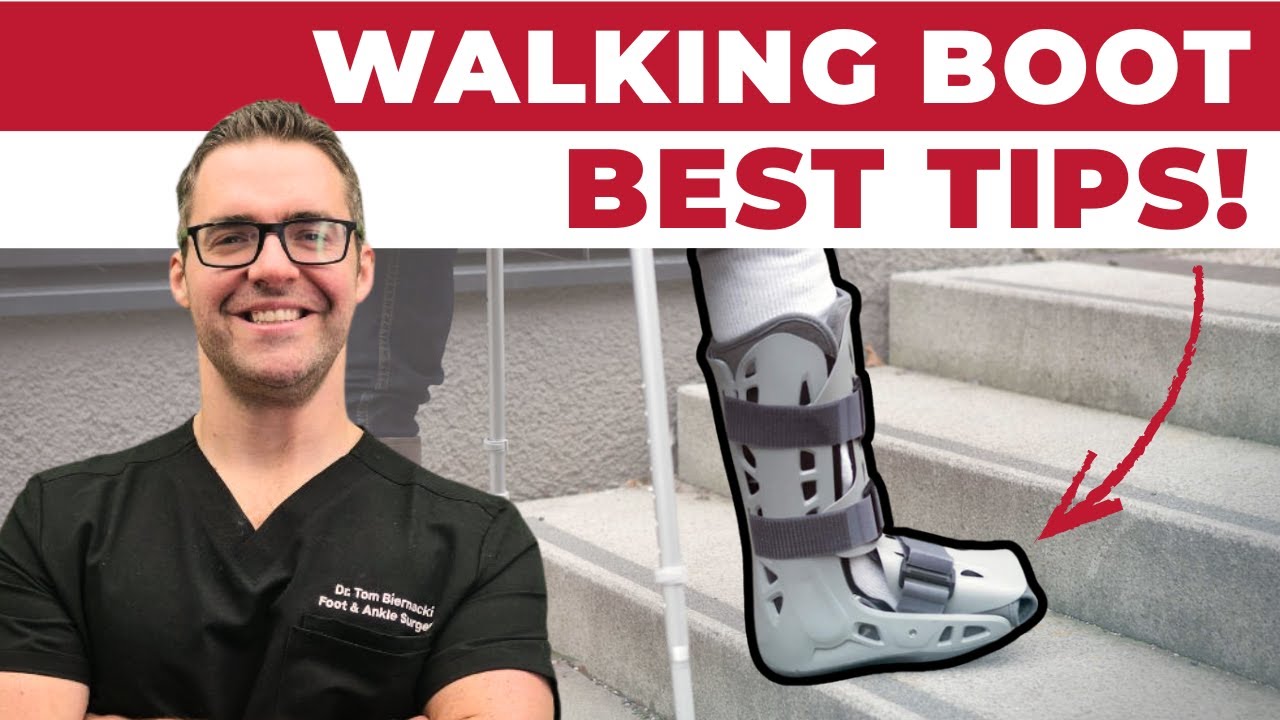
Watch Dr. Biernacki explain how to safely return to exercise after foot surgery, including specific timeline guidance and exercise progression recommendations:
More Podiatrist-Recommended Surgery Essentials
OOFOS Recovery Slide


Post-op approved — impact-absorbing slide for early recovery.
HOKA Ora 3 Recovery Slide
Max-cushion recovery sandal — comfort for post-surgical swelling.
Hoka Bondi 9
Max-cushion walking shoe — ease into return-to-walking post-surgery.
As an Amazon Associate, Balance Foot & Ankle earns from qualifying purchases. Product recommendations are based on clinical experience; prices and availability shown above update live from Amazon.

When to See a Podiatrist
Foot and ankle surgery in 2026 is dramatically different than a decade ago — most procedures are now minimally-invasive, outpatient, and allow weight-bearing within days. Balance Foot & Ankle surgeons have performed 3,000+ foot/ankle surgeries with modern techniques. If another surgeon has recommended a traditional open procedure, a second opinion may reveal a faster, less-invasive option.
Call Balance Foot & Ankle: (810) 206-1402 · Book online · Offices in Howell & Bloomfield Township
Frequently Asked Questions
How soon can I exercise after foot surgery?
The timeline depends on the specific procedure. Non-weight-bearing upper body exercises can often begin within 1 to 2 weeks. Stationary cycling typically starts at 4 to 6 weeks. Walking programs begin at 6 to 10 weeks. Running is usually not appropriate until 12 to 20 weeks post-surgery. Your surgeon will provide specific guidance based on your procedure, healing progress, and radiographic findings. The most important principle is following your surgeon’s prescribed progression rather than comparing your timeline to someone who had a different procedure.
Can I use an exercise bike after foot surgery?
Stationary cycling is typically one of the first exercises permitted after foot surgery, usually starting at 4 to 6 weeks for most procedures. Begin with a recumbent bike (which places less weight through the foot), zero resistance, and 10-minute sessions. Position the pedal under the midfoot rather than the forefoot if you had forefoot surgery. Gradually increase duration and resistance over 4 to 6 weeks. Always get specific clearance from your surgeon before starting, as some procedures require longer immobilization before cycling is safe.
When can I run after bunion surgery?
Most patients can begin a gradual walk-run program 12 to 16 weeks after bunion surgery, provided radiographs confirm complete bone healing at the osteotomy site. Start with short intervals of jogging alternated with walking and progress over 6 to 8 weeks to continuous running. Full return to running at pre-surgical intensity typically occurs at 4 to 6 months. Wearing supportive shoes with arch-supportive orthotics is recommended for all running after bunion surgery to maintain the surgical correction and prevent recurrence.
Is it normal to have swelling when returning to exercise after foot surgery?
Some swelling increase during the return to exercise is normal and expected — the healing tissues are being challenged by new loads and respond with mild inflammation. Normal post-exercise swelling resolves overnight with elevation and ice and does not progressively worsen from session to session. Abnormal swelling that persists beyond 24 hours, progressively worsens, or is accompanied by increased pain suggests you are exceeding your healing tissues’ current tolerance and need to reduce exercise intensity.
What exercises should I avoid after foot surgery?
During the first 8 to 12 weeks, avoid all impact activities (running, jumping, plyometrics), exercises requiring maximal toe push-off (calf raises, box jumps, sprinting), sports involving rapid direction changes (basketball, tennis), and heavy lower body compound movements. Specific exercises to avoid vary by procedure — after bunion surgery, avoid extreme big toe extension; after Achilles repair, avoid maximal calf stretching. Your surgeon and physical therapist will provide procedure-specific exercise restrictions tailored to your recovery.
In-Office Treatment at Balance Foot & Ankle
If home treatment isn’t providing relief for your foot and ankle conditions, our podiatry team at Balance Foot & Ankle can help with same-day evaluations and advanced in-office care.
Same-day appointments available. (810) 206-1402
Sources
- Baumhauer JF, et al. “Return to activity after foot and ankle surgery.” Foot and Ankle International. 2018;39(12):1437-1447.
- Saxena A, et al. “Return to activity after foot and ankle surgery: guidelines for the recreational and competitive athlete.” Clinics in Sports Medicine. 2015;34(4):741-753.
- Hunt KJ, et al. “Outcomes of the modified Broström procedure for lateral ankle instability in runners.” Foot and Ankle International. 2017;38(2):132-138.
- Carreira DS, et al. “Clinical update on returning to sport following foot and ankle surgery.” Foot and Ankle Clinics. 2019;24(3):471-490.
- Glazebrook M, et al. “Evidence-based indications for ankle arthroscopy.” Arthroscopy. 2009;25(12):1478-1490.
Schedule Your Appointment
🏃 Ready to get back to your exercise routine after foot surgery?
Dr. Biernacki at Balance Foot & Ankle provides personalized post-surgical rehabilitation guidance to help you return to the activities you love — safely and on the right timeline for your specific procedure.
Related Articles
- How Long Does It Take for Foot Surgery to Heal?
- Bunion Surgery: Complete Guide to Recovery
- Achilles Tendon Reconstruction: Expert Guide
- Plantar Fasciitis: Causes, Treatment, and Recovery
- Best Shoes for Plantar Fasciitis 2026: Podiatrist Picks
- Podiatrist Recommended Foot Care Products 2026
Insurance Accepted
BCBS · Medicare · Aetna · Cigna · United Healthcare · HAP · Priority Health · Humana · View All →
Howell Office
4330 E Grand River Ave
Howell, MI 48843
Get Directions →
Bloomfield Township Office
43494 Woodward Ave, Suite 208
Bloomfield Township, MI 48302
Get Directions →
Your Board-Certified Podiatrists



Ready to Get Back on Your Feet?
Same-week appointments available at both locations.
Watch: Return to Exercise After Foot Surgery
Dr. Tom’s timeline for returning to exercise after foot surgery — walking, cardio, strength, and running.
Return-to-Exercise Kit
Safe return requires support, cushioning, and progressive load. Dr. Tom’s kit:
As an Amazon Associate, Balance Foot & Ankle earns from qualifying purchases. This supports our free patient education content.
Distributes impact during walking progression.
Supports venous return during cardio phase.
Progressive strengthening for foot and ankle.
Post-workout flare control during reconditioning.
Related: Sports Injury Care · Foot & Ankle Surgery · Book Follow-Up

Dr. Tom Biernacki, DPM is a board-certified foot & ankle surgeon (ABFAS & ABPM) at Balance Foot & Ankle Specialists in Southeast Michigan. With over a decade of clinical experience, he specializes in heel pain, bunions, diabetic foot care, sports injuries, and minimally invasive surgery. Dr. Biernacki is a member of the APMA and ACFAS, and his patient education content on MichiganFootDoctors.com and YouTube has made him one of the most-followed foot & ankle educators on YouTube.