
Quick answer: Running Injury Prevention Foot Ankle Podiatrist Tips is a common foot/ankle topic that affects many patients. Effective treatment starts with a targeted diagnosis, conservative-first treatment, and escalation only when needed. We treat this regularly at our Howell and Bloomfield Township practices. Call (810) 206-1402.
Medically reviewed by Dr. Tom Biernacki, DPM · Board-Certified Podiatric Surgeon · Last reviewed: April 2026 · Editorial Policy
The most important clinical decision with Running Injury Prevention Foot Ankle Podiatrist Tips isn’t which treatment to start with — it’s identifying the correct subtype. That changes everything. Call (810) 206-1402.
Quick Answer
Runner’s Guide to Foot and Ankle Injury Prevention fro relates to foot pain — typically caused by overuse, footwear, or biomechanics. Most patients improve in 6-12 weeks with conservative care. Same-week appointments in Howell + Bloomfield Township: (810) 206-1402.
Medically reviewed by Dr. Tom Biernacki, DPM — Board-Certified Podiatric Surgeon — Balance Foot & Ankle, Howell & Bloomfield Township, MI. Last updated April 2026.
▶ Watch
Medically Reviewed by Dr. Tom Biernacki, DPM — Board-Certified Podiatrist, Balance Foot & Ankle Specialists, Michigan. Last updated April 2026.
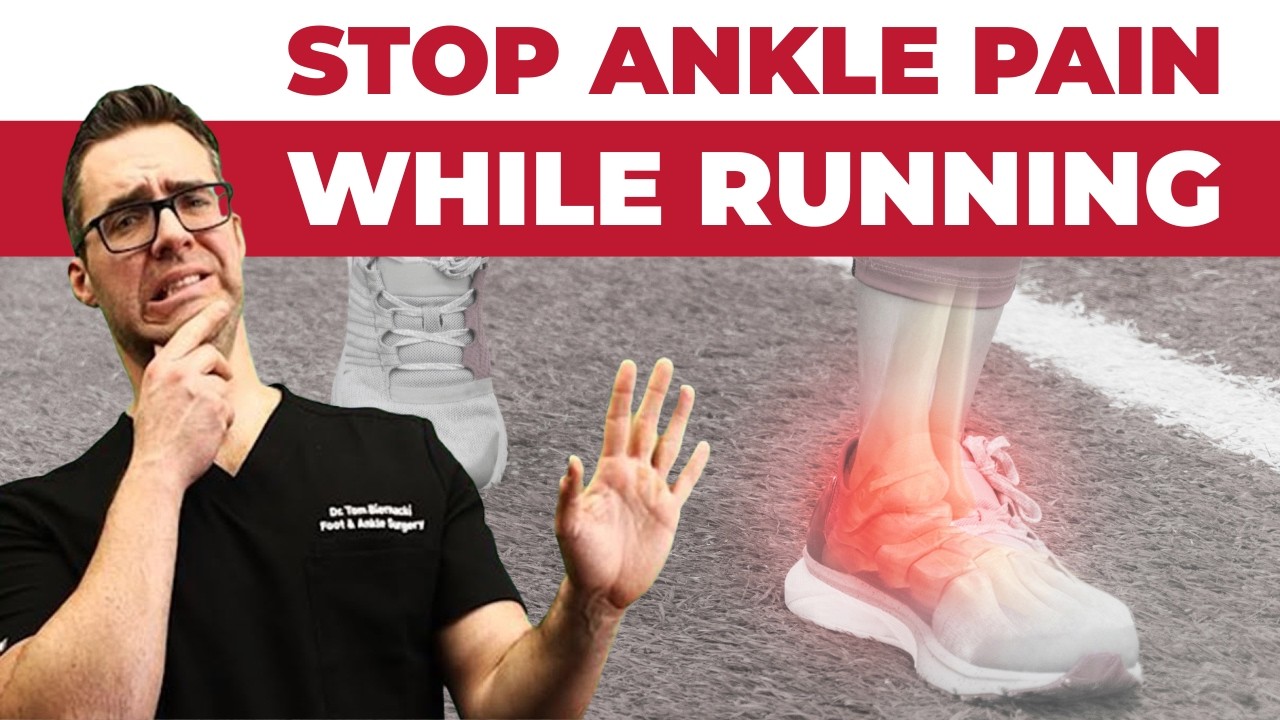
Running is one of the most accessible, effective, and popular forms of exercise — and one of the most injury-prone. Epidemiological studies suggest that 37–56% of regular runners sustain a running-related injury in any given year. The vast majority of these injuries are overuse injuries that develop gradually and are preventable with evidence-based training practices. This guide summarizes the most important podiatric principles for injury prevention in runners at every level.
The Most Common Running Injuries and Their Causes
Understanding the most common injuries helps runners recognize warning signs early:
- Plantar fasciitis — heel pain worst in the morning; caused by sudden mileage spikes, hard surfaces, inadequate footwear, and tight calf muscles
- Metatarsal stress fractures — forefoot pain that progressively worsens with running; caused by inadequate bone loading adaptation relative to training volume increase
- Achilles tendinopathy — posterior heel or mid-tendon pain; caused by sudden hill running increase, speed work, or inadequate eccentric calf strength
- Peroneal tendonitis — lateral ankle pain; often associated with supination (high-arched feet) or excessive banking/camber running
- Medial tibial stress syndrome — shin splints; often biomechanical (overpronation, hip weakness) combined with volume overload
- Ankle sprains — lateral ankle; trail running, uneven surfaces, neuromuscular fatigue
The 10% Rule and Its Limitations
The “10% rule” — never increase weekly mileage by more than 10% per week — remains a useful guideline but is an oversimplification. More important than the percentage increase is the absolute load increase. Going from 5 miles to 5.5 miles (10%) is very different from going from 50 miles to 55 miles. A more nuanced approach considers total training stress (combining mileage, intensity, and surface), recovery time between hard efforts, and individual bone density and running economy.
Shoe Selection: What the Evidence Actually Shows
Shoe selection is one of the most hotly debated topics in running medicine. Current evidence supports:
- Fit matters more than brand: A shoe that fits your foot width, toe box depth, and heel counter snugly (without pressure points) will prevent more injuries than a highly marketed “biomechanical correction” shoe that doesn’t fit well
- Motion control shoes for severe overpronators: Substantial evidence supports motion control footwear for runners with significant tibial internal rotation under load — but the indication is much narrower than many specialty running stores apply it
- Replace shoes at 300–500 miles: Midsole compression fatigue significantly reduces cushioning and support after this range, regardless of how the upper appears
- Cushioning transition matters: Moving from maximalist to minimalist shoes (or vice versa) should occur over 8–12 weeks — sudden changes in stack height alter Achilles and plantar fascia loads dramatically
Biomechanical Evaluation Before Symptoms Develop
Runners with a history of recurrent injury, those beginning marathon training, or those with known biomechanical risk factors (flat feet, high arches, leg length discrepancy) benefit from a proactive podiatric evaluation before injury occurs. Dr. Biernacki performs comprehensive running biomechanical assessment including gait analysis, foot structure evaluation, flexibility testing, and custom orthotic fabrication when indicated — preventing the injuries that training errors and structural factors produce.
Warning Signs That Require Podiatric Evaluation
- Any pain that changes your running form (altered gait is a sign of compensation, not adaptation)
- Pain during running that does not resolve within 30 minutes of finishing
- Pain that requires NSAIDs to get through runs (masking pain does not treat the cause)
- Localized forefoot pain that worsens progressively over days (stress fracture risk)
- Morning heel pain in a runner (plantar fasciitis — early treatment prevents chronic pain)
Runner With Foot Pain? Get Back to Running Faster.
Dr. Biernacki specializes in running injury evaluation and prevention at Balance Foot & Ankle — Bloomfield Township and Howell, MI.
📞 (810) 206-1402 |
📧 Get Dr. Tom’s Free Lab Test Guide
Discover the 5 lab tests every person over 35 should ask their doctor about — explained in plain English by a board-certified physician.
📍 Located in Michigan?
Our board-certified podiatrists treat this condition at two convenient locations. Same-day appointments often available.
Insurance Accepted
BCBS · Medicare · Aetna · Cigna · United Healthcare · HAP · Priority Health · Humana · View All →
Howell Office
4330 E Grand River Ave
Howell, MI 48843
Get Directions →
Bloomfield Township Office
43494 Woodward Ave, #208
Bloomfield Township, MI 48302
Get Directions →
Your Board-Certified Podiatrists



Ready to Get Back on Your Feet?
Same-week appointments available at both locations.
Book Your AppointmentMore Podiatrist-Recommended Sports Essentials
Hoka Clifton 10


Max-cushion everyday shoe — podiatrist favorite for walking and running.

OOFOS Recovery Slide

Impact-absorbing recovery sandal — wear after long days on your feet.
As an Amazon Associate, Balance Foot & Ankle earns from qualifying purchases. Product recommendations are based on clinical experience; prices and availability shown above update live from Amazon.

When to See a Podiatrist
Athletic injuries heal faster with sport-specific rehab protocols — not generic rest and ice. Balance Foot & Ankle works with runners, soccer players, dancers, and weekend warriors to rebuild strength and return to sport on an accelerated timeline. Don’t let a foot injury keep you sidelined longer than necessary.
Call Balance Foot & Ankle: (810) 206-1402 · Book online · Offices in Howell & Bloomfield Township
Pros & Cons of Conservative Care for foot care
Advantages
- ✓ Conservative care first
- ✓ Same-week appointments
- ✓ Multiple insurance accepted
Considerations
- ✗ Self-treatment can mask issues
- ✗ See a podiatrist if pain >2 weeks
Dr. Tom’s Recommended Products for foot care
Affiliate disclosure: As an Amazon Associate, Balance Foot & Ankle earns from qualifying purchases. We only recommend products we use with patients.
Footnanny Heel Cream Dr. Tom’s Pick
Best for: Daily moisturizer for cracked heels
Ready to Get Back on Your Feet?
Same-day appointments in Howell + Bloomfield Township. Most insurance accepted. Dr. Tom Biernacki, DPM & team.
Book Today — Same-Day Appointments Available
Call Now: (810) 206-1402
About Your Care Team at Balance Foot & Ankle
Dr. Tom Biernacki, DPM · Board-Certified Foot & Ankle Surgeon. Specializes in conservative-first care, minimally invasive bunion surgery, and complex reconstruction.
Dr. Carl Jay, DPM · Accepting new patients. Specializes in sports medicine, athletic injuries, and routine podiatric care.
Dr. Daria Gutkin, DPM, AACFAS · Accepting new patients. Specializes in surgical reconstruction and pediatric podiatry.
Locations: 4330 E Grand River Ave, Howell, MI 48843 · 43494 Woodward Ave Suite 208, Bloomfield Township, MI 48302
Hours: Mon–Fri 8:00 AM – 5:00 PM · (810) 206-1402
In-Office Treatment at Balance Foot & Ankle
If home treatment isn’t providing relief for your foot and ankle injuries, our podiatry team at Balance Foot & Ankle can help with same-day evaluations and advanced in-office care.
Same-day appointments available. (810) 206-1402
Doctor Hoy’s Natural Pain Relief Gel
Natural topical pain relief I use in our clinic. Arnica + camphor formula — apply directly to the area 3–4x daily. ($20–25)
Shop Doctor Hoy’s →Ready for Expert Care?
Same-day appointments in Howell & Bloomfield Township, MI.
4.9★ | 1,123 Reviews | 3,000+ Surgeries
Or call: (810) 206-1402

Dr. Tom Biernacki, DPM is a board-certified foot & ankle surgeon (ABFAS & ABPM) at Balance Foot & Ankle Specialists in Southeast Michigan. With over a decade of clinical experience, he specializes in heel pain, bunions, diabetic foot care, sports injuries, and minimally invasive surgery. Dr. Biernacki is a member of the APMA and ACFAS, and his patient education content on MichiganFootDoctors.com and YouTube has made him one of the most-followed foot & ankle educators on YouTube.