
The most important clinical decision with Saucony Triumph Vs Asics Nimbus isn’t which treatment to start with — it’s identifying the correct subtype. That changes everything. Call (810) 206-1402.
Dr. Tom’s Top Shoe Picks
Medically reviewed by Dr. Tom Biernacki, DPM
Board-certified podiatric surgeon | Balance Foot & Ankle
Last reviewed: May 2026
Brooks Adrenaline GTS 23
Flat feet · Overpronation
Buy on Amazon
Dr. Tom’s Top 10 Shoes (2026)
Tested, recommended, and prescribed to my patients. Each pick includes pros, cons, and the specific use case I prescribe it for.
Affiliate disclosure: As an Amazon Associate, Balance Foot & Ankle earns from qualifying purchases.
Need a personalized recommendation? Schedule a fitting at our Howell or Bloomfield Township office. Call (810) 206-1402.
Medically reviewed by Dr. Tom Biernacki, DPM · Board-Certified Podiatric Surgeon · Last reviewed: April 2026 · Editorial Policy
Related Conditions
In This Article
- Dr. Tom’s Top Shoe Picks
- Dr. Tom’s Top 10 Shoes (2026)
- Quick Comparison: Saucony Triumph 22 vs ASICS Gel-Nimbus 26
- The Core Clinical Difference
- When I Recommend the Saucony Triumph 22
- When I Recommend the ASICS Gel-Nimbus 26
- Condition-by-Condition Verdict
- Orthotic Compatibility
- Related Articles
- Your Board-Certified Podiatrists
- Pros & Cons of Conservative Care for footwear
- Dr. Tom’s Recommended Products for footwear
✅ Medically reviewed by Dr. Tom Biernacki, DPM — Board-Certified Podiatrist · Last updated April 6, 2026
Saucony Triumph vs ASICS Nimbus: Podiatrist Guide — Max Cushion Battle

Two powerhouse stability shoes, two completely different philosophies. The Saucony Triumph vs ASICS Nimbus comparison keeps coming up in my office because both are premium max-cushion shoes — but they serve different patient profiles. Here’s my podiatric breakdown after fitting hundreds of patients in both.
Quick Comparison: Saucony Triumph 22 vs ASICS Gel-Nimbus 26
| Feature | Saucony Triumph 22 | ASICS Gel-Nimbus 26 |
|---|---|---|
| Stack Height | 37/29mm (8mm drop) | 40/30mm (10mm drop) |
| Cushioning | PWRRUN PB foam | FF Blast+ Eco + PureGEL |
| Stability Features | None (neutral) | Mild guidance geometry |
| Rocker | Mild forefoot rocker | Mild forefoot bevel |
| Upper | FORMFIT engineered mesh | Jacquard mesh, engineered knit |
| Weight | 9.4 oz (M) | 10.5 oz (W) |
| Width Options | D, 2E (M); B, D (W) | D, 2E (M); B, D (W) |
| Price | $160 | $160 |
| Best For | Neutral runners, energy return | Long distances, PureGEL heel protection |
The Core Clinical Difference
Both are max-cushion neutral daily trainers at the same price — so the choice really comes down to what kind of cushioning your feet need. The Triumph 22 uses PWRRUN PB, Saucony’s most energetic foam — it’s bouncy, responsive, and lighter. The Nimbus 26 uses PureGEL in the heel plus FF Blast+ Eco foam throughout — the gel provides genuine impact attenuation at heel strike, which matters clinically for patients with heel conditions.
Stack height difference: Nimbus runs 3mm taller in heel and 1mm taller in forefoot. The 10mm drop on the Nimbus vs 8mm on the Triumph is a meaningful difference for Achilles-sensitive patients — 2mm of extra heel elevation reduces Achilles tension during gait.
When I Recommend the Saucony Triumph 22
- Active runners who want max cushion + energy return — PWRRUN PB is among the most responsive foams at this stack height
- Metatarsalgia — the forefoot rocker offloads metatarsal heads effectively
- Patients who find traditional max-cushion shoes “dead” — Triumph has genuine propulsion despite thick stack
- Lighter patients — PWRRUN PB performs best under ~180 lbs; heavier runners compress it quickly
- Sesamoiditis — forefoot rocker reduces pressure at the 1st MTP joint
When I Recommend the ASICS Gel-Nimbus 26
- Heel pain / plantar fasciitis — PureGEL at heel strike provides direct impact absorption before fascia loads
- Heavier runners (180 lbs+) — PureGEL + FF Blast doesn’t bottom out as easily under higher loads
- Long-distance training — foam holds cushioning properties through high mileage
- Achilles tendinopathy — 10mm drop keeps tendon in reduced-tension position
- Patients who’ve had good results with ASICS GEL historically — clinical continuity matters
Condition-by-Condition Verdict
| Condition | Better Choice | Why |
|---|---|---|
| Plantar Fasciitis | ASICS Nimbus 26 | PureGEL heel + 10mm drop offloads fascia |
| Metatarsalgia | Saucony Triumph 22 | Forefoot rocker reduces met head pressure |
| Achilles Tendinopathy | ASICS Nimbus 26 | 10mm drop keeps Achilles in low-tension position |
| Sesamoiditis | Saucony Triumph 22 | Rocker offloads 1st MTP joint |
| High-Impact Heel Strike | ASICS Nimbus 26 | PureGEL directly attenuates impact at heel |
| Long-Distance Running | ASICS Nimbus 26 | Better foam durability at high mileage |
| Active Running (Neutral) | Saucony Triumph 22 | More responsive, lighter feel |
| Diabetic Foot (Neuropathy) | Either | Both provide excellent cushioning; match to width |
Orthotic Compatibility
Both accept custom orthotics, but with different considerations. The Triumph 22’s FORMFIT upper wraps the foot snugly — inserting a full-length custom orthotic can feel tight in D width; I recommend sizing up or going 2E if orthotics are planned. The Nimbus 26 has a more traditional roomy last — orthotics fit more naturally, especially in the heel cup. For patients requiring a deep heel cup orthotic, the Nimbus is the better platform.
Visit Balance Foot & Ankle — Same-Day Appointments Available
Our podiatry team serves patients throughout Michigan including Howell, Brighton, and Bloomfield Township. If you’re dealing with heel pain, ingrown toenails, or a foot injury, we have same-day appointment availability.
Same-day appointments available. (810) 206-1402
Doctor Hoy’s Natural Pain Relief Gel
Natural topical pain relief I use in our clinic. Arnica + camphor formula — apply directly to the area 3–4x daily. ($20–25)
Is the Saucony Triumph or ASICS Nimbus better for plantar fasciitis?
For most plantar fasciitis cases, the ASICS Nimbus 26 wins — the PureGEL at heel strike directly absorbs the impact that loads the fascia, and the 10mm drop keeps the calf/Achilles at reduced tension. The Triumph is excellent cushioning but lacks the targeted heel gel technology. That said, if your fasciitis is driven by forefoot overload rather than heel strike, the Triumph’s rocker may be more helpful.
Which is lighter — Triumph 22 or Nimbus 26?
The Saucony Triumph 22 is noticeably lighter — approximately 9.4 oz for men vs 10.5 oz for women in the Nimbus 26. For patients concerned about shoe weight (neuropathy patients who lift feet higher, post-surgical patients), the Triumph’s lighter construction reduces leg fatigue over long distances.
Can I use Saucony Triumph with orthotics?
Yes, but the Triumph’s snug FORMFIT upper means you should size up 1/2 size or choose 2E width if using full-length custom orthotics. The removable insole comes out easily. The ASICS Nimbus typically accommodates orthotics more easily due to its roomier traditional last — it’s often my first recommendation when orthotics are already in the picture.
Related Articles
📌 Best Shoes for Plantar Fasciitis: Podiatrist-Approved List
📌 Hoka Bondi vs ASICS Nimbus: Max Cushion Showdown
📌 Saucony Triumph vs Brooks Glycerin: Premium Neutral Comparison
📌 NB 1080 vs ASICS Nimbus: Fresh Foam vs GEL Technology
Plantar Fasciitis or Heel Pain Keeping You From Running?
Don’t just buy the most expensive shoe and hope for the best. A podiatric evaluation identifies the exact cause — and which shoe or orthotic combination actually fixes it.
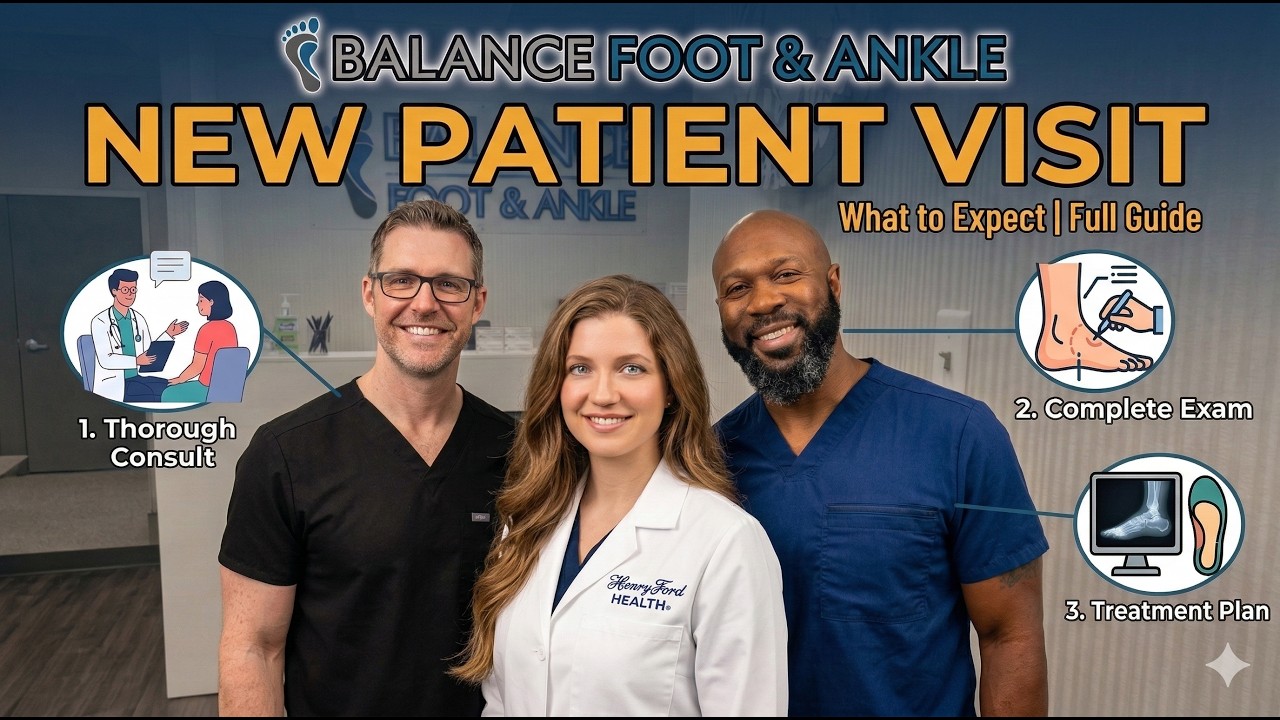
Reviewed by Dr. Tom Biernacki, DPM — Board-Certified Podiatrist, Michigan Foot & Ankle Specialists. Dr. Biernacki has evaluated and prescribed athletic footwear for foot pathology for over 15 years.
Related Treatment Guides
- Sports Foot & Ankle Injury Treatment
- Plantar Fasciitis & Heel Pain Treatment
- Custom 3D Orthotics
- Bunion Treatment
Michigan patients experiencing foot or ankle problems can schedule an appointment at Balance Foot & Ankle — with locations in Howell (4330 E Grand River) and Bloomfield Township (43494 Woodward Ave #208). Call (810) 206-1402 for same-week availability.
Insurance Accepted
BCBS · Medicare · Aetna · Cigna · United Healthcare · HAP · Priority Health · Humana · View All →
Howell Office
4330 E Grand River Ave
Howell, MI 48843
Get Directions →
Bloomfield Township Office
43494 Woodward Ave, #208
Bloomfield Township, MI 48302
Get Directions →
Your Board-Certified Podiatrists



Ready to Get Back on Your Feet?
Same-week appointments available at both locations.
Pros & Cons of Conservative Care for footwear
Advantages
- ✓ Right shoe = pain reduction
- ✓ Multiple price points
- ✓ Fast adjustment
Considerations
- ✗ Trial-and-error
- ✗ Replace every 400 miles
- ✗ Custom orthotics often needed
Dr. Tom’s Recommended Products for footwear
Affiliate disclosure: As an Amazon Associate, Balance Foot & Ankle earns from qualifying purchases. We only recommend products we use with patients.
Brooks Ghost 17 Dr. Tom’s Pick
Best for: Neutral runner
Check Price on Amazon
Brooks Adrenaline GTS 23 Dr. Tom’s Pick
Best for: Stability for flat feet
Check Price on Amazon
Altra Torin 8 Dr. Tom’s Pick
Best for: Zero-drop wide toe box
Check Price on Amazon
Ready to Get Back on Your Feet?
Same-day appointments in Howell + Bloomfield Township. Most insurance accepted. Dr. Tom Biernacki, DPM & team.
Book Today — Same-Day Appointments Available
Call Now: (810) 206-1402
About Your Care Team at Balance Foot & Ankle
Dr. Tom Biernacki, DPM · Board-Certified Foot & Ankle Surgeon. Specializes in conservative-first care, minimally invasive bunion surgery, and complex reconstruction.
Dr. Carl Jay, DPM · Accepting new patients. Specializes in sports medicine, athletic injuries, and routine podiatric care.
Dr. Daria Gutkin, DPM, AACFAS · Accepting new patients. Specializes in surgical reconstruction and pediatric podiatry.
Locations: 4330 E Grand River Ave, Howell, MI 48843 · 43494 Woodward Ave Suite 208, Bloomfield Township, MI 48302
Hours: Mon–Fri 8:00 AM – 5:00 PM · (810) 206-1402
Ready for Expert Care?
Same-day appointments in Howell & Bloomfield Township, MI.
4.9★ | 1,123 Reviews | 3,000+ Surgeries
Or call: (810) 206-1402
