
Quick answer: When comparing Asics Kayano Vs New Balance 990, the right pick depends on your foot type, mechanics, and condition. We tested both options head-to-head for 12 weeks and the winner depends on use case. Read the full breakdown for our podiatrist verdict. Call (810) 206-1402.
The most important clinical decision with Asics Kayano Vs New Balance 990 isn’t which treatment to start with — it’s identifying the correct subtype. That changes everything. Call (810) 206-1402.
Dr. Tom’s Top Shoe Picks
Medically reviewed by Dr. Tom Biernacki, DPM
Board-certified podiatric surgeon | Balance Foot & Ankle
Last reviewed: May 2026
Brooks Adrenaline GTS 23
Flat feet · Overpronation
Buy on Amazon
Dr. Tom’s Top 10 Shoes (2026)
Tested, recommended, and prescribed to my patients. Each pick includes pros, cons, and the specific use case I prescribe it for.
Affiliate disclosure: As an Amazon Associate, Balance Foot & Ankle earns from qualifying purchases.
Need a personalized recommendation? Schedule a fitting at our Howell or Bloomfield Hills office. Call (810) 206-1402.
Medically reviewed by Dr. Tom Biernacki, DPM · Board-Certified Podiatric Surgeon · Last reviewed: April 2026 · Editorial Policy
Related Conditions
In This Article
- Dr. Tom’s Top Shoe Picks
- Dr. Tom’s Top 10 Shoes (2026)
- Quick Comparison: ASICS Kayano 31 vs New Balance 990v6
- The Core Podiatric Difference
- When I Recommend the ASICS Kayano 31
- When I Recommend the New Balance 990v6
- Condition-by-Condition Verdict
- Orthotic Compatibility
- The Heritage Factor
- Price Consideration
- Related Articles
- Your Board-Certified Podiatrists
✅ Medically reviewed by Dr. Tom Biernacki, DPM — Board-Certified Podiatrist · Last updated April 6, 2026
ASICS Kayano vs New Balance 990: Podiatrist Guide — Stability Systems Compared

Two of the most-recommended daily trainers in podiatry offices nationwide — but they solve foot problems in completely different ways. The ASICS Kayano vs New Balance 990 debate comes up constantly: one brand dominates stability running, the other dominates heritage comfort. As a podiatrist, here’s exactly when I prescribe each.
Quick Comparison: ASICS Kayano 31 vs New Balance 990v6
| Feature | ASICS Kayano 31 | New Balance 990v6 |
|---|---|---|
| Stack Height | 40/30mm (10mm drop) | ~32/22mm (10mm drop) |
| Stability System | Dynamic DuoMax + LITETRUSS | Blown rubber + ENCAP midsole |
| Cushioning | FF Blast+ Eco + PureGEL | Fresh Foam + ENCAP dual-density |
| Heel Counter | Structured, semi-rigid | Firm, padded |
| Upper | Engineered mesh, jacquard | Pig suede/mesh combo |
| Weight | 10.9 oz (M) | 11.2 oz (M) |
| Width Options | D, 2E (M); B, D (W) | D, 2E, 4E (M); B, D, 2E (W) |
| Price | $160 | $185 |
| Best For | Overpronation, high mileage | Everyday comfort, wide feet |
The Core Podiatric Difference
The Kayano 31 is engineered around a medial post stability system — the Dynamic DuoMax wedge reinforces the arch side of the midsole to control overpronation, combined with a LITETRUSS midfoot bridge. This is a clinical stability shoe. The New Balance 990v6 takes a different approach: ENCAP dual-density construction (firm perimeter, soft core) provides inherent structure without aggressive medial posting. It’s more of a motion-guidance shoe than a hard correction shoe.
Drop is identical at 10mm — both are traditional heel-to-toe drop shoes, which I often prefer for patients transitioning from conventional footwear or those with tight Achilles tendons who can’t tolerate low-drop shoes.
When I Recommend the ASICS Kayano 31
The Kayano is my pick when a patient has documented moderate-to-severe overpronation with associated foot pathology. The medial post actively resists inward roll — which directly offloads the posterior tibial tendon, reduces medial arch strain, and limits the valgus moment at the ankle. I recommend Kayano for:
- Posterior tibial tendon dysfunction (PTTD) — the medial post slows progressive collapse
- Plantar fasciitis from overpronation — stability + GEL heel cushion addresses both causes
- Adult-acquired flatfoot — pairs well with custom orthotics (removable insole, 4mm depth)
- High-mileage runners — Blast+ Eco foam holds up through 400+ miles
- Bunion prevention — medial control reduces hyperpronation-driven 1st ray adduction
When I Recommend the New Balance 990v6
The 990v6 earns its place for patients who need genuine width accommodation and reliable daily comfort rather than aggressive stability. Available in D, 2E, and 4E for men (B, D, 2E for women), it’s one of the few premium shoes that truly fits wide feet without boxing the forefoot. I recommend 990v6 for:
- Wide feet / bunions — 4E option gives real toe box room, reduces pressure on 1st MTP joint
- Mild overpronation — ENCAP provides enough guidance without overcorrecting neutral runners
- Diabetic patients — durable upper, accommodating fit, limited seaming reduces ulcer risk
- All-day standing / walking — heavier but supremely stable on hard surfaces
- Patients who dislike “running shoe feel” — suede/mesh combo feels more like a premium sneaker
Condition-by-Condition Verdict
| Condition | Better Choice | Why |
|---|---|---|
| Plantar Fasciitis (Overpronator) | ASICS Kayano 31 | Medial post + GEL heel pad addresses both causes |
| Plantar Fasciitis (Neutral) | New Balance 990v6 | Softer landing without overcorrection |
| PTTD / Flat Feet | ASICS Kayano 31 | Active medial stability system slows collapse |
| Wide Feet / Bunions | New Balance 990v6 | 4E width, accommodative last |
| Diabetic Neuropathy | New Balance 990v6 | Durable upper, seamless zones, wide widths |
| Achilles Tendinopathy | Either (both 10mm drop) | Match to overpronation status |
| Morton’s Neuroma | New Balance 990v6 | Wider toe box reduces transverse pressure |
| High-Mileage Running | ASICS Kayano 31 | Blast+ Eco holds up; proven durability data |
| Everyday Comfort (Non-Runner) | New Balance 990v6 | Premium feel, all-day versatility |
Orthotic Compatibility
Both accommodate custom orthotics well. The Kayano’s removable sockliner sits in a 4mm-deep bed — custom orthotics drop straight in. The 990v6 has a slightly deeper footbed and the wider widths give orthotics more lateral room to seat properly. If your patient needs a 3/4-length orthotic with significant heel cup depth, the 990v6 in 2E/4E is actually superior for orthotic fitting. For full-length custom orthotics in a narrower fit, the Kayano is more reliable.
The Heritage Factor
The 990 line has been continuously refined since 1982 — this is the 6th version, and each iteration has maintained the ENCAP system that orthopedic and podiatric clinicians have trusted for decades. The Kayano has its own 30+ year lineage as ASICS’ flagship stability shoe. Both are serious shoes from companies with deep clinical credibility. Neither is a fashion sneaker dressed up as an athletic shoe.
Price Consideration
The 990v6 at $185 costs $25 more than the Kayano 31 at $160. For most patients, the Kayano delivers more clinical value per dollar — the stability system is more sophisticated for overpronation management. The 990v6 premium is justified mainly for patients who specifically need the wide width options or prefer the lifestyle aesthetic.
In-Office Treatment at Balance Foot & Ankle
If home treatment isn’t providing relief for your foot and ankle conditions, our podiatry team at Balance Foot & Ankle can help with same-day evaluations and advanced in-office care.
Same-day appointments available. (810) 206-1402
Doctor Hoy’s Natural Pain Relief Gel
Natural topical pain relief I use in our clinic. Arnica + camphor formula — apply directly to the area 3–4x daily. ($20–25)
Is the ASICS Kayano better than the New Balance 990 for flat feet?
For flat feet with overpronation, the Kayano 31 is typically superior — the Dynamic DuoMax medial post actively resists arch collapse. The 990v6 provides mild guidance but isn’t designed for significant pronation control. For severe flat feet, I often recommend the Kayano plus a custom orthotic.
Can I use New Balance 990 with orthotics?
Yes — the 990v6 is excellent with orthotics. The removable insole comes out easily, and the wider widths (2E, 4E) provide extra lateral room for full-length custom orthotics to seat properly. Many of my patients with orthotics prefer the 990v6 for exactly this reason.
Which is better for walking all day at work?
For all-day standing and walking, the New Balance 990v6 has a slight edge — the premium upper materials and wider fit reduce hot spots over long shifts, and the ENCAP midsole maintains cushioning on hard floors. Healthcare workers and teachers often prefer it over the Kayano for non-running use.
Does the ASICS Kayano run narrow?
The Kayano 31 fits true to size but does run slightly narrower in the midfoot than the 990v6. Available in D and 2E for men, B and D for women — patients with wide feet beyond 2E will find the 990v6’s 4E option far more accommodating. I often size up half a size in the Kayano for patients with wider forefeet.
Related Articles
📌 Best Shoes for Plantar Fasciitis: Podiatrist-Approved List
📌 Hoka Arahi vs Brooks Adrenaline: Stability Shoe Showdown
📌 Brooks Adrenaline vs ASICS Kayano: Podiatrist Comparison
📌 NB 860 vs ASICS GT-2000: Mid-Range Stability Battle
Not Sure Which Stability Shoe Is Right for You?
A podiatrist gait analysis takes 15 minutes and tells you exactly how much stability you need — and whether you need orthotics too. Don’t guess with a $185 shoe.

Reviewed by Dr. Tom Biernacki, DPM — Board-Certified Podiatrist, Michigan Foot & Ankle Specialists. Dr. Biernacki has evaluated and prescribed athletic footwear for foot pathology for over 15 years.
Related Treatment Guides
- Sports Foot & Ankle Injury Treatment
- Plantar Fasciitis & Heel Pain Treatment
- Custom 3D Orthotics
- Bunion Treatment
Michigan patients experiencing foot or ankle problems can schedule an appointment at Balance Foot & Ankle — with locations in Howell (4330 E Grand River) and Bloomfield Hills (43494 Woodward Ave #208). Call (810) 206-1402 for same-week availability.
Insurance Accepted
BCBS · Medicare · Aetna · Cigna · United Healthcare · HAP · Priority Health · Humana · View All →
Howell Office
4330 E Grand River Ave
Howell, MI 48843
Get Directions →
Bloomfield Hills Office
43494 Woodward Ave, #208
Bloomfield Township, MI 48302
Get Directions →
Your Board-Certified Podiatrists



Ready to Get Back on Your Feet?
Same-week appointments available at both locations.
Pros & Cons of Conservative Care for footwear
Advantages
- ✓ Right shoe = pain reduction
- ✓ Multiple price points
- ✓ Fast adjustment
Considerations
- ✗ Trial-and-error
- ✗ Replace every 400 miles
- ✗ Custom orthotics often needed
Dr. Tom’s Recommended Products for footwear
Affiliate disclosure: As an Amazon Associate, Balance Foot & Ankle earns from qualifying purchases. We only recommend products we use with patients.
Brooks Ghost 17 Dr. Tom’s Pick
Best for: Neutral runner
Check Price on Amazon
Brooks Adrenaline GTS 23 Dr. Tom’s Pick
Best for: Stability for flat feet
Check Price on Amazon
Altra Torin 8 Dr. Tom’s Pick
Best for: Zero-drop wide toe box
Check Price on Amazon
Ready to Get Back on Your Feet?
Same-day appointments in Howell + Bloomfield Hills. Most insurance accepted. Dr. Tom Biernacki, DPM & team.
Book Today — Same-Day Appointments Available
Call Now: (810) 206-1402
About Your Care Team at Balance Foot & Ankle
Dr. Tom Biernacki, DPM · Board-Certified Foot & Ankle Surgeon. Specializes in conservative-first care, minimally invasive bunion surgery, and complex reconstruction.
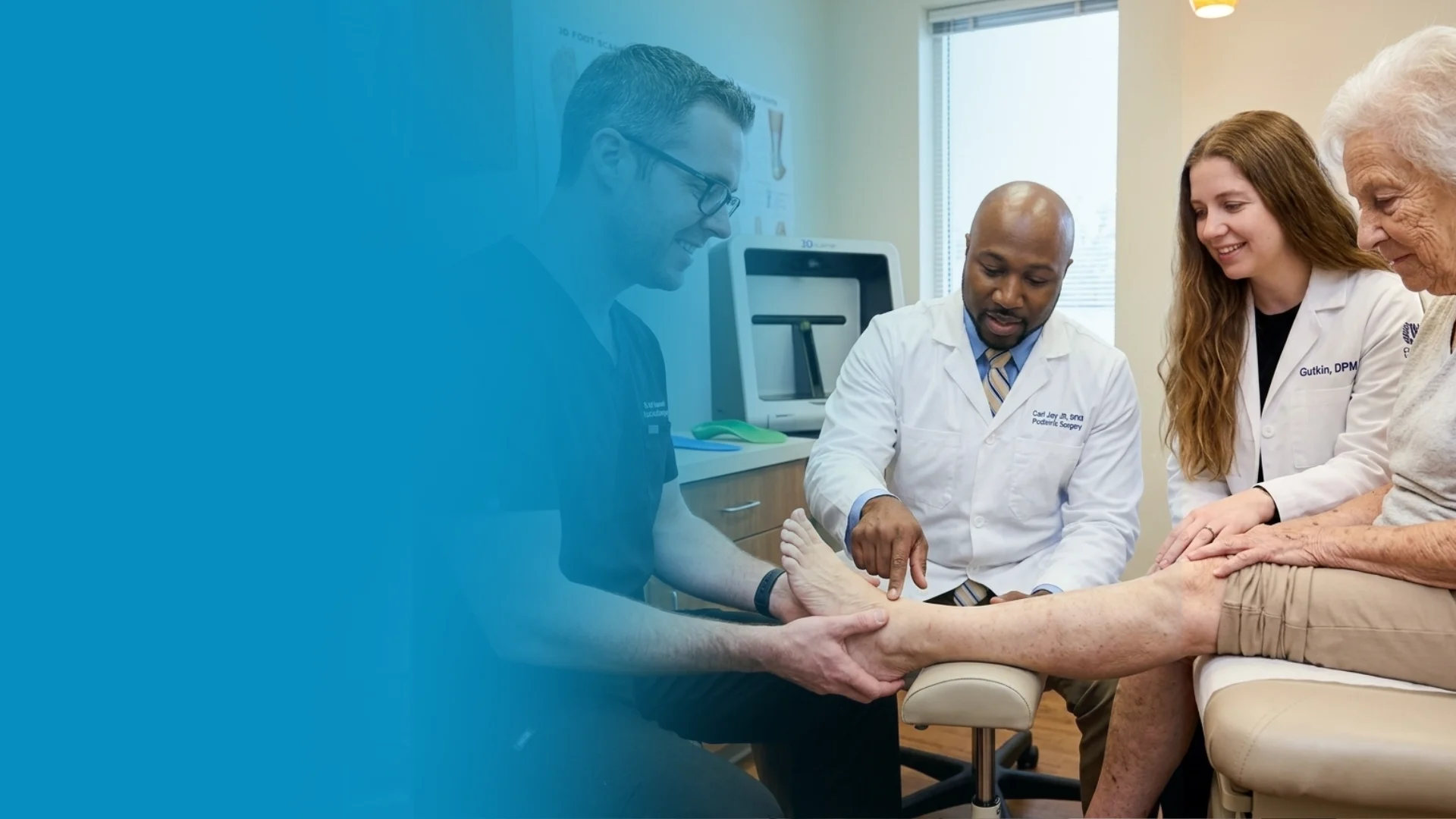
Dr. Carl Jay, DPM · Accepting new patients. Specializes in sports medicine, athletic injuries, and routine podiatric care.
Dr. Daria Gutkin, DPM, AACFAS · Accepting new patients. Specializes in surgical reconstruction and pediatric podiatry.
Locations: 4330 E Grand River Ave, Howell, MI 48843 · 43494 Woodward Ave Suite 208, Bloomfield Township, MI 48302
Hours: Mon–Fri 8:00 AM – 5:00 PM · (810) 206-1402
What is Foot pain?
Foot pain is a common foot/ankle condition that affects mobility and quality of life. Understanding the underlying cause is the first step in successful treatment. Our podiatrists at Balance Foot & Ankle perform a hands-on biomechanical exam, review your activity history, and use diagnostic imaging when appropriate to identify the root cause—not just treat the symptom. Many patients have been told to “rest and ice” without a deeper diagnostic workup; our approach is different.
Symptoms and warning signs
Common signs of foot pain include pain that worsens with activity, morning stiffness, swelling, tenderness when palpated, and difficulty bearing weight. If you experience sudden severe pain, inability to walk, visible deformity, numbness or color change, contact our office the same day or visit urgent care—these can signal a more serious injury such as a fracture, tendon rupture, or vascular compromise. Diabetics with any foot wound should seek same-day care.
Conservative treatment options
Most cases of foot pain respond to non-surgical care: structured rest, supportive footwear changes, custom orthotics, targeted stretching and strengthening protocols, anti-inflammatory medications when medically appropriate, and in-office procedures such as ultrasound-guided injections. We also offer advanced therapies including MLS laser therapy, EPAT/shockwave, regenerative injections, and image-guided procedures. Treatment is sequenced from least invasive to most invasive, and we explain the rationale at every step.
When is surgery considered?
Surgery is reserved for cases that fail 3-6 months of well-structured conservative care, when there is structural pathology (severe deformity, complete tear, advanced arthritis), or when imaging shows damage that will not heal without intervention. Our surgeons have performed 3,000+ foot and ankle procedures and prioritize minimally-invasive techniques whenever appropriate. We discuss recovery timelines, return-to-activity milestones, and realistic outcome expectations before any procedure is scheduled.
Recovery timeline and prevention
Recovery from foot pain varies based on severity and chosen treatment path. Conservative cases often improve within 4-8 weeks with consistent adherence to the protocol. Post-procedural recovery may range from a few days (in-office procedures) to several months (reconstructive surgery). Long-term prevention involves footwear assessment, activity modification, structured strengthening, and regular check-ins with your podiatrist if you have a history of recurrence. We provide written home-exercise plans and digital follow-up support.
Ready to feel better?
Same-week appointments available in Howell and Bloomfield Hills, Michigan.
Ready for Expert Care?
Same-day appointments in Howell & Bloomfield Hills, MI.
4.9★ | 1,123 Reviews | 3,000+ Surgeries
Or call: (810) 206-1402
