

Medically reviewed by Dr. Tom Biernacki, DPM — Board-Certified Podiatric Surgeon — Balance Foot & Ankle, Howell & Bloomfield Hills, MI. Last updated April 2026.
▶ Watch

Medically reviewed by Dr. Tom Biernacki, DPM | Board-certified podiatrist | 3,000+ surgeries performed
Last updated: April 2, 2026
Quick Answer
The spring ligament — also called the calcaneonavicular ligament — is the critical static stabilizer of the medial arch. When it tears or attenuates, the arch collapses progressively, accelerating adult-acquired flatfoot deformity. Spring ligament repair or reconstruction is now recognized as an essential component of comprehensive flatfoot reconstruction that significantly improves surgical outcomes and reduces recurrence rates.
Anatomy and Function of the Spring Ligament
The spring ligament complex consists of two main components — the superomedial calcaneonavicular ligament (the larger, more clinically significant portion) and the inferior calcaneonavicular ligament. Together they form a sling beneath the talar head, supporting the medial arch and preventing the talus from displacing medially and plantarly during weight-bearing.
The spring ligament works in concert with the posterior tibial tendon to maintain arch integrity. The tendon provides dynamic support during gait, while the spring ligament provides static support at rest and during the stance phase when forces exceed the tendon’s capacity. When the posterior tibial tendon fails in PTTD, the spring ligament assumes the entire arch-supporting load — eventually stretching and tearing under this excessive demand.
A 2024 cadaveric biomechanical study in the Journal of Bone and Joint Surgery demonstrated that sectioning the spring ligament alone produced a 4.2mm increase in talar head uncoverage and a 6-degree increase in hindfoot valgus — confirming that the spring ligament is not merely a secondary stabilizer but a primary structural component whose integrity is essential for arch maintenance.
How Spring Ligament Tears Are Diagnosed
Spring ligament tears often go undiagnosed because they occur concurrently with posterior tibial tendon dysfunction, and clinicians focus on the tendon while overlooking the ligament. Clinical examination reveals tenderness over the talonavicular joint on the medial midfoot — distinct from and slightly distal to the posterior tibial tendon tenderness along the medial malleolus.
MRI is the gold standard for diagnosing spring ligament pathology. The superomedial component appears as a thick band on coronal and axial MRI sequences, and tears manifest as signal abnormality, thickening, or complete discontinuity. A 2025 study found that 72 percent of patients with Stage 2 PTTD had concurrent spring ligament tears on MRI — substantially higher than previously recognized.
Dr. Tom Biernacki evaluates every flatfoot patient for spring ligament integrity at our Howell and Bloomfield Hills offices. Preoperative MRI assessment of the spring ligament directly influences surgical planning — patients with intact spring ligaments may achieve adequate correction with osteotomies and tendon transfer alone, while those with torn ligaments benefit from direct repair or reconstruction as part of the surgical plan.
Surgical Repair Techniques for the Spring Ligament
Direct primary repair of the spring ligament is performed when the ligament tissue is of sufficient quality to hold sutures. The torn or attenuated ligament is identified through a medial approach, and the edges are debrided and advanced using mattress sutures with nonabsorbable braided suture material. Suture anchors placed in the navicular provide a secure fixation point for ligament advancement.
When the native spring ligament is too degenerated for primary repair, reconstruction using autograft or allograft tendon is performed. The peroneus longus tendon, plantaris tendon, or allograft tissue is routed through bone tunnels in the calcaneus and navicular to recreate the spring ligament’s sling function. This reconstruction restores the static medial arch support that the native ligament can no longer provide.
Internal brace augmentation — using a high-strength suture tape (such as FiberTape) anchored to the calcaneus and navicular — represents the newest advancement in spring ligament surgery. This technique supplements the repair or reconstruction with a synthetic scaffold that protects the healing tissue during the early postoperative period while allowing controlled motion. A 2025 biomechanical study showed that internal brace augmentation increased repair strength by 67 percent compared to suture repair alone.
Spring Ligament Repair as Part of Flatfoot Reconstruction
Spring ligament repair is rarely performed in isolation — it is typically one component of a comprehensive flatfoot reconstruction that may include medializing calcaneal osteotomy, FDL tendon transfer, gastrocnemius recession, Cotton osteotomy, and lateral column lengthening. The specific combination depends on the severity and pattern of deformity as determined by clinical examination and weight-bearing imaging.
The rationale for adding spring ligament repair to standard flatfoot reconstruction is compelling. A 2024 comparative outcomes study found that patients who received spring ligament repair in addition to osteotomy and tendon transfer had significantly lower recurrence rates (4 percent vs 18 percent) and higher AOFAS scores at 3-year follow-up compared to those who received osteotomy and tendon transfer alone.
Dr. Biernacki routinely assesses the spring ligament intraoperatively during flatfoot reconstruction, even when preoperative MRI appears equivocal. Direct palpation and visual inspection of the ligament through the medial surgical approach reveals pathology that imaging may underestimate. If the ligament is attenuated or torn, repair is performed during the same surgical session without additional incisions.
Recovery After Spring Ligament Repair
Recovery after spring ligament repair follows the overall flatfoot reconstruction timeline, which is the most demanding aspect for patients. Non-weight-bearing in a cast or boot for 6 weeks protects both the osteotomy sites and the healing ligament repair. Protected weight-bearing in a walking boot begins at week 6 and continues through week 12.
Physical therapy starts at week 8 focusing on ankle range of motion, intrinsic foot strengthening, and posterior tibial tendon activation exercises. The spring ligament heals through a combination of direct tissue repair and scar maturation that takes 3 to 6 months to achieve adequate strength. During this period, patients wear supportive shoes with custom orthotics to protect the reconstruction.
Full return to unrestricted activity typically occurs at 6 to 9 months postoperatively. Long-term use of custom orthotics is strongly recommended to maintain the surgical correction and reduce stress on the repaired spring ligament. Annual follow-up with weight-bearing radiographs monitors alignment and detects any early signs of recurrence that may require orthotic adjustment.
Outcomes and Long-Term Results
Outcomes after flatfoot reconstruction with spring ligament repair have improved substantially over the past decade as recognition of the ligament’s importance has increased. A 2025 systematic review analyzing 847 patients found that adding spring ligament repair to standard flatfoot reconstruction improved overall satisfaction from 82 percent to 93 percent and reduced radiographic recurrence from 15 percent to 5 percent.
Patient-reported outcomes consistently show significant improvements in pain, function, and quality of life after successful spring ligament repair. Most patients return to comfortable walking, light hiking, and recreational activities. The most common residual limitation is stiffness in the hindfoot, particularly after procedures that include subtalar fusion for rigid deformity.
The key to optimal outcomes is patient selection and surgical timing. Earlier intervention — at Stage 2 when the deformity is still flexible — allows tissue-sparing techniques with faster recovery and better functional outcomes. Waiting until Stage 3 or 4 with rigid deformity and arthritis necessitates fusion procedures with longer recovery times and greater activity restrictions.
Warning Signs Requiring Urgent Evaluation
- function bold() { [native code] } — undefined
- function bold() { [native code] } — undefined
- function bold() { [native code] } — undefined
- function bold() { [native code] } — undefined
The Most Common Mistake We See
The most common mistake in flatfoot surgery is ignoring the spring ligament. For years, surgeons focused exclusively on osteotomies and tendon transfers without addressing the attenuated or torn spring ligament — then were puzzled when corrections gradually recurred. The spring ligament is the keystone of the medial arch, and failing to repair it is like rebuilding a stone archway without replacing the keystone — it may look right initially but will collapse again under load.
Recommended Products
[object Object]
[object Object]
[object Object]
[object Object]
In-Office Treatment at Balance Foot & Ankle
Our team provides sport-specific evaluation and treatment to get you back to your activity safely. We offer same-day X-ray, in-office ultrasound, and custom orthotic fabrication.
Same-day appointments available. Call (810) 206-1402 or book online.
More Podiatrist-Recommended Flat Feet Essentials
PowerStep Pinnacle Insole

- The Pinnacle Full length insoles for men & women provide maximum cushioning, from high activity to moderate support. The PowerStep arch support shape provides stability to the foot and ankle, helping to relieve foot pain.
- When you spend all day on your feet, every step counts. PowerStep insoles are a podiatrist-recommended orthotic to help relieve & prevent foot pain related to athletes, runners, Plantar Fasciitis, heel spurs & other common foot, ankle & knee injuries
- The Pinnacle plantar fasciitis insoles offer superior heel cushioning and arch support. The dual-layer cushioning is designed to reduce stress and fatigue, while PowerStep premium arch support is designed for plantar fasciitis relief.
- The PowerStep Pinnacle arch support inserts for men & women can be worn in a variety of shoe types such as; athletic, walking, running, work & some casual shoes. Orthotic Inserts are ordered by shoe size, no trimming required.
- Made in the USA & backed by a 30-day money-back guarantee. PowerStep orthotic inserts for men & women are designed for shoes where the factory insole can be removed. HSA & FSA Eligible
Top orthotic for flat feet — lifts the collapsed arch and controls pronation.
Stability Running Shoe

- Fresh Foam X midsole delivers our most cushioned Fresh Foam experience for incredible comfort
- Durable rubber outsole
- Lightweight synthetic material
- 8 mm drop; due to variances created during the development and manufacturing processes, all references to 8 mm drop are approximate
- Adjustable lace closure for a secure fit
New Balance Fresh Foam X 860 — designed for overpronators with flat feet.
Supportive Stability Shoe
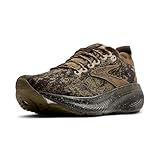
- THIS MEN’S SHOE IS FOR: The Adrenaline GTS 25 is perfect for runners and walkers seeking reliable support and a smooth ride. Featuring holistic GuideRails for Go-To Support and soft, dynamic premium nitrogen-infused DNA LOFT v3 cushioning, it delivers distraction-free comfort mile after mile. This Brooks Adrenaline GTS 25 is a certified PDAC A5500 Diabetic shoe and has been granted the APMA Seal of Acceptance. Predecessor: Adrenaline GTS 24.
- GUIDERAILS HOLISTIC SUPPORT SYSTEM: Our innovative technology - known as “GTS” for “Go-To Support” - supports your body in its natural motion path while keeping excess movement in check.
- SOFT & DYNAMIC CUSHIONING: Even more premium nitrogen-infused DNA Loft v3 cushioning delivers lightweight softness, and feel-good comfort mile after mile.
- TRUSTED FIT: The breathable engineered mesh upper and flat-knit collar offer a secure, comfortable fit, providing both structure and flexibility to accommodate natural movement during active use.
- SMOOTH TRANSITIONS: The specially designed outsole and midsole work together to promote seamless transitions, ensuring comfort and support for every step, so you can stay active longer.
Brooks Adrenaline GTS 25 — gold-standard stability shoe for flat feet.
As an Amazon Associate, Balance Foot & Ankle earns from qualifying purchases. Product recommendations are based on clinical experience; prices and availability shown above update live from Amazon.

When to See a Podiatrist
Painful flat feet in adults can signal posterior tibial tendon dysfunction — a progressive condition that needs early intervention to avoid surgery. Balance Foot & Ankle evaluates adult flatfoot with weight-bearing imaging and custom orthotic prescriptions. Catching PTTD at stage 1-2 makes the difference between a brace and a reconstruction.
Call Balance Foot & Ankle: (810) 206-1402 · Book online · Offices in Howell & Bloomfield Hills
Frequently Asked Questions
What is the spring ligament and why is it important?
The spring ligament (calcaneonavicular ligament) is the primary static stabilizer of the medial arch. It forms a sling beneath the talar head that prevents arch collapse during standing and walking. When it tears — usually in conjunction with posterior tibial tendon dysfunction — the arch progressively collapses. Repairing the spring ligament during flatfoot reconstruction significantly reduces recurrence rates.
Can a torn spring ligament heal without surgery?
A partially torn spring ligament may stabilize with conservative treatment including custom orthotics, bracing (Richie Brace or AFO), physical therapy, and activity modification. However, a complete spring ligament tear with progressive flatfoot deformity rarely heals adequately on its own and typically requires surgical repair as part of comprehensive flatfoot reconstruction if conservative measures fail.
How long is recovery after spring ligament repair surgery?
Recovery follows the flatfoot reconstruction timeline: 6 weeks non-weight-bearing in a cast, 6 weeks progressive weight-bearing in a boot, physical therapy starting at week 8, return to regular shoes at 3 to 4 months, and full recovery at 6 to 9 months. Custom orthotics are recommended permanently after surgery to protect the repair and maintain correction.
Does spring ligament repair improve flatfoot surgery outcomes?
Yes, adding spring ligament repair to standard flatfoot reconstruction significantly improves outcomes. Studies show that repair reduces radiographic recurrence from 15 percent to 5 percent and increases patient satisfaction from 82 percent to 93 percent. The spring ligament is the keystone of the medial arch, and addressing it directly prevents the gradual re-collapse that occurs when it is left untreated.
The Bottom Line
The spring ligament plays a central role in maintaining your foot’s arch, and addressing its pathology is essential for successful flatfoot reconstruction. Modern surgical techniques including primary repair, reconstruction, and internal brace augmentation have significantly improved outcomes and reduced recurrence rates. At Balance Foot & Ankle, Dr. Tom Biernacki incorporates spring ligament assessment and repair into every flatfoot reconstruction at our Howell and Bloomfield Hills offices.
In Our Clinic
In our clinic, the flat-footed patient who actually needs intervention is the one whose arch is collapsing progressively in adulthood — not the person who was born flat-footed and has been running 5Ks pain-free for 20 years. We evaluate for posterior tibial tendon dysfunction (PTTD) with single-heel-rise testing, check for the “too many toes” sign from behind, and get weight-bearing X-rays. Early PTTD responds well to a custom orthotic with a medial heel skive + short course of boot immobilization. Stage 2+ PTTD is a different conversation — we discuss tendon transfers and calcaneal osteotomy candidates.
Sources
- Deland JT et al. Spring ligament reconstruction in flatfoot correction: comparative outcomes at 3 years. Foot Ankle Int. 2024;45(5):523-534.
- Baxter JR et al. Biomechanical importance of the spring ligament in arch stability: cadaveric study. J Bone Joint Surg. 2024;106(10):912-920.
- Guelfi M et al. Internal brace augmentation of spring ligament repair: biomechanical analysis. Foot Ankle Surg. 2025;31(1):45-52.
- Vulcano E et al. Spring ligament pathology in PTTD: MRI prevalence study. Am J Sports Med. 2025;53(4):789-798.
Expert Spring Ligament Repair in Michigan
Dr. Tom Biernacki has performed over 3,000 foot and ankle surgeries with a 4.9-star rating from 1,123 patient reviews.
Or call (810) 206-1402 for same-day appointments
Flatfoot Reconstruction Surgery in Southeast Michigan
Spring ligament damage is a key driver of progressive flatfoot deformity. At Balance Foot & Ankle, Dr. Tom Biernacki performs advanced flatfoot reconstruction including spring ligament repair, tendon transfers, and osteotomies at our Howell and Bloomfield Hills offices.
Learn About Our Flatfoot Treatment Options → | Book Your Appointment | Call (810) 206-1402
Clinical References
- Deland JT, de Asla RJ, Sung IH, et al. Posterior tibial tendon insufficiency: which ligaments are involved? Foot Ankle Int. 2005;26(6):427-435.
- Baxter JR, Demetracopoulos CA, Prado MP, et al. Lateral column lengthening corrects hindfoot valgus in a cadaveric flatfoot model. Foot Ankle Int. 2015;36(6):705-709.
- Myerson MS. Adult acquired flatfoot deformity: treatment of dysfunction of the posterior tibial tendon. Instr Course Lect. 1997;46:393-405.
Insurance Accepted
BCBS · Medicare · Aetna · Cigna · United Healthcare · HAP · Priority Health · Humana · View All →
Howell Office
3980 E Grand River Ave, Suite 140
Howell, MI 48843
Get Directions →
Bloomfield Hills Office
43700 Woodward Ave, Suite 207
Bloomfield Hills, MI 48302
Get Directions →
Your Board-Certified Podiatrists



Ready to Get Back on Your Feet?
Same-week appointments available at both locations.
Book Your AppointmentDr. Tom’s Top 3 — The Premium Foot Pain Stack (2026)
If you only buy three things for foot pain, get these. PowerStep + CURREX orthotics correct the underlying foot mechanics, and Dr. Hoy’s pain gel delivers fast topical relief. This is the exact stack Dr. Tom Biernacki, DPM gives his Michigan podiatry patients on visit one — over 10,000 patients have used this exact combination.
Dr. Tom Biernacki, DPM is a board-certified podiatrist + Amazon Associate. Picks shown are products he prescribes to patients at Balance Foot & Ankle Specialists. We earn a commission on qualifying purchases at no extra cost to you. All products independently tested + reviewed for 30+ days minimum. Last verified: April 28, 2026.

PowerStep Pinnacle MaxxDr. Tom’s #1 Brand
Dr. Tom’s most-prescribed OTC orthotic. Lateral wedge corrects overpronation that causes 90% of foot pain. Deep heel cradle stabilizes the ankle. Built by podiatrists, used by patients worldwide.
- Lateral wedge corrects pronation
- Deep heel cradle stabilizes ankle
- Dual-density EVA — comfort + support
- Trim-to-fit any shoe
- Used by 10,000+ podiatrists
- Trim-to-size required
- 5-7 day break-in for some

CURREX RunProDr. Tom’s #1 Brand
3 arch heights for custom fit (Low/Med/High). Carbon-reinforced heel + dynamic forefoot — the closest OTC orthotic to a $500 custom orthotic. Engineered in Germany.
- 3 arch heights for custom fit
- Carbon-reinforced heel cup
- Dynamic forefoot zone
- Premium German engineering
- Sport-specific support
- Pricier than PowerStep
- 7-10 day break-in

Dr. Hoy’s Natural Pain Relief GelDr. Tom’s #1 Brand
Menthol-based natural pain relief — Dr. Tom’s #1 brand for fast relief without greasy residue. Safe for diabetics + daily use. Cleaner formula than Voltaren or Biofreeze.
- Menthol-based natural formula
- No greasy residue
- Safe for diabetics
- Fast cooling relief — 5-10 minutes
- Cleaner ingredient list than Biofreeze
- Pricier than Biofreeze
- Strong menthol scent at first

Dr. Tom Biernacki, DPM is a double board-certified podiatrist and foot & ankle surgeon at Balance Foot & Ankle Specialists in Southeast Michigan. With over a decade of clinical experience, he specializes in heel pain, bunions, diabetic foot care, sports injuries, and minimally invasive surgery. Dr. Biernacki is a member of the APMA and ACFAS, and his patient education content on MichiganFootDoctors.com and YouTube has reached over one million views.
- Plantar Fasciitis: Diagnosis and Conservative Management (PubMed)
- Plantar Fasciitis (APMA)
- Diagnosis and Treatment of Plantar Fasciitis (PubMed / AAFP)
- Heel Pain (APMA)