
Board-certified foot & ankle surgeon · 20+ years treating foot nerve disorders · Howell & Bloomfield Hills, MI
Last reviewed: May 2026
Quick answer
Tarsal tunnel syndrome is compression of the posterior tibial nerve as it passes through a fibrous tunnel BEHIND the inner ankle bone. The “carpal tunnel of the foot.” Symptoms: burning, tingling, numbness in the sole, often worse at night. 60-70% of cases respond to conservative care — custom orthotic with medial heel post, NSAIDs, neuromodulators (gabapentin/pregabalin), corticosteroid injection. Surgical decompression is reserved for cases that fail 3-6 months of conservative care AND have a clearly identified compressive lesion on MRI. The diagnosis is frequently missed because it mimics plantar fasciitis, neuropathy, and Morton’s neuroma.
What tarsal tunnel syndrome is
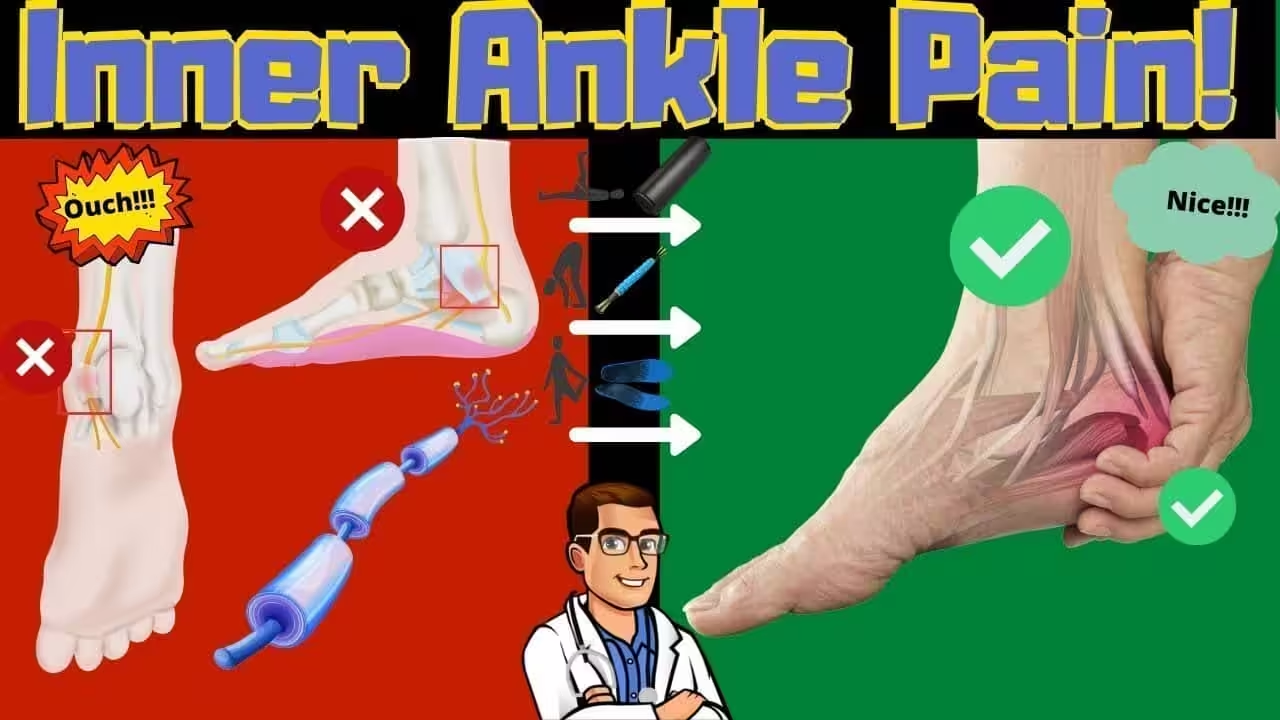
The tarsal tunnel is a fibrous canal behind the inner ankle bone (medial malleolus). The posterior tibial nerve passes through this tunnel along with tendons and blood vessels, then branches into nerves that supply sensation to the entire bottom of the foot.
When something compresses this nerve within the tunnel — a ganglion cyst, varicose vein, accessory muscle, swelling from PTTD, or chronic mechanical irritation — the result is nerve compression symptoms in the sole.
Common causes
- Idiopathic (no identifiable cause) — about 20-30% of cases
- Space-occupying lesions: ganglion cysts, lipomas, varicose veins, tenosynovitis
- Severe overpronation / flatfoot — chronic stretching of the nerve as it courses around a collapsed arch
- Trauma: ankle sprain, fracture with healing scar tissue
- Systemic conditions: diabetes, hypothyroidism, rheumatoid arthritis
- Excessive standing/walking on hard surfaces
Symptoms
- Burning, tingling, electric pain in the sole of the foot, heel, or arch
- Symptoms worse at night (similar to carpal tunnel)
- Worse with prolonged standing/walking, better with rest
- Symptoms relieved by elevation or removing shoes
- Numbness on the sole in established cases
- Tinel sign — tapping behind the inner ankle reproduces shooting pain into the sole
The night pain pattern of tarsal tunnel syndrome is the key distinguishing feature. Plantar fasciitis is worst with the first morning steps; tarsal tunnel is worst at night when supine. If your “plantar fasciitis” pain wakes you up or feels burning/electrical rather than aching, get evaluated for tarsal tunnel.
Diagnosis
- Clinical exam + Tinel sign
- Detailed history of symptom timing and triggers
- MRI — looks for compressive lesion (ganglion, lipoma, varicosity) in the tunnel
- Nerve conduction studies / EMG — confirms nerve compression and helps differentiate from peripheral neuropathy
- Differential diagnosis check: rule out peripheral neuropathy, lumbar radiculopathy, plantar fasciitis, Morton’s neuroma
Treatment
Conservative care (try first for 3-6 months)
- Custom orthotic with medial heel post — reduces dynamic stretching of the nerve
- Activity modification — reduce prolonged standing/walking
- NSAIDs short course for inflammation
- Topical lidocaine patches for nighttime symptom relief
- Neuromodulator medications: gabapentin 300-1200mg/day or pregabalin (Lyrica) 75-300mg/day
- Targeted corticosteroid injection under ultrasound guidance — can be very effective for inflammatory tarsal tunnel
- Physical therapy — nerve gliding exercises, eccentric calf work, arch strengthening
Surgical decompression — when conservative fails
- Tarsal tunnel release — surgical incision and division of the flexor retinaculum to decompress the nerve
- Done as outpatient procedure
- Recovery: 6 weeks limited weight-bearing + 6 weeks rehab
- Success rate when proper compressive lesion identified: 70-85%
- Lower success in idiopathic cases (50-60%)
- Surgical revision rare but possible
When to see a podiatrist
- Burning or electric pain on the sole of the foot, especially at night
- Tinel sign positive on examination behind the inner ankle
- Symptoms not responding to plantar fasciitis treatment
- Recent ankle injury followed by new burning foot pain
- Multiple foot pain pattern unresponsive to standard care
Burning sole pain at night? Get the right diagnosis
Tarsal tunnel syndrome is frequently misdiagnosed as plantar fasciitis. Different treatment, different outcome. Get a proper exam + MRI if indicated.
Bottom line
Tarsal tunnel syndrome is the underdiagnosed cause of “plantar fasciitis that won’t get better.” If your foot pain burns, tingles, wakes you at night, or follows a different pattern than typical plantar fasciitis, get evaluated for tarsal tunnel. Most cases respond to conservative care; some need surgical decompression. Get the diagnosis right first.
— Dr. Tom Biernacki, DPM, FACFAS

Dr. Tom Biernacki, DPM is a board-certified foot & ankle surgeon (ABFAS & ABPM) at Balance Foot & Ankle Specialists in Southeast Michigan. With over a decade of clinical experience, he specializes in heel pain, bunions, diabetic foot care, sports injuries, and minimally invasive surgery. Dr. Biernacki is a member of the APMA and ACFAS, and his patient education content on MichiganFootDoctors.com and YouTube has made him one of the most-followed foot & ankle educators on YouTube.