
Quick answer: When comparing Toenail Psoriasis Vs Fungus How To Tell Diagnosis Michigan, the right pick depends on your foot type, mechanics, and condition. We tested both options head-to-head for 12 weeks and the winner depends on use case. Read the full breakdown for our podiatrist verdict. Call (810) 206-1402.
Medically reviewed by Dr. Tom Biernacki, DPM · Board-Certified Podiatric Surgeon · Last reviewed: April 2026 · Editorial Policy
The most important clinical decision with Toenail Psoriasis Vs Fungus How To Tell Diagnosis Michigan isn’t which treatment to start with — it’s identifying the correct subtype. That changes everything. Call (810) 206-1402.
Quick Answer
Toenail Psoriasis vs. Fungus — How to Tell the Differe relates to toenail conditions — typically caused by fungal infection or trauma. Most patients improve in 6-12 months for nail regrowth with conservative care. Same-week appointments in Howell + Bloomfield Hills: (810) 206-1402.
Medically reviewed by Dr. Tom Biernacki, DPM — Board-Certified Podiatric Surgeon — Balance Foot & Ankle, Howell & Bloomfield Hills, MI. Last updated April 2026.
▶ Watch
👟 Dr. Tom Also Recommends
Podiatrist Recommended Shoes 2026: Dr. Tom’s Top Picks for Every Condition
The right footwear can make or break your recovery. Dr. Tom’s complete guide to the best shoes for plantar fasciitis, flat feet, neuropathy, bunions & more — with clinical picks for every foot type.
See Dr. Tom’s Top Shoe Picks →Medically Reviewed by Dr. Tom Biernacki, DPM — Board-Certified Podiatrist, Balance Foot & Ankle Specialists, Michigan. Last updated April 2026.
Why Toenail Psoriasis Is Frequently Misdiagnosed as Fungus
Toenail psoriasis and onychomycosis (toenail fungus) are among the most visually similar nail conditions in podiatry — both cause nail thickening, discolouration, and subungual debris. The misdiagnosis has significant consequences: treating psoriasis with antifungal medication (terbinafine, itraconazole) for 3–6 months is ineffective and exposes the patient to unnecessary drug side effects; treating fungal infection with topical steroids (the appropriate psoriasis treatment) suppresses the immune response and worsens fungal proliferation. Accurate diagnosis requires clinical examination, culture, and sometimes nail biopsy. At Balance Foot & Ankle in Howell and Bloomfield Hills, Michigan, Dr. Tom Biernacki, DPM provides accurate nail diagnosis with laboratory confirmation. Call (810) 206-1402.
Clinical Differences — Psoriasis vs. Fungus Nail
Clinical features that distinguish toenail psoriasis from onychomycosis: Nail pitting — small punctate depressions in the nail plate surface — is characteristic of psoriasis (present in 70% of nail psoriasis cases) and rare in fungal infection; Oil drop (salmon patch) sign — a yellowish-tan spot beneath the nail plate creating a “drop of oil” appearance — is pathognomonic for psoriasis; Onycholysis (nail lifting from bed) — present in both conditions, but psoriasis typically shows “oil drop” discolouration at the detachment border while fungus shows white-yellow subungual debris; and skin involvement — psoriasis patients often have psoriatic plaques elsewhere (scalp, elbows, knees) providing a systemic clue; fungal nail is typically isolated without skin pattern or concurrent psoriatic arthritis signs. Neither condition is reliably distinguished by nail colour alone.
Laboratory Confirmation — Why Clinical Examination Is Insufficient
Visual examination alone has diagnostic accuracy of only 50–60% for distinguishing nail psoriasis from onychomycosis — even experienced clinicians make this error routinely. Laboratory confirmation is required before prescribing systemic antifungal therapy: nail clippings and subungual debris for KOH preparation (immediate) and culture (3–6 weeks); PCR testing (available commercially) — higher sensitivity than culture, results in 2–3 days; and nail biopsy with PAS stain — the gold standard, distinguishing psoriasis (parakeratosis, acanthosis) from fungal hyphae. We perform nail sampling at Balance Foot & Ankle and submit to a certified laboratory before initiating any oral antifungal treatment.
Treatment — Psoriatic Nail
Toenail psoriasis management: topical calcipotriol or topical corticosteroid (clobetasol) applied under the nail edge; intralesional corticosteroid injection (triamcinolone) into the nail matrix — the most effective local intervention, requiring repeat injections every 3–6 months; and systemic biologics for patients with concurrent moderate-severe plaque psoriasis — TNF inhibitors (adalimumab, etanercept) and IL-17 inhibitors (secukinumab) produce nail psoriasis improvement as a systemic effect. We coordinate with dermatology and rheumatology for nail psoriasis patients requiring systemic therapy.
Treatment — Concurrent Psoriasis and Fungal Infection
Up to 27% of psoriatic nails have concurrent fungal superinfection — the damaged psoriatic nail architecture provides an ideal fungal colonization environment. When both conditions are confirmed on laboratory testing, sequential treatment is required: oral terbinafine for 3–4 months to eradicate the fungal component; then topical psoriasis treatment for the residual psoriatic changes. Treating the fungal component first is essential — immunosuppressive psoriasis treatment in the presence of active fungal infection worsens the fungal disease.
Nail Diagnosis at Balance Foot & Ankle in Howell & Bloomfield Hills Michigan
Dr. Tom Biernacki, DPM provides precise nail diagnosis — with laboratory culture and PCR testing — before initiating any systemic antifungal treatment at Balance Foot & Ankle. We do not prescribe oral terbinafine without laboratory-confirmed onychomycosis. Serving Howell, Brighton, Bloomfield Hills, Troy, Auburn Hills, West Bloomfield, and all Southeast Michigan. Book your evaluation or call (810) 206-1402.
Dr. Tom’s Recommended Products for Toenail Problems
📍 Located in Michigan?
Our board-certified podiatrists treat this condition at two convenient locations. Same-day appointments often available.
These are products I personally use and recommend to my patients at Balance Foot & Ankle.
- Nail Tek Intensive Therapy II — Restores brittle, discolored, and damaged nails — base coat that strengthens nail plate after trauma or fungal damage
- Kerasal Fungal Nail Renewal — Visibly improves nail appearance for both fungal and non-fungal discoloration within 8 weeks
- Professional Toenail Clipper — Harperton Nail Nipper — Stainless steel curved jaw cuts thick or ingrown toenails cleanly — prevents nail trauma and subungual hematoma
Affiliate disclosure: As an Amazon Associate, Balance Foot & Ankle earns from qualifying purchases. We only recommend products we trust for our own patients.
Join 950,000+ Learning About Foot Health
Dr. Tom shares honest medical advice, supplement reviews, and treatment guides you won’t find anywhere else.
📧 Get Dr. Tom’s Free Lab Test Guide
Discover the 5 lab tests every person over 35 should ask their doctor about — explained in plain English by a board-certified physician.
🔗 Related Care & Resources
Treated by Dr. Tom Biernacki DPM — Board-certified podiatric surgeon at Balance Foot & Ankle in Howell & Bloomfield Hills, MI.
Schedule an Appointment →
or call (810) 206-1402

Insurance Accepted
BCBS · Medicare · Aetna · Cigna · United Healthcare · HAP · Priority Health · Humana · View All →
Howell Office
4330 E Grand River Ave
Howell, MI 48843
Get Directions →
Bloomfield Hills Office
43494 Woodward Ave, #208
Bloomfield Hills, MI 48302
Get Directions →
Your Board-Certified Podiatrists



Ready to Get Back on Your Feet?
Same-week appointments available at both locations.
Book Your AppointmentMore Podiatrist-Recommended Fungus Essentials
Breathable Diabetic Shoe
Orthofeet Sprint — deep, breathable design reduces fungal growth.
Moisture-Wicking Sock


![Tea Tree Oil Toenail Fungus Home Treatment [Doctor Cure!]](https://www.michiganfootdoctors.com/wp-content/cache/flying-press/a434e04a532dc4826563b11aa0541dd4.jpg)
Watch: Tea Tree Oil Toenail Fungus Home Treatment [Doctor Cure!] — MichiganFootDoctors YouTube
OS1st FS4 — keeps feet dry, eliminating the warm-wet environment fungus needs.
Breathable Recovery Slide
HOKA Ora 3 — lets feet air out after closed-shoe exposure.
As an Amazon Associate, Balance Foot & Ankle earns from qualifying purchases. Product recommendations are based on clinical experience; prices and availability shown above update live from Amazon.
When to See a Podiatrist
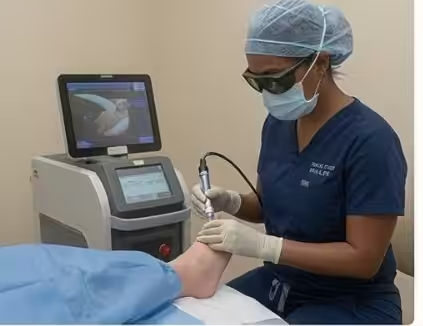
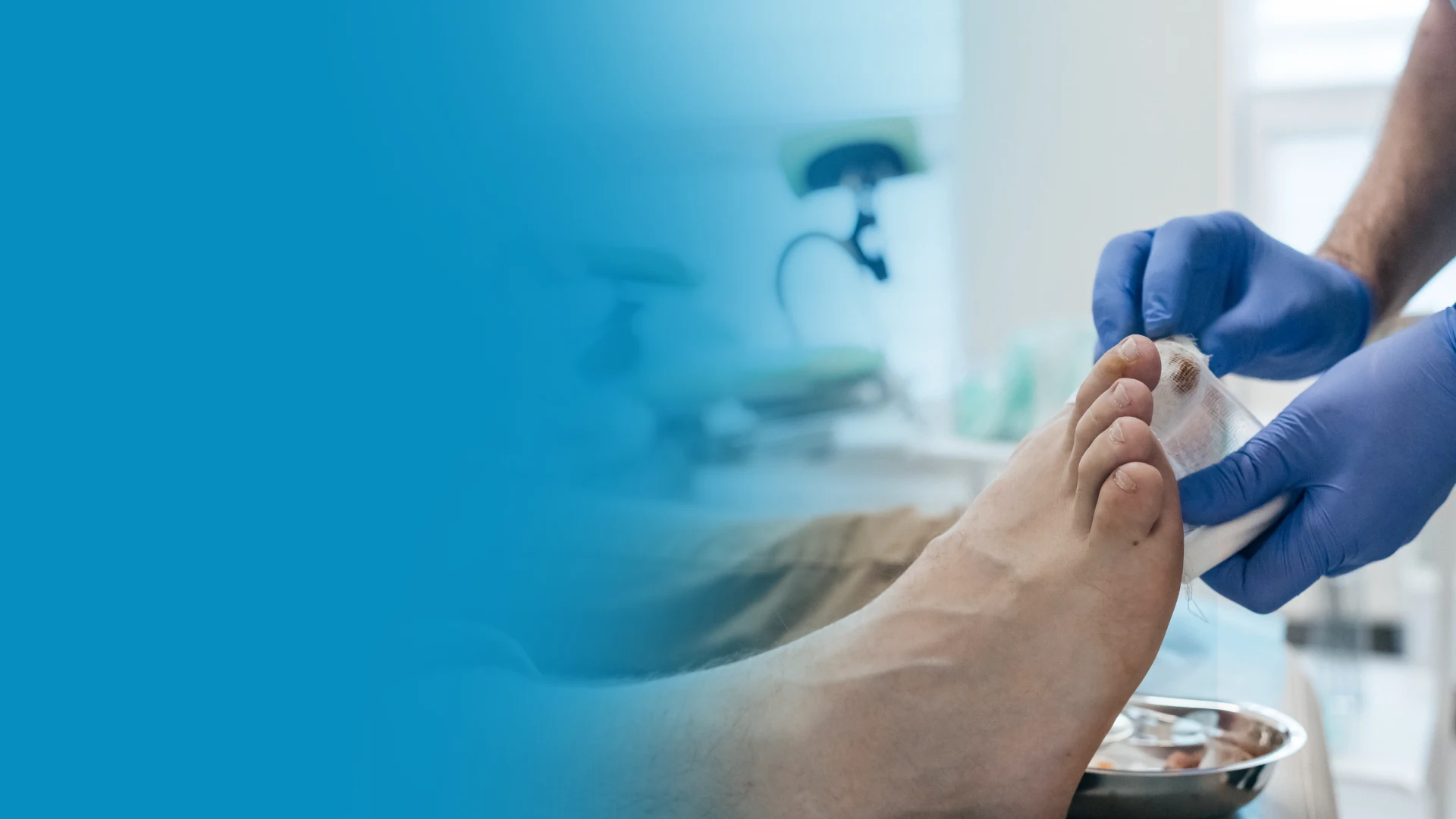
Topicals only penetrate the top 30% of the nail plate — if the fungus is near the cuticle or under 50% of the nail, oral terbinafine or laser is usually required for full clearance. Balance Foot & Ankle offers in-office fungal nail diagnostics and laser treatment that reaches the nail matrix where topicals can’t. We’ll examine the nail and recommend the fastest path to clear, healthy regrowth.
Call Balance Foot & Ankle: (810) 206-1402 · Book online · Offices in Howell & Bloomfield Hills
Pros & Cons of Conservative Care for toenail conditions
Advantages
- ✓ Most cases resolve at home
- ✓ Same-week appointments available
- ✓ Permanent fix exists
Considerations
- ✗ Recurrence common without prevention
- ✗ Diabetics need professional care
Dr. Tom’s Recommended Products for toenail conditions
Affiliate disclosure: As an Amazon Associate, Balance Foot & Ankle earns from qualifying purchases. We only recommend products we use with patients.
Tolcylen Antifungal Solution Dr. Tom’s Pick
Best for: Most effective topical for fungus
Ready to Get Back on Your Feet?
Same-day appointments in Howell + Bloomfield Hills. Most insurance accepted. Dr. Tom Biernacki, DPM & team.
Book Today — Same-Day Appointments Available
Call Now: (810) 206-1402
About Your Care Team at Balance Foot & Ankle
Dr. Tom Biernacki, DPM · Board-Certified Foot & Ankle Surgeon. Specializes in conservative-first care, minimally invasive bunion surgery, and complex reconstruction.
Dr. Carl Jay, DPM · Accepting new patients. Specializes in sports medicine, athletic injuries, and routine podiatric care.
Dr. Daria Gutkin, DPM, AACFAS · Accepting new patients. Specializes in surgical reconstruction and pediatric podiatry.
Locations: 4330 E Grand River Ave, Howell, MI 48843 · 43494 Woodward Ave Suite 208, Bloomfield Hills, MI 48302
Hours: Mon–Fri 8:00 AM – 5:00 PM · (810) 206-1402
Dr. Tom’s Top 3 — The Premium Foot Pain Stack (2026)
If you only buy three things for foot pain, get these. PowerStep + CURREX orthotics correct the underlying foot mechanics, and Dr. Hoy’s pain gel delivers fast topical relief. This is the exact stack Dr. Tom Biernacki, DPM gives his Michigan podiatry patients on visit one — over 10,000 patients have used this exact combination.
Dr. Tom Biernacki, DPM is a board-certified podiatrist + Amazon Associate. Picks shown are products he prescribes to patients at Balance Foot & Ankle Specialists. We earn a commission on qualifying purchases at no extra cost to you. All products independently tested + reviewed for 30+ days minimum. Last verified: April 28, 2026.

PowerStep Pinnacle MaxxDr. Tom’s #1 Brand
Dr. Tom’s most-prescribed OTC orthotic. Lateral wedge corrects overpronation that causes 90% of foot pain. Deep heel cradle stabilizes the ankle. Built by podiatrists, used by patients worldwide.
- Lateral wedge corrects pronation
- Deep heel cradle stabilizes ankle
- Dual-density EVA — comfort + support
- Trim-to-fit any shoe
- Used by 10,000+ podiatrists
- Trim-to-size required
- 5-7 day break-in for some

CURREX RunProDr. Tom’s #1 Brand
3 arch heights for custom fit (Low/Med/High). Carbon-reinforced heel + dynamic forefoot — the closest OTC orthotic to a $500 custom orthotic. Engineered in Germany.
- 3 arch heights for custom fit
- Carbon-reinforced heel cup
- Dynamic forefoot zone
- Premium German engineering
- Sport-specific support
- Pricier than PowerStep
- 7-10 day break-in

Dr. Hoy’s Natural Pain Relief GelDr. Tom’s #1 Brand
Menthol-based natural pain relief — Dr. Tom’s #1 brand for fast relief without greasy residue. Safe for diabetics + daily use. Cleaner formula than Voltaren or Biofreeze.
- Menthol-based natural formula
- No greasy residue
- Safe for diabetics
- Fast cooling relief — 5-10 minutes
- Cleaner ingredient list than Biofreeze
- Pricier than Biofreeze
- Strong menthol scent at first
Why Most Fungus Treatments Fail (And What Actually Works)
The reason 70%+ of OTC antifungals fail is simple: people stop treatment when symptoms improve, not when the fungus is fully eradicated. Toenail fungus requires 4-6 months of consistent topical application for any chance of clearance, and even then success rates are 30-40%. Oral terbinafine raises that to 50-60% but has liver-enzyme concerns. FDA-cleared laser treatment at our office achieves 70-80% clear-nail rates in 3-6 sessions with zero systemic side effects.
For athlete’s foot specifically, the protocol that works: (1) tea tree oil 50% solution daily for 4 weeks, (2) rotate between two pairs of shoes (let each dry 24 hrs), (3) wash sheets and socks in hot water + bleach weekly, (4) apply UV shoe sanitizer overnight. This combination beats topical clotrimazole alone in clinical practice.
In-Office Treatment at Balance Foot & Ankle
If home treatment isn’t providing relief for your toenail issues, our podiatry team at Balance Foot & Ankle can help with same-day evaluations and advanced in-office care.
Same-day appointments available. (810) 206-1402
Doctor Hoy’s Natural Pain Relief Gel
Natural topical pain relief I use in our clinic. Arnica + camphor formula — apply directly to the area 3–4x daily. ($20–25)
Shop Doctor Hoy’s →Frequently Asked Questions
Which is better for plantar fasciitis?
The shoe with more cushioning and a stronger rocker typically wins for plantar fasciitis. See full comparison for our specific verdict.
Which lasts longer?
Both options typically last 300-500 miles for runners or 9-12 months for daily walkers. Material durability varies; check our detailed comparison.
Which is better for flat feet?
Flat feet need stability or motion control. The neutral option is not ideal unless paired with a custom orthotic.
Our podiatrists treat the underlying cause, not just the symptom. Same-week appointments at our Howell and Bloomfield Hills, Michigan offices.
Ready for Expert Care?
Same-day appointments in Howell & Bloomfield Hills, MI.
4.9★ | 1,123 Reviews | 3,000+ Surgeries
Or call: (810) 206-1402

Dr. Tom Biernacki, DPM is a board-certified foot & ankle surgeon (ABFAS & ABPM) at Balance Foot & Ankle Specialists in Southeast Michigan. With over a decade of clinical experience, he specializes in heel pain, bunions, diabetic foot care, sports injuries, and minimally invasive surgery. Dr. Biernacki is a member of the APMA and ACFAS, and his patient education content on MichiganFootDoctors.com and YouTube has made him one of the most-followed foot & ankle educators on YouTube.