

Medically reviewed by Dr. Daria Gutkin, DPM
Board-Certified Podiatrist · Balance Foot & Ankle
Last reviewed: April 2026
Quick Answer: Why Are Your Toes Crossing Over?
Toes crossing over each other is almost always caused by a combination of bunion deformity (the big toe drifting toward the second toe) and hammertoe (the second toe contracting and riding over or under the big toe). Years of tight shoes, genetic foot mechanics, and progressive ligament weakening push these deformities until the toes overlap. Conservative treatment with toe spacers, proper shoes, and strengthening exercises can slow progression and reduce pain — but once the crossover is rigid, surgery is the only way to realign the toes permanently.
Table of Contents
- Why Do Toes Cross Over Each Other?
- The Bunion-Crossover Connection
- Types of Crossover Toe Deformity
- Symptoms and Progression
- Conservative Treatment Options
- Best Products for Crossover Toes
- Exercises to Strengthen Toe Alignment
- When Surgery Is Needed
- Warning Signs — When to See a Podiatrist
- Frequently Asked Questions
- The Bottom Line
You’ve noticed your second toe riding on top of — or underneath — your big toe. Maybe it started subtly years ago, and now the overlap is obvious. Your shoes don’t fit right, the crossed toes rub and develop corns, and you’re embarrassed to wear sandals. You’re wondering if this is going to keep getting worse, and what you can actually do about it.
Crossover toes are one of the most common progressive foot deformities we treat at Balance Foot & Ankle. The good news: caught early, we can slow or halt the progression with conservative measures. The reality: once the crossover becomes fixed, only surgical correction can realign the toes. Below, we’ll explain exactly what’s happening, why, and your treatment options at every stage.
Why Do Toes Cross Over Each Other?
Toe crossover doesn’t happen overnight — it’s the end result of a slow biomechanical chain reaction that typically takes years. Here’s the sequence we see most often in our clinic:
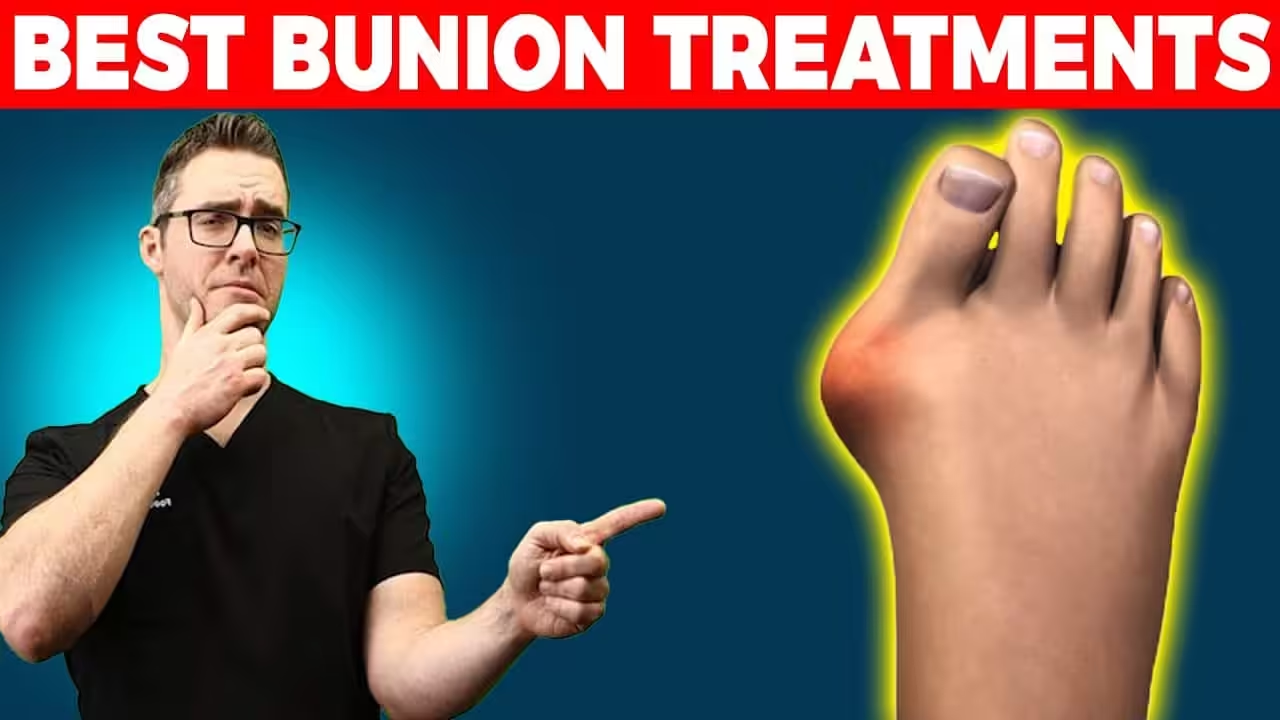
Stage 1: A bunion develops. The big toe (hallux) begins drifting toward the second toe due to genetics, tight shoes, or abnormal foot mechanics. The metatarsal bone behind the big toe angles outward, creating the bony bump on the inner side of the foot. As the big toe moves laterally, it crowds the second toe.
Stage 2: The second toe buckles. With nowhere to go, the second toe either rides up (dorsal crossover) or gets pushed under (plantar crossover) the big toe. The joint capsule and plantar plate ligament at the base of the second toe stretch and weaken from the constant pressure. The second toe develops a hammertoe contracture — the middle joint bends upward.
Stage 3: The crossover becomes fixed. Over months to years, the soft tissues around the second toe joint adapt to the new position. The contracted tendons shorten, the joint capsule scars, and the crossover position becomes rigid — the toe can no longer be straightened manually. At this point, the deformity is structural rather than flexible.
The Bunion-Crossover Connection
In our practice, over 80% of patients with crossover toes also have a bunion. This isn’t coincidental — the bunion is almost always the driving force behind the crossover. As the big toe angles toward the second toe (hallux valgus), it creates a mechanical “push” that forces the second toe out of alignment.
This is why treating crossover toes without addressing the underlying bunion often fails. If you correct the second toe position but the bunion is still pushing it out of place, the crossover will recur. The most effective treatment plans address both deformities simultaneously.
Less commonly, crossover toes occur without a bunion. This pattern is typically caused by a long second metatarsal bone (which creates excess pressure at the second toe joint), rheumatoid arthritis (which destroys the joint capsule), or severe plantar plate insufficiency from repetitive overuse.
Types of Crossover Toe Deformity
| Type | Description | Most Common Pattern |
|---|---|---|
| Dorsal crossover | Second toe rides over the top of the big toe | Most common; big toe pushes second toe upward |
| Plantar crossover | Second toe goes under the big toe | Less common; often from plantar plate tear |
| Medial deviation | Second toe angles toward the big toe without riding over | Early stage; may progress to full crossover |
| Third/fourth toe crossover | Lateral toes overlapping each other | Less common; usually from hammertoe progression |
| Fifth toe crossover | Small toe riding over or under the fourth toe | Often congenital (present from birth); “overlapping fifth toe” |
Symptoms and Progression
Crossover toes cause problems beyond cosmetic appearance. The symptoms typically worsen as the deformity progresses:
Pain at the base of the second toe (metatarsalgia): As the plantar plate weakens and the joint destabilizes, the ball of the foot beneath the second toe becomes painful with walking and standing. This is often the first symptom patients notice — pain under the foot, not at the toes themselves.
Corns and calluses: The crossed toe rubs against the adjacent toe and against the top of the shoe. Hard corns develop on the top of the hammertoe (where it contacts the shoe) and between the toes (where they overlap). These friction points are painful and become chronic sources of irritation.
Difficulty with footwear: As the crossover progresses, finding shoes that accommodate the deformity becomes increasingly difficult. The elevated second toe hits the top of the shoe box, and the bunion bump makes the foot wider. Standard shoes become painful.
Balance issues: The big toe is critical for push-off during walking. When it’s deviated sideways and the second toe is crossed over, the normal gait mechanics are disrupted. Patients may notice they feel less stable, especially on uneven surfaces.
Conservative Treatment Options
Conservative treatment works best when the crossover is still flexible (you can manually straighten the toe). Once the crossover is rigid, conservative treatment manages symptoms but can’t correct the deformity. Here’s the protocol we recommend:
Toe spacers and splints: Silicone toe spacers placed between the big toe and second toe create separation that counteracts the bunion’s lateral push. Worn inside shoes during the day and at night with a toe splint, they maintain alignment and slow progression. This is the single most effective conservative measure for early-stage crossover toes.
Wide toe box shoes: Switching to shoes with a generous toe box is essential. Any shoe that compresses the toes together accelerates the crossover. The toe box should be wide enough that your toes can spread naturally without touching the sides.
Custom orthotics: A custom orthotic with a metatarsal pad positioned behind the second metatarsal head offloads pressure from the second toe joint and supports the transverse arch. This reduces pain at the ball of the foot and can slow the progressive weakening of the plantar plate.
Taping: Buddy taping the second toe to the third toe (or to the big toe, depending on the crossover direction) holds the second toe in alignment. This is a temporary measure but provides immediate symptom relief and can be used during physical activity.
Padding: Gel corn pads between the overlapping toes reduce friction and prevent corn formation. Moleskin over the top of the hammertoe protects it from shoe pressure.
Best Products for Crossover Toes
🏆 #1 Pick: Correct Toes Toe Spacers
Best for: Realigning crossover toes and slowing bunion progression
Why we recommend it: Correct Toes are the only medical-grade toe spacers designed to be worn inside shoes during daily activities. They gently separate the big toe from the second toe, counteracting the lateral drift that causes crossover. Unlike one-size silicone separators, Correct Toes come in multiple sizes for a proper fit. We recommend them as the cornerstone of conservative crossover toe treatment — wear them inside wide shoes all day for maximum realignment benefit.
Altra Paradigm (Zero-Drop Wide Toe Box)
Best for: Daily shoe that accommodates crossover toes and toe spacers
Why we recommend it: The Altra Paradigm has the widest toe box available in a supportive athletic shoe, with a foot-shaped design that lets toes spread naturally. The zero-drop platform promotes natural toe splay and strengthens the intrinsic foot muscles that stabilize toe alignment. This is the ideal shoe for wearing with Correct Toes spacers — the toe box is wide enough to accommodate both your feet and the spacers without compression.
PowerStep Orthotic Insoles
Best for: Reducing pressure at the ball of the foot under crossed toes
Why we recommend it: PowerStep insoles provide structured arch support and a built-in metatarsal platform that offloads the second metatarsal head — the primary pain point in crossover toe deformity. They redistribute pressure away from the destabilized second toe joint, reducing the daily stress that accelerates deformity progression. Drop them into your wide toe box shoes alongside your toe spacers for the most comprehensive conservative treatment.
Metatarsal Pads
Best for: Targeted ball-of-foot pain relief from crossover toe metatarsalgia
Why we recommend it: Adhesive metatarsal pads placed just behind the second and third metatarsal heads lift and spread the metatarsals, reducing direct pressure on the ball of the foot. They’re a simple, inexpensive add-on to your orthotics for targeted pain relief. Position them behind (not under) the painful area — the goal is to offload the metatarsal heads, not cushion them.
Disclosure: Some links above are affiliate links. We only recommend products we use in our practice or have vetted for our patients. Affiliate commissions help support our free educational content. Your price is not affected.
Exercises to Strengthen Toe Alignment
Strengthening the intrinsic muscles of the foot helps stabilize the toes and can slow crossover progression. Do these exercises daily:
Towel scrunches: Place a thin towel flat on the floor. Using only your toes, scrunch the towel toward you. Repeat 10 times per foot. This strengthens the flexor muscles that stabilize the metatarsophalangeal joints — the same joints that destabilize in crossover toe deformity.
Marble pickups: Place 10–15 marbles on the floor. Pick up each marble individually with your toes and place it in a cup. This targets the intrinsic muscles that control fine toe movements and lateral stability.
Toe yoga (big toe isolation): While standing, try to lift only your big toe while keeping the other four toes on the ground. Then reverse: press the big toe down while lifting the other four. This trains independent toe control and strengthens the abductor hallucis — the muscle that pulls the big toe away from the second toe, directly counteracting the bunion drift.
Resistance band abduction: Loop a small resistance band around both big toes. Spread your feet apart against the band’s resistance, holding for 5 seconds. Repeat 15 times. This specifically strengthens the muscles that oppose the lateral drift of the big toe.
When Surgery Is Needed
Surgery becomes the appropriate option when the crossover is rigid (you can’t manually straighten the toe), pain interferes with daily activities despite conservative treatment, or the deformity is progressing despite spacers and proper shoes.
What surgery involves: For crossover toes driven by a bunion, we typically correct both deformities in one procedure. A bunionectomy realigns the big toe, and a hammertoe correction addresses the second toe crossover — often through a small joint arthroplasty or fusion, combined with plantar plate repair to stabilize the second toe joint. The surgery is performed under local anesthesia with sedation, and most patients are weight-bearing in a surgical shoe within 24 hours.
Recovery: Expect 4–6 weeks in a surgical shoe, followed by a transition to supportive athletic shoes. Full recovery with return to all activities takes approximately 3–4 months. The results are long-lasting — properly corrected crossover toes rarely recur if the patient transitions to appropriate footwear.
Warning Signs — When to See a Podiatrist
⚠️ Schedule an Evaluation If:
- The crossover has progressed noticeably in the past 6 months — accelerating deformity progression suggests the stabilizing structures are failing rapidly.
- Pain at the ball of the foot is limiting your walking or exercise — persistent metatarsalgia indicates plantar plate damage that may benefit from early intervention.
- You can no longer straighten the crossed toe by hand — a rigid crossover won’t respond to conservative treatment and may require surgical correction.
- Open sores or skin breakdown between the overlapping toes — especially concerning in diabetic patients; friction wounds between toes can lead to infection.
- The deformity is affecting your balance or gait pattern — altered biomechanics from crossover toes can cause compensatory knee, hip, or back problems.
Frequently Asked Questions
Can crossover toes be fixed without surgery?
If the crossover is still flexible (you can manually straighten the toe), conservative treatment with toe spacers, wide shoes, and exercises can slow or halt progression and manage symptoms effectively. Once the crossover becomes rigid, surgery is the only way to permanently realign the toes. Early intervention is key — the sooner you start conservative treatment, the better the chance of avoiding surgery.
Why does the second toe cross over the big toe?
In most cases, a bunion (hallux valgus) pushes the big toe laterally into the second toe, forcing the second toe to buckle upward and cross over. The second toe is most vulnerable because it sits directly adjacent to the big toe and has a relatively weak plantar plate ligament. Years of tight shoes and genetic foot structure accelerate this progression.
Do toe spacers actually work for crossover toes?
Yes — toe spacers provide measurable benefit for flexible crossover toes. Clinical studies show that consistent use of toe spacers reduces the hallux valgus angle (the angle of bunion deviation) and improves subjective pain scores. They work by maintaining proper toe alignment and counteracting the lateral forces that drive the crossover. However, they must be worn consistently (daily) inside appropriate wide shoes to be effective.
Is crossover toe surgery painful?
Modern bunion and hammertoe surgery is performed under local anesthesia with sedation — you’re comfortable during the procedure. Post-operative pain is typically well-controlled with ibuprofen and acetaminophen; most patients don’t need narcotic pain medication beyond the first 1–2 days. The first week involves the most discomfort, and most patients describe it as manageable soreness rather than severe pain.
The Bottom Line
Toes crossing over each other is a progressive deformity — it won’t fix itself and it typically gets worse over time. The earlier you intervene, the more effective conservative treatment will be. Toe spacers, wide shoes, exercises, and orthotics can slow progression and manage pain when the crossover is still flexible. Once the crossover becomes rigid, surgical correction of both the bunion and hammertoe provides permanent realignment. If you’ve noticed your toes starting to overlap, don’t wait — early evaluation gives you the most options.
Sources
- Coughlin MJ. “Crossover second toe deformity.” Foot Ankle. 1987;8(1):29-39.
- Nery C, Coughlin MJ, Baumfeld D, et al. “Lesser metatarsophalangeal joint instability.” Foot Ankle Int. 2012;33(4):301-311.
- Deland JT, Lee KT, Sobel M, DiCarlo EF. “Anatomy of the plantar plate and its attachments in the lesser metatarsophalangeal joint.” Foot Ankle Int. 1995;16(8):480-486.
- Kaz AJ, Coughlin MJ. “Crossover second toe: demographics, etiology, and radiographic assessment.” Foot Ankle Int. 2007;28(12):1223-1237.
Toes Crossing Over? Let’s Stop the Progression.
Bunion & hammertoe specialists · Conservative & surgical options · Howell & Bloomfield Hills, MI
⭐ 4.9 Stars · 1,123 Reviews · 3,000+ Surgeries

Dr. Tom Biernacki, DPM is a double board-certified podiatrist and foot & ankle surgeon serving Southeast Michigan at Balance Foot & Ankle Specialists. With over a decade of clinical experience and thousands of surgeries and procedures performed, Dr. Biernacki brings exceptional expertise to every patient interaction.
A Michigan native, Dr. Biernacki earned his undergraduate degree from the University of Memphis and his Doctor of Podiatric Medicine (DPM) from Kent State University College of Podiatric Medicine. He completed a three-year advanced surgical residency in foot and ankle surgery in the Detroit metro area, followed by additional fellowship training in podiatric surgery.
Dr. Biernacki specializes in the treatment of heel pain, bunions, hammertoes, diabetic foot care, sports injuries, flatfoot correction, and minimally invasive foot surgery. He is dedicated to providing evidence-based, patient-centered care that helps people of all ages stay active and pain-free.
Outside the office, Dr. Biernacki is a devoted family man — married for over 15 years and a proud father of four children. He is committed to community education through the MichiganFootDoctors.com resource library and his YouTube channel, which has reached over one million views. Dr. Biernacki is a member of the American Podiatric Medical Association (APMA) and the American College of Foot and Ankle Surgeons (ACFAS).