


How long until you can run again? Grade 1 is 2 weeks, grade 2 is 4-6 weeks, grade 3 is 6-12 weeks — with caveats.
You are in the right place. Dr. Tom Biernacki, DPM, FACFAS — board-certified foot & ankle surgeon with 3,000+ surgeries — explains exactly what twisted ankle recovery time means and what works. Call (810) 206-1402 for same-day appointment at Howell or Bloomfield Hills.
Quick answer: Need a podiatrist’s opinion on this? Call Balance Foot & Ankle at (810) 206-1402 for same-week appointments in Howell or Bloomfield Hills, Michigan. Most insurance accepted, including Medicare.
Twisted Ankle Recovery Time
Best Treatment Guide
Twisted Ankle Recovery Time: In about 95% of cases, a twisted ankle can heal effectively with the right care—starting with RICE (Rest, Ice, Compression, Elevation), followed by protection through bracing or taping, and then gradually restoring flexibility and strength through targeted exercises. With proper treatment and patience, most people can return to normal activity without long-term issues. For expert guidance and personalized care, consider visiting Balance Foot & Ankle in Howell or Balance Foot & Ankle Bloomfield Hills—both locations offer specialized podiatric services to help you recover quickly and safely.
Schedule Your Consultation TodayWhat Is A Twisted Ankle?
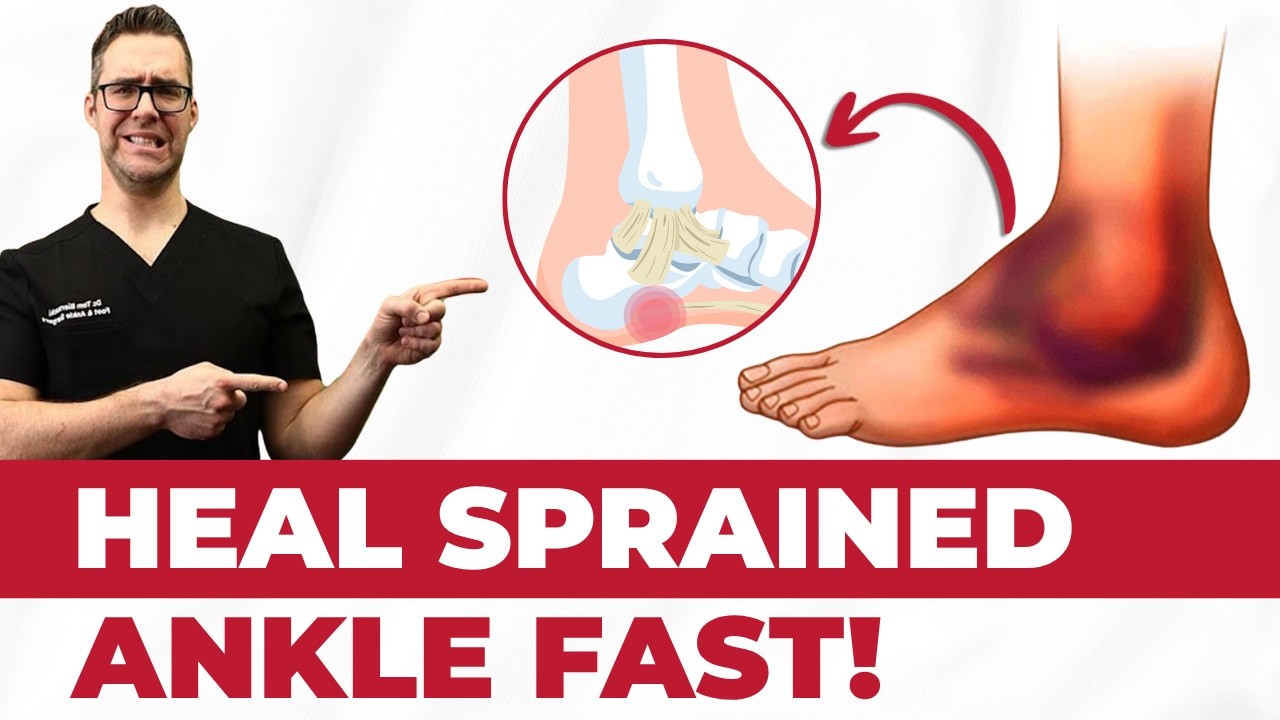
Ankle sprains happen when you roll your foot in. There are 3 ligaments on the outside of your foot that case stretch, partially tears, and completely tear:
- A “stretch” is known as a grade 1 ankle sprain.
- A partial tear is known as a grade 2 ankle sprain.
- A complete tear is known as a grade 3 ankle sprain.

Twisted Ankle Recovery Time:
The recovery time depends on what type of sprain you have. If the ligaments are just stretched, then it could be weeks. But if you fully tear the ligaments, you will be out numerous months and potentially need surgery!
2 types of Twisted Ankle Sprains:
A. Inversion Ankle Sprain.
B. High Ankle Sprain.
A. Inversion Twisted Ankle Recovery Time:
From Shortest To Longest:
Grade 1 Sprain: Stretched Ligaments.
This is a very mild sprain that should only take 3-5 days or up to 2-3 weeks to get better.
- The difference in time has to do with how you treat the twisted ankle.
- Using rest, ice, compression & elevation in the early stages can dramatically increase healing time.
Recovery Time: 3 days – 2 weeks!
- Improve this but using with rest, ice, compression & elevation!
Grade 2 Sprain: Partially Torn Ligaments.
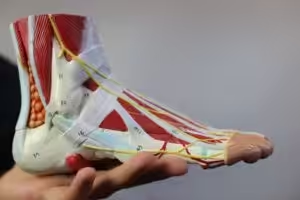
This is when one or more of the lateral ankle ligaments have been damaged. This will take a minimum of 2-4 weeks to heal & could take even longer.
- This means that either the anterior talofibular ligament or the calcaneofibular ligament are partially torn.
- If these types of sprains are not treated properly, they may lead to chronic ankle instability.
- Athletes with chronic ankle instability will likely need braces & physical therapy in the future.
- It is even possible to start developing ankle arthritis & ankle spurs within a decade or so chronic ankle instability.
Recovery Time: 2-4 weeks Minimum!
- Improve this but using rest, ice, compression & elevation initially.
- Time off until it heals is usually necessary.
- Accommodation braces may be necessary early on until healing.
Grade 3 Sprain: Partially Torn Ligaments.
This is a complete tear of the ankle ligaments with possible dislocation of the ankle.
- This type of ankle injury will take many months to heal.
- It is likely to have an osteochondral defect: this means cartilage damage.
- Further lower extremity foot and ankle tendons or ligaments may also be damaged.
- It may be necessary to check for compartment syndrome.

Recovery Time: 2-3 Months+!
- This type of ankle sprain will require a visit to your podiatrist for evaluation.
- Depending on the situation or the damage, you may need surgery to avoid future damage.
B. High Twisted Ankle Recovery Time:
![High Ankle Sprain Treatment [Causes & Best Recovery Time!]](https://www.michiganfootdoctors.com/wp-content/cache/flying-press/12974f926995703b061973e48b6249ed.jpg)
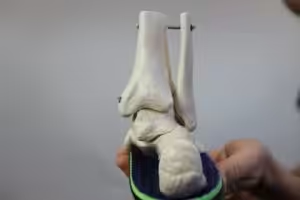
A high ankle sprain occurs when your foot turns out while still planted firmly on the ground at 90 degrees.
- This is the damage of the ligaments within your leg rather than on the outside of your ankle.
- These occur between the tibia and the fibula of your lower leg.
- The ligaments of your syndesmosis are damaged.
From Shortest To Longest:
Grade 1 Sprain: Stretched Syndesmosis.
The joint is stable upon testing stress testing (performed by the physician under imaging).
- The injury should heal in a few short days or weeks.
- The athlete is likely still able to stand on the foot.
- No gross dislocation or disruptions.
Recovery Time: 3 days – 2 weeks!
- Improve this but using with rest, ice, compression & elevation!
Grade 2 Sprain: Partially Torn Syndesmosis.
This is a partial tear & injury of the ligaments.
- There may or may not be some loosening on stress testing by the podiatrist.
- An MRI may be necessary to diagnose the extent of the injury.
- The athlete may have difficulty bearing weight on the ankle.
- There likely will not be widening.
Recovery Time: 2-4 weeks Minimum!
- Improve this but using rest, ice, compression & elevation initially.
- Time off until it heals is usually necessary.
- Accommodation braces may be necessary early on until healing.

Grade 3 Sprain: Fully Torn Syndesmosis.
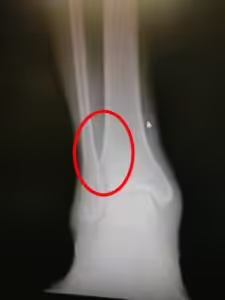
Complete dislocation of the talus from between the tibia and fibula.
- This is obvious, and it looks very gruesome.
- It will require many months to get better.
- This will require physician treatment immediately to relocate and assess the injury.
Recovery Time: 2-3 Months+!
- This type of ankle sprain will require a visit to your podiatrist for evaluation.
- Depending on the situation or the damage, you may need surgery to avoid future damage.
Ankle Sprain Home Treatment:
The first thing to do is see your podiatrist immediately to get this condition diagnosed.
It is difficult to judge online whether it is a fracture not. You may need more significant offloading than can be provided by any of these braces.
Protect your ankle joint:
- Initially, right after the injury.
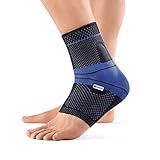
- You want a good stable ankle brace.
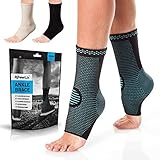
- These are our recommended ankle sprain braces.
- These are the best-reviewed and the best cost braces that we could find excavation point.


Long-term ankle joint protection:
- Once the initial few weeks have gone by, and your pain is getting better, the key is to provide compression combined with stability.
- These are not as stable as the stability, providing braces, but they will provide compression to fit into more pairs of shoes.

Twisted Ankle? Walk With Confidence Again – Trusted Foot & Ankle Guidance
Learn what’s hurting and how to fix it.
Athlete’s Foot
Ball of Foot
Achilles Tendon
Bunion
Big Toe
Callus
Foot Fungus
Gout
Ingrown
Orthotics
Outside of Foot Pain
Sports Podiatrist
Twisted ankle? Schedule an Evaluation with Balance Foot & Ankle Specialist in Howell or Bloomfield
Our experienced podiatric surgeons combine precision, care, and innovation to deliver successful outcomes in flatfoot reconstruction. With modern facilities, patient education, and compassionate care, we’ve become the trusted choice for foot and ankle surgery in Southeast Michigan. We’re committed to restoring your stride—comfortably and confidently.
Book Your Podiatrist Visit Now
Twisted Ankle Recovery: Your Questions Answered About Healing Time and Care
How long does it take to recover from a twisted ankle?Mild sprains may heal in 1–2 weeks, while moderate to severe sprains can take 4–8 weeks or longer depending on treatment and activity level.
What are the stages of twisted ankle recovery?Recovery typically includes inflammation (first few days), tissue repair (weeks 1–3), and rehabilitation (weeks 3+), with gradual return to activity.
What factors affect recovery time?Severity of the sprain, age, overall health, treatment approach, and how soon you begin rehab exercises all play a role.
Should I walk on a twisted ankle?Avoid walking on it initially. Rest and protect the ankle until swelling and pain decrease, then gradually reintroduce weight-bearing activities.
What treatments speed up recovery?R.I.C.E (Rest, Ice, Compression, Elevation), anti-inflammatory medications, physical therapy, and ankle braces can help accelerate healing.
When should I see a doctor for a twisted ankle?If you can’t bear weight, have severe swelling or bruising, or suspect a fracture, seek medical attention immediately.
Can a twisted ankle heal without physical therapy?Mild sprains may heal without it, but therapy helps restore strength, flexibility, and balance—especially for moderate or severe injuries.
How can I prevent future ankle sprains?Strengthen ankle muscles, improve balance, wear supportive footwear, and avoid uneven surfaces during physical activity.
Related Treatment Guides
In-Office Treatment Available
Inadequately treated ankle sprains lead to chronic instability and arthritis. Dr. Tom offers grade-specific ankle sprain protocols, functional rehabilitation, bracing recommendations, and for chronic instability, Brostrom ligament repair — a effective outpatient procedure.
Learn more about Ankle Sprain & Instability Treatment → | Book an appointment
Dr. Tom’s Recommended Compression
DASS socks are what I personally prescribe for swelling, circulation, and recovery at Balance Foot & Ankle.
- Foundation Wellness Plantar Fasciitis Compression Socks — Medical-grade graduated compression (15-20 mmHg) for swelling, post-surgery recovery, and all-day comfort. The compression sock I recommend most in my clinic.
Affiliate disclosure: As an Amazon Associate, Balance Foot & Ankle earns from qualifying purchases. We only recommend products we trust for our own patients.
How Long Until Your Twisted Ankle Recovers?
Recovery timelines vary by injury severity. Our podiatrists grade your sprain accurately and provide a structured rehab plan so you recover as fast as safely possible.
📞 Or call us directly: (810) 206-1402
Clinical References
- Ferran NA, Maffulli N. Epidemiology of sprains of the lateral ankle ligament complex. Foot Ankle Clin. 2006;11(3):659-662.
- Petersen W, et al. Treatment of acute ankle ligament injuries: a systematic review. Arch Orthop Trauma Surg. 2013;133(8):1129-1141.
- van Rijn RM, et al. What is the clinical course of acute ankle sprains? Am J Med. 2008;121(4):324-331.
Insurance Accepted
BCBS · Medicare · Aetna · Cigna · United Healthcare · HAP · Priority Health · Humana · View All →
Howell Office
4330 E Grand River Ave
Howell, MI 48843
Get Directions →
Bloomfield Hills Office
43494 Woodward Ave, #208
Bloomfield Hills, MI 48302
Get Directions →
Your Board-Certified Podiatrists



Ready to Get Back on Your Feet?
Same-week appointments available at both locations.
Book Your AppointmentPodiatrist-Recommended Products for Ankle Sprain Recovery
- Plantar Fasciitis Compression Socks — graduated compression is step one for any lateral ankle sprain to control swelling
- Doctor Hoy’s Natural Pain Relief Gel — topical pain and inflammation relief during the acute and subacute recovery phases
- PowerStep Maxx — maximum lateral stability insole for return-to-activity after ligament healing
These are the same products Dr. Biernacki recommends in clinic. Available through our partner Foundation Wellness.
In-Office Treatment at Balance Foot & Ankle
If home treatment isn’t providing relief for your ankle condition, our podiatry team at Balance Foot & Ankle can help with same-day evaluations and advanced in-office care.
Frequently Asked Questions
When should I see a podiatrist?
If symptoms persist past 2 weeks, affect your normal activity, or are accompanied by red-flag symptoms (warmth, redness, swelling, inability to bear weight).
What does treatment cost?
Most diagnostic visits and conservative treatments are covered by Medicare and major insurers. Out-of-pocket costs vary by your specific plan.
How quickly can I get an appointment?
Most non-urgent cases see us within 5 business days. Urgent cases (sudden pain, possible fracture) typically same or next business day.
What is Foot pain?
Foot pain is a common foot/ankle condition that affects mobility and quality of life. Understanding the underlying cause is the first step in successful treatment. Our podiatrists at Balance Foot & Ankle perform a hands-on biomechanical exam, review your activity history, and use diagnostic imaging when appropriate to identify the root cause—not just treat the symptom. Many patients have been told to “rest and ice” without a deeper diagnostic workup; our approach is different.
Symptoms and warning signs
Common signs of foot pain include pain that worsens with activity, morning stiffness, swelling, tenderness when palpated, and difficulty bearing weight. If you experience sudden severe pain, inability to walk, visible deformity, numbness or color change, contact our office the same day or visit urgent care—these can signal a more serious injury such as a fracture, tendon rupture, or vascular compromise. Diabetics with any foot wound should seek same-day care.
Conservative treatment options
Most cases of foot pain respond to non-surgical care: structured rest, supportive footwear changes, custom orthotics, targeted stretching and strengthening protocols, anti-inflammatory medications when medically appropriate, and in-office procedures such as ultrasound-guided injections. We also offer advanced therapies including MLS laser therapy, EPAT/shockwave, regenerative injections, and image-guided procedures. Treatment is sequenced from least invasive to most invasive, and we explain the rationale at every step.
When is surgery considered?
Surgery is reserved for cases that fail 3-6 months of well-structured conservative care, when there is structural pathology (severe deformity, complete tear, advanced arthritis), or when imaging shows damage that will not heal without intervention. Our surgeons have performed 3,000+ foot and ankle procedures and prioritize minimally-invasive techniques whenever appropriate. We discuss recovery timelines, return-to-activity milestones, and realistic outcome expectations before any procedure is scheduled.
Recovery timeline and prevention
Recovery from foot pain varies based on severity and chosen treatment path. Conservative cases often improve within 4-8 weeks with consistent adherence to the protocol. Post-procedural recovery may range from a few days (in-office procedures) to several months (reconstructive surgery). Long-term prevention involves footwear assessment, activity modification, structured strengthening, and regular check-ins with your podiatrist if you have a history of recurrence. We provide written home-exercise plans and digital follow-up support.
Ready to feel better?
Same-week appointments available in Howell and Bloomfield Hills, Michigan.
Book Your VisitReady to fix this for good?
Reading goes only so far. The fastest path to relief is a 30-minute office visit with Dr. Biernacki — same-day Howell or Bloomfield Hills. Call (810) 206-1402 or use our online booking.
Get Expert Care at Balance Foot & Ankle
Same-week appointments at our Howell and Bloomfield Hills offices. Board-certified podiatric surgeons. Most insurance accepted.

Dr. Tom Biernacki, DPM is a board-certified foot & ankle surgeon (ABFAS & ABPM) at Balance Foot & Ankle Specialists in Southeast Michigan. With over a decade of clinical experience, he specializes in heel pain, bunions, diabetic foot care, sports injuries, and minimally invasive surgery. Dr. Biernacki is a member of the APMA and ACFAS, and his patient education content on MichiganFootDoctors.com and YouTube has made him one of the most-followed foot & ankle educators on YouTube.