


Medically reviewed by Dr. Tom Biernacki, DPM — Board-certified foot & ankle surgeon, 3,000+ surgeries performed. Updated April 2026 with current clinical evidence. This article reflects real practice experience from Balance Foot & Ankle Specialists in Howell and Bloomfield Hills, Michigan.
Quick Answer
Most foot and ankle problems respond to conservative care — proper footwear, supportive inserts, activity modification, and targeted stretching — within 4-8 weeks. Persistent pain beyond that window, or any symptom that prevents walking, warrants a podiatric evaluation to rule out fracture, tendon tear, or systemic cause.
Watch: Dr. Tom Biernacki, DPM
/div>Medically reviewed by Dr. Tom Biernacki, DPM — Board-Certified Podiatric Surgeon — Balance Foot & Ankle, Howell & Bloomfield Hills, MI. Last updated April 2026.
▶ Watch
Medically Reviewed by Dr. Tom Biernacki, DPM — Board-Certified Podiatrist, Balance Foot & Ankle Specialists, Michigan. Last updated April 2026.
Ultimate Frisbee: High-Demand Footwork in an Underappreciated Sport
Ultimate Frisbee — simply called ‘Ultimate’ in the sport’s community — has grown from a college campus recreational activity into a serious competitive sport with national and international leagues, professional tournaments, and an active youth development system. Michigan fields numerous club and college programs competing in USA Ultimate’s regional and national championship series. Despite its non-contact designation (intentional body contact is a foul), Ultimate is biomechanically demanding: the sport requires explosive cutting movements from a standing start, rapid direction changes, prolonged field coverage at aerobic intensity, and full-layout diving catches that create unique foot and ankle injury patterns.
Cutting Mechanics and Ankle Sprain Risk
Cutting in Ultimate — the rapid change of direction used to create separation from a defender — generates high lateral ankle stress. A cut begins with a plant step on the outside foot (ankle in inversion stress), followed by an explosive push-off that loads the MTP joints and Achilles maximally. Players who cut in cleats on turf face the elevated traction-to-pivot ratio that characterizes artificial surface play. Lateral ankle sprains from cutting missteps are the most common acute injury in Ultimate, occurring particularly when the cutting foot lands on another player’s foot or on a field surface irregularity during the plant phase.
Layout Diving Foot and Ankle Injuries
The layout dive — throwing oneself horizontally to catch a disc — is a signature Ultimate technique that creates unique injury mechanisms. Landing from a layout subjects the dorsal foot and ankle to impact forces when the feet contact the ground after the dive. Toe stubbing during the initial dive push-off can hyperextend the great toe (turf toe). Ankle twisting during an uncontrolled layout landing produces sprains that can be severe, as the athlete has no ability to prepare their landing mechanics during a full dive.
Turf Toe in Ultimate Players
The combination of cleated play on artificial turf (which maximizes traction and prevents the foot from releasing during extreme dorsiflexion) and the explosive push-off mechanics of Ultimate cuts makes turf toe a common injury. When the forefoot is fixed by high-traction turf and the body continues forward, the great toe dorsiflexes beyond its normal range — spraining or tearing the plantar plate and collateral ligaments of the first MTP joint. Turf toe management in Ultimate athletes follows established protocols: rigid insole to limit MTP dorsiflexion, buddy taping, relative rest, and for Grade II–III injuries, structured rehabilitation before return to cutting activities.
Metatarsal Stress Fractures from High-Volume Play
Tournament Ultimate — where teams play 5–8 games over a weekend — creates rapid loading spikes that can precipitate metatarsal stress reactions in athletes who are not accustomed to that volume. Second and third metatarsal stress fractures present as insidious forefoot pain that worsens progressively through a tournament weekend. Athletes who arrive at tournaments already carrying baseline metatarsal soreness from season training face the highest acute-on-chronic stress fracture risk.
Heel Pain in Ultimate Athletes
Plantar fasciitis develops in Ultimate players who run significant mileage in training, particularly those who train across multiple days of practice without adequate rest. The explosive stop-start movement patterns of Ultimate are more demanding on the plantar fascia than steady-state distance running, as each cutting movement generates a sudden tensile spike through the fascial attachment. Players with tight calves — a common finding in athletes who spend much of their field time on the forefoot — are at elevated risk.
Prevention Strategies for Ultimate Players
Cleats appropriate for the playing surface (turf-specific cleats for turf, molded for grass) reduce traction-related injury risk. Ankle bracing — lace-up functional braces — provides meaningful protection against lateral ankle sprains in players with prior sprain history. A dedicated pre-game dynamic warm-up with calf raises, ankle circles, and lateral shuffle drills prepares the ankle stabilizers for the cutting demands of play. Training periodization — managing total weekly cutting volume rather than playing through fatigue — prevents the cumulative loading that produces stress fractures. Any foot or ankle pain that limits cutting ability or persists beyond 48 hours post-tournament warrants professional evaluation.
Relief Starts With One Appointment
Board-certified podiatrists serving Southeast Michigan — same-week appointments available.
Sports Foot Injury Treatment in Michigan
Ultimate frisbee involves rapid cutting, jumping, and pivoting that stresses the feet and ankles. Dr. Tom Biernacki treats ultimate players with sport-specific rehabilitation, custom orthotics, and surgical repair when needed at Balance Foot & Ankle.
Explore Our Sports Injury Treatments | Book Your Appointment | Call (810) 206-1402
Clinical References
- Akinbola M, et al. “Epidemiology of injuries in ultimate frisbee.” Am J Sports Med. 2015;43(6):1476-1481.
- Yen LE, et al. “Incidence of injuries in competitive ultimate frisbee players.” J Sci Med Sport. 2019;22(12):1390-1394.
- Swedler DI, et al. “A description of injuries in ultimate Frisbee.” Med Sci Sports Exerc. 2013;45(5):166.
Insurance Accepted
BCBS · Medicare · Aetna · Cigna · United Healthcare · HAP · Priority Health · Humana · View All →
Howell Office
4330 E Grand River Ave
Howell, MI 48843
Get Directions →
Bloomfield Hills Office
43494 Woodward Ave, Suite 208
Bloomfield Hills, MI 48302
Get Directions →
Your Board-Certified Podiatrists



Ready to Get Back on Your Feet?
Same-week appointments available at both locations.
Book Your AppointmentWatch: Ultimate Frisbee Foot & Ankle Injuries
Dr. Tom on ultimate frisbee foot/ankle injuries — cutting ankle sprains, layout injuries, toe turf burn.
Ultimate Player’s Foot Kit
Cutting + diving + long points. Dr. Tom’s kit:
As an Amazon Associate, Balance Foot & Ankle earns from qualifying purchases. This supports our free patient education content.
Cutting-sport ankle sprain prevention.
Lateral movement medial support.
Post-tournament ankle cool-down.
Post-game muscle + ankle relief.
Related: Ankle Sprain · Sports Medicine · Book Same-Week Appointment
Differential Diagnosis: What Else Could It Be?
Not every case of turf toe / first mtp sprain is straightforward. In our clinic we routinely rule out three look-alike conditions before confirming the diagnosis. If your symptoms don’t match the classic presentation, one of these may explain the pain — which is why physical exam matters more than self-diagnosis.
| Condition | How It Differs |
|---|---|
| Hallux rigidus | Chronic progressive stiffness, not a single hyperextension event; dorsal osteophyte on X-ray. |
| Sesamoiditis | Pain under the joint (at the sesamoid bones), not on top; worse with push-off. |
| Gout | Warm, erythematous, crystal-driven flare; elevated uric acid and crystal arthrocentesis. |
Red Flags — When to See a Podiatrist Now
Seek same-day evaluation at Balance Foot & Ankle if you notice any of the following:
- Inability to push off big toe
- Swelling and bruising across entire joint
- Grade 3 injury on MRI (complete plantar plate tear)
- Progressive hallux valgus after injury
Call (810) 206-1402 or request an appointment. Our Howell and Bloomfield Hills offices reserve same-day slots for urgent foot and ankle issues.
In Our Clinic: What We See
Clinical perspective from Dr. Tom Biernacki, DPM — Balance Foot & Ankle, Howell & Bloomfield Hills, MI:
Turf toe is the injury everyone remembers — a football cleat stuck in the turf, a yoga pose that forced the toe too far back, or a misstep off a curb. In our clinic we grade 1, 2, or 3. Grade 1 is taping, a stiff-soled shoe, and return to play in a week. Grade 2 frequently takes 4-6 weeks and may need a carbon-fiber plate inside the shoe. Grade 3 plantar-plate tears need imaging and often surgical repair. We have patients keep a photo of the toe in neutral so we can track swelling and bruising across follow-ups. Return-to-sport is earned, not timed.
In-Office Treatment at Balance Foot & Ankle
If home care isn’t resolving your your foot or ankle concern, a visit with a board-certified podiatrist is the fastest path to accurate diagnosis and a personalized plan. At Balance Foot & Ankle Specialists, Dr. Tom Biernacki, Dr. Carl Jay, and Dr. Daria Gutkin offer same-day and next-day appointments at both our Howell and Bloomfield Hills offices. We perform on-site diagnostic ultrasound, digital X-ray, conservative care, advanced regenerative treatments, and minimally invasive surgery when indicated.
Call (810) 206-1402 or request an appointment online. Most insurance plans accepted, including Medicare, Blue Cross Blue Shield, Aetna, Cigna, and United Healthcare.
Most Common Mistake We See
The most common mistake we see is: Waiting too long before seeking care. Fix: any foot pain lasting more than 4 weeks, or any sudden severe symptom, deserves a professional evaluation rather than more rest.
Warning Signs That Need Same-Day Care
Seek immediate evaluation at Balance Foot & Ankle if you experience any of the following:
- Unable to bear weight
- Severe swelling with skin colour change
- Fever with foot pain (possible infection)
- Diabetes plus any new foot symptom
Call (810) 206-1402 — same-day and next-day appointments at our Howell and Bloomfield Hills offices.
More Podiatrist-Recommended Foot Health Essentials
Hoka Clifton 10

Max-cushion everyday shoe — podiatrist favorite for walking and running.

OOFOS Recovery Slide

Impact-absorbing recovery sandal — wear after long days on your feet.
As an Amazon Associate, Balance Foot & Ankle earns from qualifying purchases. Product recommendations are based on clinical experience; prices and availability shown above update live from Amazon.
When to See a Podiatrist
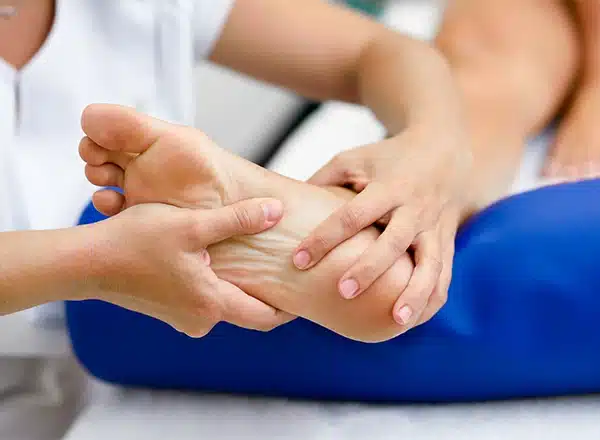
If foot or ankle pain has been bothering you for more than a few weeks, home care alone may not be enough. Balance Foot & Ankle offers same-week appointments at our Howell and Bloomfield Hills clinics — no referral needed in most cases. Bring your current shoes and a short list of symptoms and we’ll build you a treatment plan in one visit.
Call Balance Foot & Ankle: (810) 206-1402 · Book online · Offices in Howell & Bloomfield Hills

Dr. Tom Biernacki, DPM is a board-certified foot & ankle surgeon (ABFAS & ABPM) at Balance Foot & Ankle Specialists in Southeast Michigan. With over a decade of clinical experience, he specializes in heel pain, bunions, diabetic foot care, sports injuries, and minimally invasive surgery. Dr. Biernacki is a member of the APMA and ACFAS, and his patient education content on MichiganFootDoctors.com and YouTube has made him one of the most-followed foot & ankle educators on YouTube.