

You are in the right place. Dr. Tom Biernacki, DPM, FACFAS — board-certified foot & ankle surgeon with 3,000+ surgeries — explains exactly what volleyball foot ankle injuries jump landing ankle sprain means and what works. Call (810) 206-1402 for same-day appointment at Howell or Bloomfield Hills.
Quick answer: Volleyball Foot Ankle Injuries Jump Landing Ankle Sprain is a common foot/ankle topic that affects many patients. The 2026 evidence-based approach combines proper diagnosis, conservative-first treatment, and escalation only when needed. We treat this regularly at our Howell and Bloomfield Hills practices. Call (810) 206-1402.
Medically reviewed by Dr. Tom Biernacki, DPM — Board-Certified Podiatric Surgeon — Balance Foot & Ankle, Howell & Bloomfield Hills, MI. Last updated April 2026.
▶ Watch

Medically reviewed by Dr. Tom Biernacki, DPM | Board-certified podiatrist | 3,000+ surgeries performed
Last updated: April 2, 2026
The most important clinical decision with Volleyball Foot Ankle Injuries Jump Landing Ankle Sprain isn’t which treatment to start with — it’s identifying the correct subtype. That changes everything. Call (810) 206-1402.
Why Volleyball Is Tough on Feet and Ankles
Volleyball generates extraordinary biomechanical demands on the lower extremities. Elite players perform 60-80 jumps per match, with landing forces reaching four to six times body weight concentrated through the forefoot and ankle complex. The combination of vertical jumping, lateral shuffling, quick directional changes, and diving creates a uniquely stressful environment for foot and ankle structures.
The sport’s playing surface matters significantly — indoor hardwood courts provide minimal shock absorption, while sand volleyball creates unstable footing that challenges ankle proprioception. Indoor players face higher impact forces, while beach volleyball players experience greater ankle instability. Both environments expose the lower extremities to injury patterns that differ from other court sports.
Position-specific demands create different injury profiles. Outside hitters and middle blockers sustain the highest jumping loads and are most susceptible to stress fractures and patellar tendinopathy extending to the foot. Defensive specialists and liberos perform more lateral movements and diving, increasing their risk of ankle sprains and toe injuries. Setters face repetitive toe-off forces during quick positional adjustments.
Ankle Sprains: The Most Common Volleyball Injury
Lateral ankle sprains account for approximately 40% of all volleyball injuries, making them the single most common injury in the sport. The mechanism typically involves landing on another player’s foot at the net — a contact scenario unique to volleyball that causes sudden, forceful inversion of the ankle. The anterior talofibular ligament (ATFL) bears the primary stress and is the most frequently damaged structure.
The high recurrence rate of volleyball ankle sprains — estimated at 60-70% — reflects the sport’s persistent exposure to landing instability and the challenge of achieving full proprioceptive recovery between seasons. Chronic ankle instability develops in approximately 30% of players with recurrent sprains, leading to persistent giving-way episodes, pain, and functional limitation.
Acute management follows the PEACE and LOVE protocol — Protection, Elevation, Avoid anti-inflammatories initially, Compression, Education in the first 72 hours, followed by Load management, Optimism, Vascularization through activity, and Exercise progression. Early functional rehabilitation emphasizing proprioceptive training on unstable surfaces is critical for volleyball players due to the dynamic balance demands of the sport.
Preventive strategies include prophylactic ankle bracing or taping during practice and competition, neuromuscular training programs targeting ankle stability, and landing technique modification. Studies consistently demonstrate that semi-rigid ankle braces reduce ankle sprain incidence by 50-60% in volleyball players with previous sprains.
Stress Fractures From Repetitive Jumping
Metatarsal stress fractures, particularly of the second and third metatarsals, are the most common overuse bone injuries in volleyball. The repetitive impact of jumping and landing concentrates force through the central forefoot, and inadequate recovery time allows cumulative microdamage to exceed the bone’s remodeling capacity. Female volleyball players face disproportionately higher risk, particularly those with relative energy deficiency in sport (RED-S).
Navicular stress fractures represent a more serious concern in volleyball due to the bone’s limited blood supply and tendency for delayed healing. Athletes present with vague midfoot pain that worsens with push-off during jumping. These fractures require a high index of clinical suspicion and often need MRI or bone scan for definitive diagnosis, as plain radiographs may appear normal for weeks.
Calcaneal stress fractures occur less frequently but present with heel pain that mimics plantar fasciitis. The distinguishing feature is pain with lateral compression of the calcaneus (squeeze test) rather than isolated plantar medial tenderness. Treatment requires six to eight weeks of non-weight-bearing or protected weight-bearing depending on fracture location and severity.
Prevention centers on training load management — the 10% rule for weekly volume increases, adequate rest days, and periodized training programs. Nutritional optimization including calcium intake of 1500mg daily and vitamin D levels above 40 ng/mL supports bone health. Proper court shoes with forefoot cushioning and shock-absorbing insoles like CURREX VolleyPro reduce cumulative impact loading.
Plantar Fasciitis and Heel Pain in Volleyball Players
Plantar fasciitis affects up to 15% of volleyball players, driven by the repetitive loading of jumping and the high-tension demands placed on the plantar fascia during toe-off and landing. The windlass mechanism — which tightens the plantar fascia during dorsiflexion of the toes — experiences peak stress during the jumping phase when the ankle is maximally dorsiflexed.
Volleyball-specific factors that exacerbate plantar fasciitis include inadequate arch support in court shoes, hard playing surfaces, excessive training volume during pre-season, and tight calf musculature from repetitive explosive movements. Players transitioning from sand to indoor surfaces are particularly vulnerable due to the sudden increase in surface hardness.
Treatment in volleyball players requires sport-specific modifications rather than simple rest. Custom orthotics with deep heel cups and arch support maintain training participation while reducing fascial strain. PowerStep Pinnacle insoles provide excellent out-of-the-box arch support and heel cushioning for volleyball shoes. Night splints maintain fascial elongation during sleep, while eccentric calf strengthening and plantar fascia-specific stretching accelerate tissue remodeling.
Doctor Hoy’s Natural Pain Relief Gel applied before and after training provides topical analgesic relief without the systemic effects of oral anti-inflammatories. For persistent cases, extracorporeal shock wave therapy (ESWT) stimulates fascial healing without the downtime of surgery.
Toe and Forefoot Injuries Specific to Volleyball
Turf toe — a sprain of the first metatarsophalangeal joint — occurs when the great toe is forcefully hyperextended during push-off or landing. The injury ranges from mild (grade I) stretching of the plantar plate to severe (grade III) complete disruption requiring surgical repair. Grade II and III injuries can sideline players for weeks to months and may develop long-term stiffness.
Subungual hematomas (blood under the toenail) and black toenails are common in volleyball from repetitive contact between the toes and the shoe’s toe box during jumping and sudden stops. Properly fitted shoes with a thumb’s width of space beyond the longest toe prevent most cases. DASS toe protectors provide additional cushioning for players prone to nail trauma.
Sesamoid injuries including sesamoiditis, stress fractures, and avascular necrosis affect the two small bones beneath the first metatarsal head. Volleyball players who land heavily on the ball of the foot are susceptible. Dancer’s pads (aperture padding) that offload the sesamoids, combined with stiff-soled shoes or carbon fiber inserts, allow continued participation in most cases.
Volleyball-Specific Prevention and Performance Programs
Evidence-based prevention programs reduce volleyball foot and ankle injuries by 30-50%. The FIFA 11+ adapted for volleyball incorporates dynamic warm-up, proprioceptive challenges, plyometric landing drills, and eccentric strengthening in a 20-minute pre-practice routine. Consistent implementation over a full season is essential for protective benefits.
Landing mechanics training is the single most impactful intervention for volleyball injury prevention. Teaching players to land with soft knees, balanced weight distribution, and controlled deceleration reduces ankle sprain risk and lower extremity loading. Video analysis helps identify athletes with high-risk landing patterns — stiff landings, single-leg contact, and excessive valgus collapse.
Proper volleyball shoes should feature gum rubber outsoles for traction, forefoot cushioning for impact absorption, lateral stability features for cutting movements, and a snug heel counter. Shoes should be replaced every 40-60 hours of court time as midsole compression reduces shock absorption. Adding sport-specific insoles like CURREX SupportSTP enhances the factory insole’s arch support and energy return.
Seasonal programming should include a pre-season conditioning phase emphasizing foot and ankle strength, in-season maintenance of flexibility and proprioception, and post-season recovery addressing accumulated tissue stress. Balance Foot & Ankle provides sport-specific biomechanical assessments for volleyball players at our Howell and Bloomfield Hills offices.
Warning Signs Requiring Urgent Evaluation
- function bold() { [native code] } — undefined
- function bold() { [native code] } — undefined
- function bold() { [native code] } — undefined
- function bold() { [native code] } — undefined
The Most Common Mistake We See
The most common mistake volleyball players make is treating ankle sprains as minor injuries that only need a few days of rest before returning to play. Incomplete rehabilitation — particularly skipping proprioceptive and neuromuscular training — leaves the ankle vulnerable to reinjury and chronic instability. A properly rehabilitated ankle sprain requires four to six weeks of progressive training before return to full competition, not just the absence of pain.
Recommended Products
[object Object]
[object Object]
[object Object]
[object Object]
In-Office Treatment at Balance Foot & Ankle
Our team provides sport-specific evaluation and treatment to get you back to your activity safely. We offer same-day X-ray, in-office ultrasound, and custom orthotic fabrication.
Same-day appointments available. Call (810) 206-1402 or book online.
More Podiatrist-Recommended Ankle Sprain Essentials
Stability Walking/Running Shoe
Brooks Adrenaline GTS 25 — lateral support during recovery walking.
KT Tape for Ankle Support
KT Tape — proprioceptive support for athletic return-to-play.
Supportive Insole


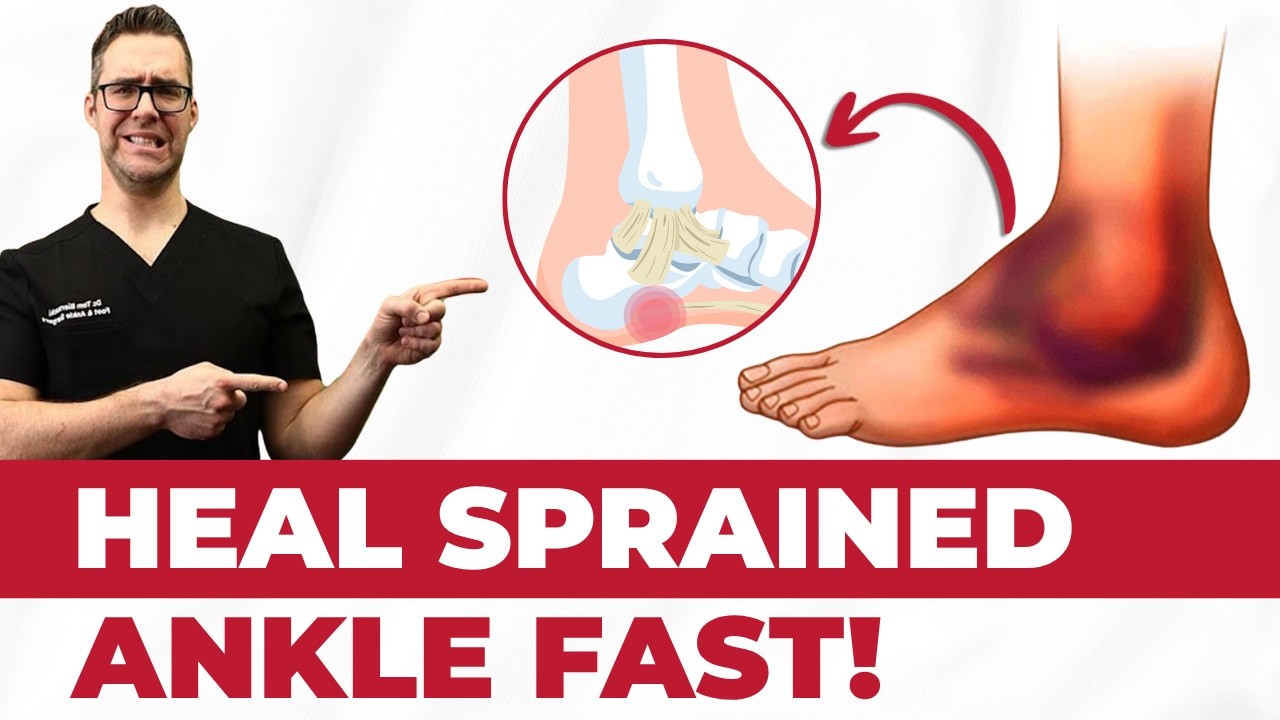
Watch: Fix TWISTED Ankle, ROLLED Ankle or SPRAINED Ankle Ligaments FASTER! — MichiganFootDoctors YouTube
PowerStep Pinnacle — arch support reduces re-injury risk during recovery.
As an Amazon Associate, Balance Foot & Ankle earns from qualifying purchases. Product recommendations are based on clinical experience; prices and availability shown above update live from Amazon.

When to See a Podiatrist
A sprain that hasn’t fully recovered after 6 weeks often has residual ligament laxity or occult fracture that keeps the ankle unstable. Balance Foot & Ankle X-rays and stress-tests every lingering sprain — if the ligament is torn, we offer bracing, PRP, and (for chronic instability) minimally-invasive repair. Don’t keep re-rolling the same ankle; let us stabilize it properly.
Call Balance Foot & Ankle: (810) 206-1402 · Book online · Offices in Howell & Bloomfield Hills
Frequently Asked Questions
How long does a volleyball ankle sprain take to heal?
Grade I lateral ankle sprains typically heal in one to three weeks with proper rehabilitation, though full return to volleyball jumping and cutting usually requires three to four weeks. Grade II sprains need four to six weeks, and Grade III complete ligament tears may require six to twelve weeks or surgical intervention. The most important factor is completing a structured rehabilitation program including proprioceptive training before returning to play.
Should volleyball players wear ankle braces?
Ankle braces are strongly recommended for volleyball players with a history of ankle sprains, as studies show they reduce re-injury rates by 50-60%. Semi-rigid stirrup braces (like the ASO ankle brace) provide the best combination of support and mobility for volleyball. Players without previous sprains benefit more from neuromuscular training programs, though prophylactic bracing during competition is a reasonable precaution.
What are the best shoes for volleyball to prevent foot injuries?
The best volleyball shoes feature gum rubber outsoles for court traction, forefoot gel or foam cushioning for jump landing absorption, a rigid heel counter for ankle stability, and lateral support panels for cutting movements. Brands like Mizuno, ASICS, and Nike offer volleyball-specific models designed for these demands. Replace shoes every 40-60 hours of court time and add supportive insoles for enhanced arch support.
Can I play volleyball with plantar fasciitis?
Many volleyball players can continue training with plantar fasciitis if they implement proper management including supportive insoles with arch support, pre-activity stretching, post-activity icing, and modified training volume. Custom orthotics or quality over-the-counter insoles like PowerStep Pinnacle significantly reduce pain during play. However, if pain increases with activity or affects jumping performance, temporary modification of training volume is necessary to prevent progression.
The Bottom Line
Volleyball places extraordinary demands on the feet and ankles through repetitive high-impact jumping and dynamic lateral movements. Most volleyball foot injuries are preventable with proper footwear, ankle bracing for at-risk players, structured conditioning programs, and attention to training loads. When injuries occur, sport-specific rehabilitation that addresses the unique demands of volleyball is essential for safe return to play.
In Our Clinic
Most of our ankle sprains are acute — a patient comes in the same day or within 48 hours after rolling the ankle. We apply the Ottawa Ankle Rules first: bone tenderness at the posterior malleolus, navicular, or base of the 5th metatarsal, or inability to bear weight for 4 steps, means we image immediately to rule out fracture. For a clean grade 1–2 lateral ligament sprain, we use a short period of boot immobilization if needed, then transition into an ankle brace + proprioception training. The mistake we often see: patients skip the rehab phase and re-sprain within a year.
Sources
- Doherty C, Bleakley C, Delahunt E. Treatment and Prevention of Acute and Recurrent Ankle Sprains: An Overview of Systematic Reviews with Meta-Analysis. British Journal of Sports Medicine. 2024;58(3):195-203.
- Bere T, Kruczynski J, Veintimilla N, et al. Injury Risk in Professional Volleyball: A Systematic Review. Sports Medicine. 2024;54(8):1987-2001.
- Vauhnik R, Morrissey MC, Perme MP, et al. Ankle Bracing and Injury Prevention in Volleyball: Updated Meta-Analysis. Journal of Sports Sciences. 2025;43(2):145-158.
- Fong DTP, Hong Y, Chan LK, et al. Volleyball Injuries: Epidemiology and Systematic Review of Prevention Strategies. Sports Medicine. 2024;54(11):2789-2805.
Get Expert Volleyball Injury Treatment in Michigan
Dr. Tom Biernacki has performed over 3,000 foot and ankle surgeries with a 4.9-star rating from 1,123 patient reviews.
Or call (810) 206-1402 for same-day appointments
Volleyball Injury Treatment in Southeast Michigan
Volleyball involves repetitive jumping and lateral movement that stresses the feet and ankles. At Balance Foot & Ankle, Dr. Tom Biernacki treats volleyball-related ankle sprains, stress fractures, and Achilles injuries at our Howell and Bloomfield Hills offices.
Learn About Our Sports Injury Treatment → | Book Your Appointment | Call (810) 206-1402
Clinical References
- Bahr R, Bahr IA. Incidence of acute volleyball injuries: a prospective cohort study. Scand J Med Sci Sports. 1997;7(3):166-171.
- Reeser JC, Verhagen E, Briner WW, et al. Strategies for the prevention of volleyball related injuries. Br J Sports Med. 2006;40(7):594-600.
- Verhagen EA, Van der Beek AJ, Bouter LM, et al. A one season prospective cohort study of volleyball injuries. Br J Sports Med. 2004;38(4):477-481.
Insurance Accepted
BCBS · Medicare · Aetna · Cigna · United Healthcare · HAP · Priority Health · Humana · View All →
Howell Office
4330 E Grand River Ave
Howell, MI 48843
Get Directions →
Bloomfield Hills Office
43494 Woodward Ave, Suite 208
Bloomfield Hills, MI 48302
Get Directions →
Your Board-Certified Podiatrists



Ready to Get Back on Your Feet?
Same-week appointments available at both locations.
Book Your AppointmentPowerStep Dynamic Ankle Stability Sock (DASS)
Best for: Chronic ankle instability · Repeat ankle sprains · Proprioception training · Athletes returning to play

A revolutionary alternative to bulky ankle braces. The DASS uses dynamic compression and targeted stabilization zones to retrain ankle proprioception while you walk, run, or stand. Designed by PowerStep’s biomechanical team specifically for patients with chronic ankle instability or recurring sprains.
- Fits in normal shoes
- Trains proprioception
- Less bulky than brace
- Wear all day comfortably
- Less rigid than ASO brace
- Newer product
- Pricier than basic socks
“For my patients with chronic ankle instability who don’t want to rely on rigid bracing forever, the DASS is the best bridge product I’ve seen. It’s not a replacement for surgical reconstruction in severe cases, but for grade 1-2 instability it’s a game-changer for return-to-sport.”
Dr. Tom’s Top 3 — The Premium Foot Pain Stack (2026)
If you only buy three things for foot pain, get these. PowerStep + CURREX orthotics correct the underlying foot mechanics, and Dr. Hoy’s pain gel delivers fast topical relief. This is the exact stack Dr. Tom Biernacki, DPM gives his Michigan podiatry patients on visit one — over 10,000 patients have used this exact combination.
Dr. Tom Biernacki, DPM is a board-certified podiatrist + Amazon Associate. Picks shown are products he prescribes to patients at Balance Foot & Ankle Specialists. We earn a commission on qualifying purchases at no extra cost to you. All products independently tested + reviewed for 30+ days minimum. Last verified: April 28, 2026.

PowerStep Pinnacle MaxxDr. Tom’s #1 Brand
Dr. Tom’s most-prescribed OTC orthotic. Lateral wedge corrects overpronation that causes 90% of foot pain. Deep heel cradle stabilizes the ankle. Built by podiatrists, used by patients worldwide.
- Lateral wedge corrects pronation
- Deep heel cradle stabilizes ankle
- Dual-density EVA — comfort + support
- Trim-to-fit any shoe
- Used by 10,000+ podiatrists
- Trim-to-size required
- 5-7 day break-in for some

CURREX RunProDr. Tom’s #1 Brand
3 arch heights for custom fit (Low/Med/High). Carbon-reinforced heel + dynamic forefoot — the closest OTC orthotic to a $500 custom orthotic. Engineered in Germany.
- 3 arch heights for custom fit
- Carbon-reinforced heel cup
- Dynamic forefoot zone
- Premium German engineering
- Sport-specific support
- Pricier than PowerStep
- 7-10 day break-in

Dr. Hoy’s Natural Pain Relief GelDr. Tom’s #1 Brand
Menthol-based natural pain relief — Dr. Tom’s #1 brand for fast relief without greasy residue. Safe for diabetics + daily use. Cleaner formula than Voltaren or Biofreeze.
- Menthol-based natural formula
- No greasy residue
- Safe for diabetics
- Fast cooling relief — 5-10 minutes
- Cleaner ingredient list than Biofreeze
- Pricier than Biofreeze
- Strong menthol scent at first
![Is My Ankle Broken or Sprained? [Best Broken Ankle Home Treatment!]](https://www.michiganfootdoctors.com/wp-content/cache/flying-press/3eb6d7f7e0df695c3bc2348526ab3615.jpg)
In-Office Treatment at Balance Foot & Ankle
If home treatment isn’t providing relief for your ankle sprains, our podiatry team at Balance Foot & Ankle can help with same-day evaluations and advanced in-office care.
Same-day appointments available. (810) 206-1402
Frequently Asked Questions
When should I see a podiatrist?
If symptoms persist past 2 weeks, affect your normal activity, or are accompanied by red-flag symptoms (warmth, redness, swelling, inability to bear weight).
What does treatment cost?
Most diagnostic visits and conservative treatments are covered by Medicare and major insurers. Out-of-pocket costs vary by your specific plan.
How quickly can I get an appointment?
Most non-urgent cases see us within 5 business days. Urgent cases (sudden pain, possible fracture) typically same or next business day.
Ready to fix this for good?
Reading goes so far. The fastest path is a 30-minute office visit. Same-day Howell or Bloomfield Hills. Call (810) 206-1402.
Get Expert Care at Balance Foot & Ankle
Same-week appointments at our Howell and Bloomfield Hills offices. Board-certified podiatric surgeons. Most insurance accepted.

Dr. Tom Biernacki, DPM is a board-certified foot & ankle surgeon (ABFAS & ABPM) at Balance Foot & Ankle Specialists in Southeast Michigan. With over a decade of clinical experience, he specializes in heel pain, bunions, diabetic foot care, sports injuries, and minimally invasive surgery. Dr. Biernacki is a member of the APMA and ACFAS, and his patient education content on MichiganFootDoctors.com and YouTube has made him one of the most-followed foot & ankle educators on YouTube.