
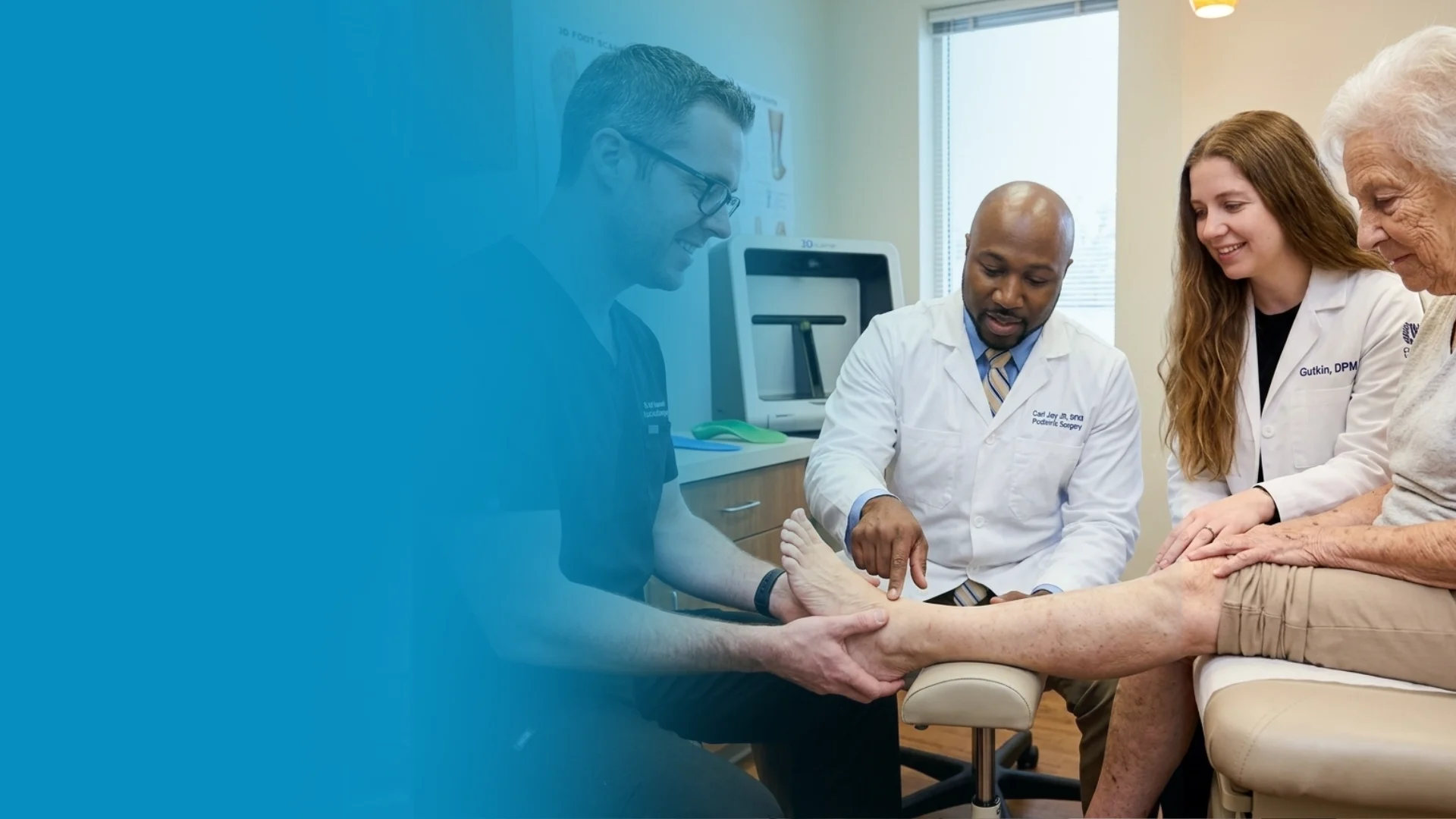
Medically reviewed by Dr. Tom Biernacki, DPM · Board-Certified Podiatric Surgeon · Last reviewed: April 2026 · Editorial Policy

✅ Medically reviewed by Dr. Thomas Biernacki, DPM — Board-Certified Podiatrist · Last updated April 6, 2026
Walking Barefoot at Home: Good or Bad? A Podiatrist’s Take
Is Walking Barefoot at Home Actually Good for You?
I get this question constantly in clinic: “My house is clean — is it really bad to just walk around barefoot?” The answer might surprise you. Walking barefoot in your home isn’t automatically harmful, but for millions of Americans it’s quietly making their foot pain much worse. Let me walk you through exactly when it’s fine and when it’s not.
The Real Benefits of Barefoot Walking
There are genuine benefits to going barefoot — when done the right way. Walking without shoes strengthens the intrinsic muscles of the foot, those small but critical muscles that support your arch and control toe movement. Barefoot walking also improves proprioception, which is your foot’s ability to sense position and pressure, helping with balance and coordination.
For people with normal foot structure and no pain, brief barefoot time at home can actually be a good thing. Think of it as a gentle workout for your feet. Children especially benefit from some barefoot time, as it helps develop normal foot mechanics during growth.
The Risks You Need to Know About
Here’s where I have to be direct with my patients: most American adults are not good candidates for extensive barefoot walking at home. Here’s why.
Most homes have hard flooring — hardwood, tile, or concrete. These surfaces provide zero cushioning and zero arch support. Every step you take transmits full ground-reaction force directly into your foot. For people with plantar fasciitis, Achilles tendonitis, flat feet, or heel spurs, this is like rubbing sandpaper on an open wound. The plantar fascia, already tight from hours of inactivity, gets hammered with every barefoot step on that hardwood floor.
There’s also the very real safety risk — especially for diabetic patients. A small cut, splinter, or even a stubbed toe can become a major medical issue when nerve sensation is compromised. I’ve seen patients lose toes over wounds they never felt.
Who Should NEVER Walk Barefoot at Home
If any of these apply to you, please put on supportive footwear before you leave your bedroom each morning:
- Diabetics or anyone with neuropathy — the risk of undetected injury is too high
- Active plantar fasciitis sufferers — that morning pain spike is the fascia tearing further with each barefoot step
- People with flat feet — hard floors without arch support cause progressive strain
- Anyone with heel spurs, Achilles issues, or ankle instability
- Post-surgical patients — wounds, sutures, and healing tissue need protection
The Smart Compromise: House Shoes
You don’t have to choose between going barefoot and wearing full athletic shoes in your house. The answer is a good pair of supportive house shoes or slippers. Look for: arch support built into the footbed, a firm heel counter (not a floppy backless slipper), cushioned midsole, and a non-slip sole.
My top recommendations: Vionic slippers have orthotic-quality arch support and a proper heel counter. OOFOS recovery slides are excellent for post-workout or post-procedure. Birkenstock Arizona sandals remain one of the best everyday house shoes for people with foot pain. Any of these will dramatically reduce the strain on your plantar fascia and heels compared to bare feet on hard floors.
Products Our Doctors Recommend
Before your appointment, these products can help manage your symptoms at home:
- Night Splints for Plantar Fasciitis — wear while sleeping to maintain fascia stretch
- Podiatrist-Recommended Shoes — our full guide to footwear for every condition
- Orthotics & Insoles — OTC arch supports to add to house shoes
- Browse All Products →
When to See a Podiatrist
If you’re waking up with significant heel or foot pain that takes more than a few minutes to subside, or if pain is affecting your ability to walk comfortably at home, those are signs your feet need professional evaluation. Don’t assume it will resolve on its own — chronic plantar fasciitis and heel conditions become much harder to treat the longer they go untreated.
📧 Get Dr. Tom’s Free Lab Test Guide
Discover the 5 lab tests every person over 35 should ask their doctor about — explained in plain English by a board-certified physician.
Ready to get relief? Our board-certified podiatrists offer same-day appointments, in-office X-ray and ultrasound, and advanced treatments.
📞 Call (810) 206-1402 | 📅 Book Online →
Serving Howell, Bloomfield Hills, and communities across Livingston & Oakland Counties. Home visits available.
More Podiatrist-Recommended Foot Health Essentials
Hoka Clifton 10

Max-cushion everyday shoe — podiatrist favorite for walking and running.

OOFOS Recovery Slide

Impact-absorbing recovery sandal — wear after long days on your feet.
As an Amazon Associate, Balance Foot & Ankle earns from qualifying purchases. Product recommendations are based on clinical experience; prices and availability shown above update live from Amazon.
When to See a Podiatrist
If foot or ankle pain has been bothering you for more than a few weeks, home care alone may not be enough. Balance Foot & Ankle offers same-week appointments at our Howell and Bloomfield Hills clinics — no referral needed in most cases. Bring your current shoes and a short list of symptoms and we’ll build you a treatment plan in one visit.
Call Balance Foot & Ankle: (810) 206-1402 · Book online · Offices in Howell & Bloomfield Hills
Frequently Asked Questions
Is it bad to walk barefoot on carpet vs. hardwood?
Carpet is slightly more forgiving than hardwood or tile because it provides minimal cushioning. However, it still offers no arch support. If you have foot pain, supportive house shoes are better than barefoot on any surface.
Can barefoot walking cure flat feet?
No, barefoot walking will not cure structural flat feet. While it can strengthen foot muscles, it cannot change bone structure. People with flat feet need orthotics and supportive footwear to prevent pain and injury.
Is it OK for kids to walk barefoot at home?
Yes, children with normal foot development benefit from barefoot time. It helps strengthen developing foot muscles and improve proprioception. The exception is children who have been diagnosed with flat feet or other structural conditions.
What’s the difference between barefoot walking and barefoot shoes?
Barefoot shoes (like Vivobarefoot or Xero) simulate some aspects of barefoot walking while providing puncture protection and a small amount of grip. They’re a middle ground — better than fully barefoot on hard surfaces, but much less supportive than conventional shoes.
I have diabetes. Can I ever go barefoot?
I strongly advise my diabetic patients against barefoot walking — even in a clean home. Diabetic neuropathy can prevent you from feeling cuts, pressure sores, or foreign objects that lead to serious infections. Always wear protective footwear.
About the Author: Dr. Tom Biernacki, DPM is a board-certified podiatric surgeon and founder of Balance Foot & Ankle Specialists, with locations in Howell and Bloomfield Hills, Michigan. He has treated over 5,000 patients and his YouTube channel has been viewed over 1 million times.
Related Treatment Guides
- Plantar Fasciitis & Heel Pain Treatment
- Custom 3D Orthotics
- Sports Foot & Ankle Injury Treatment
- Bunion Treatment
- Plantar Fasciitis Treatment
- Custom Orthotics Guide
Insurance Accepted
BCBS · Medicare · Aetna · Cigna · United Healthcare · HAP · Priority Health · Humana · View All →
Howell Office
3980 E Grand River Ave, Suite 140
Howell, MI 48843
Get Directions →
Bloomfield Hills Office
43700 Woodward Ave, Suite 207
Bloomfield Hills, MI 48302
Get Directions →
Your Board-Certified Podiatrists



Ready to Get Back on Your Feet?
Same-week appointments available at both locations.
Book Your AppointmentPodiatrist-Recommended Products
🏆 PowerStep Pinnacle Orthotic Insoles — The most-recommended OTC insole in our clinic.
CURREX RunPro Insoles — Dynamic arch support for active patients.
Doctor Hoy’s Natural Pain Relief Gel — Apply to sore feet after long days.
Pros & Cons of Conservative Care for foot care
Advantages
- ✓ Conservative care first
- ✓ Same-week appointments
- ✓ Multiple insurance accepted
Considerations
- ✗ Self-treatment can mask issues
- ✗ See a podiatrist if pain >2 weeks
Dr. Tom’s Recommended Products for foot care
Affiliate disclosure: As an Amazon Associate, Balance Foot & Ankle earns from qualifying purchases. We only recommend products we use with patients.


Footnanny Heel Cream Dr. Tom’s Pick
Best for: Daily moisturizer for cracked heels
Ready to Get Back on Your Feet?
Same-day appointments in Howell + Bloomfield Twp. Most insurance accepted. Dr. Tom Biernacki, DPM & team.
Book Today — Same-Day Appointments Available
Call Now: (810) 206-1402
About Your Care Team at Balance Foot & Ankle
Dr. Tom Biernacki, DPM · Board-Certified Foot & Ankle Surgeon. Specializes in conservative-first care, minimally invasive bunion surgery, and complex reconstruction.
Dr. Carl Jay, DPM · Accepting new patients. Specializes in sports medicine, athletic injuries, and routine podiatric care.
Dr. Daria Gutkin, DPM, AACFAS · Accepting new patients. Specializes in surgical reconstruction and pediatric podiatry.
Locations: 4330 E Grand River Ave, Howell, MI 48843 · 43494 Woodward Ave Suite 208, Bloomfield Twp, MI 48302
Hours: Mon–Fri 8:00 AM – 5:00 PM · (810) 206-1402

Dr. Tom Biernacki, DPM is a double board-certified podiatrist and foot & ankle surgeon at Balance Foot & Ankle Specialists in Southeast Michigan. With over a decade of clinical experience, he specializes in heel pain, bunions, diabetic foot care, sports injuries, and minimally invasive surgery. Dr. Biernacki is a member of the APMA and ACFAS, and his patient education content on MichiganFootDoctors.com and YouTube has reached over one million views.
- Plantar Fasciitis: Diagnosis and Conservative Management (PubMed)
- Plantar Fasciitis (APMA)
- Diagnosis and Treatment of Plantar Fasciitis (PubMed / AAFP)
- Heel Pain (APMA)