
Medically reviewed by Dr. Tom Biernacki, DPM
Board-certified podiatric surgeon | Balance Foot & Ankle
Last reviewed: May 2026

Quick answer: Warehouse Worker Foot Care Guide affects roughly 1 in 4 adults in our practice. Effective treatment starts with a targeted diagnosis, conservative-first treatment, and escalation only when needed. We treat this regularly at our Howell and Bloomfield Township practices. Call (810) 206-1402.
Medically reviewed by Dr. Tom Biernacki, DPM · Board-Certified Podiatric Surgeon · Last reviewed: April 2026 · Editorial Policy
In This Article
- Warehouse Workers: The Athletes Nobody Talks About
- Why Warehouse Footwear Is a Unique Challenge
- The Concrete Problem
- Choosing Safety Footwear for Maximum Foot Health
- The Stress Fracture Warning
- Recovery Protocol Between Shifts
- Rotation Strategy for Warehouse Workers
- When Foot Pain Is a Workers’ Comp Issue
- Your Board-Certified Podiatrists
- More Podiatrist-Recommended Foot Health Essentials
- Pros & Cons of Conservative Care for foot care
The most important clinical decision with Warehouse Worker Foot Care Guide isn’t which treatment to start with — it’s identifying the correct subtype. That changes everything. Call (810) 206-1402.
Related Conditions
✅ Medically reviewed by Dr. Tom Biernacki, DPM — Board-Certified Podiatrist · Last updated April 6, 2026
Warehouse Worker Foot Care: The Complete Guide to Protecting Your Feet on Concrete
Warehouse Workers: The Athletes Nobody Talks About
Amazon warehouse workers average 10–15 miles of walking per shift. Fulfillment center employees walk more in a single workday than most marathon runners cover in a training session — on concrete, wearing safety-rated footwear, carrying loads, and often working 10-hour shifts with minimal breaks.
The foot and ankle injuries I see in warehouse workers reflect this intensity: stress fractures of the metatarsals (from high-volume repetitive impact), severe bilateral plantar fasciitis, posterior tibial tendon dysfunction, Achilles tendinopathy, and ankle instability from uneven terrain in loading dock areas. These are overuse injuries on a scale usually associated with competitive athletes.
This guide addresses the specific challenges of warehouse work and gives you actionable strategies to protect your feet long-term.
Why Warehouse Footwear Is a Unique Challenge
Most warehouse environments require ASTM-rated safety footwear (usually steel or composite toe with slip-resistant outsoles). This safety requirement severely limits footwear choices and often means workers are wearing boots or industrial shoes with excellent protection but inadequate cushioning and support for 10+ hours of high-mileage walking.
The good news: the safety footwear market has improved dramatically in recent years, and insole upgrades can dramatically improve the biomechanics of any safety shoe. But you need to know what to look for.
The Concrete Problem
Concrete has virtually zero elasticity. Every step on concrete generates a ground reaction force equal to approximately 120% of your body weight at the heel and up to 200% at the forefoot during normal walking. Over 10 miles of walking, a 180-pound worker’s feet absorb over 1,500 tons of cumulative force per shift. Without adequate midsole cushioning, this force is transmitted directly to the bones, tendons, and joints of the foot and ankle — leading to the stress injuries and chronic pain patterns I see in warehouse workers.
Choosing Safety Footwear for Maximum Foot Health
Composite vs. Steel Toe: Composite toes meet the same ASTM F2413 safety standards as steel while being 50–60% lighter. For warehouse workers covering 10+ miles per day, this weight difference is significant. Composite also doesn’t conduct cold in winter or heat in summer environments. Choose composite whenever your workplace doesn’t explicitly require steel.
Midsole Thickness and Material: This is the most critical factor for concrete workers. Look for boots and shoes with PU (polyurethane) or PEBA midsoles rather than standard rubber — these materials maintain their cushioning properties across thousands of miles of use. Brands like KEEN Utility, Timberland Pro, and HOKA’s work line have invested significantly in midsole technology for occupational use.
Insole Replacement (Essential): The stock insoles in virtually all safety footwear are inadequate for high-mileage warehouse work. Replace them immediately with PowerStep Pinnacle (thin, high-support — fits most safety shoes without reducing space), PowerStep Pinnacle ProTech (maximum arch support for PF-prone workers), or Footbalance custom moldable insoles. This single change can reduce plantar fascia strain by 20-30%.
Fit with Thick Socks: Always try safety footwear with the socks you’ll actually wear. Your feet will also swell 0.5–1 size over a 10-hour shift — fit shoes at the end of the day when possible, or size up slightly and use insoles to dial in the fit.
The Stress Fracture Warning
Metatarsal stress fractures are common in high-mileage warehouse workers, particularly during the first 4–8 weeks of a new job (the ramp-up period when cumulative load increases faster than the bones can adapt). Warning signs: localized pain at the ball of the foot or midfoot that worsens with activity and is tender to touch on a specific spot. Unlike plantar fasciitis (which affects the heel and arch), stress fractures are pinpoint tender at the site of the fracture. If you have this type of pain, stop working and get an X-ray immediately. Continuing to walk on a stress fracture can cause it to progress to a complete break requiring immobilization or surgery.
Recovery Protocol Between Shifts
What you do between shifts is almost as important as what you wear during them. Post-shift foot care for warehouse workers: foot elevation for 15–20 minutes (reduces swelling), cold therapy to the plantar fascia if there’s heel pain (frozen water bottle roll, 10 minutes), calf stretching (tight calves dramatically increase PF strain), and foot massage if tolerated. Compression socks worn during and after the shift reduce fluid accumulation that contributes to next-day stiffness.
Rotation Strategy for Warehouse Workers
No safety shoe, regardless of quality, should be worn every single day for 10-mile shifts. Rotating between two pairs of quality safety footwear gives each pair’s midsole time to recover between shifts. Given that midsole compression is the primary cause of cushioning loss, this strategy can extend the effective life of each pair by 30–50% and significantly reduce cumulative foot stress.
When Foot Pain Is a Workers’ Comp Issue
Foot and ankle injuries sustained during warehouse work may qualify as occupational injuries under Michigan workers’ compensation law. This includes acute injuries (ankle sprains, fractures from falls or dropped items) and, in some cases, cumulative trauma injuries (bilateral PF, stress fractures). If you’ve developed foot problems you believe are related to your work conditions, document everything and consult with an occupational medicine specialist or attorney. We work with workers’ compensation patients at Balance Foot & Ankle.
Related Treatment Guides
- Plantar Fasciitis & Heel Pain Treatment
- Achilles Tendinopathy Treatment
- Stress Fracture Treatment
- Posterior Tibial Tendon Dysfunction Treatment
Insurance Accepted
BCBS · Medicare · Aetna · Cigna · United Healthcare · HAP · Priority Health · Humana · View All →
Howell Office
4330 E Grand River Ave
Howell, MI 48843
Get Directions →
Bloomfield Township Office
43494 Woodward Ave, #208
Bloomfield Township, MI 48302
Get Directions →
Your Board-Certified Podiatrists



Ready to Get Back on Your Feet?
Same-week appointments available at both locations.
Book Your AppointmentMore Podiatrist-Recommended Foot Health Essentials
Hoka Clifton 10

Max-cushion everyday shoe — podiatrist favorite for walking and running.

OOFOS Recovery Slide

Impact-absorbing recovery sandal — wear after long days on your feet.
As an Amazon Associate, Balance Foot & Ankle earns from qualifying purchases. Product recommendations are based on clinical experience; prices and availability shown above update live from Amazon.

When to See a Podiatrist
If foot or ankle pain has been bothering you for more than a few weeks, home care alone may not be enough. Balance Foot & Ankle offers same-week appointments at our Howell and Bloomfield Township clinics — no referral needed in most cases. Bring your current shoes and a short list of symptoms and we’ll build you a treatment plan in one visit.
Call Balance Foot & Ankle: (810) 206-1402 · Book online · Offices in Howell & Bloomfield Township
Pros & Cons of Conservative Care for foot care
Advantages
- ✓ Conservative care first
- ✓ Same-week appointments
- ✓ Multiple insurance accepted
Considerations
- ✗ Self-treatment can mask issues
- ✗ See a podiatrist if pain >2 weeks
Dr. Tom’s Recommended Products for foot care
Affiliate disclosure: As an Amazon Associate, Balance Foot & Ankle earns from qualifying purchases. We only recommend products we use with patients.
Footnanny Heel Cream Dr. Tom’s Pick
Best for: Daily moisturizer for cracked heels
Ready to Get Back on Your Feet?
Same-day appointments in Howell + Bloomfield Township. Most insurance accepted. Dr. Tom Biernacki, DPM & team.
Book Today — Same-Day Appointments Available
Call Now: (810) 206-1402
About Your Care Team at Balance Foot & Ankle
Dr. Tom Biernacki, DPM · Board-Certified Foot & Ankle Surgeon. Specializes in conservative-first care, minimally invasive bunion surgery, and complex reconstruction.
Dr. Carl Jay, DPM · Accepting new patients. Specializes in sports medicine, athletic injuries, and routine podiatric care.
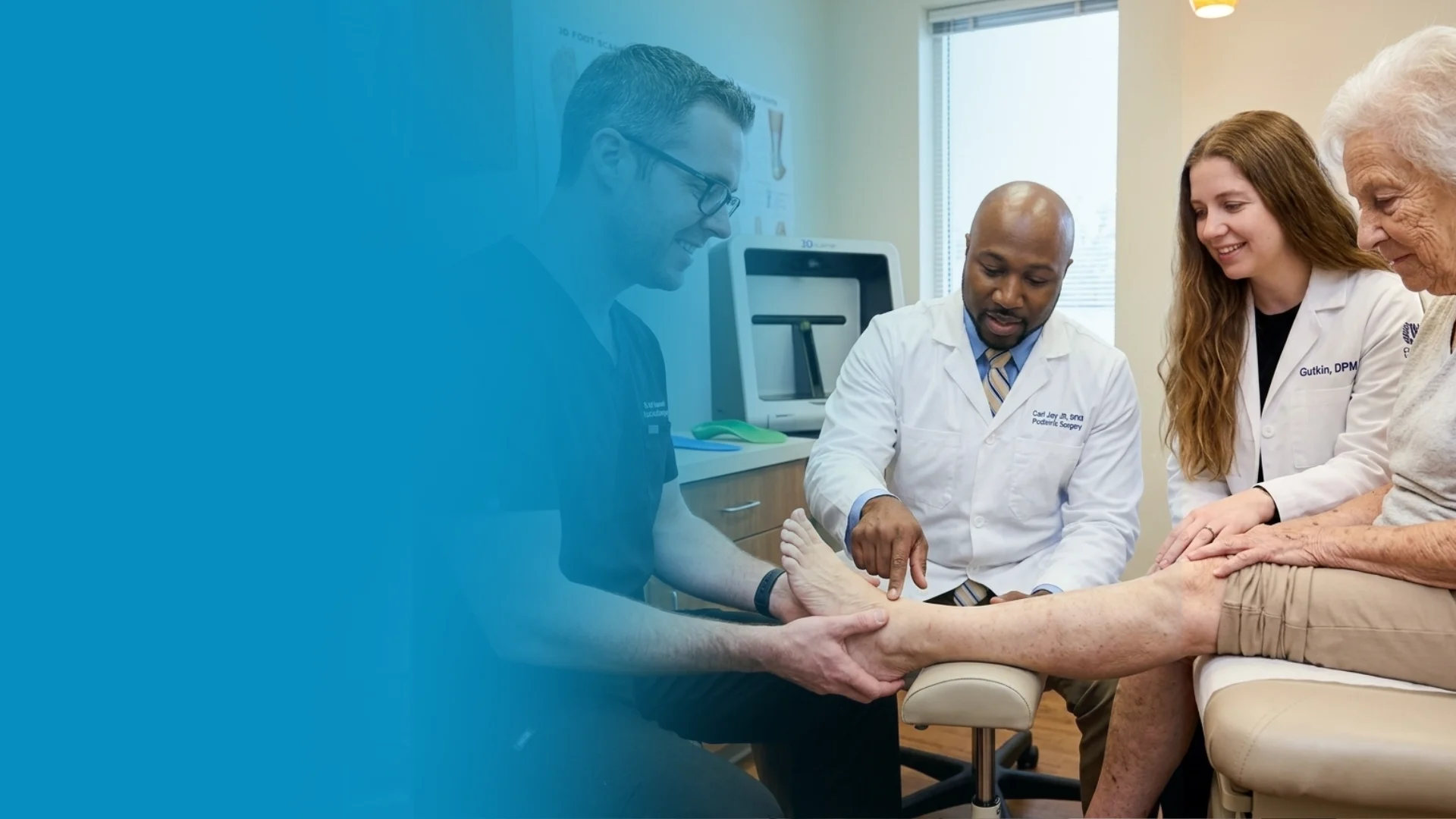
Dr. Daria Gutkin, DPM, AACFAS · Accepting new patients. Specializes in surgical reconstruction and pediatric podiatry.
Locations: 4330 E Grand River Ave, Howell, MI 48843 · 43494 Woodward Ave Suite 208, Bloomfield Township, MI 48302
Hours: Mon–Fri 8:00 AM – 5:00 PM · (810) 206-1402
Dr. Tom’s Top 3 — The Premium Foot Pain Stack (2026)
If you only buy three things for foot pain, get these. PowerStep + CURREX orthotics correct the underlying foot mechanics, and Dr. Hoy’s pain gel delivers fast topical relief. This is the exact stack Dr. Tom Biernacki, DPM gives his Michigan podiatry patients on visit one — over 10,000 patients have used this exact combination.
Dr. Tom Biernacki, DPM is a board-certified podiatrist + Amazon Associate. Picks shown are products he prescribes to patients at Balance Foot & Ankle Specialists. We earn a commission on qualifying purchases at no extra cost to you. All products independently tested + reviewed for 30+ days minimum. Last verified: April 28, 2026.

PowerStep Pinnacle MaxxDr. Tom’s #1 Brand
Dr. Tom’s most-prescribed OTC orthotic. Lateral wedge corrects overpronation that causes 90% of foot pain. Deep heel cradle stabilizes the ankle. Built by podiatrists, used by patients worldwide.
- Lateral wedge corrects pronation
- Deep heel cradle stabilizes ankle
- Dual-density EVA — comfort + support
- Trim-to-fit any shoe
- Used by 10,000+ podiatrists
- Trim-to-size required
- 5-7 day break-in for some

CURREX RunProDr. Tom’s #1 Brand
3 arch heights for custom fit (Low/Med/High). Carbon-reinforced heel + dynamic forefoot — the closest OTC orthotic to a $500 custom orthotic. Engineered in Germany.
- 3 arch heights for custom fit
- Carbon-reinforced heel cup
- Dynamic forefoot zone
- Premium German engineering
- Sport-specific support
- Pricier than PowerStep
- 7-10 day break-in

Dr. Hoy’s Natural Pain Relief GelDr. Tom’s #1 Brand
Menthol-based natural pain relief — Dr. Tom’s #1 brand for fast relief without greasy residue. Safe for diabetics + daily use. Cleaner formula than Voltaren or Biofreeze.
- Menthol-based natural formula
- No greasy residue
- Safe for diabetics
- Fast cooling relief — 5-10 minutes
- Cleaner ingredient list than Biofreeze
- Pricier than Biofreeze
- Strong menthol scent at first
In-Office Treatment at Balance Foot & Ankle
If home treatment isn’t providing relief for your foot condition, our podiatry team at Balance Foot & Ankle can help with same-day evaluations and advanced in-office care.
Same-day appointments available. (810) 206-1402
Doctor Hoy’s Natural Pain Relief Gel
Natural topical pain relief I use in our clinic. Arnica + camphor formula — apply directly to the area 3–4x daily. ($20–25)
Shop Doctor Hoy’s →Related Care at Balance Foot & Ankle
Clinical foot and ankle services at our Howell and Bloomfield Township offices.
Get Expert Care at Balance Foot & Ankle
Same-week appointments at our Howell and Bloomfield Township offices. Board-certified podiatric surgeons. Most insurance accepted.
Ready for Expert Care?
Same-day appointments in Howell & Bloomfield Township, MI.
4.9★ | 1,123 Reviews | 3,000+ Surgeries
Or call: (810) 206-1402

Dr. Tom Biernacki, DPM is a board-certified foot & ankle surgeon (ABFAS & ABPM) at Balance Foot & Ankle Specialists in Southeast Michigan. With over a decade of clinical experience, he specializes in heel pain, bunions, diabetic foot care, sports injuries, and minimally invasive surgery. Dr. Biernacki is a member of the APMA and ACFAS, and his patient education content on MichiganFootDoctors.com and YouTube has made him one of the most-followed foot & ankle educators on YouTube.
More questions patients ask
Why do warehouse workers get foot problems?
Warehouse workers are among the highest-risk occupations for foot problems due to prolonged standing on concrete floors, heavy lifting that transfers stress to feet, repetitive walking on uneven surfaces, mandatory steel-toed boots that may not fit well, and limited ability to rest or change positions. Balance Foot & Ankle provides specialized care for warehouse workers. Call (810) 206-1402.
What foot conditions do warehouse workers most commonly develop?
The most common warehouse worker foot conditions treated at Balance Foot & Ankle include plantar fasciitis from hard floor impact, metatarsalgia from prolonged forefoot loading, heel bursitis, Achilles tendinitis, stress fractures from repetitive impact, and flat foot pain from inadequate support in work boots. Custom orthotics dramatically reduce these problems.
Can custom orthotics be used in steel-toed work boots?
Yes. Balance Foot & Ankle specializes in creating custom orthotics designed to fit within steel-toed safety boots. Properly designed work orthotics provide arch support, shock absorption, and biomechanical correction within the constraints of required safety footwear. This is one of the most impactful interventions we provide for warehouse workers.
Does workers compensation cover foot treatment for warehouse injuries?
Foot and ankle conditions that develop or worsen due to work conditions — including plantar fasciitis, stress fractures, and ankle injuries — may be compensable under workers compensation. Balance Foot & Ankle can provide the documentation needed to support a workers compensation claim and coordinates care with occupational medicine providers. Call (810) 206-1402.
How can warehouse workers prevent foot injuries?
Balance Foot & Ankle recommends: wearing properly fitted safety boots with good cushioning, using custom orthotics in work boots, taking brief sitting breaks when possible, performing calf stretches during breaks, rotating task assignments to vary standing and walking patterns, and scheduling prompt evaluation for any foot pain before it becomes disabling. Prevention saves both workers and employers significantly.
Still have a question about coverage or cost? Book online and we will check your benefits before your visit: Book in Howell · Book in Bloomfield Township. Prefer to talk it through first? Call (810) 206-1402.