
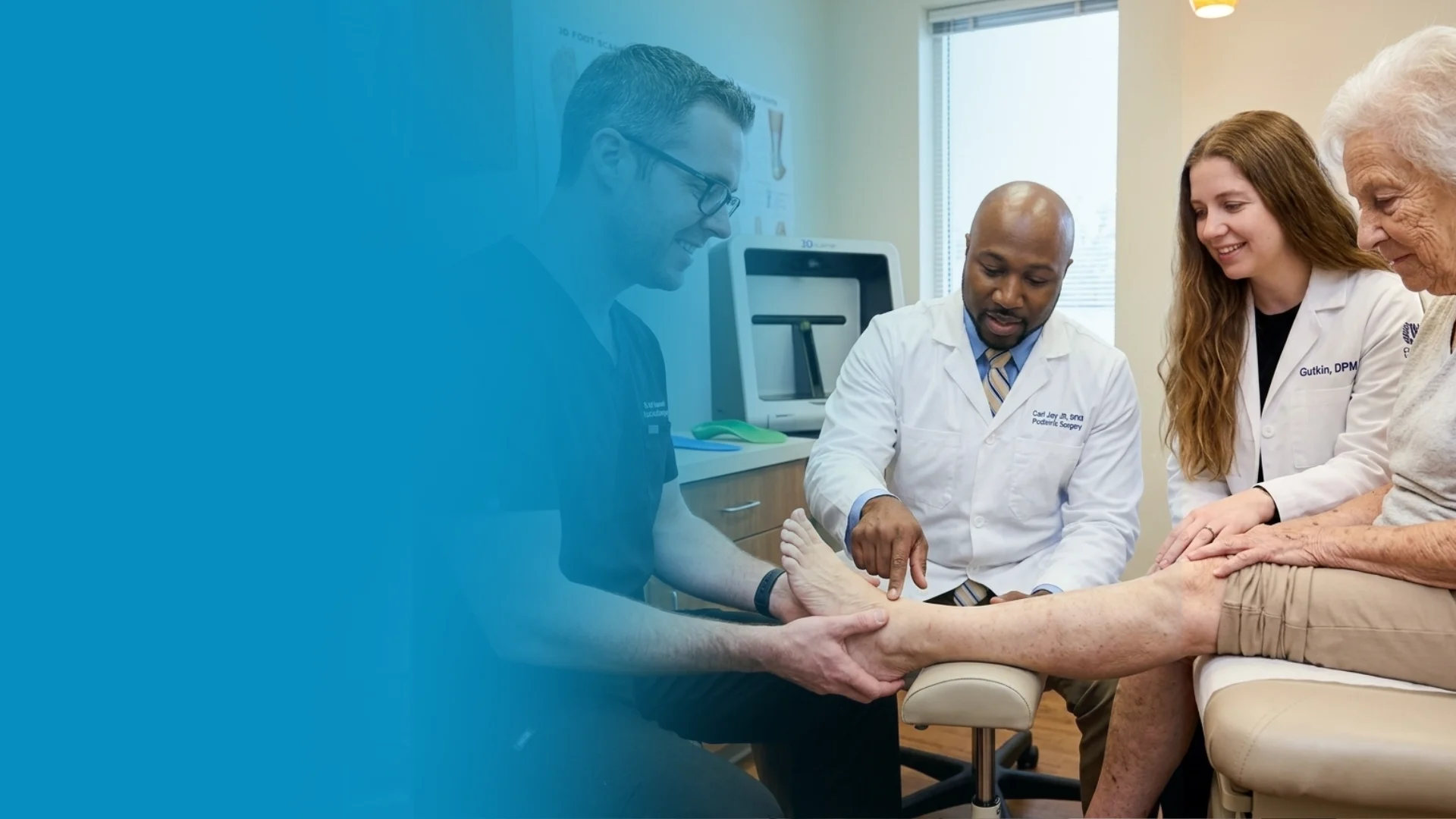
Medically reviewed by Dr. Tom Biernacki, DPM
Board-certified podiatric surgeon | Balance Foot & Ankle
Last reviewed: May 2026
Quick answer: Healthcare Worker Foot Health Guide comes up often in our clinics. Effective treatment starts with a targeted diagnosis, conservative-first treatment, and escalation only when needed. We treat this regularly at our Howell and Bloomfield Township practices. Call (810) 206-1402.
Medically reviewed by Dr. Tom Biernacki, DPM · Board-Certified Podiatric Surgeon · Last reviewed: April 2026 · Editorial Policy
In This Article
- Healthcare Workers: The Irony of Treating Others While Ignoring Your Own Health
- The Healthcare Setting: Why It’s So Hard on Feet
- By Role: What I See and What to Do
- The Shift-to-Shift Recovery Protocol
- Custom Orthotics for Healthcare Workers: A Career-Length Investment
- The “I’ll Deal With It Later” Trap
- Your Board-Certified Podiatrists
- More Podiatrist-Recommended Foot Health Essentials
- Pros & Cons of Conservative Care for foot care
- Dr. Tom’s Recommended Products for foot care
The most important clinical decision with Healthcare Worker Foot Health Guide isn’t which treatment to start with — it’s identifying the correct subtype. That changes everything. Call (810) 206-1402.
Related Conditions
✅ Medically reviewed by Dr. Tom Biernacki, DPM — Board-Certified Podiatrist · Last updated April 6, 2026
Healthcare Worker Foot Health: The Complete Guide for Nurses, Techs & Doctors
Healthcare Workers: The Irony of Treating Others While Ignoring Your Own Health
There is a painful irony in my podiatry practice: some of my most severely affected patients are healthcare workers — nurses, surgical techs, physical therapists, pharmacists, and physicians — who know exactly what’s happening to their feet but have been too focused on caring for others to address their own problems.
Healthcare workers log more steps, on harder floors, for longer periods than almost any other occupation. They often work 12-hour shifts with inadequate break time to sit down. They work through pain because their patients need them. And then they come to my office with advanced plantar fasciitis, Achilles tendinopathy, or stress fractures that have been festering for months because they kept delaying care.
This guide is for every healthcare worker who has been putting their patients’ foot health ahead of their own.
The Healthcare Setting: Why It’s So Hard on Feet
Clinical environments present a unique combination of foot health challenges. Hard flooring (vinyl composition tile over concrete) provides zero shock absorption. Shift lengths (8–12 hours minimum) far exceed what human feet can tolerate without adequate footwear. The acuity of patient care means workers frequently cannot take adequate breaks. The emotional and cognitive demands of the work increase cortisol and reduce pain sensitivity — meaning healthcare workers often don’t notice foot pain until it’s severe.
Additionally, different healthcare roles create different foot injury patterns. ICU and floor nurses: high-mileage walking injuries (PF, metatarsal stress fractures). Surgical techs and scrub nurses: prolonged static standing injuries (posterior tibial tendon dysfunction, metatarsalgia). Radiologists and proceduralists: hybrid of standing and position changes. ED staff: explosive, unpredictable movement patterns leading to acute ankle injuries.
By Role: What I See and What to Do
Nurses (Floor, ICU, ED)
Floor nurses walk 8,000–15,000+ steps per shift. The most common injuries: bilateral plantar fasciitis (arch and heel pain), metatarsal stress fractures, Achilles tendinopathy, and posterior tibial tendon dysfunction. Primary recommendation: maximalist cushioning (HOKA Bondi or Clifton, Brooks Ghost, New Balance Fresh Foam 1080) with a quality insole. Shoe rotation between shifts is critical. Custom orthotics should be considered for anyone who has had more than one episode of foot problems.
Surgical Technicians and OR Nurses
OR staff stand relatively stationary for 4–8 hour cases on hard OR floors. This static loading pattern causes different injuries than walking — primarily metatarsalgia (forefoot pain from prolonged loading), posterior tibial tendon strain, and lower limb vascular issues. Anti-fatigue mats in the OR (where infection control allows) can significantly reduce this burden. Compression garments help with vascular symptoms. Clogs with rocker soles (Dansko Professional) are particularly well-suited for OR environments.
Physical and Occupational Therapists
PT/OT staff combine floor walking with physically demanding patient handling. The lifting, bending, and guarding involved in therapy work puts significant strain on ankles and arches. In addition to good cushioning, PTs and OTs need ankle stability — a shoe with a firm heel counter and adequate lateral support. The On Running Cloudmonster or Brooks Glycerin with added arch support works well for this population.
Physicians and Midlevel Providers
Physicians doing rounds walk extensively, while proceduralists and office-based providers do a hybrid of sitting and standing. The professional appearance requirement often conflicts with optimal foot health choices. Brands like Ecco, Clarks Comfort, and Vionic offer physician-appropriate aesthetics with genuine biomechanical support.
The Shift-to-Shift Recovery Protocol
What you do between shifts determines how well your feet recover. The protocol I recommend for healthcare workers: elevate legs 15–20 minutes post-shift (reduces venous congestion and edema), cold therapy to any inflamed areas, targeted plantar fascia and Achilles stretching, and foot massage with a frozen water bottle if heel pain is present. Compression socks should be worn during and ideally for an hour after each shift.
Sleep is also a recovery intervention: your body repairs musculoskeletal microtrauma during sleep. Healthcare workers who rotate shifts or work nights disrupt this repair process, which is part of why shift workers develop occupational injuries faster than day workers.
Custom Orthotics for Healthcare Workers: A Career-Length Investment
I tell healthcare workers this: your feet are your career. You will spend more time on your feet than almost any other professional. Investing in custom orthotics — which properly address your individual foot biomechanics — is one of the most rational career investments you can make.
Unlike athletes who use orthotics seasonally, healthcare workers need consistent biomechanical support for decades of clinical work. A good pair of custom orthotics, transferred between your work shoes, provides personalized arch support and pressure distribution that no off-the-shelf product can replicate. Most insurance covers custom orthotics for workers with documented foot conditions.
The “I’ll Deal With It Later” Trap
The most common thing I hear from healthcare workers: “I knew something was wrong for months but I kept putting it off.” This delay invariably makes treatment harder and recovery slower. Plantar fasciitis treated in the first 6 weeks has an 85%+ resolution rate with conservative care. Plantar fasciitis that has been present for 12+ months may require shockwave therapy, injections, or surgery. Stress fractures caught early require boot immobilization. Stress fractures that progress to complete breaks may require surgery. Early intervention is not just faster — it’s often the difference between a simple fix and a career-disrupting injury.
As a healthcare worker, you know this. Please apply it to yourself. Schedule an evaluation at Balance Foot & Ankle Specialists — we offer early morning and evening appointments to work around shift schedules, and same-day urgent visits are always available.
Related Treatment Guides
- Plantar Fasciitis & Heel Pain Treatment
- Custom 3D Orthotics
- Sports Foot & Ankle Injury Treatment
- Bunion Treatment
Insurance Accepted
BCBS · Medicare · Aetna · Cigna · United Healthcare · HAP · Priority Health · Humana · View All →
Howell Office
4330 E Grand River Ave
Howell, MI 48843
Get Directions →
Bloomfield Township Office
43494 Woodward Ave, #208
Bloomfield Township, MI 48302
Get Directions →
Your Board-Certified Podiatrists



Ready to Get Back on Your Feet?
Same-week appointments available at both locations.
Book Your AppointmentMore Podiatrist-Recommended Foot Health Essentials
Hoka Clifton 10


Max-cushion everyday shoe — podiatrist favorite for walking and running.

OOFOS Recovery Slide

Impact-absorbing recovery sandal — wear after long days on your feet.
As an Amazon Associate, Balance Foot & Ankle earns from qualifying purchases. Product recommendations are based on clinical experience; prices and availability shown above update live from Amazon.
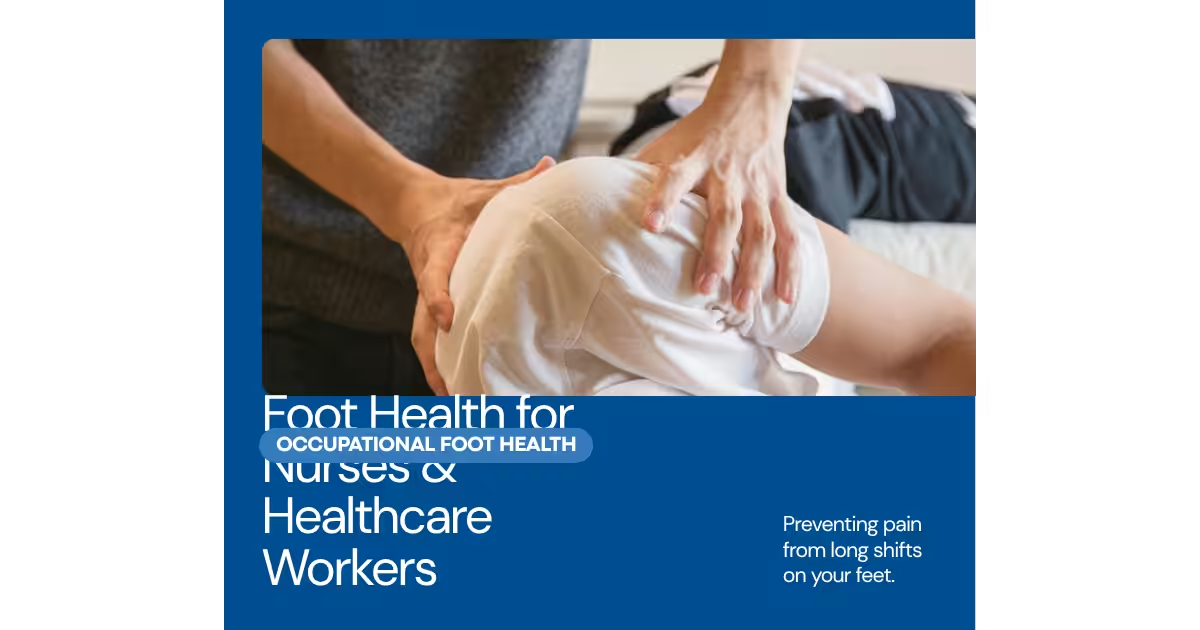
When to See a Podiatrist
If foot or ankle pain has been bothering you for more than a few weeks, home care alone may not be enough. Balance Foot & Ankle offers same-week appointments at our Howell and Bloomfield Township clinics — no referral needed in most cases. Bring your current shoes and a short list of symptoms and we’ll build you a treatment plan in one visit.
Call Balance Foot & Ankle: (810) 206-1402 · Book online · Offices in Howell & Bloomfield Township
Pros & Cons of Conservative Care for foot care
Advantages
- ✓ Conservative care first
- ✓ Same-week appointments
- ✓ Multiple insurance accepted
Considerations
- ✗ Self-treatment can mask issues
- ✗ See a podiatrist if pain >2 weeks
Dr. Tom’s Recommended Products for foot care
Affiliate disclosure: As an Amazon Associate, Balance Foot & Ankle earns from qualifying purchases. We only recommend products we use with patients.
Footnanny Heel Cream Dr. Tom’s Pick
Best for: Daily moisturizer for cracked heels
Ready to Get Back on Your Feet?
Same-day appointments in Howell + Bloomfield Township. Most insurance accepted. Dr. Tom Biernacki, DPM & team.
Book Today — Same-Day Appointments Available
Call Now: (810) 206-1402
About Your Care Team at Balance Foot & Ankle
Dr. Tom Biernacki, DPM · Board-Certified Foot & Ankle Surgeon. Specializes in conservative-first care, minimally invasive bunion surgery, and complex reconstruction.
Dr. Carl Jay, DPM · Accepting new patients. Specializes in sports medicine, athletic injuries, and routine podiatric care.
Dr. Daria Gutkin, DPM, AACFAS · Accepting new patients. Specializes in surgical reconstruction and pediatric podiatry.
Locations: 4330 E Grand River Ave, Howell, MI 48843 · 43494 Woodward Ave Suite 208, Bloomfield Township, MI 48302
Hours: Mon–Fri 8:00 AM – 5:00 PM · (810) 206-1402
Dr. Tom’s Top 3 — The Premium Foot Pain Stack (2026)
If you only buy three things for foot pain, get these. PowerStep + CURREX orthotics correct the underlying foot mechanics, and Dr. Hoy’s pain gel delivers fast topical relief. This is the exact stack Dr. Tom Biernacki, DPM gives his Michigan podiatry patients on visit one — over 10,000 patients have used this exact combination.
Dr. Tom Biernacki, DPM is a board-certified podiatrist + Amazon Associate. Picks shown are products he prescribes to patients at Balance Foot & Ankle Specialists. We earn a commission on qualifying purchases at no extra cost to you. All products independently tested + reviewed for 30+ days minimum. Last verified: April 28, 2026.

PowerStep Pinnacle MaxxDr. Tom’s #1 Brand
Dr. Tom’s most-prescribed OTC orthotic. Lateral wedge corrects overpronation that causes 90% of foot pain. Deep heel cradle stabilizes the ankle. Built by podiatrists, used by patients worldwide.
- Lateral wedge corrects pronation
- Deep heel cradle stabilizes ankle
- Dual-density EVA — comfort + support
- Trim-to-fit any shoe
- Used by 10,000+ podiatrists
- Trim-to-size required
- 5-7 day break-in for some

CURREX RunProDr. Tom’s #1 Brand
3 arch heights for custom fit (Low/Med/High). Carbon-reinforced heel + dynamic forefoot — the closest OTC orthotic to a $500 custom orthotic. Engineered in Germany.
- 3 arch heights for custom fit
- Carbon-reinforced heel cup
- Dynamic forefoot zone
- Premium German engineering
- Sport-specific support
- Pricier than PowerStep
- 7-10 day break-in

Dr. Hoy’s Natural Pain Relief GelDr. Tom’s #1 Brand
Menthol-based natural pain relief — Dr. Tom’s #1 brand for fast relief without greasy residue. Safe for diabetics + daily use. Cleaner formula than Voltaren or Biofreeze.
- Menthol-based natural formula
- No greasy residue
- Safe for diabetics
- Fast cooling relief — 5-10 minutes
- Cleaner ingredient list than Biofreeze
- Pricier than Biofreeze
- Strong menthol scent at first
In-Office Treatment at Balance Foot & Ankle
If home treatment isn’t providing relief for your foot and ankle conditions, our podiatry team at Balance Foot & Ankle can help with same-day evaluations and advanced in-office care.
Same-day appointments available. (810) 206-1402
Doctor Hoy’s Natural Pain Relief Gel
Natural topical pain relief I use in our clinic. Arnica + camphor formula — apply directly to the area 3–4x daily. ($20–25)
Shop Doctor Hoy’s →Ready for Expert Care?
Same-day appointments in Howell & Bloomfield Township, MI.
4.9★ | 1,123 Reviews | 3,000+ Surgeries
Or call: (810) 206-1402
