
Medically reviewed by Dr. Tom Biernacki, DPM
Board-certified podiatric surgeon | Balance Foot & Ankle, Howell & Bloomfield Hills, MI
Last reviewed: May 2026

Quick answer: White Toenail Causes is a common nail condition with multiple causes including trauma, fungal infection, biomechanical pressure, and underlying medical conditions. Treatment depends on the cause: trauma resolves as the nail grows out (6-12 months), fungus needs antifungal therapy, and biomechanical issues need shoe and orthotic correction. Call (810) 206-1402.
White discoloration on toenails is one of the most frequent nail complaints I see in my podiatry practice. The appearance — whether it’s diffuse white powdery surface changes, white streaks, white spots, or a fully white nail — points toward different underlying causes and different treatments.
The most important clinical decision with White Toenail Causes isn’t which treatment to start with — it’s identifying the correct subtype. That changes everything. Call (810) 206-1402.
1. Toenail Fungus (Superficial White Onychomycosis)
Superficial white onychomycosis is a specific type of toenail fungus where the fungus (usually Trichophyton mentagrophytes) grows on the surface of the nail plate rather than invading from underneath. It appears as white, chalky, powdery patches on the top of the nail. The nail surface scrapes off easily and looks “eaten.” This is different from the more common distal subungual onychomycosis, where the fungus enters from under the free edge and causes yellow-brown discoloration.
Superficial white onychomycosis is easier to treat than other types — topical antifungals (efinaconazole, ciclopirox) can penetrate the superficial infection. Our laser treatment works well for all types including superficial white fungus.
2. Keratin Granulations from Nail Polish
Keratin granulations are the most common cause of white, chalky, rough nail surfaces in women who regularly wear nail polish. They form when nail polish (especially acetone-based removers) dehydrates and damages the nail plate, causing keratin proteins to clump and delaminate. The result is a rough, white, pitted nail surface. They are NOT fungal — nail culture or KOH prep will be negative.
Treatment: stop nail polish for 6-8 weeks, apply a nail strengthener or keratin-based nail treatment nightly, keep nails hydrated with cuticle oil. The nail surface normalizes as it grows out. We have a full guide on white chalky toenails from nail polish if this is your situation.
3. True Leukonychia (White Spots and Lines)
True leukonychia refers to actual white discoloration within the nail plate (not the nail bed). Small white spots or transverse white lines (Mees’ lines) are the classic presentation. The most common cause of white spots is minor trauma to the nail matrix — contrary to popular belief, white spots are NOT from calcium deficiency. They grow out harmlessly in 2-3 months.
Mees’ lines (single transverse white lines) have historically been associated with arsenic poisoning, but today are more often seen after severe systemic illness, chemotherapy, or COVID-19 infection. Multiple Mees’ lines in multiple nails simultaneously suggests a systemic event, not a local nail problem.
4. Terry’s Nails and Muehrcke’s Lines (Systemic Causes)
Terry’s nails describe a nail that is white over most of its length with a narrow pink band at the tip. They are associated with hepatic cirrhosis, congestive heart failure, and hypoalbuminemia. If you notice both toenails and fingernails turning uniformly white-ish with this pattern, and you have known liver or heart disease, this is clinically significant and warrants a conversation with your physician.
Muehrcke’s lines are paired transverse white bands (lines visible through the nail, from the nail bed) associated with hypoalbuminemia and nephrotic syndrome. Unlike Mees’ lines, Muehrcke’s lines don’t move with nail growth because they reflect the nail bed, not the plate.
⚠️ See a podiatrist for white toenails if:
- White powdery changes on the nail surface that won’t scrub off — may be superficial fungus
- All toenails becoming white or pale — could signal systemic illness
- White patches under the nail (not on the surface) that are growing toward the cuticle
- White toenails combined with nail thickening, crumbling, or odor — classic fungal signs
- You have diabetes or immune compromise — nail changes need earlier evaluation
How White Toenails Are Diagnosed
In the office, I distinguish fungal from non-fungal white toenails using a nail clipping sent for KOH (potassium hydroxide) prep and periodic acid-Schiff (PAS) staining — both identify fungal elements in the nail. For suspected keratin granulations, the clinical appearance (polish history, surface-only changes, clear nail plate on biopsy) confirms the diagnosis without testing. For systemic nail changes, labs and referral to internal medicine may be appropriate.
In-Office Treatment at Balance Foot & Ankle
We offer nail culture, KOH prep, and laser fungal nail treatment for white toenails caused by fungus. For keratin granulations, we provide nail restoration guidance and professional nail buffing. Book a nail evaluation if you’re unsure what’s causing your white toenail changes.
Same-day appointments available. (810) 206-1402 | Book online
Frequently Asked Questions
Are white spots on toenails a sign of fungus?
Small isolated white spots (true leukonychia) are almost never fungal — they’re most commonly from minor trauma to the nail matrix and grow out in 2-3 months. Superficial white onychomycosis, by contrast, presents as larger white powdery patches on the nail surface that don’t scrub off cleanly and slowly spread. If your white spots are scattered and small, they’re most likely benign. If the white areas are coalescing, powdery, and expanding, get a nail culture.
Can nail polish cause white toenails?
Yes — keratin granulations from nail polish are the most common cause of white, chalky, rough toenails in women. This is not fungal — it’s a surface protein denaturation from the chemical interaction between nail polish/acetone remover and the nail plate. The fix is simple: stop all nail polish for 6-8 weeks, hydrate the nail with keratin serum or cuticle oil, and the nail surface normalizes as it grows. Avoid acetone removers going forward.
Do white toenails mean I’m unhealthy?
In most cases, white toenail changes are purely local — fungus, polish damage, or minor trauma — and don’t indicate underlying health problems. The exceptions are Terry’s nails (diffuse white nails associated with liver or heart disease) and Mees’ lines from severe systemic illness. If you’re healthy and your white toenails are limited to a few toes, a systemic cause is very unlikely. If you also have symptoms like fatigue, swelling, or jaundice, mention the nail changes to your doctor.
Bottom line: White toenails are most often keratin granulations from nail polish or superficial toenail fungus — both treatable. Isolated white spots grow out on their own. White nail changes affecting all nails, or combined with systemic symptoms, warrant evaluation for underlying health conditions.
When Shoes Aren’t Enough — Dr. Tom’s Top 9 Orthotics
About 30% of patients I see for foot pain need MORE than a great shoe — they need a structured insole. Below: my complete 2026 orthotic ranking with pros, cons, and the specific patient I’d give each one to.

- The Pinnacle Full length insoles for men & women provide maximum cushioning, from high activity to moderate support. The PowerStep arch support shape provides stability to the foot and ankle, helping to relieve foot pain.
- When you spend all day on your feet, every step counts. PowerStep insoles are a podiatrist-recommended orthotic to help relieve & prevent foot pain related to athletes, runners, Plantar Fasciitis, heel spurs & other common foot, ankle & knee injuries
- The Pinnacle plantar fasciitis insoles offer superior heel cushioning and arch support. The dual-layer cushioning is designed to reduce stress and fatigue, while PowerStep premium arch support is designed for plantar fasciitis relief.
- The PowerStep Pinnacle arch support inserts for men & women can be worn in a variety of shoe types such as; athletic, walking, running, work & some casual shoes. Orthotic Inserts are ordered by shoe size, no trimming required.
- Made in the USA & backed by a 30-day money-back guarantee. PowerStep orthotic inserts for men & women are designed for shoes where the factory insole can be removed. HSA & FSA Eligible

- Full Length Support – Our ProTech orthotic insoles support pronation, arch pain, heel pain, plantar fasciitis, and heel spurs.
- Your Go To Inserts – These orthotics for plantar fasciitis provide full length, total contact support for a number of common foot issues
- Easily Fix Your Arches – Standard, semi-rigid arch support that fits most shoes including, work boots, dress shoes and sneakers.
- Enhanced Comfort – Our ProTech orthotic inserts have maximum cushioning featuring ShockAbsorb Premium Foam heel support cushion to increased protection.
- Support + Comfort – PowerStep ProTech orthotic insoles are designed with built-in arch support, heel cradle, and a perfect balance of support and comfort. Legitimate PowerStep product packaging is marked with a unique US quality control code. If you are concerned that a PowerStep item is not legitimate, please contact PowerStep customer service.
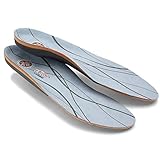
- PODIATRIST DESIGNED! An effective alternative to expensive custom-made orthotics. Innovative biomechanical THREE-ZONE COMFORT technology delivers deep heel cup stability, forefoot cushioning, and ultimate arch support to prevent excessive pronation caused by flat feet. These essential contact points help to realign positioning of feet, aiding to re-establish your body’s natural alignment, from the ground up.
- VIONIC ORTHOTIC INSOLES! These women’s and men’s shoe inserts offer a convenient, pain-free natural healing solution for many of the common aches and pains associated with poor lower-limb alignment, plantar fasciitis, and arch pain. EVA orthotic with re-enforced, hardened plastic (PE) shell for added motion control and stability. Cushioned shock dot in the heel for added shock absorption. Can be trimmed in forefoot if necessary.
- DESIGNED FOR EVERYDAY USE! Designed to provide greater control in faster paced activities such as running and fast walking. 4 degree rear foot wedge to provide support and control which helps prevent excess pronation. Odor absorbing cover. Contoured around the heel and arch areas to achieve 100% foot contact. Podiatrist Designed, APMA Seal of Acceptance.
- COMFORTABLE TO WEAR! Shoe inserts for women and men contoured around the heel and arch areas to achieve perfect foot contact.
- SIZES AVAILABLE: XS: Women’s 4.5 – 6 / Men’s 3.5 – 5 S: Women’s 6.5 – 8 / Men’s 5.5 – 7 M: Women’s 8.5 – 10 / Men’s 7.5 – 9 L: Women’s 10.5 – 12 / Men’s 9.5 – 11 XL: Men’s 11.5 – 13

- Signature waffle-inspired rubber outsole for traction and flexibility

- Provides continuous support of the Plantar Fascia by gently stretching the fascia tissue.
- Compression zones promote circulation, reduce impact vibration, boost recovery and strengthen feet.
- Lightweight, seamless design with extra cushioning provides support while still being comfortable.
- Supports the heel/arch and overall foot structure while stabilizing the tendon for better performance
- Made from high quality materials, the socks are moisture wicking and breathable.

- The first generation of Protalus’s M-100 Insole
- Patented Alignment Technology: The M-100 features a deep heel cup and contoured arch to correct overpronation and promote better posture, stability, and joint health throughout your body.
- Comfortable Insoles: The patented stress relief replacement shoe insoles increase comfort and relieve plantar fasciitis and anti-fatigue.
- Improves Alignment: The shoe insoles help improve alignment and reduce pain in the feet, ideal for low and high arches.
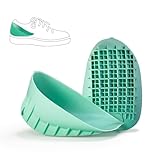
- ✶ALLEVIATES HEEL PAIN – Tuli’s Heavy Duty Heel Cups provide heel pain relief caused by plantar fasciitis, Sever’s disease, excessive pronation, Achilles tendonitis, etc. Ideal for those on their feet for most of the day or those looking for added comfort.
- ✶PODIATRIST PREFERRED – In an independent study conducted by M3 Global Research, podiatrists chose Tuli’s as the clear winner of recommended heel cup brands.
- ✶SHOCK-ABSORBING DESIGN – The multi-cell, multi-layer design absorbs shock and impact energy, mimicking the natural shock-absorbing system of your feet. As you walk or run, the design reduces the stress on your feet.
- ✶DOCTOR RECOMMENDED & APMA ACCEPTED – Tuli’s Heel Cups were designed by a leading podiatrist and have the honor of being accepted by the American Podiatric Medical Association.
- ✶FITS MOST LACE-UP SHOES – Best used in spacious lace-up shoes like athletic shoes / sneakers.
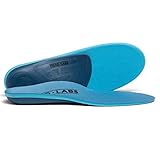
- Plantar Fasciitis Relief, Every Step – Firm arch support helps relieve heel and arch pain from plantar fasciitis and supports flat feet and overpronation for better alignment and all-day comfort.
- Clinical-Grade Biomechanics – Tread Labs 26-33 ARCHitecture delivers orthotic-level stability—custom-orthotic feel without the prescription.
- Dialed Fit for Any Shoe – Four arch heights (low, medium, high, extra-high) and an easy 3-step sizing guide make selection simple for work boots, sneakers, and everyday shoes—great for standing all day.
- Built to Last a Million Miles – Durable, recyclable arch supports with our Million-Mile Guarantee; replaceable top covers keep insoles fresh and cost-effective. Unlike foam that flattens, Pace is engineered to last.
- Trusted Expertise – Designed by Mark Paigen (founder of Chaco). Premium arch support inserts for men and women backed by decades of footwear innovation.
Frequently Asked Questions
How long does it take a toenail to grow back?
6-12 months for a full big toenail. Smaller toenails 4-6 months. Speed varies with age, circulation, and nutrition.
Will this affect other nails?
Trauma affects only the injured nail. Fungal infection can spread without treatment. Systemic causes affect multiple nails simultaneously.
Should I cover the nail or leave it open?
Cover with a breathable bandage during work or activity. Leave open at night for healing. Keep dry and clean.
APMA: White Toenails — Causes and Treatment
Ready to Get Relief?
Same-day appointments available in Howell & Bloomfield Hills, MI
4.9★ | 1,123 Reviews | 3,000+ Surgeries
Or call: (810) 206-1402

Dr. Tom Biernacki, DPM is a board-certified foot & ankle surgeon (ABFAS & ABPM) at Balance Foot & Ankle Specialists in Southeast Michigan. With over a decade of clinical experience, he specializes in heel pain, bunions, diabetic foot care, sports injuries, and minimally invasive surgery. Dr. Biernacki is a member of the APMA and ACFAS, and his patient education content on MichiganFootDoctors.com and YouTube has made him one of the most-followed foot & ankle educators on YouTube.