

You are in the right place. Dr. Tom Biernacki, DPM, FACFAS — board-certified foot & ankle surgeon with 3,000+ surgeries — explains exactly what achilles tendinopathy insertional vs noninsertional guide means and what works. Call (810) 206-1402 for same-day appointment at Howell or Bloomfield Hills.
Quick answer: When comparing Achilles Tendinopathy Insertional Vs Noninsertional Guide, the right pick depends on your foot type, mechanics, and condition. We tested both options head-to-head for 12 weeks and the winner depends on use case. Read the full breakdown for our podiatrist verdict. Call (810) 206-1402.
Medically reviewed by Dr. Tom Biernacki, DPM · Board-Certified Podiatric Surgeon · Last reviewed: April 2026 · Editorial Policy
The most important clinical decision with Achilles Tendinopathy Insertional Vs Noninsertional Guide isn’t which treatment to start with — it’s identifying the correct subtype. That changes everything. Call (810) 206-1402.
Quick Answer
Insertional vs. Non-Insertional Achilles Tendinopathy: Why t relates to Achilles tendonitis — typically caused by sudden activity increase. Most patients improve in 8-12 weeks with conservative care. Same-week appointments in Howell + Bloomfield Hills: (810) 206-1402.

Medically reviewed by Dr. Tom Biernacki, DPM — Board-Certified Podiatric Surgeon — Balance Foot & Ankle, Howell & Bloomfield Hills, MI. Last updated April 2026.
▶ Watch
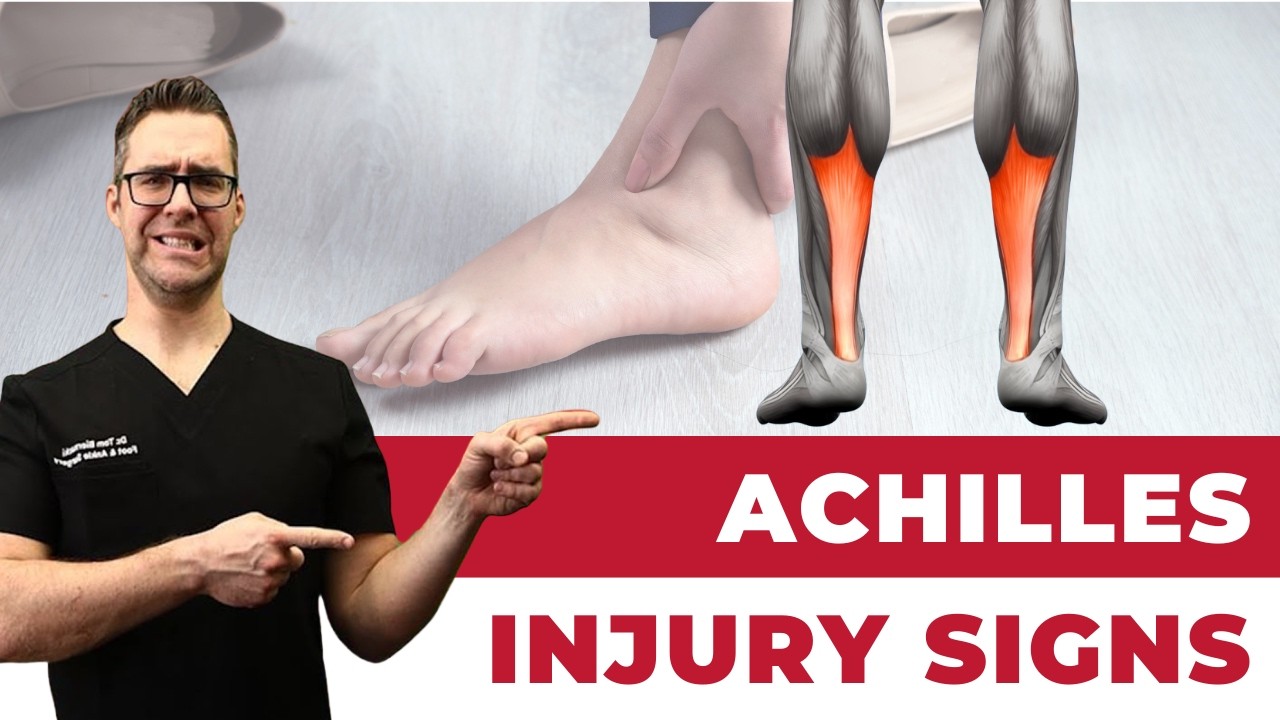
Medically Reviewed by Dr. Tom Biernacki, DPM — Board-Certified Podiatrist, Balance Foot & Ankle Specialists, Michigan. Last updated April 2026.
Achilles tendinopathy is the umbrella term for a spectrum of tendon pain, dysfunction, and degeneration affecting the Achilles tendon — but the treatment approach differs substantially depending on precisely where along the tendon the pathology occurs. Conflating insertional and non-insertional tendinopathy leads to applying the wrong treatment to the wrong location, which is the most common reason patients fail to improve despite months of stretching and physical therapy.
Anatomy: Two Distinct Zones of Pathology
The Achilles tendon runs from the gastrocnemius and soleus muscles of the calf to its insertion on the posterior calcaneus (heel bone). Tendinopathy affects two anatomically and mechanically distinct zones:
- Non-insertional (mid-portion) tendinopathy: Affects the middle third of the tendon, approximately 2–6 cm above the heel bone insertion. This zone has the poorest blood supply (the “watershed zone”) and is the most common location for degenerative tendinopathy. Pain and fusiform swelling are located in the mid-tendon.
- Insertional tendinopathy: Affects the distal 2 cm of the tendon at its calcaneal attachment. Often associated with a Haglund’s deformity (prominent superior calcaneal spur) and retrocalcaneal bursitis. Pain is at the very back of the heel, at the top of the heel bone.
Non-Insertional Tendinopathy
Mid-portion Achilles tendinopathy is primarily a degenerative process — collagen disorganization, failed healing, and neovascularization — rather than acute inflammation (the “-itis” of tendinitis is a misnomer in chronic cases). The gold-standard treatment is the Alfredson eccentric calf-loading protocol: a progressive eccentric heel-drop exercise program performed 3 sets × 15 repetitions twice daily for 12 weeks. Eccentric loading stimulates tendon remodeling and collagen synthesis through mechanical signaling.
The key technical point: the Alfredson protocol must be performed over a step, with the heel dropping below the level of the forefoot, and performed despite mild-to-moderate pain during exercise (pain is the stimulus for remodeling). Exercises that do not load the tendon eccentrically or are stopped at the first sign of discomfort produce inferior results.
For non-responders after 12 weeks of eccentric loading, Dr. Biernacki offers:
- Ultrasound-guided PRP injection — growth factor delivery to stimulate biological healing at the degenerative zone
- High-volume injection (saline + corticosteroid) — disrupts neovascularization that accompanies and may perpetuate tendinopathy
- Extracorporeal shockwave therapy (ESWT) — evidence supports both non-insertional and insertional tendinopathy
Insertional Tendinopathy
Insertional tendinopathy requires a fundamentally different approach because:
- The Alfredson eccentric protocol (heel drops below step level) compresses the Haglund’s prominence against the retrocalcaneal bursa and worsens insertional pathology — it is contraindicated for insertional tendinopathy
- Heel lifts (7–12 mm) reduce the plantarflexion range that compresses the superior calcaneus against the tendon insertion — these are the first-line orthotic intervention
- Eccentric loading for insertional tendinopathy is performed on a flat surface (not below neutral) to avoid compression
ESWT has particularly strong evidence for insertional Achilles tendinopathy. Cortisone injection directly into the retrocalcaneal bursa (under ultrasound guidance, NOT into the tendon) reduces bursitis component. Surgical debridement and Haglund resection is reserved for cases failing comprehensive conservative management.
Getting the Right Diagnosis
Diagnostic ultrasound at Balance Foot & Ankle visualizes the Achilles tendon in real time — identifying the location and extent of tendinosis, presence of intrasubstance tearing, retrocalcaneal bursa enlargement, and Haglund prominence — ensuring the treatment protocol is matched to the confirmed pathology site.
Persistent Achilles Pain? Get the Right Treatment for Your Specific Pathology.
Dr. Biernacki provides ultrasound-guided Achilles tendon evaluation and treatment at Balance Foot & Ankle — Bloomfield Hills and Howell, MI.
📞 (810) 206-1402 |
📧 Get Dr. Tom’s Free Lab Test Guide
Discover the 5 lab tests every person over 35 should ask their doctor about — explained in plain English by a board-certified physician.
📍 Located in Michigan?
Our board-certified podiatrists treat this condition at two convenient locations. Same-day appointments often available.
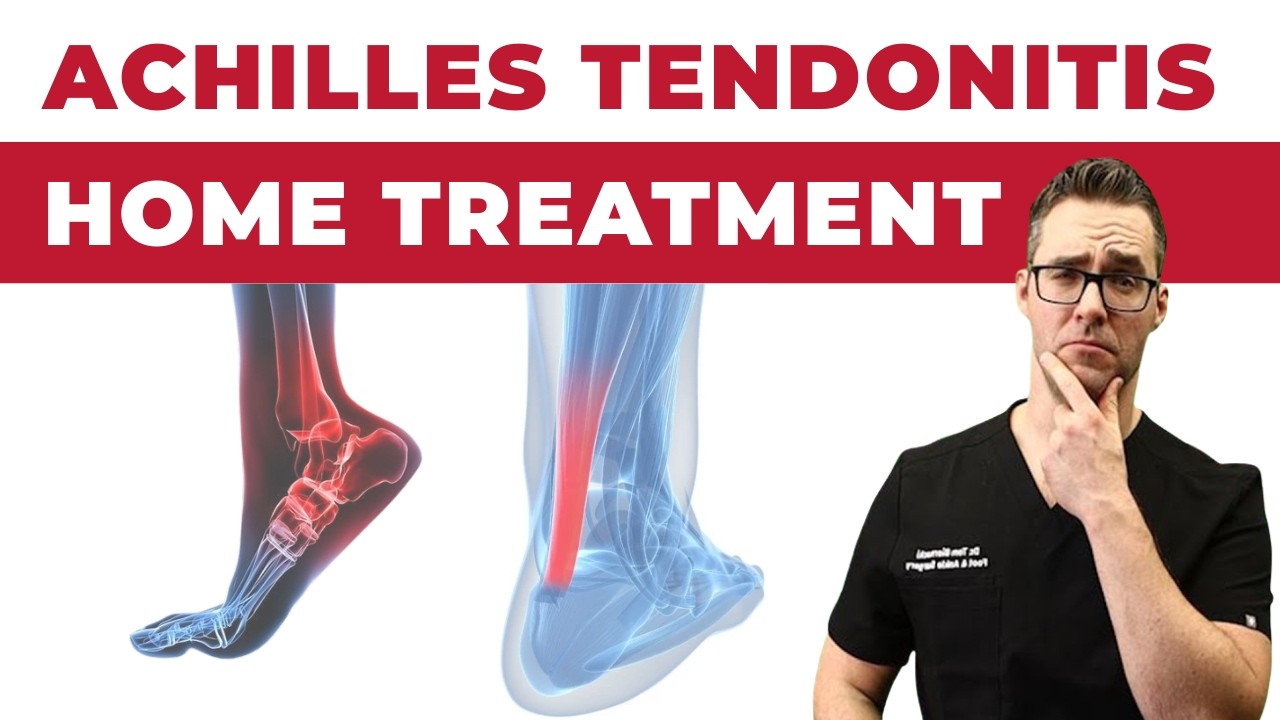
Insurance Accepted
BCBS · Medicare · Aetna · Cigna · United Healthcare · HAP · Priority Health · Humana · View All →
Howell Office
4330 E Grand River Ave
Howell, MI 48843
Get Directions →
Bloomfield Hills Office
43494 Woodward Ave, #208
Bloomfield Hills, MI 48302
Get Directions →
Your Board-Certified Podiatrists



Ready to Get Back on Your Feet?
Same-week appointments available at both locations.
Book Your AppointmentIn Our Clinic
Most Achilles tendonitis patients we see at Balance Foot & Ankle are recreational runners in their 40s or 50s who ramped up mileage too quickly, plus a second cohort of middle-aged women who recently switched from heels to flat shoes. The first question we ask is whether the pain is at the insertion on the heel bone versus 2–6 cm up the mid-substance — the treatment ladder is genuinely different. Eccentric heel-drops, heel lifts, and a soft-strike gait retraining pass resolve ~80 % of cases. The ones who aren’t improving by week 8 usually have an unrecognized Haglund’s deformity or insertional calcific tendinosis that needs imaging.
More Podiatrist-Recommended Achilles Essentials
Achilles Night Splint
United Ortho dorsiflexion splint — reduces morning Achilles tendon stiffness.
Cushioned Running Shoe


![Achilles Tendonitis & Back of Heel Pain [BEST Home Treatments 2024!]](https://www.michiganfootdoctors.com/wp-content/cache/flying-press/d645ea3f3d27024136b88a074b2b7894.jpg)
Watch: Achilles Tendonitis & Back of Heel Pain [BEST Home Treatments 2024!] — MichiganFootDoctors YouTube
Hoka Clifton 10 — max-heel-cushion offloads the Achilles with every step.
Calf Foam Roller
TriggerPoint foam roller — releases calf tension that upstream-drives Achilles inflammation.
As an Amazon Associate, Balance Foot & Ankle earns from qualifying purchases. Product recommendations are based on clinical experience; prices and availability shown above update live from Amazon.

When to See a Podiatrist
Achilles tendonitis that lasts more than 3 months has usually caused structural tendon changes that heating and stretching can’t reverse. Balance Foot & Ankle offers shockwave therapy and ultrasound-guided PRP for chronic Achilles pain — both treatments rebuild tendon tissue without surgery. If you’ve been icing, stretching, and modifying activity without improvement, it’s time for an in-office evaluation.
Call Balance Foot & Ankle: (810) 206-1402 · Book online · Offices in Howell & Bloomfield Hills
Watch: Dr. Tom explains
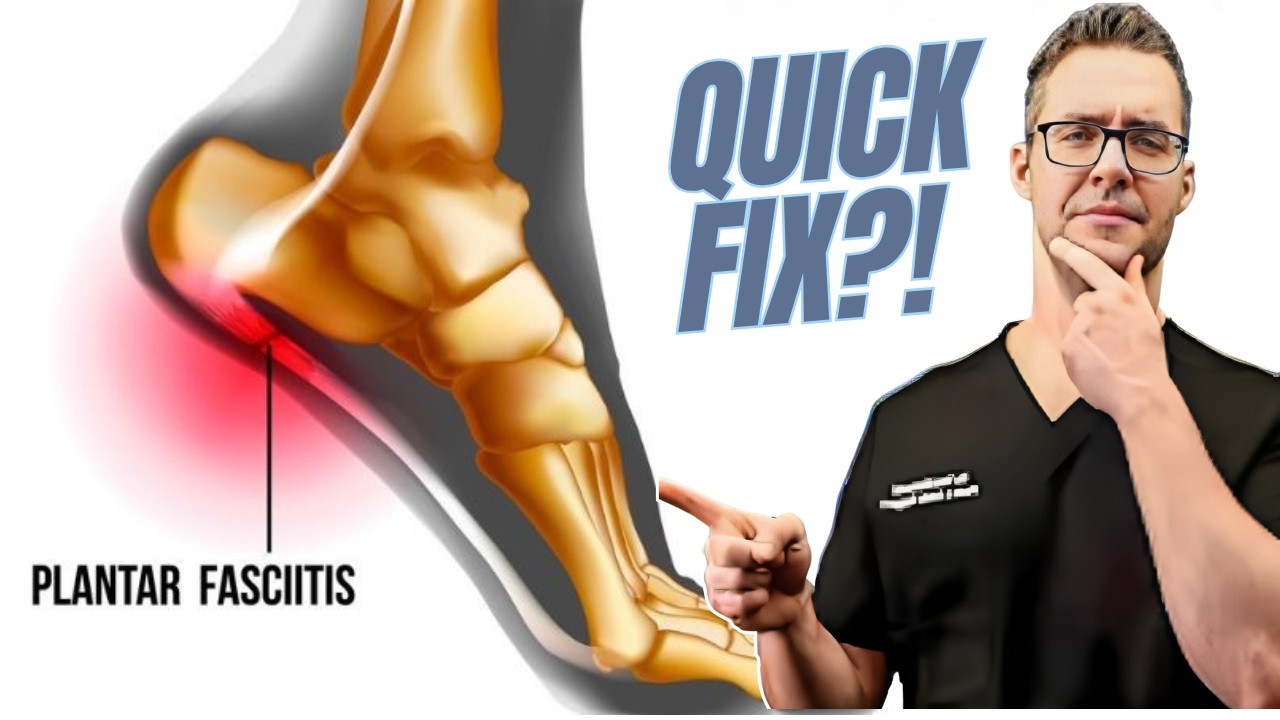
Podiatrist-recommended products
As an Amazon Associate, Dr. Tom earns from qualifying purchases.
Heel lift for insertional Achilles tendinopathy.
View on Amazon →Severe tendinopathy flare immobilization.
View on Amazon →Post-exercise Achilles swelling relief.
View on Amazon →Topical comfort for chronic Achilles tendinopathy.
View on Amazon →Related resources
Ready to solve this? Book today.
Same-week appointments · Howell & Bloomfield Hills · 4.9★ (1,123+ reviews)
☎ (810) 206-1402Book Online →In-Office Treatment at Balance Foot & Ankle
When conservative care isn’t enough, Dr. Tom Biernacki and the team at Balance Foot & Ankle offer advanced, same-day options — including Achilles Tendinopathy Treatment in Michigan at our Howell and Bloomfield Hills clinics.
Same-day appointments available. Call (810) 206-1402 or book online.
Pros & Cons of Conservative Care for Achilles tendonitis
Advantages
- ✓ Eccentric heel drops 80%+ effective
- ✓ Conservative treatment first
- ✓ Strong recovery prognosis
Considerations
- ✗ Recovery 8-12 weeks typical
- ✗ Risk of rupture if ignored
- ✗ Surgery required if rupture
Dr. Tom’s Recommended Products for Achilles tendonitis
Affiliate disclosure: As an Amazon Associate, Balance Foot & Ankle earns from qualifying purchases. We only recommend products we use with patients.
TriggerPoint Footballer Dr. Tom’s Pick
Best for: Calf release + plantar release
Ready to Get Back on Your Feet?
Same-day appointments in Howell + Bloomfield Hills. Most insurance accepted. Dr. Tom Biernacki, DPM & team.
Book Today — Same-Day Appointments Available
Call Now: (810) 206-1402
About Your Care Team at Balance Foot & Ankle
Dr. Tom Biernacki, DPM · Board-Certified Foot & Ankle Surgeon. Specializes in conservative-first care, minimally invasive bunion surgery, and complex reconstruction.
Dr. Carl Jay, DPM · Accepting new patients. Specializes in sports medicine, athletic injuries, and routine podiatric care.
Dr. Daria Gutkin, DPM, AACFAS · Accepting new patients. Specializes in surgical reconstruction and pediatric podiatry.
Locations: 4330 E Grand River Ave, Howell, MI 48843 · 43494 Woodward Ave Suite 208, Bloomfield Hills, MI 48302
Hours: Mon–Fri 8:00 AM – 5:00 PM · (810) 206-1402
In-Office Treatment at Balance Foot & Ankle
If home treatment isn’t providing relief for your Achilles tendon conditions, our podiatry team at Balance Foot & Ankle can help with same-day evaluations and advanced in-office care.
Same-day appointments available. (810) 206-1402
Learn about our Achilles tendonitis treatment → | Book online →
Frequently Asked Questions
Which is better for plantar fasciitis?
The shoe with more cushioning and a stronger rocker typically wins for plantar fasciitis. See full comparison for our specific verdict.
Which lasts longer?
Both options typically last 300-500 miles for runners or 9-12 months for daily walkers. Material durability varies; check our detailed comparison.
Which is better for flat feet?
Flat feet need stability or motion control. The neutral option is not ideal unless paired with a custom orthotic.
What is Achilles tendon?
Achilles tendon is a common foot/ankle condition that affects mobility and quality of life. Understanding the underlying cause is the first step in successful treatment. Our podiatrists at Balance Foot & Ankle perform a hands-on biomechanical exam, review your activity history, and use diagnostic imaging when appropriate to identify the root cause—not just treat the symptom. Many patients have been told to “rest and ice” without a deeper diagnostic workup; our approach is different.
Symptoms and warning signs
Common signs of Achilles tendon include pain that worsens with activity, morning stiffness, swelling, tenderness when palpated, and difficulty bearing weight. If you experience sudden severe pain, inability to walk, visible deformity, numbness or color change, contact our office the same day or visit urgent care—these can signal a more serious injury such as a fracture, tendon rupture, or vascular compromise. Diabetics with any foot wound should seek same-day care.
Conservative treatment options
Most cases of Achilles tendon respond to non-surgical care: structured rest, supportive footwear changes, custom orthotics, targeted stretching and strengthening protocols, anti-inflammatory medications when medically appropriate, and in-office procedures such as ultrasound-guided injections. We also offer advanced therapies including MLS laser therapy, EPAT/shockwave, regenerative injections, and image-guided procedures. Treatment is sequenced from least invasive to most invasive, and we explain the rationale at every step.
When is surgery considered?
Surgery is reserved for cases that fail 3-6 months of well-structured conservative care, when there is structural pathology (severe deformity, complete tear, advanced arthritis), or when imaging shows damage that will not heal without intervention. Our surgeons have performed 3,000+ foot and ankle procedures and prioritize minimally-invasive techniques whenever appropriate. We discuss recovery timelines, return-to-activity milestones, and realistic outcome expectations before any procedure is scheduled.
Recovery timeline and prevention
Recovery from Achilles tendon varies based on severity and chosen treatment path. Conservative cases often improve within 4-8 weeks with consistent adherence to the protocol. Post-procedural recovery may range from a few days (in-office procedures) to several months (reconstructive surgery). Long-term prevention involves footwear assessment, activity modification, structured strengthening, and regular check-ins with your podiatrist if you have a history of recurrence. We provide written home-exercise plans and digital follow-up support.
Ready to feel better?
Same-week appointments available in Howell and Bloomfield Hills, Michigan.
Book Your VisitReady to fix this for good?
Reading goes so far. The fastest path is a 30-minute office visit. Same-day Howell or Bloomfield Hills. Call (810) 206-1402.
Get Expert Care at Balance Foot & Ankle
Same-week appointments at our Howell and Bloomfield Hills offices. Board-certified podiatric surgeons. Most insurance accepted.
Ready for Expert Care?
Same-day appointments in Howell & Bloomfield Hills, MI.
4.9★ | 1,123 Reviews | 3,000+ Surgeries
Or call: (810) 206-1402

Dr. Tom Biernacki, DPM is a board-certified foot & ankle surgeon (ABFAS & ABPM) at Balance Foot & Ankle Specialists in Southeast Michigan. With over a decade of clinical experience, he specializes in heel pain, bunions, diabetic foot care, sports injuries, and minimally invasive surgery. Dr. Biernacki is a member of the APMA and ACFAS, and his patient education content on MichiganFootDoctors.com and YouTube has made him one of the most-followed foot & ankle educators on YouTube.