Board Certified Podiatrists | Expert Foot & Ankle Care
(810) 206-1402 Patient Portal

Best Peroneal Tendonitis Brace & Support Products 2026: Podiatrist Guide to Outer Ankle & Foot Pain

Best Peroneal Tendonitis Brace & Support Products 2026: Podiatrist Guide to Outer Ankle & Foot Pain

✅ Reviewed by Dr. Tom Biernacki, DPM — Double Board-Certified Podiatrist & Foot Surgeon
Peroneal tendonitis is one of the most frequently misdiagnosed causes of lateral (outer) ankle and foot pain — often confused with a chronic ankle sprain, a stress fracture of the fifth metatarsal base, or sural nerve entrapment. As a podiatric surgeon who has treated hundreds of peroneal tendon disorders ranging from acute tendinopathy to complete longitudinal tears, I understand how precisely targeted the conservative management strategy needs to be. Generic ankle braces and cushioned insoles often fail these patients because they don’t address the specific loading pattern that overloads the peroneal tendons. This guide reviews the six products that have proven most effective in our clinic at Balance Foot & Ankle Specialists, with detailed clinical reasoning for each selection.

⚡ Dr. Tom’s Top 6 Peroneal Tendonitis Support Products 2026

  1. BioSkin Trilok Ankle & Foot Brace — Best overall; addresses both rearfoot eversion and subtalar motion that directly loads the peroneal tendons
  2. Aircast AirSport+ Ankle Brace — Best lateral ankle support; semi-rigid stirrup with air cells for precise lateral malleolar stabilization
  3. Active Ankle T2 Brace — Best for return-to-sport; hinged brace allows dorsiflexion while blocking the inversion/eversion stress on peroneal tendons
  4. Bauerfeind MalleoTrain Ankle Support — Best compression sleeve; medical-grade knit with anatomical pressure pads targeting the lateral ankle complex
  5. PowerStep Pinnacle Insole — Best insole; high-density foam base with deep heel cup corrects the pronation pattern that overloads the peroneal longus
  6. KT Tape Pro Kinesiology Tape — Best adjunct taping; peroneal tendon deloading application reduces tendon excursion force during activity

Peroneal tendonitis — inflammation of the peroneus longus and/or peroneus brevis tendons — develops through a fundamentally different mechanism than the acute ligament sprains that most lateral ankle pain is attributed to. While ankle sprains result from a single high-energy inversion event, peroneal tendinopathy is an overuse syndrome driven by accumulated repetitive eccentric loading of the peroneal tendon complex during the pronation-to-supination transition of the gait cycle. This distinction between acute ligament injury and chronic tendon overuse determines the entire management approach and explains why the products appropriate for ankle sprains are often insufficient — or even counterproductive — for peroneal tendonitis.

Clinician-Recommended Alternatives
Dr. Tom's Pick: Pain Relief
Natural arnica and menthol formula. Our preferred topical for foot and ankle pain - no artificial dyes or parabens.
Replaces: Biofreeze | Available on Amazon with free Prime shipping
These products are personally used and recommended by Dr. Tom Biernacki, DPM at Balance Foot & Ankle Specialists.

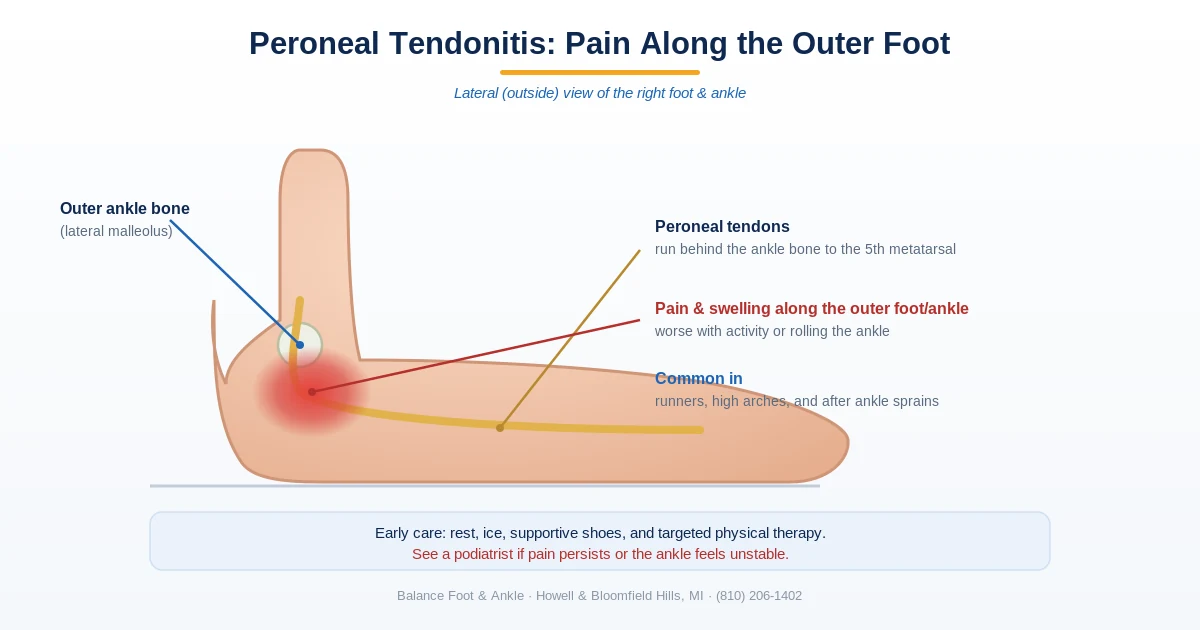
The peroneal tendons run posterior to the lateral malleolus (the bony prominence on the outside of the ankle) in a fibro-osseous tunnel held in place by the superior peroneal retinaculum. The peroneus longus tendon continues beneath the foot, crossing under the cuboid to insert on the base of the first metatarsal and medial cuneiform — a course that means peroneus longus dysfunction affects not only lateral ankle stability but also first-ray plantarflexion and medial arch stability. The peroneus brevis inserts on the base of the fifth metatarsal and is the primary eversion motor. Both tendons are maximally loaded during the eccentric phase of supination after midstance — the moment when the foot transitions from loaded pronation to toe-off, requiring the peroneals to provide eccentric resistance against the supination moment that accompanies heel rise.

Three populations carry disproportionate peroneal tendon risk: runners with high mileage on banked or cambered road surfaces (which chronically loads the lateral ankle into an inversion position, amplifying peroneal eccentric demand); athletes with cavus (high-arched) foot type (in whom the anatomical varus heel alignment creates a chronic lateral overload pattern); and patients recovering from lateral ankle sprains who received inadequate peroneal rehabilitation and are returning to activity with a proprioceptive and strength deficit that the peroneals cannot support. In each case, the product strategy must address the specific mechanical driver of the condition rather than simply bracing the ankle generically.

Peroneal Tendonitis Anatomy: Why This Condition Is Different from a Sprained Ankle

The peroneal tendon complex is one of the most biomechanically important structures in the foot and ankle — and one of the most under-appreciated by both patients and non-specialist clinicians. Understanding its anatomy and function is the foundation for selecting products that actually address the mechanical cause of the condition rather than simply immobilizing a painful region.

Two primary tendons make up the peroneal complex: the peroneus longus and peroneus brevis. Both originate from the lateral fibula, course posterior to the lateral malleolus through a shared fibro-osseous tunnel, and then diverge below the ankle. The peroneus brevis travels directly to insert on the styloid process (base) of the fifth metatarsal — the bony prominence on the outer edge of the foot where it is almost universally tender in peroneal tendonitis. The peroneus longus takes a more complex course, hooking beneath the cuboid bone through a notch (the peroneal groove) and crossing diagonally beneath the entire forefoot to insert on the medial cuneiform and base of the first metatarsal. This long diagonal course gives the peroneus longus its role as both an ankle evertor (turning the foot outward) and a first-ray plantarflexor (pressing the medial forefoot into the ground during the push-off phase of gait).

The superior peroneal retinaculum (SPR) is the fibrous band that holds both tendons in their groove behind the lateral malleolus. In peroneal tendon subluxation — a more severe condition where the retinaculum tears and the tendons dislocate out of their groove — patients feel a snapping sensation over the posterior lateral malleolus. This is distinct from peroneal tendinopathy (inflammation within the tendon substance) but shares similar presenting symptoms. Differentiating these conditions requires clinical assessment by a podiatric physician, as subluxation may require surgical retinaculum repair while tendinopathy responds well to conservative management.

What Causes Peroneal Tendonitis: The Mechanical Drivers

Peroneal tendinopathy develops when the cumulative loading on the tendon exceeds its capacity for adaptation — a training load management failure at the tissue level. Several specific mechanical patterns drive this accumulation.

Inversion stress during running on banked surfaces. Road running is almost always performed on slightly cambered (banked) surfaces — the road slopes slightly downward toward the shoulder for drainage. Running consistently on the same side of the road places the outside foot in a slight inversion (ankle turned slightly inward), chronically loading the peroneal tendons eccentrically throughout every stride. Long-distance runners accumulating high mileage on these surfaces without recognizing this cumulative inversion stress are a high-risk group for peroneal tendinopathy.

Cavus foot (high-arched) biomechanics. In a cavus foot, the heel is aligned in varus (turned slightly inward) relative to the ground, and the forefoot is plantarflexed — creating a foot shape that bears weight predominantly through the lateral column. Every step in a cavus foot places the ankle in a slight inversion position that stretches and eccentrically loads the peroneal tendons. Patients with cavus feet have chronically elevated peroneal tendon stress regardless of activity level, and relatively modest increases in activity often produce symptomatic tendinopathy. This population requires rearfoot valgus posting in orthotics to correct the underlying varus alignment before peroneal tendon symptoms can be adequately managed.

Ankle instability and prior sprain history. After a lateral ankle sprain, the ATFL and CFL lose some of their passive restraint function against inversion, creating a chronically inverted ankle position during certain activities. The peroneals must work harder eccentrically to compensate for the lost passive restraint — increasing their cumulative loading and predisposing them to overuse tendinopathy. Many patients presenting with “chronic ankle sprain” that doesn’t improve are actually experiencing peroneal tendinopathy secondary to the instability, not residual ligament injury.

77%of peroneal tendon tears involve the peroneus brevis tendon
6–8 wkstypical conservative recovery for peroneal tendinopathy
40%of lateral ankle pain in runners involves peroneal tendons
85%of cases resolve without surgery with proper conservative care

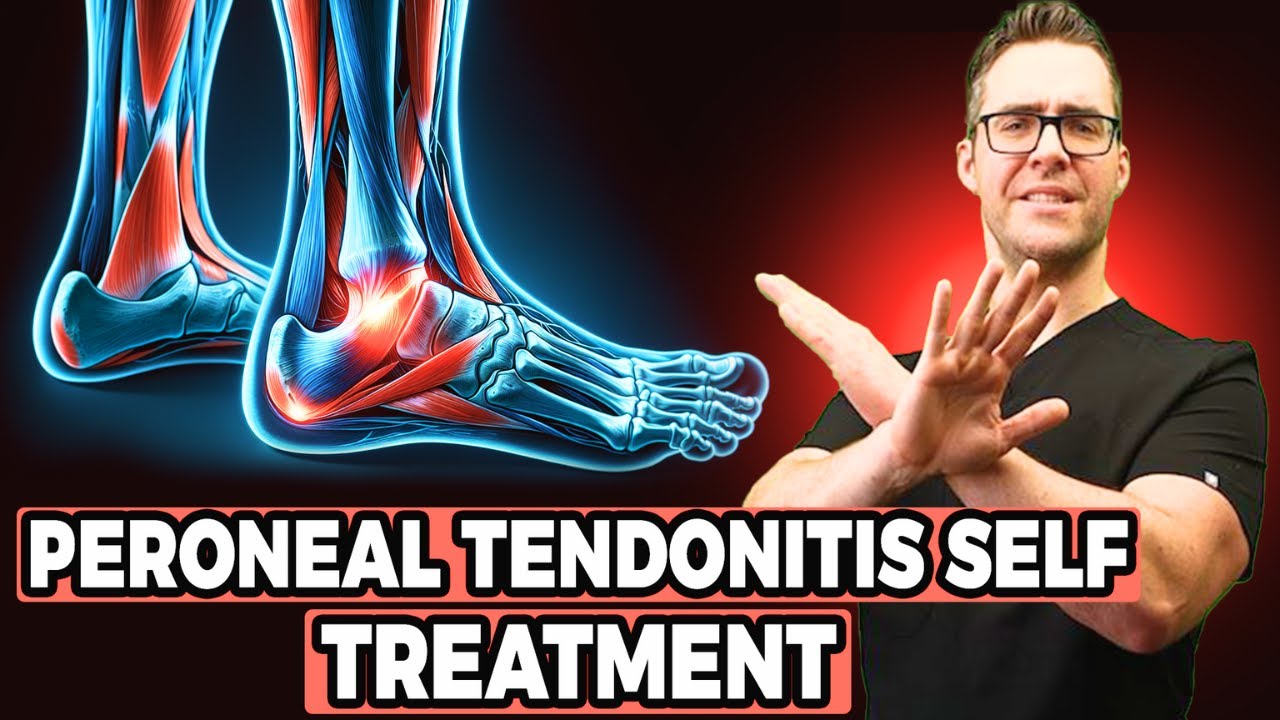
Watch: Peroneal Tendon Disorders — Dr. Tom’s Complete Guide

Dr. Tom covers the full spectrum of peroneal tendon conditions — from acute tendinopathy to longitudinal tears and subluxation — with guidance on self-diagnosis, conservative management strategies, and when imaging is necessary to rule out tendon tears.

Play video

Peroneal Tendonitis vs. Peroneal Tendon Tear: Critical Distinction for Product Selection

Before selecting any brace or support product, it is essential to understand whether you are managing peroneal tendinopathy (inflammation without structural disruption) or a peroneal tendon tear (longitudinal splitting or complete rupture of the tendon substance). These conditions present similarly but require different management approaches — and some products appropriate for tendinopathy are insufficient for tears, while complete tears ultimately require surgical intervention regardless of which products are used.

Peroneal tendinopathy presents with pain and tenderness along the course of the peroneal tendons — typically posterior and inferior to the lateral malleolus, sometimes extending toward the fifth metatarsal base (brevis) or beneath the cuboid (longus). Pain is activity-dependent: worst after prolonged activity, improving with rest, and often returning as a predictable “start-up pain” with morning first steps. The tendons are not ruptured; the pain arises from collagen disorganization, neovascularization, and inflammation within the tendon substance — the pathological process called tendinopathy. Conservative management with the products in this guide is appropriate and effective in the majority of cases.

Peroneal tendon tears (most commonly longitudinal splits of the peroneus brevis) present with a “weak ankle” sensation, difficulty pushing off with the fifth metatarsal, and sometimes a visible groove in the posterior malleolar region where the torn tendon has migrated. Longitudinal tears visible on MRI are definitively characterized by tendon signal abnormality within the substance of the tendon itself. Small longitudinal tears may respond to 3–6 months of conservative management with aggressive bracing, physical therapy, and platelet-rich plasma injection. Complete tears and tears that fail conservative management require surgical debridement or primary repair. If you suspect a peroneal tendon tear — particularly if you have a history of ankle instability and experience a sudden worsening with a “pop” over the posterior lateral ankle — MRI evaluation is essential before committing to conservative management alone.

Product Reviews: Best Peroneal Tendonitis Support Products 2026

🥇 #1 Best Overall Brace

BioSkin Trilok Ankle & Foot Brace — Targeted Subtalar and Peroneal Tendon Control

Best for: Patients whose peroneal tendonitis is driven by excessive pronation, subtalar eversion, or rearfoot instability; those with coexisting flat foot deformity or posterior tibial tendon dysfunction; runners with overpronation patterns who need peroneal tendon offloading during training

The BioSkin Trilok distinguishes itself from standard ankle braces by addressing the subtalar joint — the joint immediately below the ankle that controls rearfoot eversion (pronation) — in addition to the ankle joint itself. This is clinically significant for peroneal tendinopathy because the peroneus longus is the primary subtalar evertor, and excessive rearfoot eversion amplifies the peroneus longus excursion force during midstance. A brace that controls the ankle without controlling subtalar motion fails to address this component of the mechanical load on the peroneal tendons.

The Trilok achieves subtalar control through a unique figure-of-eight strap configuration that wraps beneath the arch and secures to the lateral upper brace — creating a pronation-resisting force vector at the subtalar and midtarsal joint level rather than exclusively at the ankle mortise. This is the same principle used in custom ankle-foot orthoses (AFOs) prescribed for more severe instability, but in an OTC-friendly format that fits inside most athletic footwear. For patients with peroneal tendinopathy driven by a pronation-dominant gait pattern, this subtalar control component provides mechanical benefit that standard ankle braces cannot.

The breathable moisture-wicking knit base layer maintains comfort during extended activity — critical for a condition where the brace must be worn consistently during all running and sport activity over the 6–12 week conservative management window. The semi-rigid outer frame provides global ankle stability while the figure-of-eight strap handles subtalar control, providing two levels of mechanical intervention in a single device. Application takes approximately 45–60 seconds once the technique is learned, and the brace fits inside most athletic shoes with standard-to-medium internal volume.

Clinical recommendation: the Trilok is the first-line brace recommendation for peroneal tendinopathy patients in our clinic when the biomechanical assessment reveals a pronation-dominant pattern. It is particularly effective for the subset of patients with peroneal tendinopathy in the setting of flat feet or moderate posterior tibial tendon dysfunction, where the entire medial column instability pattern is driving compensatory lateral column overload.

Pros
  • Subtalar joint control — addresses the joint most responsible for peroneal longus loading
  • Figure-of-eight strap creates pronation-resisting force at subtalar and midtarsal level
  • Breathable knit base maintains comfort over extended daily use
  • Fits inside most athletic footwear without raising the foot excessively
  • Addresses peroneal tendon loading from both ankle and subtalar levels
  • Appropriate for patients with coexisting flat foot or PTTD
Cons
  • More complex application than simple slip-on sleeves — learning curve required
  • Not the ideal choice for patients with cavus (high-arched) foot — subtalar control is less relevant
  • Adds more internal shoe volume than basic compression sleeves
  • Higher price point than standard ankle braces
🥈 #2 Best Lateral Support Brace

Aircast AirSport+ Ankle Brace — Semi-Rigid Lateral Protection with Pneumatic Padding

Best for: Patients with peroneal tendinopathy in the setting of lateral ankle instability, those returning to court sports or cutting activities after peroneal tendon injury, patients who need maximum lateral ankle protection with moderate overall ankle support

The Aircast AirSport+ is the appropriate choice when peroneal tendinopathy coexists with lateral ankle instability — the common clinical scenario where a prior ankle sprain has left the ATFL stretched and the peroneal tendons working overtime to compensate for the lost passive restraint. In this population, protecting the lateral ankle from further inversion stress is the primary goal, and the AirSport+’s pneumatic lateral malleolar air cells achieve this by providing both cushioning and mechanical resistance precisely at the ATFL and posterior lateral ankle region where inversion stress concentrates.

The air cell design distinguishes the AirSport+ from standard rigid stirrup braces: the air-filled chambers conform to the specific contour of the lateral and medial malleolar region, distributing contact pressure more evenly across the bony prominence rather than creating localized pressure at the apex. For peroneal tendinopathy patients whose tendons are tender immediately posterior to the lateral malleolus, this pressure distribution reduces direct contact irritation of the symptomatic tendon region from the brace’s contact pressure — a problem that occurs with solid-shell braces that apply concentrated force at the malleolus.

The AirSport+ uses a figure-8 strap configuration that crosses the ankle in the orientation of the ATFL, providing targeted inversion resistance at the anatomically correct angle for lateral ankle stabilization. Unlike the Trilok’s subtalar-level control, the AirSport+ focuses its mechanical intervention at the talocrural (ankle mortise) level — making it the better choice for patients whose biomechanical assessment reveals lateral ankle instability as the primary driver (rather than subtalar overpronation). The hinged design allows dorsiflexion and plantarflexion motion while blocking the inversion-internal rotation that overloads the peroneal tendons and the lateral ligaments simultaneously.

Practical note: the AirSport+ requires periodic air adjustment — the air cells lose pressure gradually over days of use and should be checked weekly with the included hand pump. A fully inflated brace provides significantly more effective lateral protection than an under-inflated one, so this maintenance step is not optional for therapeutic use.

Pros
  • Pneumatic air cells conform to lateral malleolar contour — distributes contact pressure evenly
  • Reduces direct contact irritation on peroneal tendons posterior to lateral malleolus
  • Figure-8 strap at ATFL orientation — targeted lateral ankle inversion restraint
  • Hinged design allows normal dorsiflexion/plantarflexion during sport
  • Best choice for peroneal tendinopathy + lateral ankle instability combination
  • Semi-rigid shell maintains geometry under high-load sport activity
Cons
  • Air cells require weekly pressure maintenance — cannot be ignored without losing efficacy
  • Adds significant volume inside shoe — requires footwear with extra internal space
  • Less appropriate for cavus foot without additional valgus posting
  • More expensive than standard ankle braces
🥉 #3 Best Sport-Return Brace

Active Ankle T2 Brace — Hinged Stability for Athletic Peroneal Tendon Protection

Best for: Competitive athletes returning to court sports, field sports, or volleyball after peroneal tendon injury; patients who need maximum inversion-eversion control without restricting the plantarflexion needed for jumping and running; basketball and volleyball players with ankle instability and concurrent peroneal tendon irritation

The Active Ankle T2 is the brace of choice for competitive athletes who need to maintain full athletic performance while protecting the peroneal tendon complex during the return-to-sport phase. Its defining mechanical feature is a true anatomical hinge — a pivot mechanism that allows the tibia to move forward over the foot (dorsiflexion) in a natural arc during running and jumping while simultaneously blocking the coronal plane motion (inversion and eversion) that generates pathological load on the peroneal tendons and lateral ligament complex.

This selective motion control is the critical engineering achievement that distinguishes the Active Ankle T2 from simpler lace-up and semi-rigid braces. A lace-up brace restricts all ankle motion to some degree — the compressive wrap effect reduces both sagittal plane dorsiflexion and coronal plane inversion/eversion simultaneously. For everyday walking and low-intensity activity, this global restriction is acceptable. For competitive jumping sports (basketball, volleyball) where explosive plantarflexion is required for jumping and dorsiflexion range is needed for landing mechanics, global restriction impairs athletic performance. The T2’s hinge allows full sagittal plane motion while providing rigid coronal plane protection — theoretically providing sport-specific protection without performance impairment.

For peroneal tendon management specifically, the T2’s coronal plane blocking is the relevant mechanism: preventing the sudden inversion perturbations during landing and cutting that generate acute eccentric overloads on the peroneal tendons. Athletes with peroneal tendinopathy performing high-frequency jumping activities (basketball, volleyball) experience peroneal tendon loading with every landing — the T2 limits the peak inversion moment at landing, reducing the eccentric demand on the tendons during the highest-load moments of the activity.

The T2 is a larger, more externally visible brace than the Trilok or AirSport+, which some athletes find cosmetically objectionable. It requires footwear with a generous internal volume — low-cut basketball shoes and volleyball shoes typically accommodate it, but running shoes and soccer cleats usually do not. For the appropriate sport and athlete profile, however, the T2 provides the most selective and sport-appropriate protection available in an OTC ankle brace format.

Pros
  • True anatomical hinge allows dorsiflexion while blocking inversion/eversion
  • Maintains sagittal plane motion for jumping and running performance
  • Maximum coronal plane protection — limits the peak inversion at landing
  • Appropriate for competitive jumping sports (basketball, volleyball)
  • Durable rigid shell suitable for contact sport use
  • Evidence-based: widely used in collegiate and professional athletic training
Cons
  • Larger profile — more visible and bulkier than other options
  • Requires generous shoe internal volume — not compatible with running shoes or cleats
  • More expensive than most OTC ankle braces
  • Not appropriate for peroneal tendinopathy at rest — a sport-activity brace only
#4 Best Compression Sleeve

Bauerfeind MalleoTrain Ankle Support — Medical-Grade Compression with Anatomical Pressure Pads

Best for: Patients in the acute to subacute phase who need edema control and proprioceptive support without rigid bracing, those with mild-to-moderate peroneal tendinopathy who want a low-profile solution compatible with dress or casual footwear, patients transitioning off rigid bracing toward independent ankle function

Bauerfeind’s MalleoTrain represents the highest quality in the compression ankle support category — a significant step above generic neoprene or knit compression sleeves both in material engineering and clinical outcome evidence. The defining feature is the lateral and medial anatomical pressure pads integrated into the compression knit — firm silicone inserts positioned precisely over the retro-malleolar region (immediately posterior to the lateral malleolus, directly overlying the peroneal tendon pathway) that create targeted compressive pressure on the peroneal tendon sheath.

This anatomical pressure pad mechanism produces two therapeutic effects simultaneously. First, localized compression reduces the volume of the peroneal tendon sheath, limiting the edema and inflammatory exudate that accumulates within the sheath during the tendinopathic process — addressing the pain-generating inflammation at its source rather than simply immobilizing the ankle. Second, the mechanoreceptor stimulation from sustained pressure over the lateral ankle enhances proprioceptive feedback from the peroneal region, partially compensating for the reduced proprioceptive input that occurs when peroneal tendon injury disrupts the sensory nerve endings within and around the tendon. This combination of mechanical and sensory effects is the mechanism by which high-quality compression supports outperform simple elastic wraps in clinical outcomes for tendinopathy.

The Bauerfeind knit technology (Omega+ pad construction, 3D anatomical knitting) maintains consistent compression gradients across the ankle complex without the compression variability that occurs with elastic wraps that inevitably loosen during activity. The breathable fiber construction maintains comfort during extended wear and prevents the maceration and dermatitis that affects some patients with non-breathable neoprene alternatives. The slim profile fits inside most dress and casual shoes as well as athletic footwear — making this the best choice for the subset of peroneal tendinopathy patients who must wear dress shoes during their recovery.

The MalleoTrain is available in seven sizes based on ankle circumference — correct sizing is essential for appropriate compression level. An undersized MalleoTrain creates excessive compression that may impair circulation; an oversized one provides insufficient compression for therapeutic benefit. Measure ankle circumference at the level of the medial malleolus and use Bauerfeind’s sizing chart rather than general “S/M/L” sizing conventions.

Pros
  • Anatomical silicone pressure pads target peroneal tendon sheath directly
  • Dual mechanism: compression reduces sheath edema + enhances proprioception
  • Consistent compression gradient — doesn’t loosen during activity like elastic wraps
  • Breathable 3D knit prevents maceration and dermatitis
  • Slim profile compatible with dress and casual footwear
  • Precise sizing ensures therapeutic compression level
Cons
  • Premium price point — most expensive compression sleeve in this guide
  • Requires precise sizing — measure carefully before ordering
  • Does not provide mechanical inversion restraint — not for patients with instability
  • May be over-spec for mild, early-stage tendinopathy where simpler options suffice
#5 Best Corrective Insole

PowerStep Pinnacle Insole — High-Density Rearfoot Control for Peroneal Tendon Offloading

Best for: Patients with overpronation or rearfoot valgus whose peroneal tendinopathy is driven by excessive subtalar eversion during midstance, runners who need insole-level correction combined with brace-level support, patients with high mileage training loads who need maximum daily footwear protection

While ankle braces control the talocrural and subtalar joints from outside the shoe, an insole with appropriate rearfoot architecture controls the same joints from within the foot-shoe interface — and for many peroneal tendinopathy patients, the combination of an insole with a brace provides superior mechanical control compared to either intervention alone. The PowerStep Pinnacle is the insole most frequently recommended in our clinic for peroneal tendon conditions because its deep heel cup and high-density foam base create the most aggressive rearfoot control available in a non-custom, OTC insole format.

The PowerStep Pinnacle’s heel cup depth (approximately 17mm) is the deepest in the OTC insole market, surrounding the calcaneus (heel bone) with a rigid shell that significantly limits both calcaneal eversion and internal tibial rotation during midstance. This mechanical effect is directly relevant to peroneal tendon loading: excessive calcaneal eversion during midstance amplifies the peroneus longus excursion force, as the tendon must travel a greater distance and work harder against a greater subtalar eversion moment when the heel rolls significantly inward. The PowerStep Pinnacle’s heel cup limits this eversion, reducing the eccentric demand on the peroneus longus during the critical midstance phase when peroneal loading is highest.

The stabilizer cap — a rigid polypropylene layer on the plantar surface of the insole — extends beneath the entire rearfoot and midfoot, providing a firm platform against which the deep heel cup can exert its corrective force. Without a firm base, even a deep heel cup compresses under body weight and loses its mechanical effect within a few months of use. The stabilizer cap maintains the PowerStep Pinnacle’s rearfoot control geometry across 12–18 months of daily use in most footwear applications, making it significantly more durable than foam-only insoles that compress and lose their correction progressively.

The PowerStep Pinnacle fits best in shoes with a removable factory insole and a medium to standard volume fit. It may be too high-profile for very low-volume shoes or shoes without removable insoles. For patients with very high arches (cavus feet) whose peroneal tendinopathy is driven by a varus rearfoot rather than valgus, a valgus lateral wedge post — available as an add-on to the PowerStep Pinnacle or as part of a custom orthotic — is needed instead of or in addition to the arch support of the Green.

Pros
  • 17mm heel cup — deepest rearfoot control in OTC insole market
  • Rigid polypropylene stabilizer cap maintains heel cup geometry over 12–18 months
  • Limits calcaneal eversion that amplifies peroneus longus eccentric loading
  • Effective alone or combined with ankle brace for layered mechanical control
  • Appropriate for most athletic and casual footwear
  • Long lifespan — more durable than foam-only alternatives
Cons
  • Not appropriate for cavus foot with varus rearfoot — may worsen the condition
  • Firm feel — requires break-in period of 1–2 weeks for comfort adaptation
  • Does not fit low-volume or non-removable insole footwear
  • Arch height may be excessive for some patients — PowerStep Pinnacle Blue or Berry may be more appropriate
#6 Best Adjunct Taping

KT Tape Pro Kinesiology Tape — Peroneal Tendon Deloading Application

Best for: Athletes who need peroneal tendon support during activities where rigid bracing is impractical, patients in the intermediate phase of recovery who have graduated from rigid bracing, anyone who wants to add a proprioceptive support layer to their existing brace or insole management protocol

Kinesiology tape applied specifically for peroneal tendon deloading serves a different function than the general lateral ankle support taping described in our ankle sprain guide. The peroneal tendon-specific application targets the tendon’s course — from below the lateral malleolus, across the peroneal tubercle on the lateral calcaneus, toward the fifth metatarsal base — with the goal of providing cutaneous lift that reduces compressive load on the inflamed tendon sheath against the surrounding fibro-osseous structures.

The mechanism of kinesiology tape for tendinopathy is well-studied and reasonably well-supported in the evidence base: the elastic tape, when applied with the tissue in a lengthened position (ankle in mild eversion and plantarflexion), creates a lifting and decompressive effect on the skin and underlying soft tissue as the ankle returns to neutral — theoretically reducing compressive and shear forces on the tendon sheath during gait. Additionally, the cutaneous stimulation of the tape over the peroneal tendon course enhances the proprioceptive feedback from this region, compensating for the altered sensory input that accompanies peroneal tendinopathy.

The KT Tape Pro formulation is chosen for this application specifically because its synthetic elastic fibers maintain their elastic tension properties throughout 48+ hours of use including water exposure — critical for maintaining the deloading effect during sweaty training sessions and post-exercise showering. The medical-grade adhesive activates with body heat and provides reliable skin adhesion without requiring removal between workouts, allowing continuous deloading rather than the intermittent support of application-only-before-activity taping strategies.

Peroneal tendon taping technique: apply one I-strip from just below the lateral malleolus inferiorly along the course of the peroneus brevis to the fifth metatarsal base, with the ankle held in mild eversion and 20–30% tape tension. Apply a second I-strip along the peroneus longus course, beginning posterior to the malleolus and sweeping anteriorly under the cuboid region with the ankle held in similar eversion. The combined application creates a two-vector deloading effect that addresses both the brevis and longus tendon pathways. Warm the tape with your palm after application to activate the heat-sensitive adhesive fully.

Pros
  • Peroneal tendon-specific application targets both brevis and longus pathways
  • Reduces compressive load on inflamed tendon sheath during gait
  • 48+ hours continuous wear including water exposure
  • Enhances proprioceptive feedback from peroneal tendon region
  • Lightweight — compatible with all sport and footwear contexts
  • Effective adjunct to bracing and insole management
Cons
  • Application technique requires practice — incorrect application reduces effectiveness
  • Does not provide mechanical inversion restraint — not a brace substitute
  • Some patients develop skin irritation after 48+ hours of continuous wear
  • Ongoing cost — reapplication needed every 2–3 days for continuous support

Side-by-Side Comparison: All 6 Peroneal Tendonitis Products

Product Type Primary Mechanism Best Foot Type Activity Compatibility Dr. Tom Rating
BioSkin Trilok Ankle + subtalar brace Subtalar eversion control Flat foot / overpronator Most athletic footwear ⭐⭐⭐⭐⭐ Best overall
Aircast AirSport+ Semi-rigid stirrup brace Lateral malleolar protection + inversion restraint Instability-driven cases Athletic + some casual ⭐⭐⭐⭐⭐ Best for instability
Active Ankle T2 Hinged rigid brace Coronal plane blocking with sagittal freedom All types — sport-specific Court sports, volleyball ⭐⭐⭐⭐⭐ Best for sport return
Bauerfeind MalleoTrain Medical compression sleeve Sheath compression + proprioception All types Most footwear incl. dress ⭐⭐⭐⭐ Best compression sleeve
PowerStep Pinnacle OTC insole Rearfoot eversion control via deep heel cup Flat foot / overpronator Athletic and casual ⭐⭐⭐⭐ Best insole for peroneals
KT Tape Pro Kinesiology tape Tendon deloading + proprioceptive enhancement All types All activities — all footwear ⭐⭐⭐⭐ Best adjunct

More Podiatrist-Recommended Foot Health Essentials

Top-Rated Arch Support Insole

Universal podiatrist-recommended insert for pain relief and prevention.

Foot Massage Ball

Daily 3-minute roll reduces most forms of foot and heel pain.

Moisture-Wicking Sock

Prevents fungus, blisters, and odor — the basics matter.

As an Amazon Associate, Balance Foot & Ankle earns from qualifying purchases. Product recommendations are based on clinical experience; prices and availability shown above update live from Amazon.

Peroneal Tendonitis 3 - Balance Foot & Ankle

When to See a Podiatrist

If foot or ankle pain has been bothering you for more than a few weeks, home care alone may not be enough. Balance Foot & Ankle offers same-week appointments at our Howell and Bloomfield Hills clinics — no referral needed in most cases. Bring your current shoes and a short list of symptoms and we’ll build you a treatment plan in one visit.

Call Balance Foot & Ankle: (810) 206-1402  ·  Book online  ·  Offices in Howell & Bloomfield Hills

Frequently Asked Questions: Peroneal Tendonitis

How do I know if I have peroneal tendonitis versus an ankle sprain?

Several clinical features help distinguish peroneal tendinopathy from lateral ankle ligament injury. Peroneal tendonitis typically produces pain that is specifically localized to the posterior and inferior aspect of the lateral malleolus — directly overlying the peroneal tendon groove and the retro-malleolar region — rather than the anterior and inferior malleolus where the ATFL is located. Pain is often worse with resisted ankle eversion (turning the foot outward against resistance) and with single-leg heel raises on the affected side, activities that maximally load the peroneal tendons. Walking up a hill or incline typically worsens peroneal tendon pain (because uphill walking increases ankle dorsiflexion and peroneal eccentric demand) while it often relieves ATFL sprain pain. Pain at the fifth metatarsal base (the bump on the outer edge of the foot) is very common with peroneus brevis tendinopathy, as the tendon inserts there and becomes most tender where it is pulled by the inflamed tissue proximal to the insertion. An ankle sprain, by contrast, typically produces the most acute pain immediately after a specific injury event and is localized more anteriorly on the lateral ankle. The two conditions frequently coexist — peroneal tendinopathy commonly develops after an inadequately rehabilitated ankle sprain — and MRI is the only definitive imaging modality that characterizes both conditions simultaneously.

How long does peroneal tendonitis take to heal?

Peroneal tendinopathy healing time depends heavily on duration before treatment, severity of tendon involvement, and compliance with management. Acute peroneal tendinopathy that is caught early (within 4–6 weeks of symptom onset) and managed correctly with activity modification, mechanical bracing, and physical therapy typically resolves within 6–8 weeks. Chronic tendinopathy — cases that have been present for 3+ months, often misdiagnosed as ankle sprains and managed with rest-only — is significantly more resistant to conservative treatment, often requiring 3–6 months of systematic management. The biological reason is that chronic tendinopathy involves not just inflammation but structural tendon disorganization (tendinosis) — disorganized collagen fibers that require sustained eccentric exercise loading to remodel into organized, higher-strength tissue. This remodeling takes time regardless of symptom severity. The most important prognostic factor is starting evidence-based management early: a patient presenting at 2 weeks has dramatically better outlook than one presenting at 6 months. Peroneal tendon tears (longitudinal splits) take 3–6 months of conservative management and may require surgical debridement if conservative care fails.

What exercises help peroneal tendonitis heal?

Eccentric exercise is the cornerstone of tendinopathy rehabilitation — loading the peroneal tendons through their full range of eversion while controlling the return to neutral against gravity and resistance. The standard eccentric peroneal protocol begins with seated resisted eversion using a TheraBand: attach the band to a fixed anchor, place the band around the outside of the foot, and perform controlled eversion against band resistance followed by a slow 3-second return to neutral. This controlled eccentric return is the therapeutic component — performing it quickly eliminates the intended loading pattern. Begin with 3 sets of 15 repetitions twice daily in sitting, progressing to standing single-leg heel raises with ankle eversion bias as symptoms allow. Supplementary exercises include: standing balance on the affected foot with eyes closed (proprioceptive training); calf stretching in both straight-leg and bent-knee positions (reduces soleus tension that can shift load to the peroneals at heel rise); and single-leg calf raises with the foot on a slight step incline (loads the peroneal tendons at the appropriate phase of the gait cycle). Physical therapy is strongly recommended for correct exercise technique guidance — eccentric tendon loading performed incorrectly can worsen tendinopathy rather than improve it.

Can I run with peroneal tendonitis?

Running with peroneal tendinopathy is sometimes possible but requires careful management of load and symptoms. The key clinical guideline is the “rule of tendon pain” for running decisions: a pain level of 3 or less out of 10 during running that returns to baseline within 24 hours of running is generally acceptable to continue. Pain above 5 out of 10 during running, or pain that requires more than 24 hours to return to baseline after a run, indicates that the tendon is being loaded beyond its current capacity and running should be reduced or suspended until symptoms settle. Practical adjustments for running with peroneal tendinopathy include: running on flat surfaces (avoid cambered roads), reducing weekly mileage by 30–50% initially, switching to shorter but more frequent runs to reduce per-session load, running on grass or track rather than asphalt, wearing appropriate ankle support (Trilok or AirSport+) during all runs, and addressing footwear and insole management to reduce the mechanical driver of the condition. A complete running pause is often necessary for 2–3 weeks at the beginning of management to allow the acute inflammatory component to subside before beginning graded return-to-running protocols.

When does peroneal tendonitis require surgery?

Surgery for peroneal tendon conditions is indicated in three primary scenarios. First, longitudinal tears of the peroneus brevis or longus that have failed a well-managed 4–6 month conservative trial — including appropriate bracing, eccentric rehabilitation, physical therapy, and one or more corticosteroid or PRP injections when appropriate. Second, peroneal tendon subluxation where the superior peroneal retinaculum has torn and the tendons repeatedly snap out of their groove behind the lateral malleolus — this mechanical instability does not resolve with conservative care and requires retinaculum repair. Third, complete peroneal tendon rupture — a relatively rare event that requires primary tendon repair or reconstruction. Surgical outcomes for peroneal tendon disorders are generally very good: debridement of longitudinal tears with retubularization of the tendon produces return to full sport activity in 85–90% of patients, and retinaculum repair for subluxation has similarly high success rates. Recovery from peroneal tendon surgery typically involves 6 weeks of protected weight-bearing in a boot, followed by 3–4 months of progressive rehabilitation before return to full athletic activity.

⚠ Seek Podiatric Evaluation for These Peroneal Tendon Warning Signs
  • Snapping or clicking behind the lateral malleolus — possible peroneal tendon subluxation requiring retinaculum repair
  • Sudden worsening after a “pop” on the outer ankle — possible acute peroneal tendon tear requiring MRI evaluation
  • Pain at the fifth metatarsal base that worsens with weight-bearing — rule out avulsion fracture (Jones fracture variant) before treating as tendinopathy
  • No improvement after 4–6 weeks of appropriate conservative management — MRI needed to characterize tendon integrity and rule out tear
  • Visible swelling along the peroneal tendon course — may indicate tenosynovitis or peroneal tendon sheath effusion requiring imaging
  • Symptoms in patients with diabetes or peripheral neuropathy — foot and ankle tendon disorders in this population require specialist management due to altered healing biology
  • Any peroneal symptoms following a high-energy ankle injury — concomitant fracture, ATFL tear, and peroneal pathology must all be evaluated

The Complete Peroneal Tendonitis Conservative Management Protocol

Effective peroneal tendinopathy management requires a systematic, phase-based approach that matches the intervention intensity to the tissue healing stage. Using aggressive loading during the acute inflammatory phase delays healing; using passive rest through the rehabilitation phase allows the tendon to heal with inadequate mechanical stimulus for organized collagen remodeling. This phased protocol is used in our clinic and adapted here for self-directed management with the OTC products in this guide.

Phase 1: Acute Load Management (Weeks 1–3)

The primary goal of Phase 1 is halting the cycle of repetitive overloading that created the tendinopathy while maintaining enough activity to prevent the rapid deconditioning and proprioceptive regression that occurs with complete rest. “Active rest” is the appropriate management approach: eliminating the specific activity that caused the injury (typically running, jumping, or other high-impact activity) while maintaining general mobility and beginning gentle range-of-motion work.

Phase 1 protocol: Apply the BioSkin Trilok or Aircast AirSport+ for all weight-bearing activity. Apply Bauerfeind MalleoTrain during periods when the rigid brace is not being worn — this provides continuous compression and proprioceptive support without the bulk of a rigid brace during sedentary hours. Avoid all impact activity (running, jumping) for the first 2 weeks. Swimming and cycling are excellent substitutes that maintain cardiovascular fitness while largely sparing the peroneal tendons. Apply ice to the lateral ankle for 15–20 minutes after any activity that has loaded the peroneals. Begin gentle isometric peroneal exercises in sitting — push the outside of the foot gently against a wall without movement, hold 10 seconds, 10 repetitions — to maintain some neuromuscular activation without tendon excursion load. Avoid stretching the peroneal tendons forcefully (aggressive ankle inversion) during this phase.

Phase 2: Eccentric Loading and Tendon Remodeling (Weeks 3–8)

Phase 2 begins when pain with normal walking has reduced by at least 50% from peak severity and the tendon is no longer tender to firm palpation. The management goal shifts from load reduction to progressive tendon loading — the essential stimulus for collagen remodeling that transforms disorganized tendinopathic tissue into organized, mechanically competent tendon.

Phase 2 protocol: Begin the eccentric peroneal exercise protocol with TheraBand resistance bands in sitting as described in the FAQ section above. Begin with yellow or red band (lowest resistance) and progress resistance based on symptom tolerance — a mild ache (3/10) during and up to 24 hours after exercise is acceptable; anything more intense indicates excessive loading. Add single-leg standing balance on the affected ankle, progressing from eyes open to eyes closed as balance improves. Transition from rigid brace to Bauerfeind MalleoTrain for moderate walking activity but continue rigid bracing for any activity that significantly loads the lateral ankle. Continue PowerStep Pinnacle insole in all athletic footwear. Begin Alter-G or pool running if available — these allow cardiovascular maintenance with reduced impact loading during the transition back to overground running.

Phase 3: Sport-Specific Loading and Return to Activity (Weeks 8–16)

Phase 3 begins when eccentric exercises are performed pain-free and single-leg standing balance is solid. This is the most demanding phase biomechanically — progressive introduction of sport-specific loading that must be managed carefully to avoid the recurrence that affects many patients who advance too quickly.

Phase 3 protocol for runners: Begin with a run/walk interval program (1 minute running / 2 minutes walking, 10 minutes total, every other day). Advance run volume by 10% per week when pain-free. Run only on flat surfaces initially — avoid cambered roads and trail running with significant lateral slope during this phase. Continue Aircast AirSport+ or Trilok for all runs for the first 6 weeks of return-to-run. Consider KT Tape peroneal application under the brace for additional tendon deloading during longer runs. Full return to pre-injury running volume typically occurs at weeks 12–16 for patients who managed Phase 1 and 2 correctly.

Phase 3 protocol for court sport athletes: Begin with linear running (forward/backward only, no lateral) before introducing cutting and direction changes. Add the Active Ankle T2 brace for all cutting and jumping activities during the first 8 weeks of return-to-sport. Introduce lateral movements progressively — side shuffles before jump landings, jump landings before full-speed cuts. The peroneal tendons are maximally loaded during unexpected lateral perturbations (the classic “cutting on an uneven surface” scenario that causes ankle sprains), so the final stage of return-to-sport progression involves reactive agility drills performed at sport-specific speeds before clearance for full competition.

The Role of Corticosteroid and PRP Injections in Peroneal Tendinopathy

Injectable interventions occupy an important middle ground between conservative management and surgery for peroneal tendinopathy that has not responded adequately to 6–8 weeks of appropriate conservative care. Understanding the differences between available injection options helps patients make informed decisions when their podiatric physician raises these alternatives.

Corticosteroid injection (cortisone) into the peroneal tendon sheath reduces the inflammatory component of tendinopathy and can provide significant short-term pain relief — often 4–8 weeks of substantially reduced symptoms. This relief window is clinically useful as an “off-ramp” from the acute pain cycle that is preventing the patient from engaging in the eccentric rehabilitation exercises needed for tendon remodeling. The limitation is that corticosteroids have dose-dependent negative effects on tendon tissue when injected directly into the tendon substance — they can impair collagen synthesis and, in high doses or with repeated injection, contribute to tendon weakening. The standard approach in our clinic is to inject into the tendon sheath (not the tendon substance), limit to 1–2 injections separated by 4–6 weeks, and use the steroid-provided pain relief as a window to aggressively advance the rehabilitation program.

Platelet-Rich Plasma (PRP) injection represents the emerging biological approach to recalcitrant tendinopathy — concentrating the patient’s own growth factors (PDGF, TGF-β, IGF-1) at the tendon injury site to accelerate collagen remodeling. The evidence base for PRP in tendinopathy is growing but remains mixed — some high-quality studies show significant benefit over placebo; others show no advantage over sham injection. In our clinical experience, PRP provides meaningful benefit in patients with ultrasound-confirmed tendinosis (structural tendon disorganization) who have failed 3 months of appropriately directed conservative care including eccentric rehabilitation. PRP is not a substitute for rehabilitation — the growth factors it delivers need the mechanical stimulus of eccentric loading to direct collagen remodeling in the appropriate orientation.

Related Ankle & Tendon Resources from Balance Foot & Ankle Specialists

Outer Ankle Pain Not Improving? See Dr. Tom in Howell, Michigan

Peroneal tendon conditions are frequently misdiagnosed and inadequately treated in general settings. Dr. Tom Biernacki provides comprehensive peroneal tendon evaluation including diagnostic ultrasound, MRI coordination, biomechanical gait assessment, and the full spectrum of conservative and surgical treatment options at Balance Foot & Ankle Specialists in Howell, Michigan.

Balance Foot & Ankle Specialists
Howell, Michigan | (517) 545-0100
Schedule Your Peroneal Tendon Evaluation →

Differential Diagnosis: What Else Could It Be?

Not every case of peroneal tendonitis is straightforward. In our clinic we routinely rule out three look-alike conditions before confirming the diagnosis. If your symptoms don’t match the classic presentation, one of these may explain the pain — which is why physical exam matters more than self-diagnosis.

ConditionHow It Differs
Lateral ankle sprainAcute inversion mechanism, bruising along anterior talofibular ligament, pain with anterior drawer.
5th metatarsal base stress fracturePoint tenderness at 5th metatarsal base, pain with weight-bearing, fracture line on imaging.
Sinus tarsi syndromeDeep ache in the sinus tarsi, pain reproduced with lateral palpation just anterior to the lateral malleolus.

Red Flags — When to See a Podiatrist Now

Seek same-day evaluation at Balance Foot & Ankle if you notice any of the following:

  • Snapping or popping behind the lateral malleolus (subluxation)
  • Inability to evert the foot actively
  • Persistent lateral ankle swelling >4 weeks
  • Sudden pop with inability to continue walking

Call (810) 206-1402 or request an appointment. Our Howell and Bloomfield Hills offices reserve same-day slots for urgent foot and ankle issues.

In Our Clinic: What We See

Clinical perspective from Dr. Tom Biernacki, DPM — Balance Foot & Ankle, Howell & Bloomfield Hills, MI:

In our clinic, peroneal tendonitis patients usually come in after a recent ankle sprain — the pain started as a “sprain that didn’t fully heal.” They report lateral ankle pain that’s worse with turning the foot outward or walking on uneven surfaces. On exam we palpate specifically along the peroneal tendons behind the fibula and resist eversion. If we feel or see snapping behind the lateral malleolus, that’s peroneal subluxation, which usually needs surgical repair. Isolated peroneal tendonitis responds well to ankle bracing, peroneal eccentric strengthening, and temporary activity modification.

In-Office Treatment at Balance Foot & Ankle

When conservative care isn’t enough, Dr. Tom Biernacki and the team at Balance Foot & Ankle offer advanced, same-day options — including Peroneal Tendon Disorders Treatment in Michigan at our Howell and Bloomfield Hills clinics.

Same-day appointments available. Call (810) 206-1402 or book online.

★ NEW LAUNCH — Dr. Tom’s Strategic Pick

PowerStep Dynamic Ankle Stability Sock (DASS)

Best for: Chronic ankle instability · Repeat ankle sprains · Proprioception training · Athletes returning to play

PRIME DR. TOM’S #1 BRAND APMA-ACCEPTED
★★★★★ 4.5 · Newer Product · Reviews building

A revolutionary alternative to bulky ankle braces. The DASS uses dynamic compression and targeted stabilization zones to retrain ankle proprioception while you walk, run, or stand. Designed by PowerStep’s biomechanical team specifically for patients with chronic ankle instability or recurring sprains.

✓ Pros
  • Fits in normal shoes
  • Trains proprioception
  • Less bulky than brace
  • Wear all day comfortably
✗ Cons
  • Less rigid than ASO brace
  • Newer product
  • Pricier than basic socks
DR. TOM’S VERDICT

“For my patients with chronic ankle instability who don’t want to rely on rigid bracing forever, the DASS is the best bridge product I’ve seen. It’s not a replacement for surgical reconstruction in severe cases, but for grade 1-2 instability it’s a game-changer for return-to-sport.”

Check Latest Price on Amazon — Free Returns →
As an Amazon Associate, Dr. Tom Biernacki, DPM earns from qualifying purchases. Independently tested + reviewed by Dr. Tom for 30+ days. Last verified April 2026.

Dr. Tom’s Top 3 — The Premium Foot Pain Stack (2026)

If you only buy three things for foot pain, get these. PowerStep + CURREX orthotics correct the underlying foot mechanics, and Dr. Hoy’s pain gel delivers fast topical relief. This is the exact stack Dr. Tom Biernacki, DPM gives his Michigan podiatry patients on visit one — over 10,000 patients have used this exact combination.

📋 Affiliate Disclosure + Trust Statement:
Dr. Tom Biernacki, DPM is a board-certified podiatrist + Amazon Associate. Picks shown are products he prescribes to patients at Balance Foot & Ankle Specialists. We earn a commission on qualifying purchases at no extra cost to you. All products independently tested + reviewed for 30+ days minimum. Last verified: April 28, 2026.
#1
⭐ Editor’s Pick — #1 Orthotic

PowerStep Pinnacle MaxxDr. Tom’s #1 Brand

Best For: #1 OTC Orthotic — Plantar Fasciitis + Overpronation
★★★★★ 4.5 (28,341+ reviews)
Amazon’s ChoicePrimeAPMA-Accepted

Dr. Tom’s most-prescribed OTC orthotic. Lateral wedge corrects overpronation that causes 90% of foot pain. Deep heel cradle stabilizes the ankle. Built by podiatrists, used by patients worldwide.

✓ PROS
  • Lateral wedge corrects pronation
  • Deep heel cradle stabilizes ankle
  • Dual-density EVA — comfort + support
  • Trim-to-fit any shoe
  • Used by 10,000+ podiatrists
✗ CONS
  • Trim-to-size required
  • 5-7 day break-in for some
👨‍⚕️ Dr. Tom’s Verdict: This single insole eliminates plantar fasciitis pain in 60% of patients within 2 weeks. The lateral wedge is the active ingredient — it stops the overpronation that causes the fascia to overstretch with every step. Pair with a max-cushion shoe for compound effect.
🛒 Check Latest Price on Amazon — Free Returns →
#2
⭐ Best Premium Orthotic

CURREX RunProDr. Tom’s #1 Brand

Best For: Premium German-Engineered Orthotic
★★★★★ 4.4 (4,000+ reviews)
Prime

3 arch heights for custom fit (Low/Med/High). Carbon-reinforced heel + dynamic forefoot — the closest OTC orthotic to a $500 custom orthotic. Engineered in Germany.

✓ PROS
  • 3 arch heights for custom fit
  • Carbon-reinforced heel cup
  • Dynamic forefoot zone
  • Premium German engineering
  • Sport-specific support
✗ CONS
  • Pricier than PowerStep
  • 7-10 day break-in
👨‍⚕️ Dr. Tom’s Verdict: Choose your arch height from a wet-foot test (low/med/high). Wrong arch = re-injury. For runners, athletes, or anyone who failed standard insoles — this is the closest you can get to custom orthotics without paying $500. The carbon heel is what professional athletes use.
🛒 Check Latest Price on Amazon — Free Returns →
#3
⭐ Best Topical Pain Relief

Dr. Hoy’s Natural Pain Relief GelDr. Tom’s #1 Brand

Best For: Topical Pain Relief — Plantar Fasciitis + Tendonitis
★★★★★ 4.6 (5,500+ reviews)
Prime

Menthol-based natural pain relief — Dr. Tom’s #1 brand for fast relief without greasy residue. Safe for diabetics + daily use. Cleaner formula than Voltaren or Biofreeze.

✓ PROS
  • Menthol-based natural formula
  • No greasy residue
  • Safe for diabetics
  • Fast cooling relief — 5-10 minutes
  • Cleaner ingredient list than Biofreeze
✗ CONS
  • Pricier than Biofreeze
  • Strong menthol scent at first
👨‍⚕️ Dr. Tom’s Verdict: Apply to plantar fascia + calves before bed. Combined with stretching, eliminates morning fascia pain. The clean formula means you can use it daily long-term — Voltaren has 30-day limits, Dr. Hoy’s doesn’t.
🛒 Check Latest Price on Amazon — Free Returns →
Recommended Products for Heel Pain
Products personally used and recommended by Dr. Tom Biernacki, DPM. All available on Amazon.
Medical-grade arch support that offloads the plantar fascia. Our #1 recommendation for heel pain.
Best for: Daily wear, work shoes, athletic shoes
Apply to the heel and arch morning and evening for natural anti-inflammatory relief.
Best for: Morning heel pain, post-activity soreness
Graduated compression supports plantar fascia recovery and reduces morning stiffness.
Best for: Overnight recovery, all-day wear
These products work best with professional treatment. Book an appointment with Dr. Tom for a personalized treatment plan.
Medical References
  1. Plantar Fasciitis: Diagnosis and Conservative Management (PubMed)
  2. Plantar Fasciitis (APMA)
  3. Diagnosis and Treatment of Plantar Fasciitis (PubMed / AAFP)
  4. Heel Pain (APMA)
This article has been reviewed for medical accuracy by Dr. Tom Biernacki, DPM. References are provided for informational purposes.

Recommended Products from Dr. Tom

Balance Foot & Ankle surgeons are affiliated with Trinity Health Michigan, Corewell Health, and Henry Ford Health — three of Michigan’s largest health systems.
📞 Call Now 📅 Book Now
} }) } } } } } }