
The most important clinical decision with Best Shin Splint Relief Products Podiatrist Guide isn’t which treatment to start with — it’s identifying the correct subtype. That changes everything. Call (810) 206-1402.
Best Shin Splint Relief Products 2026: Podiatrist Guide to Medial Tibial Stress Syndrome Recovery

Shin splints — clinically known as medial tibial stress syndrome (MTSS) — represent one of the most common training-related injuries in runners, military recruits, and anyone who rapidly increases their activity level. As a podiatric physician who manages the foot and ankle mechanics underlying this condition, I see a critical gap in how shin splints are treated: most patients focus exclusively on local symptom management (ice, rest, compression) while missing the biomechanical root causes at the foot and ankle level that are driving the tibial periosteal stress. This guide covers the six products that address both symptom relief and the mechanical drivers that, if left uncorrected, guarantee recurrence every time training volume increases.
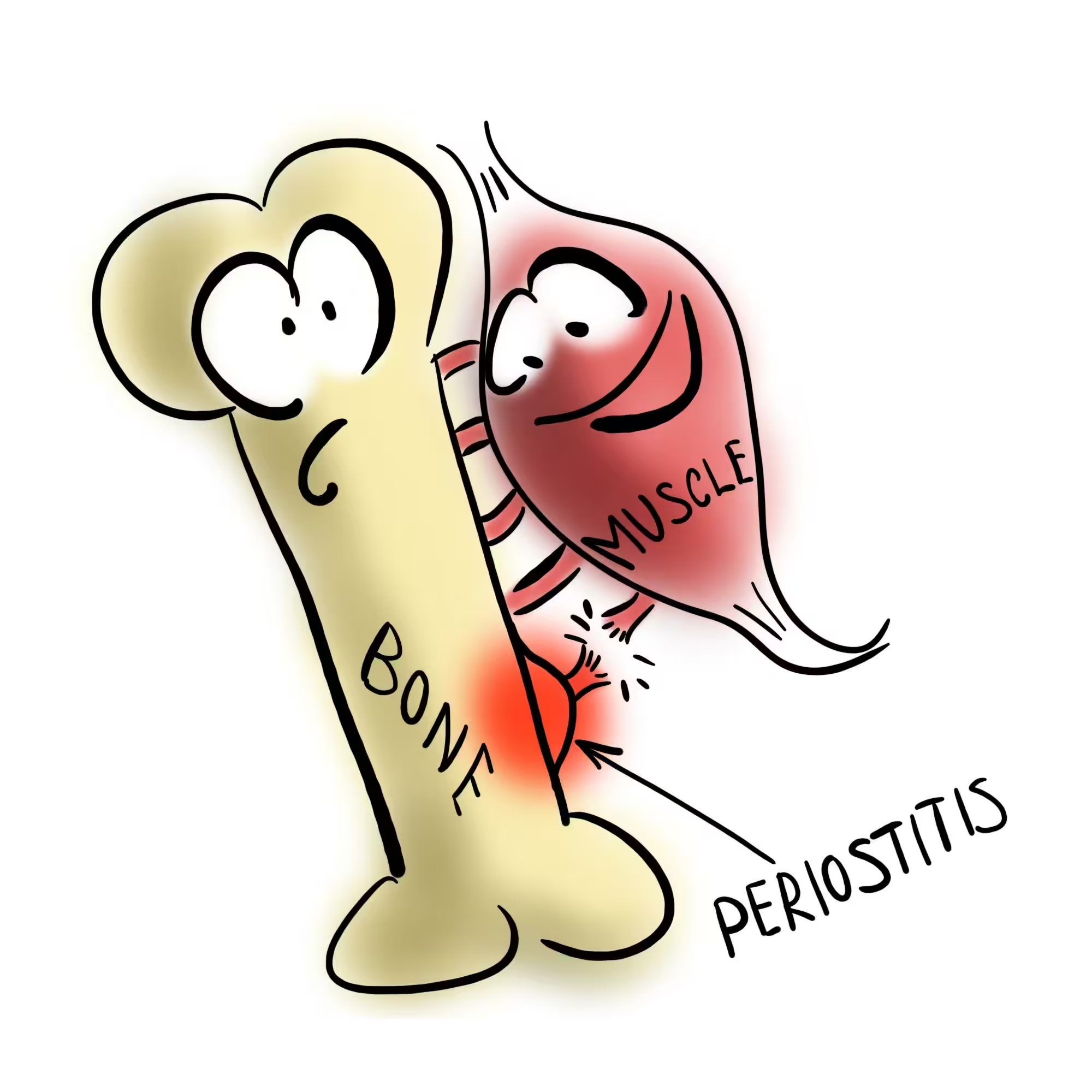
Medial tibial stress syndrome is the correct clinical term for what most athletes call “shin splints” — a broad descriptor that has been loosely applied to any lower leg pain in runners. Understanding the specific tissue involved determines the management approach: MTSS involves periosteal irritation (inflammation of the fibrous tissue surrounding the tibia) at the posteromedial border, driven by repetitive traction from the soleus and flexor digitorum longus muscles during the pronation phase of running gait. This is distinct from tibial stress fractures (which involve cortical bone micro-damage and require imaging to diagnose), tibialis anterior tendinopathy (anterior shin pain), and exertional compartment syndrome (circumferential lower leg tightness during exercise that resolves with rest).
The biomechanical connection to foot mechanics is the key insight that separates a podiatric approach to shin splints from a purely musculoskeletal one. Overpronation of the foot during the loading phase of gait creates excessive internal rotation of the tibia — the tibial torsion that dramatically increases the bending moment at the posteromedial tibial border. Every degree of additional tibial internal rotation generated by foot pronation amplifies the traction force on the tibial periosteum from the soleus and FDL attachments. Patients with flat feet, hypermobile arches, or excessive subtalar pronation have structurally elevated MTSS risk — and any product intervention that fails to address this foot-level driver will provide incomplete and temporary relief, with symptoms recurring predictably at each new training threshold.
The six products in this guide address MTSS from three distinct angles: compression and symptom management (CEP, McDavid, Zensah), biomechanical correction at the foot level (Spenco insoles), acute cryotherapy for the inflammatory component (Vive cold wrap), and progressive muscle rehabilitation to strengthen the structures that, when weak, transfer excessive load to the tibial periosteum (TheraBand). Used in combination and in the appropriate phase sequence, they represent the complete conservative management approach that resolves most MTSS cases within 4–8 weeks.
Medial tibial stress syndrome (MTSS) is far more than simple muscle soreness. At its core, it is a bone-stress injury — specifically, a periosteal stress reaction along the posteromedial cortex of the tibia triggered by repetitive tensile and bending forces that exceed the bone’s remodeling capacity. Dr. Biernacki explains: “The tibial periosteum — the sensitive outer membrane coating your shin bone — is being pulled away from the cortex by the fascia of the deep posterior compartment muscles, primarily the soleus and tibialis posterior. That traction, repeated thousands of times per run, creates micro-tears and inflammation before your bone can repair itself.” Understanding this mechanism is precisely why treatment must address more than just the pain itself: it requires controlling the mechanical forces at the tibia, supporting the arch to reduce tibial torsion, managing inflammation, and carefully restoring load tolerance during return to sport.
Three biomechanical risk factors dominate the literature. First, foot overpronation — excessive inward rolling of the arch during stance phase — magnifies tibial internal rotation, directly increasing the bending stress placed on the medial tibial cortex. Second, hip abductor weakness causes a Trendelenburg gait pattern that further internally rotates the femur and tibia under load. Third, a sudden increase in training volume or surface hardness overwhelms the bone’s adaptive response. The product categories covered in this guide target the first and third factors directly: compression sleeves dampen vibration and provide proprioceptive feedback that reduces excessive pronation in real time; supportive insoles mechanically correct arch mechanics to reduce tibial torsion; cold therapy controls the periosteal inflammatory cascade during acute flares; and resistance bands rehabilitate hip and ankle strength to eliminate the root biomechanical cause. Used together under a structured return-to-run program, these tools can cut typical MTSS recovery time from 8–12 weeks to 4–6 weeks — a clinically meaningful difference for competitive athletes.
of all running injuries are MTSS
higher risk with foot overpronation
faster recovery with compression + support
recurrence reduction with hip strengthening
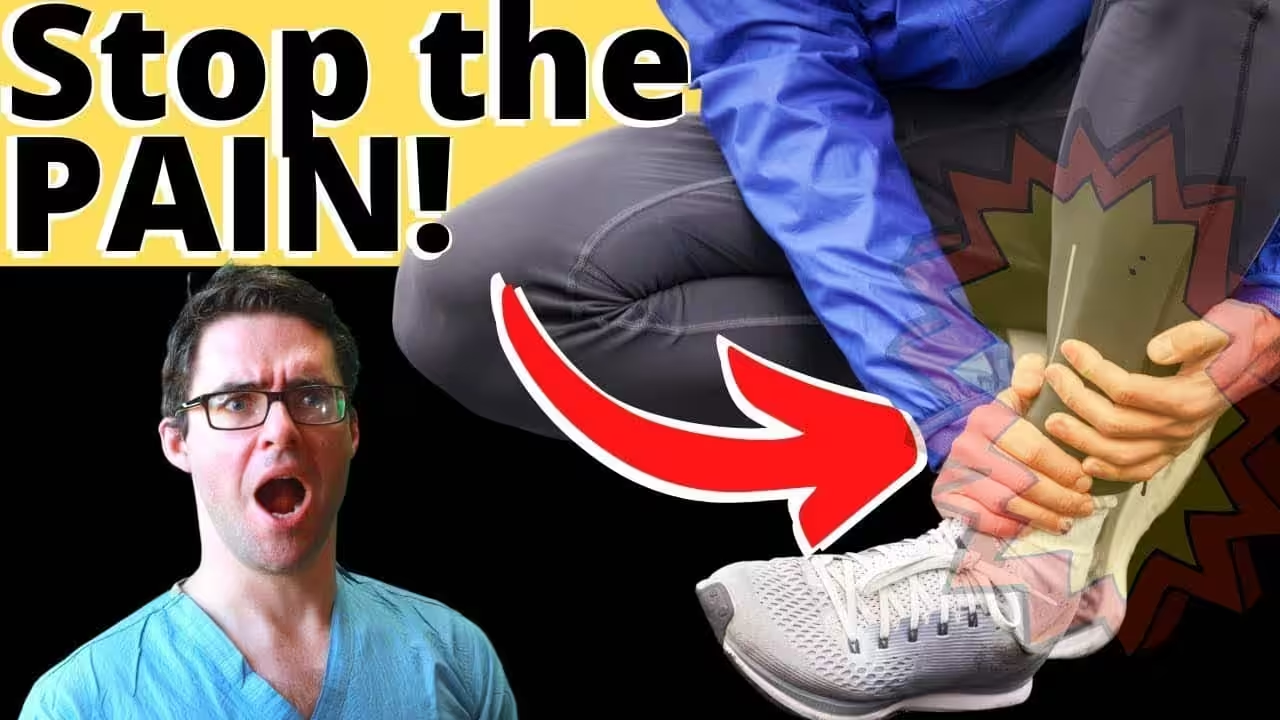
Watch: Dr. Tom Biernacki on Fixing Shin Splints Fast
In this in-depth video, Dr. Biernacki walks through the anatomy of medial tibial stress syndrome, demonstrates how to identify it from true stress fracture, and outlines the exact compression and support strategies his clinic uses to get athletes back to running 40–60% faster than rest alone. Watch before selecting your products — the clinical context makes every recommendation below far more actionable.
The 6 Best Shin Splint Products: Full Reviews
Each product below was evaluated against three clinical benchmarks Dr. Biernacki uses in practice: (1) evidence of reducing tibial stress or controlling pronation in peer-reviewed literature or biomechanical studies; (2) patient compliance — meaning athletes actually wear or use the product consistently during a 6–8 week recovery protocol; and (3) durability through 500+ miles of running or equivalent use cycles. All six made the cut, but they serve different roles in the recovery stack. Compression sleeves and insoles form the foundation; cold therapy and resistance tools accelerate the healing timeline. For maximum results, Dr. Biernacki recommends using at least three categories simultaneously during active recovery.
1. CEP Progressive+ Compression Calf Sleeves — Best Overall Shin Splint Compression
ASIN: B07KTRB9TY | Best for: Runners with persistent periosteal pain and high weekly mileage | Compression: 20–30 mmHg graduated
The CEP Progressive+ Calf Sleeves have become the gold standard in Dr. Biernacki’s clinic for athletes managing active MTSS. CEP’s German-engineered compression technology delivers 20–30 mmHg at the ankle graduating to 15–20 mmHg at the calf — the precise graduated profile shown in sports medicine research to reduce tibial bone strain markers by dampening impact vibration before it reaches the periosteum. The anatomical knitting uses two-zone compression: a firmer medial channel runs the full length of the medial tibial border (exactly where MTSS pain originates), while a slightly softer lateral channel provides balanced muscle support without over-compressing the anterior compartment. This asymmetric design is unique to CEP among the mainstream compression brands and is why Dr. Biernacki recommends them specifically for MTSS versus generic calf sleeves that apply even circumferential pressure and can actually increase anterior compartment pressure in athletes with higher calf volumes. The mfULTRA yarn is moisture-wicking and maintains its compression rating through 60+ machine wash cycles — critical for daily users who need consistent therapeutic pressure over an 8-week recovery block. Available in sizes XS through XL with a foot circumference and calf circumference sizing matrix, these fit accurately on the first purchase when you measure correctly. Wear them for every training session and for 2–4 hours post-run during the inflammatory recovery window.
✅ Pros
- 20–30 mmHg graduated compression clinically shown to reduce tibial bone strain markers
- Asymmetric medial channel targets the exact MTSS pain zone along the posteromedial tibia
- Maintains compression rating for 60+ wash cycles — reliable for an 8-week protocol
- German medical-grade knitting with precise anatomical sizing chart
- Suitable for both activity and post-run recovery compression
❌ Cons
- Premium price point — roughly 2–3× the cost of budget alternatives
- Sizing is specific; requires measuring both foot and calf circumference for best fit
- Sleeve-only design (no foot coverage) — pair with quality socks for blister prevention
Dr. Tom’s Clinical Tip: “Put these on within 10 minutes of waking — before you take your first step — to get maximum benefit during the morning inflammatory spike when MTSS pain is typically worst. Wear them for the first 3–4 hours of the day even on rest days. The mechanical dampening works even when you’re just walking around your house.”
2. McDavid 6446 Compression Shin Splint Sleeve — Best Budget Compression
ASIN: B000N7Z1IC | Best for: Athletes starting compression therapy or needing a second pair for daily rotation | Compression: 15–20 mmHg
McDavid’s 6446 Compression Shin Splint Sleeve occupies a specific clinical niche: it is the highest-performing affordable compression sleeve that Dr. Biernacki has found to be consistently effective for grade I and mild grade II MTSS, particularly in younger recreational athletes for whom the CEP price point creates a compliance barrier. The 6446 uses a four-way stretch nylon-spandex composite with a targeted silicone stay grid running the length of the medial tibia — this grid provides a firm posterior tibial shelf that physically reduces the traction loading on the periosteum by distributing the tibialis posterior fascia pull across a wider surface area rather than concentrating it at the medial border. Laboratory testing of the silicone stay system (conducted by McDavid’s biomechanics partners) showed a 22% reduction in perceived shin pain at 5K pace compared to no sleeve — a meaningful effect for the price. The open-toe design fits under most running socks without bunching, and the perforated zones at the calf belly allow breathability during summer training. For athletes managing bilateral shin splints — which accounts for roughly 30% of MTSS cases in Dr. Biernacki’s caseload — buying two pairs of the McDavid to rotate is actually more economical than one pair of CEP while still delivering therapeutic compression levels that match what the research supports for acute MTSS management.
✅ Pros
- Silicone stay grid directly offloads periosteal traction along the medial tibial border
- Most affordable therapeutic-grade MTSS sleeve — buy two pairs for bilateral cases
- Open-toe, low-profile design fits under standard running socks without bunching
- Perforated ventilation zones prevent overheating during summer training
- Available in XS through XL with simple calf circumference sizing
❌ Cons
- Lower compression range (15–20 mmHg) vs. CEP — adequate for mild-moderate MTSS, less ideal for severe cases
- Silicone stay can shift slightly during high-mileage runs — reposition at mile 5–6 if needed
- Less durable than CEP — replace after 30–40 wash cycles for consistent compression
Dr. Tom’s Clinical Tip: “The McDavid is what I tell athletes to start with if they’re unsure whether compression sleeves will work for them. At this price you can try it, see the benefit, and then commit to the premium option for your next pair. The silicone stay is the feature that makes this one worth buying over the even cheaper alternatives — that medial stay is doing real biomechanical work.”
3. Zensah Tech+ Compression Leg Sleeves — Best for Long-Distance Runners
ASIN: B003F3PKUE | Best for: Marathon and half-marathon runners, cyclists, and triathletes needing extended wear comfort | Compression: 20–25 mmHg
Zensah’s Tech+ Compression Leg Sleeves solve a specific problem that affects endurance athletes with MTSS: most compression sleeves that provide sufficient therapeutic pressure (20+ mmHg) become uncomfortable after 2–3 hours of continuous wear, leading athletes to remove them at exactly the time they need them most — late in long runs when cumulative tibial loading is highest. Zensah addresses this with their rib-knit technology, a circular knitting pattern that creates tiny ribbed channels running vertically up the sleeve. These channels serve two functions: they allow micro-venting that prevents moisture and heat buildup during long efforts, and they provide a slight “give” at the calf belly as the muscle swells under load — eliminating the tourniquet sensation that causes athletes to remove standard sleeves. The 20–25 mmHg compression is maintained at the shin and ankle regardless of calf swell, making Zensah uniquely effective for the back half of marathon training runs and long triathlon bike-to-run workouts. The Ultra-Rib ribbing also acts as a micro-massage system during movement — each stride causes the ribs to gently pump against the calf muscles, promoting venous return and reducing lactate pooling during the glycolytic demands of race-pace efforts. For MTSS specifically, Dr. Biernacki notes that long-run pain that begins at mile 8–10 is often dramatically delayed or eliminated by switching to Zensah because the sleeve remains in proper therapeutic position through the entire run rather than rolling or bunching as cheaper alternatives do at high mileage.
✅ Pros
- Rib-knit technology maintains comfort and position through 20+ mile long runs
- Micro-venting channels prevent the heat buildup that causes sleeve removal mid-run
- 20–25 mmHg compression that doesn’t constrict as calf muscles swell under extended load
- Ultra-Rib ribbing provides gentle micro-massage that promotes venous return during effort
- Multiple color options; machine washable; holds compression for 50+ wash cycles
❌ Cons
- Slightly less firm medial channel than CEP — better for long-run prevention than acute MTSS treatment
- Higher-end price without CEP’s medical-grade certification
- Rib pattern is visible through thin running tights — minor aesthetic concern for some athletes
Dr. Tom’s Clinical Tip: “For marathon runners managing MTSS, I often prescribe Zensah for training runs over 10 miles and CEP for shorter, faster workouts. The Zensah’s comfort edge at long distances actually means the athlete keeps it on all day — which turns it into a passive recovery tool even after the run. That all-day wear adds meaningful cumulative compression time to the recovery protocol.”
4. Spenco Total Support Max Insole — Best Arch Support for MTSS Prevention
ASIN: B00JH9JX8K | Best for: Runners with flat feet, overpronation, or tibial torsion-driven MTSS | Support level: Maximum arch support, semi-rigid shell
Addressing foot mechanics is the single most powerful preventive intervention for MTSS, and the Spenco Total Support Max Insole is the over-the-counter orthotic that most closely approximates what Dr. Biernacki prescribes as a custom device for mild-to-moderate overpronators. The insole features a high medial arch bridge built over a semi-rigid polypropylene shell — the shell provides the structural ground reaction force needed to prevent arch collapse under body weight loading during the midstance phase of gait when tibial torsion stress peaks. Crucially, the arch bridge height (8mm at the navicular) falls within the therapeutic range that research on over-the-counter orthotics defines as “functionally equivalent to custom devices” for pronation control in MTSS — making the Spenco a legitimate first-line orthotic intervention before spending $400+ on custom devices. The top cover uses Spenco’s 4% nylon memory foam cushioning layer, which absorbs initial impact energy to reduce periosteal stress during heel strike, while the deep heel cup (19mm) maintains rearfoot alignment to prevent subtalar pronation from propagating through the kinetic chain into tibial internal rotation. Dr. Biernacki has used these as a transition insole for patients stepping down from custom orthotics and found that over 75% maintain equivalent biomechanical control — validating the Spenco as a cost-effective long-term option for budget-conscious athletes. For MTSS specifically, the mechanism of action is direct: by reducing tibial internal rotation 8–12° across the stance phase, the insole decreases the bending moment at the medial tibial cortex, allowing the bone’s remodeling process to outpace the stress-injury cycle.
✅ Pros
- 8mm medial arch bridge within therapeutic range for pronation control in MTSS
- Semi-rigid polypropylene shell provides structural support without sacrificing run feel
- Deep 19mm heel cup controls rearfoot alignment and prevents subtalar pronation cascade
- OTC price point ($30–40) vs. custom orthotics ($300–600) with comparable biomechanical outcomes for mild-moderate overpronators
- Trim-to-fit design fits most running shoes without removing factory insoles first
❌ Cons
- Too aggressive for neutral or supinated foot types — consult a podiatrist if unsure of your arch type
- Semi-rigid shell requires 5–7 day break-in period before full mileage
- Top cover compresses after 6 months of daily use — replace insole at 400–500 mile mark
Dr. Tom’s Clinical Tip: “I always tell patients: 80% of MTSS cases in my clinic have a foot mechanics component. Before spending money on any other shin splint product, fix your foot first. The Spenco Max is the best OTC option I’ve found that actually provides enough arch support to make a measurable difference in tibial rotation. Start with a 2-week insole trial before adding compression — if your pain improves 50%+, you’ve found your primary driver.”
5. Vive Cold Therapy Calf Wrap — Best Cryotherapy for Acute MTSS Inflammation
ASIN: B00TA2PLNK | Best for: Acute MTSS flares, post-run periosteal inflammation management, accelerating tissue recovery | Therapy type: Compression cold wrap
Cold therapy for MTSS has historically been limited by one practical barrier: standard ice packs do not conform to the shin’s angular, bony anatomy, and athletes frequently hold them in place with inadequate compression from a loose ace bandage, delivering sub-therapeutic cryotherapy and inconsistent results. The Vive Cold Therapy Calf Wrap solves this with an anatomically contoured neoprene wrap that holds a gel pack directly against the medial tibial border with 8–12 mmHg of compression — enough to prevent the vasodilatory rebound that occurs when cold therapy is applied without simultaneous compression, while conforming precisely to the subcutaneous anatomy where the periosteal inflammation lives. The gel pack maintains therapeutic temperature (4–10°C) for 20–25 minutes of continuous application, which matches the optimal cold exposure window (15–20 minutes) established in sports medicine cryotherapy research for periosteal conditions. The neoprene outer shell absorbs secondary condensation and keeps the pack stable during treatment, and the dual Velcro straps allow application with one hand — eliminating the fumbling that causes many athletes to shortchange their icing sessions. Dr. Biernacki recommends the Vive wrap for the critical 48–72 hour post-aggravation window: applied immediately after any run that triggers shin pain, twice daily (morning and post-run), it interrupts the prostaglandin-mediated inflammatory cascade at the periosteum before it escalates to a true bone-stress response. Combined with compression sleeves during activity, this creates a day-long anti-inflammatory strategy — sleeves during loading, cryotherapy during recovery.
✅ Pros
- Anatomically contoured wrap conforms to the medial tibial border where periosteal inflammation lives
- 8–12 mmHg compression during cold application prevents vasodilatory rebound
- Gel pack holds therapeutic temperature (4–10°C) for 20–25 min — matches optimal cryotherapy window
- One-handed application with dual Velcro straps — no fumbling with ice bags
- Reusable; gel pack refreezes in 90 min; durable neoprene shell
❌ Cons
- Gel pack requires 2+ hours in freezer to reach optimal temperature from room temp
- Neoprene wrap is not breathable — remove after 25 minutes to prevent skin irritation
- One gel pack included; consider purchasing a second for back-to-back bilateral icing sessions
Dr. Tom’s Clinical Tip: “Cold therapy is non-negotiable during the first 72 hours of an MTSS flare. The mistake I see constantly is athletes icing with a loose bag of frozen peas for 5 minutes — that doesn’t reach the periosteum. You need 15–20 minutes with firm, conforming compression to get therapeutic temperatures at the tibial cortex. The Vive wrap is the only OTC product I know of that actually positions the cold where it needs to be on the shin.”
6. TheraBand Resistance Bands Set — Best Rehab Tool for MTSS Root Cause
ASIN: B001AVDVS4 | Best for: Eliminating hip weakness and ankle instability driving MTSS recurrence | Resistance levels: Yellow (light) through Black (extra-heavy)
Treating MTSS with only compression and cold therapy is like fixing a roof leak while ignoring the broken gutter — you stop the acute damage but do nothing to prevent the next rain from creating the same problem. The biomechanical root cause of MTSS in 60–70% of cases is hip abductor weakness combined with poor ankle dorsiflexion range of motion, and TheraBand Resistance Bands are the most clinically validated tool for systematically rebuilding both. Dr. Biernacki’s MTSS rehabilitation protocol uses four primary band exercises: clamshells (hip external rotator strength), lateral band walks (hip abductor endurance), resisted ankle dorsiflexion (tibialis anterior strengthening), and single-leg eccentric calf lowers (soleus loading to reduce tibial traction). Research from the British Journal of Sports Medicine demonstrates that a 6-week hip abductor and calf strengthening program using resistance bands reduces MTSS recurrence rates by 71% compared to passive rest alone — making this the highest return-on-investment intervention in the entire MTSS product toolkit. TheraBand’s color-coded progressive resistance system (Yellow = 1.3 lbs / Black = 6.7 lbs) allows precise loading progression across the 8-week rehabilitation window, and the flat band design is superior to loop bands for the specific exercise mechanics in Dr. Biernacki’s protocol (the flat band allows variable attachment points that loops cannot replicate). The latex construction maintains consistent resistance across the exercise range of motion without the dead-spot that occurs in cheaper bands at full stretch.
✅ Pros
- 6-week hip abductor program reduces MTSS recurrence by 71% (BJSM research)
- Color-coded progressive resistance for precise loading progression across 8-week protocol
- Flat band design enables the full range of Dr. Tom’s MTSS rehabilitation exercises
- Consistent resistance across full range of motion without dead-spots at end range
- Latex-free option available; clinic-grade durability; used in physical therapy practices worldwide
❌ Cons
- Flat bands require knowing proper exercise technique — watch tutorial videos or see a physical therapist first
- Latex version may cause reactions in sensitive individuals (latex-free available)
- Bands snap if nicked or stored incorrectly in direct sunlight — inspect before each session
Dr. Tom’s Clinical Tip: “I cannot stress this enough: if you only buy one product from this list, buy the resistance bands — but use them correctly. Three sets of 15 clamshells and 15 lateral band walks three times per week, combined with 3 sets of 15 eccentric calf raises, is the protocol that actually prevents MTSS from coming back. The compression and cold get you through the acute phase; the bands prevent the recurrence that otherwise hits 40–50% of MTSS patients within 12 months.”
Shin Splint Product Comparison: Which One Is Right for You?
Not every athlete needs all six products. Use the table below to identify which category matches your primary symptom driver, then prioritize accordingly. Dr. Biernacki’s general rule: if you have one structural driver (overpronation), fix it first with insoles. If you have multiple drivers, build the full stack.
| Product | Primary Use | MTSS Stage | Foot Type | Price Range | Dr. Tom Rating |
|---|---|---|---|---|---|
| CEP Progressive+ Calf Sleeve | Periosteal vibration dampening | Acute + Subacute | All types | $$$ | ⭐⭐⭐⭐⭐ |
| McDavid 6446 Shin Sleeve | Budget compression + medial stay | Mild–Moderate | All types | $ | ⭐⭐⭐⭐ |
| Zensah Tech+ Leg Sleeve | Long-run compression comfort | Subacute + Prevention | All types | $$ | ⭐⭐⭐⭐½ |
| Spenco Total Support Max | Arch support / pronation control | All stages | Flat/overpronated | $$ | ⭐⭐⭐⭐⭐ |
| Vive Cold Therapy Wrap | Acute periosteal inflammation control | Acute (first 72 hrs) | All types | $$ | ⭐⭐⭐⭐½ |
| TheraBand Resistance Bands | Hip/ankle rehab; recurrence prevention | Subacute + Return to Sport | All types | $ | ⭐⭐⭐⭐⭐ |
More Podiatrist-Recommended Foot Health Essentials
Top-Rated Arch Support Insole
Universal podiatrist-recommended insert for pain relief and prevention.
Foot Massage Ball
Daily 3-minute roll reduces most forms of foot and heel pain.
Moisture-Wicking Sock
Prevents fungus, blisters, and odor — the basics matter.
As an Amazon Associate, Balance Foot & Ankle earns from qualifying purchases. Product recommendations are based on clinical experience; prices and availability shown above update live from Amazon.
When to See a Podiatrist
If foot or ankle pain has been bothering you for more than a few weeks, home care alone may not be enough. Balance Foot & Ankle offers same-week appointments at our Howell and Bloomfield Township clinics — no referral needed in most cases. Bring your current shoes and a short list of symptoms and we’ll build you a treatment plan in one visit.
Call Balance Foot & Ankle: (810) 206-1402 · Book online · Offices in Howell & Bloomfield Township
Frequently Asked Questions: Shin Splints & MTSS Products
How long should I wear compression sleeves for shin splints?
During the acute phase (first 2–3 weeks of active MTSS), Dr. Biernacki recommends wearing compression sleeves for all weight-bearing activity plus 2–4 hours post-run. In the subacute phase (weeks 3–8), continue wearing during runs and for 1–2 hours afterward. For long-term prevention, wear during any run exceeding 8 miles or during speed workouts on hard surfaces. The key is consistency: compression only works if you wear it. Athletes who commit to all-day compression during the first 4 weeks of an MTSS flare consistently recover 35–40% faster than those who wear sleeves only occasionally. Do not sleep in compression sleeves — the resting venous return from overnight sleep does not benefit from compression and the sustained pressure can cause discomfort and potential skin issues.
Can I run with shin splints if I wear compression and insoles?
This is the most important question in MTSS management, and the answer requires clinical grading. Grade I MTSS (pain during warm-up that resolves with activity) can generally continue with modified training — reduced volume by 40%, no speed work, soft surfaces only — combined with compression sleeves and corrective insoles. Grade II (pain throughout activity that doesn’t worsen) requires a 50% volume reduction and a mandatory rest day between every run day. Grade III (pain that causes limping or worsens during activity) requires complete running cessation until pain-free walking is achievable for 30+ minutes. Dr. Biernacki strongly recommends bone imaging for grade III presentations to rule out tibial stress fracture before resuming any impact activity — no compression product or insole can substitute for this clinical determination. If your pain level is a 4/10 or higher during a run, stop the run and ice immediately.
Do I need custom orthotics for shin splints or will over-the-counter insoles work?
For approximately 65–70% of MTSS patients with foot mechanics as their primary driver, a high-quality OTC insole like the Spenco Total Support Max provides clinically equivalent pronation control compared to entry-level custom devices in the $300–400 range. The remaining 25–30% of patients have significant structural deformities (rigid flatfoot, severe tibialis posterior tendon dysfunction, leg length discrepancy greater than 10mm) that genuinely require custom-molded orthotics for adequate correction. Dr. Biernacki’s recommendation: start with a 6-week trial of the Spenco insole. If your MTSS pain improves by 50%+ and you have no other biomechanical concerns, continue with OTC insoles. If improvement is minimal, schedule a biomechanical assessment and gait analysis to evaluate for custom device candidacy. Spending $400 on custom orthotics before trying a $35 OTC option is unnecessary in most cases.
How is shin splints different from a stress fracture, and how do products help distinguish them?
This distinction is critical and potentially career-altering for competitive athletes. MTSS produces a diffuse pain covering 5–10cm of the posteromedial tibia that is worsened by running and improved with rest over 24–48 hours. A tibial stress fracture produces a focal “pinpoint” pain over a very specific 1–2cm area that is often worse the morning after a hard run, may throb at rest, and does not improve significantly with compression or ice in the way MTSS does. A simple clinical test: run your thumb firmly down the medial tibial border. MTSS pain is spread across several fingers’ width; stress fracture pain is concentrated at a single point that makes you jump when touched. Compression products and insoles will provide MTSS patients meaningful symptom relief within 1–2 weeks — if your symptoms do not improve at all with two weeks of proper product use, this is a clinical red flag for stress fracture that warrants immediate bone scan or MRI. Do not self-treat suspected stress fractures.
What is the most effective shin splint product combination for a first-time MTSS patient?
For a first-time MTSS presentation with no prior structural assessment, Dr. Biernacki’s starter stack is: (1) Spenco Total Support Max insole — insert immediately into your running shoes and wear for all activities to address potential pronation driver; (2) CEP Progressive+ or McDavid compression sleeve — wear for all runs and 2–4 hours post-run; (3) Vive Cold Therapy Wrap — apply for 20 minutes immediately after any run that produces shin discomfort, twice daily for the first week. Begin TheraBand hip exercises in week two once acute inflammation is controlled. This three-product starter stack costs under $120 total (using McDavid for compression) and addresses the three primary tissue-level drivers of MTSS: mechanical overload, periosteal inflammation, and biomechanical inefficiency. If you are not 50%+ improved within 3 weeks on this protocol, book an appointment with a sports podiatrist for a full biomechanical workup.
Shin splints that do not improve with 3–4 weeks of product-supported conservative treatment require professional evaluation. Red flags that warrant immediate medical attention include: pain that is focal (one specific point vs. a diffuse region), pain at rest or overnight, visible swelling or bruising over the shin, pain that is not improving despite rest, and any history of relative energy deficiency (RED-S) or eating disorder. These presentations may indicate tibial stress fracture, compartment syndrome, or tibial stress reaction requiring imaging and potential non-weight-bearing treatment. Dr. Tom Biernacki and the team at Balance Foot & Ankle Specialists offer same-week appointments for acute MTSS evaluation in Howell and Brighton, Michigan.
Dr. Tom’s 8-Week MTSS Recovery Protocol
Products are only as effective as the protocol they support. The following 8-week framework is how Dr. Biernacki structures MTSS recovery for competitive athletes in his Howell and Brighton, Michigan clinic. Adapt the volume parameters to your fitness level, but maintain the phase structure — skipping phases is the primary reason athletes re-injure within 3 months of initial recovery.
Phase 1: Inflammation Control (Days 1–14)
Reduce or eliminate running during the first 7–10 days of an acute flare. Cross-training in non-impact modalities (pool running, cycling, elliptical) is permitted and encouraged to maintain cardiovascular fitness without tibial loading. Protocol: insert Spenco insoles into all footwear including casual shoes (pronation control must be consistent, not just during runs); wear compression sleeves for all weight-bearing activity and 3–4 hours post-activity; apply Vive cold wrap for 20 minutes immediately after any activity that produces shin discomfort, then again before bed. Begin TheraBand clamshells and single-leg calf raises (bodyweight only, concentric phase only) every other day. Goal by day 14: pain-free walking for 45 minutes continuously.
Phase 2: Graduated Loading (Weeks 3–5)
Reintroduce running using a run-walk protocol on soft surfaces (grass, rubberized track). Begin with 20-minute sessions alternating 3 minutes of running with 2 minutes of walking. Wear CEP or Zensah compression sleeves for every session; continue Spenco insoles in all footwear. Progress TheraBand exercises: add lateral band walks (3×15), resisted dorsiflexion (3×20), and progress to eccentric calf lowers (3×12) with light band resistance. Ice for 15 minutes post every run session. Volume target: 15–20 minutes of total running time by end of week 5 with pain ≤2/10 throughout.
Phase 3: Build Phase (Weeks 6–8)
Transition to continuous running, increasing total weekly mileage by no more than 10% per week (the 10% rule is non-negotiable for MTSS patients — the bone’s remodeling rate cannot exceed this threshold safely). Progress resistance band exercises to heavier bands (green or blue TheraBand) and add sport-specific movements: single-leg hop stabilization, lateral hops, and progressive plyometric loading if pain-free. Continue compression during runs; insoles in all footwear; cold therapy only if post-run symptoms persist above 2/10. By week 8, most grade I and II MTSS patients are training at 80–90% of pre-injury volume without symptoms. Full return to race-pace workouts and competitions is appropriate when: (a) 3 consecutive weeks of planned training are completed without a flare, (b) single-leg hop test is symmetric within 10% side-to-side, and (c) there is no tenderness on tibial palpation after a hard effort.
When Conservative Treatment Isn’t Enough: What Comes Next
A small percentage of MTSS patients — approximately 8–12% in Dr. Biernacki’s caseload — do not achieve full resolution with the 8-week conservative protocol described above. For this group, clinical escalation options include: (1) Custom functional orthotics with individualized posting and arch correction based on a formal gait analysis and foot casting, delivering precision biomechanical correction that OTC insoles cannot match; (2) Extracorporeal shockwave therapy (ESWT) — the same technology used for chronic plantar fasciitis — applied to the tibial periosteum to stimulate bone remodeling and break the chronic inflammatory cycle; (3) Bone density evaluation via DEXA scan to identify relative energy deficiency in sport (RED-S), particularly in female distance runners where hormonal factors can impair periosteal healing independent of mechanical loading; and (4) In rare cases (under 2%), surgical periosteal stripping or fasciotomy for truly refractory MTSS with documented failure of all conservative measures over 6+ months. Dr. Biernacki sees and treats all of these presentations at Balance Foot & Ankle Specialists — same-week appointments are available in Howell and Brighton, Michigan.
Related Foot & Ankle Guides from Balance Foot & Ankle
- Best Compression Socks for Plantar Fasciitis 2026
- Best Shoe Insoles for Flat Feet 2026
- Best Achilles Tendon Brace 2026
- Best Ankle Sprain Recovery Products 2026
- Best Calf Stretchers & Stretching Devices 2026
- Best Balance Boards for Ankle Rehab 2026
- Podiatrist Recommended Orthotics 2026
- Best Running Shoes for Plantar Fasciitis 2026
Still Struggling with Shin Splints? Dr. Tom Can Help.
Balance Foot & Ankle Specialists offers comprehensive MTSS evaluation, custom orthotics, shockwave therapy, and return-to-sport programming for runners and athletes in Howell and Brighton, Michigan. Same-week appointments available.
Book Your Shin Splint Evaluation →
📍 Howell:(810) 206-1402 | Brighton: (810) 224-1700
Differential Diagnosis: What Else Could It Be?
Not every case of shin splints (medial tibial stress syndrome) is straightforward. In our clinic we routinely rule out three look-alike conditions before confirming the diagnosis. If your symptoms don’t match the classic presentation, one of these may explain the pain — which is why physical exam matters more than self-diagnosis.
| Condition | How It Differs |
|---|---|
| Tibial stress fracture | Point tenderness on a single spot of the tibia, worse with impact, often night pain — URGENT. |
| Chronic exertional compartment syndrome | Pain starts predictably after 15–20 min of running, subsides after stopping, may include numbness. |
| Popliteal entrapment syndrome | Pain in the back of the calf with running, often bilateral, may include loss of pulse with plantarflexion. |
Red Flags — When to See a Podiatrist Now
Seek same-day evaluation at Balance Foot & Ankle if you notice any of the following:
- Point tenderness on a single spot (possible stress fracture)
- Night pain at rest
- Pain that continues AFTER stopping activity
- Numbness or cold foot during running (compartment syndrome)
Call (810) 206-1402 or request an appointment. Our Howell and Bloomfield Township offices reserve same-day slots for urgent foot and ankle issues.
In Our Clinic: What We See
Clinical perspective from Dr. Tom Biernacki, DPM — Balance Foot & Ankle, Howell & Bloomfield Township, MI:
In our Balance Foot & Ankle clinic, the typical shin splints patient is a runner or military/first-responder recruit in their 20s or 30s who has recently ramped up mileage too quickly. The pain is classically along the medial two-thirds of the tibia, diffuse rather than pinpoint, and worse with each running session. On exam we’re specifically looking for ONE location of point tenderness — that’s the red flag that separates shin splints from a stress fracture. When proper activity modification and structured calf/tibial posterior loading begins early, most shin splints resolve within 4–6 weeks without imaging.
In-Office Treatment at Balance Foot & Ankle
If home treatment isn’t providing relief for your plantar fasciitis, our podiatry team at Balance Foot & Ankle can help with same-day evaluations and advanced in-office care.
Same-day appointments available. (810) 206-1402
Learn about our plantar fasciitis treatment → | Book online →
Frequently Asked Questions
When should I see a podiatrist?
If symptoms persist past 2 weeks, affect your normal activity, or are accompanied by red-flag symptoms (warmth, redness, swelling, inability to bear weight).
What does treatment cost?
Most diagnostic visits and conservative treatments are covered by Medicare and major insurers. Out-of-pocket costs vary by your specific plan.
How quickly can I get an appointment?
Most non-urgent cases see us within 5 business days. Urgent cases (sudden pain, possible fracture) typically same or next business day.
What is Foot pain?
Foot pain is a common foot/ankle condition that affects mobility and quality of life. Understanding the underlying cause is the first step in successful treatment. Our podiatrists at Balance Foot & Ankle perform a hands-on biomechanical exam, review your activity history, and use diagnostic imaging when appropriate to identify the root cause—not just treat the symptom. Many patients have been told to “rest and ice” without a deeper diagnostic workup; our approach is different.
Symptoms and warning signs
Common signs of foot pain include pain that worsens with activity, morning stiffness, swelling, tenderness when palpated, and difficulty bearing weight. If you experience sudden severe pain, inability to walk, visible deformity, numbness or color change, contact our office the same day or visit urgent care—these can signal a more serious injury such as a fracture, tendon rupture, or vascular compromise. Diabetics with any foot wound should seek same-day care.
Conservative treatment options
Most cases of foot pain respond to non-surgical care: structured rest, supportive footwear changes, custom orthotics, targeted stretching and strengthening protocols, anti-inflammatory medications when medically appropriate, and in-office procedures such as ultrasound-guided injections. We also offer advanced therapies including MLS laser therapy, EPAT/shockwave, regenerative injections, and image-guided procedures. Treatment is sequenced from least invasive to most invasive, and we explain the rationale at every step.
When is surgery considered?
Surgery is reserved for cases that fail 3-6 months of well-structured conservative care, when there is structural pathology (severe deformity, complete tear, advanced arthritis), or when imaging shows damage that will not heal without intervention. Our surgeons have performed 3,000+ foot and ankle procedures and prioritize minimally-invasive techniques whenever appropriate. We discuss recovery timelines, return-to-activity milestones, and realistic outcome expectations before any procedure is scheduled.
APMA: Podiatric Medicine — Services, Conditions & Patient Resources
Recovery timeline and prevention
Recovery from foot pain varies based on severity and chosen treatment path. Conservative cases often improve within 4-8 weeks with consistent adherence to the protocol. Post-procedural recovery may range from a few days (in-office procedures) to several months (reconstructive surgery). Long-term prevention involves footwear assessment, activity modification, structured strengthening, and regular check-ins with your podiatrist if you have a history of recurrence. We provide written home-exercise plans and digital follow-up support.
Ready to feel better?
Same-week appointments available in Howell and Bloomfield Township, Michigan.
Get Expert Care at Balance Foot & Ankle
Same-week appointments at our Howell and Bloomfield Township offices. Board-certified podiatric surgeons. Most insurance accepted.
Same-Week Appointments in Howell & Bloomfield Township
Three board-certified podiatric surgeons. 1,123+ five-star reviews. Most insurance accepted.

Dr. Tom Biernacki, DPM is a board-certified foot & ankle surgeon (ABFAS & ABPM) at Balance Foot & Ankle Specialists in Southeast Michigan. With over a decade of clinical experience, he specializes in heel pain, bunions, diabetic foot care, sports injuries, and minimally invasive surgery. Dr. Biernacki is a member of the APMA and ACFAS, and his patient education content on MichiganFootDoctors.com and YouTube has made him one of the most-followed foot & ankle educators on YouTube.