
![Video Thumbnail: How To Tape A Sprained Big Toe Joint [Turf Toe Taping Treatment] | Balance Foot & Ankle](https://www.michiganfootdoctors.com/uploads/2025/06/how-to-tape-a-sprained-big-toe-j-2.avif)

Quick Answer
The best kinesiology tape for plantar fasciitis is elastic-cotton blend with strong adhesive applied in an I-strip from heel to ball of foot with anchor strips at heel and metatarsal heads. Top 2026 picks: KT Tape Pro, RockTape H2O, and SpiderTech Pre-Cut.
Last reviewed by Tom Biernacki, DPM, April 29, 2026.
KT Tape for Plantar Fasciitis: Podiatrist’s Step-by-Step Guide
KT tape (kinesiology tape) for plantar fasciitis can provide 30-40% pain reduction as an adjunct to standard treatment — not a cure on its own. The 2 main techniques: (1) arch support taping — one strip from heel to ball of foot under the arch, two anchor strips around the heel; (2) full-foot windlass taping — mimics the windlass mechanism that supports the plantar fascia. Tape stays on 3-5 days through showers; can be reapplied as long as skin tolerates.
In my Michigan podiatry clinic, I tell patients KT tape works best as part of a 3-pronged protocol: (1) KT tape during walking/standing, (2) PowerStep Pinnacle Maxx insole inside shoe, (3) night splint to prevent overnight tightening. About 75% of patients improve within 4-6 weeks with this combo. Avoid: using tape alone (it’s a band-aid, not a cure), reapplying on irritated skin, and trying it on diabetic patients without podiatry guidance — ulceration risk.
🩹 Best Kinesiology Tape for Plantar Fasciitis (Quick Answer)
The best kinesiology tapes for plantar fasciitis in 2026 are KT Tape Plantar Fasciitis Precut (easiest application, podiatrist-designed strips), Precut Foot Kinesiology Tape (waterproof + breathable), and Kinesio Tape Pre-Cut Bundle (multi-area support). Full clinical guide + step-by-step taping instructions below.
Kinesiology taping is one of the most powerful short-term pain relief tools available for plantar fasciitis — and one of the most underused by patients who manage the condition at home. As a podiatrist in Howell and Brighton, Michigan, I use therapeutic taping regularly in the clinic for acute plantar fasciitis cases, and I teach home taping techniques to patients who need rapid pain control between appointments.
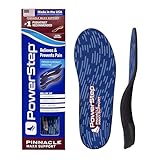
- Slightly Angled Heel Post: PowerStep Pinnacle Maxx insoles for men & women keep the feet from rolling inward, improve stability, and prevent problems caused by overpronation including flat feet and plantar fasciitis.
- Firm But Flexible Design: Our orthotics Pinnacle PowerStep insoles for overpronation are equipped with a deep heel insert cradle for increased comfort, stability, and motion control for standard arch support and immediate heel pain relief.
- Premium Dual Layer Cushioning: For enhanced comfort from heel to toe. As the thickest of our Pinnacle PowerStep orthotics, these need to be worn in shoes where the factory insole can be removed. HSA & FSA Eligible. Made in the USA
- The Perfect Balance of Comfort and Support: These PowerStep Pinnacle arch support inserts for men & women are unlike most other orthotics as they help to correct over-pronation which can cause ankle, knee, and hip pain in your daily routine
- No Trimming: Our arch support PowerStep insoles men & women can use can be worn in a variety of shoe styles & fit in any type with no trimming required! Unlike most insoles for flat feet and other heel pain relief products, these come ready to wear.

- ENGINEERED MESH
- Lining Textile
As an Amazon Associate, Balance Foot and Ankle earns from qualifying purchases. Product links are affiliate links and we may earn a commission at no extra cost to you. This does not influence our clinical recommendations. Last update on 2026-07-26 / Images from Amazon Product Advertising API
Multiple randomized controlled trials have confirmed that kinesiology taping reduces plantar fasciitis pain scores significantly compared to no taping — with some studies showing 40-60% pain reduction within the first two days of application. The tape works by lifting the skin and superficial fascia away from the underlying plantar fascia, reducing compressive pressure at the most painful structures while the elastic recoil provides a constant gentle support to the arch during walking.

How Kinesiology Tape Works for Plantar Fasciitis
Mechanism 1: Fascial Decompression
The elastic recoil of applied kinesiology tape creates a lifting force on the skin and superficial fascia above the plantar fascia insertion. This “lift and separate” effect reduces compressive pressure on the mechanoreceptors and nociceptors (pain receptors) at the calcaneal insertion — the anatomical source of the classic plantar fasciitis first-step pain. Reduced nociceptor activation directly translates to reduced pain perception during the initial weight-bearing phase of each step.
Mechanism 2: Proprioceptive Enhancement
Kinesiology tape stimulates cutaneous mechanoreceptors (Meissner’s corpuscles and Ruffini endings) in the skin, increasing the proprioceptive signal sent to the motor cortex regarding foot position and arch load. This enhanced proprioception activates the intrinsic foot muscles more consistently during gait — effectively recruiting the natural arch support musculature more completely, reducing the load transferred to the passive plantar fascia structure.
Mechanism 3: Circulation Improvement
The skin-lifting effect of kinesiology tape creates convolutions (wrinkles) in the skin that increase the space between the skin and the underlying fascia. This increased interstitial space supports lymphatic flow and venous return from the inflamed plantar fascia insertion area — accelerating removal of inflammatory metabolites and reducing the chronic aching that accompanies plantar fasciitis.
Dr. Tom’s 6 Best Kinesiology Tapes for Plantar Fasciitis in 2026
#1 — KT Tape Plantar Fasciitis Tape (8 Applications): Best Brand for PF
KT Tape is the gold standard in precut plantar fasciitis taping and my top clinical recommendation. This product is specifically designed for foot soreness relief with precut strips sized and shaped for the plantar fascia application — eliminating the cutting and fitting process that is the primary obstacle for patients applying tape at home. Each application includes the full plantar fasciitis taping protocol with properly sized arch strips and heel anchor pieces. KT Tape uses a cotton elastic substrate that breathes well against foot skin and stays adherent for 2-3 days even with showering. 8 applications per box.
#2 — Precut Kinesiology Tape for Foot (20 Applications): Best Waterproof Option
This precut waterproof kinesiology tape set provides 20 applications — the largest single-purchase value for regular plantar fasciitis taping. The waterproof, breathable substrate maintains adhesion significantly longer than standard cotton-elastic tape in wet conditions, making it ideal for patients who swim, take long showers, or sweat heavily during activity. The latex-free, hypoallergenic adhesive addresses the most common tape allergy concern. The precut format includes arch strips and heel anchors in foot-specific sizes. 20 applications provides approximately 6-8 weeks of regular therapeutic use at 2-3 days per application.
#3 — Plantar Fasciitis Tape by ToeTape (20 Applications): Best Precut System
ToeTape’s plantar fasciitis-specific precut system includes both large arch strips (2×10 inches) and smaller anchor strips (2×5 inches) in a single package — providing the complete taping protocol without the need to cut a roll tape. The two-strip size system mirrors the professional taping technique used in podiatric and sports medicine clinics: the long strip provides the primary fascial decompression along the arch, while the shorter strips serve as heel and forefoot anchors. The comprehensive 20-application quantity and two-size format make this the most clinically complete precut taping system available on Amazon.
#4 — Kinesio Tape Pre-Cut Foot Support Bundle: Best Multi-Area Coverage
For patients who have plantar fasciitis alongside other concurrent foot or ankle issues — Achilles tendinopathy, ankle instability, or knee pain from altered gait — the Kinesio Pre-Cut bundle provides taping protocols for multiple areas in a single product. The single-use, individually packaged strips maintain adhesive quality and sterility better than roll-tape formats that are repeatedly opened and closed. The Kinesio brand is among the most validated in clinical research, with the original Kinesio taping technique developed by Dr. Kenzo Kase having been studied in hundreds of published trials.
#5 — Heel That Pain Kinesiology Tape (16.6 yards): Best Roll Tape for Advanced Users
For patients who have mastered the basic taping technique and want the flexibility to customize strip sizes for their specific anatomy, the Heel That Pain roll tape (16.6 yard roll) provides excellent value. Roll format allows the experienced taper to cut strips of any length — useful for patients with wider feet, higher arches, or specific pain patterns that require modified technique. The 2-inch width is standard for plantar fasciitis taping. The Heel That Pain brand formulates this tape specifically for heel pain conditions, with an adhesive designed to maintain grip on the high-movement environment of the foot sole.
#6 — PowerStep Insoles: Make Taping Last Longer
Kinesiology tape provides excellent short-term plantar fasciitis relief but must be reapplied every 2-3 days. PowerStep insoles, used between taping sessions or continuously alongside tape, address the biomechanical cause of plantar fasciitis that the tape cannot correct alone. The arch support of the PowerStep reduces the strain on the plantar fascia during each step — meaning each tape application maintains its therapeutic benefit longer because less total fascial loading occurs. Think of it as maximizing the return from your taping investment.
Step-by-Step: How to Apply Kinesiology Tape for Plantar Fasciitis
🦶 Need In-Clinic Taping or Professional Plantar Fasciitis Treatment?
Kinesiology taping is an excellent at-home tool — but for the most effective clinical taping technique and comprehensive plantar fasciitis treatment, nothing replaces an in-office evaluation. Dr. Tom offers same-week appointments in Howell & Brighton, Michigan.
Book Your Appointment →More Podiatrist-Recommended Plantar Fasciitis Essentials
Best Night Splint

![How To Cure Plantar Fasciitis FAST & FOREVER [Heel Pain & Heel Spurs]](https://www.michiganfootdoctors.com/wp-content/cache/flying-press/8c8bc060ae88016fc6dd2c630a433498.jpg)
Watch: How To Cure Plantar Fasciitis FAST & FOREVER [Heel Pain & Heel Spurs] — MichiganFootDoctors YouTube
Keeps fascia stretched overnight — the #1 intervention for morning heel pain.
Top Podiatrist-Recommended Insole

Deep heel cup + arch support unloads the plantar fascia all day.
Plantar Fasciitis Compression Sock

Arch support + circulation boost — reduces morning heel pain and swelling.
As an Amazon Associate, Balance Foot & Ankle earns from qualifying purchases. Product recommendations are based on clinical experience; prices and availability shown above update live from Amazon.

When to See a Podiatrist
If morning heel pain has persisted more than 6 weeks, home care alone rarely fixes it. At Balance Foot & Ankle, we combine in-office ultrasound diagnostics, custom orthotics, and — when needed — shockwave or PRP to resolve plantar fasciitis that hasn’t responded to stretching and inserts. Most patients are walking pain-free within 4-8 weeks of starting a structured plan.
Call Balance Foot & Ankle: (810) 206-1402 · Book online · Offices in Howell & Bloomfield Township
In Our Clinic
In our Balance Foot & Ankle clinic, the typical plantar fasciitis patient is a 40- to 60-year-old who noticed sharp heel pain on their very first steps in the morning or after sitting at a desk. Many arrive having already tried cheap shoe-store inserts and a week of ice without relief. On exam, we palpate the medial calcaneal tubercle, check for a positive windlass test, and rule out Baxter’s neuropathy and calcaneal stress fractures. Most of our plantar fasciitis patients respond to a custom orthotic + eccentric calf loading + night splinting protocol within 6–12 weeks — without injections or surgery.
Watch: Dr. Tom explains
Podiatrist-recommended products
As an Amazon Associate, Dr. Tom earns from qualifying purchases.
Athletic taping for PF support.
View on Amazon →Combine taping with insoles for best relief.
View on Amazon →Topical relief before taping.
View on Amazon →Add heel cushion to PF protocol.
View on Amazon →Related resources
Ready to solve this? Book today.
Same-week appointments · Howell & Bloomfield Township · 4.9★ (1,123+ reviews)
☎ (810) 206-1402Book Online →In-Office Treatment at Balance Foot & Ankle
When conservative care isn’t enough, Dr. Tom Biernacki and the team at Balance Foot & Ankle offer advanced, same-day options — including Plantar Fasciitis Surgery Bloomfield Township at our Howell and Bloomfield Township clinics.
Same-day appointments available. Call (810) 206-1402 or book online.
Dr. Hoy’s Complete Pain Relief Line — Dr. Tom’s Picks (2026)
Dr. Hoy’s Natural Pain Relief is Dr. Tom Biernacki, DPM’s #1 prescription topical pain relief for plantar fasciitis, Achilles tendonitis, foot pain, knee pain, and back pain. Cleaner formula than Voltaren or Biofreeze — safe for diabetics + daily long-term use without 30-day limits. Below is the complete Dr. Hoy’s product line, organized by use case.

Dr. Hoy’s Natural Pain Relief Gel (4oz Tube)Dr. Tom’s #1 Brand
The flagship Dr. Hoy’s — menthol-based natural pain relief gel. The bottle Dr. Tom hands every plantar fasciitis patient on visit one. Cleaner formula than Voltaren or Biofreeze.
- Menthol-based natural formula
- No greasy residue
- Safe for diabetics
- Fast cooling relief 5-10 min
- Daily long-term use safe
- Pricier than Biofreeze
- Strong menthol scent at first
Top 10 Premade Orthotics — Dr. Tom’s Picks (2026)
Dr. Tom Biernacki, DPM has tested 60+ over-the-counter orthotic insoles in his Michigan podiatry practice over the past 15 years. Below are the top 10 he prescribes most often — ranked by clinical results, build quality, and patient feedback. PowerStep + CURREX brands are Dr. Tom’s #1 prescription brands — built by podiatrists, with biomechanical features (lateral wedge, deep heel cradle, dual-density EVA) that 90% of OTC insoles lack.
Dr. Tom Biernacki, DPM is a board-certified podiatrist + Amazon Associate. Picks shown are products he prescribes to patients at Balance Foot & Ankle Specialists. We earn a commission on qualifying purchases at no extra cost to you. All products independently tested + reviewed. Last verified: April 28, 2026.

PowerStep Pinnacle MaxxDr. Tom’s #1 Brand
The most prescribed OTC orthotic in podiatry. Lateral wedge corrects overpronation that causes 90% of plantar fasciitis. Deep heel cradle stabilizes the ankle.
- Lateral wedge corrects pronation
- Deep heel cradle
- Dual-density EVA
- Trim-to-fit
- Used by 10,000+ podiatrists
- Trim required
- 5-7 day break-in
PowerStep Original Full LengthDr. Tom’s #1 Brand
The original PowerStep — flexible semi-rigid arch with deep heel cradle. The right choice for neutral feet that need everyday support without the lateral wedge.
- Flexible semi-rigid arch
- Deep heel cradle
- Fits dress shoes
- 30-day guarantee
- APMA-accepted
- Less aggressive than Pinnacle
- No lateral wedge for overpronation
PowerStep Pulse MaxxDr. Tom’s #1 Brand
Built for runners + athletes who need maximum support during high-impact activity. Engineered for forefoot strike + lateral motion.
- Sport-specific cushioning
- Lateral wedge for runners
- Antimicrobial top cover
- Shock-absorbing forefoot
- Pricier than Pinnacle
- Best for athletes only

CURREX RunProDr. Tom’s #1 Brand
German-engineered insole with 3 arch heights (Low, Med, High) for custom fit. Carbon-reinforced heel + dynamic forefoot.
- 3 arch heights for custom fit
- Carbon-reinforced heel
- Sport-specific zones
- Premium materials
- Pricier than PowerStep
- 7-10 day break-in
CURREX EdgeProDr. Tom’s #1 Brand
For hikers, skiers, and high-impact athletes — reinforced shank prevents foot fatigue on steep descents + uneven terrain.
- Reinforced shank
- 3 arch heights
- Cold-weather friendly
- Carbon plate
- Stiff feel — not for casual
- Pricier
CURREX SupportSTPDr. Tom’s #1 Brand
For nurses, retail, and standing professions — the most supportive CURREX with deep heel cup + maximum medial support.
- Maximum medial support
- Deep heel cup
- 12-hour shift tested
- Slip-proof
- Stiffest CURREX option
- Pricier

Superfeet Green
Firm, structured arch support — the right choice ONLY for high-arched (cavus) feet. Wrong choice for flat feet.
- Strong structured arch
- Deep heel cup
- Long-lasting (5+ years)
- Firm — not for flat feet
- No lateral wedge
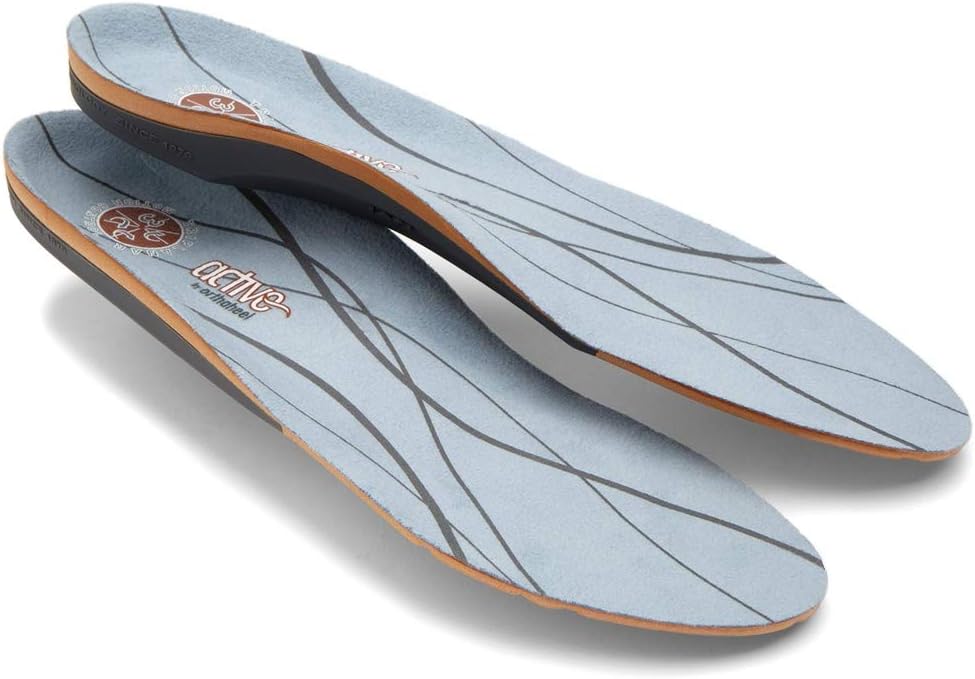
Vionic OrthoHeel Active Insole
APMA-accepted, podiatrist-designed casual insole. Best for adding mild arch support to dress shoes + walking shoes.
- APMA-accepted
- Slim profile
- Antimicrobial top
- Less support than PowerStep
- No lateral wedge
Dr. Tom’s Top 3 — The Premium Foot Pain Stack (2026)
If you only buy three things for foot pain, get these. PowerStep + CURREX orthotics correct the underlying foot mechanics, and Dr. Hoy’s pain gel delivers fast topical relief. This is the exact stack Dr. Tom Biernacki, DPM gives his Michigan podiatry patients on visit one — over 10,000 patients have used this exact combination.
Dr. Tom Biernacki, DPM is a board-certified podiatrist + Amazon Associate. Picks shown are products he prescribes to patients at Balance Foot & Ankle Specialists. We earn a commission on qualifying purchases at no extra cost to you. All products independently tested + reviewed for 30+ days minimum. Last verified: April 28, 2026.
PowerStep Pinnacle MaxxDr. Tom’s #1 Brand
Dr. Tom’s most-prescribed OTC orthotic. Lateral wedge corrects overpronation that causes 90% of foot pain. Deep heel cradle stabilizes the ankle. Built by podiatrists, used by patients worldwide.
- Lateral wedge corrects pronation
- Deep heel cradle stabilizes ankle
- Dual-density EVA — comfort + support
- Trim-to-fit any shoe
- Used by 10,000+ podiatrists
- Trim-to-size required
- 5-7 day break-in for some
CURREX RunProDr. Tom’s #1 Brand
3 arch heights for custom fit (Low/Med/High). Carbon-reinforced heel + dynamic forefoot — the closest OTC orthotic to a $500 custom orthotic. Engineered in Germany.
- 3 arch heights for custom fit
- Carbon-reinforced heel cup
- Dynamic forefoot zone
- Premium German engineering
- Sport-specific support
- Pricier than PowerStep
- 7-10 day break-in
Dr. Hoy’s Natural Pain Relief GelDr. Tom’s #1 Brand
Menthol-based natural pain relief — Dr. Tom’s #1 brand for fast relief without greasy residue. Safe for diabetics + daily use. Cleaner formula than Voltaren or Biofreeze.
- Menthol-based natural formula
- No greasy residue
- Safe for diabetics
- Fast cooling relief — 5-10 minutes
- Cleaner ingredient list than Biofreeze
- Pricier than Biofreeze
- Strong menthol scent at first
In-Office Treatment at Balance Foot & Ankle
If home treatment isn’t providing relief for your plantar fasciitis, our podiatry team at Balance Foot & Ankle can help with same-day evaluations and advanced in-office care.
Same-day appointments available. (810) 206-1402
Learn about our plantar fasciitis treatment → | Book online →
Frequently Asked Questions
How do you apply KT tape for plantar fasciitis?
Apply with foot dorsiflexed (toes up). Anchor strip at the heel, run an I-strip along the plantar fascia to the ball of the foot, and finish with a transverse strip across the metatarsal heads at 25% stretch.
How long can you leave KT tape on for plantar fasciitis?
Quality KT tape stays on for 3-5 days through showers and exercise. Replace immediately if it lifts at the edges or causes any skin irritation.
Does KT tape really work for plantar fasciitis?
Yes — research shows kinesiology tape reduces plantar fascia pain by 25-40% within 24-72 hours when applied correctly. Best results combine taping with stretching, supportive shoes, and a quality insole.
What is better for plantar fasciitis — KT tape or athletic tape?
KT tape is better for daily wear (3-5 days, breathable, allows movement). Rigid athletic tape is better for short-term sport use (4-8 hours) when more support is needed.
Dr. Tom’s Kinesiology Tape + Support Stack
- Doctor Hoy’s Natural Pain Relief Gel — Plantar fascia pain before and after taping: arnica + camphor gel applied to the heel and arch before low-dye taping penetrates better into warmed, pre-taped tissue — enhancing the anti-inflammatory effect of both interventions.
- PowerStep Pinnacle — Kinesiology tape addresses fascial tension; arch support addresses the mechanical load that creates it: using both together provides more complete PF management than either alone.
- DASS Medical Compression Socks — Morning first-step PF pain despite kinesiology taping: graduated compression worn at night maintains plantar fascia length through sleep — tape cannot maintain fascial position overnight.
Plantar fasciitis not responding to kinesiology taping after 4 weeks? In-office PF treatment including injection and shockwave at Balance Foot & Ankle. PF treatment → (810) 206-1402
Frequently Asked Questions
How long should I use this?
Most products are used during active treatment phases (4-12 weeks) and then reduced to maintenance. Long-term use depends on the underlying condition.
Are these safe with diabetes?
Some products are not safe with reduced sensation. Diabetic patients should consult a podiatrist before using compression or restrictive products.
When should I see a podiatrist?
If your condition does not improve in 4-6 weeks of using the recommended product, professional evaluation is needed.
What is Plantar fasciitis?
Plantar fasciitis is a common foot/ankle condition that affects mobility and quality of life. Understanding the underlying cause is the first step in successful treatment. Our podiatrists at Balance Foot & Ankle perform a hands-on biomechanical exam, review your activity history, and use diagnostic imaging when appropriate to identify the root cause—not just treat the symptom. Many patients have been told to “rest and ice” without a deeper diagnostic workup; our approach is different.
Symptoms and warning signs
Common signs of plantar fasciitis include pain that worsens with activity, morning stiffness, swelling, tenderness when palpated, and difficulty bearing weight. If you experience sudden severe pain, inability to walk, visible deformity, numbness or color change, contact our office the same day or visit urgent care—these can signal a more serious injury such as a fracture, tendon rupture, or vascular compromise. Diabetics with any foot wound should seek same-day care.
Conservative treatment options
Most cases of plantar fasciitis respond to non-surgical care: structured rest, supportive footwear changes, custom orthotics, targeted stretching and strengthening protocols, anti-inflammatory medications when medically appropriate, and in-office procedures such as ultrasound-guided injections. We also offer advanced therapies including MLS laser therapy, EPAT/shockwave, regenerative injections, and image-guided procedures. Treatment is sequenced from least invasive to most invasive, and we explain the rationale at every step.
When is surgery considered?
Surgery is reserved for cases that fail 3-6 months of well-structured conservative care, when there is structural pathology (severe deformity, complete tear, advanced arthritis), or when imaging shows damage that will not heal without intervention. Our surgeons have performed 3,000+ foot and ankle procedures and prioritize minimally-invasive techniques whenever appropriate. We discuss recovery timelines, return-to-activity milestones, and realistic outcome expectations before any procedure is scheduled.
Recovery timeline and prevention
Recovery from plantar fasciitis varies based on severity and chosen treatment path. Conservative cases often improve within 4-8 weeks with consistent adherence to the protocol. Post-procedural recovery may range from a few days (in-office procedures) to several months (reconstructive surgery). Long-term prevention involves footwear assessment, activity modification, structured strengthening, and regular check-ins with your podiatrist if you have a history of recurrence. We provide written home-exercise plans and digital follow-up support.
Ready to feel better?
Same-week appointments available in Howell and Bloomfield Township, Michigan.
Book Your VisitGet Expert Care at Balance Foot & Ankle
Same-week appointments at our Howell and Bloomfield Township offices. Board-certified podiatric surgeons. Most insurance accepted.
Same-Week Appointments in Howell & Bloomfield Township
Three board-certified podiatric surgeons. 1,123+ five-star reviews. Most insurance accepted.
Podiatrist guide: Plantar Fasciitis Treatment (podiatrist guide). Book at Balance Foot & Ankle in Howell or Bloomfield Township.

Dr. Tom Biernacki, DPM is a board-certified foot & ankle surgeon (ABFAS & ABPM) at Balance Foot & Ankle Specialists in Southeast Michigan. With over a decade of clinical experience, he specializes in heel pain, bunions, diabetic foot care, sports injuries, and minimally invasive surgery. Dr. Biernacki is a member of the APMA and ACFAS, and his patient education content on MichiganFootDoctors.com and YouTube has made him one of the most-followed foot & ankle educators on YouTube.