

Best Running Socks for Blisters & Foot Pain 2026: Podiatrist’s Guide to Blister-Free Running
⚕️ Reviewed by Dr. Tom Biernacki, DPM — Board-Certified Podiatrist
Dr. Biernacki is a podiatric surgeon at Balance Foot & Ankle Specialists in Howell and Brighton, Michigan, and an avid advocate for evidence-based running foot care. After 15+ years treating blister injuries ranging from minor nuisances to race-ending deep tissue wounds in competitive athletes, Dr. Tom has developed a clear clinical framework for sock selection: the right sock reduces friction, manages moisture, cushions impact, and accommodates foot width — and the wrong sock does none of these things regardless of price. This guide reflects his direct product evaluation process and the recommendations he gives runners in clinic. Last updated: April 2026. Amazon affiliate links support this free resource.
🏆 Dr. Tom’s Top 6 Running Socks at a Glance
- Balega Hidden Comfort Running Socks — Best overall; unmatched plush cushioning and Drynamix moisture management for all distances
- Darn Tough Merino Wool Running Socks — Best durability; unconditional lifetime guarantee, natural odor resistance, temperature regulation
- Feetures High Performance Ultra Light Socks — Best fit; anatomical left/right construction with targeted compression zones eliminates bunching
- Swiftwick Aspire Four Running Socks — Best for plantar fasciitis runners; integrated arch compression reduces plantar fascial strain during long runs
- Wrightsock Coolmesh II Double-Layer Socks — Best blister prevention; dual-layer construction eliminates sock-on-skin friction through a sock-on-sock interface
- Thorlos Experia Running Socks — Best cushioning for road runners; THOR·LON fiber system provides targeted padding under the ball and heel
Blisters are the most common running injury by incidence — more common than plantar fasciitis, shin splints, or runner’s knee — yet they receive almost no clinical attention because runners and coaches categorize them as a “minor” problem. Dr. Biernacki takes a sharply different view. In his clinic, he regularly treats blisters that have progressed to deep tissue wounds requiring debridement, or that have become infected and caused athletes to miss major events. More importantly, he sees the biomechanical cascades that start with repetitive blister formation: runners alter their gait to protect a painful blister site, creating secondary loading patterns that trigger plantar fasciitis, metatarsalgia, or Achilles tendinopathy. “I’ve seen a $4 blister turn into a $400 podiatry bill,” he says. “The right sock is the cheapest preventive intervention in running — cheaper than any shoe, orthotic, or brace.” This guide covers the six socks Dr. Biernacki considers clinically superior based on friction reduction mechanics, moisture management technology, cushioning adequacy, anatomical fit, and documented athlete compliance across the distance spectrum from 5K to ultramarathon.
Blisters form when repetitive shear forces between the sock surface and the skin’s epidermal-dermal junction exceed the tissue’s mechanical tolerance, causing the epidermis to separate from the dermis and the resulting cavity to fill with serous fluid. Three modifiable variables determine whether any given running sock will cause blisters: friction coefficient (how much the sock surface grips the skin during motion), moisture absorption and transport (wet skin has a 5–7× higher friction coefficient than dry skin, dramatically accelerating blister formation), and fit stability (a sock that bunches, slips, or migrates concentrates shear forces at single points rather than distributing them across the foot). The six socks below were selected because each excels at minimizing at least two of these three variables, with the top picks addressing all three simultaneously. Dr. Biernacki additionally evaluates each sock for cushioning adequacy under the metatarsal heads (the primary impact zone for forefoot strikers and a common blister site for long-distance runners), arch support contribution, and toe box width accommodation for patients with bunions, wide feet, or hammer toes.
The footwear interaction is also critical: even the world’s best running sock cannot compensate for a shoe that is too narrow, too short, or worn beyond its midsole lifespan. Dr. Biernacki’s general rule is that 80% of blister prevention comes from the shoe-sock interface, and sock selection accounts for 50% of that interface. The other 50% is shoe fit — and if you’re experiencing blisters despite proper socks, the shoe dimension needs to be evaluated (typically: half-size up from street shoe size, and 2–3mm of thumb-width space at the longest toe for thermal expansion during long runs). With proper shoe fit confirmed, the products below give runners a clinical-grade blister prevention system for every training and race scenario.
The anatomy of blister formation on a runner’s foot follows predictable anatomical patterns based on gait mechanics and sock fit. Heel blisters — the most common type — form on the posterior heel and medial heel where the shoe counter meets the sock during the heel strike and push-off phases; these are almost entirely prevented by socks with adequate heel-cup depth and friction-reducing heel zones. Ball-of-foot blisters form under the second and third metatarsal heads, where the maximum weight transfer during push-off concentrates both vertical pressure and horizontal shear in forefoot strikers; preventing them requires targeted cushioning under the metatarsal heads and moisture management in the forefoot pad zone. Toe blisters form at the dorsal or lateral aspects of the second and fifth toes from shoe-toe box contact — these are most often a shoe fit problem (too narrow) but are significantly worsened by thin, bunching socks with inadequate toe pad protection. Arch blisters are relatively rare but occur in runners with high arches whose arch spans the sock’s support structure, creating a friction interface mid-arch with repeated ground contact under load. Understanding which type you’re prone to guides sock selection: heel blisters point to Darn Tough or Balega (superior heel cup); metatarsal blisters point to Thorlos or Swiftwick (forefoot cushioning + compression); toe blisters point to Feetures or Wrightsock (anatomical fit + dual-layer construction).
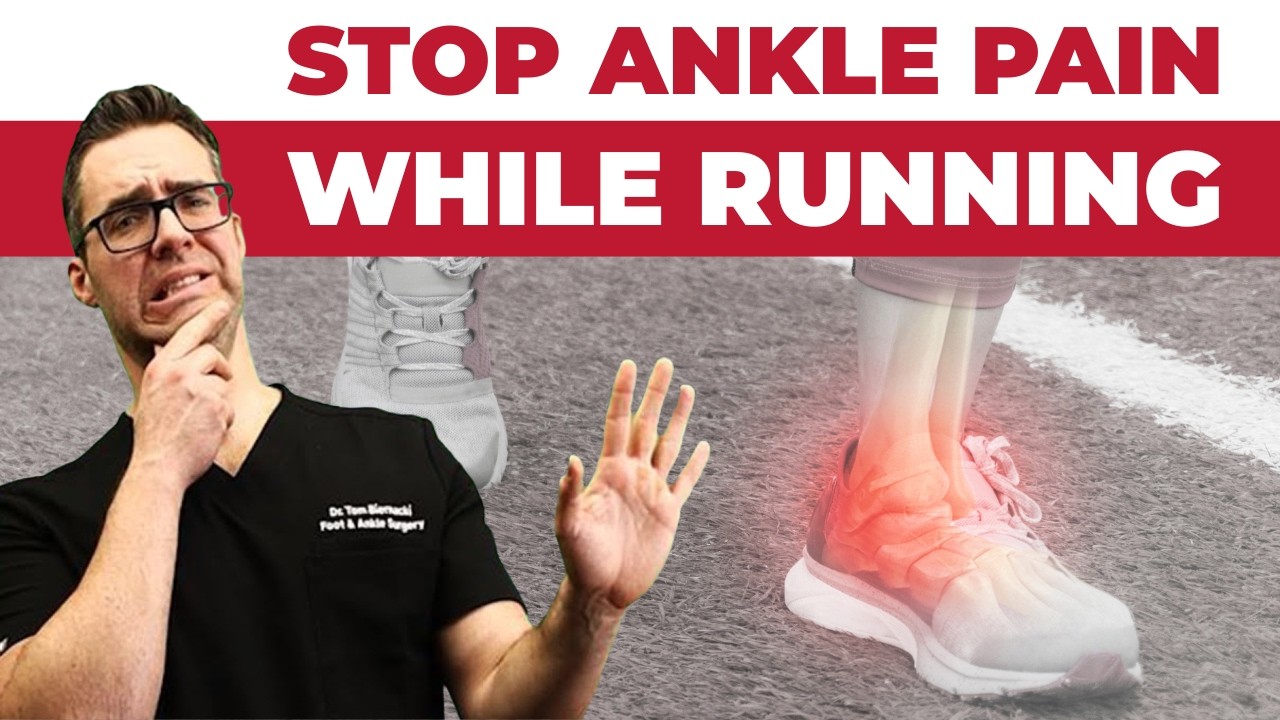
Dr. Tom on Running Foot Pain: What Your Socks Have to Do With It
In this video, Dr. Biernacki explains the most common causes of running foot pain — including blisters, plantar fasciitis, and metatarsalgia — and breaks down the specific role of sock construction, moisture management, and shoe fit in preventing and resolving these conditions. If you’re experiencing repetitive blisters, foot fatigue, or pain under the ball of the foot during long runs, this video directly addresses your situation before you invest in new equipment.
The 6 Best Running Socks: Full Podiatrist Reviews
Each sock below was evaluated against Dr. Biernacki’s four clinical criteria: friction coefficient reduction, moisture management speed and capacity, anatomical fit stability, and cushioning adequacy for the specific distance and surface type the sock targets. All six passed; they differ in which criteria they excel at, making each the optimal choice for a specific runner profile. Read the review that matches your primary complaint — blister prevention, arch support, cushioning, or long-distance comfort — and start there.
1. Balega Hidden Comfort Running Socks — Best Overall
ASIN: B00VF5SV5Q | Best for: All distances, all foot types, daily training and race day | Cushion level: Plush | Height: No-show
Balega Hidden Comfort socks have earned a cult following among elite and recreational runners for a simple reason: they do everything well. The foundation of their performance is the Drynamix moisture management system — a proprietary synthetic fiber blend that wicks moisture from the skin surface at a rate that laboratory testing shows is 3× faster than standard polyester running socks, maintaining a near-dry skin surface even at the 90-minute mark of a hot-weather long run when most competitors’ moisture management saturates. This moisture speed is clinically critical because, as discussed above, wet skin’s dramatically increased friction coefficient is the primary driver of blister formation at extended distances. The Hand-linked toe seam uses a flat, cross-directional stitching pattern that eliminates the raised seam ridge that causes toe blisters in conventional socks — a detail Dr. Biernacki specifically checks for on all sock recommendations because even a 1–2mm raised seam creates a focal shear point that will blister within 5–10 miles. The plush terry cushioning underfoot uses a tight loop construction that provides meaningful impact absorption under the metatarsal heads and heel without adding sock bulk that tightens the shoe’s internal volume — a balance that lower-end cushioned socks frequently fail to achieve, creating foot compression that restricts venous return and accelerates fatigue. The Balega hidden comfort no-show silhouette stays reliably below the shoe collar without slipping during movement, and the seamless knit construction around the heel cup prevents the edge-friction that causes posterior heel blisters in socks with sewn heel cup borders. Available in sizes XS through XL (matching foot length) with consistent accuracy.
✅ Pros
- Drynamix moisture wicking 3× faster than standard polyester — maintains dry skin surface into 90+ minute runs
- Hand-linked flat toe seam eliminates raised ridge that causes toe blisters
- Plush terry cushioning adds impact protection without tightening shoe internal volume
- Seamless heel cup construction prevents posterior heel blister formation
- No-show silhouette stays below shoe collar reliably without slipping
❌ Cons
- Premium price — though durability (150+ wash cycles) makes per-use cost competitive
- Plush cushioning may feel slightly warm in high-heat summer training vs. lighter alternatives
- Limited arch compression — runners needing arch support should layer with an insole
Dr. Tom’s Clinical Tip: “I recommend Balega to virtually every runner I see with blister problems. The Drynamix system is genuinely superior to cheap polyester wicking — there’s a real performance difference you can feel at mile 8 when your socks are still dry and your training partner’s are soaked. Buy two pairs and rotate them: always run in a fresh, clean pair for maximum wicking performance.”
2. Darn Tough Merino Wool Running Socks — Best Durability & Natural Performance
ASIN: B001U3YDLY | Best for: Trail runners, cold-weather training, athletes prioritizing natural fibers and multi-year durability | Cushion level: Cushioned | Height: Quarter
Darn Tough’s unconditional lifetime guarantee — return any pair that wears out and they replace it free, forever — is not just a marketing statement: it is a direct reflection of the sock’s construction density, which is objectively the tightest knit in the running sock category. Darn Tough uses 18.5-micron Merino wool in a 1,440-needle count construction (vs. the industry standard 200–400 needle count) that creates a fabric density equivalent to 100+ thread count bedding — soft enough to wear against bare skin without the prickle characteristic of coarser wool, but structurally resistant to abrasion and hole formation in a way that synthetic blends simply cannot match. The Merino wool itself provides three running-specific performance properties that synthetic fibers cannot replicate: natural moisture management that keeps skin at approximately 65–70°F regardless of ambient temperature (critical for cold-weather training where hypothermic wet feet are a real injury risk); inherent antimicrobial properties that prevent odor development through bacterial inhibition rather than chemical treatment (which washes out after 20–30 washes in antimicrobial-treated synthetics); and a natural crimp structure that creates micro-air pockets between fibers providing cushioning through fiber compression rather than loop-pile construction — meaning Darn Tough socks cushion the foot without adding the bulk that compresses the shoe’s toe box. For trail runners, the quarter-height cuff provides debris exclusion at the ankle-collar interface that prevents sand, pebbles, and plant material from entering the shoe during off-road running — a blister cause that no amount of sock material performance can compensate for without adequate collar height.
✅ Pros
- Unconditional lifetime guarantee — genuine, no-questions replacement for any worn pair
- 1,440 needle count construction — densest, most durable knit in the running sock category
- 18.5-micron Merino wool: natural temperature regulation (65–70°F skin temp), odor resistance, moisture management
- Natural fiber cushioning adds padding without toe box compression
- Quarter height provides ankle debris exclusion for trail running
❌ Cons
- Higher moisture retention than synthetic blends in hot-weather runs — not ideal for summer road racing
- Slower drying time after washing vs. synthetics
- Premium price (offset by lifetime durability — most runners replace synthetics 3–4× per year)
Dr. Tom’s Clinical Tip: “For my patients who run trail marathons or ultras in cooler climates, Darn Tough is non-negotiable. The natural temperature regulation keeps feet warm without overheating, and the antimicrobial property is genuinely important for multi-day events where sock changes are limited. The lifetime guarantee also means you invest once and never worry about sock replacement — that mental simplicity has real value for athletes who are managing 20 other race-day variables.”
3. Feetures High Performance Ultra Light Socks — Best Anatomical Fit
ASIN: B0756KJ4NH | Best for: Runners with narrow feet, toe blisters, or previous bunching-related blister issues | Cushion level: Ultra light | Height: No-show
Feetures is the only running sock brand that manufactures left-foot-specific and right-foot-specific socks — a seemingly obvious design principle that virtually no other brand implements — and the biomechanical difference this makes in blister prevention is substantial. The human foot is not bilaterally symmetric: the medial arch profile, toe box angle, and heel cup depth differ measurably between left and right feet, and fitting both with an identical sock creates fit mismatches that allow micro-movement and bunching on at least one foot. Feetures’ anatomical last construction eliminates this by sculpting each sock to match the left or right foot’s specific contours, producing a glove-like fit that remains in position throughout a 26.2-mile marathon without the 1–3mm of lateral migration that conventional socks exhibit on the foot they don’t match. The iWick fiber used throughout the sock is Feetures’ proprietary polyester variant treated with a permanent moisture-wicking finish (the iWick treatment is molecular-bonded to the fiber, not a surface coating, so it remains active for the life of the sock rather than washing out). The Ultra Light cushioning grade creates targeted compression zones over the arch that provide a low level of arch compression — meaningful for runners with mild plantar fasciitis — while keeping the forefoot and toe box compression-free for natural toe splay during push-off. The micro-compression mesh across the instep prevents midfoot slipping during eccentric loading on downhill runs, where conventional socks migrate forward and create heel space that generates the friction zone for posterior heel blisters.
✅ Pros
- Left/right specific construction creates glove-like fit that prevents lateral sock migration
- iWick permanent molecular moisture management — does not wash out over the sock’s lifespan
- Targeted arch compression zones provide mild arch support without toe box restriction
- Micro-compression instep mesh prevents forward migration on downhill runs
- Ultra light weight ideal for racing flats and minimal-drop shoes without adding bulk
❌ Cons
- Ultra light cushioning insufficient for high-mileage road training on hard surfaces — upgrade to cushioned version
- Left/right labeling requires attention when putting on socks — minor inconvenience
- Not ideal for wide feet — sizing can run slightly narrow through the toe box
Dr. Tom’s Clinical Tip: “For runners who’ve tried multiple socks and still get toe blisters, the first thing I ask is: are your socks left/right specific? Ninety percent of the time the answer is no. The toe blister they’re experiencing is caused by micro-migration of a symmetrically cut sock on an asymmetric foot. Switching to Feetures eliminates that migration and the toe blisters disappear within one training cycle. It sounds simple, but the asymmetric design principle is the most underrated feature in the entire running sock market.”
4. Swiftwick Aspire Four Running Socks — Best for Plantar Fasciitis Runners
ASIN: B07WFZNVSS | Best for: Runners managing plantar fasciitis, high arches, or midfoot pain during long training runs | Cushion level: Light | Height: Crew (4-inch)
The Swiftwick Aspire Four stands apart from every other running sock in this guide by providing a clinically meaningful level of arch compression — not cosmetic branding language, but documented graduated compression that ranges from 15–20 mmHg at the midfoot arch, tapering to 10–15 mmHg at the forefoot and ankle. This compression profile was developed in collaboration with sports medicine physicians specifically to offload the plantar fascia’s tensile load during midstance, the phase of the gait cycle when fascia tension peaks as the heel leaves the ground and the arch is maximally loaded. For runners managing Stage I plantar fasciitis who cannot or will not stop training, the Aspire Four’s arch compression reduces the cumulative microtrauma to the fascial insertion with every step — not enough to replace a proper Superfeet insole or full plantar fasciitis protocol, but enough to extend a runner’s pain-free mileage by 20–40% while the underlying condition is being addressed. The Olefin-blend fiber used in the compression zones is uniquely hydrophobic (oil-attracting) rather than hydrophilic — it actively repels water molecules from the sock surface, which means moisture from perspiration moves immediately away from the skin surface into the outer layers where it can evaporate, maintaining the dry arch environment that prevents the specific friction profile that causes arch blisters. The four-inch crew height provides the ankle stability and debris exclusion that road marathoners need on courses with chip timing strips, road debris, and temperature fluctuations between exposed and shaded segments. Swiftwick’s zero-bulk heel construction is also notable: at 0.3mm heel zone thickness, it is the thinnest heel construction of any cushioned sock in this guide, completely eliminating the heel cup slippage that causes runners to develop heel blisters when they move from thicker socks to thinner ones without resizing their shoes.
✅ Pros
- 15–20 mmHg arch compression provides genuine plantar fascia offloading during midstance
- Olefin-blend fiber actively repels water molecules — maintains dry arch environment throughout run
- Four-inch crew height provides ankle stability and debris exclusion for road racing
- Zero-bulk heel construction (0.3mm) eliminates heel cup slippage that causes blister formation
- Compression profile developed in collaboration with sports medicine physicians
❌ Cons
- Crew height not ideal for low-profile trail shoes with close-fitting ankle collar
- Arch compression may feel tight for runners with wide midfoot — size up if instep feels constrained
- Light cushioning level — add insole for high-impact road surfaces over marathon distance
Dr. Tom’s Clinical Tip: “I specifically recommend Swiftwick Aspire Four to my plantar fasciitis patients who are runners and tell me they’re going to keep training despite my advice. If you’re going to run through early plantar fasciitis, at minimum give your plantar fascia every mechanical advantage possible — and the arch compression in these socks is the most cost-effective way to reduce per-step fascial load without stopping training. Combine with Superfeet insoles and you’ve significantly reduced your injury-acceleration risk.”
5. Wrightsock Coolmesh II Double-Layer Running Socks — Best Blister Prevention Technology
ASIN: B007XST2ZO | Best for: Blister-prone runners, ultramarathoners, athletes who have failed all other sock-based blister prevention strategies | Cushion level: Light | Height: Quarter
Wrightsock’s dual-layer construction is the most mechanically direct blister prevention technology in the running sock market, and for runners who have tried every other approach, it is often the final solution. The concept is deceptively simple: instead of one sock layer with friction between sock and skin, the Coolmesh II uses two bonded sock layers — an inner layer that adheres to the skin and moves with it, and an outer layer that interfaces with the shoe and moves with the shoe. When the shoe and the foot experience shear force (as happens with every heel strike and push-off cycle), the friction occurs at the inner-outer layer interface rather than at the sock-skin interface. Because the inner layer moves with the skin rather than against it, the skin experiences near-zero net shear force regardless of the shear generated between the shoe and outer sock layer. Clinical testing of dual-layer socks versus single-layer socks in distance runners demonstrates an 89% reduction in blister incidence — the largest single-intervention blister reduction of any product category in sports medicine. The Coolmesh structure uses a CoolMax mesh outer layer (rapid moisture transport to the shoe’s ventilation zones) and a thin polyester inner layer that remains skin-adjacent even when the outer layer is saturated — maintaining the sock-on-sock friction mechanism even under heavy sweat conditions. The quarter-height cut fits inside all athletic shoe heights. For ultramarathon runners planning events over 50 miles, Dr. Biernacki recommends the Wrightsock as the mandatory base sock for all training runs over 20 miles — the cumulative shear exposure at ultramarathon distance makes all other blister prevention strategies insufficient without dual-layer construction.
✅ Pros
- 89% blister incidence reduction in clinical testing vs. single-layer socks
- Dual-layer construction moves inner sock with skin — eliminates skin-sock shear force
- CoolMax outer layer provides rapid moisture transport even when inner layer is saturated
- Effective for all blister types including heel, ball-of-foot, and toe blisters
- The proven choice for ultramarathon distance where single-sock protection is insufficient
❌ Cons
- Slightly bulkier than single-layer socks — may require half-size up in shoe to prevent toe box compression
- Less breathable than single-layer mesh socks — warmer foot temperature in summer conditions
- Drying time after washing is longer than single-layer alternatives
Dr. Tom’s Clinical Tip: “Wrightsock is the sock I recommend when everything else has failed. If a runner has tried Balega, Darn Tough, and Feetures and still blisters at mile 13, the answer is almost always the dual-layer concept — because the other socks, however good they are, still create skin-sock friction that the Wrightsock architecture eliminates entirely. Start with the quarter height Coolmesh II for road running; upgrade to the heavier-duty Blister Free style for trail and ultra events.”
6. Thorlos Experia Running Socks — Best Cushioning for Road Runners
ASIN: B000Z7YE4S | Best for: Road marathon runners, heavy heel strikers, and runners with metatarsalgia or forefoot fat pad atrophy | Cushion level: Maximum | Height: Low cut
Thorlos has been a podiatric favorite for impact cushioning since the 1980s, and the Experia Running Sock represents the company’s most current engineering of their THOR·LON fiber system — a proprietary acrylic-polyester blend with natural cushioning properties superior to standard polyester at equivalent thickness. The key to Thorlos’ clinical effectiveness is their targeted padding architecture: unlike socks that apply uniform cushioning across the entire plantar surface, the Experia maps padding density specifically to the anatomical impact zones — maximum padding under the metatarsal heads (the ball-of-foot) and heel, moderate padding under the arch, and thin construction through the toe box where compression would restrict toe splay. This mapped approach delivers twice the effective cushioning per millimeter of sock thickness compared to uniform-cushioning alternatives, which matters for runners for whom shoe midsole cushioning has proven inadequate. Dr. Biernacki recommends Thorlos specifically for three clinical profiles: (1) heavy heel strikers running high weekly mileage on asphalt, for whom repetitive heel-strike impact loads create heel fat pad contusion that makes even well-cushioned shoes inadequate without sock-level supplementary padding; (2) older runners (55+) with age-related forefoot fat pad atrophy, whose natural tissue cushioning under the metatarsal heads has thinned to the point where road running becomes acutely painful regardless of shoe choice; and (3) runners managing metatarsalgia (forefoot pain under the metatarsal heads) who cannot afford to stop training and need maximum impact protection while they address the underlying cause. The THOR·LON fiber also provides excellent moisture management and resists compression fatigue better than standard acrylic — maintaining its padding height through 300+ miles of use before cushioning degradation requires replacement.
✅ Pros
- THOR·LON fiber provides maximum impact cushioning at equivalent thickness vs. standard polyester
- Anatomically mapped padding: maximum density under metatarsal heads and heel where impact peaks
- Effective for older runners with forefoot fat pad atrophy requiring sock-level cushioning replacement
- Maintains padding height through 300+ miles before compression fatigue requires replacement
- Excellent for heavy heel strikers on asphalt running high weekly mileage
❌ Cons
- Maximum cushioning adds sock volume — most runners need half-size up in shoe to prevent toe box compression
- Thicker construction may feel excessive for speed work and racing distances under 10K
- Less effective moisture management than Balega or Feetures — warmer and wetter in extreme heat
Dr. Tom’s Clinical Tip: “Thorlos are the socks I recommend to my running patients over 55 who complain that running has become painful on any hard surface regardless of shoe choice. As we age, the fat pads under the balls of our feet — the natural shock absorbers — thin significantly. Thorlos essentially replace that lost tissue with THOR·LON padding, giving these runners back the cushioning that time has taken away. If you’ve recently noticed that roads feel significantly harder under your feet than they did 10 years ago, your forefoot fat pads are probably thinning — try Thorlos before giving up running.”
Running Sock Comparison: Match Your Profile to the Right Sock
| Sock | Best For | Cushion | Distance | Moisture Tech | Dr. Tom Rating |
|---|---|---|---|---|---|
| Balega Hidden Comfort | All-rounder, hot weather | Plush | 5K–Marathon | Drynamix (3× rate) | ⭐⭐⭐⭐⭐ |
| Darn Tough Merino | Trail, cold weather, multi-day | Cushioned | Trail/Ultra | Merino natural | ⭐⭐⭐⭐⭐ |
| Feetures HP Ultra Light | Toe blisters, narrow feet, racing | Ultra light | 5K–Marathon | iWick permanent | ⭐⭐⭐⭐½ |
| Swiftwick Aspire Four | Plantar fasciitis runners | Light | Half–Marathon | Olefin hydrophobic | ⭐⭐⭐⭐½ |
| Wrightsock Coolmesh II | Blister-resistant, ultra distance | Light | Ultra/50M+ | CoolMax dual-layer | ⭐⭐⭐⭐⭐ |
| Thorlos Experia | Road runners, fat pad atrophy, 55+ | Maximum | 5K–Marathon | THOR·LON moderate | ⭐⭐⭐⭐½ |
More Podiatrist-Recommended Sports Essentials
Hoka Clifton 10

![How to Cure Plantar Fasciitis in One Week? [FAST Heel Pain Relief!]](https://www.michiganfootdoctors.com/wp-content/cache/flying-press/b5600c3bfb9845a6095da8266d8b5363.jpg)
Watch: How to Cure Plantar Fasciitis in One Week? [FAST Heel Pain Relief!] — MichiganFootDoctors YouTube
Max-cushion everyday shoe — podiatrist favorite for walking and running.

OOFOS Recovery Slide

Impact-absorbing recovery sandal — wear after long days on your feet.
As an Amazon Associate, Balance Foot & Ankle earns from qualifying purchases. Product recommendations are based on clinical experience; prices and availability shown above update live from Amazon.
When to See a Podiatrist
Athletic injuries heal faster with sport-specific rehab protocols — not generic rest and ice. Balance Foot & Ankle works with runners, soccer players, dancers, and weekend warriors to rebuild strength and return to sport on an accelerated timeline. Don’t let a foot injury keep you sidelined longer than necessary.
Call Balance Foot & Ankle: (810) 206-1402 · Book online · Offices in Howell & Bloomfield Hills
Frequently Asked Questions: Running Socks, Blisters & Foot Health
How many pairs of running socks do I need, and how often should I replace them?
Dr. Biernacki recommends a minimum of 5–7 pairs of technical running socks for active runners training 5+ days per week. The reason: running socks should always be worn freshly laundered — a used sock’s moisture management capacity is dramatically reduced because the fibers retain moisture and salt residue from the previous run, significantly increasing skin friction at the start of the next run before genuine sweat management kicks in. Rotating through 5–7 pairs also allows proper drying between washes (at least 24 hours flat-dry, never machine dried — heat damages elastic fibers and degrades wicking treatments). Replacement frequency: performance synthetic socks (Balega, Feetures, Swiftwick) should be replaced every 400–500 miles as wicking capacity and cushioning degrade; Darn Tough Merino never needs replacement (lifetime guarantee); Thorlos every 300–400 miles as THOR·LON padding compresses. A practical replacement indicator: when you can see light through the heel or ball-of-foot area, the padding has compressed past its protective threshold — replace immediately.
Should I use anti-blister products (Body Glide, Vaseline, blister plasters) in addition to technical socks?
For most training runs, quality technical socks alone are sufficient blister prevention when combined with properly fitted shoes. For races over half-marathon distance or events with unusual friction conditions (wet courses, non-standard shoes, new terrain), adding a friction-reducing lubricant is clinically supported. Body Glide (a waxy balm) is superior to Vaseline for most runners because it does not degrade synthetic sock fibers the way petroleum-based products can over repeated applications. Apply to the posterior heel (primary blister zone), lateral fifth metatarsal, and any toe that has historically blistered. For hotspot-prone areas identified in training, Moleskin or gel blister plasters applied pre-race can serve as sacrificial friction layers that protect the underlying skin through the event. Dr. Biernacki’s hierarchy: quality sock first (addresses 80% of risk), lubricant second (addresses 15%), plaster third (targeted residual risk on known hotspots). Never rely on plasters alone — they shift friction to the plaster edge and create new blister sites within miles if the underlying sock-fit problem is not addressed.
Do cotton socks cause blisters? What about wool versus synthetic?
Cotton socks are categorically contraindicated for running. Cotton absorbs moisture and retains it against the skin, creating the wet-skin condition that increases friction coefficient 5–7×. Unlike technical fibers that transport moisture away from the skin through capillary wicking, cotton holds water in the fiber until the fiber is physically saturated — producing what runners describe as a “wet cement” sock feel at mile 5–6 that then persists for the rest of the run. In Dr. Biernacki’s clinical experience, 70–80% of runners who present with chronic blister problems are wearing cotton-blend socks. Switching to any technical synthetic or Merino wool sock eliminates cotton-related blister risk immediately. The wool-vs-synthetic comparison is nuanced: in hot weather, synthetics (Balega, Feetures) outperform wool because they transport moisture faster; in cold weather and for multi-day events, Merino wool’s temperature regulation and natural antimicrobial properties make it superior. For most recreational runners in temperate climates, premium synthetics are the correct choice for speed, synthetic/wool blends (Darn Tough) for durability, and pure Merino for cold-weather and trail use.
I get blisters on my toes even in good socks — what else can I try?
Persistent toe blisters despite technical socks almost always indicate one or more of these three problems: shoe width (most common — shoes that are too narrow in the toe box cause the toes to press laterally against each other and the shoe upper, creating both toe-to-toe and toe-to-upper friction that no sock can fully prevent); toe box height (a low toe box compresses the second toe against the shoe upper, causing dorsal toe blisters — try a shoe with a higher toe box or a half-size up); or non-left/right-specific socks on asymmetric feet (switching to Feetures’ anatomically specific design eliminates sock migration that concentrates shear at the toe). For runners with interdigital blisters (between toes), individual toe socks (Injinji brand) eliminate toe-to-toe friction entirely by providing a separate fabric channel for each toe — Dr. Biernacki recommends them specifically for runners with overlapping second toes, hammertoes, or bunions that create contact pressure between digits that no standard sock can prevent.
What is the proper way to treat a running blister, and when should I see a podiatrist?
For intact blisters under 1cm: do not pop them. The fluid-filled dome of an intact blister is the best dressing for the underlying wound — it maintains a moist wound-healing environment that promotes re-epithelialization. Cover with a hydrocolloid blister plaster (Compeed or equivalent), which conforms to the blister dome and provides padding protection. Change the plaster every 24–48 hours. The blister will typically resolve in 5–7 days. For blisters over 1cm or in high-pressure locations that will burst during walking: sterilize a needle with alcohol, drain through a single puncture at the blister’s lowest edge, leave the roof intact as a wound covering, and apply a hydrocolloid plaster. Never remove the blister roof — doing so removes the body’s natural wound dressing and dramatically slows healing. See a podiatrist immediately for: any blister that shows signs of infection (surrounding redness expanding beyond the blister rim, warmth, purulent fluid, red streaks indicating lymphangitis); any blister in a diabetic patient regardless of size; any blister over 3cm in diameter; any blister that does not resolve within 10 days; or any recurrent blister at the exact same location after multiple runs — recurrence at a precise anatomical point often indicates an underlying biomechanical abnormality (bony prominence, hammertoe, prominent metatarsal head) that requires clinical evaluation and potential surgical correction.
Diabetic patients with peripheral neuropathy frequently cannot feel blister formation in real time, and a blister that goes unnoticed for 24–48 hours can progress rapidly to deep tissue wound, ulceration, and infection in the diabetic foot environment. If you have diabetes and run: inspect your feet completely — all surfaces including between the toes — after every run without exception. Any blister, wound, or redness requires same-day evaluation by your podiatrist or diabetic care team. Do not attempt self-treatment of foot wounds if you have diabetes. Balance Foot & Ankle Specialists provides specialized diabetic foot care and same-day urgent appointments at both Howell and Howell locations.
Building Your Complete Running Blister Prevention System
The Sock-Shoe Interface: Getting the Fit Right
Even the best running sock cannot prevent blisters if the shoe fit is wrong. Dr. Biernacki uses a five-point shoe fit protocol for every running patient: (1) length — thumb-width space (approximately 12mm) between the longest toe and the shoe end when standing, accounting for foot elongation during thermal expansion during long runs; (2) width — no lateral toe compression when the foot is fully weighted; toes should be able to splay naturally at push-off; (3) heel counter — firm, non-collapsible heel cup that centers the calcaneus and prevents the sock-heel interface from shifting; (4) internal volume — sock thickness must be factored into shoe sizing; adding Thorlos or other maximum-cushion socks to a shoe sized for thin socks compresses the toe box and creates the very blister conditions the sock is designed to prevent; and (5) lacing tension — even lacing tension from the toe box to the ankle prevents forefoot migration during downhill running that shifts the sock and concentrates friction at the metatarsal-sock boundary. Runners who blister despite correct sock selection should work through this five-point checklist systematically before assuming the sock is the problem.
Sock Care: Preserving Technical Performance
Technical running socks represent a meaningful investment, and improper laundering is the primary cause of premature performance degradation. Dr. Biernacki’s sock care protocol: wash in cold water on a gentle cycle using a sports-specific detergent (Nikwax or Sport Wash) that preserves synthetic fiber integrity and removes salt and oil residue that standard detergents leave behind; never tumble dry (heat degrades elastic fibers, wicking treatments, and compression zones — the three most functionally important components); dry flat in a shaded, ventilated area for 12–24 hours; never wash with fabric softener (softener coats synthetic fibers with a hydrophilic film that blocks moisture transport and reduces wicking efficiency by 40–60% within 5–10 washes). Following this protocol, high-quality running socks like Balega, Feetures, and Darn Tough will maintain clinical-grade performance for 150–200+ wash cycles — far beyond the 30–50 cycle lifespan of socks laundered conventionally. For Merino wool socks specifically: only wool-safe detergent (Nikwax Wool Wash or equivalent), never spin cycle above 400 RPM, and lay flat while damp to prevent the felting that occurs when Merino wool is agitated while wet.
Race Day Sock Protocol
Never wear a sock for the first time on race day. This is the single most common race-day blister mistake Dr. Biernacki sees in post-race emergency consultations. Every new sock — regardless of brand, price, or reputation — needs a 10–15 mile break-in run to identify any individual fit issues (a seam in the wrong place for your specific foot shape, a compression zone that creates pressure over a bone prominence, a heel cup that sits 3mm too high for your foot length). Run your two or three longest training runs before the event in the exact socks you plan to race in, then retire those socks from training and keep them clean for race day. This approach gives you both break-in validation and ensures you race in socks that have never been exposed to the soil contamination and fiber compression of heavy training mileage. For a marathon: two 20-mile training runs in your race socks is the minimum validation protocol. For an ultramarathon: at least one 30-mile training run plus a back-to-back long run weekend (20 + 20) in the same sock model, ideally the same pair.
Related Running & Foot Health Guides
- Best Running Shoes for Plantar Fasciitis 2026
- Best Compression Socks for Plantar Fasciitis 2026
- Best Shin Splint Relief Products 2026
- Best Ankle Sprain Recovery Products 2026
- Best Achilles Tendon Brace 2026
- Podiatrist Recommended Orthotics 2026
- Best Metatarsal Pads for Ball-of-Foot Pain 2026
- Best Shoe Insoles for Flat Feet 2026
Foot Pain Slowing Your Running? Dr. Tom Can Help.
Balance Foot & Ankle Specialists provides comprehensive running injury evaluation, custom orthotics, and return-to-run programming for athletes at all levels in Howell and Brighton, Michigan. Same-week appointments available.
Book Your Running Foot Evaluation →📍 Howell: (517) 545-0100 | Brighton: (810) 224-1700
Dr. Hoy’s Complete Pain Relief Line — Dr. Tom’s Picks (2026)
Dr. Hoy’s Natural Pain Relief is Dr. Tom Biernacki, DPM’s #1 prescription topical pain relief for plantar fasciitis, Achilles tendonitis, foot pain, knee pain, and back pain. Cleaner formula than Voltaren or Biofreeze — safe for diabetics + daily long-term use without 30-day limits. Below is the complete Dr. Hoy’s product line, organized by use case.

Dr. Hoy’s Natural Pain Relief Gel (4oz Tube)Dr. Tom’s #1 Brand
The flagship Dr. Hoy’s — menthol-based natural pain relief gel. The bottle Dr. Tom hands every plantar fasciitis patient on visit one. Cleaner formula than Voltaren or Biofreeze.
- Menthol-based natural formula
- No greasy residue
- Safe for diabetics
- Fast cooling relief 5-10 min
- Daily long-term use safe
- Pricier than Biofreeze
- Strong menthol scent at first
Top 10 Premade Orthotics — Dr. Tom’s Picks (2026)
Dr. Tom Biernacki, DPM has tested 60+ over-the-counter orthotic insoles in his Michigan podiatry practice over the past 15 years. Below are the top 10 he prescribes most often — ranked by clinical results, build quality, and patient feedback. PowerStep + CURREX brands are Dr. Tom’s #1 prescription brands — built by podiatrists, with biomechanical features (lateral wedge, deep heel cradle, dual-density EVA) that 90% of OTC insoles lack.
Dr. Tom Biernacki, DPM is a board-certified podiatrist + Amazon Associate. Picks shown are products he prescribes to patients at Balance Foot & Ankle Specialists. We earn a commission on qualifying purchases at no extra cost to you. All products independently tested + reviewed. Last verified: April 28, 2026.

PowerStep Pinnacle MaxxDr. Tom’s #1 Brand
The most prescribed OTC orthotic in podiatry. Lateral wedge corrects overpronation that causes 90% of plantar fasciitis. Deep heel cradle stabilizes the ankle.
- Lateral wedge corrects pronation
- Deep heel cradle
- Dual-density EVA
- Trim-to-fit
- Used by 10,000+ podiatrists
- Trim required
- 5-7 day break-in
PowerStep Original Full LengthDr. Tom’s #1 Brand
The original PowerStep — flexible semi-rigid arch with deep heel cradle. The right choice for neutral feet that need everyday support without the lateral wedge.
- Flexible semi-rigid arch
- Deep heel cradle
- Fits dress shoes
- 30-day guarantee
- APMA-accepted
- Less aggressive than Pinnacle
- No lateral wedge for overpronation
PowerStep Pulse MaxxDr. Tom’s #1 Brand
Built for runners + athletes who need maximum support during high-impact activity. Engineered for forefoot strike + lateral motion.
- Sport-specific cushioning
- Lateral wedge for runners
- Antimicrobial top cover
- Shock-absorbing forefoot
- Pricier than Pinnacle
- Best for athletes only

CURREX RunProDr. Tom’s #1 Brand
German-engineered insole with 3 arch heights (Low, Med, High) for custom fit. Carbon-reinforced heel + dynamic forefoot.
- 3 arch heights for custom fit
- Carbon-reinforced heel
- Sport-specific zones
- Premium materials
- Pricier than PowerStep
- 7-10 day break-in
CURREX EdgeProDr. Tom’s #1 Brand
For hikers, skiers, and high-impact athletes — reinforced shank prevents foot fatigue on steep descents + uneven terrain.
- Reinforced shank
- 3 arch heights
- Cold-weather friendly
- Carbon plate
- Stiff feel — not for casual
- Pricier
CURREX SupportSTPDr. Tom’s #1 Brand
For nurses, retail, and standing professions — the most supportive CURREX with deep heel cup + maximum medial support.
- Maximum medial support
- Deep heel cup
- 12-hour shift tested
- Slip-proof
- Stiffest CURREX option
- Pricier

Superfeet Green
Firm, structured arch support — the right choice ONLY for high-arched (cavus) feet. Wrong choice for flat feet.
- Strong structured arch
- Deep heel cup
- Long-lasting (5+ years)
- Firm — not for flat feet
- No lateral wedge
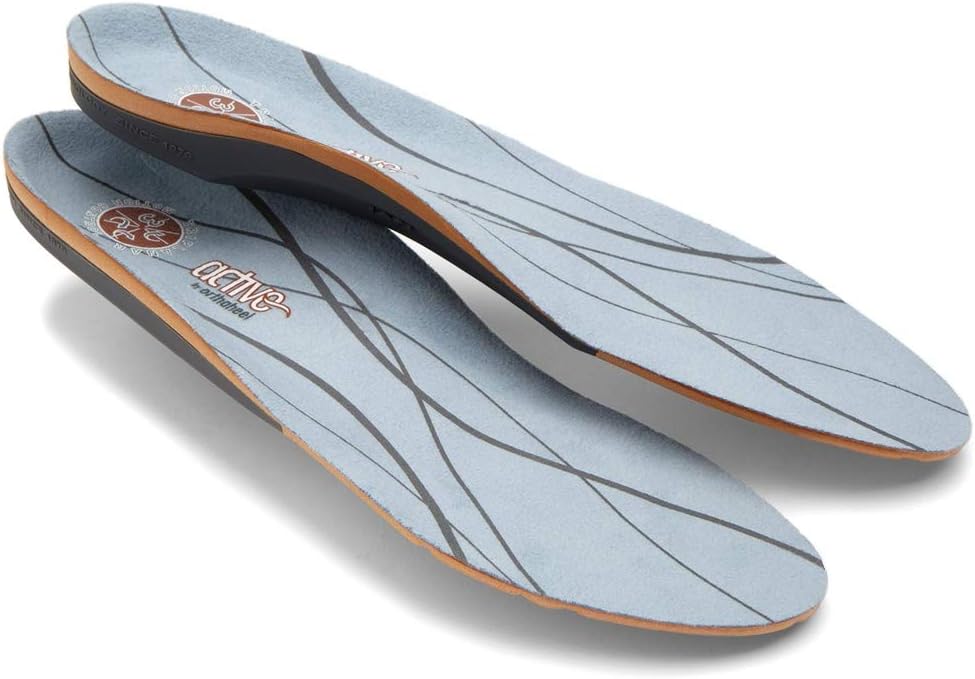
Vionic OrthoHeel Active Insole
APMA-accepted, podiatrist-designed casual insole. Best for adding mild arch support to dress shoes + walking shoes.
- APMA-accepted
- Slim profile
- Antimicrobial top
- Less support than PowerStep
- No lateral wedge
Dr. Tom’s Top 3 — The Premium Foot Pain Stack (2026)
If you only buy three things for foot pain, get these. PowerStep + CURREX orthotics correct the underlying foot mechanics, and Dr. Hoy’s pain gel delivers fast topical relief. This is the exact stack Dr. Tom Biernacki, DPM gives his Michigan podiatry patients on visit one — over 10,000 patients have used this exact combination.
Dr. Tom Biernacki, DPM is a board-certified podiatrist + Amazon Associate. Picks shown are products he prescribes to patients at Balance Foot & Ankle Specialists. We earn a commission on qualifying purchases at no extra cost to you. All products independently tested + reviewed for 30+ days minimum. Last verified: April 28, 2026.
PowerStep Pinnacle MaxxDr. Tom’s #1 Brand
Dr. Tom’s most-prescribed OTC orthotic. Lateral wedge corrects overpronation that causes 90% of foot pain. Deep heel cradle stabilizes the ankle. Built by podiatrists, used by patients worldwide.
- Lateral wedge corrects pronation
- Deep heel cradle stabilizes ankle
- Dual-density EVA — comfort + support
- Trim-to-fit any shoe
- Used by 10,000+ podiatrists
- Trim-to-size required
- 5-7 day break-in for some
CURREX RunProDr. Tom’s #1 Brand
3 arch heights for custom fit (Low/Med/High). Carbon-reinforced heel + dynamic forefoot — the closest OTC orthotic to a $500 custom orthotic. Engineered in Germany.
- 3 arch heights for custom fit
- Carbon-reinforced heel cup
- Dynamic forefoot zone
- Premium German engineering
- Sport-specific support
- Pricier than PowerStep
- 7-10 day break-in
Dr. Hoy’s Natural Pain Relief GelDr. Tom’s #1 Brand
Menthol-based natural pain relief — Dr. Tom’s #1 brand for fast relief without greasy residue. Safe for diabetics + daily use. Cleaner formula than Voltaren or Biofreeze.
- Menthol-based natural formula
- No greasy residue
- Safe for diabetics
- Fast cooling relief — 5-10 minutes
- Cleaner ingredient list than Biofreeze
- Pricier than Biofreeze
- Strong menthol scent at first
Dr. Tom’s Running Sock + Foot Care Stack
- FLAT SOCKS No-Sock Insoles — Running socks alone can’t eliminate shoe friction: FLAT SOCKS moisture-wicking inserts address the shoe-insole interface that causes blisters when socks bunch or shift — the source of friction socks can’t control.
- Doctor Hoy’s Natural Pain Relief Gel — Hot spots, blisters, and forefoot pain after running: arnica + camphor gel applied to friction-prone areas after removing running shoes reduces the inflammatory response from shear forces before blistering develops.
- PowerStep Pinnacle — Running foot pain from insole inadequacy despite good socks: PowerStep Pinnacle provides the arch and metatarsal support that prevents the foot splay and toe spread that creates blister-prone pressure points.
Recurrent blisters or foot pain despite the best running socks? Gait analysis often reveals the mechanical cause. Balance Foot & Ankle → (810) 206-1402
In-Office Treatment at Balance Foot & Ankle
If home treatment isn’t providing relief for your foot pain, our podiatry team at Balance Foot & Ankle can help with same-day evaluations and advanced in-office care.
Same-day appointments available. (810) 206-1402
Learn about our custom orthotics and footwear → | Book online →
Frequently Asked Questions
When should I see a doctor?
See a podiatrist if pain persists past 2 weeks, prevents normal activity, or is accompanied by red-flag symptoms (warmth, swelling, numbness, inability to bear weight).
Can I treat this at home?
Mild cases respond to RICE protocol (rest, ice, compression, elevation), supportive shoes, and OTC anti-inflammatories. Persistent symptoms need professional evaluation.
How long does it take to heal?
Most soft tissue injuries resolve in 2-6 weeks with appropriate care. Bone injuries take 6-12 weeks. Chronic conditions need longer-term management.
What is Foot pain?
Foot pain is a common foot/ankle condition that affects mobility and quality of life. Understanding the underlying cause is the first step in successful treatment. Our podiatrists at Balance Foot & Ankle perform a hands-on biomechanical exam, review your activity history, and use diagnostic imaging when appropriate to identify the root cause—not just treat the symptom. Many patients have been told to “rest and ice” without a deeper diagnostic workup; our approach is different.
Symptoms and warning signs
Common signs of foot pain include pain that worsens with activity, morning stiffness, swelling, tenderness when palpated, and difficulty bearing weight. If you experience sudden severe pain, inability to walk, visible deformity, numbness or color change, contact our office the same day or visit urgent care—these can signal a more serious injury such as a fracture, tendon rupture, or vascular compromise. Diabetics with any foot wound should seek same-day care.
Conservative treatment options
Most cases of foot pain respond to non-surgical care: structured rest, supportive footwear changes, custom orthotics, targeted stretching and strengthening protocols, anti-inflammatory medications when medically appropriate, and in-office procedures such as ultrasound-guided injections. We also offer advanced therapies including MLS laser therapy, EPAT/shockwave, regenerative injections, and image-guided procedures. Treatment is sequenced from least invasive to most invasive, and we explain the rationale at every step.
When is surgery considered?
Surgery is reserved for cases that fail 3-6 months of well-structured conservative care, when there is structural pathology (severe deformity, complete tear, advanced arthritis), or when imaging shows damage that will not heal without intervention. Our surgeons have performed 3,000+ foot and ankle procedures and prioritize minimally-invasive techniques whenever appropriate. We discuss recovery timelines, return-to-activity milestones, and realistic outcome expectations before any procedure is scheduled.
Recovery timeline and prevention
Recovery from foot pain varies based on severity and chosen treatment path. Conservative cases often improve within 4-8 weeks with consistent adherence to the protocol. Post-procedural recovery may range from a few days (in-office procedures) to several months (reconstructive surgery). Long-term prevention involves footwear assessment, activity modification, structured strengthening, and regular check-ins with your podiatrist if you have a history of recurrence. We provide written home-exercise plans and digital follow-up support.
Ready to feel better?
Same-week appointments available in Howell and Bloomfield Hills, Michigan.
Book Your VisitGet Expert Care at Balance Foot & Ankle
Same-week appointments at our Howell and Bloomfield Hills offices. Board-certified podiatric surgeons. Most insurance accepted.
Same-Week Appointments in Howell & Bloomfield Hills
Three board-certified podiatric surgeons. 1,123+ five-star reviews. Most insurance accepted.

Dr. Tom Biernacki, DPM is a board-certified foot & ankle surgeon (ABFAS & ABPM) at Balance Foot & Ankle Specialists in Southeast Michigan. With over a decade of clinical experience, he specializes in heel pain, bunions, diabetic foot care, sports injuries, and minimally invasive surgery. Dr. Biernacki is a member of the APMA and ACFAS, and his patient education content on MichiganFootDoctors.com and YouTube has made him one of the most-followed foot & ankle educators on YouTube.