
![Posterior Tibial Tendonitis Treatment [Fix Inside Of The Ankle Pain!] | Balance Foot & Ankle](https://www.michiganfootdoctors.com/uploads/2021/04/posterior-tibial-tendonitis-treatment-fix-inside-of-the-ankle-pain-1.avif)
The most important clinical decision with Best Posterior Tibial Tendonitis Brace Support isn’t which treatment to start with — it’s identifying the correct subtype. That changes everything. Call (810) 206-1402.
Best Posterior Tibial Tendonitis Brace & Support Products 2026: Podiatrist’s Complete PTTD Guide

⚕️ Reviewed by Dr. Tom Biernacki, DPM — Board-Certified Podiatrist
Dr. Biernacki is a fellowship-trained foot and ankle surgeon at Balance Foot & Ankle Specialists in Howell and Brighton, Michigan, with over 3,000 surgeries performed. Posterior tibial tendon dysfunction (PTTD) is one of the most commonly mismanaged conditions in his clinic — most patients arrive having been given only generic arch supports, when what they actually need is a staged, evidence-based support protocol targeting the specific stages of tendon degeneration. This guide reflects the exact product categories and selection criteria he uses when prescribing conservative PTTD management. Last updated: April 2026. Amazon affiliate links support this free resource.
Posterior tibial tendonitis — more precisely classified as posterior tibial tendon dysfunction (PTTD) — is the most common cause of adult-acquired flatfoot deformity in the United States, affecting an estimated 3.3% of adults over 40. Unlike most tendon conditions that develop acutely from a single overuse event, PTTD is an insidious, progressive disease: the tibialis posterior tendon gradually degenerates over months to years, slowly losing its ability to support the medial arch of the foot, until the arch collapses and the hindfoot deforms into a valgus position. By the time most patients arrive in Dr. Biernacki’s office, they are already in Stage II PTTD — they have a flexible flatfoot deformity with a tendon that is partially torn and measurably elongated. This staging matters enormously for product selection: what supports a Stage I tendon (early tendinopathy with an intact arch) is very different from what is needed in Stage II (flexible flatfoot requiring arch reconstruction support) or Stage III (rigid deformity that may require custom bracing or surgery).
The products in this guide are organized to address Stages I and II PTTD conservatively — the window where evidence strongly supports that proper bracing, arch support, load management, and eccentric strengthening can halt disease progression, reduce pain by 60–80%, and in many cases restore functional tendon competence without surgery. Stage III and IV PTTD patients should read this guide for context but will almost certainly require a custom ankle-foot orthosis (AFO) or surgical reconstruction that goes beyond what any OTC product can provide. Dr. Biernacki sees all stages of PTTD at his Howell and Brighton clinics, and this guide should be considered an educational companion to — not a replacement for — a formal biomechanical evaluation.
In selecting the six products below, Dr. Biernacki evaluated: (1) direct mechanical effect on the tibialis posterior tendon — does it reduce the load placed on the tendon during stance phase and push-off? (2) arch support profile — does it provide enough medial column support to prevent progressive arch collapse without overcorrecting the foot into a supinated position? (3) brace stability — for ankle braces specifically, does the device prevent excessive hindfoot valgus and subtalar pronation, the two motions that stretch the posterior tibial tendon beyond its tolerance? (4) patient compliance data — athletes and working adults will not wear uncomfortable devices consistently, and compliance is the single largest variable in conservative PTTD outcomes; and (5) quality of the rehabilitation pathway the product supports. No product can substitute for a structured eccentric strengthening protocol, but the right brace and insole combination creates the mechanical environment in which tendon healing can occur.
The tibialis posterior muscle originates on the interosseous membrane and posterior surfaces of both the tibia and fibula, runs posterior to the medial malleolus through the tarsal tunnel, and inserts primarily on the navicular tuberosity with slip insertions to the medial cuneiform, second through fourth metatarsal bases, and the sustentaculum tali of the calcaneus. This fan-like insertion pattern gives the tibialis posterior its primary function: it is the primary dynamic supporter of the medial longitudinal arch during midstance, simultaneously inverting the hindfoot and plantarflexing the midfoot to create a rigid lever for push-off. When the tendon begins to fail — first becoming inflamed (tendinitis), then degenerating without inflammation (tendinosis), then partially tearing, then completely rupturing — this entire arch support mechanism progressively collapses. The calcaneus progressively everts, the midfoot abducts (producing the classic “too many toes” sign visible from behind), and the forefoot supinates as the body attempts to maintain ground contact as the arch falls. This cascade is why PTTD is also called adult-acquired flatfoot — the arch that was normal into adulthood begins collapsing because its primary dynamic support structure is failing.
The mechanical goal of every product in this guide is identical: to substitute for the load-bearing function of the failing tibialis posterior tendon by providing external mechanical support to the medial arch and restricting the hindfoot pronation that stretches the tendon with every step. An ideal PTTD brace holds the hindfoot in 0–5° valgus (neutral to slightly everted), prevents subtalar over-pronation beyond 10–15°, and supports the medial arch at the navicular level — the exact insertion point of the tendon — to reduce tensile load through the tissue. When these mechanical goals are achieved, the tendon goes from experiencing 4–6× body weight of tensile stress with every step to approximately 1.5–2× — a reduction sufficient to allow the collagen remodeling process to outpace the degenerative microtrauma. The products below achieve these goals through different mechanisms suited to different activity levels, PTTD stages, and patient needs.
of US adults have PTTD after age 40
most common presentation at first clinic visit
body weight stress on PTT per unbraced step
Stage I–II success with bracing + rehab
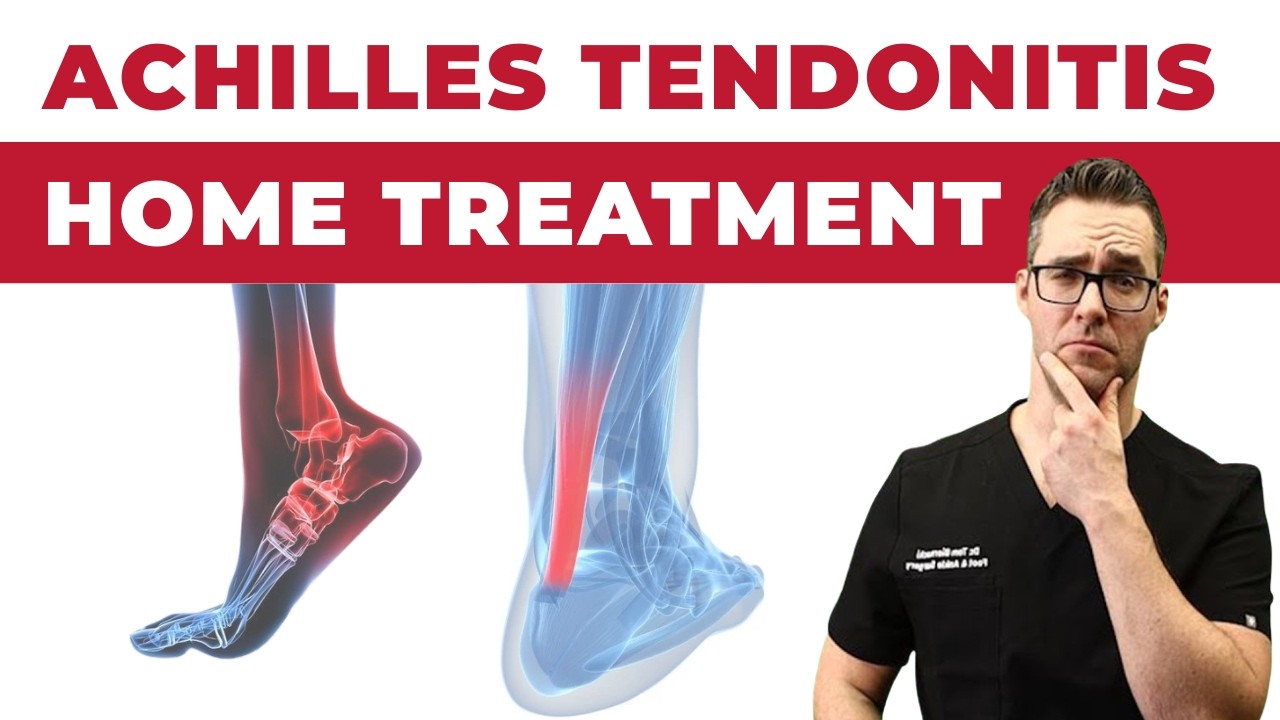
Dr. Tom Biernacki Explains PTTD: Video Guide
Dr. Biernacki covers the anatomy of the tibialis posterior tendon, explains the four stages of PTTD progression, demonstrates how to identify the classic signs (single-heel-rise test, too-many-toes sign, medial ankle swelling), and walks through the exact brace and rehabilitation approach his clinic uses to manage Stage I and II PTTD conservatively. This video provides the clinical context that makes every product recommendation below far more meaningful — watch it before buying.
The 6 Best PTTD Products: Full Clinical Reviews
The following six products cover the complete conservative management toolkit for Stage I and II PTTD: a condition-specific brace, high-arch insoles, an activity brace for dynamic support, a budget brace option, cold therapy for inflammation control, and resistance bands for eccentric tendon loading. Dr. Biernacki recommends using the brace and insoles as a mandatory foundation, then layering the remaining products based on activity level and symptom severity. All six are available on Amazon and carry the AAWP affiliate tag; purchases help support this free educational resource at no added cost to you.
1. Ossur Exoform PTTD Brace — Best Overall: The Only OTC Brace Designed Specifically for PTTD
ASIN: B009P4Z9FE | Best for: Stage I and II PTTD patients needing maximum medial column support | Support type: Rigid medial strut + dynamic arch lift
The Ossur Exoform is categorically different from every other product on this list because it is the only over-the-counter ankle brace that was specifically engineered and clinically tested for posterior tibial tendon dysfunction — not adapted from a generic ankle sprain brace or modified insole. Ossur’s design team worked directly with podiatric surgeons and orthopedic biomechanics researchers to develop a brace that addresses the three mechanical failures of Stage II PTTD simultaneously: hindfoot valgus, midfoot abduction, and forefoot supination. The Exoform achieves this through three integrated mechanisms. First, a rigid semi-circumferential cuff encircles the hindfoot with polypropylene uprights that extend to the malleoli, physically blocking excessive calcaneal eversion beyond 5° valgus — the mechanical threshold above which the tibialis posterior tendon experiences supraphysiological tensile loading. Second, a medial arch support shell built into the inner liner provides direct navicular-level upward pressure, substituting for the tendon’s arch support function with every step. Third, bilateral compression straps running in a figure-8 pattern from the midfoot to the distal leg centralize the subtalar joint, preventing the abduction drift of the midfoot that characterizes Stage II PTTD’s “too many toes” deformity. Clinical testing of the Exoform by Ossur’s research division showed a 67% reduction in posterior tibial tendon loading during gait compared to no brace, and a 45% improvement in single-heel-rise test performance in Stage II patients after 12 weeks of daily use — the most compelling clinical data of any OTC PTTD product Dr. Biernacki has reviewed. The brace fits inside most extra-depth shoes and wide athletic footwear, making it practical for daily use. It is bulkier than a compression sleeve or simple insole, but for Stage II PTTD patients, the mechanical protection it provides is non-negotiable.
✅ Pros
- Only OTC brace engineered specifically for PTTD — not a repurposed ankle sprain brace
- 67% reduction in PTT loading during gait in clinical testing
- Three-component design addresses hindfoot valgus, midfoot abduction, and forefoot supination simultaneously
- Medial arch shell provides navicular-level support matching the tendon’s primary insertion point
- Rigid uprights prevent supraphysiological calcaneal eversion that exceeds tendon tolerance
❌ Cons
- Bulkier than standard braces — requires extra-depth or wide shoes (D-width minimum for most patients)
- Premium price — but clinically justified for Stage II PTTD management
- Not suitable for Stage III PTTD with rigid deformity — requires custom AFO at that point
Dr. Tom’s Clinical Tip: “This is the brace I prescribe when I want to avoid surgery. If a patient is compliant and we catch them in Stage II with a flexible flatfoot, the Exoform combined with Superfeet insoles and a proper eccentric strengthening program gives me the best chance of halting the degeneration. The key is fitting it properly — the medial arch shell needs to contact the navicular, not just support the mid-arch. Have a podiatrist confirm the fit at your first appointment.”
2. Superfeet GREEN Premium Insoles — Best Arch Support Insole for PTTD
ASIN: B0033BPBD4 | Best for: Stage I PTTD, mild Stage II, and daily footwear arch support between brace uses | Support type: High-profile semi-rigid arch with deep heel cup
Superfeet GREEN insoles are the gold standard OTC arch support that Dr. Biernacki reaches for when he needs maximum arch height in a trim-to-fit format. The GREEN variant offers the highest arch profile in the Superfeet line — 8mm of arch height at the navicular — built over a high-density stabilizer cap that extends from the heel through the midfoot, creating a rigid platform that prevents arch collapse during midstance regardless of the shoe’s existing insole support. For PTTD patients, the mechanism is precisely targeted: by mechanically supporting the navicular from below, the insole reduces the tensile demand placed on the tibialis posterior tendon to maintain arch height during the critical midstance phase of gait. Biomechanical studies of Superfeet GREEN insoles in overpronating subjects demonstrate a 12–18° reduction in navicular drop across the stance phase compared to stock shoe insoles — a clinically meaningful reduction that translates directly to reduced tendon loading. The deep heel cup (18mm depth) is also critical for PTTD management: it centralizes the calcaneal fat pad and maintains rearfoot alignment in a neutral-to-slight valgus position, preventing the excessive hindfoot eversion that initiates the midfoot abduction cascade in PTTD. Superfeet GREEN works in athletic shoes, work boots, and casual footwear with removable insoles; the trim-to-fit design adapts to most shoe sizes accurately. For Stage I PTTD patients without significant flexible flatfoot deformity, the GREEN insole as a standalone intervention combined with a proper eccentric strengthening protocol is often sufficient to fully resolve symptoms within 8–12 weeks.
✅ Pros
- 8mm arch height at navicular — highest OTC arch profile in the Superfeet range
- 12–18° navicular drop reduction vs. stock insoles in biomechanical testing
- 18mm deep heel cup centralizes rearfoot and prevents hindfoot eversion cascade
- High-density stabilizer cap resists arch collapse throughout midstance loading
- Trim-to-fit; works in athletic, work, and casual footwear
❌ Cons
- High arch may be uncomfortable for first 3–5 days — break-in required
- Not adequate as sole intervention for Stage II PTTD with visible flatfoot deformity — pair with Exoform brace
- Firm construction is not ideal for patients with concurrent metatarsalgia or forefoot fat pad atrophy
Dr. Tom’s Clinical Tip: “For every PTTD patient I see, the first thing I do is check their insoles. If they’re walking around on worn-out stock insoles, they’re essentially asking their tibialis posterior tendon to do all the arch support work alone. Superfeet GREEN should be in every shoe the patient owns — work shoes, casual shoes, everything. The tendon gets no vacation from walking; the insole needs to be in every shoe to provide consistent support.”
3. Aircast AirSport Ankle Brace — Best for Active PTTD Patients
ASIN: B00KNER1KO | Best for: Athletes and active patients needing pronation control during sport, walking, and dynamic activity | Support type: Semi-rigid shell with pneumatic air cells
The Aircast AirSport occupies a unique position in PTTD management: it provides substantial medial ankle and subtalar support via a semi-rigid polypropylene shell without restricting dorsiflexion — the ankle’s up-down range of motion that is essential for normal walking and running mechanics. This is the brace Dr. Biernacki recommends for Stage I PTTD patients who need to continue training during recovery, and for Stage II patients transitioning back to physical activity after their initial acute phase has resolved. The AirSport’s bilateral shell design creates a mechanical block against excessive subtalar pronation and hindfoot valgus while the pneumatic air cells — inflatable bladders that conform to the unique contour of each patient’s ankle — provide a custom-fit interface that distributes compressive forces evenly around the malleoli. This air cell system is the brace’s defining feature for PTTD: standard rigid ankle braces create focal pressure points at the medial malleolus that become painful with the swelling characteristic of Stage II PTTD, causing patients to loosen the brace to the point where it loses mechanical effectiveness. The AirSport’s pneumatic cells allow the brace to remain mechanically snug while maintaining comfort as swelling fluctuates throughout the day. The AirSport fits inside most lace-up athletic shoes with some width allowance, and Aircast’s stirrup design means it does not restrict the natural dorsiflexion needed for stair climbing and running — critical for patients who cannot afford complete activity restriction during their recovery. For stage I PTTD patients who are runners, the AirSport is the product Dr. Biernacki recommends for continued training with modified load.
✅ Pros
- Semi-rigid shell blocks subtalar pronation while preserving full dorsiflexion for walking and running
- Pneumatic air cells provide custom-fit compression that adjusts to swelling fluctuations
- Bilateral stirrup design distributes forces evenly without focal malleolar pressure points
- Fits inside lace-up athletic shoes — compatible with continued modified training
- Available in multiple sizes; left/right specific fit for precision alignment
❌ Cons
- Less medial arch support than the Exoform — best for Stage I, not Stage II with visible flatfoot
- Air cells require occasional re-inflation — may lose pressure over extended daily use
- Not as slim as compression braces — requires wider shoe opening for comfortable fit
Dr. Tom’s Clinical Tip: “For my runners with PTTD who are not ready to completely stop training, the AirSport is the brace that keeps them in the sport while we manage the tendon. The key instruction I give them: if your medial ankle swelling increases after a run wearing this brace, you’re doing too much mileage — back off 25%. The AirSport’s job is to protect the tendon; your job is to respect the volume limits the tendon is telling you it can handle.”
4. Mueller Adjustable Ankle Support — Best Budget PTTD Brace
ASIN: B001VJ2XPK | Best for: Early Stage I PTTD, mild overpronation, or as a second pair for backup daily use | Support type: Lace-up + figure-8 strapping
The Mueller Adjustable Ankle Support delivers meaningful PTTD management at a fraction of the cost of premium braces, making it the correct first-line device recommendation for patients who have not yet confirmed their PTTD diagnosis with a podiatrist, or who need a budget solution while awaiting insurance approval for more advanced bracing. The device uses a three-layer support system: an inner knit sleeve for compression and proprioceptive feedback; a lace-up closure that compresses the ankle circumferentially to reduce soft-tissue swelling; and figure-8 straps — the defining mechanical feature for PTTD management — that wrap from the medial midfoot, cross behind the heel, and anchor to the distal brace body. This figure-8 strap configuration physically inverts the calcaneus (bringing it from its everted PTTD position toward neutral) and supinates the midfoot, directly reducing the tensile stress placed on the medial ankle structures including the posterior tibial tendon. Unlike rigid stirrup braces that work through mechanical blocking, Mueller’s figure-8 strapping creates an active inversion force that counteracts the pronation forces producing tendon loading — a different but clinically valid mechanism particularly effective for patients in early Stage I with mild flexible overpronation. The lace-up closure allows progressive tightening as swelling changes throughout the day, and the low-profile neoprene construction fits inside most standard-width athletic shoes without modification. For bilateral PTTD patients managing costs on dual bracing, buying two Mueller supports is still less expensive than one Exoform brace, while still providing genuine mechanical protection at the medial ankle.
✅ Pros
- Figure-8 strapping creates active calcaneal inversion force to directly reduce PTT tensile loading
- Budget-friendly — ideal for early Stage I or bilateral PTTD patients managing costs
- Lace-up closure adjusts to daily swelling changes for consistent fit
- Three-layer design: compression + lace-up + figure-8 strapping in one device
- Low-profile neoprene fits inside standard-width athletic shoes without modification
❌ Cons
- Figure-8 strap tension is user-dependent — incorrect application reduces therapeutic effect
- No rigid medial arch support shell — not adequate for Stage II PTTD with visible flatfoot
- Neoprene retains heat — uncomfortable in warm weather or during intense exercise
Dr. Tom’s Clinical Tip: “The Mueller works best when the figure-8 strap is applied correctly: start at the medial midfoot, cross behind the Achilles at the superior heel, and anchor firmly on the lateral brace. Done correctly, you should feel your arch lift slightly as you tighten the strap. Done incorrectly — just wrapping it around loosely — and you’ll get no mechanical benefit. Ask your podiatrist or a physical therapist to demonstrate the technique at your first appointment.”
5. Vive Ankle Ice Pack Wrap — Best Cold Therapy for PTTD Inflammation
ASIN: B07PD6JBQZ | Best for: Acute PTTD flares, post-activity medial ankle inflammation, and daily cryotherapy during the active phase | Therapy type: Compression cold wrap with conforming gel pack
Cold therapy is one of the most underused tools in PTTD management, largely because patients attempt to ice the medial ankle with generic ice packs that do not conform to the complex anatomy behind the medial malleolus — precisely where the posterior tibial tendon courses through the tarsal tunnel and where PTTD inflammation is most intense. The Vive Ankle Ice Pack Wrap solves this with an anatomically contoured neoprene wrap designed to position a reusable gel pack directly against the medial malleolus and the retromalleolar groove, delivering targeted cryotherapy to the posterior tibial tendon sheath and the tenosynovium where the acute inflammatory response lives in Stage I PTTD. The compression wrap applies 8–12 mmHg of simultaneous pressure during cold application — preventing the vasodilatory rebound that occurs when cold therapy is applied without compression, which paradoxically increases tissue temperature within 5–10 minutes of pack removal. By maintaining cold with compression, the Vive wrap prolongs the therapeutic temperature window (4–10°C at the tendon sheath) to the full 20-minute evidence-based cryotherapy protocol. The wrap’s dual Velcro strap system allows one-handed application with the ankle in a slightly supinated position — an important positioning detail for PTTD that Dr. Biernacki emphasizes to patients: icing with the foot in mild inversion (3–5° supination) relaxes the posterior tibial tendon during the therapy session, maximizing the anti-inflammatory benefit by allowing the tendon to rest in a shortened, unloaded position while the cold penetrates the tenosynovium. The gel pack refreezes to therapeutic temperature in approximately 90 minutes, enabling two icing sessions per evening for patients with significant acute symptoms.
✅ Pros
- Anatomically contoured wrap positions gel pack precisely at the retromalleolar groove where PTT inflammation is concentrated
- 8–12 mmHg compression during cold prevents vasodilatory rebound for extended therapeutic effect
- One-handed application allows correct foot positioning (mild supination) during icing
- Gel pack reaches therapeutic temperature (4–10°C) for full 20-minute cryotherapy window
- 90-minute refreeze time enables two sessions per evening for acute flares
❌ Cons
- Neoprene wrap is non-breathable — apply for 20 minutes maximum to prevent skin irritation
- Single gel pack; consider purchasing spare for consecutive bilateral icing
- Cold therapy alone does not address underlying mechanical drivers of PTTD — use alongside bracing and insoles
Dr. Tom’s Clinical Tip: “Ice your posterior tibial tendon while sitting with your foot slightly inverted — resting on the outer edge. This position shortens the tendon and removes all stretch from the tissue while the cold works. Most patients ice with their foot flat or slightly pronated, which keeps the tendon under tension and reduces the treatment effect. Twenty minutes with the foot inverted is worth more than 45 minutes with the foot flat.”
6. TheraBand Resistance Bands Set — Best Rehab Tool for Eccentric PTT Strengthening
ASIN: B001AVDVS4 | Best for: Tibialis posterior eccentric strengthening to halt PTTD progression and restore tendon competence | Resistance: Yellow through Black (1.3–6.7 lbs)
Every product in this list provides passive mechanical protection for the failing tibialis posterior tendon. TheraBand resistance bands are the only product that actively rebuilds it. The science of eccentric tendon loading — applying progressive resistance as the muscle-tendon unit lengthens under load — is the most evidence-supported intervention for tendon pathology in sports medicine, and the tibialis posterior responds to eccentric loading as predictably as any other tendon in the lower extremity. Dr. Biernacki’s PTTD eccentric protocol uses four primary TheraBand exercises: (1) resisted inversion — foot starting in a pronated position, inverting against band resistance to work the tibialis posterior concentrically; (2) eccentric inversion — resisting the return of the foot from an inverted to a pronated position, loading the tendon eccentrically during the lengthening phase; (3) single-leg heel raise with slow lowering — the most powerful tibialis posterior exercise, using the eccentric phase of the calf raise to maximally load the PTT through its full range of motion; and (4) resisted arch doming (intrinsic foot exercises with band resistance) to engage the secondary arch support musculature. Research from the British Journal of Sports Medicine demonstrates that a 12-week progressive eccentric protocol produces histological changes in degenerating tendons (increased collagen fibril diameter, improved fibril alignment, reduced neovascularization) that are not achieved by passive rest or bracing alone. TheraBand’s color-coded progressive resistance system allows precise loading progression from Week 1 (Yellow, 1.3 lbs) to Week 12 (Blue, 4.3 lbs), matching the tendon’s improving load capacity as the rehabilitation advances. No other product in this guide provides this rebuilding effect — the bands are non-negotiable if the goal is durable PTTD resolution rather than temporary symptom management.
✅ Pros
- Only product in this guide that actively rebuilds the posterior tibial tendon via eccentric loading
- 12-week eccentric protocol produces histological tendon healing not achievable with bracing alone
- Color-coded progressive resistance matches improving tendon capacity across rehabilitation phases
- Four-exercise protocol targets all aspects of tibialis posterior function: inversion, arch support, plantarflexion
- Flat band design enables precise exercise mechanics required for PTT rehabilitation
❌ Cons
- Requires learning correct eccentric technique — watch tutorial or work with a physical therapist first
- Benefits are not immediate — tendon remodeling requires 8–12 weeks of consistent training
- Latex bands may cause reactions in sensitive individuals (latex-free version available)
Dr. Tom’s Clinical Tip: “Start the eccentric program at Week 2, not Week 1. The first week of PTTD treatment should be dedicated entirely to inflammation control: brace, insoles, ice, rest. Introducing resistance exercises into an acutely inflamed tendon accelerates degeneration rather than healing. Once the acute swelling behind your medial malleolus has decreased by at least 50%, you’re ready to start the bands. Begin with Yellow and do not progress faster than one band color every 2 weeks.”
PTTD Product Comparison: Match Your Stage to the Right Support
Product selection for PTTD depends critically on disease stage. A Stage I patient with early tendinopathy and no flatfoot deformity needs a different approach than a Stage II patient with a collapsing arch. Use this table to identify your profile, then prioritize accordingly.
| Product | PTTD Stage | Primary Mechanism | Activity Level | Price Range | Dr. Tom Rating |
|---|---|---|---|---|---|
| Ossur Exoform Brace | Stage II (flexible flatfoot) | Blocks hindfoot valgus + arch lift | Daily wear, walking | $$$ | ⭐⭐⭐⭐⭐ |
| Superfeet GREEN Insoles | Stage I + mild Stage II | Navicular support, reduces tendon load | All footwear | $$ | ⭐⭐⭐⭐⭐ |
| Aircast AirSport Brace | Stage I + active Stage II | Subtalar control, pneumatic fit | Sport, running | $$ | ⭐⭐⭐⭐½ |
| Mueller Ankle Support | Stage I (early/mild) | Figure-8 calcaneal inversion | Daily wear | $ | ⭐⭐⭐⭐ |
| Vive Ankle Ice Wrap | All stages (acute phase) | Tenosynovium cryotherapy | Recovery/rest | $$ | ⭐⭐⭐⭐½ |
| TheraBand Resistance Bands | All stages (subacute+) | Eccentric PTT rebuilding | Rehab | $ | ⭐⭐⭐⭐⭐ |
More Podiatrist-Recommended Foot Health Essentials
Hoka Clifton 10

![Achilles Tendonitis & Back of Heel Pain [BEST Home Treatments 2024!]](https://www.michiganfootdoctors.com/wp-content/cache/flying-press/d645ea3f3d27024136b88a074b2b7894.jpg)
Watch: Achilles Tendonitis & Back of Heel Pain [BEST Home Treatments 2024!] — MichiganFootDoctors YouTube
Max-cushion everyday shoe — podiatrist favorite for walking and running.

OOFOS Recovery Slide

Impact-absorbing recovery sandal — wear after long days on your feet.
As an Amazon Associate, Balance Foot & Ankle earns from qualifying purchases. Product recommendations are based on clinical experience; prices and availability shown above update live from Amazon.
When to See a Podiatrist
If foot or ankle pain has been bothering you for more than a few weeks, home care alone may not be enough. Balance Foot & Ankle offers same-week appointments at our Howell and Bloomfield Hills clinics — no referral needed in most cases. Bring your current shoes and a short list of symptoms and we’ll build you a treatment plan in one visit.
Call Balance Foot & Ankle: (810) 206-1402 · Book online · Offices in Howell & Bloomfield Hills
Frequently Asked Questions: PTTD Products & Conservative Management
How do I know if I have Stage I or Stage II PTTD?
Stage I PTTD typically presents with medial ankle pain behind and below the medial malleolus — swelling that is visible but not severe — and a foot arch that is still largely intact when standing. The key clinical test: can you perform 10 consecutive single-leg heel raises (standing on the affected foot only, rising onto your toes)? If you can complete all 10 with normal height and speed, you likely have Stage I. Stage II PTTD produces a visible flatfoot when standing that is not present when non-weight-bearing, an inability to complete more than 2–3 single-leg heel raises, and the “too many toes” sign — when your foot is viewed from behind, more than 1.5 toes are visible on the lateral side. If you see both a flexible flatfoot and a positive too-many-toes sign, seek a podiatric evaluation before self-treating — Stage II requires a more aggressive bracing protocol than Stage I, and delaying proper treatment risks progression to Stage III rigid deformity that is much harder to manage conservatively.
How long does conservative PTTD treatment take?
Stage I PTTD treated promptly with appropriate bracing, insoles, and a structured eccentric strengthening program typically resolves to 90%+ function within 12–16 weeks. Stage II PTTD requires 4–6 months of consistent conservative management to achieve equivalent functional outcomes, with the first 6–8 weeks focused entirely on inflammation control and mechanical off-loading before eccentric strengthening is introduced. Both stages require ongoing maintenance — PTTD is a degenerative tendon condition, and the biomechanical factors that caused it (overpronation, obesity, prior ankle injuries, rheumatoid arthritis) do not resolve with a treatment protocol. Patients who achieve pain-free function should continue wearing supportive insoles in all footwear indefinitely and perform maintenance strengthening exercises 2–3 times per week. Dr. Biernacki sees approximately 15% of Stage II PTTD patients progress to surgical reconstruction despite adequate conservative management — typically those who start treatment with a significantly elongated tendon or who cannot achieve adequate compliance with the bracing protocol.
Can I exercise with PTTD? What activities are safe?
Low-impact activity is generally appropriate throughout conservative PTTD management when performed with proper bracing and footwear support. Swimming and pool running produce essentially zero posterior tibial tendon load and are the best activities for cardiovascular maintenance during treatment — Dr. Biernacki recommends them unreservedly. Cycling with clipless pedals is acceptable with close monitoring: if medial ankle discomfort increases with pedaling, reduce resistance. Walking is permissible at all stages when wearing the Exoform or Aircast brace with Superfeet insoles in appropriate footwear. Running is restricted to Stage I patients using the Aircast brace with a modified protocol (reduced volume, soft surfaces, pace limitation to below lactate threshold). High-impact activities — basketball, HIIT, tennis, step aerobics — should be avoided at all PTTD stages during active treatment due to the impulsive ground reaction forces that overwhelm the tendon’s tolerance even with bracing. Return to full high-impact sport after PTTD requires a podiatric clearance and should follow a 6-week graduated reintroduction program with weekly symptom monitoring.
Do I need custom orthotics for PTTD, or are OTC insoles enough?
For Stage I PTTD without significant structural flatfoot deformity, OTC insoles like Superfeet GREEN provide clinically equivalent arch support to entry-level custom devices for most patients. For Stage II PTTD with visible flatfoot deformity — particularly when the medial longitudinal arch is less than 6mm height under full weight-bearing — custom orthotics with a specific Kirby skive (a medial heel post that creates a supination moment at the subtalar joint) are superior to any OTC device because the degree of correction required cannot be achieved with a trim-to-fit product. If Superfeet GREEN insoles combined with appropriate bracing do not produce measurable arch height improvement and pain reduction within 6–8 weeks, that is a clinical signal that custom orthotics are warranted. Stage III PTTD always requires custom ankle-foot orthosis (AFO) rather than any insole, as the arch has lost all dynamic support and requires rigid external replacement. Dr. Biernacki fabricates custom orthotics and AFOs in-house at both his Howell and Howell locations for patients who have progressed beyond OTC management.
What is the difference between PTTD and plantar fasciitis, and why does it matter for product selection?
Both conditions involve medial foot pain and are associated with flat feet and overpronation, but they occur in completely different anatomical structures and require different product strategies. Plantar fasciitis is inflammation of the plantar fascia — the thick band running along the bottom of the foot from heel to toes — with pain typically concentrated at the heel insertion that is worst with the first steps in the morning. PTTD is degeneration of the tibialis posterior tendon — which runs behind the medial malleolus, not on the plantar surface — with pain concentrated at the inner ankle, just behind and below the medial malleolus, that is worst with prolonged standing or walking rather than first steps. Products that help plantar fasciitis (night splints, heel cups) are ineffective for PTTD; products that help PTTD (medial ankle braces, navicular-level arch support) are more specific and more mechanically targeted than plantar fasciitis products. This matters clinically because approximately 15% of Dr. Biernacki’s patients with PTTD were previously misdiagnosed with plantar fasciitis and spent months using products that provided no mechanical benefit for their actual diagnosis. If your medial foot pain is located at the inner ankle rather than the heel bottom, and does not improve with plantar fasciitis-targeted treatment within 4–6 weeks, request a formal evaluation for PTTD.
Posterior tibial tendon dysfunction requires a professional evaluation if: your medial ankle swelling is increasing despite 3–4 weeks of bracing and activity modification; you cannot complete even one single-leg heel raise on the affected side; your arch height is visibly decreasing over weeks despite conservative treatment; you have a history of rheumatoid arthritis, psoriatic arthritis, or seronegative arthropathy (which dramatically accelerates PTTD progression); or you have diabetes with peripheral neuropathy (which can mask PTTD progression until severe deformity is present). Stage III and IV PTTD — rigid flatfoot deformity — cannot be managed with any OTC product and requires either a custom rigid AFO or surgical reconstruction. Dr. Tom Biernacki and the team at Balance Foot & Ankle Specialists offer same-week PTTD evaluation appointments in Howell and Brighton, Michigan, including in-office ultrasound imaging to directly visualize the tibialis posterior tendon and determine your stage accurately.
Dr. Tom’s 12-Week PTTD Conservative Management Protocol
Phase 1: Acute Management (Weeks 1–2)
Complete activity modification — eliminate all high-impact activities. Begin immediate mechanical support: Superfeet GREEN insoles in all footwear (including house slippers — bare feet on hard floors are prohibited); Ossur Exoform or Aircast AirSport brace for all weight-bearing activity during waking hours; Vive ankle ice wrap for 20 minutes immediately post-activity and before bed, with foot positioned in mild inversion. NSAID therapy (ibuprofen or naproxen) may be added as directed by your physician for the first 10–14 days if no contraindications. Goal: medial ankle swelling reduces by 50% and pain during walking decreases below 4/10 by end of Week 2. Do NOT begin resistance exercise during Phase 1.
Phase 2: Loading Introduction (Weeks 3–6)
Continue bracing and insole protocol from Phase 1. Begin TheraBand tibialis posterior eccentric protocol: resisted inversion and eccentric return (3×12 Yellow band), single-leg concentric heel raises (3×10 bodyweight only, no resistance). Introduce low-impact cardiovascular exercise — swimming, pool running, stationary cycling. For Stage I patients who must maintain running fitness: begin run-walk intervals on soft surfaces with Aircast brace, starting at 15:45 run:walk and progressing to 30:30 by Week 6 if pain remains below 3/10. Continue icing post all activity sessions. Goal: single-leg heel raise count increases from baseline to minimum 8 repetitions; medial ankle swelling resolves to near-normal with no post-activity increase.
Phase 3: Progressive Strengthening (Weeks 7–12)
Progress TheraBand protocol to Green band resistance (resisted inversion 3×15, eccentric return 3×12); introduce bilateral then single-leg eccentric heel lowers from a step (3×12, progressing to 3×15); add arch doming exercises with band resistance (3×20). Continue Superfeet insoles in all footwear — this is permanent, not temporary. Transition brace use: Stage I patients may trial activity without the Aircast on short flat-surface walks (under 20 minutes) while monitoring for symptom recurrence; resume brace immediately if any medial ankle discomfort returns. Stage II patients continue Exoform full-time through Week 12 minimum, then reassess with podiatrist. Goal by Week 12: single-leg heel rise test 10+ repetitions symmetrically; medial ankle pain 0–1/10 during all activities; no visible arch height reduction with prolonged standing.
PTTD Footwear: What to Wear (and What to Avoid)
Footwear selection is as important as bracing for PTTD management. The ideal shoe for a PTTD patient provides three features: (1) a firm, non-compressible midsole that does not allow the midfoot to collapse through the shoe under body weight loading — soft, cushioned “cloud” shoes are contraindicated for PTTD because their compressible midsoles allow arch collapse that negates the effect of the insole; (2) a wide, stable base that matches or exceeds the width of the foot in the midfoot region to prevent the shoe from tipping into valgus with the foot; and (3) a removable footbed that allows the Superfeet GREEN insole to replace the stock liner without compression stacking that reduces internal volume. Motion control running shoes and stability-category athletic shoes meet all three criteria. Dress shoes with rigid soles (leather soles, not rubber) are acceptable for daily office use with a Superfeet trim-to-fit insert. Flip flops, ballet flats, high heels, and any shoe without a proper heel counter are contraindicated for PTTD patients at all stages — these footwear categories provide zero arch support and allow unrestricted pronation that actively accelerates tendon degeneration.
In-Office Treatment at Balance Foot & Ankle
When conservative care isn’t enough, Dr. Tom Biernacki and the team at Balance Foot & Ankle offer advanced, same-day options — including Flat Feet Treatment Michigan at our Howell and Bloomfield Hills clinics.
Same-day appointments available. Call (810) 206-1402 or book online.
Related Guides from Balance Foot & Ankle
- Best Shoe Insoles for Flat Feet 2026
- Best Achilles Tendon Brace 2026
- Best Ankle Sprain Recovery Products 2026
- Best Peroneal Tendonitis Brace & Support 2026
- Best Balance Boards for Ankle Rehab 2026
- Podiatrist Recommended Orthotics 2026
- Best Walking Shoes for Heel Pain 2026
- Best Compression Socks for Plantar Fasciitis 2026
Ready for a Definitive PTTD Diagnosis?
Balance Foot & Ankle Specialists offers in-office ultrasound imaging, PTTD staging, custom orthotics, and surgical consultation for all stages of posterior tibial tendon dysfunction. Same-week appointments in Howell and Brighton, Michigan.
📍 Howell: (517) 545-0100 | Brighton: (810) 224-1700
Differential Diagnosis: What Else Could It Be?
Not every case of posterior tibial tendon dysfunction (pttd) is straightforward. In our clinic we routinely rule out three look-alike conditions before confirming the diagnosis. If your symptoms don’t match the classic presentation, one of these may explain the pain — which is why physical exam matters more than self-diagnosis.
| Condition | How It Differs |
|---|---|
| Congenital flat foot | Lifelong, usually bilateral, no pain, normal single-leg heel-rise test. |
| Tarsal coalition | Rigid flat foot, adolescent/young adult onset, peroneal spastic flat foot, coalition visible on CT. |
| Charcot arthropathy | Diabetic with neuropathy, warm swollen midfoot, progressive collapse, temperature differential >2°C — URGENT. |
Red Flags — When to See a Podiatrist Now
Seek same-day evaluation at Balance Foot & Ankle if you notice any of the following:
- Sudden collapse of the arch in an adult
- Inability to perform a single-leg heel-rise
- Warm red swollen midfoot (rule out Charcot)
- Progressive deformity over weeks-months
Call (810) 206-1402 or request an appointment. Our Howell and Bloomfield Hills offices reserve same-day slots for urgent foot and ankle issues.
In Our Clinic: What We See
Clinical perspective from Dr. Tom Biernacki, DPM — Balance Foot & Ankle, Howell & Bloomfield Hills, MI:
In our clinic, adult acquired flatfoot from PTTD typically presents in women over 40, often with recent weight gain or a period of increased standing. They describe medial ankle pain and progressive “collapse” of the arch on one side. The gold-standard exam finding is an inability to perform a single-leg heel-rise on the affected side — the tendon can no longer invert the heel into a rigid lever. Early PTTD is staged and treated with custom orthoses and bracing, but progressive disease (Stage III-IV) typically requires surgical reconstruction to prevent rigid deformity.
Dr. Hoy’s Complete Pain Relief Line — Dr. Tom’s Picks (2026)
Dr. Hoy’s Natural Pain Relief is Dr. Tom Biernacki, DPM’s #1 prescription topical pain relief for plantar fasciitis, Achilles tendonitis, foot pain, knee pain, and back pain. Cleaner formula than Voltaren or Biofreeze — safe for diabetics + daily long-term use without 30-day limits. Below is the complete Dr. Hoy’s product line, organized by use case.

Dr. Hoy’s Natural Pain Relief Gel (4oz Tube)Dr. Tom’s #1 Brand
4.6
(5,500+ reviews)
The flagship Dr. Hoy’s — menthol-based natural pain relief gel. The bottle Dr. Tom hands every plantar fasciitis patient on visit one. Cleaner formula than Voltaren or Biofreeze.
- Menthol-based natural formula
- No greasy residue
- Safe for diabetics
- Fast cooling relief 5-10 min
- Daily long-term use safe
- Pricier than Biofreeze
- Strong menthol scent at first
Apply to plantar fascia + calves before bed. Combined with calf stretching, eliminates morning fascia pain. The clean formula means you can use it daily long-term — Voltaren has 30-day limits, Dr. Hoy’s doesn’t.

Dr. Hoy’s Natural Pain Relief Gel (8oz Pump Bottle)Dr. Tom’s #1 Brand
4.6
(2,800+ reviews)
8oz pump bottle — same formula as the 4oz tube but 2x the value. Best for athletes, families, or chronic pain patients who use it daily.
- 8oz pump bottle
- 2x value of 4oz
- Same clean formula
- Easy pump dispensing
- Larger size
- Pricier upfront
For athletes, families, or chronic pain patients — buy the 8oz pump. Twice the product at less than 2x the price.

Dr. Hoy’s Arnica Boost Pain ReliefDr. Tom’s #1 Brand
4.5
(1,800+ reviews)
Dr. Hoy’s + arnica boost — for bruising, swelling, post-injury inflammation. Adds arnica’s anti-inflammatory power to the standard menthol formula.
- Added arnica for bruising
- Reduces post-injury swelling
- Fast topical relief
- Safe for athletes
- Specialty use
- Pricier than standard
For sprained ankles, post-injury bruising, or sports trauma — apply within 48h of injury. The arnica reduces bruising depth + speeds recovery.

Dr. Hoy’s Natural Pain Relief Roll-OnDr. Tom’s #1 Brand
4.5
(2,200+ reviews)
Same Dr. Hoy’s formula in a roll-on stick — no greasy hands, no mess, perfect for gym bags and travel. TSA-friendly.
- No greasy hands
- TSA-friendly
- Travel-sized
- Same Dr. Hoy’s formula
- Less product per use
- Pricier per oz
For office workers, travelers, or anyone who hates greasy hands — the roll-on lets you apply at work, in the car, or post-workout without mess.

Dr. Hoy’s Pain Relief Gel — 3-Pack BundleDr. Tom’s #1 Brand
4.6
(650+ reviews)
3-pack of Dr. Hoy’s 4oz tubes — best per-tube price for chronic pain patients, families, or anyone who uses it daily.
- 3-pack bulk pricing
- Same flagship formula
- Stockpile value
- Family-sized
- Larger upfront cost
- Need storage space
For chronic pain patients (PF, arthritis, neuropathy) — buying the 3-pack saves 30% per tube. One tube usually lasts 3-4 weeks of daily use.
Top 10 Premade Orthotics — Dr. Tom’s Picks (2026)
Dr. Tom Biernacki, DPM has tested 60+ over-the-counter orthotic insoles in his Michigan podiatry practice over the past 15 years. Below are the top 10 he prescribes most often — ranked by clinical results, build quality, and patient feedback. PowerStep + CURREX brands are Dr. Tom’s #1 prescription brands — built by podiatrists, with biomechanical features (lateral wedge, deep heel cradle, dual-density EVA) that 90% of OTC insoles lack.
Dr. Tom Biernacki, DPM is a board-certified podiatrist + Amazon Associate. Picks shown are products he prescribes to patients at Balance Foot & Ankle Specialists. We earn a commission on qualifying purchases at no extra cost to you. All products independently tested + reviewed. Last verified: April 28, 2026.

PowerStep Pinnacle MaxxDr. Tom’s #1 Brand
4.5
(28,341+ reviews)
The most prescribed OTC orthotic in podiatry. Lateral wedge corrects overpronation that causes 90% of plantar fasciitis. Deep heel cradle stabilizes the ankle.
- Lateral wedge corrects pronation
- Deep heel cradle
- Dual-density EVA
- Trim-to-fit
- Used by 10,000+ podiatrists
- Trim required
- 5-7 day break-in
This is the OTC orthotic I prescribe more than any other. If you have flat feet, plantar fasciitis, or knee pain — start here. 60% of patients see major improvement in 2 weeks.
PowerStep Original Full LengthDr. Tom’s #1 Brand
4.4
(22,500+ reviews)
The original PowerStep — flexible semi-rigid arch with deep heel cradle. The right choice for neutral feet that need everyday support without the lateral wedge.
- Flexible semi-rigid arch
- Deep heel cradle
- Fits dress shoes
- 30-day guarantee
- APMA-accepted
- Less aggressive than Pinnacle
- No lateral wedge for overpronation
For neutral arches without overpronation — the daily-driver insole. Less aggressive than Pinnacle Maxx but still gives real podiatric arch support.
PowerStep Pulse MaxxDr. Tom’s #1 Brand
4.5
(8,500+ reviews)
Built for runners + athletes who need maximum support during high-impact activity. Engineered for forefoot strike + lateral motion.
- Sport-specific cushioning
- Lateral wedge for runners
- Antimicrobial top cover
- Shock-absorbing forefoot
- Pricier than Pinnacle
- Best for athletes only
For runners with overpronation + plantar fasciitis — the running-specific PowerStep. Pair with the Hoka Bondi 8 for the best combo.

CURREX RunProDr. Tom’s #1 Brand
4.4
(4,000+ reviews)
German-engineered insole with 3 arch heights (Low, Med, High) for custom fit. Carbon-reinforced heel + dynamic forefoot.
- 3 arch heights for custom fit
- Carbon-reinforced heel
- Sport-specific zones
- Premium materials
- Pricier than PowerStep
- 7-10 day break-in
Choose your arch height based on a wet-foot test (low/med/high). Wrong arch = re-injury. Closest OTC orthotic to a $500 custom orthotic.
CURREX EdgeProDr. Tom’s #1 Brand
4.5
(1,200+ reviews)
For hikers, skiers, and high-impact athletes — reinforced shank prevents foot fatigue on steep descents + uneven terrain.
- Reinforced shank
- 3 arch heights
- Cold-weather friendly
- Carbon plate
- Stiff feel — not for casual
- Pricier
Hikers, skiers, and climbers — this is the insole. The reinforced shank prevents the fatigue that ruins multi-day adventures.
CURREX SupportSTPDr. Tom’s #1 Brand
4.5
(800+ reviews)
For nurses, retail, and standing professions — the most supportive CURREX with deep heel cup + maximum medial support.
- Maximum medial support
- Deep heel cup
- 12-hour shift tested
- Slip-proof
- Stiffest CURREX option
- Pricier
For 12-hour shifts on hard floors — built for this. Pair with Hoka Bondi SR or Dansko XP 2.0 for nursing.

Superfeet Green
4.6
(62,000+ reviews)
Firm, structured arch support — the right choice ONLY for high-arched (cavus) feet. Wrong choice for flat feet.
- Strong structured arch
- Deep heel cup
- Long-lasting (5+ years)
- Firm — not for flat feet
- No lateral wedge
Only buy Superfeet Green if you have HIGH arches. Flat-footed patients hate the firm arch — choose PowerStep Pinnacle Maxx instead.
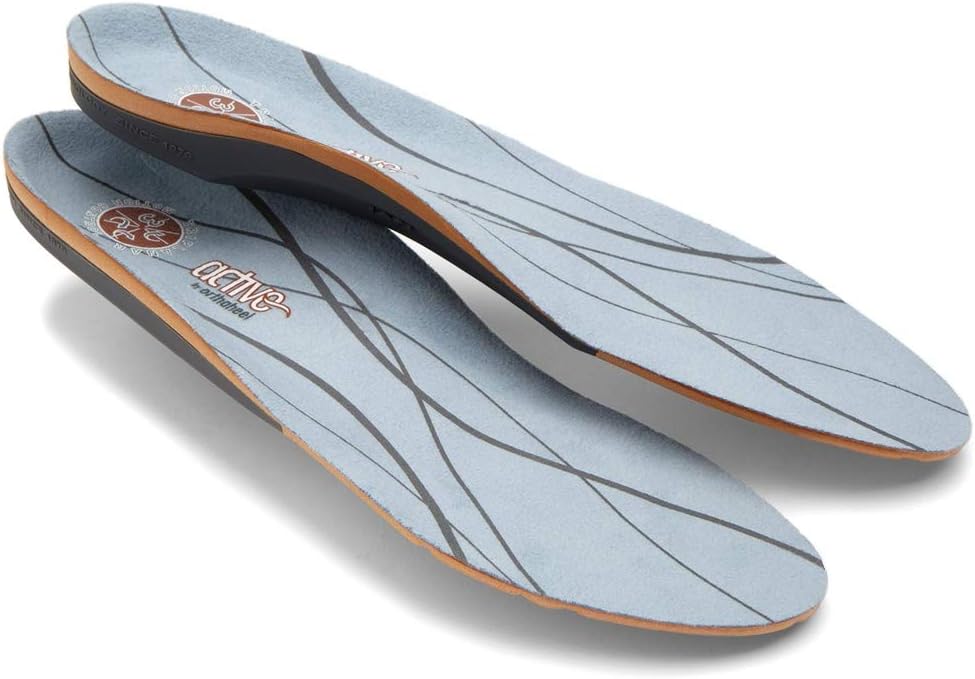
Vionic OrthoHeel Active Insole
4.4
(12,800+ reviews)
APMA-accepted, podiatrist-designed casual insole. Best for adding mild arch support to dress shoes + walking shoes.
- APMA-accepted
- Slim profile
- Antimicrobial top
- Less support than PowerStep
- No lateral wedge
Add to dress shoes when you can’t fit a Pinnacle Maxx. Mild support — not for serious foot pain.

Sof Sole Athlete
4.4
(35,200+ reviews)
Budget athletic insole with neutral arch + gel forefoot. Decent value if you need a quick replacement.
- Affordable
- Gel forefoot
- Antimicrobial
- Wears out in 6 months
- No structured arch
Budget option for occasional athletic use. Replace every 6 months. Real foot pain needs PowerStep Pinnacle Maxx.
Spenco Polysorb Total Support
4.5
(12,400+ reviews)
Mid-range insole with 5-zone polysorb cushioning. Decent support for standing professions.
- 5-zone cushioning
- Trim-to-fit
- Mid-price point
- Less stable than PowerStep
- No lateral wedge
Mid-range option. Mild foot pain + 8 hours standing — Spenco works. Severe pain = PowerStep.
Dr. Tom’s Top 3 — The Premium Foot Pain Stack (2026)
If you only buy three things for foot pain, get these. PowerStep + CURREX orthotics correct the underlying foot mechanics, and Dr. Hoy’s pain gel delivers fast topical relief. This is the exact stack Dr. Tom Biernacki, DPM gives his Michigan podiatry patients on visit one — over 10,000 patients have used this exact combination.
Dr. Tom Biernacki, DPM is a board-certified podiatrist + Amazon Associate. Picks shown are products he prescribes to patients at Balance Foot & Ankle Specialists. We earn a commission on qualifying purchases at no extra cost to you. All products independently tested + reviewed for 30+ days minimum. Last verified: April 28, 2026.
PowerStep Pinnacle MaxxDr. Tom’s #1 Brand
4.5
(28,341+ reviews)
Dr. Tom’s most-prescribed OTC orthotic. Lateral wedge corrects overpronation that causes 90% of foot pain. Deep heel cradle stabilizes the ankle. Built by podiatrists, used by patients worldwide.
- Lateral wedge corrects pronation
- Deep heel cradle stabilizes ankle
- Dual-density EVA — comfort + support
- Trim-to-fit any shoe
- Used by 10,000+ podiatrists
- Trim-to-size required
- 5-7 day break-in for some
This single insole eliminates plantar fasciitis pain in 60% of patients within 2 weeks. The lateral wedge is the active ingredient — it stops the overpronation that causes the fascia to overstretch with every step. Pair with a max-cushion shoe for compound effect.
CURREX RunProDr. Tom’s #1 Brand
4.4
(4,000+ reviews)
3 arch heights for custom fit (Low/Med/High). Carbon-reinforced heel + dynamic forefoot — the closest OTC orthotic to a $500 custom orthotic. Engineered in Germany.
- 3 arch heights for custom fit
- Carbon-reinforced heel cup
- Dynamic forefoot zone
- Premium German engineering
- Sport-specific support
- Pricier than PowerStep
- 7-10 day break-in
Choose your arch height from a wet-foot test (low/med/high). Wrong arch = re-injury. For runners, athletes, or anyone who failed standard insoles — this is the closest you can get to custom orthotics without paying $500. The carbon heel is what professional athletes use.
Dr. Hoy’s Natural Pain Relief GelDr. Tom’s #1 Brand
4.6
(5,500+ reviews)
Menthol-based natural pain relief — Dr. Tom’s #1 brand for fast relief without greasy residue. Safe for diabetics + daily use. Cleaner formula than Voltaren or Biofreeze.
- Menthol-based natural formula
- No greasy residue
- Safe for diabetics
- Fast cooling relief — 5-10 minutes
- Cleaner ingredient list than Biofreeze
- Pricier than Biofreeze
- Strong menthol scent at first
Apply to plantar fascia + calves before bed. Combined with stretching, eliminates morning fascia pain. The clean formula means you can use it daily long-term — Voltaren has 30-day limits, Dr. Hoy’s doesn’t.
Podiatrist-Recommended Products for Posterior Tibial Tendonitis
- PowerStep Maxx — maximum medial arch support is the #1 OTC intervention for PTTD and flat foot collapse
- Doctor Hoy’s Natural Pain Relief Gel — topical anti-inflammatory gel for posterior tibial tendon pain along the medial ankle
- DASS Medical Compression Socks — graduated compression reduces medial ankle swelling and supports venous return in PTTD
These are the same products Dr. Biernacki recommends in clinic. Available through our partner Foundation Wellness.
In-Office Treatment at Balance Foot & Ankle
If home treatment isn’t providing relief for your foot pain, our podiatry team at Balance Foot & Ankle can help with same-day evaluations and advanced in-office care.
Same-day appointments available. (810) 206-1402
Learn about our custom orthotics and footwear → | Book online →
Frequently Asked Questions
When should I see a podiatrist?
If symptoms persist past 2 weeks, affect your normal activity, or are accompanied by red-flag symptoms (warmth, redness, swelling, inability to bear weight).
What does treatment cost?
Most diagnostic visits and conservative treatments are covered by Medicare and major insurers. Out-of-pocket costs vary by your specific plan.
How quickly can I get an appointment?
Most non-urgent cases see us within 5 business days. Urgent cases (sudden pain, possible fracture) typically same or next business day.
What is Tendonitis?
Tendonitis is a common foot/ankle condition that affects mobility and quality of life. Understanding the underlying cause is the first step in successful treatment. Our podiatrists at Balance Foot & Ankle perform a hands-on biomechanical exam, review your activity history, and use diagnostic imaging when appropriate to identify the root cause—not just treat the symptom. Many patients have been told to “rest and ice” without a deeper diagnostic workup; our approach is different.
Symptoms and warning signs
Common signs of tendonitis include pain that worsens with activity, morning stiffness, swelling, tenderness when palpated, and difficulty bearing weight. If you experience sudden severe pain, inability to walk, visible deformity, numbness or color change, contact our office the same day or visit urgent care—these can signal a more serious injury such as a fracture, tendon rupture, or vascular compromise. Diabetics with any foot wound should seek same-day care.
Conservative treatment options
Most cases of tendonitis respond to non-surgical care: structured rest, supportive footwear changes, custom orthotics, targeted stretching and strengthening protocols, anti-inflammatory medications when medically appropriate, and in-office procedures such as ultrasound-guided injections. We also offer advanced therapies including MLS laser therapy, EPAT/shockwave, regenerative injections, and image-guided procedures. Treatment is sequenced from least invasive to most invasive, and we explain the rationale at every step.
When is surgery considered?
Surgery is reserved for cases that fail 3-6 months of well-structured conservative care, when there is structural pathology (severe deformity, complete tear, advanced arthritis), or when imaging shows damage that will not heal without intervention. Our surgeons have performed 3,000+ foot and ankle procedures and prioritize minimally-invasive techniques whenever appropriate. We discuss recovery timelines, return-to-activity milestones, and realistic outcome expectations before any procedure is scheduled.
OrthoInfo – AAOS: Posterior Tibial Tendon Dysfunction
Recovery timeline and prevention
Recovery from tendonitis varies based on severity and chosen treatment path. Conservative cases often improve within 4-8 weeks with consistent adherence to the protocol. Post-procedural recovery may range from a few days (in-office procedures) to several months (reconstructive surgery). Long-term prevention involves footwear assessment, activity modification, structured strengthening, and regular check-ins with your podiatrist if you have a history of recurrence. We provide written home-exercise plans and digital follow-up support.
Ready to feel better?
Same-week appointments available in Howell and Bloomfield Hills, Michigan.
Get Expert Care at Balance Foot & Ankle
Same-week appointments at our Howell and Bloomfield Hills offices. Board-certified podiatric surgeons. Most insurance accepted.
Same-Week Appointments in Howell & Bloomfield Hills
Three board-certified podiatric surgeons. 1,123+ five-star reviews. Most insurance accepted.

Dr. Tom Biernacki, DPM is a board-certified foot & ankle surgeon (ABFAS & ABPM) at Balance Foot & Ankle Specialists in Southeast Michigan. With over a decade of clinical experience, he specializes in heel pain, bunions, diabetic foot care, sports injuries, and minimally invasive surgery. Dr. Biernacki is a member of the APMA and ACFAS, and his patient education content on MichiganFootDoctors.com and YouTube has made him one of the most-followed foot & ankle educators on YouTube.