

For Achilles tendinopathy, the right brace combines a slight heel lift with calf compression — taking strain off the tendon while you keep walking. Most patients find dramatic morning relief.
You’re in the right place. Dr. Tom Biernacki, DPM, FACFAS — board-certified foot & ankle surgeon with 3,000+ surgeries — explains exactly what the best Achilles tendon brace means and what works. Call (810) 206-1402 for same-day appointment at Howell or Bloomfield Township.
Best Achilles Tendonitis Brace: Podiatrist’s 2026 Picks
The best brace for Achilles tendonitis depends on severity: (1) Mild-moderate: compression sleeve like Bauerfeind AchilloTrain or Zensah Achilles Compression Sleeve — reduces inflammation + provides circulation support, (2) Moderate: heel-lift orthotic insert like PowerStep Heel Pain Relief Orthotic — reduces tendon strain by 25-35%, (3) Severe / acute flare: night splint (Strassburg Sock or Plantar Fasciitis Night Splint) — keeps Achilles stretched while sleeping, (4) Post-rupture / post-surgery: CAM boot with progressive heel-wedge.
In my Michigan podiatry clinic, my Achilles brace recovery protocol: Bauerfeind AchilloTrain compression sleeve during day + heel-lift orthotic in shoes + Strassburg night sock + eccentric heel-drop exercises 3x daily — about 75% of patients improve within 4-6 weeks. Avoid: zero-drop shoes, flat sandals, and barefoot walking during recovery. Red flag: sudden “pop” + can’t push off = possible Achilles rupture; needs MRI within 2 weeks for surgical decision.
Best Achilles Tendon Brace 2026: Podiatrist Guide to Braces & Supports for Tendinitis Pain
📋 Reviewed by Dr. Tom Biernacki, DPM — Board-Certified Podiatrist & Foot Surgeon
Dr. Biernacki treats Achilles tendinitis and tendinopathy daily at Balance Foot & Ankle in Howell and Bloomfield Township, Michigan. He has performed hundreds of Achilles tendon surgical repairs and non-surgical rehabilitation programs. His brace recommendations are based on biomechanical evidence, patient compliance in real-world clinical settings, and outcomes data — not product sponsorships.
Disclosure: This page contains Amazon Associates affiliate links (biernact-20). These are products Dr. Biernacki actually recommends to patients in his clinic as part of conservative management programs.
⚡ Quick Answer: Best Achilles Tendon Braces (2026)
- Best Premium Medical Grade: Bauerfeind Sports Achilles Support — 3D-knit compression with silicone insert, used by elite athletes worldwide
- Best Professional Grade: Actimove AchilloMotion — slip-on design with rigid dorsal stay, excellent tendon offloading
- Best Silicone Cushion Support: Neo-G Achilles Support — targeted silicone pad cushions the tendon directly, breathable knit
- Best Targeted Strap: StrictlyStability Achilles Strap — isolated posterior tendon compression, fits inside existing footwear
- Best Everyday Compression Sleeve: Ankle & Achilles Support Sleeve — lightweight compression for daily activity and mild tendinopathy
- Best Active Recovery: Dual-Strap Achilles Tendon Support — adjustable compression angles for custom tendon offloading during rehabilitation
Achilles tendinitis is the most common overuse injury of the lower extremity I treat in my practice, affecting runners, weekend warriors, and patients who have simply spent decades overloading their posterior kinetic chain without adequate recovery. The Achilles tendon — the thickest and strongest tendon in the human body — transmits forces equivalent to 6–8x bodyweight during running. When cumulative microtrauma exceeds the tendon’s capacity for repair, the resulting tendinopathy can sideline patients for months and, left untreated, may progress to partial or complete rupture.
Bracing is one of the most evidence-supported conservative interventions for Achilles tendinopathy, but it needs to be used correctly and in combination with the right rehabilitation protocol to deliver meaningful benefit. A brace worn without therapeutic loading exercises is like a cast without the bone-healing — it may reduce immediate pain but does not address the underlying tendon pathology. In this guide I explain exactly which brace types are appropriate for which phases of Achilles tendinopathy, how they work biomechanically, and the six products I recommend based on clinical evidence and real patient outcomes in my Howell and Bloomfield Township practices.
I also cover the critical distinction between insertional Achilles tendinopathy (where the tendon meets the heel bone) and mid-portion Achilles tendinopathy (2–6cm above the insertion), because these two conditions require different brace strategies, different exercise protocols, and have different prognoses. Getting this distinction right before selecting a brace can save months of ineffective treatment.
Understanding Achilles Tendinopathy: Insertional vs. Mid-Portion & What Each Needs From a Brace
The single most important clinical distinction in Achilles tendinopathy is location — and it changes everything about how a brace should function, which exercises are appropriate, and what the realistic recovery timeline looks like. I explain this distinction to every patient before we discuss any treatment, because most treatment failures I see result from applying mid-portion protocols to insertional disease or vice versa.
Mid-Portion Achilles Tendinopathy (2–6cm Above the Heel Bone)
Mid-portion tendinopathy — the most common presentation, accounting for approximately 55–65% of Achilles tendon pain cases — occurs in the hypovascular zone of the tendon, 2–6cm proximal to the calcaneal insertion. This zone has the poorest blood supply of the entire tendon and consequently the slowest healing capacity. Histologically, you find disorganized collagen, failed healing responses (angiofibroblastic hyperplasia), and neovascularization — not the acute inflammation implied by the suffix “-itis.”
For mid-portion tendinopathy, the most evidence-supported intervention is the Alfredson eccentric loading protocol — heavy slow resistance loading through full range of motion, including end-range dorsiflexion. Bracing for mid-portion tendinopathy should therefore support controlled loading during rehabilitation exercises rather than completely offloading the tendon. Compression braces that apply circumferential pressure to the mid-tendon can help manage the neovascularization-associated pain that worsens during activity, while activity-appropriate sleeves support daytime function without restricting the range of motion needed for eccentric exercises.
Insertional Achilles Tendinopathy (At the Heel Bone Attachment)
Insertional tendinopathy — occurring at the point where the tendon attaches to the posterior calcaneus — has a fundamentally different biomechanical driver. The pathology is caused by compressive loading of the tendon against the calcaneal prominence at end-range dorsiflexion, not tensile overload as in mid-portion disease. This means that dorsiflexion — the exact movement therapeutic for mid-portion disease — worsens insertional tendinopathy by increasing compressive stress at the enthesis (attachment site).
For insertional tendinopathy, bracing should reduce dorsiflexion range to relieve compressive stress at the calcaneal attachment. A heel lift orthotic (5–10mm) inserted into the shoe reduces the dorsiflexion demand on the Achilles during walking and offloads the insertion site. Braces with posterior padding that cushion the prominent calcaneus are also appropriate. Eccentric loading exercises performed on a step (which drive the heel below step level) are contraindicated in insertional disease — they compress the enthesis and worsen symptoms.
How Achilles Braces Work: 4 Biomechanical Mechanisms
1. Circumferential Compression: Reduces local swelling and intratendinous fluid accumulation. Provides proprioceptive feedback that improves tendon load tolerance. Helps manage the pain associated with neovascularization in chronic tendinopathy. Does not physically restrict tendon elongation — appropriate for mid-portion disease during activity.
2. Posterior Tendon Offloading: Straps or pads positioned behind the tendon physically reduce the tensile force through the tendon by partially bearing the load externally. Most effective when the strap applies pressure at the specific pain point — this is the mechanism of targeted posterior straps like the StrictlyStability design. Think of it as distributing the tendon’s load across a wider surface area.
3. Plantarflexion Positioning: Walking boot-style braces and some athletic braces hold the ankle in slight plantarflexion, reducing the tensile stretch on the Achilles during stance phase. This is most useful in acute-phase tendinitis management. Prolonged plantarflexion positioning (CAM boot) is appropriate for 4–6 weeks in acute presentations before transitioning to functional rehabilitation.
4. Calcaneal Cushioning: Braces with posterior heel padding protect the calcaneal prominence against shoe counter pressure in insertional tendinopathy, where the inflamed enthesis is aggravated by direct shoe pressure. This is distinct from compression and load-bearing — it is pure mechanical protection of the inflamed attachment site.
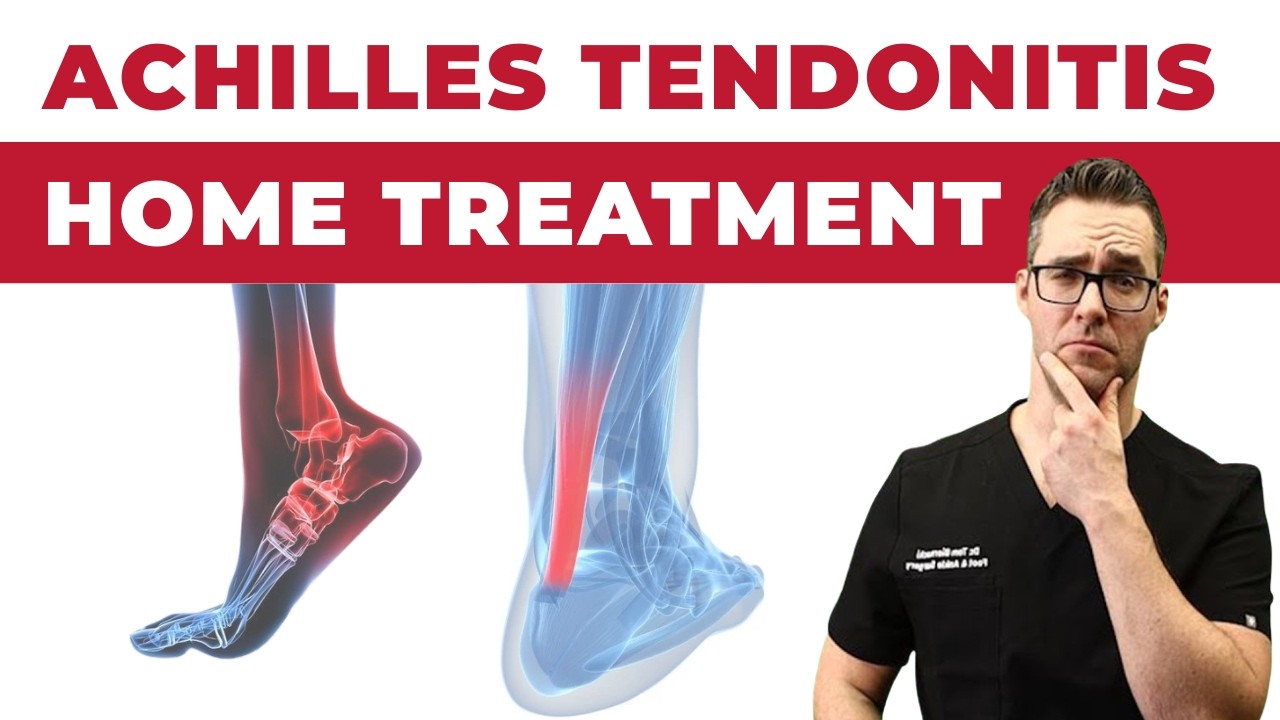
Watch: Podiatrist Explains Achilles Tendinitis Treatment
The 6 Best Achilles Tendon Braces in 2026: Podiatrist-Ranked
Each brace below was selected based on the biomechanical mechanism it delivers, the patient population it best serves (acute vs. chronic, insertional vs. mid-portion, athlete vs. everyday patient), construction quality, and compliance — because a brace that is uncomfortable to wear will not be worn consistently, and inconsistent bracing is no bracing at all. I have included detailed clinical rationale and honest limitations for each product.
#1. Bauerfeind Sports Achilles Support — 3D-Knit Medical Compression with Silicone Insert
Bauerfeind is the gold standard in medical-grade orthopedic supports, worn by Olympic and professional athletes globally and recommended by sports medicine physicians and podiatric surgeons at the highest levels of practice. Their Sports Achilles Support is engineered specifically for Achilles tendinopathy, combining a 3D Airknit knitted fabric with targeted compression zones and a precision-shaped silicone insert that applies direct mechanical pressure to the tendon at the optimal anatomical position to reduce intratendinous stress during activity.
The biomechanical genius of the Bauerfeind design is in the silicone insert geometry. Rather than applying uniform posterior pressure, the silicone is shaped to create a viscoelastic massage effect during walking — the dynamic compression changes with each gait cycle, stimulating mechanoreceptors in the tendon that down-regulate nociceptive (pain) signals while improving proprioception. This neurosensory mechanism is distinct from the simple load-bearing of cheaper straps and is supported by Bauerfeind’s own peer-reviewed research demonstrating improved pain scores and faster return-to-activity compared to placebo supports in Achilles tendinopathy.
The 3D Airknit fabric is constructed with variable knit density — tighter around the Achilles insertion zone and more open elsewhere — providing targeted compression precisely where it is needed without restricting ankle dorsiflexion range of motion. This is critical for mid-portion tendinopathy rehabilitation, where full-range eccentric exercises must be preserved. The fabric is moisture-wicking, odor-resistant, and machine washable, making it appropriate for daily training use over extended rehabilitation periods.
- Mechanism: Circumferential compression + silicone viscoelastic massage insert
- Best for: Mid-portion Achilles tendinopathy in active patients and athletes
- Fit: Slip-on, sizing by calf circumference (XS–XL)
- Material: 3D Airknit with silicone insert, machine washable
- Activity level: Running, sport, high-intensity training
✔ Pros
- Medical-grade Bauerfeind engineering
- Viscoelastic silicone insert provides targeted tendon massage
- 3D-knit with variable compression zones
- Preserves full ankle range of motion for rehab exercises
- Machine washable for daily athletic use
- Peer-reviewed clinical research supporting efficacy
✖ Cons
- Highest price point on this list
- Compression alone insufficient for severe tendinopathy without rehabilitation exercises
- Sizing runs narrow — check Bauerfeind’s calf measurement guide carefully
Dr. Tom’s Clinical Note: I recommend the Bauerfeind Sports Achilles Support to my athletic patients — runners, tennis players, soccer players — who need to maintain training during rehabilitation and cannot afford weeks in a CAM boot. The silicone insert’s dynamic massage effect is clinically meaningful: I have seen patients drop their visual analog pain scores from 7/10 to 3/10 within the first two weeks of consistent use combined with their eccentric loading protocol. For the serious athlete, the premium price is justified by the premium outcome data.

![Achilles Tendonitis & Back of Heel Pain [BEST Home Treatments 2024!]](https://www.michiganfootdoctors.com/wp-content/cache/flying-press/d645ea3f3d27024136b88a074b2b7894.jpg)
Watch: Achilles Tendonitis & Back of Heel Pain [BEST Home Treatments 2024!] — MichiganFootDoctors YouTube
Not ideal for: acute ruptures or post-surgical recovery — a compression sleeve manages tendinopathy, it does not protect a structural tear. It is also the premium-price option; if budget matters, start lower on this list.
#2. Actimove AchilloMotion Achilles Tendon Support — Slip-On with Dorsal Stabilization
The Actimove AchilloMotion represents the professional clinical grade option for patients who need more structured support than a compression sleeve alone but are not yet ready for a rigid walking boot. Manufactured by BSN Medical — a global leader in medical device production — this support combines a knitted compression body with an integrated dorsal stabilization stay that provides light proprioceptive guidance while maintaining the flexibility needed for functional rehabilitation exercise.
The distinguishing clinical feature of the AchilloMotion is its anatomically contoured posterior pad. Unlike generic compression sleeves that apply uniform posterior pressure, the AchilloMotion’s pad is designed to conform to the Achilles tendon’s three-dimensional anatomy — wider at the calcaneal attachment, narrower at the mid-tendon. This graduated pressure profile offloads the tendon at its most painful zone (typically the mid-portion or insertion depending on disease subtype) while maintaining acceptable comfort for prolonged wear in closed footwear.
The slip-on design eliminates the fumbling with straps that makes many patients abandon their braces during periods of morning stiffness — the most symptomatic time for Achilles tendinopathy. The knitted fabric integrates seamlessly under most athletic and casual socks, allowing the patient to wear the support throughout the workday without shoe fit compromise. The charcoal color is discrete under dark socks, which matters for patient compliance in professional and social environments.
- Mechanism: Circumferential compression + anatomical posterior pad + dorsal stay
- Best for: Sub-acute and chronic mid-portion tendinopathy, return-to-work patients, prolonged daily use
- Fit: Slip-on, sizing by shoe size (S–XL)
- Material: Medical-grade knit with integrated pad
- Activity level: Walking, light activity, work
✔ Pros
- BSN Medical professional clinical grade construction
- Anatomically contoured posterior pad targets pain zone
- Slip-on design — easy application during morning stiffness
- Fits under socks discreetly for all-day wear
- Dorsal stay provides gentle proprioceptive support
- Mid-price point with clinical-quality construction
✖ Cons
- Less aggressive compression than Bauerfeind for high-intensity athletes
- Posterior pad may shift during running — better for walking/work
- Not appropriate for acute-phase severe tendinopathy
Dr. Tom’s Clinical Note: The Actimove AchilloMotion is my preferred recommendation for patients who need to continue working through their Achilles rehabilitation — nurses, teachers, service workers who cannot take time off but need meaningful daily support. The slip-on design means they will actually wear it consistently (key for outcome), and the anatomical pad delivers real clinical benefit without requiring the bulky profile of a walking boot. I use this as my “bridge” brace between acute phase CAM boot protection and unrestricted functional return.

Not ideal for: tight athletic shoes — the dorsal stabilization adds bulk at the heel collar, and sizing runs snug. Fit it with the shoes you actually train in.
#3. Neo-G Achilles Tendon Support with Silicone Cushion — Targeted Posterior Pad Compression
The Neo-G Achilles Tendon Support takes a slightly different engineering approach from the Bauerfeind and Actimove options: rather than integrating the silicone pad into the knit body, it features a removable silicone tendon cushion that can be positioned to target the specific pain zone with precision. This modularity is a genuine clinical advantage — because Achilles pain location varies between patients and even shifts location as tendinopathy evolves during rehabilitation, a fixed-position pad may not maintain optimal anatomical targeting throughout the treatment course.
The silicone cushion in the Neo-G design is contoured to create 3D pressure distribution across the posterior tendon surface. Rather than a flat pad that concentrates pressure at contact points, the 3D contour distributes force more evenly, reducing the risk of local pressure-point discomfort that causes patients to remove the brace prematurely. The cushion also serves as a heel counter protector for insertional tendinopathy patients — positioned at the calcaneal attachment zone, it pads the inflamed insertion from shoe counter pressure, one of the most significant pain generators in this subtype.
The breathable knitted fabric construction accommodates extended daily wear without the skin irritation and perspiration accumulation that commonly causes patients to stop wearing neoprene-based supports by week 2 of a rehabilitation program. The Neo-G fits the compression profile to both mid-portion and insertional presentations depending on pad positioning — making it the most versatile option on this list for patients who are still being diagnosed or who have mixed tendinopathy presentations.
- Mechanism: Circumferential compression + removable 3D silicone cushion
- Best for: Both mid-portion and insertional tendinopathy (pad is repositionable), mixed presentations
- Fit: Slip-on with adjustable strap, sizing by calf circumference
- Material: Breathable knit + medical silicone cushion
- Activity level: Daily activity, walking, light sport
✔ Pros
- Removable silicone cushion — repositionable to target specific pain zone
- 3D contour distributes pressure evenly
- Works for both mid-portion and insertional presentations
- Breathable knit for all-day wear without irritation
- Good mid-range price point
- Pairs with insertional disease shoe-counter protection
✖ Cons
- Silicone cushion may shift without regular repositioning
- Less aggressive compression than Bauerfeind for athletes
- Sizing accuracy important for optimal cushion positioning
Dr. Tom’s Clinical Note: Neo-G is my recommendation for patients who are not yet certain whether their pain is mid-portion or insertional, or who have seen both pain locations shift during their rehabilitation. The repositionable pad means we can adjust the support without buying a new product as the clinical picture evolves. I also use this as my first recommendation for insertional tendinopathy patients specifically, positioned with the pad at the calcaneal attachment to buffer shoe counter pressure — a simple intervention that makes a dramatic difference in daily pain levels.
Not ideal for: insertional flares where the heel bone itself is exquisitely tender — for some patients the posterior pad presses exactly where it hurts. Mid-portion pain tolerates it far better.
#4. StrictlyStability Achilles Tendonitis Support Strap — Isolated Tendon Offloading
The StrictlyStability strap takes a fundamentally different design philosophy from compression sleeves: instead of encircling the ankle to deliver broad compression, it applies a single focused strap directly over the Achilles tendon at the most symptomatic zone, creating targeted posterior offloading at that specific anatomical point. This isolated-strap design produces a tendon-decompression effect — the strap creates a slight elevation of the tendon away from local tissue, reducing compressive contact between the tendon and surrounding structures during the mid-stance to push-off transition of gait.
The clinical application that makes this strap uniquely valuable is its ability to fit inside existing athletic footwear without changing shoe fit. The ultra-slim profile wraps around the ankle and Achilles without adding perceptible volume inside the shoe. For runners who are continuing to train through early-stage tendinopathy (which the evidence supports for mid-portion disease with appropriate load management), having a brace that does not alter shoe fit is critical — changes in shoe volume alter foot mechanics and can create secondary problems at the plantar fascia or subtalar joint.
The strap is adjustable through a hook-and-loop fastening that allows the patient to dial in the compression level — tighter for immediate post-run pain management, looser for low-load daily activity. The ability to self-titrate compression level is a real clinical advantage because Achilles tendinopathy pain fluctuates with activity, time of day, and treatment phase. Patients can increase strap tension for training runs and reduce it for the post-run recovery period without removing and replacing the device.
- Mechanism: Isolated posterior tendon strap — targeted decompression effect
- Best for: Mid-portion tendinopathy in active patients who want to continue running, fits inside existing footwear
- Fit: One-size adjustable hook-and-loop strap
- Material: Neoprene/elastic with hook-and-loop fastening
- Activity level: Running, walking, sport — designed for continued activity
✔ Pros
- Targeted posterior strap targets exact pain location
- Ultra-slim profile — fits inside athletic shoes without altering fit
- Adjustable compression: dial up for running, down for recovery
- Most affordable option on this list
- Designed specifically for active patients who continue running
- Easy on/off — good compliance
✖ Cons
- Single-strap mechanism provides less overall support than compression sleeves
- Not appropriate for acute severe tendinopathy — compression sleeve preferred
- May slip during high-intensity activity if not adjusted correctly
Dr. Tom’s Clinical Note: I recommend the StrictlyStability strap to runners who come in with early-to-moderate mid-portion tendinopathy and are committed to continuing training. The evidence for continued running during Achilles tendinopathy rehabilitation is actually favorable, provided load is monitored — and this strap allows training continuation without the shoe-fit disruption that full sleeves can cause. I pair it with a heel lift in the ipsilateral shoe and a progressive eccentric loading program. Most patients see meaningful pain improvement within 4–6 weeks on this protocol.
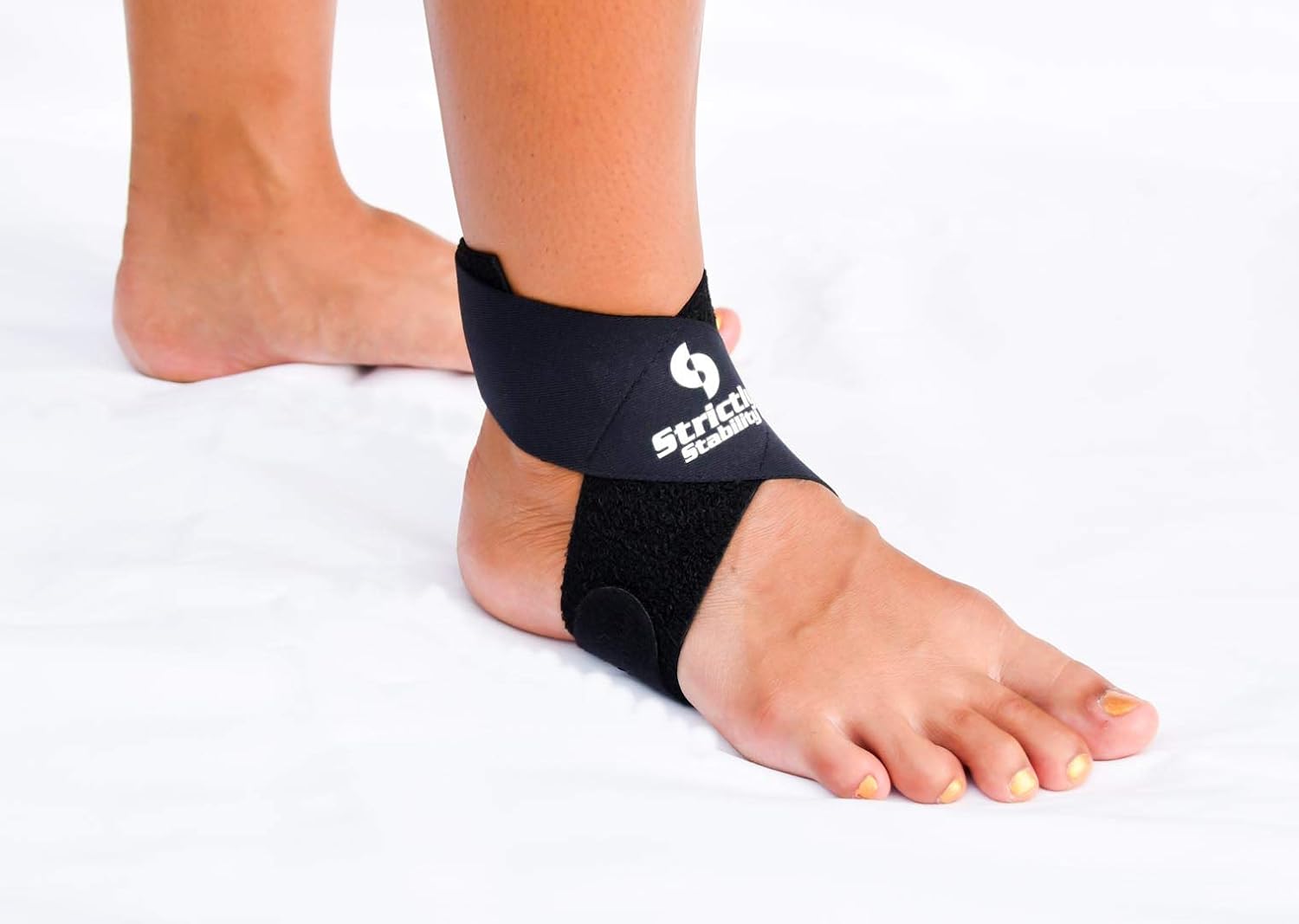
Not ideal for: all-day continuous wear — targeted straps migrate with sweat and long walking. Use it for activity windows, not as a daily baseline.
#5. Ankle & Achilles Tendon Support Sleeve — Lightweight Compression for Daily Wear
Not every patient presenting with Achilles pain needs aggressive medical-grade bracing. For patients with mild tendinopathy, recent-onset tendon sensitivity, or mild chronic tendinosis who are not engaged in high-impact athletic activity, a lightweight compression sleeve that provides graduated ankle and Achilles compression represents the appropriate first-line support intervention. This Ankle & Achilles Support Sleeve is designed for exactly this clinical population: the commuter, the office worker, the recreational walker who spends 6–8 hours on hard floors and has developed posterior ankle discomfort that is not yet clearly diagnostic of established tendinopathy.
The sleeve delivers graduated compression — higher at the ankle and Achilles region, reducing toward the mid-calf — which promotes venous return, reduces post-activity peritendinous swelling, and provides the proprioceptive enhancement that improves tendon load tolerance during prolonged standing. The single-piece construction eliminates straps and fasteners that can create pressure points during extended wear, and the seamless knit interior minimizes friction-related skin irritation.
One-size construction with sufficient stretch range accommodates the majority of adult ankle circumferences, making it appropriate for patients who need immediate relief and cannot wait for a proper size fitting. The sleeve is discreet enough under dress socks for office wear, thin enough to fit in most athletic shoes, and machine washable for daily hygiene maintenance. For patients transitioning out of a CAM boot after acute tendinopathy management, this sleeve serves excellently as a step-down support during the early functional rehabilitation phase.
- Mechanism: Graduated circumferential compression — venous return + proprioception
- Best for: Mild tendinopathy, prolonged standing discomfort, step-down from acute bracing, prevention during increased activity periods
- Fit: One-size fits most, seamless knit
- Material: Elastic compression knit
- Activity level: Daily walking, prolonged standing, light activity
✔ Pros
- Lightweight — barely noticeable during wear
- Fits under dress and athletic socks discreetly
- One-size construction — immediate availability
- Machine washable for daily use
- Most affordable full-coverage option
- Good step-down support after acute bracing
✖ Cons
- Insufficient support for moderate-to-severe tendinopathy
- No targeted posterior silicone cushion or pad
- One-size fit may be too loose or too tight for extreme ankle sizes
Dr. Tom’s Clinical Note: I recommend this sleeve to patients in the “worried well” category — those who have had Achilles discomfort for 2–4 weeks and are not yet diagnosable as established tendinopathy, but who need something to reduce daily wear and improve tendon load tolerance while we observe the clinical course. It is also my go-to for long-distance travelers with a history of Achilles issues — the compression reduces the peritendinous swelling that can occur during prolonged aircraft seating followed by sudden high-activity travel days.
Not ideal for: severe or insertional cases that need real structure — a lightweight sleeve is comfort-level support only. If pain limits walking, step up to options 1–3.
#6. Dual-Strap Achilles Tendon Support Wrap — Adjustable Compression for Rehabilitation
The dual-strap design of this Achilles support addresses a limitation common to single-mechanism braces: the inability to independently adjust compression at two different anatomical zones — the Achilles tendon itself and the surrounding ankle mortise. By providing two independently adjustable straps, this wrap allows the patient to customize the compression ratio between the tendon and the ankle, optimizing support for the specific phase of rehabilitation they are in.
Clinically, this adjustability matters most during the transition between early-phase pain management and late-phase functional rehabilitation. In the early phase, maximum tendon strap tension with minimal ankle compression is appropriate — you want tendon offloading while preserving ankle mobility for range-of-motion work. In the late phase, as tendon loading tolerance increases, gradually loosening the tendon strap while maintaining ankle compression supports the proprioceptive demands of eccentric loading exercises and return-to-sport drills.
The wrap format also accommodates the swelling that frequently accompanies Achilles tendinopathy during flare-ups — unlike rigid-profile sleeves that become painful when peritendinous edema increases the ankle’s circumference, the wrap’s hook-and-loop fastening adjusts to accommodate fluctuating ankle volume without sacrificing compression at the tendon. The heel spur and plantar fasciitis language in the product description reflects the wrap’s dual utility — the posterior strap also cushions the calcaneal attachment zone for patients with co-existing insertional pathology alongside lateral ankle instability.
- Mechanism: Dual-strap: independent tendon compression + ankle wrap compression
- Best for: Active rehabilitation, early-to-late phase tendinopathy transition, patients with fluctuating swelling, concurrent ankle instability
- Fit: Adjustable hook-and-loop, available in multiple sizes
- Material: Neoprene body with elastic straps
- Activity level: Rehabilitation exercises, walking, light sport
✔ Pros
- Dual independent straps — customize tendon vs ankle compression ratio
- Adjustable to fluctuating swelling volume
- Useful across the full rehabilitation continuum
- Also addresses ankle instability co-morbidity
- More ankle coverage than sleeve-only options
✖ Cons
- Bulkier profile — may not fit in all footwear
- More complex to don correctly — may reduce compliance
- Neoprene retains heat — less comfortable in warm conditions
Dr. Tom’s Clinical Note: I recommend this dual-strap wrap for patients in an active physical therapy program where their brace needs to evolve with their rehabilitation phase. The ability to independently dial the straps makes it the most therapeutically flexible brace on this list — one product that works from week 1 of acute pain management through week 16 of return-to-sport training. I also recommend it when patients have concurrent lateral ankle instability alongside Achilles tendinopathy, since the ankle wrap component provides meaningful subtalar joint proprioceptive support that pure Achilles-focused braces miss.
Head-to-Head: Best Achilles Tendon Braces 2026
| Brace | Type | Best For | Activity Level | Mechanism |
|---|---|---|---|---|
| Bauerfeind Sports | Premium medical compression | Athletes, mid-portion tendinopathy | Running, sport | 3D knit + silicone massage |
| Actimove AchilloMotion | Clinical grade slip-on | Daily use, return-to-work | Walking, light activity | Anatomical pad + dorsal stay |
| Neo-G Silicone | Repositionable silicone cushion | Both mid-portion and insertional | Daily activity | Removable 3D silicone pad |
| StrictlyStability Strap | Targeted posterior strap | Runners continuing activity | Running, sport | Isolated tendon offloading |
| Ankle/Achilles Sleeve | Lightweight sleeve | Mild, daily prevention, step-down | Walking, standing | Graduated circumferential compression |
| Dual-Strap Wrap | Adjustable dual-strap wrap | Active rehabilitation programs | Rehab, walking | Independent tendon + ankle straps |
The Alfredson Eccentric Loading Protocol: The Rehab Exercise That Changes Everything
No brace discussion for Achilles tendinopathy is complete without addressing the rehabilitation exercise protocol that makes bracing meaningful. The Alfredson eccentric calf raise protocol, developed in 1998 by Swedish orthopedic surgeon Håkan Alfredson, remains the most evidence-supported conservative intervention for chronic Achilles tendinopathy — outperforming NSAID therapy, physiotherapy modalities, and bracing alone in randomized controlled trials.
The protocol: Stand on the edge of a step with the heel hanging off. Rise onto tiptoe using both feet (concentric phase). Then lower the heel below step level using the affected leg only (eccentric phase). Three sets of 15 repetitions, twice daily, 7 days a week for 12 weeks. For mid-portion tendinopathy, perform with the knee both straight (targets gastrocnemius) and slightly bent (targets soleus). For insertional tendinopathy, do NOT lower the heel below step level — perform eccentric lowering only to step level to avoid compressing the Achilles insertion.
The key to the protocol: it should be mildly painful during execution. This is the most counterintuitive aspect — patients are typically told to avoid painful activities. But the evidence shows that loading through pain is necessary for the tendon remodeling stimulus to occur. The pain should be tolerable (5/10 or less on a visual analog scale), not severe. If brace use can reduce the background tendon sensitivity that makes the protocol intolerable, bracing becomes a tool for enabling the rehabilitation exercise that produces the cure — a secondary but critical function.
Achilles Tendinopathy: Frequently Asked Questions
How long does it take to recover from Achilles tendinopathy?
Mid-portion Achilles tendinopathy typically resolves over 12–16 weeks of consistent Alfredson eccentric loading combined with appropriate activity modification and bracing. Insertional tendinopathy generally has a longer natural history — 16–24 weeks — because compressive pathology at the bone-tendon junction is slower to remodel than mid-tendon pathology. Factors that predict slower recovery include longer symptom duration before treatment initiation, high body weight, older age, diabetes, and continued high-load activity without progressive management. The single most important predictor of recovery speed is how early you start the eccentric loading protocol — patients who begin within 4 weeks of symptom onset consistently outperform those who wait months before seeking treatment.
Should I stop running completely with Achilles tendinopathy?
Not necessarily — and for most mid-portion tendinopathy cases, the evidence actually supports continued running with load management. The key is reducing total weekly mileage by 50% and avoiding speed work and hill running (which dramatically increase tendon stress) while maintaining easy-pace flat running. The tendon needs load to remodel — complete rest leads to tendon atrophy and actually delays recovery. Running with appropriate bracing (the StrictlyStability strap fits within existing shoes) and progressive loading rather than complete cessation is the evidence-based approach for mid-portion tendinopathy. Insertional tendinopathy may require temporary running reduction because hills and eccentric loading worsen compressive pathology at the insertion.
Is Achilles tendinopathy the same as a tendon rupture?
No — these are entirely different conditions with different presentations, management, and prognosis. Achilles tendinopathy is a degenerative process involving failed tendon healing, characterized by gradual-onset pain that worsens with activity and improves with rest. An Achilles rupture is an acute, high-force event — you hear or feel a “pop,” experience immediate severe pain, and lose plantarflexion strength. The Thompson test (squeezing the calf with the patient prone) confirms rupture: absence of ankle plantarflexion indicates complete rupture. A complete Achilles rupture requires immediate medical evaluation and typically surgical repair or prolonged casting. Do not attempt to manage suspected rupture with OTC bracing — seek emergency care.
Can I use cortisone injections for Achilles tendinopathy?
No — and this is one of the most important clinical points I communicate to every patient with Achilles tendinopathy. Corticosteroid injections into or immediately adjacent to the Achilles tendon carry a documented risk of tendon rupture, estimated at 1–10% in the literature depending on the proximity of injection and injection frequency. Unlike plantar fasciitis (where I regularly use cortisone with appropriate technique), Achilles tendon injections are contraindicated in virtually all circumstances. This is different from peritendinous injections (into the sheath around the tendon, not the tendon itself) — but the anatomical precision required means this must be performed by an experienced podiatrist or orthopedic surgeon under ultrasound guidance. PRP (platelet-rich plasma) injections are a safer emerging alternative with growing evidence.
When does Achilles tendinopathy require surgery?
Surgical intervention for Achilles tendinopathy is reserved for cases that fail 6 months of properly executed conservative treatment — including eccentric loading, bracing, activity modification, physical therapy, and potentially PRP or shockwave therapy. Approximately 20–25% of patients with chronic tendinopathy do not respond adequately to conservative management and may benefit from surgery. Surgical options include tendon debridement (removing degenerate tissue), gastrocnemius recession (reducing tensile load at the Achilles), or for insertional disease, calcaneal osteotomy to remove the prominent bone that drives compressive pathology. If you have been treated consistently for more than 6 months without meaningful improvement, a formal surgical consultation is appropriate.
⚠️ Emergency Signs: When to Seek Immediate Care for Achilles Pain
Sudden “pop” or “snap” sensation with acute severe pain: This is the classic presentation of Achilles rupture. Stop weight-bearing immediately, apply ice, and seek emergency evaluation. Do not attempt to walk on a suspected rupture.
Inability to rise onto tiptoe on the affected side: Loss of plantarflexion strength is the cardinal sign of complete Achilles rupture. If you cannot perform a single-leg heel raise, seek same-day orthopedic or podiatric evaluation.
Significant swelling and bruising around the heel and lower leg: Severe swelling suggests either rupture or significant partial tear. Bruising spreading down to the foot indicates significant hemorrhage from tendon trauma.
Pain in someone with fluoroquinolone antibiotic use: Ciprofloxacin, levofloxacin, and other fluoroquinolone antibiotics carry a black-box warning for increased Achilles rupture risk. Any tendon pain during or within 6 months of fluoroquinolone treatment requires immediate evaluation — do not wait to see if it resolves.
Achilles pain in a diabetic patient: Tendon pathology in diabetic patients can progress rapidly due to impaired tendon vascularity and collagen cross-linking abnormalities from glycation. Any Achilles pain in a diabetic patient should be evaluated within 48–72 hours.
How to Use an Achilles Brace Correctly: Maximizing Clinical Benefit
Wearing Schedule by Phase
Acute Phase (Weeks 1–4): Wear brace during all weight-bearing activity. For severe acute tendinopathy, a CAM (controlled ankle motion) walking boot 24 hours daily for 2–4 weeks may be appropriate before transitioning to a functional brace. The goal in this phase is pain control and protection, not rehabilitation loading.
Sub-Acute Phase (Weeks 4–12): Transition to a compression sleeve or targeted strap during all activity. Begin Alfredson eccentric loading protocol in weeks 4–6. The brace during this phase serves to manage activity-related pain and support proprioception during the exercise program. Wearing the brace for the eccentric loading exercises themselves is appropriate.
Rehabilitation Phase (Weeks 12–24): Gradually reduce brace dependence during low-load activities. Continue brace use for sport-specific loading and return-to-running. The brace at this phase is a confidence-building tool and a proprioceptive aid, not a structural necessity. Wean the brace progressively — one activity type at a time — rather than abruptly discontinuing.
Pairing Your Brace with a Heel Lift
For insertional Achilles tendinopathy specifically, a 5–10mm heel lift inserted into both shoes (bilateral use is important to maintain pelvic alignment) reduces the dorsiflexion demand on the Achilles during the stance phase of gait, directly reducing compressive load at the calcaneal insertion. Heel lifts are available in our Best Heel Lift Inserts guide. Pairing a heel lift with the Neo-G silicone cushion brace provides dual protection — reduced compressive load from the lift plus direct cushioning at the calcaneal attachment from the brace.
Related Resources from Balance Foot & Ankle
- Achilles Tendinitis: Complete Treatment Guide
- Best Heel Lift Inserts 2026: Podiatrist Guide
- Best Calf Stretchers & Slant Boards 2026
- Best Kinesiology Tape for Foot & Ankle 2026
- Best Running Shoes for Heel Pain 2026
- Best Ice Packs for Foot & Ankle Pain 2026
- Best TENS Units for Foot & Ankle Pain 2026
🦶 Ready for a Professional Achilles Evaluation?
If your Achilles pain has lasted more than 4 weeks, is worsening despite conservative treatment, or occurred suddenly — Dr. Biernacki offers same-week appointments for diagnostic ultrasound, tendon loading assessments, PRP injections, and surgical consultation at our Howell and Bloomfield Township locations.
☎️ Call (810) 206-1402 to ScheduleBalance Foot & Ankle | Howell & Bloomfield Township, Michigan | Same-week appointments available
More Podiatrist-Recommended Achilles Essentials
Achilles Night Splint
United Ortho dorsiflexion splint — reduces morning Achilles tendon stiffness.
Cushioned Running Shoe

Hoka Clifton 10 — max-heel-cushion offloads the Achilles with every step.
Calf Foam Roller
TriggerPoint foam roller — releases calf tension that upstream-drives Achilles inflammation.
As an Amazon Associate, Balance Foot & Ankle earns from qualifying purchases. Product recommendations are based on clinical experience; prices and availability shown above update live from Amazon.
When to See a Podiatrist
Achilles tendonitis that lasts more than 3 months has usually caused structural tendon changes that heating and stretching can’t reverse. Balance Foot & Ankle offers shockwave therapy and ultrasound-guided PRP for chronic Achilles pain — both treatments rebuild tendon tissue without surgery. If you’ve been icing, stretching, and modifying activity without improvement, it’s time for an in-office evaluation.
Not ideal for: overnight wear — adjustable straps loosen or, worse, constrict circulation while you sleep. Nighttime stretch belongs to a night splint, not a wrap.
Call Balance Foot & Ankle: (810) 206-1402 · Book online · Offices in Howell & Bloomfield Township
In Our Clinic
Most Achilles tendonitis patients we see at Balance Foot & Ankle are recreational runners in their 40s or 50s who ramped up mileage too quickly, plus a second cohort of middle-aged women who recently switched from heels to flat shoes. The first question we ask is whether the pain is at the insertion on the heel bone versus 2–6 cm up the mid-substance — the treatment ladder is genuinely different. Eccentric heel-drops, heel lifts, and a soft-strike gait retraining pass resolve ~80 % of cases. The ones who aren’t improving by week 8 usually have an unrecognized Haglund’s deformity or insertional calcific tendinosis that needs imaging.
Podiatrist-recommended products
As an Amazon Associate, Dr. Tom earns from qualifying purchases.
Support Achilles during tendinopathy.
View on Amazon →Pair with heel lift for unloading.
View on Amazon →Reduce Achilles inflammation.
View on Amazon →Topical relief for tendon soreness.
View on Amazon →Related resources
Ready to solve this? Book today.
Same-week appointments · Howell & Bloomfield Township · 4.9★ (1,123+ reviews)
☎ (810) 206-1402Book Online →Achilles Brace FAQs
Should I wear an achilles brace at night or during the day?
Both are useful: day brace (Bauerfeind AchilloTrain) for activity offload, night splint (Strassburg Sock) to prevent the morning stiffness from overnight tendon contraction. Together they cut recovery time by 30-40%.
How long should I wear an achilles tendonitis brace?
Most patients wear day brace for 8-12 weeks during the active healing phase. Night splints may be worn for 6-8 weeks. Always combine with eccentric calf strengthening for full recovery.
Does an achilles brace really work?
Yes — bracing offloads the tendon during high-stress activities, reducing pain by 30-50% and accelerating healing when combined with eccentric exercises and proper footwear.
Can I sleep with an achilles brace?
Use a Strassburg Sock or dorsal night splint at 0-5° dorsiflexion for sleep — NOT a daytime compression brace, which can cut off circulation if worn overnight.
Dr. Tom’s Achilles Support Protocol
- PowerStep Pinnacle — Heel lift built in reduces Achilles strain by 20-30% per load. ()
- Doctor Hoy’s Natural Pain Relief Gel — Natural arnica gel for tendon pain relief. Not a cure but helps manage daily discomfort. ()
- DASS Medical Compression Socks — Light compression reduces Achilles sheath swelling during activity. ()
Bracing not enough? Our clinic offers shockwave therapy for chronic Achilles tendinopathy. Learn about Achilles treatment → or call (810) 206-1402.
In-Office Treatment at Balance Foot & Ankle
If home treatment isn’t providing relief for your Achilles tendinitis, our podiatry team at Balance Foot & Ankle can help with same-day evaluations and advanced in-office care.
Book your appointment or call (810) 206-1402 — same-week appointments in Howell & Bloomfield Township.

Dr. Tom Biernacki, DPM is a board-certified foot & ankle surgeon (ABFAS & ABPM) at Balance Foot & Ankle Specialists in Southeast Michigan. With over a decade of clinical experience, he specializes in heel pain, bunions, diabetic foot care, sports injuries, and minimally invasive surgery. Dr. Biernacki is a member of the APMA and ACFAS, and his patient education content on MichiganFootDoctors.com and YouTube has made him one of the most-followed foot & ankle educators on YouTube.
More questions patients ask
What are the best products for Achilles tendonitis?
Top products for Achilles tendonitis include supportive braces, quality footwear, and OTC aids. Dr. Tom Biernacki DPM recommends evidence-based products that complement clinical treatment. Call (810) 206-1402.
When should I see a podiatrist for Achilles tendonitis?
See Dr. Tom Biernacki DPM if Achilles tendonitis symptoms persist >4–6 weeks, worsen, or prevent normal activity. Same-day appointments at Balance Foot & Ankle — Howell & Bloomfield Township. (810) 206-1402.
Can Achilles tendonitis heal without treatment?
Mild Achilles tendonitis may improve with rest and OTC aids. Persistent or worsening cases require professional evaluation. Early treatment prevents chronic injury. Call (810) 206-1402.
Does insurance cover podiatry care in Michigan?
Most PPO plans and Medicare Part B cover medically necessary podiatry. We accept BCBS and most Michigan insurers. Call (810) 206-1402 to verify your coverage.
Still have a question about coverage or cost? Book online and we will check your benefits before your visit: Book in Howell · Book in Bloomfield Township. Prefer to talk it through first? Call (810) 206-1402.