

Medically reviewed by Dr. Tom Biernacki, DPM — Board-Certified Podiatric Surgeon — Balance Foot & Ankle, Howell & Bloomfield Hills, MI. Last updated April 2026.
▶ Watch

Medically Reviewed by Dr. Tom Biernacki, DPM — Board-Certified Podiatrist, Balance Foot & Ankle Specialists, Michigan. Last updated April 2026.
Insurance Accepted
BCBS · Medicare · Aetna · Cigna · United Healthcare · HAP · Priority Health · Humana · View All →
Howell Office
3980 E Grand River Ave, Suite 140
Howell, MI 48843
Get Directions →
Bloomfield Hills Office
43700 Woodward Ave, Suite 207
Bloomfield Hills, MI 48302
Get Directions →
Your Board-Certified Podiatrists



Ready to Get Back on Your Feet?
Same-week appointments available at both locations.
Book Your AppointmentWatch: Dr. Tom explains

Podiatrist-recommended products
As an Amazon Associate, Dr. Tom earns from qualifying purchases.
Related resources
Ready to solve this? Book today.
Same-week appointments · Howell & Bloomfield Hills · 4.9★ (1,123+ reviews)
☎ (810) 206-1402Book Online →In Our Clinic
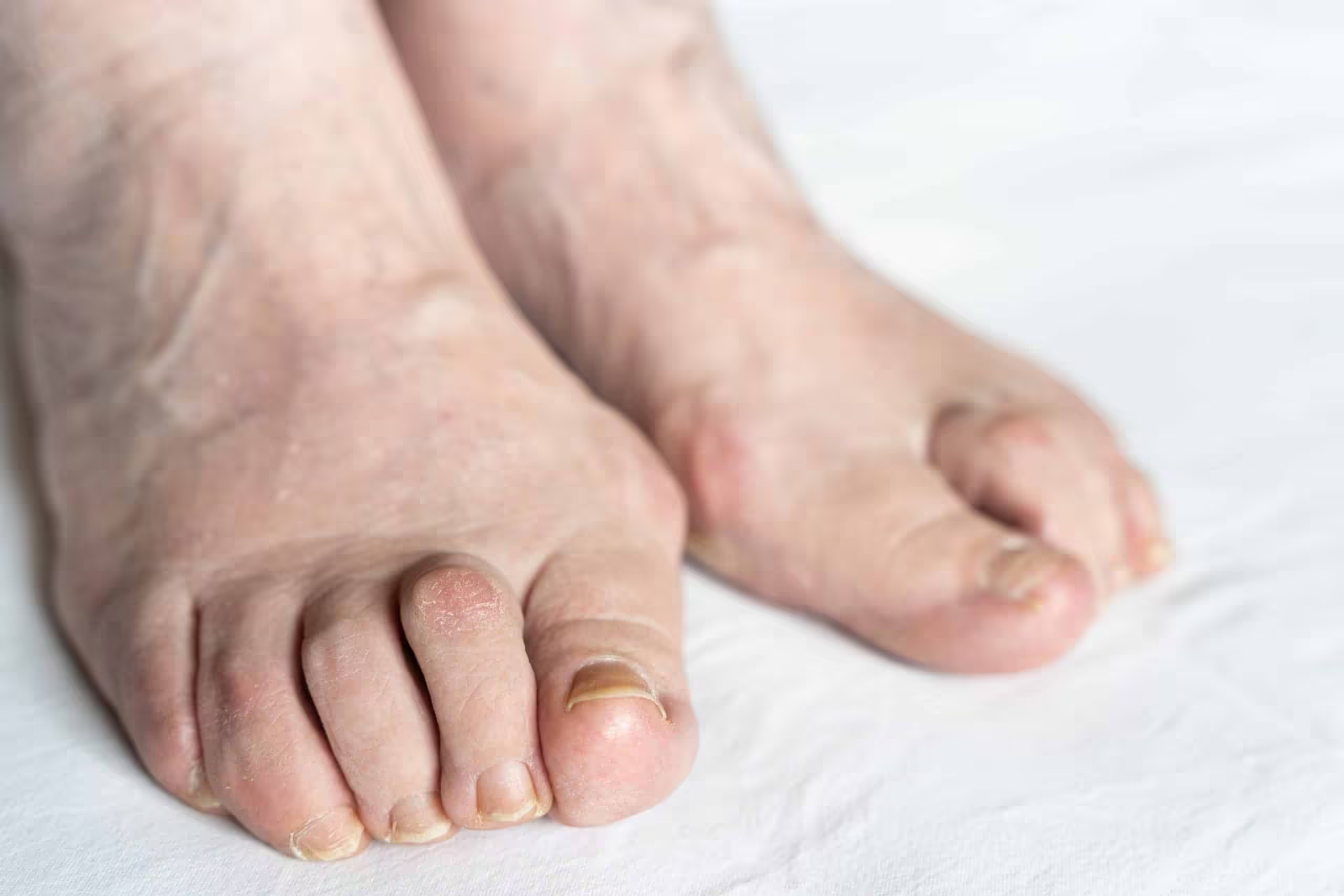
In our clinic, bunion patients come in at two very different stages. The first group is women in their 30s and 40s noticing a small bump and seeking nonsurgical slowing tactics — wide toe box shoes, bunion splints at night, custom orthotics to redistribute load away from the first MTP. The second group is patients in their 50s+ who can no longer find shoes that fit and are asking, honestly, about surgery. Our standard workup includes weight-bearing X-rays to measure the intermetatarsal angle and the HVA. Patients with an IMA under 13° usually do well conservatively; 13°+ often benefits from a surgical plan.
More Podiatrist-Recommended Bunion Essentials
Bunion-Friendly Stability Shoe
Brooks Adrenaline GTS 25 — wide toe box reduces bunion pressure.
Wide-Toe-Box Walking Shoe
New Balance 990v6 — roomy forefoot accommodates bunions and reduces rubbing.
Orthotic Insole

PowerStep arch support — realigns foot mechanics that drive bunion progression.
As an Amazon Associate, Balance Foot & Ankle earns from qualifying purchases. Product recommendations are based on clinical experience; prices and availability shown above update live from Amazon.
When to See a Podiatrist
A bunion is a progressive joint deformity — padding and splints reduce pain but don’t reverse the bone shift. If the big toe angle is worsening, shoes no longer fit, or pain is disrupting sleep or activity, schedule a consult at Balance Foot & Ankle. Our surgeons perform minimally-invasive bunion correction with faster recovery than traditional osteotomy. We’ll review X-rays with you and explain exactly what the joint needs.
Call Balance Foot & Ankle: (810) 206-1402 · Book online · Offices in Howell & Bloomfield Hills

Dr. Tom Biernacki, DPM is a double board-certified podiatrist and foot & ankle surgeon at Balance Foot & Ankle Specialists in Southeast Michigan. With over a decade of clinical experience, he specializes in heel pain, bunions, diabetic foot care, sports injuries, and minimally invasive surgery. Dr. Biernacki is a member of the APMA and ACFAS, and his patient education content on MichiganFootDoctors.com and YouTube has reached over one million views.
- Diagnosis and Treatment of Plantar Fasciitis (PubMed / AAFP)
- Heel Pain (APMA)
- Hallux Valgus (Bunions): Evaluation and Management (PubMed)
- Bunions (Mayo Clinic)
Related Treatments at Balance Foot & Ankle
Our board-certified podiatrists offer advanced treatments at our Bloomfield Hills and Howell locations.
Recommended Products from Dr. Tom