

Quick answer:(810) 206-1402.
Medically reviewed by Dr. Tom Biernacki, DPM
Board-certified podiatric surgeon | Balance Foot & Ankle | Last reviewed: May 2026
In This Article

The short answer: no, a structurally established bunion cannot be reversed without surgery. But the nuanced answer — which is what actually helps patients — is that the vast majority of bunion pain can be controlled non-surgically, and surgery is only warranted when conservative measures have genuinely failed or the deformity is severe and worsening rapidly.
📖 Related: Bunion Guide: Conservative Care to Surgery — What Actually Works
What Is a Bunion?
A bunion (hallux valgus) is a progressive deformity of the first metatarsophalangeal joint where the big toe drifts toward the second toe and the first metatarsal head migrates medially, creating the characteristic bony prominence at the inner forefoot. The deformity involves actual changes in joint alignment, articular surface orientation, and surrounding soft tissue — structural changes that cannot be reversed by stretching, splinting, or any non-surgical intervention. What conservative care CAN do is slow progression and eliminate or substantially reduce pain.
Can Bunion Splints or Toe Spacers Straighten a Bunion?
This is the most common misconception we encounter. Bunion splints and toe spacers do not straighten a bunion — the research is clear on this point. A 2019 systematic review in the Journal of Foot and Ankle Research found no high-quality evidence that splinting reverses hallux valgus deformity. What splints and spacers can do is reduce pain by temporarily offloading the bunion prominence and stretching the adductor hallucis, making them useful for symptom management even if they don’t provide structural correction.
Key takeaway: Bunion splints reduce pain and may slightly slow progression — but they do not reverse the deformity. No conservative treatment corrects the underlying structural bony change. Surgery is the only intervention that realigns the joint.
What Non-Surgical Treatments Actually Help Bunion Pain?
Even though they can’t fix the structural problem, conservative measures are the right first-line approach for most patients with mild-to-moderate bunions. In our practice, the majority of patients with mild-grade bunions are comfortably managed non-surgically for years with the right combination of interventions.
- Wide toe-box footwear: The single most impactful conservative measure. A shoe that accommodates the bunion prominence without rubbing eliminates 70–80% of bunion pain in most patients. Round or squared toe boxes, 1–1.5cm of space beyond the big toe, and no pointed fronts.
- Bunion pads: Donut-shaped gel or moleskin pads protect the bony prominence from shoe contact. Effective for acute flares. Not a long-term solution but very useful for specific occasions (formal shoes, long walks).
- Custom orthotics: Correct overpronation (the most common biomechanical driver of bunion progression) and redistribute forefoot pressure. Can slow the rate of deformity progression and reduce joint pain significantly.
- Toe spacers / splints: Reduce pain by stretching the soft tissue contracture and temporarily offloading the joint. Most effective during rest and sleep, not during weight-bearing activity.
- Corticosteroid injection: Targets the inflamed bursa or MTP synovitis for acute flares — relief lasting 3–6 months. Not a long-term management strategy.
- Physical therapy / intrinsic strengthening: Strengthening the intrinsic foot muscles may slow abductor hallucis atrophy and maintain some dynamic medial support at the first MTP joint.
When Does a Bunion Need Surgery?
Surgery is indicated when conservative care has genuinely failed — meaning 3–6 months of proper footwear and orthotics with persistent limiting pain — or when the deformity is severe enough that conservative measures cannot be accommodated. Purely cosmetic correction (the bunion looks bad but doesn’t hurt in appropriate footwear) is generally not a surgical indication in our practice, as all bunion surgeries carry recovery risks that must be justified by meaningful functional gain.
Dr. Tom’s Picks: Conservative Bunion Management
While bunions can’t be reversed without surgery, arch support slows progression significantly. Pinnacle is the OTC I recommend to delay surgical need.
View on Amazon →
Daily topical arnica + menthol for bunion joint inflammation. Applied 3-4x daily to the bump — reduces the chronic inflammatory cycle that accelerates deformity.
View on Amazon →
As an Amazon Associate I earn from qualifying purchases. As a Foundation Wellness partner I may also earn commission.
⚠️ See a podiatrist if your bunion:
- Is painful even in wide, comfortable shoes
- Is visibly progressing year over year
- Is causing the second toe to overlap or dislocate (crossover toe)
- Is affecting your ability to walk, exercise, or stand for your job
- Has developed an open sore over the prominence (ulceration — urgent if diabetic)
The Most Common Mistake We See
The most common mistake is purchasing expensive bunion “corrector” devices advertised online with claims of non-surgical reversal. The evidence does not support structural correction from any splint, separator, or brace currently on the market. Patients who spend months and money on these devices delay getting properly fitted footwear and orthotics that would actually provide relief.
⭐ 4.4★ · 12,000+ Reviews · Bunion Relief
While bunions cannot be permanently reversed without surgery, toe separators slow progression by realigning the big toe, reducing pressure on the bunion, and preventing skin breakdown.
PowerStep Pinnacle Arch Support
⭐ 4.5★ · 45,000+ Reviews
Overpronation is the primary mechanical driver of bunion formation. These insoles correct arch collapse, reducing the rotational force that causes the big toe to drift outward.
Frequently Asked Questions
Will my bunion get worse over time?
In most cases, yes — gradually. Bunions are progressive deformities; without intervention, the metatarsal bone continues to drift outward over years. The rate of progression varies enormously: some bunions are stable for decades; others worsen significantly within 5 years. Wearing narrow, pointed-toe footwear accelerates progression. If your bunion is causing pain or limiting footwear choices and is still mild-to-moderate, earlier surgical correction has better outcomes than waiting for severe deformity.
Can I fix a bunion without surgery?
Conservative treatment manages symptoms but cannot structurally correct the deformity. Wide toe-box shoes, bunion pads, toe separators, and orthotics reduce pain and slow progression. They cannot realign the metatarsal bone because the deviation involves structural changes to the joint capsule and ligaments. If the goal is permanent cosmetic and functional correction, surgery is the only option. If the goal is pain management and living comfortably with the bunion, conservative care can be effective for years.
Can splints or bunion braces straighten a bunion?
No — this is one of the most common misconceptions. Bunion splints maintain toe alignment while being worn and may slow progression, but cannot reverse the bony deviation. The first metatarsal has physically rotated and shifted laterally — no external splint can move bone. Studies show splints worn nightly improve comfort and reduce inflammation but do not change bunion angle on X-ray. They’re a useful adjunct for pain management, not correction.
What causes bunions? Are they genetic?
Bunions have a strong genetic component — about 70% of patients with bunions have a first-degree relative with bunions. The underlying cause is a biomechanical instability of the first metatarsophalangeal joint, likely inherited. Footwear doesn’t cause bunions but accelerates them — tight, narrow shoes in a genetically predisposed person progress much faster than in someone who wears supportive shoes. Women develop bunions more often than men largely due to footwear choices over decades.
What shoes should I wear with a bunion?
Wide toe box is non-negotiable — the box must accommodate the bunion without compressing it. Avoid anything with a tapered or pointed toe, stiletto heels, or thin canvas uppers that press against the bump. Best options: Hoka Bondi, New Balance 574, Brooks Ghost (wide), Altra (all models have anatomical toe box). For dress occasions, Vionic and Orthofeet make supportive wide-toe options. The general rule: your toes should never feel compressed.
How long is recovery from bunion surgery?
Recovery depends on the procedure. Simple bunionectomy (soft tissue only): 4–6 weeks. Osteotomy (bone cut and realignment, the most common modern approach): 6–12 weeks non-weight-bearing in a boot, full recovery 4–6 months. Lapidus procedure (fusion at the base of the first metatarsal): 6–8 weeks non-weight-bearing, 6–9 months full recovery. The Lapidus has the lowest recurrence rate and is preferred for severe bunions or hypermobile first rays. We discuss the specific procedure during your surgical consultation.
Will I be able to walk after bunion surgery?
Yes — most patients walk in a surgical boot immediately or within 1–2 weeks. Full return to regular shoes takes 6–12 weeks depending on the procedure. Return to athletic activity typically takes 4–6 months. The question we hear most often is whether the foot will be comfortable and functional long-term — the answer is yes for the vast majority. Over 90% of patients are satisfied with bunion surgery outcomes at 5-year follow-up.
Can bunions come back after surgery?
Yes — recurrence is possible, especially without lifestyle changes. With modern osteotomy procedures, recurrence runs 5–10% at 10 years. The Lapidus procedure has the lowest recurrence rate (2–5%) because it addresses the hypermobility at the metatarsal base. The single biggest recurrence factor is returning to narrow, pointed-toe shoes within 6 months of surgery. We follow patients for 2 years post-surgery specifically to catch early recurrence signs.
Does insurance cover bunion surgery?
Most PPO and Medicare plans cover bunion surgery when it’s functionally necessary — meaning pain limits daily activity, conservative care has been attempted, and X-rays show a meaningful deformity. Purely cosmetic bunionectomy is not covered. We document conservative treatment failure and functional limitation prior to surgery to build the strongest possible insurance case. Call our office at (810) 206-1402 and we’ll verify your coverage before your consultation.
Can children get bunions?
Yes — juvenile bunions account for about 10% of all bunions and are typically bilateral and genetic. They’re most common in girls aged 10–15. Treatment in growing children is conservative whenever possible — wide-toe-box shoes and monitoring. Surgical correction is generally delayed until skeletal maturity (16–18) because operating on open growth plates increases recurrence risk. If your child has a painful or rapidly progressing bunion, evaluation is warranted to track progression.
When is bunion surgery actually necessary?
Surgery is appropriate when: pain is consistent and limits daily activities despite 3–6 months of conservative care, footwear options are severely restricted, there’s a secondary deformity (hammer toe, crossover toe) being driven by the bunion, or joint arthritis is developing. Mild, painless bunions don’t require surgery even if they look significant on X-ray. The decision is always functional, not cosmetic — we operate on pain, not appearance.
The Bottom Line
Bunions cannot be reversed without surgery, but the majority of bunion pain can be well-controlled with wide shoes, orthotics, and padding for many years. Surgery is a real and reliable option when conservative care fails — modern bunion procedures have excellent outcomes and short recovery times. If you’re unsure whether your bunion is at a point where surgery is warranted, we’d be happy to evaluate you at Balance Foot & Ankle in Howell or Bloomfield Township.
Sources
- Torkki M et al. Surgery vs orthosis vs watchful waiting for hallux valgus. JAMA. 2001.
- Fraissler L et al. Hallux valgus — analysis of a therapeutic problem. J Orthop Surg Res. 2016.
- Nix S et al. Prevalence of hallux valgus in the general population: a systematic review and meta-analysis. J Foot Ankle Res. 2010.
Related Conditions
Ready to Get Relief?
Same-day appointments available in Howell & Bloomfield Township, MI
4.9★ | 1,123 Reviews | 3,000+ Surgeries
Or call: (810) 206-1402
🦶 Slow Bunion Progression Without Surgery: What Actually Works
- PowerStep Pinnacle Insoles — Bunions are worsened by flat foot mechanics that push the big toe outward with each step. PowerStep Pinnacle corrects this load — the OTC insole I prescribe most for bunion management without surgery.
- Doctor Hoy’s Natural Pain Relief Gel — For bunion pain and the bursitis that flares when shoes compress the joint. Apply arnica + camphor directly to the bunion prominence 3–4× daily.
Bunions cannot be reversed without surgery — but progression can be slowed significantly. See our bunion surgery & conservative care options → · Book → · (810) 206-1402
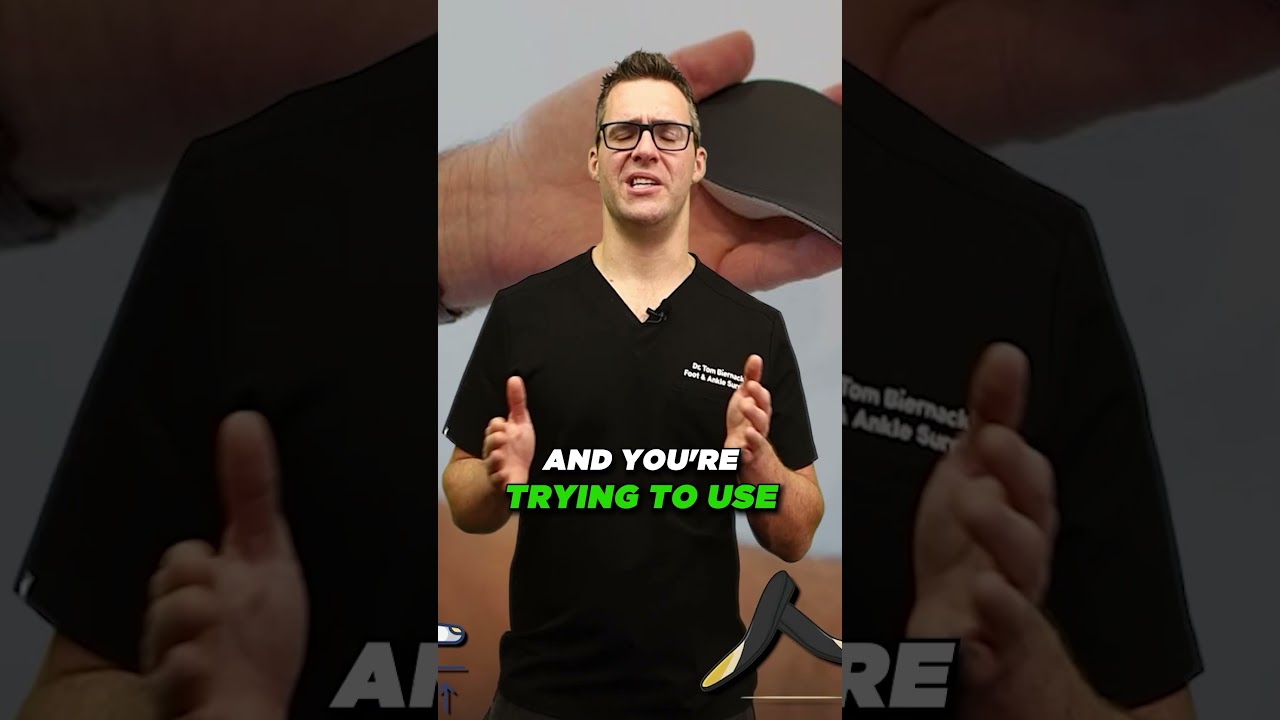
Watch: TOP 13 Ways to Shrink Bunions Naturally
![TOP 13 Ways to Shrink Bunions Naturally [+1 HUGE SECRET!]](https://www.michiganfootdoctors.com/wp-content/cache/flying-press/6f02e4f6e14ff26cdab41c5fef8dcc5f.jpg)
Dr. Tom covers the full spectrum of conservative bunion management — from toe spacers and splints to orthotics and footwear modification. He explains what the research shows about each intervention and which ones provide measurable slowing of deformity progression versus which are marketing-driven.
In-Office Treatment at Balance Foot & Ankle
When bunion pain or conservative bunion treatment persists despite home care, our team provides hands-on exam plus imaging when needed and treatment at our Howell and Bloomfield Township locations. Same-day appointments are available.
Get Expert Care at Balance Foot & Ankle
Same-week appointments at our Howell and Bloomfield Township offices. Board-certified podiatric surgeons. Most insurance accepted.

Dr. Tom Biernacki, DPM is a board-certified foot & ankle surgeon (ABFAS & ABPM) at Balance Foot & Ankle Specialists in Southeast Michigan. With over a decade of clinical experience, he specializes in heel pain, bunions, diabetic foot care, sports injuries, and minimally invasive surgery. Dr. Biernacki is a member of the APMA and ACFAS, and his patient education content on MichiganFootDoctors.com and YouTube has made him one of the most-followed foot & ankle educators on YouTube.
More questions patients ask
Can bunions be reversed without surgery?
Bunion deformity cannot be reversed without surgery—the bone has shifted position. However, pain can be managed and progression slowed with wide shoes, bunion spacers, custom orthotics, and exercises. These conservative measures help many people avoid or delay surgery.
Do bunion correctors actually work?
Bunion splints and correctors can temporarily realign the toe while worn and may reduce pain, but they cannot permanently reverse the bony deformity. They're most useful for pain relief and slowing progression when combined with proper footwear and orthotics.
What is the newest bunion surgery?
Minimally invasive bunion surgery (MIS) and Lapiplasty 3D bunion correction are newer techniques. Lapiplasty corrects the bunion at its root cause (unstable joint), has lower recurrence rates, and allows earlier weight-bearing compared to traditional procedures.
Still have a question about coverage or cost? Book online and we will check your benefits before your visit: Book in Howell · Book in Bloomfield Township. Prefer to talk it through first? Call (810) 206-1402.