
Medically reviewed by Dr. Tom Biernacki, DPM — Board-Certified Podiatric Surgeon — Balance Foot & Ankle, Howell & Bloomfield Hills, MI. Last updated April 2026.
▶ Watch

Medically Reviewed by Dr. Tom Biernacki, DPM — Board-Certified Podiatrist, Balance Foot & Ankle Specialists, Michigan. Last updated April 2026.
What Are Corns and Calluses?
Corns and calluses are areas of thickened, hardened skin that form in response to repeated friction or pressure. They are the skin’s protective response — building up a thicker barrier to protect against the irritation that’s causing them. While they serve a protective function, they can become painful and problematic, particularly in people with diabetes, poor circulation, or neuropathy.
At Balance Foot & Ankle in Howell and Bloomfield Township, we treat corns and calluses regularly — typically removing them in minutes during an office visit while also addressing the underlying causes that allowed them to form.
Corns vs. Calluses: The Difference
Calluses are broad areas of thickened skin, typically on weight-bearing areas of the sole — under the metatarsal heads, on the heel, or on the lateral border of the foot. They are diffuse, relatively uniform in thickness, and usually not particularly painful unless very thick or cracked.
Corns are smaller, concentrated areas of thickened skin with a hard central core (nucleus) that points inward, pressing on underlying nerves and causing sharp, localized pain. Hard corns (heloma durum) typically develop on the toes or outer edge of the foot where bones press against shoe material. Soft corns (heloma molle) develop between the toes, where the skin remains soft from moisture — they have a rubbery texture and can become macerated and infected.
An additional type — nucleated calluses or intractable plantar keratosis (IPK) — involves a discrete, deeply nucleated callus under a metatarsal head that causes significant point tenderness similar to a corn.
What Causes Them?
All corns and calluses are caused by mechanical factors: friction, pressure, and shear forces applied repeatedly to the same skin area. Improperly fitting shoes — too tight, too narrow, or with seams over bony prominences — are the most common cause. Foot deformities (bunions, hammertoes, flat feet) create abnormal pressure points on the skin. Walking barefoot on hard surfaces creates calluses on weight-bearing areas. Bony prominences create pressure hotspots regardless of shoe fit.
Safe Home Care
Soaking the affected area in warm water for 10–15 minutes softens the skin. Gentle pumice stone or emery board use after soaking can reduce callus thickness. Over-the-counter moisturizing creams (particularly those containing urea or salicylic acid) help soften thickened skin with regular use.
OTC corn pads containing salicylic acid are effective for some corns but carry risks — they don’t distinguish between corn and healthy skin and can cause chemical burns, particularly in diabetic or vascular patients. These should be used cautiously or avoided in high-risk patients.
What Not to Do
Never use razor blades, scissors, or other sharp instruments to cut corns or calluses. Infection risk is significant, particularly in diabetic patients where a small self-inflicted wound can escalate into a serious infection. This is precisely the kind of “bathroom surgery” that causes hospital admissions in diabetic patients.
Professional Treatment
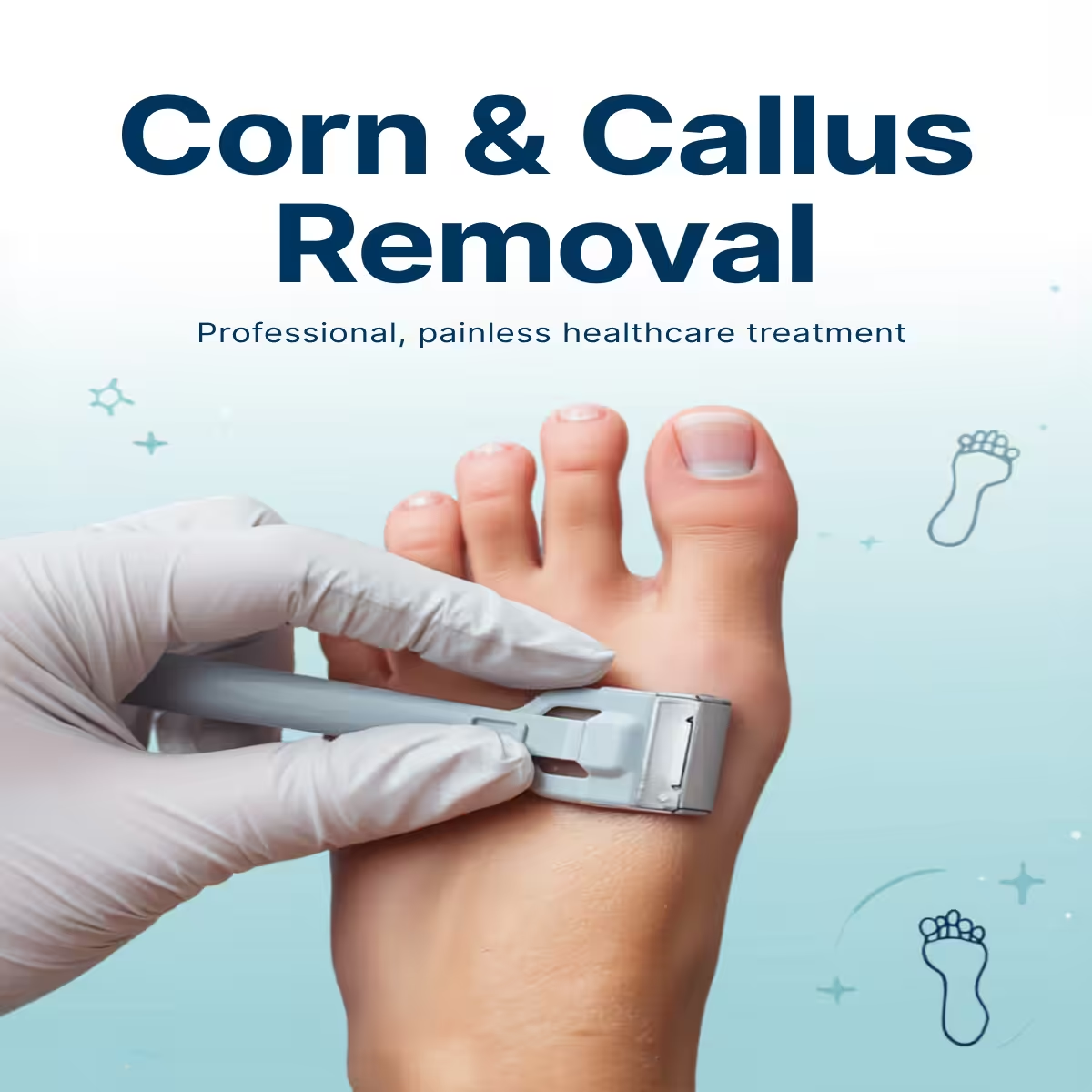
Our podiatrists perform corn and callus debridement with a sterile blade, removing the thickened skin down to healthy tissue in a painless, precise procedure. We also address the underlying cause: fitting advice for shoes, toe padding or offloading devices for corns on bony prominences, metatarsal pads for plantar calluses, and orthotics for biomechanical contributors. Without addressing the cause, corns and calluses inevitably recur.
If you have painful corns or calluses, or if you’re a diabetic patient with any foot skin thickening, contact Balance Foot & Ankle for safe, effective professional care.
Foot or Ankle Pain? We Can Help.
Balance Foot & Ankle — Howell & Bloomfield Township, MI
📅 Book Online
📞 (810) 206-1402
Struggling with Corns or Calluses That Keep Coming Back?
Corns and calluses are your body signaling abnormal pressure on the foot. A podiatrist can identify the biomechanical cause — whether its a hammertoe, bunion, or ill-fitting shoes — and provide lasting solutions including professional debridement and custom orthotics.
Get Professional Corn and Callus Treatment | Book Your Appointment | Call (810) 206-1402
Clinical References
- Freeman DB. Corns and calluses resulting from mechanical hyperkeratosis. American Family Physician. 2002;65(11):2277-2280.
- Singh D, et al. Fortnightly review: plantar fasciitis and corns. BMJ. 1997;315(7111):172-175.
- Grouios G. Corns and calluses in athletes feet: a cause for concern. The Foot. 2004;14(4):175-184.
Insurance Accepted
BCBS · Medicare · Aetna · Cigna · United Healthcare · HAP · Priority Health · Humana · View All →
Howell Office
3980 E Grand River Ave, Suite 140
Howell, MI 48843
Get Directions →
Bloomfield Hills Office
43700 Woodward Ave, Suite 207
Bloomfield Hills, MI 48302
Get Directions →
Your Board-Certified Podiatrists



Ready to Get Back on Your Feet?
Same-week appointments available at both locations.
Book Your AppointmentIn Our Clinic
The typical corn or callus patient at Balance Foot & Ankle has been trimming them at home for years with limited success. We pare the lesion to see what’s underneath — a well-demarcated central core distinguishes a corn from a diffuse callus, and a plantar wart interrupts the skin lines instead of following them. The real question we ask is WHY the callus formed: a bony prominence (bunion, hammertoe), a biomechanical imbalance, or an ill-fitting shoe. Correct the cause — with custom orthotics, a metatarsal pad, or footwear change — and the callus stops coming back. Otherwise it’s a lifelong re-trim cycle.
Watch: Dr. Tom explains
Podiatrist-recommended products
As an Amazon Associate, Dr. Tom earns from qualifying purchases.
Offloads pressure points that cause corns and calluses on the ball of foot.
View on Amazon →Redistributes plantar pressure to prevent recurrent corns and calluses.
View on Amazon →Topical comfort for tender calluses between professional debridements.
View on Amazon →Relief for inflamed corns and surrounding soft tissue.
View on Amazon →Related resources
Ready to solve this? Book today.
Same-week appointments · Howell & Bloomfield Hills · 4.9★ (1,123+ reviews)
☎ (810) 206-1402Book Online →More Podiatrist-Recommended Foot Health Essentials
Hoka Clifton 10

Max-cushion everyday shoe — podiatrist favorite for walking and running.

OOFOS Recovery Slide

Impact-absorbing recovery sandal — wear after long days on your feet.
As an Amazon Associate, Balance Foot & Ankle earns from qualifying purchases. Product recommendations are based on clinical experience; prices and availability shown above update live from Amazon.

When to See a Podiatrist
If foot or ankle pain has been bothering you for more than a few weeks, home care alone may not be enough. Balance Foot & Ankle offers same-week appointments at our Howell and Bloomfield Hills clinics — no referral needed in most cases. Bring your current shoes and a short list of symptoms and we’ll build you a treatment plan in one visit.
Call Balance Foot & Ankle: (810) 206-1402 · Book online · Offices in Howell & Bloomfield Hills

Dr. Tom Biernacki, DPM is a double board-certified podiatrist and foot & ankle surgeon at Balance Foot & Ankle Specialists in Southeast Michigan. With over a decade of clinical experience, he specializes in heel pain, bunions, diabetic foot care, sports injuries, and minimally invasive surgery. Dr. Biernacki is a member of the APMA and ACFAS, and his patient education content on MichiganFootDoctors.com and YouTube has reached over one million views.
- Plantar Fasciitis: Diagnosis and Conservative Management (PubMed)
- Plantar Fasciitis (APMA)
- Diagnosis and Treatment of Plantar Fasciitis (PubMed / AAFP)
- Heel Pain (APMA)
Recommended Products from Dr. Tom