
Quick answer: Foot Care Elderly affects roughly 1 in 4 adults in our practice. Effective treatment starts with a targeted diagnosis, conservative-first treatment, and escalation only when needed. We treat this regularly at our Howell and Bloomfield Township practices. Call (810) 206-1402.
The most important clinical decision with Foot Care Elderly isn’t which treatment to start with — it’s identifying the correct subtype. That changes everything. Call (810) 206-1402.
Dr. Tom’s Top Shoe Picks
Brooks Adrenaline GTS 23
Flat feet · Overpronation
Dr. Tom’s Top Foot Creams
Medically reviewed by Dr. Tom Biernacki, DPM · Board-Certified Podiatric Surgeon · Last reviewed: April 2026 · Editorial Policy
Related Conditions
Quick Answer
Foot Care for Seniors: Common Problems and How a Podiatrist relates to foot pain — typically caused by overuse, footwear, or biomechanics. Most patients improve in 6-12 weeks with conservative care. Same-week appointments in Howell + Bloomfield Township: (810) 206-1402.
Medically reviewed by Dr. Tom Biernacki, DPM — Board-Certified Podiatric Surgeon — Balance Foot & Ankle, Howell & Bloomfield Township, MI. Last updated April 2026.
Why Foot Care Becomes More Important With Age
![Diabetic Foot Care 101 [Diabetic Foot Pain: Podiatrist Treatment] | Balance Foot Ankle](https://www.michiganfootdoctors.com/uploads/2021/05/diabetic-foot-care-101-diabetic-foot-pain-podiatrist-treatment.avif)

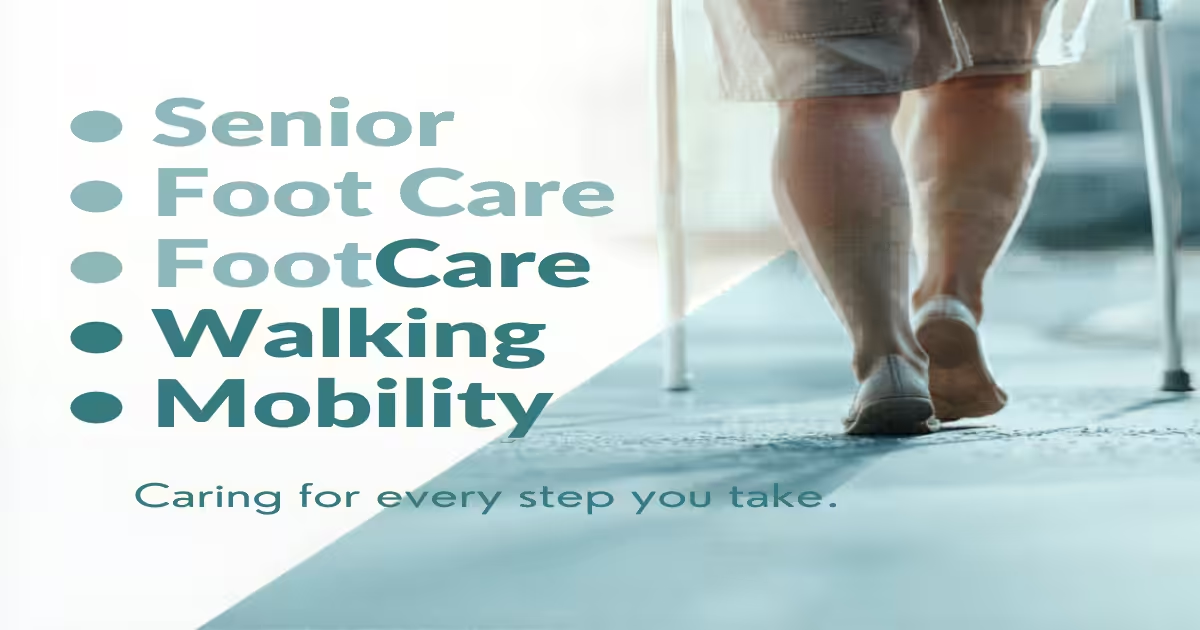
Foot health is central to independence and quality of life in older adults—the ability to walk comfortably, maintain balance, and avoid falls is directly tied to foot and ankle function. Yet foot problems are among the most undertreated health issues in seniors: many older adults accept foot pain as “normal” aging and defer care, not realizing that effective treatment is available for most conditions. A podiatrist provides specialized care for the full spectrum of foot problems that accumulate with age, from routine nail and callus care to management of complex conditions like diabetic foot disease, neuropathy, and severe arthritis.
Most Common Foot Problems in Older Adults
Thick Toenails and Nail Dystrophy
Toenails thicken, yellow, and become difficult to trim with advancing age due to reduced circulation, slower nail growth, accumulated fungal infection (onychomycosis), and repeated microtrauma from footwear. Thick nails that cannot be safely trimmed at home create serious problems: pressure from the nail against footwear causes pain, ingrown nail edges develop, and unrecognized nail injuries can progress to infections in patients with diabetes or poor circulation. Podiatric nail debridement—professional trimming and thinning of dystrophic nails—is safe, painless, and dramatically improves comfort. Nail care every 6–12 weeks is appropriate for seniors who cannot safely manage their own nails.
Calluses and Corns
Callus formation accelerates in older adults due to fat pad atrophy (loss of the natural cushioning layer under the metatarsal heads and heel), changes in foot mechanics, and chronic pressure from footwear. Calluses can develop into painful keratotic lesions; corns (nucleated calluses with a central core) on the toe prominences cause significant pain with shoe wear. Podiatric debridement of calluses and corns provides immediate pain relief. Custom orthotics with metatarsal padding redistributes pressure and reduces callus recurrence. In diabetic or neuropathic patients, calluses are a serious fall and ulceration risk—calluses concentrate plantar pressure and predispose to skin breakdown at exactly the locations with reduced pain sensation.
Fall Risk From Foot Problems
Foot and ankle conditions are a leading contributor to falls in older adults—one of the most serious and costly health problems in the elderly population. Reduced ankle dorsiflexion (from Achilles tightening or ankle arthritis), diminished sensation from neuropathy, foot pain that alters gait pattern, and ill-fitting footwear all significantly increase fall risk. Treatment of foot conditions—pain management, proprioceptive rehabilitation, appropriate footwear and orthotics, and ankle strengthening—reduces fall risk. Any senior who has fallen or is concerned about balance should have a podiatric gait and footwear evaluation as part of a fall prevention assessment.
Peripheral Vascular Disease and Circulation
Atherosclerosis narrows the arteries supplying the feet, reducing healing capacity and increasing infection risk. Cold feet, calf cramping with walking (claudication), and non-healing wounds suggest peripheral arterial disease (PAD). Seniors with PAD require podiatric evaluation before any elective foot procedures and need regular monitoring for skin breakdown and wounds. Routine podiatric care—including nail trimming and callus management—is particularly important for patients with PAD because even minor injuries can progress to serious wounds in poorly perfused tissue.
Arthritis of the Foot and Ankle
Osteoarthritis of the first metatarsophalangeal joint (hallux rigidus), midfoot joints, and ankle is common in older adults and produces pain with walking, stiffness, and difficulty with activities. Custom orthotics with appropriate rocker modifications, bracing, cortisone injections, and appropriate footwear modifications provide substantial relief for most patients. Surgical options (fusion, arthroplasty) are available when conservative measures are inadequate. Treating foot arthritis effectively preserves mobility and independence.
Frequently Asked Questions
How often should seniors see a podiatrist?
For healthy older adults without diabetes or significant medical conditions, annual podiatric evaluation is appropriate to monitor for developing conditions, assess footwear, and address nail and callus concerns. Seniors with diabetes should see a podiatrist every 1–3 months for preventive care, with more frequent visits if wounds, neuropathy, or circulation problems are present. Patients with peripheral arterial disease, immunosuppression, or history of foot ulceration benefit from quarterly monitoring. Medicare covers podiatric care for diabetic patients and for patients who meet criteria for routine nail care (including patients who cannot safely trim their own nails due to their condition or physical limitations). Ask your podiatrist about Medicare coverage for routine care at your first visit.
What are the best shoes for elderly feet?
Ideal footwear for older adults features a wide, roomy toe box (to accommodate toe deformities and prevent pressure), cushioned midsoles (to compensate for fat pad atrophy), firm heel counters (for hindfoot stability), velcro or adjustable closures (for ease of donning with arthritic hands), non-slip soles, and low heels (under 1 inch). Extra-depth shoes from brands such as New Balance (wide width options), Propet, Apis, Drew, and SAS accommodate custom orthotics and diabetic insoles. Avoid soft, flexible ballet flats, flip-flops, and slip-on shoes without heel support—these increase fall risk and provide inadequate support. A podiatrist can assess foot shape and provide specific footwear recommendations, including diabetic shoes if Medicare-covered therapeutic footwear applies.
Is foot pain a normal part of aging?
Foot pain is common in older adults but is not an inevitable or untreatable part of aging. Most foot pain in seniors has identifiable, treatable causes—nail problems, calluses, arthritis, neuropathy, plantar fasciitis, and ill-fitting footwear—that respond well to appropriate treatment. Many seniors have significantly reduced their foot pain and improved mobility with relatively simple interventions (new footwear, orthotics, nail care, cortisone injections). Accepting foot pain as inevitable means missing treatable conditions that can substantially improve quality of life. If foot pain is limiting your walking, activities, or independence, a podiatric evaluation is worthwhile—the likelihood of finding a treatable cause is high.
Medical References & Sources
- PubMed Research — Foot Problems, Fall Risk, and Older Adults
- PubMed Research — Elderly Foot Pain Prevalence and Treatment
- American Podiatric Medical Association — Senior Foot Care
📧 Get Dr. Tom’s Free Lab Test Guide
Discover the 5 lab tests every person over 35 should ask their doctor about — explained in plain English by a board-certified physician.
Dr. Tom Biernacki, DPM is a board-certified podiatric surgeon at Balance Foot & Ankle in Howell and Bloomfield Township, Michigan. He provides comprehensive foot care for older adults including nail care, callus management, diabetic foot monitoring, orthotics, and treatment of arthritis and pain limiting mobility.
Join 950,000+ Learning About Foot Health
Dr. Tom shares honest medical advice, supplement reviews, and treatment guides you won’t find anywhere else.
Subscribe on YouTube →📍 Located in Michigan?
Our board-certified podiatrists treat this condition at two convenient locations. Same-day appointments often available.
Insurance Accepted
BCBS · Medicare · Aetna · Cigna · United Healthcare · HAP · Priority Health · Humana · View All →
Howell Office
4330 E Grand River Ave
Howell, MI 48843
Get Directions →
Bloomfield Township Office
43494 Woodward Ave, #208
Bloomfield Township, MI 48302
Get Directions →
Your Board-Certified Podiatrists



Ready to Get Back on Your Feet?
Same-week appointments available at both locations.
Book Your AppointmentPros & Cons of Conservative Care for foot care
Advantages
- ✓ Conservative care first
- ✓ Same-week appointments
- ✓ Multiple insurance accepted
Considerations
- ✗ Self-treatment can mask issues
- ✗ See a podiatrist if pain >2 weeks
Dr. Tom’s Recommended Products for foot care
Affiliate disclosure: As an Amazon Associate, Balance Foot & Ankle earns from qualifying purchases. We only recommend products we use with patients.
Footnanny Heel Cream Dr. Tom’s Pick
Best for: Daily moisturizer for cracked heels
Ready to Get Back on Your Feet?
Same-day appointments in Howell + Bloomfield Township. Most insurance accepted. Dr. Tom Biernacki, DPM & team.
Book Today — Same-Day Appointments Available
Call Now: (810) 206-1402
About Your Care Team at Balance Foot & Ankle
Dr. Tom Biernacki, DPM · Board-Certified Foot & Ankle Surgeon. Specializes in conservative-first care, minimally invasive bunion surgery, and complex reconstruction.
Dr. Carl Jay, DPM · Accepting new patients. Specializes in sports medicine, athletic injuries, and routine podiatric care.
Dr. Daria Gutkin, DPM, AACFAS · Accepting new patients. Specializes in surgical reconstruction and pediatric podiatry.
Locations: 4330 E Grand River Ave, Howell, MI 48843 · 43494 Woodward Ave Suite 208, Bloomfield Township, MI 48302
Hours: Mon–Fri 8:00 AM – 5:00 PM · (810) 206-1402
In-Office Treatment at Balance Foot & Ankle
If home treatment isn’t providing relief for your foot and ankle conditions, our podiatry team at Balance Foot & Ankle can help with same-day evaluations and advanced in-office care.
Same-day appointments available. (810) 206-1402
Doctor Hoy’s Natural Pain Relief Gel
Natural topical pain relief I use in our clinic. Arnica + camphor formula — apply directly to the area 3–4x daily. ($20–25)
Shop Doctor Hoy’s →Ready for Expert Care?
Same-day appointments in Howell & Bloomfield Township, MI.
4.9★ | 1,123 Reviews | 3,000+ Surgeries
Or call: (810) 206-1402
