
Corns and Calluses on Feet: Causes, Treatment & Prevention
Corns and calluses are among the most common foot complaints seen by podiatrists — and also among the most misunderstood. While both involve thickened skin (hyperkeratosis) from repeated friction or pressure, they are distinct conditions with different characteristics, locations, and treatment approaches. Understanding which type you have ensures you choose the right treatment and, critically, avoid treatments that can cause serious harm.
Corns vs. Calluses: Key Differences
Calluses
A callus is a diffuse area of thickened, hardened skin that develops in response to repetitive friction over a broad area. Characteristics:
- Large, flat, and poorly defined borders
- Located on weight-bearing surfaces — heels, balls of feet, under metatarsal heads
- Usually yellowish or grayish in color
- Often painless unless extremely thick or cracked
- Skin texture is normal but compressed
- Protective function — calluses reduce blister formation for athletes and manual laborers
Corns
A corn is a focused, cone-shaped thickening of skin with a central hard “nucleus” or “core” that points inward toward underlying tissue. The core presses on nerves and causes sharp, often intense pain. There are two types:
- Hard corns (heloma durum) — found on bony prominences of the toes (dorsal surfaces) or under the ball of the foot; small, firm, and sharply delineated
- Soft corns (heloma molle) — occur between toes (most commonly 4th interspace) where sweat maceration keeps the skin soft and whitish; can be mistaken for athlete’s foot or fungal infection
What Causes Corns and Calluses?
The common denominator is abnormal pressure or friction. Specific causes:
- Ill-fitting shoes — too narrow (especially in the toe box), too tight, or shoes with seams that rub against bony areas; the most common and modifiable cause
- Structural deformities — bunions, hammertoes, and bone spurs create bony prominences that rub against shoe uppers; these corns cannot be permanently resolved without addressing the underlying deformity
- Abnormal biomechanics — overpronation, supination, or leg-length discrepancy create uneven weight distribution, producing calluses under overloaded metatarsal heads
- Going barefoot on hard surfaces — especially on heels and balls of feet
- Hosiery problems — seams in socks, wearing no socks, or poorly fitting socks that bunch and create friction
- Toe deformities that cause toe-on-toe contact — toes rubbing against each other generate interdigital corns
Safe Home Treatment
What You Can Safely Do at Home
- Soak first — soak the foot in warm water for 10–15 minutes to soften the thickened skin
- Pumice stone or foot file — gently rub the callus or corn with a wet pumice stone in a circular motion; only remove the outermost layers; do not aggressively file
- Moisturize — apply a urea-based cream (20–40% urea) or salicylic acid lotion to the affected area; these keratolytic agents help soften hyperkeratotic skin between treatments
- Padding — use donut-shaped corn pads (NOT medicated, which contain acid) to relieve pressure; adhesive padding keeps the corn off shoe surfaces
- Correct the footwear — switch to shoes with a wider toe box, lower heel, and softer upper; no home treatment will prevent recurrence if the offending shoe is still worn
What NOT to Do at Home
- Never cut corns or calluses with a razor, scissors, or knife — the risk of cutting too deep and causing infection, particularly dangerous in diabetic patients, is significant; this is strictly a professional procedure
- Avoid over-the-counter medicated corn removers (salicylic acid plasters) for diabetics, those with neuropathy, or poor circulation — the acid cannot distinguish between corn and healthy tissue; chemical burns and ulcers can result
- Do not try to dig out the corn’s core — this will not remove it permanently and risks infection
Professional Podiatric Treatment
Débridement
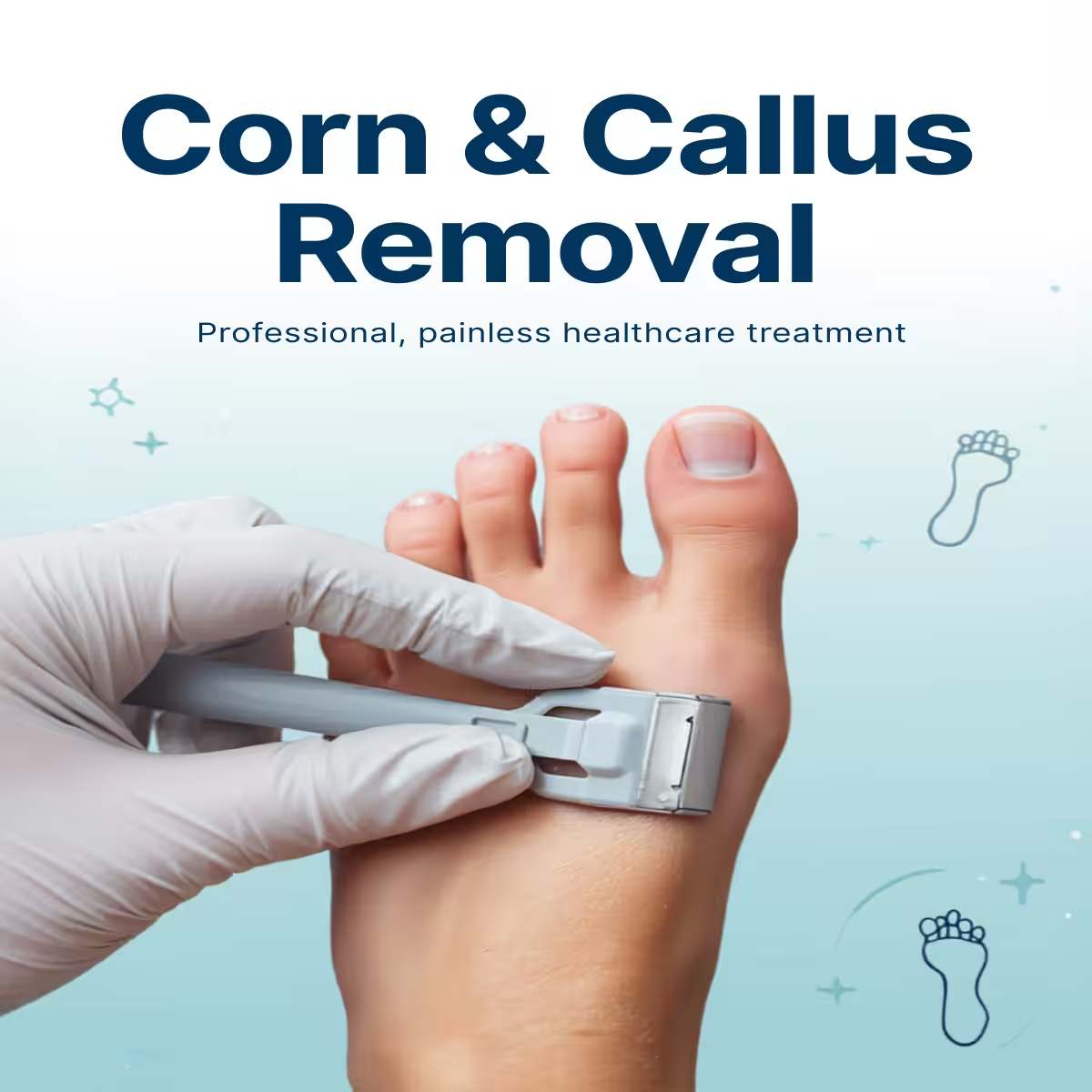
Podiatric débridement is the safe, painless removal of callus and corn tissue using a scalpel blade. With a properly sharpened blade and skilled technique, this procedure removes the hyperkeratotic tissue without damaging underlying healthy skin or nerves. It provides immediate pain relief — most patients walk out feeling dramatically better. In diabetic patients and those with poor circulation, this should always be done by a podiatrist rather than at home.
Addressing Underlying Causes
Professional débridement is not a permanent solution if the underlying cause isn’t corrected. A podiatrist identifies whether the corn or callus is caused by:
- Biomechanical abnormality → treated with custom orthotics
- Structural deformity (bunion, hammertoe) → conservative management or surgical correction
- Footwear → specific shoe recommendations
- Soft tissue changes (fat pad atrophy) → padding protocols
Custom Orthotics for Recurrent Calluses
Thick, recurrent plantar calluses under the 2nd or 3rd metatarsal heads are almost always biomechanical in origin. Custom orthotics that redistribute plantar pressure — with metatarsal domes, arch corrections, or metatarsal head cutouts — address the root cause and dramatically reduce callus recurrence rates. OTC insoles are helpful but rarely as effective for structural contributors.
Surgical Treatment
Corns or calluses caused by underlying bone spurs, digital deformities, or prominent metatarsal heads that create an inescapable pressure point may ultimately require surgical correction of the bony abnormality. Procedures include hammertoe correction (to eliminate dorsal corn), condylectomy (removal of bony prominence), or metatarsal osteotomy (to elevate a prominent metatarsal head).
Special Considerations for Diabetic Patients
In diabetic patients, calluses are not merely a cosmetic nuisance — they are a significant risk factor for diabetic foot ulcers. Calluses create concentrated pressure points beneath them; if neuropathy prevents the patient from sensing this pressure, a subcallus ulcer can form silently. Studies show diabetic patients with callus are 11× more likely to develop a foot ulcer. Diabetic patients should:
- Have regular podiatric callus débridement (typically every 6–8 weeks)
- Never use OTC acid corn/callus removers
- Never attempt home cutting
- Wear custom diabetic shoes and insoles covered by Medicare Part B
- Inspect their feet daily for new pressure areas or skin breakdown
Frequently Asked Questions
Can I permanently get rid of corns without surgery?
Corns caused by shoe friction on normal toe anatomy can be permanently resolved by eliminating the friction — switching to properly fitting shoes that don’t contact the corn. Corns caused by underlying structural problems (hammertoe, bunion, bone spur) will recur indefinitely unless the structural cause is corrected. For the structural type, regular podiatric débridement and protective padding control symptoms, while surgery corrects the underlying deformity permanently.
Is a corn the same as a plantar wart?
No — they’re frequently confused but are completely different conditions requiring different treatment. A plantar wart is caused by the human papillomavirus (HPV) and has a characteristic cauliflower-like surface with tiny black dots (thrombosed capillaries) visible when the surface is shaved. A corn has a smooth, translucent central nucleus. Plantar warts require antiviral or destructive treatment (salicylic acid, cryotherapy, laser); treating a wart with corn techniques (pumice stone) can spread the virus.
How often should I have calluses professionally removed?
For non-diabetic patients with moderate calluses, professional débridement every 8–12 weeks is typical. Patients with significant biomechanical contributors, hyperhidrosis, or rapid callus regrowth may need more frequent visits. Diabetic patients typically benefit from a 6–8 week schedule. Between professional visits, regular pumice stone use and keratolytic moisturizers (urea 20–40%) significantly slow regrowth.
Do corns have roots?
This is one of the most persistent foot myths. Corns do NOT have roots. The corn is entirely within the skin’s outer layers (stratum corneum) and does not attach to underlying bone or deep tissue. The pointed, cone-shaped nucleus simply concentrates pressure onto the sensitive dermis beneath it — creating pain — but there is no root extending into deeper tissue. A podiatrist removes the entire corn including its nucleus safely with a scalpel, which is why it provides immediate relief.
Painful corns and calluses, especially when recurrent, deserve a professional evaluation to identify and address the underlying cause. Balance Foot & Ankle in Howell and Bloomfield Hills, Michigan provides safe, painless podiatric débridement and custom orthotics for long-term prevention. Schedule an appointment with Dr. Tom Biernacki DPM today.
Medical References & Sources
- American Podiatric Medical Association — Patient Education
- American Orthopaedic Foot & Ankle Society — Foot Conditions
Dr. Tom’s Recommended Products for Calluses & Corns
📍 Located in Michigan?
Our board-certified podiatrists treat this condition at two convenient locations. Same-day appointments often available.
These are products I personally use and recommend to my patients at Balance Foot & Ankle.
- Amope Pedi Perfect Electronic Foot File — Micro-abrasion rollers remove callus layers painlessly — the most effective at-home alternative to office debridement
- Dr. Scholl’s Corn Cushions — Medicated pads with salicylic acid dissolve corn tissue while donut pad offloads pressure
- Urea 40% Foot Cream (Gold Bond Rough & Bumpy) — 40% urea dissolves hard callus keratin — clinically effective for thick skin reduction between podiatry visits
📧 Get Dr. Tom’s Free Lab Test Guide
Discover the 5 lab tests every person over 35 should ask their doctor about — explained in plain English by a board-certified physician.
Affiliate disclosure: As an Amazon Associate, Balance Foot & Ankle earns from qualifying purchases. We only recommend products we trust for our own patients.
Join 950,000+ Learning About Foot Health
Dr. Tom shares honest medical advice, supplement reviews, and treatment guides you won’t find anywhere else.
Blister-Prevention Socks and Products
- Darn Tough Merino Wool Socks — Lifetime Guarantee
- Balega Hidden Comfort — Ultra-Padded Running Socks
- Body Glide Anti-Blister Balm — Friction Prevention
Amazon affiliate links — we may earn a small commission at no extra cost to you.

Dr. Tom Biernacki, DPM is a double board-certified podiatrist and foot & ankle surgeon at Balance Foot & Ankle Specialists in Southeast Michigan. With over a decade of clinical experience, he specializes in heel pain, bunions, diabetic foot care, sports injuries, and minimally invasive surgery. Dr. Biernacki is a member of the APMA and ACFAS, and his patient education content on MichiganFootDoctors.com and YouTube has reached over one million views.