
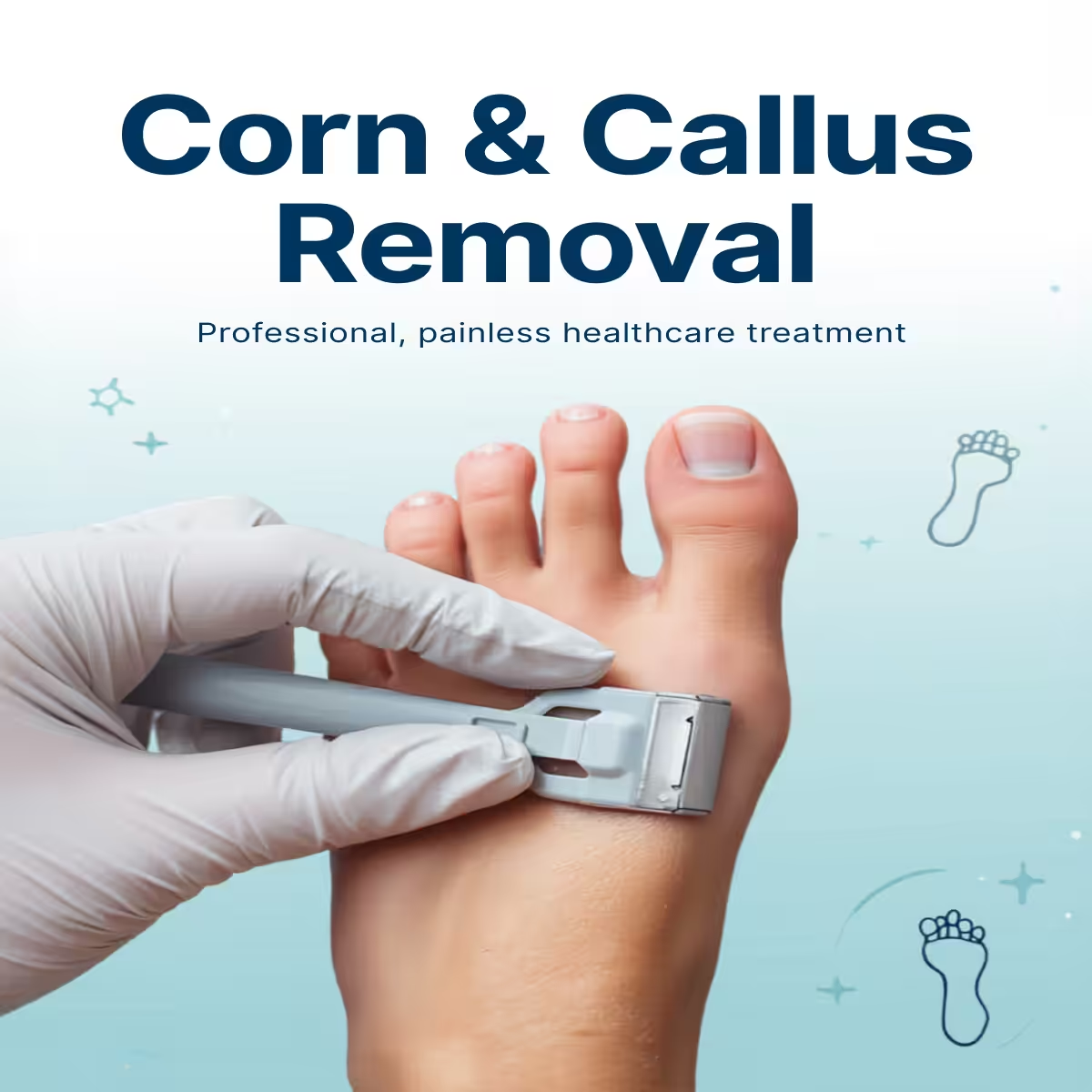
Corns and Calluses: Related but Different

Corns and calluses are both areas of thickened, hardened skin that form in response to repeated pressure or friction—but they differ in location, structure, and management. Understanding the distinction helps direct appropriate treatment. Both are extremely common: calluses affect the majority of adults at some point, and corns are one of the most frequent reasons patients seek podiatric care. Neither is dangerous in healthy individuals, but both cause pain and discomfort, and in diabetic or vascular patients, thickened skin over pressure areas can lead to ulceration and serious infection.
Calluses: Diffuse Protective Thickening
A callus (tyloma) is a diffuse, flat area of thickened skin with no defined central core. It forms over weight-bearing surfaces—the ball of the foot, the heel, or under prominent metatarsal heads—in response to repetitive pressure and shear forces during walking. Calluses are the skin’s protective adaptation to mechanical stress. The thickening is gradual and relatively uniform across the area. Calluses are typically not painful when thin, but thick calluses over bony prominences (particularly under metatarsal heads in patients with high arches or toe deformity) can become painful as pressure concentrates through the hard skin onto the underlying soft tissue.
Treatment for painful calluses involves debridement (trimming the thickened skin with a scalpel in a podiatric office—the most effective immediate treatment), followed by addressing the underlying pressure cause with custom orthotics, metatarsal pads, or footwear modification to redistribute load. Home management includes regular use of a pumice stone after bathing when the skin is softened, followed by application of a urea-based moisturizing cream (20–40% urea). Avoid aggressive at-home cutting with blades, particularly if you have diabetes or poor circulation.
Corns: Focal Pressure with a Central Core
A corn (heloma) is a more focal, cone-shaped thickening of skin with a central hard core (nucleus) that points inward, directly into the underlying tissue. This inward-pointing core is what makes corns significantly more painful than calluses—the nucleus acts like a pebble pressing into soft tissue with every step. Corns develop on non-weight-bearing surfaces of the toes where shoe pressure creates localized friction: on the tops and sides of the lesser toes (hard corns, heloma durum) and between the toes where opposing toe surfaces press against each other (soft corns, heloma molle).
Hard corns are dry, firm, and yellowish. Soft corns (most commonly in the fourth interspace between the fourth and fifth toes) are white and macerated from moisture trapped between the toes—they often appear as a raw, painful, whitish lesion and may be mistaken for athlete’s foot. Both types cause sharp, focused pain with shoe pressure. Treatment involves professional debridement of the corn and nucleus by a podiatrist, followed by addressing the pressure cause—toe separators, wider footwear, padding, or surgical correction of the underlying toe deformity (hammertoe, crossover toe) when conservative measures fail.
What Causes Them?
The root cause of both corns and calluses is abnormal or excessive pressure and friction. Contributing factors include: ill-fitting footwear (too narrow, too tight, high heels), toe deformities (hammertoes, mallet toes, claw toes that rub on shoe uppers), bony prominences (prominent metatarsal heads, large interphalangeal joints), biomechanical problems (flat feet, high arches, altered gait), and occupational or lifestyle factors (prolonged standing, barefoot walking on hard surfaces). Recurring corns and calluses after debridement indicate that the pressure source has not been addressed—debridement alone without correction of the causative mechanical abnormality produces only temporary relief.
Frequently Asked Questions
Should I use corn removal pads from the drugstore?
Over-the-counter corn removal pads contain salicylic acid (typically 40%), which softens and dissolves the thickened skin. They can be effective for small, superficial corns in healthy individuals, but carry significant risks: salicylic acid does not distinguish between corn tissue and surrounding normal skin, and prolonged application can cause chemical burns and ulceration, particularly in patients with diabetes, peripheral neuropathy, or poor circulation. For diabetic patients, OTC corn removal products are contraindicated—professional podiatric care is always recommended. For non-diabetic patients, acid pads may provide temporary relief but do not address the underlying pressure cause; recurrence is typical. Professional debridement by a podiatrist is safer and more effective than self-treatment.
Can corns become infected?
Yes—particularly in diabetic patients or those with compromised circulation, untreated corns over bony prominences can break down into ulcers that become infected. The hard skin of a corn can mask ulceration developing beneath it, so diabetic patients should have corns evaluated and debrided by a podiatrist rather than monitored at home. In non-diabetic patients, corns can become inflamed and secondarily infected if the skin breaks down from excessive pressure—typically signaled by increasing pain, redness, warmth, and discharge. Any corn with surrounding redness, drainage, or increasing pain in a diabetic patient warrants same-day podiatric evaluation.
Will my corns come back after treatment?
Corns and calluses almost always recur if the underlying pressure cause is not addressed. Debridement removes the corn, but if the same shoe pressure, toe deformity, or biomechanical abnormality continues, the skin will rebuild the thickening in the same location within weeks to months. Preventing recurrence requires eliminating the source: wider footwear, toe spacers, custom orthotics to redistribute pressure, or surgical correction of the toe deformity causing the pressure. Patients who get regular podiatric maintenance debridement every 8–12 weeks manage recurring corns effectively even without surgical correction. Patients who want a more permanent solution should discuss surgical correction of underlying toe deformities with their podiatrist.
Medical References & Sources
- American Podiatric Medical Association — Corns and Calluses
- PubMed Research — Foot Corn and Callus Management
- American Academy of Dermatology — Corns and Calluses
Dr. Tom Biernacki, DPM is a board-certified podiatric surgeon at Balance Foot & Ankle in Howell and Bloomfield Hills, Michigan. He provides professional debridement of corns and calluses and addresses underlying deformities to prevent recurrence.
Dr. Tom’s Recommended Products for Calluses & Corns
📍 Located in Michigan?
Our board-certified podiatrists treat this condition at two convenient locations. Same-day appointments often available.
These are products I personally use and recommend to my patients at Balance Foot & Ankle.
- Amope Pedi Perfect Electronic Foot File — Micro-abrasion rollers remove callus layers painlessly — the most effective at-home alternative to office debridement
- Dr. Scholl’s Corn Cushions — Medicated pads with salicylic acid dissolve corn tissue while donut pad offloads pressure
- Urea 40% Foot Cream (Gold Bond Rough & Bumpy) — 40% urea dissolves hard callus keratin — clinically effective for thick skin reduction between podiatry visits
📧 Get Dr. Tom’s Free Lab Test Guide
Discover the 5 lab tests every person over 35 should ask their doctor about — explained in plain English by a board-certified physician.
Affiliate disclosure: As an Amazon Associate, Balance Foot & Ankle earns from qualifying purchases. We only recommend products we trust for our own patients.
Join 950,000+ Learning About Foot Health
Dr. Tom shares honest medical advice, supplement reviews, and treatment guides you won’t find anywhere else.
Subscribe on YouTube →
Dr. Tom Biernacki, DPM is a double board-certified podiatrist and foot & ankle surgeon at Balance Foot & Ankle Specialists in Southeast Michigan. With over a decade of clinical experience, he specializes in heel pain, bunions, diabetic foot care, sports injuries, and minimally invasive surgery. Dr. Biernacki is a member of the APMA and ACFAS, and his patient education content on MichiganFootDoctors.com and YouTube has reached over one million views.