


Quick answer: Deltoid Ligament Reconstruction Valgus Ankle Instability is a common foot/ankle topic that affects many patients. The 2026 evidence-based approach combines proper diagnosis, conservative-first treatment, and escalation only when needed. We treat this regularly at our Howell and Bloomfield Township practices. Call (810) 206-1402.
Medically Reviewed by Dr. Tom Biernacki, DPM — Board-Certified Podiatrist, Balance Foot & Ankle Specialists, Michigan. Last updated April 2026.
▶ Watch
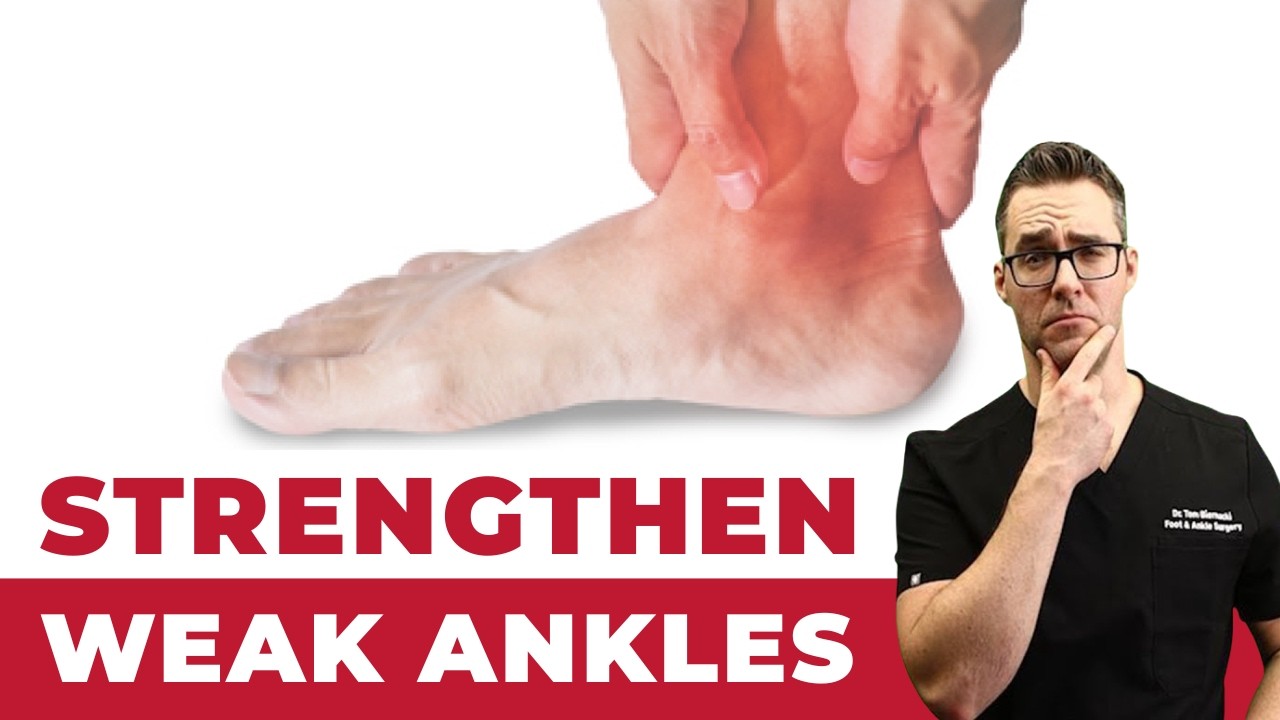
Understanding the Deltoid Ligament
The deltoid ligament is a powerful fan-shaped ligament complex on the medial (inner) side of the ankle. Unlike the lateral ligament complex—which is injured in the vast majority of common ankle sprains—the deltoid ligament provides critical resistance to valgus (outward rolling) forces and prevents the talus from shifting medially within the ankle mortise. Deltoid ligament insufficiency is far less common than lateral ankle instability but can produce significant disability, progressive flatfoot deformity, and tibiotalar arthritis when left untreated.
Causes of Deltoid Ligament Insufficiency
Deltoid ligament tears most often occur in the setting of high-energy trauma such as ankle fracture-dislocations, where the medial structures are placed under extreme tension. Chronic insufficiency develops from untreated acute tears, repetitive valgus stress in flatfooted individuals, or as a consequence of progressive adult-acquired flatfoot deformity (posterior tibial tendon dysfunction). In the flatfoot population, the deltoid ligament stretches progressively as the arch collapses, ultimately becoming incompetent and allowing the ankle to tilt into valgus alignment.
Symptoms of Medial Ankle Instability
Patients with deltoid insufficiency typically describe medial ankle pain with prolonged standing or walking, a sense of the ankle “giving way” or feeling unstable, visible valgus collapse of the hindfoot during weight-bearing, and progressive difficulty with activities requiring ankle stability such as running or stair climbing. Many patients have a visible flatfoot deformity with too-many-toes sign on clinical examination.
Diagnosis and Pre-Surgical Evaluation
Evaluation begins with weight-bearing X-rays of the foot, ankle, and full-length leg to assess alignment. The talar tilt angle and medial clear space on mortise view X-ray quantify the degree of medial laxity. MRI characterizes the ligament tissue quality and identifies associated pathology such as PTT tears, spring ligament insufficiency, or peroneal tendon disease. CT arthrography may be used to evaluate cartilage surfaces.
Deltoid Ligament Reconstruction: Surgical Technique
Surgical reconstruction of the deltoid ligament is typically performed in conjunction with flatfoot correction procedures (calcaneal osteotomy, FDL tendon transfer, and/or spring ligament repair) to address both the structural cause of instability and the ligamentous deficiency itself. The procedure is performed under general or spinal anesthesia with a thigh tourniquet.
Two primary reconstruction techniques are employed. Direct repair (used when tissue quality permits) involves reattaching the ligament to bone using suture anchors placed in the medial malleolus and along the deltoid footprint on the talus. Reconstruction with graft augmentation is preferred when native tissue is attenuated or of poor quality. A gracilis allograft or autograft tendon is threaded through bone tunnels in the medial malleolus and talus, recreating the anterior superficial and deep deltoid bundles. The graft is tensioned and secured with interference screws or suture anchor fixation.
Recovery and Rehabilitation
Postoperative management begins with 6 weeks of non-weight-bearing in a short leg cast to protect graft healing and bony osteotomy fixation (when flatfoot correction is combined). Patients then transition to a walking boot for 4–6 weeks with progressive weight-bearing. Physical therapy focuses on range of motion restoration, peroneal and tibialis posterior strengthening, proprioception training, and gait normalization. Return to low-impact activities is typically achieved at 4–5 months, with full return to sport or demanding physical work at 9–12 months following combined reconstruction procedures.
Outcomes and Prognosis
Deltoid ligament reconstruction performed as part of comprehensive flatfoot correction produces reliable improvements in ankle stability, alignment, and pain scores. Long-term outcome studies demonstrate maintained correction of talar tilt and low recurrence rates when the underlying flatfoot deformity has been adequately addressed. Isolated deltoid reconstruction without bony realignment carries higher recurrence risk due to persistent deforming forces.
Ready to Relieve Your Foot Pain?
Board-certified podiatrists serving Southeast Michigan. Same-week appointments available.
Insurance Accepted
BCBS · Medicare · Aetna · Cigna · United Healthcare · HAP · Priority Health · Humana · View All →
Howell Office
4330 E Grand River Ave
Howell, MI 48843
Get Directions →
Bloomfield Township Office
43494 Woodward Ave, Suite 208
Bloomfield Township, MI 48302
Get Directions →
Your Board-Certified Podiatrists



Ready to Get Back on Your Feet?
Same-week appointments available at both locations.
Book Your AppointmentMore Podiatrist-Recommended Ankle Sprain Essentials
Ankle Brace Stabilizer
Compression + lateral support during walking — prevents re-injury during recovery.
Kinesiology Tape
Proprioceptive support for athletic return-to-play without restricting motion.
Arch Support Insole
Stable midfoot platform reduces the inversion forces that re-sprain ankles.
As an Amazon Associate, Balance Foot & Ankle earns from qualifying purchases. Product recommendations are based on clinical experience; prices and availability shown above update live from Amazon.
When to See a Podiatrist
A sprain that hasn’t fully recovered after 6 weeks often has residual ligament laxity or occult fracture that keeps the ankle unstable. Balance Foot & Ankle X-rays and stress-tests every lingering sprain — if the ligament is torn, we offer bracing, PRP, and (for chronic instability) minimally-invasive repair. Don’t keep re-rolling the same ankle; let us stabilize it properly.
Call Balance Foot & Ankle: (810) 206-1402 · Book online · Offices in Howell & Bloomfield Township
🦶 Dr. Tom’s Recommended Products
These are the at-home products I recommend most often to patients at Balance Foot & Ankle in Howell, MI.
The OTC orthotic I recommend most in our clinic. Medical-grade arch support at a fraction of custom orthotic cost.
View on Amazon →
Natural topical pain relief I use in our clinic. Arnica + menthol formula — apply directly to the area 3-4x daily. FSA-eligible.
View on Amazon →
FTC Disclosure: As an Amazon Associate and Foundation Wellness affiliate, we earn from qualifying purchases. This never affects our clinical recommendations.
In-Office Treatment at Balance Foot & Ankle
If home treatment isn’t providing relief for your ankle instability, our podiatry team at Balance Foot & Ankle can help with same-day evaluations and advanced in-office care.
Same-day appointments available. (810) 206-1402
Get Expert Care at Balance Foot & Ankle
Same-week appointments at our Howell and Bloomfield Township offices. Board-certified podiatric surgeons. Most insurance accepted.

Dr. Tom Biernacki, DPM is a board-certified foot & ankle surgeon (ABFAS & ABPM) at Balance Foot & Ankle Specialists in Southeast Michigan. With over a decade of clinical experience, he specializes in heel pain, bunions, diabetic foot care, sports injuries, and minimally invasive surgery. Dr. Biernacki is a member of the APMA and ACFAS, and his patient education content on MichiganFootDoctors.com and YouTube has made him one of the most-followed foot & ankle educators on YouTube.