

Quick answer: Treatment for diabetic foot ulcer treatment prevention michigan follows a stepwise approach: 1) conservative care first (rest, ice, supportive footwear, OTC anti-inflammatories), 2) physical therapy and targeted exercises, 3) in-office treatments (injections, custom orthotics) if conservative fails at 4-6 weeks, 4) surgery for refractory cases. Most patients resolve at step 1 or 2. Book online, or call (810) 206-1402.
Medically reviewed by Dr. Tom Biernacki, DPM · Board-Certified Podiatric Surgeon · Last reviewed: April 2026 · Editorial Policy
Quick Answer
Diabetic foot ulcers need offloading, debridement and adequate perfusion to heal, plus prompt treatment of any infection. Prevention rests on daily inspection and protective footwear. Same-week appointments in Howell + Bloomfield Township: (810) 206-1402.

Medically reviewed by Dr. Tom Biernacki, DPM — Board-Certified Podiatric Surgeon — Balance Foot & Ankle, Howell & Bloomfield Township, MI. Last updated April 2026.
▶ Watch
👟 Dr. Tom Also Recommends
Podiatrist Recommended Shoes 2026: Dr. Tom’s Top Picks for Every Condition
The right footwear can make or break your recovery. Dr. Tom’s complete guide to the best shoes for plantar fasciitis, flat feet, neuropathy, bunions & more — with clinical picks for every foot type.
See Dr. Tom’s Top Shoe Picks →Medically Reviewed by Dr. Tom Biernacki, DPM — Board-Certified Podiatrist, Balance Foot & Ankle Specialists, Michigan. Last updated April 2026.
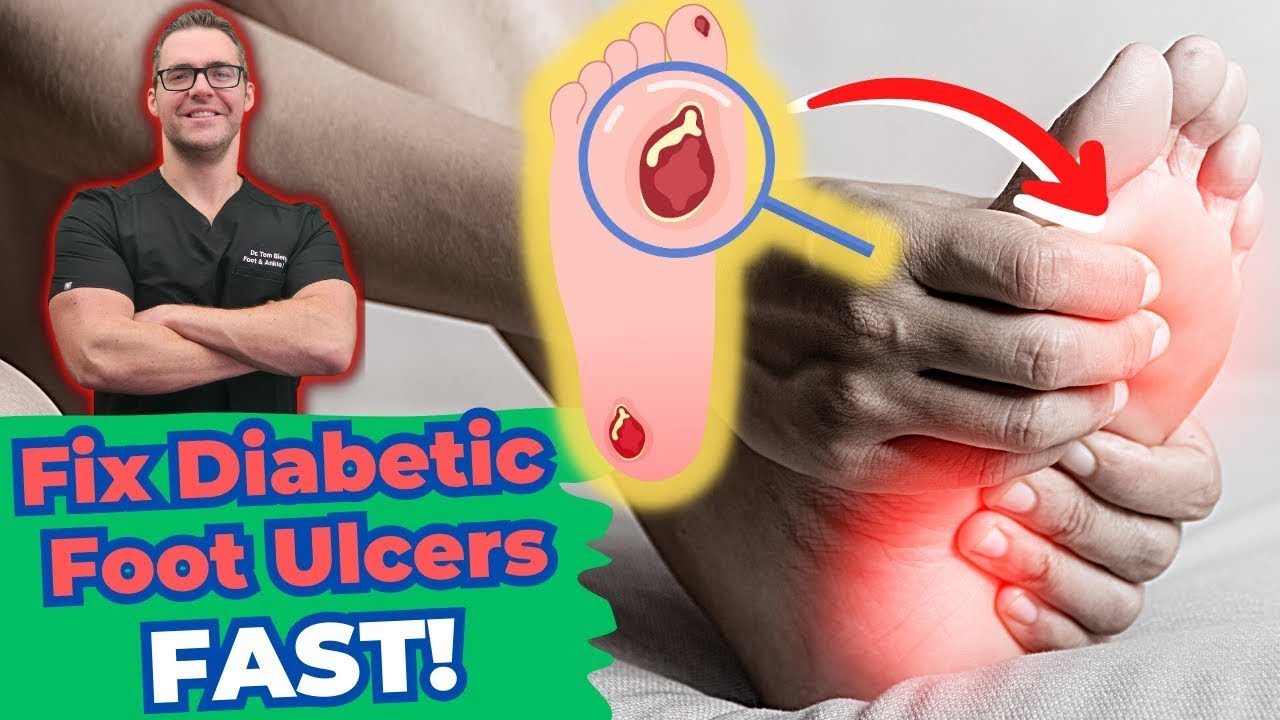
A diabetic foot ulcer (DFU) is an open wound on the foot in a patient with diabetes — and it is a medical emergency with a clear mortality signal. Approximately 25% of diabetic patients will develop a foot ulcer during their lifetime; 15–25% of those will require amputation; and 5-year mortality after a diabetic foot amputation exceeds that of most common cancers. Understanding the cascade from neuropathy → pressure → ulceration → infection → amputation is essential for prevention and early intervention.
The Diabetic Foot Ulcer Triad
Virtually all diabetic foot ulcers result from the combination of three factors: neuropathy (inability to feel pain from pressure), peripheral arterial disease (impaired healing), and repetitive trauma (a pressure point that would hurt in a sensate person, but doesn’t hurt in a neuropathic foot). Remove any one of these three factors and the ulcer either doesn’t form or heals. This is why the treatment and prevention of DFU is biomechanical (offloading) as much as it is medical.
Wagner Classification of Diabetic Foot Ulcers
- Grade 0: Intact skin; pre-ulcerative lesion (callus over pressure point, blistering, skin breakdown) — treat aggressively to prevent ulceration
- Grade 1: Superficial ulcer; extends through skin only; no subcutaneous involvement; treat with debridement + offloading
- Grade 2: Deep ulcer to tendon, capsule, or bone without bone infection; requires aggressive wound care and often hospital-level evaluation
- Grade 3: Deep ulcer with osteomyelitis or abscess formation; requires hospitalization, IV antibiotics, and surgical debridement/bone resection
- Grade 4: Gangrene of a portion of the foot (forefoot or toe); requires vascular evaluation and likely amputation of affected portion
- Grade 5: Gangrene of the entire foot; major amputation required
Wound Care for Grade 1–2 Diabetic Foot Ulcers
Grade 1–2 ulcers that are not infected and have adequate blood supply can be managed in an outpatient podiatric wound care setting.
- Sharp debridement: Removal of necrotic and hyperkeratotic tissue surrounding the ulcer; the single most evidence-based intervention for DFU healing; stimulates wound bed granulation and removes bacterial biofilm. Must be performed by a trained podiatrist — not a bandage change.
- Total contact casting (TCC): The gold standard offloading device; custom plaster or fiberglass cast that distributes weight across the entire plantar surface; removes all peak pressure from the ulcer site; superior to any removable device for Grade 1–2 plantar forefoot ulcers. Heals 86–90% of Grade 1 ulcers within 5–7 weeks in appropriately selected patients.
- Instant total contact cast (iTCC): Removable CAM boot wrapped in cohesive bandage to make it non-removable; practical alternative to plaster TCC; outcomes comparable when compliance is controlled.
- Non-adherent dressings: Mepilex Ag (silver) for infected or at-risk wounds; Adaptic/Xeroform non-adherent for clean wounds; Aquacel Ag for highly exudating wounds. The dressing type matters less than debridement and offloading.
- Advanced wound care products: Becaplermin gel (PDGF), collagen matrix products, skin substitutes (Apligraf, Dermagraft) for stalled wounds (no 50% size reduction at 4 weeks); significantly increase healing rates in recalcitrant wounds.
Infection: When to Hospitalize
Infected diabetic foot ulcers require urgent evaluation and often inpatient care. The IDSA classification guides management:
- Mild infection: ≤2cm cellulitis around wound; no systemic signs; oral antibiotics as outpatient appropriate (amoxicillin-clavulanate or trimethoprim-sulfamethoxazole based on culture)
- Moderate infection: >2cm cellulitis OR deeper tissue involvement (fascia, muscle, joint) with no systemic signs; IV antibiotics; imaging to rule out osteomyelitis; consider admission
- Severe infection: Any systemic signs (fever, leukocytosis, hypotension, tachycardia); emergent hospital admission; broad-spectrum IV antibiotics (vancomycin + pip/tazo); surgical consultation for source control
- Red flags requiring ER referral: Fever, rapidly spreading redness (tracks toward leg), streaking lymphangitis, altered mental status, inability to weight-bear, gas in tissue on X-ray (necrotizing fasciitis)
Osteomyelitis Diagnosis
Bone infection complicates 15–20% of DFU presentations and is critical to identify because it changes management from wound care to bone surgery. The probe-to-bone test (inserting a sterile blunt metal probe into the ulcer base; touching bone = positive) has 89% sensitivity for osteomyelitis in infected wounds. MRI is the gold standard imaging; X-ray changes appear 10–21 days after infection begins. ESR >70 mm/hr in a diabetic with a foot ulcer has a high positive predictive value for osteomyelitis.
Prevention: The Entire Point
Every prevention strategy is more important than any treatment strategy, because prevention works. The evidence-based prevention protocol for all diabetic patients:
- Annual comprehensive podiatric foot exam: Monofilament (5.07/10g), tuning fork, ABI, visual inspection, nail assessment
- Daily self-inspection: Mirror for plantar surface; inspect every digit; any redness or new wound = podiatric evaluation within 24 hours
- Therapeutic footwear program: Medicare-covered A5500 diabetic shoes + A5512 custom molded insoles for qualifying patients; eliminates the most common pressure ulcer triggers
- Professional callus management: Never self-treat calluses with blades, file grinders, or over-the-counter acids; callus removal by a podiatrist reduces plantar pressure by 25–30%
- Never go barefoot: On any surface; neuropathic feet cannot feel the glass, nail, or pebble that creates the wound entry point
- HbA1c optimization: Poor glucose control slows wound healing; HbA1c <7.5% is the target for patients with active foot wounds
Diabetic Foot Care at Balance Foot & Ankle
Dr. Biernacki provides comprehensive diabetic foot care including annual exams, wound debridement, total contact casting, therapeutic shoe prescription, and coordination with vascular surgery when ABI findings indicate arterial compromise. Schedule a same-day evaluation or call (810) 206-1402. Any new wound in a diabetic patient should be evaluated within 24 hours — not deferred.
Dr. Tom’s Recommended Products for Diabetic Foot Care
📍 Located in Michigan?
Our board-certified podiatrists treat this condition at two convenient locations. Most new patients are seen the same week.
These are products I personally use and recommend to my patients at Balance Foot & Ankle.
- Dr. Comfort Men’s Paradise Diabetic Shoe — Medicare-covered diabetic shoe with seamless interior — eliminates pressure points that cause diabetic ulcers
- Foundation Wellness DASS Diabetic Socks (Levanta) — non-binding, seamless toe, moisture-wicking diabetic socks protecting neuropathic feet
- Derma Sciences Bordered Gauze Dressings — Non-adherent wound dressing ideal for diabetic foot wound management between podiatry visits
Affiliate disclosure: As an Amazon Associate, Balance Foot & Ankle earns from qualifying purchases. We only recommend products we trust for our own patients.
Join 950,000+ Learning About Foot Health
Dr. Tom shares honest medical advice, supplement reviews, and treatment guides you won’t find anywhere else.
Subscribe on YouTube →🔗 Related Care & Resources
Treated by Dr. Tom Biernacki DPM — Board-certified podiatric surgeon at Balance Foot & Ankle in Howell & Bloomfield Township, MI.
Schedule an Appointment → or call (810) 206-1402
Insurance Accepted
BCBS · Medicare · Aetna · Cigna · United Healthcare · HAP · Priority Health · Humana · View All →
Howell Office
4330 E Grand River Ave
Howell, MI 48843
Get Directions →
Bloomfield Township Office
43494 Woodward Ave, #208
Bloomfield Township, MI 48302
Get Directions →
Your Board-Certified Podiatrists



Ready to Get Back on Your Feet?
Same-week appointments available at both locations.
Book Your AppointmentIn Our Clinic
Diabetic neuropathy patients in our clinic often don’t realize they have it until we put a 10-gram Semmes-Weinstein monofilament to the plantar foot and they can’t feel it. Many arrive for an unrelated concern — an ingrown toenail, a callus — and we catch the neuropathy on screening. The conversation then shifts: we need to discuss daily foot inspections, appropriate footwear, the urgency of any blister or open area, and the timing of vascular referral if pulses are diminished. Comprehensive diabetic foot exams are covered by Medicare annually. If you have diabetes, we want to see you once a year even if nothing hurts.
More Podiatrist-Recommended Diabetic Essentials
Diabetic-Approved Walking Shoe
Orthofeet Sprint — seamless, extra-depth, designed for neuropathic feet.
Seamless Diabetic Sock


Watch: Diabetic Foot Ulcer Treatment & Early Stages [Diabetic Neuropathy] — MichiganFootDoctors YouTube
OS1st FS4 — non-binding, moisture-wicking, protects fragile diabetic skin.
Recovery Slide for Indoor Wear
HOKA Ora 3 — protects diabetic feet from barefoot injury at home.
As an Amazon Associate, Balance Foot & Ankle earns from qualifying purchases. Product recommendations are based on clinical experience; prices and availability shown above update live from Amazon.

When to See a Podiatrist
One unnoticed blister on a neuropathic foot can become a limb-threatening ulcer in under 14 days. Medicare covers diabetic shoes (A5500) and comprehensive foot exams annually for most diabetic patients with neuropathy or circulation concerns. Balance Foot & Ankle runs a dedicated diabetic limb-preservation program — vascular screening, offloading, ulcer care, and shoe fitting — all in one visit. Schedule your annual diabetic foot exam today.
Call Balance Foot & Ankle: (810) 206-1402 · Book online · Offices in Howell & Bloomfield Township
In-Office Treatment at Balance Foot & Ankle
When conservative care isn’t enough, Dr. Tom Biernacki and the team at Balance Foot & Ankle offer advanced, same-day options — including Diabetic Foot Care Michigan at our Howell and Bloomfield Township clinics.
Same-week appointments available. Call (810) 206-1402 or book online.
Pros & Cons of Conservative Care for diabetic foot care
Advantages
- ✓ Daily inspection prevents amputation
- ✓ Most insurance covers DME
- ✓ Custom orthotics help
Considerations
- ✗ Daily commitment required
- ✗ Slow wound healing
- ✗ Charcot risk if neuropathy
Dr. Tom’s Recommended Products for diabetic foot care
Affiliate disclosure: As an Amazon Associate, Balance Foot & Ankle earns from qualifying purchases. We only recommend products we use with patients.
Drew Moonwalker Diabetic Shoe Dr. Tom’s Pick
Best for: Medicare-covered diabetic footwear
Diabetic Compression Socks Dr. Tom’s Pick
Best for: Daily protection + circulation
Ready to Get Back on Your Feet?
Same-week appointments in Howell + Bloomfield Township. Most insurance accepted. Dr. Tom Biernacki, DPM & team.
Book Today — Same-Week Appointments Available
Call Now: (810) 206-1402
About Your Care Team at Balance Foot & Ankle
Dr. Tom Biernacki, DPM · Board-Certified Foot & Ankle Surgeon. Specializes in conservative-first care, minimally invasive bunion surgery, and complex reconstruction.
Dr. Carl Jay, DPM · Accepting new patients. Specializes in sports medicine, athletic injuries, and routine podiatric care.
Dr. Daria Gutkin, DPM, AACFAS · Accepting new patients. Specializes in surgical reconstruction and pediatric podiatry.
Locations: 4330 E Grand River Ave, Howell, MI 48843 · 43494 Woodward Ave Suite 208, Bloomfield Township, MI 48302
Hours: Mon–Fri 8:00 AM – 5:00 PM · (810) 206-1402
In-Office Treatment at Balance Foot & Ankle
If home treatment isn’t providing relief for your diabetic foot, our podiatry team at Balance Foot & Ankle can help with same-week evaluations and advanced in-office care.
Same-week appointments available. (810) 206-1402
Doctor Hoy’s Natural Pain Relief Gel
Natural topical pain relief I use in our clinic. Arnica + camphor formula — apply directly to the area 3–4x daily. ($20–25)
Shop Doctor Hoy’s →Frequently Asked Questions
How long does treatment take to work?
Most patients see improvement in 4-8 weeks with consistent conservative care. Persistent symptoms after 8 weeks need imaging and escalation.
When is surgery needed?
Surgery is reserved for cases that fail 3-6 months of conservative care, structural deformities, or fractures requiring stabilization.
Is this covered by insurance?
Most diagnostic visits and conservative treatments are covered by Medicare and major insurers. Custom orthotics often require diabetic or post-surgical justification.
Our podiatrists treat the underlying cause, not just the symptom. Same-week appointments at our Howell and Bloomfield Township, Michigan offices.
Get Expert Care at Balance Foot & Ankle
Same-week appointments at our Howell and Bloomfield Township offices. Board-certified podiatric surgeons. Most insurance accepted.
Ready for Expert Care?
Same-week appointments in Howell & Bloomfield Township, MI.
4.9★ | 1,123 Reviews | 3,000+ Surgeries
Or call: (810) 206-1402

Dr. Tom Biernacki, DPM is a board-certified foot & ankle surgeon (ABFAS & ABPM) at Balance Foot & Ankle Specialists in Southeast Michigan. With over a decade of clinical experience, he specializes in heel pain, bunions, diabetic foot care, sports injuries, and minimally invasive surgery. Dr. Biernacki is a member of the APMA and ACFAS, and his patient education content on MichiganFootDoctors.com and YouTube has made him one of the most-followed foot & ankle educators on YouTube.
More questions patients ask
How often should diabetics check their feet?
Diabetic patients should perform daily self-examinations of both feet, checking for cuts, blisters, redness, swelling, calluses, and temperature changes. Professional diabetic foot exams should occur at least annually, or every 3-6 months for patients with neuropathy, peripheral artery disease, or history of foot ulcers. Dr. Biernacki provides comprehensive diabetic foot care programs.
Why do diabetics have foot problems?
Diabetes causes peripheral neuropathy (nerve damage reducing sensation), peripheral artery disease (reduced blood flow), and impaired immune function. This combination means injuries go unnoticed, heal slowly, and are prone to infection. Approximately 15% of diabetics will develop a foot ulcer, and diabetic foot complications are the leading cause of non-traumatic amputation. Prevention through regular podiatric care is essential.
What are the signs of diabetic neuropathy in feet?
Early signs include tingling, burning, or numbness starting in the toes and progressing upward. Other symptoms include sensitivity to touch, muscle weakness, balance problems, and loss of reflexes. If you experience any of these symptoms, schedule an evaluation with Dr. Biernacki at 810-206-1402 for nerve conduction testing and a comprehensive neuropathy management plan.
What causes diabetic foot ulcers?
See our full guide from Dr. Tom Biernacki DPM at Balance Foot & Ankle, Howell & Bloomfield Township, MI.
How are diabetic foot ulcers treated?
See our full guide from Dr. Tom Biernacki DPM at Balance Foot & Ankle, Howell & Bloomfield Township, MI.
How do you prevent diabetic foot ulcers?
See our full guide from Dr. Tom Biernacki DPM at Balance Foot & Ankle, Howell & Bloomfield Township, MI.
When should a diabetic see a podiatrist for a foot wound?
See Dr. Tom Biernacki at Balance Foot & Ankle — same-day appointments. Call (810) 206-1402. Howell & Bloomfield Township, MI.
Does Medicare cover diabetic foot ulcer treatment?
Most PPO and Medicare plans cover medically necessary foot care. We accept BCBS and most Michigan insurers. Call (810) 206-1402.
Still have a question about coverage or cost? Book online and we will check your benefits before your visit: Book in Howell · Book in Bloomfield Township. Prefer to talk it through first? Call (810) 206-1402.