

Balance Foot & Ankle — Bloomfield Township Office
43494 Woodward Ave #208, Bloomfield Township, MI 48302Quick answer
Most heel pain in adults is plantar fasciitis — irritation of the thick band under the foot where it attaches to the heel bone. It usually settles with calf stretching, supportive shoes, arch support and time, and very few people ever need surgery. If your heel still hurts after three or four weeks of home care, or every first step in the morning is painful, it’s worth an exam. At our Bloomfield Township office we can take X-rays during the visit and start treatment the same day.
I’m Dr. Tom Biernacki. Heel pain is one of the most common problems we treat at our office on Woodward Avenue, and it’s also one of the most fixable. The key is getting the diagnosis right, because several other problems feel a lot like plantar fasciitis and don’t respond to the same treatment. Below is what I look for, what you can do at home this week, and what treatment looks like if you come in.
What heel pain usually means — and what I check first
The classic story I hear is sharp pain under the heel with the first steps out of bed. It eases after a few minutes of walking, then comes back after you’ve been sitting or at the end of a long day on your feet. That pattern points to plantar fasciitis. It’s more likely if you’ve recently increased your walking or running, stand for long shifts on hard floors, have tight calves, or have gained weight.
But a sore heel isn’t always plantar fasciitis, and treating the wrong problem is the most common reason I see heel pain drag on for months. During the exam I press on specific spots, test your calf flexibility, watch you walk and look at the wear on your shoes. These are the other causes I’m ruling out:
- Heel spur. Spurs show up on X-rays of plenty of people with no pain at all, so a spur is rarely the whole problem. I treat the irritated tissue around it. More on heel spurs vs. plantar fasciitis.
- Fat pad thinning. Pain in the center of the heel pad, worse barefoot on hard floors, rather than on the inner edge. See heel pad syndrome.
- Baxter’s nerve entrapment. Burning or shooting pain on the inside of the heel that doesn’t follow the first-step pattern. See Baxter’s nerve entrapment.
- Tarsal tunnel syndrome. Numbness, tingling or burning that runs into the arch and toes. See tarsal tunnel syndrome.
- Stress fracture of the heel bone. Pain when I squeeze both sides of the heel, often after a sudden jump in walking, running or standing. See heel stress fractures.
- Achilles problems. Pain, and sometimes a bump, at the back of the heel rather than underneath. See insertional Achilles tendinopathy.
- Sever’s disease in kids. Heel pain in an active 8- to 14-year-old is usually irritation of the growth plate, not plantar fasciitis. See Sever’s disease.
I often take X-rays at the first visit to rule out a fracture, arthritis or another bone problem. A normal X-ray doesn’t mean nothing is wrong — plantar fasciitis is a soft-tissue problem, which is why your heel can hurt with a normal X-ray. Ultrasound or MRI is only needed when the pain doesn’t fit the usual pattern or isn’t improving with treatment.
When heel pain shouldn’t wait
Most heel pain isn’t an emergency. Get seen the same day — or go to an emergency room after hours — if any of these apply:
- You can’t put weight on the foot after a fall, jump or twist.
- The heel is hot, red and swollen, or you have a fever.
- You have diabetes or poor circulation and notice a wound, a color change or new numbness.
- The pain wakes you at night or keeps getting worse at rest.
- Numbness or tingling is spreading.
On weekdays, call (810) 206-1402 and tell us it’s urgent — we keep same-day and next-day slots for problems like these at both offices. If you’re unsure where to go, read when foot pain needs emergency care.
What you can start at home this week
If none of those red flags apply, these are the steps I give almost every heel pain patient on day one. They cost little, and they work for most people when they’re done consistently:
- Stretch before your first step. Before you get out of bed, pull your toes back toward your shin and hold for 30 seconds, three times. Then stretch your calf against a wall two or three times a day. Here are my plantar fasciitis stretches, step by step.
- Stop going barefoot. Wear a supportive shoe or sandal from the moment you get up, including around the house. Flat slippers and bare feet on hardwood or tile keep the fascia irritated.
- Support the arch. A firm over-the-counter arch support or heel cup takes load off the fascia. Replace walking or running shoes that are worn down.
- Tape the arch. Taping unloads the fascia for a few days at a time, and if it helps, an orthotic probably will too. Here’s how to tape your foot for plantar fasciitis.
- Ice and roll. Roll the arch over a frozen water bottle for about 10 minutes after activity.
- Adjust, don’t stop. Swap some runs or long walks for cycling or swimming for a few weeks instead of resting completely.
An over-the-counter anti-inflammatory can help for a short stretch if it’s safe for you — check with your doctor first if you have kidney disease or stomach ulcers, or take a blood thinner. If you’re not clearly better after three or four weeks, come in. In my experience, heel pain that has gone on for many months takes longer to settle, so starting early pays off.
Your first heel pain visit in Bloomfield Township
At your first visit, one of our doctors goes over your history and activity, examines both feet, watches you walk and takes X-rays if they’re needed. You leave with a diagnosis and a plan, and most people start treatment that day — a stretching and footwear plan, taping, a cortisone injection when it makes sense, or being measured for custom orthotics.
We’re in network with most major Michigan plans, including Blue Cross Blue Shield of Michigan, Blue Care Network, Medicare and Medicare Advantage, Aetna, Cigna, UnitedHealthcare, HAP, Priority Health and Humana, and we check your benefits before you come in. No insurance, or we’re not in your network? Self-pay care is $200 for your first visit and $100 for each follow-up. The exam, X-rays, custom orthotics, and shockwave therapy are all included when they are medically necessary, and only surgery and diabetic shoes are priced separately.
How I treat plantar fasciitis, step by step
I start with the simplest treatment that fits your problem and step up only if you’re not improving. Most people never need more than the first few steps. This order follows the 2023 clinical practice guideline for plantar fasciitis, which gives stretching, taping and night splints its strongest recommendations and advises using orthotics together with other treatments rather than on their own (Koc et al., 2023).
1. Stretching, footwear and activity changes
Everything in the home-care list above, adjusted once I’ve seen how you walk, what you wear and what your day on your feet looks like.
2. Arch support and custom orthotics
If an over-the-counter insert helps but not enough, or your foot shape puts extra strain on the fascia, custom orthotics made from a 3D cast of your foot spread the load more precisely. They work best alongside stretching, not as the only treatment. Learn about custom orthotics at our Bloomfield Township office; coverage depends on your plan, and we check it and quote you before we make them.
3. Cortisone injection
A cortisone injection can calm a bad flare quickly, which makes stretching and walking easier. It’s a tool, not a cure. I limit how many I give in the same heel, because repeated injections can weaken the fascia and thin the heel’s fat pad. More on cortisone injections for foot pain.
4. Night splint or walking boot
If your first steps in the morning are the worst part of your day, a night splint holds the foot gently flexed while you sleep; I usually prescribe it for one to three months. For a severe flare, a few weeks in a walking boot takes the load off completely. See whether night splints work.
5. EPAT shockwave therapy
For heel pain that hasn’t settled after a few months of good conservative care, shockwave is my next step. It’s done in the office in a short series of sessions, usually about a week apart, with no anesthesia, no incisions and no downtime. The evidence is solid: a 2024 meta-analysis of 11 randomized trials with 997 patients found that pain scores fell by about 3 points on a 0–10 scale after shockwave, and side effects were mostly minor, such as temporary redness (Lippi et al., 2024). Insurance usually doesn’t cover it, so it’s typically self-pay; ask us for the current price. Read more about how EPAT shockwave works.
6. Laser therapy and EMTT
Laser therapy and EMTT (extracorporeal magnetotransduction therapy) are also available at the Bloomfield Township office. I use them as add-ons alongside the steps above, mainly for heel and tendon pain that has lasted a long time. The research behind them is thinner than for shockwave, and EMTT is newer still, so I’ll tell you up front what to expect. See laser vs. shockwave and EMTT at our Oakland County office.
7. Surgery, when nothing else has worked
Surgery is rare. I consider it only after 6 to 12 months of consistent non-surgical treatment hasn’t worked. When it’s needed, we offer endoscopic plantar fascia release, which releases part of the fascia through small incisions as an outpatient procedure. See plantar fascia surgery in Bloomfield Township.
Mistakes that keep heel pain going
- Walking barefoot or in flat slippers at home, especially on hard floors.
- Stretching only after the pain has started for the day, instead of before the first step.
- Wearing worn-out or completely flat shoes for long days on your feet.
- Getting repeated cortisone injections without changing anything else.
- Pushing through runs or long walks while it’s flaring.
- Assuming it’s plantar fasciitis for months without an exam, when it may be a nerve, bone or Achilles problem.
Who treats heel pain at our Bloomfield Township office
All three of our doctors see heel pain patients: Dr. Tom Biernacki, Dr. Carl Jay and Dr. Daria Gutkin.
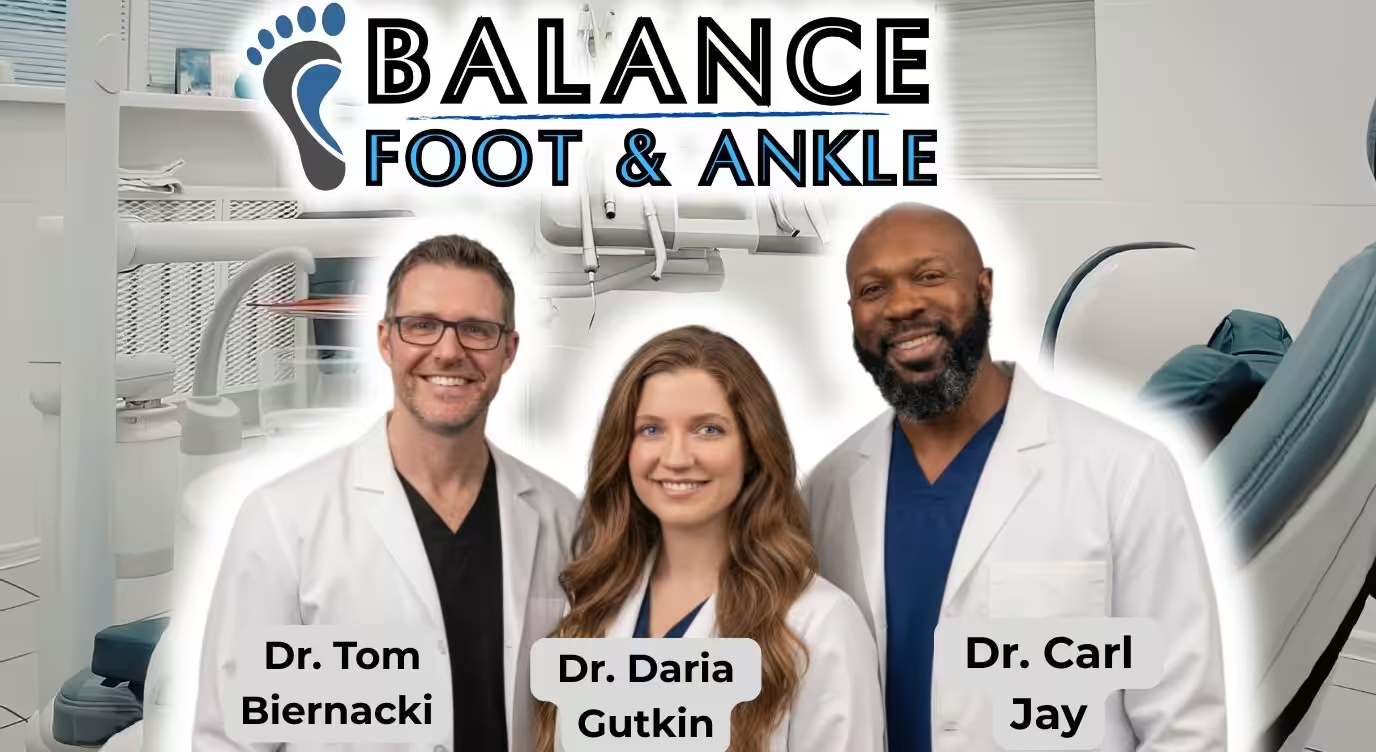
Patients come to our office at 43494 Woodward Ave from Bloomfield Hills, Birmingham, Troy, West Bloomfield, Rochester Hills, Royal Oak and Pontiac. If Livingston County is closer, we treat heel pain the same way at our Howell office at 4330 E Grand River Ave — see heel spur and heel pain treatment in Howell or the Howell office page.
Related care at this office: Achilles tendinitis treatment, custom orthotics and plantar fascia surgery. For the full background, read my guides to plantar fasciitis and the causes of heel pain, or visit our Bloomfield Township office page.
Book a heel pain visit in Bloomfield Township
Pick a time online, day or night. Choose New patient, then the first open day.
New-patient times are released a few weeks ahead, so today may show none — use the calendar to jump to the first green day, or call (810) 206-1402. Closer to Livingston County? Book at our Howell office.
Frequently asked questions
How long does plantar fasciitis take to heal?
Many people feel a clear improvement within six to eight weeks of consistent treatment, and most are better within a year without surgery. Heel pain that has gone on for many months usually takes longer to settle, which is why I’d rather see you early.
Do I need an X-ray for heel pain?
Not always, but I often take one at the first visit to rule out a stress fracture, arthritis or another bone problem. X-rays are taken at our Bloomfield Township office during your visit. A normal X-ray is common with plantar fasciitis, because the problem is in the soft tissue.
Does insurance cover shockwave therapy for plantar fasciitis?
Usually not. Most insurance plans don’t cover shockwave for plantar fasciitis, so it’s typically self-pay, and we’ll give you the price before you start. Your office visit and X-rays are billed to your insurance as usual.
Do I need a referral to see a podiatrist for heel pain?
Most PPO plans don’t require one. Some HMO plans, including Blue Care Network, may. Call (810) 206-1402 and we’ll check before your visit.
When should I stop treating heel pain at home and see a podiatrist?
Come in if your heel isn’t clearly better after three or four weeks of stretching, supportive shoes and arch support, if it’s getting worse, or if you have numbness, swelling, or pain at night or at rest. Get seen the same day if you can’t put weight on the foot.
References
- Lippi L, Folli A, Moalli S, et al. Efficacy and tolerability of extracorporeal shock wave therapy in patients with plantar fasciopathy: a systematic review with meta-analysis and meta-regression. Eur J Phys Rehabil Med. 2024;60(5):832–846. Read the study.
- Koc TA Jr, Bise CG, Neville C, Carreira D, Martin RL, McDonough CM. Heel pain – plantar fasciitis: revision 2023. J Orthop Sports Phys Ther. 2023;53(12):CPG1–CPG39. Read the guideline.
Last updated September 2026. This page is general information, not a diagnosis; call (810) 206-1402 or book a visit if you’re in pain.