
Medically reviewed by Dr. Tom Biernacki, DPM
Board-certified podiatric surgeon | Balance Foot & Ankle, Howell & Bloomfield Hills, MI
Last reviewed: May 2026
Balance Foot & Ankle offers same-day appointments for urgent foot and ankle conditions across Southeast Michigan — but the most important factor in outcomes isn’t getting seen quickly. Our podiatrists explain what to do in the first 24-48 hours before your appointment that most patients skip entirely. Call (810) 206-1402 — expert podiatric care across Michigan.

| ESWT Type | Wave Generation | Energy Level | Anesthesia Needed? | Best For |
|---|---|---|---|---|
| Focused ESWT (High-Energy) | Electrohydraulic / electromagnetic | 0.12–0.60 mJ/mm² | Yes (local or sedation) | Calcific tendinopathy, nonunion, dense calcification |
| Radial ESWT (Low-Energy) | Pneumatic / ballistic | 0.04–0.20 mJ/mm² | No — mild discomfort only | Plantar fasciitis, Achilles tendinopathy, trigger points |
| Focused ESWT (Low-Energy) | Piezoelectric | 0.08–0.20 mJ/mm² | Topical anesthetic | Calcification, targeted tendon lesions |
| Condition | Evidence Level | Protocol | Success Rate | vs Alternatives |
|---|---|---|---|---|
| Plantar Fasciitis (chronic >6 months) | Level I (multiple RCTs) | 3 weekly radial sessions, 2,000 pulses, 0.12 mJ/mm² | 70–85% pain reduction at 12 weeks | Superior to sham; comparable to surgery without risk |
| Insertional Achilles Tendinopathy | Level II | 3–5 sessions, focused or radial | 65–80% improvement | Better outcomes than eccentric loading alone for calcific disease |
| Non-insertional Achilles Tendinopathy | Level II | 3 weekly sessions | 60–75% improvement | Adds benefit when combined with eccentric loading |
| Calcific Rotator Cuff (reference) | Level I | Focused ESWT × 2 sessions | 80–90% calcium resorption | Gold standard for calcific rotator cuff disease |
| Stress Fracture Delayed Union | Level III | 3–5 focused ESWT sessions over fracture site | 60–70% union in recalcitrant cases | Adjunct to conservative care; avoids surgery in some |
| Morton’s Neuroma | Level III | 3–4 radial sessions | 55–65% symptom relief | Emerging; may reduce perineural inflammation |
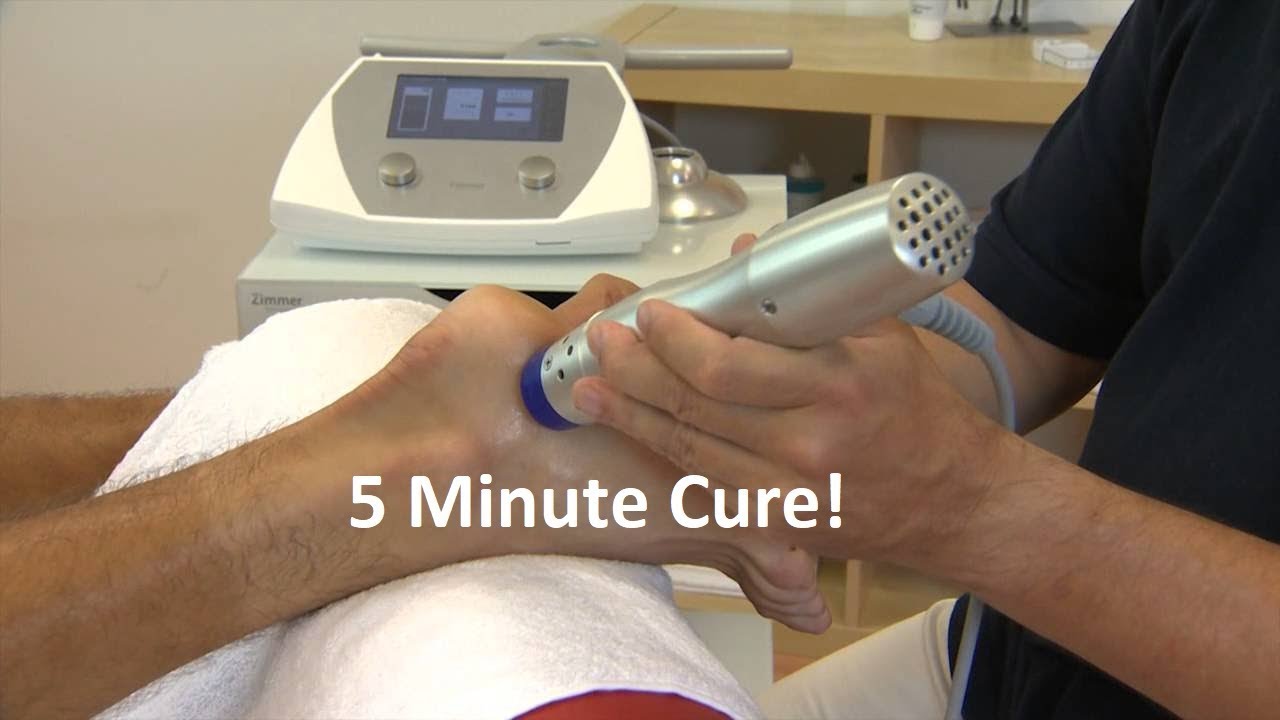
Watch: Shockwave Therapy For Plantar Fasciitis: *Amazing Results in 5 Minutes** — MichiganFootDoctors YouTube
Foot pain isn't resolving?
Same-week appointments at Howell & Bloomfield Hills
Medically Reviewed | Dr. Tom Biernacki, DPM | Board-Certified Podiatric Surgeon | Balance Foot & Ankle, Michigan
Extracorporeal shockwave therapy (ESWT) — delivering precisely controlled acoustic pressure waves through the skin to initiate tissue healing — is one of the most evidence-supported non-surgical treatments for chronic plantar fasciitis, Achilles tendinopathy, and calcific tendinopathy that has failed standard conservative management. Unlike cortisone injection (which reduces inflammation temporarily) or physical therapy (which addresses flexibility and strengthening), ESWT works by stimulating the body’s own healing biology at the cellular level — making it the appropriate choice for the chronic degenerative tendinopathy that fails inflammation-targeted treatments. At Balance Foot & Ankle PLLC, Dr. Tom Biernacki uses clinical-grade focused shockwave therapy for Michigan patients with chronic plantar fasciitis, insertional Achilles tendinopathy, and calcific tendinopathy.
How Shockwave Therapy Works: The Biological Mechanism
ESWT produces healing through three primary mechanisms that address the underlying pathology of chronic tendinopathy: Neovascularization: Chronic plantar fasciosis — the degenerative end-stage of plantar fasciitis — is characterized by fibroblast proliferation, collagen disorganization, and critically, avascular changes: the degenerated tissue lacks adequate blood supply for natural healing. ESWT stimulates vascular endothelial growth factor (VEGF) release and new blood vessel formation within the treatment zone, restoring the blood supply necessary for collagen remodeling and tissue repair. This neovascularization effect persists for 3-6 months post-treatment and explains the delayed improvement pattern — patients often continue improving for weeks to months after completing the treatment series. Tenocyte stimulation: The mechanical stress of shockwave energy activates tenocytes (tendon fibroblasts) to upregulate collagen synthesis and matrix metalloproteinase production — the cellular machinery of tissue remodeling. This triggers a controlled healing response that restores organized collagen architecture to the disordered fibrocartilaginous degeneration of chronic plantar fasciosis. Pain modulation: High-energy acoustic stimulation produces hyperstimulation analgesia — overwhelming the pain receptors and reducing substance P (the primary pain neurotransmitter in the peritendinous tissue). This accounts for the immediate post-treatment pain reduction and reduced nociceptive sensitivity.
Focused vs. Radial Shockwave: Which Is Right
Two distinct technologies are marketed as “shockwave therapy” with substantially different mechanisms and evidence bases: Focused ESWT (true shockwave): Uses electromagnetic, piezoelectric, or electrohydraulic generators to produce a high-pressure convergent wave that concentrates energy at a precise tissue depth — the focal zone. Energy levels at the focal point reach 10-100 MPa. Depth penetration can be adjusted to 1-12cm. This is the technology studied in the highest-quality RCTs and is the technology that produces the biological effects described above. Clinical-grade focused ESWT devices are hospital-grade equipment. Radial pressure wave therapy (rESWT): Uses a pneumatic device to strike an applicator tip, creating a divergent pressure wave at lower amplitude (0.1-2.0 MPa) that dissipates with tissue depth. Treats a broader area less precisely. The technology available at many physical therapy offices and chiropractic offices. The evidence quality for radial pressure waves is substantially lower than for focused ESWT. Patients evaluating “shockwave therapy” options should ask specifically about the device type — clinical-grade focused ESWT has the Level 1 evidence base; radial pressure wave therapy is an extrapolation.
Who Is the Best Candidate for ESWT
ESWT produces the best outcomes in a specific clinical profile: Chronic plantar fasciosis/fasciitis: Symptoms present for at least 6 months — the degenerative changes that respond to ESWT’s neovascularization and tenocyte stimulation develop over this time course. Acute-phase plantar fasciitis (less than 6 weeks) responds better to anti-inflammatory interventions (corticosteroid injection, NSAIDs). Failed conservative management: Standard conservative treatment (physical therapy, custom orthotics, cortisone injection) has not provided lasting relief. ESWT is most appropriately positioned as a next step after first-line conservative treatment — not as a first-line intervention. Calcific tendinopathy: High-energy focused ESWT is the primary non-surgical treatment for calcific insertional Achilles and supraspinatus tendinopathy — breaking down calcium deposits that don’t respond to other treatments. Insertional Achilles tendinopathy: The insertion of the Achilles at the calcaneus — an area with limited blood supply similar to the plantar fascia origin — responds well to ESWT’s neovascularization mechanism. Contraindications: coagulation disorders, active infection at the treatment site, pregnancy, skeletally immature patients, and malignancy at the treatment site.
Dr. Tom's Product Recommendations
Powerstep Pinnacle Arch Support Insoles
⭐ Highly Rated
Full-length arch support OTC insole — used adjunctively with ESWT for plantar fasciitis to address the biomechanical overload driver while shockwave therapy stimulates tissue healing.
Dr. Tom says: “My podiatrist recommended arch support insoles alongside my shockwave therapy for plantar fasciitis to maintain the biomechanical benefit between sessions and after treatment.”
ESWT plantar fasciitis adjunct, shockwave therapy arch support, plantar fasciosis biomechanical
OTC insoles are a bridge — custom orthotics based on your specific biomechanics provide optimal loading correction alongside ESWT
Disclosure: We earn a commission at no extra cost to you.
Strassburg Sock Night Splint for Plantar Fasciitis
⭐ Highly Rated
Plantar fascia night splint maintaining dorsiflexion during sleep — used concurrently with ESWT for plantar fasciitis to prevent the overnight contracture that produces first-step morning pain.
Dr. Tom says: “My podiatrist recommended the Strassburg Sock during my shockwave therapy series and the combination eliminated my morning first-step heel pain within 3 weeks.”
ESWT plantar fasciitis combined treatment, shockwave therapy night splint, plantar fascia dorsiflexion
Night splint requires consistent use — benefit diminishes if worn intermittently
Disclosure: We earn a commission at no extra cost to you.
✅ Pros / Benefits
- Level 1 evidence (multiple RCTs) demonstrates superiority over placebo for chronic plantar fasciitis >6 months duration
- Non-surgical, non-injectable — appropriate when repeated cortisone injections are contraindicated or ineffective
- Neovascularization effect continues healing for 3-6 months after the treatment series completes
- Calcific tendinopathy responds to focused ESWT when anti-inflammatory treatments fail
❌ Cons / Risks
- Optimal results in chronic plantar fasciosis (>6 months) — acute plantar fasciitis responds better to anti-inflammatory treatment
- Improvement is progressive — full benefit may not be apparent until 8-12 weeks after the final treatment session
- Focused clinical-grade ESWT and radial pressure wave therapy are very different technologies — clinical evidence applies primarily to focused ESWT
Dr. Tom Biernacki’s Recommendation
Shockwave therapy is genuinely one of the most scientifically elegant treatments we have — the idea that we can stimulate the body’s natural healing biology by delivering a calibrated mechanical stimulus to the exact millimeter depth of the degenerated tissue is notable. What I explain to patients is that this works best when the plantar fascia has moved from the acute inflammatory phase to the chronic degenerative phase — when the cortisone shots stopped working, when the physical therapy maintained but didn’t cure, when the orthotics control but don’t resolve. That’s the patient who responds to shockwave because their tissue needs stimulated healing, not reduced inflammation. The evidence for this in chronic plantar fasciosis is as strong as anything in outpatient podiatry.
— Dr. Tom Biernacki, DPM | Board-Certified Podiatric Surgeon | Balance Foot & Ankle
Frequently Asked Questions
How many shockwave therapy treatments are needed for plantar fasciitis?
The standard clinical protocol for plantar fasciitis ESWT is 3-5 sessions, typically performed at weekly intervals — allowing tissue to respond between treatments. Each session delivers 1500-2500 impulses at calibrated energy levels targeting the plantar fascia origin. Most patients experience progressive improvement during and after the treatment series, with continued improvement for 8-12 weeks after the final session as the neovascularization and collagen remodeling effects accumulate. Some patients require only 3 sessions for significant improvement; others benefit from the full 5-session series. A 3-month follow-up assessment determines if additional treatment is warranted.
Is shockwave therapy painful?
Shockwave therapy produces a sensation that most patients describe as pressure, tapping, or aching during the treatment — at low to medium energy levels, most patients tolerate treatment without anesthesia or with only topical anesthesia (numbing cream). At higher energies used for calcific tendinopathy, a local anesthetic injection may be used. The treatment site is often tender to touch for 24-48 hours after each session — mild post-treatment soreness indicates the appropriate tissue response. Patients typically can walk out of the clinic without significant pain after each session. The post-treatment sensitivity resolves within 2-3 days in most patients.
How long does it take for shockwave therapy to work?
ESWT produces two phases of improvement: immediate analgesia from hyperstimulation (substance P reduction) that patients often notice during and immediately after the first 1-2 sessions; and delayed healing from neovascularization and collagen remodeling that continues for weeks to months after the treatment series. Many patients notice significant improvement within 4-6 weeks of completing the 3-5 session series, with continued improvement to 3-6 months post-treatment. This delayed improvement pattern differs from cortisone injection (which peaks in 1-2 weeks) and reflects the biological healing cascade initiated by ESWT. Patients should not judge ESWT effectiveness until at least 8-12 weeks after the final session.
Does shockwave therapy work for Achilles tendinopathy?
Yes — ESWT has Level 1 evidence for insertional Achilles tendinopathy (where the Achilles tendon attaches to the calcaneus) and good evidence for mid-substance Achilles tendinopathy. The mechanism is the same as for plantar fasciitis: neovascularization of the chronically avascular degenerated tendon tissue, tenocyte stimulation for collagen remodeling, and pain modulation. Insertional Achilles tendinopathy is particularly amenable to ESWT because the insertion site shares the same blood supply limitations as the plantar fascia origin — both benefit from the angiogenic stimulus of focused shockwave. For calcific insertional Achilles tendinopathy (calcium deposits within the tendon insertion), high-energy focused ESWT is considered the primary non-surgical treatment option before considering surgical calcification removal.
Michigan Foot Pain? See Dr. Biernacki In Person
4.9★ rated | 1,123 Reviews | 3,000+ Surgeries
Same-week appointments · Howell & Bloomfield Hills
📞 (810) 206-1402 Book Online →Frequently Asked Questions
When should I see a podiatrist?
If symptoms persist past 2 weeks, affect your normal activity, or are accompanied by red-flag symptoms (warmth, redness, swelling, inability to bear weight).
What does treatment cost?
Most diagnostic visits and conservative treatments are covered by Medicare and major insurers. Out-of-pocket costs vary by your specific plan.
How quickly can I get an appointment?
Most non-urgent cases see us within 5 business days. Urgent cases (sudden pain, possible fracture) typically same or next business day.
In-Office Treatment at Balance Foot & Ankle
If home treatment isn’t providing relief for your extracorporeal shockwave therapy mechanism michigan podiatrist, our podiatry team at Balance Foot & Ankle can help with same-day evaluations and advanced in-office care.
PubMed: Shockwave Therapy for Plantar Fasciitis
Ready to Get Relief?
Same-day appointments available in Howell & Bloomfield Hills, MI
4.9★ | 1,123 Reviews | 3,000+ Surgeries
Or call: (810) 206-1402

Dr. Tom Biernacki, DPM is a board-certified foot & ankle surgeon (ABFAS & ABPM) at Balance Foot & Ankle Specialists in Southeast Michigan. With over a decade of clinical experience, he specializes in heel pain, bunions, diabetic foot care, sports injuries, and minimally invasive surgery. Dr. Biernacki is a member of the APMA and ACFAS, and his patient education content on MichiganFootDoctors.com and YouTube has made him one of the most-followed foot & ankle educators on YouTube.