
Medically reviewed by Dr. Tom Biernacki, DPM
Board-certified podiatric surgeon | Balance Foot & Ankle, Howell & Bloomfield Hills, MI
Last reviewed: May 2026

The most important clinical decision with Hammertoe Surgery Correction Flexible Rigid Michigan Podiatrist isn’t which treatment to start with — it’s identifying the correct subtype. That changes everything. Call (810) 206-1402.
The most important clinical decision with Hammertoe Surgery Correction Flexible Rigid Michigan Podiatrist isn’t which treatment to start with — it’s identifying the correct subtype. That changes everything. Call (810) 206-1402.
Hammertoe Surgery: Procedure Selection by Deformity Type and Flexibility
Hammertoe surgery selection depends on two critical variables: (1) whether the deformity is flexible (passively correctable by hand) or rigid (fixed — cannot be straightened without force), and (2) which joint is primarily contracted (PIP vs MTP vs both). Flexible hammertoes require soft tissue procedures that balance tendon forces without removing bone. Rigid hammertoes require bony correction — either resection arthroplasty (removing the PIP joint head) or arthrodesis (fusing the PIP joint). Here is the evidence-based procedure selection guide used for surgical planning at Balance Foot & Ankle.
| Deformity Type | Flexibility | Procedure of Choice | Technique | Return to Shoe | Expected Outcome |
|---|---|---|---|---|---|
| Flexible hammertoe (PIP contracture, MTP reducible) | Flexible — PIP joint corrects passively; MTP joint not yet dislocated | Flexor digitorum longus (FDL) tendon transfer (Girdlestone-Taylor) | FDL tendon sectioned at distal insertion, split longitudinally, rerouted dorsal to extensor hood at proximal phalanx; converts the deforming flexor force into a corrective extensor/intrinsic force; no bone removed; preserves joint motion | Wide shoe at 2-3 weeks; regular shoe at 4-6 weeks; toe sling for 6 weeks | Excellent for flexible deformity — 85-90% correction rate; lowest recurrence; preserves digit length; requires compliant FDL transfer technique; least preferred by surgeons less familiar with soft tissue transfer |
| Mild-moderate rigid hammertoe (PIP fixed, MTP subluxed but reducible) | Rigid at PIP; MTP partially correctable | PIP resection arthroplasty (condylectomy) ± FDL lengthening | Small dorsal incision over PIP; sectioning extensor tendons; excision of head of proximal phalanx (removes contracted joint surfaces); K-wire for temporary stabilization; soft tissue rebalancing; MTP release if subluxed (plantar plate repair vs dorsal release) | Post-op shoe 3-4 weeks; wide shoe 6 weeks; K-wire removed at 3-4 weeks | Good — 80-85% correction; floppy toe risk (no bone bridging); slight digit shortening; simple, widely performed; preferred for elderly or low-demand patients |
| Severe rigid hammertoe (PIP fixed, MTP dislocated) | Rigid at PIP; MTP dislocated (not reducible) | PIP arthrodesis (fusion) + MTP release/plantar plate repair | Excision of articular surfaces of proximal and middle phalanx at PIP; fusion in slight flexion (3-5°); internal fixation with K-wire OR Smart Toe implant OR Weil screw; MTP joint: Weil osteotomy (shorten metatarsal to reduce dislocation) + plantar plate repair | Post-op shoe 4-6 weeks; regular shoe 8-10 weeks; implant stays permanent; K-wire removed 5-6 weeks | Best for rigid deformity — 90%+ correction; more stable than resection arthroplasty; lower recurrence; requires osseous fusion (6-8 weeks); Weil osteotomy adds complexity but necessary for MTP dislocation |
| Crossover toe / 2nd toe dislocation (chronic) | Rigid MTP dislocation with crossover deformity (2nd toe crossing over hallux or 3rd toe) | Weil osteotomy of 2nd metatarsal + plantar plate repair + PIP arthrodesis if needed | Weil osteotomy: oblique saw cut through 2nd metatarsal neck, sliding metatarsal head proximally and plantarly to reduce MTP dislocation; secured with 1-2 cortical screws; plantar plate direct repair through dorsal incision; PIP fusion if hammertoe concurrent | Post-op shoe 4-6 weeks; stiff-soled shoe 8 weeks; full recovery 3-4 months | Good-excellent for true MTP dislocation — 80-85% correction; risk of “floating toe” (metatarsal shortened too aggressively); patient selection critical; most technically demanding hammertoe procedure |
| Mallet toe (DIP contracture, PIP and MTP normal) | DIP rigid contracture; PIP and MTP mobile | FDL tenotomy (percutaneous) OR DIP arthrodesis | Percutaneous FDL tenotomy: needle or blade through plantar skin at DIP; sections FDL tendon; toe straightens immediately; local anesthesia, office procedure; DIP fusion: open excision of DIP joint surfaces + K-wire; for rigid mallet that cannot be corrected by tenotomy | Post-op shoe 2-3 weeks; tenotomy patients in regular shoes sooner; K-wire removed 4 weeks (fusion cases) | FDL tenotomy: 85% correction flexible mallet; DIP fusion: 90% correction rigid; tenotomy is simplest hammertoe procedure — can be performed in clinic; low risk; ideal for elderly or high-risk surgical candidates |
Hammertoe Surgery: Recovery Timeline and Complication Guide
| Recovery Stage | Timeline | Restrictions | Expected Findings | Complication Warning Signs |
|---|---|---|---|---|
| Immediate post-op | Day 0-3 | Strict elevation (foot above heart level); no weight-bearing on toes; post-op shoe or surgical boot; ice 20 min on/off; pain medication as prescribed | Surgical dressing intact; moderate swelling expected; toe held in corrected position with dressing/splint or K-wire; toes may appear bruised; pain controlled with medication (3-5/10) | Pain score >8 uncontrolled by medication; white/cold/blue toes (vascular compromise); fever >101°F; drainage soaking dressing; signs of DVT (calf swelling/pain) |
| Early healing | Week 1-3 | Post-op shoe — heel weight only; no driving (right foot surgery); K-wire protruding from toe tip (not a problem — do not manipulate); dressing changes at 1-week visit; keep incision dry | Swelling and bruising tracking to adjacent toes and forefoot (normal); toe in corrected alignment; sutures/skin staples in place; wound edges approximated without gapping | Wound dehiscence (gapping); purulent drainage or increasing erythema (infection); K-wire migration (wire has moved visibly from original position); complete loss of toe sensation (nerve injury) |
| K-wire / suture removal | Week 3-6 | K-wire removed at 3-5 weeks in office (quick, minimal discomfort); sutures removed at 2-3 weeks; transition to wide/soft shoe when K-wire is out; buddy tape toe to adjacent toe for 4 additional weeks | Incision healed; swelling improving but still present; toe in corrected position; early bone remodeling on X-ray (fusion cases); may see toe feel “stiffer” than pre-surgery | K-wire not removing easily (broken or ingrown — needs imaging); wound not healed at suture removal (delayed healing — diabetics at risk); corrected position lost when K-wire removed (consider re-pinning) |
| Shoe transition | Week 4-8 | Wide toe-box shoes only; no narrow, pointed, or high-heeled shoes; no impact sports; walking for exercise is permitted in wide shoes; dress shoe accommodation = 3 months minimum after hammertoe surgery | Swelling persists (up to 6 months for complete resolution — normal); toe may feel “stiff” — expected and improves with motion; digit slightly shorter (resection arthroplasty); scar softening and fading | Floating toe (toe does not touch floor when standing) — can develop from aggressive Weil osteotomy or resection; recurrence of hammertoe deformity — early recurrence (<6 weeks) suggests inadequate correction; late recurrence (>12 months) suggests continued narrow shoe use |
| Full recovery | Month 3-6 | Regular shoes at 3 months (low-heeled, wide toe box); running at 3-4 months; dress shoes at 4-6 months; no pointed shoes ever (will cause recurrence); custom orthotics if flatfoot contributing | Full swelling resolution (may take 6-12 months in some cases); scar fully matured; toe in corrected position; full weight-bearing through all toes; return to all activities; X-ray confirms fusion (arthrodesis cases) | Malunion (toe fused in poor position — requires revision); non-union of fusion (15-20% risk without proper fixation; confirmed on CT); CRPS (rare — persistent burning pain, hypersensitivity, skin changes); transfer metatarsalgia (pain shifting to adjacent MT head from altered load) |
Quick answer: Hammertoe Surgery Correction Flexible Rigid Michigan Podiatrist is a common foot/ankle topic that affects many patients. The 2026 evidence-based approach combines proper diagnosis, conservative-first treatment, and escalation only when needed. We treat this regularly at our Howell and Bloomfield Hills practices. Call (810) 206-1402.
Medically Reviewed | Dr. Tom Biernacki, DPM | Board-Certified Podiatric Surgeon | Balance Foot & Ankle, Michigan
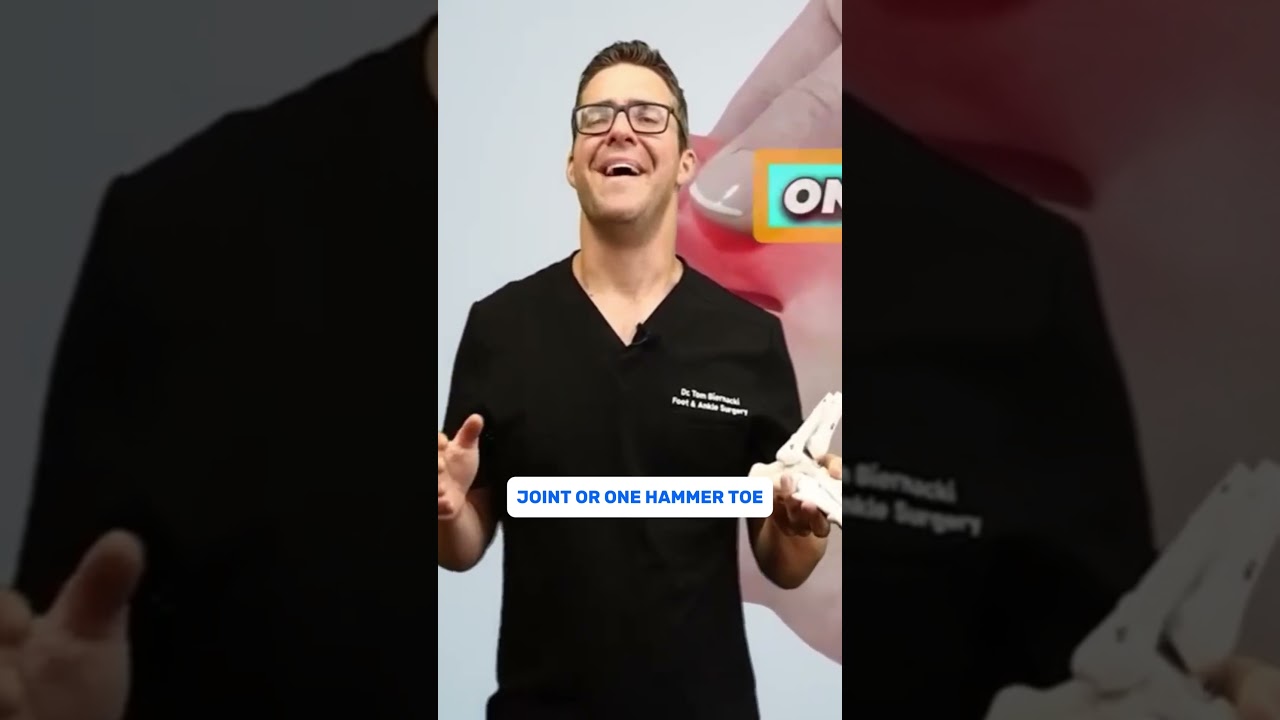

![How to Fix Hammer Toes at Home [Overlapping & Crossover Toes]!](https://www.michiganfootdoctors.com/wp-content/cache/flying-press/7ea0260b79509af610220599744e2c56.jpg)
Watch: How to Fix Hammer Toes at Home [Overlapping & Crossover Toes]! — MichiganFootDoctors YouTube
What Is a Hammertoe?
A hammertoe is a deformity of one or more of the lesser toes (2nd through 5th) where abnormal muscle and tendon imbalances cause the toe to buckle at the middle joint (PIP joint), producing a characteristic “hammer” shape. Related deformities include mallet toe — where the distal joint (DIP) is the primary bend — and claw toe, where both the PIP and DIP joints are contracted while the MTP joint is extended. All three deformities cause painful calluses on the top of the knuckle, the tip of the toe, or underneath the ball of the foot, and progressive difficulty wearing regular footwear.
Causes of Hammertoe
Hammertoe most commonly results from a combination of genetic predisposition (second toe longer than the first), footwear choices (narrow or pointed shoes that force toes to buckle), and biomechanical imbalances in the forefoot. Neuromuscular conditions, diabetic peripheral neuropathy, previous toe injury, and adjacent bunion deformity pushing the second toe into a hammered position are also recognized causes. Most hammertoes begin as flexible deformities that gradually stiffen and become rigid without treatment.
Flexible vs. Rigid Hammertoe: The Critical Distinction
The distinction between flexible and rigid hammertoe is fundamental to treatment planning. A flexible hammertoe can be manually straightened at the PIP joint — the deformity is not yet fixed in position, meaning the tendons and capsule retain some pliability. A rigid hammertoe cannot be manually corrected — the joint is fixed in the contracted position, often with arthritic changes in the joint. Flexible hammertoes respond to conservative care and are amenable to softer surgical procedures; rigid hammertoes typically require more definitive surgical correction.
Conservative Treatment for Hammertoe
Early flexible hammertoes respond to conservative management. Wider toe box shoes that accommodate the deformity without rubbing eliminate the most common source of pain. Toe crests, hammer toe cushions, and gel toe sleeves reduce callus pain on the bent knuckle. Custom orthotics with a metatarsal pad address forefoot biomechanical contributors. Toe stretching exercises and metatarsophalangeal (MTP) joint mobilization maintain flexibility in flexible deformities. Moleskin padding and callus shaving by Dr. Biernacki provide temporary pain relief during conservative management. These measures manage symptoms but do not correct the underlying deformity.
Surgical Correction: Flexible Hammertoe
Flexible hammertoe surgery involves soft tissue procedures to release the contracted tendons and joint capsule while correcting the deformity. Flexor tendon lengthening or transfer (Girdlestone-Taylor procedure) — where the flexor tendon is rerouted to act as an extensor — corrects flexible deformity without removing bone. MTP joint capsule release and extensor tendon lengthening address contracture at the toe’s base joint. These procedures preserve joint architecture and allow early mobilization. A small stabilizing K-wire may be placed temporarily to hold correction during healing and is removed in office at 4–6 weeks.
Surgical Correction: Rigid Hammertoe
Rigid hammertoe surgery requires removing a small section of bone from the PIP joint (proximal interphalangeal joint arthroplasty or arthrodesis) to straighten the toe and eliminate the deformity permanently. Arthroplasty removes the joint surfaces to allow the toe to lie flat and heal in a corrected position. Arthrodesis fuses the joint completely for maximum stability — preferred in severe deformity or when recurrence risk is high. A K-wire (stainless steel pin) is inserted through the toe tip to hold position during healing, removed at 4–6 weeks in the office. Implant-based fusion systems (Peg and Barrel, Smart Toe) are used in select cases, eliminating the external pin.
Recovery After Hammertoe Surgery
Hammertoe surgery is performed as an outpatient procedure under local anesthesia with sedation. Patients walk immediately after surgery in a surgical shoe for 3–4 weeks. Swelling and bruising resolve over 4–8 weeks. Regular shoes are typically possible at 6–8 weeks depending on the extent of correction. Most patients have well-healed, straight toes by 3 months. Minor residual swelling in the toe can persist for 4–6 months, which is normal. Adjacent toe correction at the same surgery is possible and often recommended to address all involved toes in a single procedure.
Why Choose Dr. Tom Biernacki for Hammertoe Surgery in Michigan?
Hammertoe surgery requires technical skill and experience to achieve reliably straight, pain-free results. Dr. Biernacki performs hammertoe correction regularly and tailors the surgical approach to each patient’s deformity severity, flexibility, and goals. Conservative options are always explored first, and surgery is recommended only when symptoms are significant and conservative care has been given a fair trial. Balance Foot & Ankle serves hammertoe patients from across Southeast and Mid-Michigan with hands-on exam plus imaging when needed, conservative management, and surgical correction under one roof.
Dr. Tom's Product Recommendations

PediFix Hammer Toe Crest Pad
⭐ Highly Rated
Cushioned toe crest that loops around the smaller toes to lift the tip off the ground and reduce callus pressure under the ball of the foot. Effective conservative management for flexible hammertoes.
Dr. Tom says: “Toe crests are one of the most useful conservative tools for hammertoe pain — they lift the tip of the bent toe off the shoe insole, reducing the ball-of-foot callus that makes walking painful. I recommend these as a first-line conservative option.”
Best for: Flexible hammertoes, ball-of-foot callus pain, pre-surgical conservative management
Not ideal for: Rigid hammertoes with top-of-knuckle calluses requiring different padding
Disclosure: We earn a commission at no extra cost to you.

ZenToes Hammer Toe Gel Sleeve
⭐ Highly Rated
Soft gel tube sleeve that cushions the bent hammertoe knuckle against shoe pressure, reducing corn and callus pain. Easy to apply and comfortable for all-day wear.
Dr. Tom says: “Gel toe sleeves are simple and effective for managing the dorsal corn pain that hammertoes cause — they cushion the bent knuckle from rubbing against the shoe upper. A practical daily comfort tool during conservative management.”
Best for: Hammertoe dorsal corn pain, rubbing on shoe upper, daily cushioning
Not ideal for: Replacing surgical correction in rigid or severe hammertoe deformity
Disclosure: We earn a commission at no extra cost to you.

PowerStep Pinnacle Metatarsal Arch Orthotic
⭐ Highly Rated
OTC orthotic insole with built-in metatarsal support pad that offloads the ball-of-foot pressure contributing to hammertoe pain and forefoot calluses.
Dr. Tom says: “Forefoot biomechanical support with a metatarsal pad helps reduce the plantar forefoot pressure that aggravates hammertoe pain — PowerStep Pinnacle is my go-to recommendation for hammertoe patients who also have ball-of-foot pain.”
Best for: Hammertoe with ball-of-foot pain, forefoot calluses, metatarsalgia
Not ideal for: Rigid hammertoes requiring surgical correction regardless of orthotic use
Disclosure: We earn a commission at no extra cost to you.
✅ Pros / Benefits
- Flexible hammertoes can be managed conservatively for years with proper padding and footwear
- Outpatient hammertoe surgery allows immediate post-operative walking in a surgical shoe
- Multiple surgical toes corrected simultaneously — efficient single-surgery solution
- Return to regular shoes within 6–8 weeks for most hammertoe correction procedures
❌ Cons / Risks
- Conservative measures manage symptoms but do not correct the underlying hammertoe deformity
- Rigid hammertoes require bony correction surgery with a more involved recovery than flexible cases
- Minor toe swelling after surgery can persist for 4–6 months
Dr. Tom Biernacki’s Recommendation
Hammertoes are one of the most common reasons patients visit my practice — and also one of the most satisfying to treat. Conservative care buys time for flexible hammertoes, but most patients who are truly bothered by the pain and difficulty with shoes ultimately want a permanent solution. Hammertoe surgery is straightforward, recovery is manageable, and the results are lasting. Don’t keep suffering for years with painful toes.
— Dr. Tom Biernacki, DPM | Board-Certified Podiatric Surgeon | Balance Foot & Ankle
Frequently Asked Questions
Can hammertoes be fixed without surgery?
Conservative measures — wider shoes, toe crests, gel sleeves, and orthotics — effectively manage hammertoe pain but do not correct the underlying deformity. Flexible hammertoes can be managed conservatively for years. Rigid hammertoes and those causing severe pain or difficulty with all footwear typically require surgical correction for permanent relief.
What is the recovery like from hammertoe surgery?
Most patients walk immediately after surgery in a surgical shoe. Regular shoes are typically possible at 6–8 weeks. Swelling and bruising resolve over 4–8 weeks, though minor residual swelling can persist for 4–6 months. The toe straightens progressively as healing occurs and the wire (if used) is removed in-office at 4–6 weeks.
Is hammertoe surgery painful?
The procedure is performed under local anesthesia — there is no pain during surgery. Post-operative discomfort is typically mild to moderate and managed with oral medications for the first few days. Most patients are surprised by how manageable the recovery is compared to their expectations.
How many toes can be fixed at once?
Multiple hammertoes on the same foot can be corrected in a single surgical session — in fact, Dr. Biernacki often recommends correcting all affected toes at once to avoid multiple recovery periods. The surgical shoe accommodates all toes post-operatively.
What causes hammertoes to come back after surgery?
Hammertoe recurrence after surgery is uncommon when the underlying cause is also addressed. Failing to treat a coexisting bunion (which pushes the second toe into a hammered position), inappropriate soft tissue procedures for rigid deformity, and inadequate bone resection are the most common technical causes of recurrence.
Michigan Foot Pain? See Dr. Biernacki In Person
4.9★ rated | 1,123 Reviews | 3,000+ Surgeries
Same-week appointments · Howell & Bloomfield Hills
📞 (810) 206-1402 Book Online →Frequently Asked Questions
When should I see a podiatrist?
If symptoms persist past 2 weeks, affect your normal activity, or are accompanied by red-flag symptoms (warmth, redness, swelling, inability to bear weight).
What does treatment cost?
Most diagnostic visits and conservative treatments are covered by Medicare and major insurers. Out-of-pocket costs vary by your specific plan.
How quickly can I get an appointment?
Most non-urgent cases see us within 5 business days. Urgent cases (sudden pain, possible fracture) typically same or next business day.
What is Hammertoe?
Hammertoe is a common foot/ankle condition that affects mobility and quality of life. Understanding the underlying cause is the first step in successful treatment. Our podiatrists at Balance Foot & Ankle perform a hands-on biomechanical exam, review your activity history, and use diagnostic imaging when appropriate to identify the root cause—not just treat the symptom. Many patients have been told to “rest and ice” without a deeper diagnostic workup; our approach is different.
Symptoms and warning signs
Common signs of hammertoe include pain that worsens with activity, morning stiffness, swelling, tenderness when palpated, and difficulty bearing weight. If you experience sudden severe pain, inability to walk, visible deformity, numbness or color change, contact our office the same day or visit urgent care—these can signal a more serious injury such as a fracture, tendon rupture, or vascular compromise. Diabetics with any foot wound should seek same-day care.
Conservative treatment options
Most cases of hammertoe respond to non-surgical care: structured rest, supportive footwear changes, custom orthotics, targeted stretching and strengthening protocols, anti-inflammatory medications when medically appropriate, and in-office procedures such as ultrasound-guided injections. We also offer advanced therapies including MLS laser therapy, EPAT/shockwave, regenerative injections, and image-guided procedures. Treatment is sequenced from least invasive to most invasive, and we explain the rationale at every step.
When is surgery considered?
Surgery is reserved for cases that fail 3-6 months of well-structured conservative care, when there is structural pathology (severe deformity, complete tear, advanced arthritis), or when imaging shows damage that will not heal without intervention. Our surgeons have performed 3,000+ foot and ankle procedures and prioritize minimally-invasive techniques whenever appropriate. We discuss recovery timelines, return-to-activity milestones, and realistic outcome expectations before any procedure is scheduled.
Recovery timeline and prevention
Recovery from hammertoe varies based on severity and chosen treatment path. Conservative cases often improve within 4-8 weeks with consistent adherence to the protocol. Post-procedural recovery may range from a few days (in-office procedures) to several months (reconstructive surgery). Long-term prevention involves footwear assessment, activity modification, structured strengthening, and regular check-ins with your podiatrist if you have a history of recurrence. We provide written home-exercise plans and digital follow-up support.
Ready to feel better?
Same-week appointments available in Howell and Bloomfield Hills, Michigan.
Book Your VisitIn-Office Treatment at Balance Foot & Ankle
If home treatment isn’t providing relief for your hammertoes, our podiatry team at Balance Foot & Ankle can help with same-day evaluations and advanced in-office care.
Ready to Get Relief?
Same-day appointments available in Howell & Bloomfield Hills, MI
4.9★ | 1,123 Reviews | 3,000+ Surgeries
Or call: (810) 206-1402

Dr. Tom Biernacki, DPM is a board-certified foot & ankle surgeon (ABFAS & ABPM) at Balance Foot & Ankle Specialists in Southeast Michigan. With over a decade of clinical experience, he specializes in heel pain, bunions, diabetic foot care, sports injuries, and minimally invasive surgery. Dr. Biernacki is a member of the APMA and ACFAS, and his patient education content on MichiganFootDoctors.com and YouTube has made him one of the most-followed foot & ankle educators on YouTube.