
Can You Treat an Ingrown Toenail at Home? For more information, see our complete guide to ingrown toenail treatment.
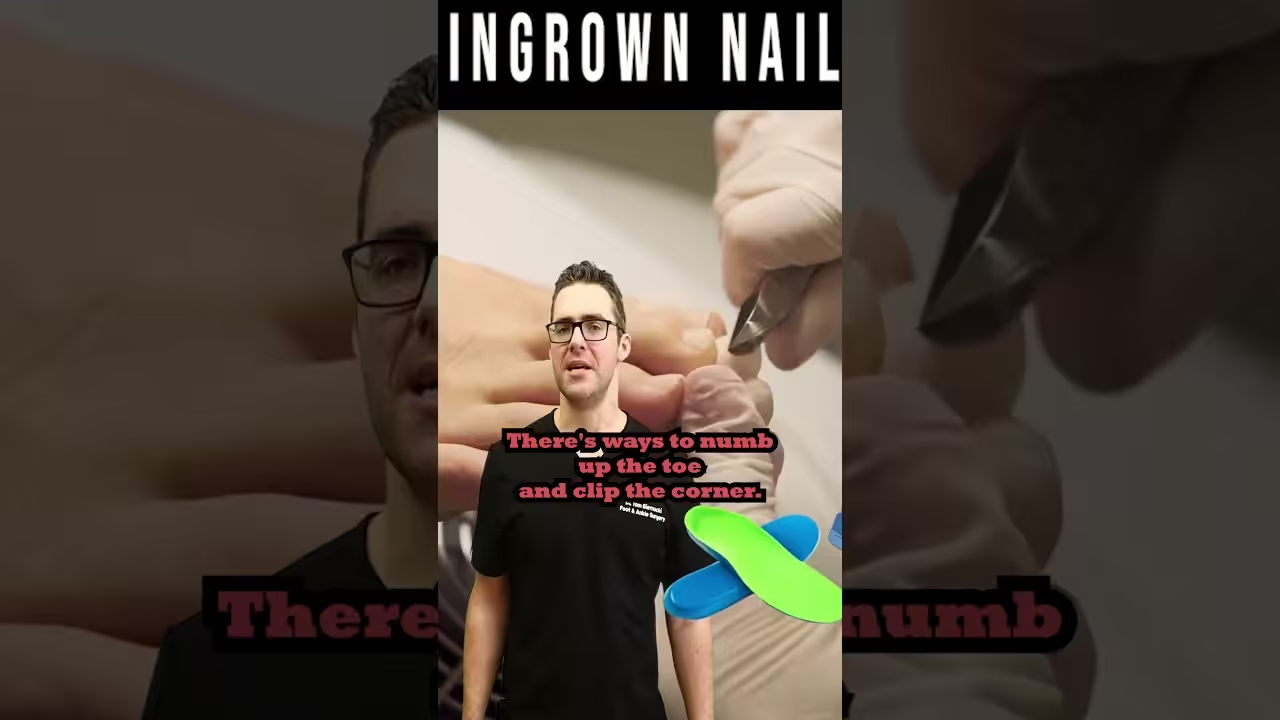
Many people’s first instinct when a toe becomes painful is to try to fix it at home. For mild ingrown toenails—where the nail edge is pressing into the surrounding skin but has not yet broken through, caused infection, or produced significant drainage—conservative home care can genuinely help and may resolve the problem without a podiatry visit. However, home treatment has clear limits: once infection is present, the nail edge has penetrated the skin deeply, or pain is severe, professional treatment is safer and more effective than home attempts. This guide explains what is safe to do at home and what signals require professional care.
Safe Home Treatment for Mild Ingrown Toenails
Warm water soaks: Soak the affected foot in warm (not hot) water for 15–20 minutes, 3–4 times daily. This softens the skin around the nail, reduces inflammation, and provides temporary pain relief. Adding Epsom salts (1–2 tablespoons per basin) may provide modest additional anti-inflammatory benefit, though the soaking itself provides most of the benefit. Plain warm water is equally effective.
Lifting the nail edge: After soaking when the skin is soft, gently place a small piece of cotton, dental floss, or a silicon gutter splint under the nail corner that is digging in. This lifts the nail edge off the skin and allows the nail to grow forward rather than into the skin. Replace the cotton or floss daily after soaking. This technique requires patience—it may take several weeks to redirect the nail edge above the skin edge—but it can resolve early ingrown nails without procedures. Do not force the cotton under if it causes significant pain; if the nail is too embedded to lift without pain, professional treatment is needed.
Proper nail trimming: Cut the toenail straight across—never curved—and do not cut below the nail groove. Trimming the nail back to a straight edge removes any offending corner that is digging in. Do not attempt to cut a “V” in the center of the nail (a persistent folk remedy with no evidence and potential to worsen the situation). Trim after soaking when the nail is softer and easier to cut cleanly.
Proper footwear: Switch to open-toed shoes, sandals, or shoes with a wide, deep toe box to eliminate pressure on the ingrown nail while it heals. Tight, narrow footwear continues to press the nail into the skin and prevents healing. Wearing a shoe with a protective toe box (like a post-op shoe) is helpful if open-toed shoes are not practical.
What NOT to Do at Home
Do not dig into the nail groove with scissors, nail files, or sharp instruments in an attempt to cut out the ingrown portion. This creates wounds in the skin that become infected and may worsen the ingrown nail. Do not tear or rip the nail corner—this leaves jagged edges that are more likely to dig in as the nail grows. Do not apply OTC antibiotic ointment and assume infection won’t develop—antibiotic ointment is for superficial skin abrasions, not ingrown nail infections. Do not continue to force footwear that compresses the toe while attempting home treatment.
When to See a Podiatrist
Stop home treatment and see a podiatrist if: the toe is red, warm, increasingly swollen, and has pus or discharge (infection has developed); severe pain prevents normal activity or sleep; home treatment for 2–3 weeks has not produced improvement; you have diabetes, peripheral vascular disease, or immunocompromise (infected ingrown toenails in these patients can progress rapidly and require prompt professional management); or the ingrown nail is recurrent—it has been treated before and returned multiple times. A podiatrist can perform a partial nail avulsion (removing only the offending nail edge) under local anesthesia in the office, with or without chemical matrixectomy (destroying the nail root permanently to prevent regrowth of the problematic edge). This in-office procedure takes 15–20 minutes, provides immediate relief, and permanently resolves recurrent ingrown toenails in approximately 95% of cases.
Frequently Asked Questions
How long does it take for an ingrown toenail to heal at home?
With consistent home care (warm soaks, nail lifting, appropriate footwear), mild ingrown toenails typically improve within 2–4 weeks as the nail edge grows forward and above the nail groove skin. Improvement in pain and swelling is usually noticed within the first week. If there has been no meaningful improvement after 2–3 weeks of consistent home treatment, the nail is too embedded for home methods to redirect and professional treatment is appropriate. More moderate or severe ingrown toenails—with significant skin penetration—rarely resolve completely with home treatment and typically require partial nail avulsion for definitive resolution.
Can I go to urgent care for an infected ingrown toenail?
Yes—urgent care can prescribe antibiotics for an infected ingrown toenail, which is helpful if the infection is spreading. However, antibiotics treat the infection but do not remove the nail fragment that is causing the problem—without removing the offending nail edge, the infection will typically recur as soon as antibiotics are completed. For definitive treatment, a podiatrist or emergency department physician should perform partial nail avulsion to remove the ingrown edge. If you go to urgent care for an infected ingrown toenail, ask whether they can perform partial nail avulsion in addition to prescribing antibiotics. If they cannot, follow up with a podiatrist promptly after completing antibiotics to address the underlying nail problem before recurrence.
Does a partial nail avulsion hurt?
The injection of local anesthetic (the numbing medication) produces a brief, sharp pinch sensation—typically the most uncomfortable moment of the procedure. Once the toe is numb (which takes effect within 2–5 minutes of the injection), the nail removal itself is pressure and sensation without pain. Most patients are surprised by how comfortable the procedure is after the initial anesthetic injection. After the procedure, as the anesthetic wears off (typically 2–3 hours), there is expected soreness for 1–3 days, managed with OTC pain relievers (ibuprofen or acetaminophen) and elevation. Most patients walk out of the office and return to normal activities the next day. This is one of the most rewarding office procedures for immediate symptom relief.
Medical References & Sources
- American Podiatric Medical Association — Ingrown Toenails
- PubMed Research — Conservative Ingrown Toenail Treatment
- PubMed Research — Partial Nail Avulsion Outcomes
Dr. Tom Biernacki, DPM is a board-certified podiatric surgeon at Balance Foot & Ankle in Howell and Bloomfield Hills, Michigan. He performs partial nail avulsion with permanent matrixectomy for recurrent ingrown toenails, providing same-day relief in a brief in-office procedure.
Dr. Tom’s Recommended Products for Ingrown Toenails
📍 Located in Michigan?
Our board-certified podiatrists treat this condition at two convenient locations. Same-day appointments often available.
These are products I personally use and recommend to my patients at Balance Foot & Ankle.
- Dr. Scholl’s Ingrown Toenail Pain Reliever — Sodium sulfide solution softens nail edge for painless removal — reduces redness and swelling within 24 hours
- Onyfix Nail Correction System — Composite strip guides nail growth away from skin — non-invasive correction without any cutting
- Proper Nail File and Nipper Set — Professional-grade stainless steel nippers and sapphire file — correct nail trimming prevents future ingrowth
📧 Get Dr. Tom’s Free Lab Test Guide
Discover the 5 lab tests every person over 35 should ask their doctor about — explained in plain English by a board-certified physician.
Affiliate disclosure: As an Amazon Associate, Balance Foot & Ankle earns from qualifying purchases. We only recommend products we trust for our own patients.
Join 950,000+ Learning About Foot Health
Dr. Tom shares honest medical advice, supplement reviews, and treatment guides you won’t find anywhere else.
Subscribe on YouTube →
Dr. Tom Biernacki, DPM is a double board-certified podiatrist and foot & ankle surgeon at Balance Foot & Ankle Specialists in Southeast Michigan. With over a decade of clinical experience, he specializes in heel pain, bunions, diabetic foot care, sports injuries, and minimally invasive surgery. Dr. Biernacki is a member of the APMA and ACFAS, and his patient education content on MichiganFootDoctors.com and YouTube has reached over one million views.