

A jammed or sprained toe takes 2-6 weeks to heal — the right buddy taping and shoe makes it less painful.
You are in the right place. Dr. Tom Biernacki, DPM, FACFAS — board-certified foot & ankle surgeon with 3,000+ surgeries — explains exactly what sprained toe treatment means and what works. Call (810) 206-1402 for same-day appointment at Howell or Bloomfield Township.
Quick answer: Treatment for sprained toe treatment follows a stepwise approach: 1) conservative care first (rest, ice, supportive footwear, OTC anti-inflammatories), 2) physical therapy and targeted exercises, 3) in-office treatments (injections, custom orthotics) if conservative fails at 4-6 weeks, 4) surgery for refractory cases. Most patients resolve at step 1 or 2. Call (810) 206-1402.
Quick answer: A sprained toe (excluding turf toe) is usually grade 1-2 — buddy-tape to the adjacent toe, ice 15 min 3x daily, and wear stiff-soled shoes for 2-3 weeks. Most heal in 3 weeks. Severe swelling + bruising + inability to bear weight = X-ray to rule out a fracture. Big toe sprains (turf toe) require longer immobilization (4-6 weeks). — Dr. Tom Biernacki, DPM, board-certified podiatrist (Michigan Foot Doctors).


3M Coban Self-Adherent Tape
Cohesive tape for buddy-taping a sprained toe — no skin sticking, reusable.
- Self-adhering
- Reusable 1-2 days
- No tape removal pain
- Tightens — apply gently
- Replace every 2-3 days

Carbon Fiber Stiff Insole (Pair)
Stiff carbon plate prevents toe motion during sprain healing.
- Limits toe motion
- Slim fits in shoes
- Pair included
- Stiff feel takes 1 week
- Custom may fit better
★ DR. TOM BIERNACKI, DPM, FACFAS · BOARD-CERTIFIED PODIATRIST
The most important clinical decision with Sprained Toe Treatment isn’t which treatment to start with — it’s identifying the correct subtype. That changes everything. Call (810) 206-1402.
Sprained Toe: Quick Answer
A sprained toe is a stretching or tearing of the ligaments around the toe joint — usually from stubbing the toe, dropping something on it, or hyperextending it during sports. Mild sprains (Grade 1) heal in 1-2 weeks with rest. Moderate sprains (Grade 2) take 3-4 weeks. Severe sprains (Grade 3 with full ligament tear) take 6-8 weeks and sometimes need a walking boot.
Standard treatment: RICE protocol (Rest, Ice, Compression, Elevation), buddy-tape the injured toe to the adjacent healthy toe (use a small cotton pad between them to prevent skin breakdown), wear stiff-soled shoes to limit toe bend, and avoid impact for 2-4 weeks. See a podiatrist immediately if: you can’t bear weight, the toe looks visibly crooked, the nail bed is bleeding, or pain doesn’t improve within 7 days. Those signs suggest a fracture or dislocation, not a sprain.
Dr. Tom’s Wound Care Kit
Dr. Tom’s Top Pain Relief Picks — Dr. Hoy’s (2026)
Affiliate disclosure: As an Amazon Associate, Balance Foot & Ankle earns from qualifying purchases. I personally use Dr. Hoy’s in my practice for patients who need topical relief.
| Product | Best For | Dr. Tom’s Take | Get It |
|---|---|---|---|
| Dr. Hoy’s Natural Pain Relief Gel 3.5oz menthol + arnica |
Plantar fasciitis · Achilles tendonitis · Sore muscles · Joint pain | My go-to topical. Cooling-then-warming sensation. No greasy residue. Non-NSAID alternative. | Buy Now |
| Dr. Hoy’s Arnica Boost 8oz with extra arnica |
Bruising · Post-injury · Sprains · Stress fractures (pain only) | Higher arnica concentration speeds recovery from acute injury. Use 4x daily for first 7 days. | Buy Now |
| Dr. Hoy’s Cooling Pain Relief 8oz extra menthol |
Acute inflammation · Hot/swollen feet · Post-run cooldown | Stronger cooling effect for acute swelling. Pair with ice for first 48 hours after injury. | Buy Now |
| Dr. Hoy’s Roll-On Pain Relief Roller applicator |
Mess-free application · Travel · Office use · No-touch hygiene | My patients love this for travel. Glides on without hand contact — cleanest application available. | Buy Now |
| Dr. Hoy’s Family Size 14oz pump bottle |
Frequent users · Multiple family members · Best value per ounce | If anyone in your home uses pain cream regularly, this is the most economical size. Same formula. | Buy Now |
Why I recommend Dr. Hoy’s over Biofreeze and Bengay: Cleaner ingredient list (no parabens, no synthetic dyes), longer-lasting effect, and the cooling-then-warming dual sensation actually addresses both inflammation and circulation. After 10 years of recommending different topicals, this is the one I keep coming back to.
Quick Compare: Dr. Tom’s Top Running Shoes
| Shoe | Best For | Watch Out For | Buy | ||||||||||||||||||||||||
|---|---|---|---|---|---|---|---|---|---|---|---|---|---|---|---|---|---|---|---|---|---|---|---|---|---|---|---|
| Hoka Bondi 9 | Plantar fasciitis, max cushion | Heavy, tall stack | Buy | ||||||||||||||||||||||||
| Brooks Ghost 17 | Neutral runners, first running shoe | Not for 200+lb runners | Buy | ||||||||||||||||||||||||
| Brooks Adrenaline GTS 23 | Flat feet, overpronation | Snug toe box | Buy | ||||||||||||||||||||||||
| Altra Torin 8 | Wide feet, bunions, Morton’s toe | Zero-drop transition | Buy | ||||||||||||||||||||||||
| Hoka Clifton 10 | Daily training, lighter Hoka | Less cushion than Bondi | Buy | ||||||||||||||||||||||||
| NB 990v6 | Senior fall prevention, 6E width |
Dr. Tom’s Top Pain Relief Picks — Dr. Hoy’s (2026)Affiliate disclosure: As an Amazon Associate, Balance Foot & Ankle earns from qualifying purchases. I personally use Dr. Hoy’s in my practice for patients who need topical relief.
Why I recommend Dr. Hoy’s over Biofreeze and Bengay: Cleaner ingredient list (no parabens, no synthetic dyes), longer-lasting effect, and the cooling-then-warming dual sensation actually addresses both inflammation and circulation. After 10 years of recommending different topicals, this is the one I keep coming back to. | Buy |
For full detailed reviews with pros/cons/Dr. Tom’s tips, see our complete shoe guide.
Medically reviewed by Dr. Tom Biernacki, DPM · Board-Certified Podiatric Surgeon · Last reviewed: April 2026 · Editorial Policy
Related Conditions
Quick Answer
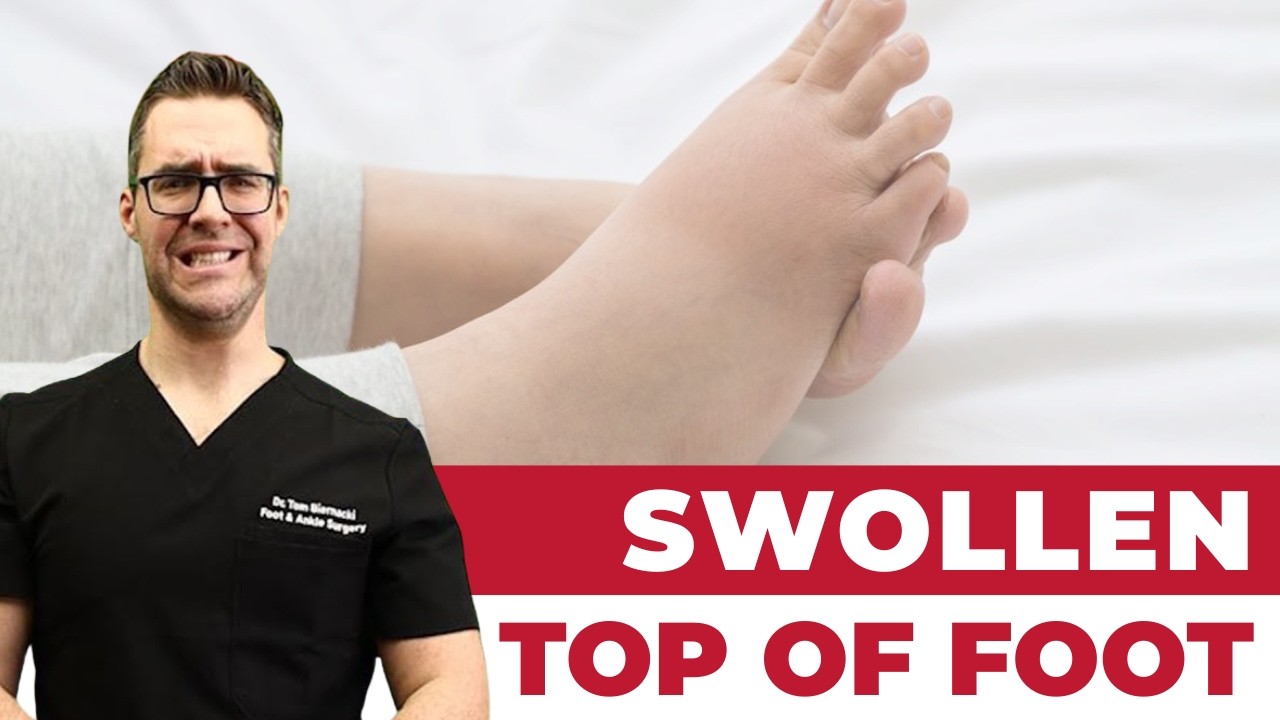
Sprained Toe Treatment 2026 Podiatrist Guide relates to foot/ankle injury — typically caused by trauma or twist. Most patients improve in 4-8 weeks with conservative care. Same-week appointments in Howell + Bloomfield Township: (810) 206-1402.
Medically reviewed by Dr. Tom Biernacki, DPM — Board-Certified Podiatric Surgeon — Balance Foot & Ankle, Howell & Bloomfield Township, MI. Last updated April 2026.
▶ Watch

What Is a Sprained Toe?

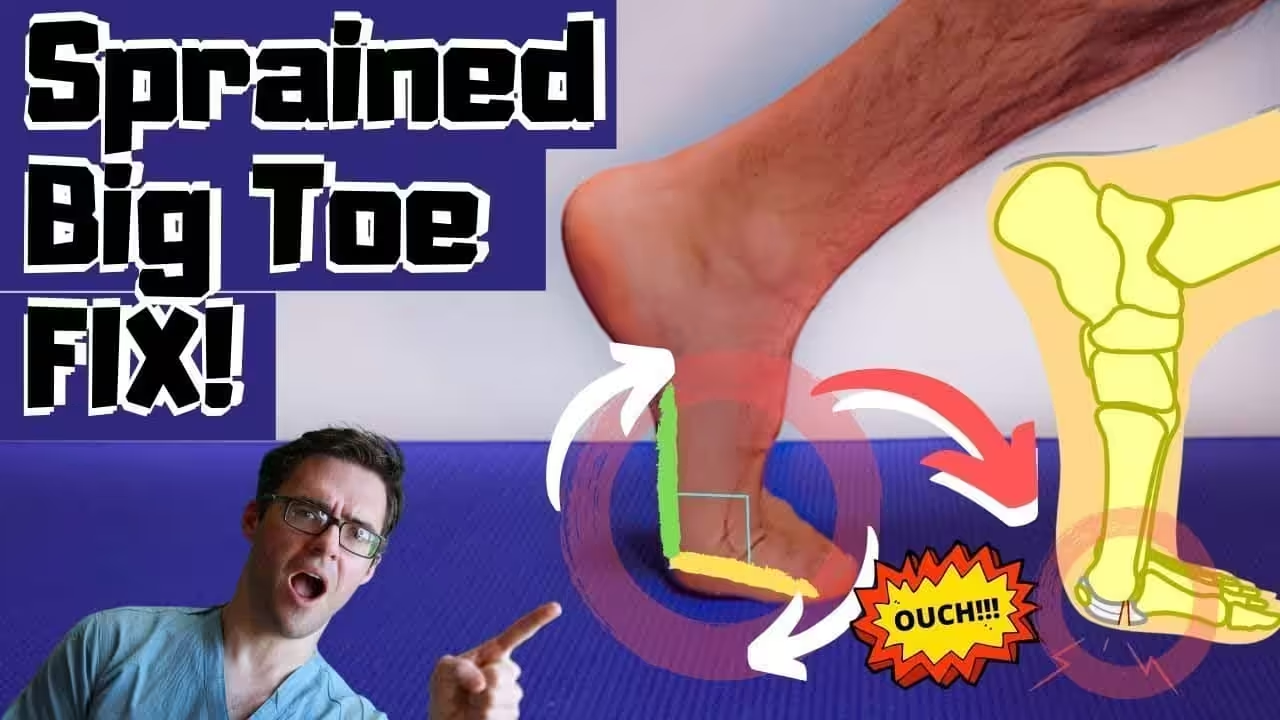
A toe sprain is an injury to one or more of the ligaments that stabilize the toe joints. Ligaments are fibrous bands connecting bone to bone—in the toes, they stabilize the metatarsophalangeal (MTP) joints (where the toes meet the foot) and the interphalangeal (IP) joints (the knuckle joints within each toe). Sprains occur when the joint is forced beyond its normal range of motion, stretching or tearing the ligaments. The most commonly sprained toe is the big toe, particularly from hyperextension injuries (“turf toe” in athletes) and stubbing injuries in everyday life.
Toe sprains are graded by severity: Grade I involves microscopic tearing of ligament fibers with intact structure and mild pain; Grade II involves partial ligament tearing with notable swelling, bruising, and pain with movement; Grade III is complete ligament rupture with joint instability. Most toe sprains are Grade I or II and heal well with conservative treatment. Grade III sprains, particularly to the big toe MTP joint, may require more prolonged immobilization or surgical repair.
Sprain vs. Fracture: Know the Difference
A toe fracture can mimic a sprain, and differentiating the two is important because fracture management differs. Features more suggestive of fracture: severe pain immediately after injury, inability to bear weight, visible deformity or angulation of the toe, significant swelling and bruising extending beyond the involved joint, and point tenderness directly over a bone rather than a joint. Sprains typically produce tenderness over the ligament (at the joint line) rather than over the bone shaft.
X-rays are the definitive way to distinguish fracture from sprain. You should seek prompt evaluation for X-rays if: you cannot walk normally on the foot, the toe appears deformed, pain is severe and not improving after 24–48 hours of home treatment, or significant bruising and swelling develop rapidly. For the big toe specifically, any significant injury warrants X-rays because big toe fractures and ligament injuries require specific management that differs from other toe injuries.
Immediate Treatment: RICE Protocol
In the first 48–72 hours after a toe sprain, the RICE protocol reduces pain and swelling. Rest the foot—avoid activities that increase toe pain. Ice the injured toe for 15–20 minutes every 2–3 hours (place a cloth between ice and skin to prevent frostbite). Compress with a soft bandage to limit swelling, and elevate the foot above heart level when resting. Over-the-counter anti-inflammatory medication (ibuprofen or naproxen) reduces pain and swelling in the acute phase—take with food and follow labeled dosing. Avoid heat, massage, or alcohol in the first 48 hours, as these increase swelling.
Buddy Taping: The Mainstay of Treatment
Buddy taping—taping the injured toe to an adjacent, uninjured toe—provides stability and pain relief for most toe sprains. Use medical tape or athletic pre-wrap. Place a small piece of foam or cotton gauze between the toes before taping to prevent skin maceration. The tape should be snug but not constrictive—check circulation (color and warmth of the toe tip) after taping. Re-tape daily or whenever wet. Continue buddy taping for 2–4 weeks for mild sprains and 4–6 weeks for moderate sprains. Walk in a wide, stiff-soled shoe that protects the toe from additional hyperextension during healing.
Turf Toe: The Big Toe Sprain That Sidelines Athletes
Turf toe—a sprain of the plantar plate and ligaments of the big toe MTP joint from hyperextension—is a significant athletic injury common in football players, soccer players, and dancers. Grade II and III turf toe can sideline athletes for weeks to months. Treatment for turf toe emphasizes avoiding hyperextension—stiff-soled athletic footwear, a rigid carbon fiber foot plate insert, and taping to limit dorsiflexion. Grade III turf toe (plantar plate rupture) may require a walking boot for 4–6 weeks and physical therapy before return to sport. Persistent joint instability, cartilage damage, or sesamoid fracture associated with turf toe may require surgical intervention.
More Podiatrist-Recommended Ankle Sprain Essentials
Stability Walking/Running Shoe
Brooks Adrenaline GTS 25 — lateral support during recovery walking.
KT Tape for Ankle Support
KT Tape — proprioceptive support for athletic return-to-play.
Supportive Insole

PowerStep Pinnacle — arch support reduces re-injury risk during recovery.
As an Amazon Associate, Balance Foot & Ankle earns from qualifying purchases. Product recommendations are based on clinical experience; prices and availability shown above update live from Amazon.
When to See a Podiatrist
A sprain that hasn’t fully recovered after 6 weeks often has residual ligament laxity or occult fracture that keeps the ankle unstable. Balance Foot & Ankle X-rays and stress-tests every lingering sprain — if the ligament is torn, we offer bracing, PRP, and (for chronic instability) minimally-invasive repair. Don’t keep re-rolling the same ankle; let us stabilize it properly.
Call Balance Foot & Ankle: (810) 206-1402 · Book online · Offices in Howell & Bloomfield Township
Frequently Asked Questions
How long does a sprained toe take to heal?
Grade I toe sprains typically heal in 1–3 weeks with conservative treatment. Grade II sprains require 3–6 weeks of buddy taping and activity modification. Grade III sprains (complete ligament rupture) may take 6–12 weeks or longer, particularly if the big toe MTP joint is involved. Turf toe (big toe hyperextension injury) in competitive athletes is notoriously slow to heal—2–8 weeks depending on grade. Most toe sprains allow walking with appropriate footwear throughout healing; running and jumping sports typically require 4–8 weeks before full return. Swelling and stiffness often persist for several months beyond when pain resolves, which is normal.
Should I walk on a sprained toe?
Walking on a sprained toe is usually acceptable if pain is manageable (under 4/10 on a pain scale) and you wear supportive footwear that limits toe bending. A stiff-soled shoe, rigid insert, or post-operative shoe significantly reduces pain and protects the joint during healing. Avoid going barefoot, wearing flip-flops, or wearing flexible athletic shoes in the early healing phase. If walking causes severe pain, produces a significant limp, or significantly worsens swelling, limit weight-bearing and seek evaluation. Walking on a sprained toe does not prevent healing, but doing so in inappropriate footwear that allows repeated re-injury of the healing ligament does delay recovery.
When should I see a doctor for a sprained toe?
See a podiatrist or urgent care provider if: you cannot bear weight or the pain is severe, the toe appears deformed or the nail is injured, significant bruising and swelling develop rapidly (suggesting fracture or Grade III sprain), symptoms are not improving after 5–7 days of conservative treatment, the injury involves the big toe (which warrants X-rays), or you are a competitive athlete who needs to return to sport quickly. Neglected Grade III sprains can develop chronic joint instability, leading to recurrent sprains, persistent pain, and early joint arthritis. A podiatrist can confirm the diagnosis, prescribe appropriate immobilization, and guide rehabilitation to ensure complete recovery.

Medical References & Sources
- McCormick JJ, Anderson RB — Turf Toe: Anatomy, Diagnosis, and Treatment (Sports Health 2010)
- American Orthopaedic Foot & Ankle Society — Turf Toe
- PubMed Research — Toe Sprain and Buddy Taping
📧 Get Dr. Tom’s Free Lab Test Guide
Discover the 5 lab tests every person over 35 should ask their doctor about — explained in plain English by a board-certified physician.
Dr. Tom Biernacki, DPM is a board-certified podiatric surgeon at Balance Foot & Ankle in Howell and Bloomfield Township, Michigan. He evaluates and treats all toe injuries including sprains, fractures, and turf toe, providing imaging, immobilization, and surgical care when indicated.
Join 950,000+ Learning About Foot Health
Dr. Tom shares honest medical advice, supplement reviews, and treatment guides you won’t find anywhere else.
Subscribe on YouTube →📍 Located in Michigan?
Our board-certified podiatrists treat this condition at two convenient locations. Same-day appointments often available.
Medically Reviewed by: Dr. Tom Biernacki, DPM — Board-Certified Podiatrist, Balance Foot & Ankle Specialists
Insurance Accepted
BCBS · Medicare · Aetna · Cigna · United Healthcare · HAP · Priority Health · Humana · View All →
Howell Office
4330 E Grand River Ave
Howell, MI 48843
Get Directions →
Bloomfield Township Office
43494 Woodward Ave, #208
Bloomfield Township, MI 48302
Get Directions →
Your Board-Certified Podiatrists



Ready to Get Back on Your Feet?
Same-week appointments available at both locations.
Book Your AppointmentPros & Cons of Conservative Care for foot care
Advantages
- ✓ Conservative care first
- ✓ Same-week appointments
- ✓ Multiple insurance accepted
Considerations
- ✗ Self-treatment can mask issues
- ✗ See a podiatrist if pain >2 weeks
Dr. Tom’s Recommended Products for foot care
Affiliate disclosure: As an Amazon Associate, Balance Foot & Ankle earns from qualifying purchases. We only recommend products we use with patients.
Footnanny Heel Cream Dr. Tom’s Pick
Best for: Daily moisturizer for cracked heels
Ready to Get Back on Your Feet?
Same-day appointments in Howell + Bloomfield Township. Most insurance accepted. Dr. Tom Biernacki, DPM & team.
Book Today — Same-Day Appointments Available
Call Now: (810) 206-1402
About Your Care Team at Balance Foot & Ankle
Dr. Tom Biernacki, DPM · Board-Certified Foot & Ankle Surgeon. Specializes in conservative-first care, minimally invasive bunion surgery, and complex reconstruction.
Dr. Carl Jay, DPM · Accepting new patients. Specializes in sports medicine, athletic injuries, and routine podiatric care.
Dr. Daria Gutkin, DPM, AACFAS · Accepting new patients. Specializes in surgical reconstruction and pediatric podiatry.
Locations: 4330 E Grand River Ave, Howell, MI 48843 · 43494 Woodward Ave Suite 208, Bloomfield Township, MI 48302
Hours: Mon–Fri 8:00 AM – 5:00 PM · (810) 206-1402
Best Walking Boots + Ankle Braces — Dr. Tom’s Picks (2026)
For ankle sprains, stress fractures, and post-op recovery — the right boot + brace + balance trainer combo cuts recovery time in half.

United Ortho Walking Boot
Air-bladder boot — controlled motion + offloading for stress fractures, grade 2-3 sprains, and post-op recovery.
- Adjustable air bladder
- Rocker bottom for normal gait
- Water-resistant
- Tall + short options
- Heavy first 2 days
- Need shoe lift on opposite foot

EvenUp Shoe Balancer (Pair)
1″ shoe balancer for the opposite shoe — eliminates the limp + hip/back pain that 50% of boot patients develop without it.
- Quick attach/detach
- Prevents back + hip pain
- Reusable
- Adds 8oz to opposite foot
- Wears in 3-6 months

Aircast A60 Ankle Brace
Lateral stabilizer prevents the inversion that causes 85% of ankle sprains. Slim profile fits in regular shoes.
- Slim — fits in shoes
- Lateral stabilizer
- Adjustable strapping
- Sizing runs small
- Replace yearly with use

BOSU Balance Trainer
Balance + proprioception rehab — prevents the chronic instability that follows 40% of ankle sprains.
- Balance + strengthening
- Used by PT clinics
- Compact for home use
- Bulky to store
- Need PT instruction first
Best Athletic Recovery Tools — Dr. Tom’s Picks (2026)
For runners + athletes recovering from foot pain — KT tape, foam rollers, calf stretchers, and night splints accelerate recovery 2-3x.

KT Tape Pro Synthetic
Synthetic KT tape — lasts 4-7 days through showers + workouts. The brand I prescribe for plantar fasciitis + ankle stability.
- Lasts 4-7 days
- Sweat + water-proof
- Pre-cut for fascia + ankle
- Pricier than cotton KT
- Skin sensitivity in some
3M Coban Self-Adherent Tape
Cohesive tape — for buddy-taping injured toes, ankle compression, post-procedure wraps.
- Self-adhering
- Reusable 1-2 days
- No skin trauma
- Tightens — apply gently
- Replace every 2-3 days
ProStretch Plus Calf + Plantar Stretcher
Calf + plantar fascia stretcher — eliminates the morning fascia pain when used 3 minutes per leg, 3x daily.
- Targets calf + plantar fascia
- Non-slip base
- 3 stretch angles
- Bulky to store
- Plastic creaks

TriggerPoint GRID Foam Roller
Multi-density foam roller — for runners with calf tightness, IT band issues, plantar fasciitis.
- Hollow core + dense exterior
- Multi-density grid
- Lightweight
- Less targeted than massage gun
- Takes practice
Strassburg Sock (Night Splint)
Holds the foot at 90° during sleep — overnight stretching for plantar fasciitis + Achilles tendonitis.
- Effective overnight stretch
- Soft compared to plastic boot
- Reduces morning pain
- Takes 2-3 nights to adjust
- Some find it tight
In-Office Treatment at Balance Foot & Ankle
If home treatment isn’t providing relief for your foot and ankle injuries, our podiatry team at Balance Foot & Ankle can help with same-day evaluations and advanced in-office care.
Same-day appointments available. (810) 206-1402
Doctor Hoy’s Natural Pain Relief Gel
Natural topical pain relief I use in our clinic. Arnica + camphor formula — apply directly to the area 3–4x daily. ($20–25)
Shop Doctor Hoy’s →Related Care at Balance Foot & Ankle
Clinical sprain services at our Howell and Bloomfield Township offices.
Get Expert Care at Balance Foot & Ankle
Same-week appointments at our Howell and Bloomfield Township offices. Board-certified podiatric surgeons. Most insurance accepted.
Ready for Expert Care?
Same-day appointments in Howell & Bloomfield Township, MI.
4.9★ | 1,123 Reviews | 3,000+ Surgeries
Or call: (810) 206-1402
Related Toe & Foot Injury Guides
- Broken toe vs sprained toe — how to tell the difference
- When to wear a walking boot for a toe or foot fracture
- Dark spot under a toenail (subungual hematoma) — when to see a doctor
- Turf toe — grades, symptoms, and recovery time

Dr. Tom Biernacki, DPM is a board-certified foot & ankle surgeon (ABFAS & ABPM) at Balance Foot & Ankle Specialists in Southeast Michigan. With over a decade of clinical experience, he specializes in heel pain, bunions, diabetic foot care, sports injuries, and minimally invasive surgery. Dr. Biernacki is a member of the APMA and ACFAS, and his patient education content on MichiganFootDoctors.com and YouTube has made him one of the most-followed foot & ankle educators on YouTube.
More questions patients ask
How long does an ankle sprain take to heal?
Recovery time depends on severity: Grade 1 (mild stretching) typically heals in 1-3 weeks, Grade 2 (partial tear) in 3-6 weeks, and Grade 3 (complete tear) in 6-12 weeks or longer. Proper rehabilitation is critical to prevent chronic ankle instability, which affects up to 40% of patients who don't receive adequate treatment. Dr. Biernacki creates customized recovery plans.
When should I see a doctor for a sprained ankle?
Seek professional evaluation if you can't bear weight, notice significant swelling or bruising, hear a pop at the time of injury, have numbness, or if pain hasn't improved after 5-7 days of RICE treatment. X-rays or MRI may be needed to rule out fractures. Dr. Biernacki offers same-day urgent evaluations at 810-206-1402.
Can a sprained ankle heal without treatment?
While mild sprains may heal with rest and home care, undiagnosed ligament tears and improperly rehabilitated sprains frequently lead to chronic ankle instability, recurrent sprains, and early-onset arthritis. A proper evaluation ensures appropriate treatment and reduces your risk of long-term complications significantly.
Still have a question about coverage or cost? Book online and we will check your benefits before your visit: Book in Howell · Book in Bloomfield Township. Prefer to talk it through first? Call (810) 206-1402.