
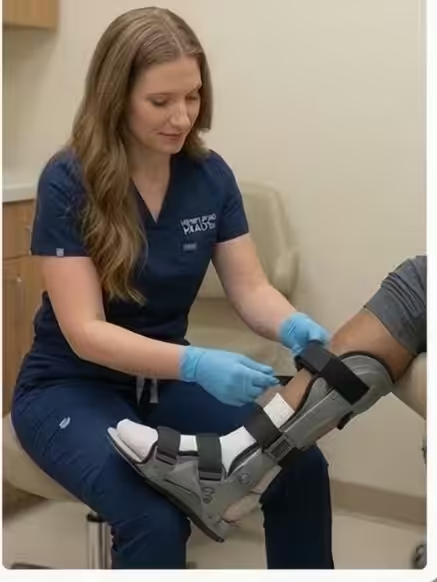
Quick answer: Lisfranc Injury Michigan is a common foot/ankle topic that affects many patients. Effective treatment starts with a targeted diagnosis, conservative-first treatment, and escalation only when needed. We treat this regularly at our Howell and Bloomfield Township practices. Call (810) 206-1402.
The most important clinical decision with Lisfranc Injury Michigan isn’t which treatment to start with — it’s identifying the correct subtype. That changes everything. Call (810) 206-1402.
Dr. Tom’s Wound Care Kit
Dr. Tom’s Top Pain Relief Picks — Dr. Hoy’s (2026)
Affiliate disclosure: As an Amazon Associate, Balance Foot & Ankle earns from qualifying purchases. I personally use Dr. Hoy’s in my practice for patients who need topical relief.
| Product | Best For | Dr. Tom’s Take | Get It |
|---|---|---|---|
| Dr. Hoy’s Natural Pain Relief Gel 3.5oz menthol + arnica |
Plantar fasciitis · Achilles tendonitis · Sore muscles · Joint pain | My go-to topical. Cooling-then-warming sensation. No greasy residue. Non-NSAID alternative. | Buy Now |
| Dr. Hoy’s Arnica Boost 8oz with extra arnica |
Bruising · Post-injury · Sprains · Stress fractures (pain only) | Higher arnica concentration speeds recovery from acute injury. Use 4x daily for first 7 days. | Buy Now |
| Dr. Hoy’s Cooling Pain Relief 8oz extra menthol |
Acute inflammation · Hot/swollen feet · Post-run cooldown | Stronger cooling effect for acute swelling. Pair with ice for first 48 hours after injury. | Buy Now |
| Dr. Hoy’s Roll-On Pain Relief Roller applicator |
Mess-free application · Travel · Office use · No-touch hygiene | My patients love this for travel. Glides on without hand contact — cleanest application available. | Buy Now |
| Dr. Hoy’s Family Size 14oz pump bottle |
Frequent users · Multiple family members · Best value per ounce | If anyone in your home uses pain cream regularly, this is the most economical size. Same formula. | Buy Now |
Why I recommend Dr. Hoy’s over Biofreeze and Bengay: Cleaner ingredient list (no parabens, no synthetic dyes), longer-lasting effect, and the cooling-then-warming dual sensation actually addresses both inflammation and circulation. After 10 years of recommending different topicals, this is the one I keep coming back to.
Medically reviewed by Dr. Tom Biernacki, DPM · Board-Certified Podiatric Surgeon · Last reviewed: April 2026 · Editorial Policy
Related Conditions
Quick Answer
Lisfranc Injury Treatment in Michigan Surgery & Recove relates to foot pain — typically caused by overuse, footwear, or biomechanics. Most patients improve in 6-12 weeks with conservative care. Same-week appointments in Howell + Bloomfield Township: (810) 206-1402.

Medically reviewed by Dr. Tom Biernacki, DPM — Board-Certified Podiatric Surgeon — Balance Foot & Ankle, Howell & Bloomfield Township, MI. Last updated April 2026.
▶ Watch

Lisfranc injuries are among the most commonly missed diagnoses in foot and ankle medicine — and one of the most consequential when missed. A Lisfranc injury that goes untreated or is undertreated develops into severe midfoot arthritis within 12–18 months, often requiring fusion surgery. At Balance Foot & Ankle, our Michigan podiatric surgeons specialize in accurate diagnosis and appropriate surgical management of these complex injuries.
What Is a Lisfranc Injury?
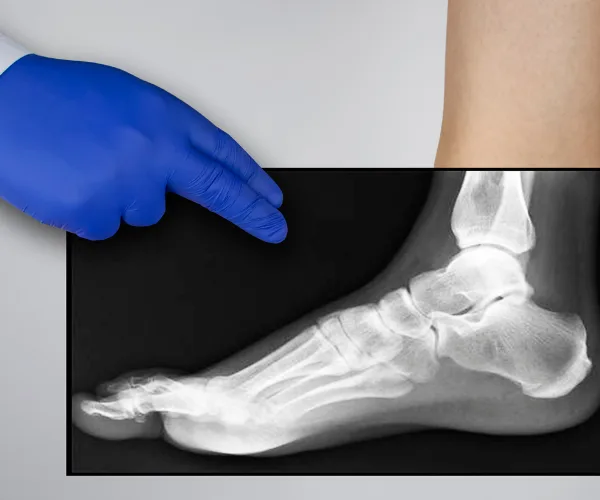

The Lisfranc joint complex is the articulation between the metatarsal bones and the tarsal bones (navicular, cuboid, and cuneiforms) at the midfoot. This joint complex is stabilized by the Lisfranc ligament — a thick band connecting the medial cuneiform to the base of the second metatarsal — and multiple dorsal and plantar ligaments. A Lisfranc injury encompasses a spectrum from ligamentous sprain to complete fracture-dislocation of the midfoot.
The injury mechanism is typically a twisting fall on a plantar-flexed foot (common in athletes) or an axial load through the forefoot (common in motor vehicle accidents). A seemingly minor twist — such as stepping in a hole or falling off a curb — can produce a subtle Lisfranc ligament tear that is easily mistaken for a “bad midfoot sprain.”
Why Lisfranc Injuries Are Frequently Missed
Lisfranc injuries are misdiagnosed or underdiagnosed in up to 20–30% of cases at initial presentation. Standard X-rays may appear nearly normal — particularly in purely ligamentous injuries where no fracture is present. The key diagnostic finding is subtle widening of the space between the first and second metatarsal bases on weight-bearing X-rays, which is absent on non-weight-bearing films taken in the emergency department. CT scan detects fractures not visible on X-ray. MRI detects ligamentous injuries and bone marrow edema in equivocal cases.
Any patient with midfoot pain, swelling, and difficulty bearing weight after a foot injury should be evaluated with weight-bearing X-rays. The classic “fleck sign” — a tiny avulsion fracture at the base of the second metatarsal or medial cuneiform — is pathognomonic for Lisfranc ligament avulsion when present.
Classification and Treatment
Stable Injuries (Pure Ligamentous Sprains, <2 mm Diastasis)
Truly stable Lisfranc injuries with less than 2 mm of diastasis (separation) on weight-bearing X-rays can be managed non-surgically — non-weight-bearing in a cast for 6 weeks, followed by gradual progressive weight bearing. These patients must be re-imaged with weight-bearing films after the initial swelling subsides, as apparently stable injuries sometimes reveal instability once the patient loads the foot. Any recurrent widening indicates surgical stabilization is needed.
Unstable Injuries (≥2 mm Diastasis, Fracture-Dislocations)
Unstable Lisfranc injuries require surgical stabilization to prevent midfoot collapse and secondary arthritis. Two surgical approaches are used:
- Open reduction and internal fixation (ORIF): Anatomic reduction and fixation with screws across the medial column (first, second, third tarsometatarsal joints). Provides excellent stability for fracture-dislocations. Screws are often removed at 3–5 months once healing is confirmed. ORIF is preferred for primarily bony injuries with articular congruity.
- Primary arthrodesis (fusion): Fusing the medial column joints (1st–3rd tarsometatarsal) at the time of acute injury. No screw removal needed. Multiple randomized trials have demonstrated that primary fusion achieves superior outcomes compared to ORIF for purely ligamentous Lisfranc injuries — with lower rate of secondary arthritis and better functional scores. The lateral column (4th–5th TMT joints) is generally not fused to preserve lateral column motion.
Recovery Timeline
After surgical stabilization: non-weight-bearing for 6–8 weeks, followed by progressive weight bearing in a boot over 6 weeks, transition to supportive shoes at 3–4 months, and return to sport or full activity at 6–12 months depending on severity. Custom orthotics with midfoot support are typically prescribed for long-term function following Lisfranc repair.
Frequently Asked Questions
How do I know if I have a Lisfranc injury?
Suspect a Lisfranc injury after any significant midfoot injury — especially if you have pain, swelling, and bruising across the top of the midfoot and difficulty bearing weight. The “plantar ecchymosis sign” (bruising on the sole of the midfoot) is a helpful indicator. Diagnosis requires weight-bearing X-rays — not the non-weight-bearing films typically taken in an emergency department. If your ER X-rays were normal but you still cannot bear weight, follow up with a podiatrist or orthopedic specialist for weight-bearing films.
What happens if a Lisfranc injury is not treated properly?
Untreated or undertreated unstable Lisfranc injuries collapse into midfoot deformity (flatfoot) and develop severe, painful midfoot arthritis within 12–18 months. This late arthritis often requires extensive midfoot fusion surgery — more complex and with less predictable outcomes than acute repair. Early accurate diagnosis and appropriate treatment prevent this devastating cascade.
Is Lisfranc surgery covered by insurance in Michigan?
Yes — Lisfranc injury surgery (ORIF or primary arthrodesis) is covered by all major Michigan insurance plans including Blue Cross Blue Shield, Aetna, Priority Health, HAP, and Medicare. It is a necessary trauma surgery. See our Insurance & Costs page for details on your specific coverage.
Where can I get a Lisfranc injury evaluated near me in Michigan?
📧 Get Dr. Tom’s Free Lab Test Guide
Discover the 5 lab tests every person over 35 should ask their doctor about — explained in plain English by a board-certified physician.
Balance Foot & Ankle evaluates and treats Lisfranc injuries at our clinics in Howell and Brighton. We obtain in-office weight-bearing X-rays and refer for CT or MRI when needed. Our podiatric surgeons perform ORIF and primary arthrodesis for unstable injuries. Call us or book online for a prompt evaluation — early treatment is critical for Lisfranc injuries.
For insurance coverage information, visit our Insurance & Costs page.
Join 950,000+ Learning About Foot Health
Dr. Tom shares honest medical advice, supplement reviews, and treatment guides you won’t find anywhere else.
Subscribe on YouTube →📍 Located in Michigan?
Our board-certified podiatrists treat this condition at two convenient locations. Same-day appointments often available.

Insurance Accepted
BCBS · Medicare · Aetna · Cigna · United Healthcare · HAP · Priority Health · Humana · View All →
Howell Office
4330 E Grand River Ave
Howell, MI 48843
Get Directions →
Bloomfield Township Office
43494 Woodward Ave, #208
Bloomfield Township, MI 48302
Get Directions →
Your Board-Certified Podiatrists



Ready to Get Back on Your Feet?
Same-week appointments available at both locations.
Book Your AppointmentIn-Office Treatment at Balance Foot & Ankle
When conservative care isn’t enough, Dr. Tom Biernacki and the team at Balance Foot & Ankle offer advanced, same-day options — including Foot & Ankle Fracture Repair Michigan at our Howell and Bloomfield Township clinics.
Same-day appointments available. Call (810) 206-1402 or book online.
Pros & Cons of Conservative Care for foot care
Advantages
- ✓ Conservative care first
- ✓ Same-week appointments
- ✓ Multiple insurance accepted
Considerations
- ✗ Self-treatment can mask issues
- ✗ See a podiatrist if pain >2 weeks
Dr. Tom’s Recommended Products for foot care
Affiliate disclosure: As an Amazon Associate, Balance Foot & Ankle earns from qualifying purchases. We only recommend products we use with patients.
Footnanny Heel Cream Dr. Tom’s Pick
Best for: Daily moisturizer for cracked heels
Ready to Get Back on Your Feet?
Same-day appointments in Howell + Bloomfield Township. Most insurance accepted. Dr. Tom Biernacki, DPM & team.
Book Today — Same-Day Appointments Available
Call Now: (810) 206-1402
About Your Care Team at Balance Foot & Ankle
Dr. Tom Biernacki, DPM · Board-Certified Foot & Ankle Surgeon. Specializes in conservative-first care, minimally invasive bunion surgery, and complex reconstruction.
Dr. Carl Jay, DPM · Accepting new patients. Specializes in sports medicine, athletic injuries, and routine podiatric care.
Dr. Daria Gutkin, DPM, AACFAS · Accepting new patients. Specializes in surgical reconstruction and pediatric podiatry.
Locations: 4330 E Grand River Ave, Howell, MI 48843 · 43494 Woodward Ave Suite 208, Bloomfield Township, MI 48302
Hours: Mon–Fri 8:00 AM – 5:00 PM · (810) 206-1402
In-Office Treatment at Balance Foot & Ankle
If home treatment isn’t providing relief for your foot fracture, our podiatry team at Balance Foot & Ankle can help with same-day evaluations and advanced in-office care.
Same-day appointments available. (810) 206-1402
Doctor Hoy’s Natural Pain Relief Gel
Natural topical pain relief I use in our clinic. Arnica + camphor formula — apply directly to the area 3–4x daily. ($20–25)
Shop Doctor Hoy’s →Related Care at Balance Foot & Ankle
Clinical lisfranc services at our Howell and Bloomfield Township offices.
Get Expert Care at Balance Foot & Ankle
Same-week appointments at our Howell and Bloomfield Township offices. Board-certified podiatric surgeons. Most insurance accepted.
Ready for Expert Care?
Same-day appointments in Howell & Bloomfield Township, MI.
4.9★ | 1,123 Reviews | 3,000+ Surgeries
Or call: (810) 206-1402

Dr. Tom Biernacki, DPM is a double board-certified podiatrist and foot & ankle surgeon at Balance Foot & Ankle Specialists in Southeast Michigan. With over a decade of clinical experience, he specializes in heel pain, bunions, diabetic foot care, sports injuries, and minimally invasive surgery. Dr. Biernacki is a member of the APMA and ACFAS, and his patient education content on MichiganFootDoctors.com and YouTube has reached over one million views.
- Plantar Fasciitis: Diagnosis and Conservative Management (PubMed)
- Plantar Fasciitis (APMA)
- Diagnosis and Treatment of Plantar Fasciitis (PubMed / AAFP)
- Heel Pain (APMA)
Dr. Tom Biernacki, DPM is a board-certified foot & ankle surgeon (ABFAS & ABPM) at Balance Foot & Ankle Specialists in Southeast Michigan. With over a decade of clinical experience, he specializes in heel pain, bunions, diabetic foot care, sports injuries, and minimally invasive surgery. Dr. Biernacki is a member of the APMA and ACFAS, and his patient education content on MichiganFootDoctors.com and YouTube has made him one of the most-followed foot & ankle educators on YouTube.