

Medically reviewed by Dr. Tom Biernacki, DPM — Board-certified foot & ankle surgeon, 3,000+ surgeries performed. Updated April 2026 with current clinical evidence. This article reflects real practice experience from Balance Foot & Ankle Specialists in Howell and Bloomfield Hills, Michigan.
The most important clinical decision with Medicare Coverage Diabetic Shoes Orthotics Therapeutic Footwear Benefit isn’t which treatment to start with — it’s identifying the correct subtype. That changes everything. Call (810) 206-1402.
Quick Answer
Diabetic peripheral neuropathy is nerve damage from prolonged hyperglycaemia, causing burning, tingling, numbness, or loss of protective sensation in the feet. It will not reverse without addressing glucose control. Daily foot checks, proper footwear, and annual monofilament testing prevent ulceration.
Medically reviewed by Dr. Tom Biernacki, DPM — Board-Certified Podiatric Surgeon — Balance Foot & Ankle, Howell & Bloomfield Hills, MI. Last updated April 2026.
Medically reviewed by Dr. Tom Biernacki, DPM
Board-certified podiatric surgeon | Balance Foot & Ankle
Last reviewed: April 2, 2026


![Diabetes Peripheral Neuropathy Treatment [Diabetic Nerve Pain Remedy]](https://www.michiganfootdoctors.com/wp-content/cache/flying-press/83886306c119511909f4e50d00e25908.jpg)
Watch: Diabetes Peripheral Neuropathy Treatment [Diabetic Nerve Pain Remedy] — MichiganFootDoctors YouTube
Quick Answer: Medicare Coverage for Diabetic Shoes
Medicare Part B covers one pair of therapeutic shoes (depth shoes or custom-molded shoes) plus three pairs of inserts per calendar year for qualifying diabetic patients through the Therapeutic Shoe Bill (TSB). To qualify, you must have diabetes (Type 1 or 2) under a comprehensive diabetes management plan with a physician, plus at least one qualifying foot condition: peripheral neuropathy, history of foot ulcer, callus formation, poor circulation, foot deformity, or previous partial foot amputation. Your treating physician certifies medical necessity, and a podiatrist or pedorthist fits and dispenses the footwear. Understanding the process ensures you receive this valuable benefit that prevents costly diabetic foot complications.
Medically reviewed by Dr. Tom Biernacki, DPM — Board-certified podiatrist at Balance Foot & Ankle Specialists
Affiliate disclosure: This page contains affiliate links to products we recommend. We may earn a small commission at no extra cost to you.
What Is the Therapeutic Shoe Bill (TSB)?
The Therapeutic Shoe Bill, established under Medicare Part B, is a preventive benefit specifically designed to reduce the devastating foot complications that affect millions of Americans with diabetes. Medicare recognized that providing therapeutic footwear to at-risk diabetic patients is far less costly than treating the consequences of inadequate foot protection—diabetic foot ulcers cost an average of $8,000-$17,000 per episode to treat, and lower extremity amputations resulting from uncontrolled ulcers cost $100,000+ with catastrophic impact on quality of life and survival. The TSB covers therapeutic shoes and inserts as durable medical equipment (DME) under HCPCS codes A5500-A5513.
The annual benefit includes either one pair of custom-molded shoes (for patients with significant foot deformity that cannot be accommodated by depth shoes) or one pair of depth shoes, plus up to three pairs of multi-density inserts. Additional coverage is available for shoe modifications like rocker soles, flared soles, and metatarsal bars when documented as medically necessary. This benefit resets annually each calendar year, meaning eligible patients can receive new therapeutic footwear every year—an important provision because diabetic shoes lose their protective properties as materials compress and wear over 12-18 months of daily use.
Who Qualifies for Medicare Diabetic Shoes
Qualifying for Medicare diabetic shoe coverage requires meeting all three criteria simultaneously. First, the patient must have a diagnosis of diabetes mellitus (Type 1 or Type 2) documented in their medical record. Second, the patient must be under a comprehensive diabetes management plan supervised by their primary care physician or endocrinologist. Third, the patient must have at least one qualifying foot condition documented through examination by a podiatrist, orthopedic surgeon, or other qualified physician.
The comprehensive diabetes management plan requirement means you must be actively managed for your diabetes—having a diabetes diagnosis alone is insufficient. Your managing physician must document that you are receiving ongoing treatment including medication management, dietary counseling, and regular monitoring. This requirement ensures that therapeutic footwear is part of a coordinated diabetes care approach rather than an isolated intervention. Patients who are newly diagnosed with diabetes can qualify immediately if they meet the foot condition criteria and are established in a management plan.
Qualifying Foot Conditions for the TSB
Medicare specifies six foot conditions that qualify a diabetic patient for therapeutic shoe coverage. Having at least one of these conditions, documented through clinical examination, meets the medical necessity requirement. The qualifying conditions are: peripheral neuropathy with evidence of callus formation (the most common qualifier, affecting over 50% of long-term diabetic patients); history of pre-ulcerative calluses; history of previous foot ulceration; foot deformity including hammertoes, bunions, Charcot foot, or prominent metatarsal heads; poor circulation (peripheral arterial disease) documented by clinical findings or non-invasive vascular testing; and previous partial or complete foot amputation.
Most diabetic patients over age 65 with a diabetes history of 10+ years qualify under the peripheral neuropathy and callus formation criteria because these are nearly universal consequences of long-standing diabetes. The podiatrist’s examination documents the specific qualifying condition(s), quantifies the neuropathy severity (typically using monofilament testing and vibratory perception), and establishes the medical necessity for therapeutic footwear. Even patients with “well-controlled” diabetes often qualify because peripheral neuropathy develops independently of blood sugar control in many patients.
The Certification Process: Step by Step
The Medicare diabetic shoe certification process involves specific documentation requirements that must be completed in the correct order to avoid claim denials. Step one: your managing physician (primary care doctor or endocrinologist—not the podiatrist who will fit the shoes) certifies that you have diabetes, are under a comprehensive management plan, and need therapeutic footwear by completing the Statement of Certifying Physician form. This certification must occur within 6 months prior to shoe delivery.
Step two: a podiatrist, pedorthist, orthotist, or prosthetist performs a comprehensive foot examination that documents the qualifying foot condition(s), takes measurements and impressions for proper fitting, and determines whether depth shoes or custom-molded shoes are medically appropriate. Step three: the qualified supplier fits and dispenses the therapeutic shoes and inserts, ensuring proper fit and function. The fitting must be performed by a Medicare-enrolled DME supplier—not all shoe stores qualify. Your podiatrist’s office is typically the most convenient and clinically appropriate location for the entire process because the examining physician and the fitting specialist work together.
Depth Shoes vs Custom-Molded Shoes: Which Do You Need?
Medicare covers two categories of therapeutic shoes, and understanding the distinction helps patients and providers select the appropriate option. Depth shoes (also called extra-depth shoes) have additional depth throughout the shoe—typically 1/4 to 1/2 inch deeper than standard shoes—to accommodate custom inserts, orthotic devices, and foot deformities without creating pressure points. Depth shoes look similar to well-constructed athletic or walking shoes and are appropriate for the majority of diabetic patients who need protective footwear. They come in a range of widths and can accommodate mild to moderate foot deformities.
Custom-molded shoes are fabricated from a mold or cast of the patient’s individual foot and are reserved for patients whose foot deformity is too severe to be accommodated by depth shoes. Indications for custom-molded shoes include significant Charcot foot deformity, severe hammertoe or bunion deformity that cannot fit standard shoe shapes, post-amputation foot anatomy requiring specialized shoe construction, and rigid foot deformities that create dangerous pressure concentrations in standard footwear. Custom-molded shoes cost more and take longer to fabricate (typically 2-4 weeks), but they provide the precise fit needed for severely deformed feet where standard depth shoes would create harmful pressure points.
Inserts and Orthotics Coverage Under Medicare
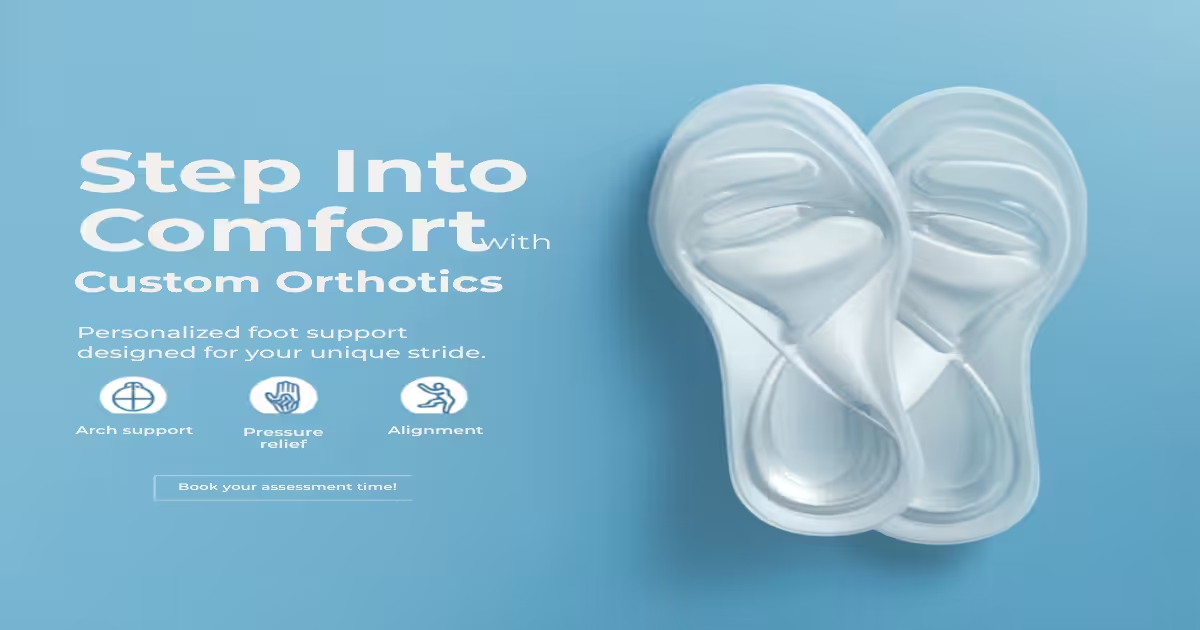
Medicare covers up to three pairs of multi-density inserts per calendar year for qualifying diabetic patients—more generous than many patients realize. These inserts are distinct from the insoles that come standard in the shoes; they are customized therapeutic devices designed to redistribute plantar pressure, accommodate foot deformities, and reduce shear forces that cause tissue breakdown. Multi-density inserts use layers of different-firmness materials: a softer top layer that conforms to the foot’s contours and a firmer base layer that provides structural support and pressure redistribution.
The three pairs of inserts are strategically valuable because inserts lose their cushioning and accommodative properties faster than shoes—typically every 3-4 months of daily wear. Having three pairs allows patients to rotate inserts, extending the effective life of each pair, or to have inserts for different activities (daily walking, exercise, dress occasions). For patients with active callus formation or pre-ulcerative changes, the podiatrist can modify insert design at each replacement to address evolving pressure distribution needs. Some patients qualify for custom-molded inserts rather than prefabricated multi-density inserts when their foot deformity requires individually crafted accommodation.
Covered Shoe Modifications for Diabetic Feet
Medicare also covers medically necessary shoe modifications that address specific biomechanical or protective needs beyond what standard depth shoes provide. Common covered modifications include rocker soles that reduce pressure under the metatarsal heads and limit motion at the MTP joints—particularly important for patients with rigid great toe (hallux rigidus) or metatarsal head prominence. Metatarsal bars offload pressure from specific metatarsal heads where pre-ulcerative callus has formed. Flared soles provide additional stability for patients with balance deficits or ankle instability. Wedge modifications correct limb length discrepancy or biomechanical malalignment.
Each modification must be documented as medically necessary and linked to a specific clinical finding on the foot examination. For example, a rocker sole modification requires documentation of metatarsal head prominence with callus formation or a history of metatarsal head ulceration. The modification is applied to the therapeutic shoes by a qualified supplier and billed separately from the shoes and inserts. Understanding which modifications are available and when they’re indicated helps ensure that patients receive the most comprehensive foot protection possible under the Medicare benefit.
Fitting and Dispensing Requirements
Proper fitting of diabetic therapeutic shoes requires more careful attention than standard shoe fitting because of the neuropathic patient’s inability to feel pressure and pain that would normally signal poor fit. The fitting process includes weight-bearing measurement of both feet (diabetic feet are frequently different sizes), assessment of foot deformities that affect shoe design, evaluation of the inserts within the shoes under weight-bearing conditions, and gait observation to ensure the shoes function properly during walking. The provider must verify that there are no areas of excessive pressure, that the heel is stable, that the toe box provides adequate clearance for all toes, and that the shoe closure system accommodates any edema fluctuation.
Medicare requires that the fitting and dispensing be performed by a Medicare-enrolled DME supplier—this includes podiatrists enrolled as DME suppliers, pedorthists, orthotists, and prosthetists. The supplier must maintain documentation of the fitting process, including the specific shoe model, size, width, and any modifications applied. The patient signs a delivery receipt confirming they have received the shoes and inserts. All documentation—the physician’s certification, the podiatrist’s examination, and the supplier’s fitting records—must be maintained for a minimum of 7 years for potential Medicare audit review.
What You’ll Actually Pay: Costs, Copays, and Deductibles
Understanding the financial aspect of Medicare diabetic shoes helps patients plan and budget for their foot protection. Medicare Part B covers 80% of the approved amount for therapeutic shoes, inserts, and modifications after the annual Part B deductible has been met. The patient is responsible for the remaining 20% coinsurance. For 2026, the Part B annual deductible is typically around $240 (confirm current amount with Medicare). Once the deductible is met, the patient’s 20% coinsurance for a typical pair of depth shoes with inserts generally runs $50-100 out of pocket.
Many Medicare Advantage plans and Medigap supplemental insurance policies cover the 20% coinsurance, potentially reducing the patient’s out-of-pocket cost to zero. Some Medicare Advantage plans offer enhanced diabetic shoe benefits beyond the standard Part B coverage. Patients should verify their specific plan’s coverage before their fitting appointment. It’s worth noting that Medicare’s coverage of therapeutic shoes saves patients significant money compared to purchasing equivalent diabetic shoes out of pocket, where high-quality depth shoes typically retail for $150-400 per pair and custom inserts run $200-400 per pair.
Annual Replacement: Use Your Benefit Every Year
One of the most underused aspects of the Medicare diabetic shoe benefit is the annual replacement provision. Many qualifying patients receive therapeutic shoes once and never realize they’re eligible for a new pair every calendar year. This annual replacement is critically important because the protective materials in diabetic shoes—particularly the cushioning layers in the insole and midsole—compress and lose their pressure-redistributing properties with 12-18 months of daily wear. Worn therapeutic shoes can actually become harmful because the compressed cushioning creates new pressure concentrations at the same high-risk areas they were designed to protect.
Mark your calendar to schedule your annual diabetic shoe fitting in January or February each year to ensure you start each year with maximum foot protection. The certification process needs to be completed annually—your managing physician provides a new Statement of Certifying Physician, and your podiatrist performs a new foot examination. This annual evaluation is valuable beyond just shoe fitting; it provides regular monitoring of neuropathy progression, circulation status, and skin integrity that may identify emerging problems before they become foot ulcers or require hospitalization.
Common Denial Reasons and How to Avoid Them
Medicare claim denials for diabetic shoes are frustrating but usually preventable with proper documentation and process adherence. The most common denial reasons include: the certifying physician signed the certification more than 6 months before shoe delivery (timing violation); the certifying physician is the same physician who will fit and dispense the shoes (the certifying physician cannot be the dispensing supplier); incomplete documentation of the qualifying foot condition on the podiatric examination; the patient’s comprehensive diabetes management plan is not documented in the medical record; and the supplier is not enrolled as a Medicare DME provider.
To avoid denials, ensure your primary care physician or endocrinologist completes the certification (not your podiatrist), schedule the certification appointment within 6 months of your expected shoe delivery date, bring documentation of your diabetes management plan to the podiatric evaluation, verify that the fitting provider is Medicare DME-enrolled before your appointment, and keep copies of all documentation. Your podiatrist’s office staff is typically experienced in navigating the Medicare diabetic shoe process and can guide you through each step to minimize denial risk.
Why Diabetic Shoes Matter: The Prevention Statistics

The clinical case for therapeutic diabetic footwear is compelling. Approximately 15-25% of people with diabetes will develop a foot ulcer during their lifetime, and foot ulcers precede 85% of diabetes-related lower extremity amputations. The annual cost of treating diabetic foot ulcers in the United States exceeds $9 billion. Studies demonstrate that proper therapeutic footwear reduces foot ulcer recurrence by 50-60% in high-risk patients compared to standard footwear—making therapeutic shoes one of the most cost-effective preventive interventions in diabetes care.
The mechanism is straightforward: diabetic neuropathy eliminates the pain signals that normally warn of excessive pressure, friction, and tissue damage. Without these warning signals, the foot sustains repetitive microtrauma from ill-fitting shoes that progresses silently to callus formation, tissue breakdown, and ultimately ulceration. Therapeutic shoes with properly fitted inserts redistribute plantar pressure away from high-risk areas, reduce shear forces during walking, and accommodate foot deformities that concentrate pressure—eliminating the mechanical drivers of ulcer formation before tissue damage occurs.
Neuropathy and the Critical Role of Protective Footwear
Peripheral diabetic neuropathy transforms the relationship between your feet and your shoes from a partnership into a potential hazard. With intact sensation, your feet communicate constantly with your brain—reporting pressure, friction, temperature, and pain that naturally cause you to adjust your gait, shift position, and change shoes before tissue damage occurs. When neuropathy eliminates this sensory feedback, you lose the early warning system that prevents foot injury. You can walk all day on a seam in your sock, a pebble in your shoe, or a pressure point from ill-fitting footwear without ever feeling the progressive tissue destruction occurring beneath your skin.
This is why therapeutic footwear is not optional for neuropathic diabetic patients—it’s essential preventive medical equipment. The depth shoe’s extra interior volume eliminates the pressure points that standard shoes create. The multi-density inserts compensate for the lost protective sensation by mechanically reducing pressure at high-risk areas. And the structured shoe construction prevents foreign objects from entering the shoe—one of the most common causes of diabetic foot ulcers is a patient stepping on a tack, stone, or other object inside their shoe without feeling it.
Ulcer Prevention Through Proper Therapeutic Footwear
Diabetic foot ulcers most commonly develop at predictable anatomical locations where peak plantar pressure concentrates during walking: under the first and fifth metatarsal heads, the great toe pulp, the heel, and over bony prominences created by hammertoes and bunions. Therapeutic inserts are specifically designed to redistribute pressure away from these high-risk zones by using multi-density construction that offloads peak pressure areas while maintaining support in the surrounding tissue. The result is a more uniform pressure distribution across the entire plantar surface, reducing peak pressures at any single point below the threshold for tissue breakdown.
For patients with a history of previous ulceration—the strongest predictor of future ulcer development—therapeutic footwear becomes even more critical because healed ulcer sites have compromised tissue integrity. Scar tissue has reduced tensile strength, diminished vascularity, and absent subcutaneous fat padding compared to normal plantar tissue. These healed sites break down at lower pressure thresholds than normal tissue, requiring more aggressive pressure redistribution through custom inserts with total contact design and accommodative modifications. The annual mortality rate for patients with diabetic foot ulcers is approximately 5%—making ulcer prevention through proper footwear literally a life-saving intervention.
PowerStep-supplemental-support” id=”powerstep-arch”>PowerStep Supplemental Arch Support for Diabetic Patients
While Medicare covers basic diabetic inserts, many patients benefit from upgrading to PowerStep orthotic insoles for enhanced biomechanical correction that standard Medicare inserts often lack. The Pinnacle series provides medical-grade arch support with a deep heel cradle that stabilizes pronation — a critical factor for diabetic patients who develop Charcot foot deformities or progressive flatfoot from neuropathy-related muscle weakness.
PowerStep insoles complement your Medicare-covered depth shoes by adding the precise biomechanical control that prevents abnormal pressure distribution. Diabetic patients frequently develop metatarsal head prominence from intrinsic muscle atrophy, and PowerStep’s contoured arch design redistributes plantar pressures away from these vulnerable areas. The semi-rigid shell provides enough control to slow progressive deformity without creating the rigidity that could cause new pressure points on insensate feet.
Doctor Hoy‘s Natural Pain Relief for Diabetic Foot Discomfort
Diabetic peripheral neuropathy often presents with paradoxical pain — burning, tingling, and shooting sensations despite reduced protective sensation. Doctor Hoy’s Natural Pain Relief Gel provides topical relief using arnica and menthol without the systemic side effects of oral neuropathy medications like gabapentin or pregabalin, which can cause dizziness and increase fall risk in diabetic patients.
The natural formulation is particularly appropriate for diabetic patients who already take multiple medications for glucose management, blood pressure, and cholesterol. Adding another systemic medication increases polypharmacy risks, while topical application delivers relief directly to affected areas. Doctor Hoy’s clean ingredient profile avoids petroleum-based chemicals that could potentially irritate fragile diabetic skin prone to breakdown and slow healing.
Apply Doctor Hoy’s gel to the tops of feet and ankles where neuropathic pain concentrates — never between toes or on open wounds. The cooling menthol sensation provides immediate comfort while arnica works on deeper tissue inflammation. Many of our diabetic patients at Balance Foot & Ankle use this as part of their nightly foot care routine alongside their daily foot inspection, moisturizing, and nail care regimen.
DASS Compression Socks for Diabetic Circulation Support
Peripheral vascular disease accompanies diabetes in over 50% of patients, making circulation support essential alongside therapeutic footwear. DASS compression socks provide graduated compression that promotes venous return without the excessive tightness that could compromise already-diminished arterial flow in diabetic extremities.
The key with diabetic compression is appropriate pressure levels — DASS offers mild to moderate graduated compression that enhances circulation without restricting it. Diabetic patients with peripheral arterial disease (PAD) need careful compression selection, as overly aggressive compression can worsen ischemic symptoms. DASS socks provide the therapeutic sweet spot: enough compression to reduce dependent edema and improve venous return while maintaining adequate arterial perfusion to already-compromised tissues.
Wearing DASS graduated compression socks inside your Medicare-covered depth shoes creates a comprehensive lower extremity protection system. The compression addresses the vascular component while the depth shoes and custom inserts handle the biomechanical and protective components. Seamless toe construction in DASS socks also eliminates friction points that could initiate skin breakdown on neuropathic feet — a detail that standard socks overlook but that can mean the difference between healthy skin and a diabetic ulcer.
Your Complete Diabetic Foot Protection Kit
🩺 Complete Diabetic Foot Protection Kit
Medicare covers the foundation — but comprehensive diabetic foot protection requires a complete system. Combine these evidence-based products with your Medicare-covered therapeutic shoes for maximum ulcer prevention and comfort:
- PowerStep Pinnacle Insoles — Medical-grade arch support for biomechanical correction between Medicare replacements
- Doctor Hoy’s Pain Relief Gel — Natural topical relief for neuropathic burning and tingling without systemic side effects
- DASS Compression Socks — Graduated compression for circulation support with seamless diabetic-safe construction
This combination addresses all three pillars of diabetic foot protection: biomechanical support (PowerStep), pain management (Doctor Hoy’s), and vascular health (DASS). Dr. Biernacki recommends this complete system to all diabetic patients at Balance Foot & Ankle.
Most Common Mistake: Waiting Until After an Ulcer to Get Diabetic Shoes
🔑 Key Takeaway: The Biggest Medicare Diabetic Shoe Mistake
The most costly mistake diabetic patients make is treating the Therapeutic Shoe Benefit as a reactive program — waiting until after developing an ulcer, callus, or deformity to pursue coverage. Medicare designed this benefit as preventive care, and you qualify the moment you have diabetes plus any qualifying foot condition (neuropathy, history of ulceration, foot deformity, poor circulation, callus formation, or previous amputation). Every month spent in inappropriate footwear accumulates microtrauma on insensate feet that compounds silently until a wound appears. By then, you’re facing a $10,000-$50,000 wound care journey that could have been prevented by a $0-$150 copay for proper diabetic shoes. At Balance Foot & Ankle, we certify patients the same day as their diabetic foot exam — there is no reason to delay when prevention costs a fraction of treatment.
Warning Signs: When Your Diabetic Feet Need Immediate Attention
⚠️ Warning Signs — Seek Immediate Podiatric Care
- Open wound or sore that won’t heal within 2 weeks — Even a small blister or crack can become a limb-threatening diabetic ulcer if not treated promptly by a podiatrist
- Color changes in your feet (red, purple, black, or white areas) — These indicate vascular compromise and possible tissue death requiring urgent evaluation
- Sudden swelling, warmth, or redness in one foot — Classic signs of acute Charcot neuroarthropathy, which can cause permanent foot collapse if not immobilized immediately
- New numbness, tingling, or loss of sensation spreading up the leg — Progressive neuropathy that changes your risk category and may require updated footwear prescriptions
- Foul odor or drainage from any foot wound — Signs of infection that can rapidly progress to osteomyelitis (bone infection) in diabetic patients, potentially requiring hospitalization
- Shoe wear patterns showing dramatic asymmetry — Indicates progressive deformity or gait abnormality that your current therapeutic footwear may no longer accommodate
- Blood sugar consistently above 250 mg/dL with any foot symptom — Hyperglycemia severely impairs wound healing and immune response, making any foot problem exponentially more dangerous
Do not wait for your next scheduled appointment if you notice any of these signs. Diabetic foot emergencies escalate rapidly — what starts as a minor wound can progress to amputation within weeks without proper intervention. Call Balance Foot & Ankle immediately at (248) 348-5553 or visit your nearest emergency room if you cannot reach us.
When to see a podiatrist about diabetic footwear:
- You have diabetes and have never been fitted for therapeutic shoes
- Your current shoes cause blisters, calluses, or pressure points
- You have numbness or tingling in your feet (peripheral neuropathy)
- You notice redness, swelling, or skin breakdown on your feet
- Your Medicare benefit year has renewed and you need replacement shoes
In-Office Treatment at Balance Foot & Ankle
If home care isn’t resolving your diabetic foot concern, a visit with a board-certified podiatrist is the fastest path to accurate diagnosis and a personalized plan. At Balance Foot & Ankle Specialists, Dr. Tom Biernacki, Dr. Carl Jay, and Dr. Daria Gutkin offer same-day and next-day appointments at both our Howell and Bloomfield Hills offices. We perform on-site diagnostic ultrasound, digital X-ray, conservative care, advanced regenerative treatments, and minimally invasive surgery when indicated.
Call (810) 206-1402 or request an appointment online. Most insurance plans accepted, including Medicare, Blue Cross Blue Shield, Aetna, Cigna, and United Healthcare.
Frequently Asked Questions
When should I see a podiatrist?
If symptoms persist past 2 weeks, affect your normal activity, or are accompanied by red-flag symptoms (warmth, redness, swelling, inability to bear weight).
What does treatment cost?
Most diagnostic visits and conservative treatments are covered by Medicare and major insurers. Out-of-pocket costs vary by your specific plan.
How quickly can I get an appointment?
Most non-urgent cases see us within 5 business days. Urgent cases (sudden pain, possible fracture) typically same or next business day.
What is Custom orthotics?
Custom orthotics is a common foot/ankle condition that affects mobility and quality of life. Understanding the underlying cause is the first step in successful treatment. Our podiatrists at Balance Foot & Ankle perform a hands-on biomechanical exam, review your activity history, and use diagnostic imaging when appropriate to identify the root cause—not just treat the symptom. Many patients have been told to “rest and ice” without a deeper diagnostic workup; our approach is different.
Symptoms and warning signs
Common signs of custom orthotics include pain that worsens with activity, morning stiffness, swelling, tenderness when palpated, and difficulty bearing weight. If you experience sudden severe pain, inability to walk, visible deformity, numbness or color change, contact our office the same day or visit urgent care—these can signal a more serious injury such as a fracture, tendon rupture, or vascular compromise. Diabetics with any foot wound should seek same-day care.
Conservative treatment options
Most cases of custom orthotics respond to non-surgical care: structured rest, supportive footwear changes, custom orthotics, targeted stretching and strengthening protocols, anti-inflammatory medications when medically appropriate, and in-office procedures such as ultrasound-guided injections. We also offer advanced therapies including MLS laser therapy, EPAT/shockwave, regenerative injections, and image-guided procedures. Treatment is sequenced from least invasive to most invasive, and we explain the rationale at every step.
When is surgery considered?
Surgery is reserved for cases that fail 3-6 months of well-structured conservative care, when there is structural pathology (severe deformity, complete tear, advanced arthritis), or when imaging shows damage that will not heal without intervention. Our surgeons have performed 3,000+ foot and ankle procedures and prioritize minimally-invasive techniques whenever appropriate. We discuss recovery timelines, return-to-activity milestones, and realistic outcome expectations before any procedure is scheduled.
Recovery timeline and prevention
Recovery from custom orthotics varies based on severity and chosen treatment path. Conservative cases often improve within 4-8 weeks with consistent adherence to the protocol. Post-procedural recovery may range from a few days (in-office procedures) to several months (reconstructive surgery). Long-term prevention involves footwear assessment, activity modification, structured strengthening, and regular check-ins with your podiatrist if you have a history of recurrence. We provide written home-exercise plans and digital follow-up support.
Ready to feel better?
Same-week appointments available in Howell and Bloomfield Hills, Michigan.
Book Your Visit
Dr. Tom Biernacki, DPM is a board-certified foot & ankle surgeon (ABFAS & ABPM) at Balance Foot & Ankle Specialists in Southeast Michigan. With over a decade of clinical experience, he specializes in heel pain, bunions, diabetic foot care, sports injuries, and minimally invasive surgery. Dr. Biernacki is a member of the APMA and ACFAS, and his patient education content on MichiganFootDoctors.com and YouTube has made him one of the most-followed foot & ankle educators on YouTube.