


Quick answer: Nail Biopsy Abnormal Nails Laboratory Testing Guide is a common nail condition with multiple causes including trauma, fungal infection, biomechanical pressure, and underlying medical conditions. Treatment depends on the cause: trauma resolves as the nail grows out (6-12 months), fungus needs antifungal therapy, and biomechanical issues need shoe and orthotic correction. Call (810) 206-1402.
Medically reviewed by Dr. Tom Biernacki, DPM · Board-Certified Podiatric Surgeon · Last reviewed: April 2026 · Editorial Policy
The most important clinical decision with Nail Biopsy Abnormal Nails Laboratory Testing Guide isn’t which treatment to start with — it’s identifying the correct subtype. That changes everything. Call (810) 206-1402.
Quick Answer
Nail Biopsy & Laboratory Testing for Abnormal Nails: Wh relates to foot pain — typically caused by overuse, footwear, or biomechanics. Most patients improve in 6-12 weeks with conservative care. Same-week appointments in Howell + Bloomfield Hills: (810) 206-1402.

Medically reviewed by Dr. Tom Biernacki, DPM — Board-Certified Podiatric Surgeon — Balance Foot & Ankle, Howell & Bloomfield Hills, MI. Last updated April 2026.
▶ Watch
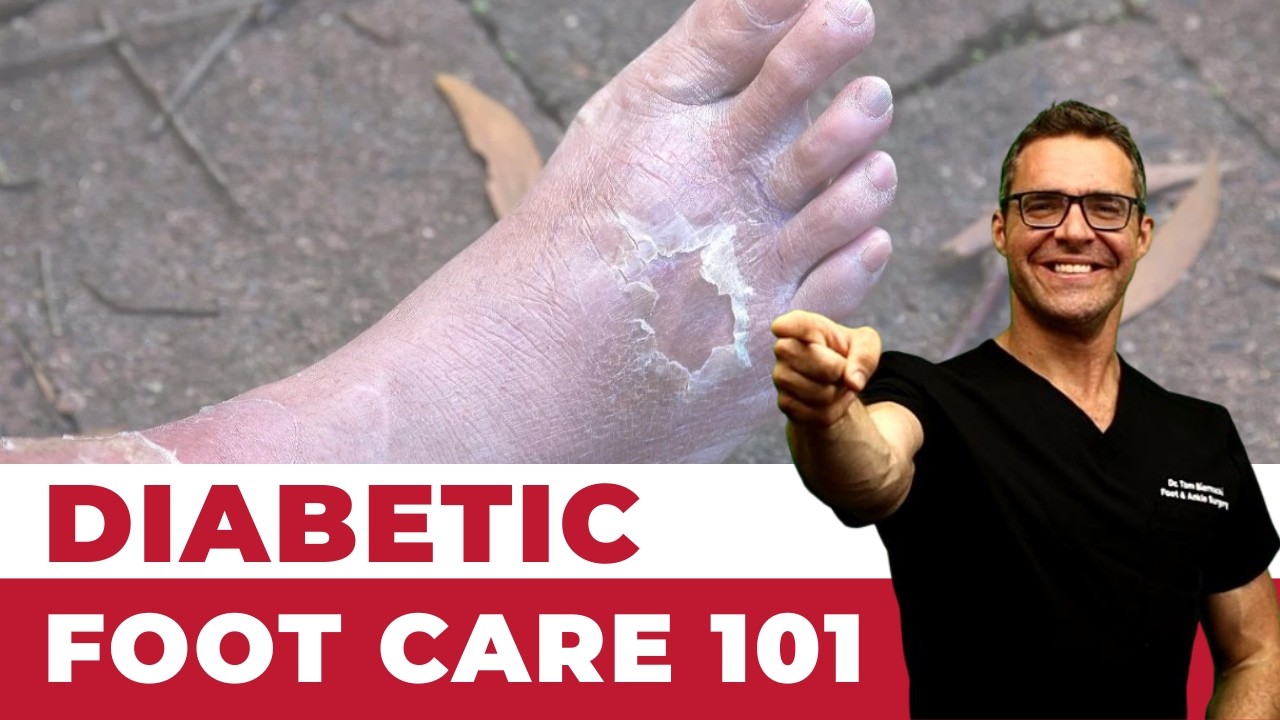
Medically Reviewed by Dr. Tom Biernacki, DPM — Board-Certified Podiatrist, Balance Foot & Ankle Specialists, Michigan. Last updated April 2026.
Abnormal toenails — discolored, thick, crumbling, or pigmented — are one of the most common presenting complaints in podiatric practice, and they are also one of the most commonly mismanaged. The reflexive assumption that any discolored toenail represents onychomycosis (fungal infection) leads to months of ineffective antifungal treatment when the true diagnosis is nail psoriasis, nail trauma, or — in rare but critical cases — subungual melanoma. Laboratory confirmation before treatment is the standard of care, and it saves patients from ineffective treatment and unnecessary drug side effects.
Why Laboratory Testing Before Treatment Matters
Clinical diagnosis of onychomycosis by appearance alone is notoriously inaccurate — studies consistently demonstrate that approximately 30–50% of clinically diagnosed “nail fungus” cases are actually caused by other conditions. Starting a 12-week course of oral terbinafine (which carries a small but real risk of hepatotoxicity) for nail psoriasis, trauma, or other non-fungal conditions is both ineffective and unnecessarily exposes the patient to medication risk.
Laboratory Tests for Toenail Conditions
Periodic Acid-Schiff (PAS) Histology — Gold Standard for Onychomycosis
A nail clipping is submitted to a pathology laboratory where the tissue is stained with periodic acid-Schiff reagent, which stains fungal hyphae and spores bright magenta against a background of normal nail tissue. PAS staining is the most sensitive test for onychomycosis (sensitivity approximately 92–96%), significantly more sensitive than KOH preparation or fungal culture, and provides a rapid result (24–72 hours from processing). A negative PAS result essentially rules out dermatophyte nail infection and prompts evaluation for alternative diagnoses.
KOH Preparation (Potassium Hydroxide)
A scraping of subungual debris is dissolved in potassium hydroxide solution and examined under microscopy for fungal elements (hyphae, arthrospores). KOH preparation is inexpensive and rapid but less sensitive than PAS (sensitivity approximately 50–70%), and it requires a skilled microscopist for accurate interpretation. It is often performed as an initial in-office screening test.
Fungal Culture
Nail clipping or subungual debris is cultured on Sabouraud’s agar for 4–6 weeks to identify the specific fungal organism and confirm viability. Culture is the only test that identifies the specific species (distinguishing dermatophytes from non-dermatophyte molds like Aspergillus, Fusarium), which is relevant because non-dermatophyte molds may require different antifungal agents than standard terbinafine. The main limitation is the 4–6 week wait time and a false-negative rate of approximately 30% due to fastidious growth requirements.
PCR-Based Nail Testing
Newer molecular PCR tests (such as Dermpath’s OnycoMDx) amplify fungal DNA from nail clippings and provide highly sensitive species identification within 24–48 hours, with sensitivity approaching 98%. PCR testing is particularly useful when other tests are inconclusive, when treatment has failed (confirming species identity), or when non-dermatophyte mold infection is suspected.
When Nail Biopsy Is Needed: Ruling Out Melanoma
Nail biopsy — surgical excision of a portion of the nail plate, nail bed, or nail matrix for histopathological examination — is indicated when:
- Longitudinal melanonychia — a brown or black vertical band extending from the proximal nail fold to the free edge; while most are benign (melanocytic activation, ethnic variants), a subset represent subungual melanoma and require biopsy for definitive diagnosis
- Hutchinson’s sign — pigmentation extending from beneath the nail onto the periungual skin; this is a red flag for subungual melanoma requiring urgent biopsy
- Rapidly changing nail pigmentation — growing, widening, or changing pigmented bands
- Persistent nail dystrophy in a single nail — when all laboratory tests for fungus are negative and nail psoriasis is clinically absent, nail biopsy specimens the tissue for inflammatory, traumatic, or neoplastic causes
Subungual melanoma accounts for approximately 1–3% of all melanomas in white-skinned individuals but up to 20–40% of melanomas in dark-skinned individuals — making the threshold for biopsy appropriately low when clinical features suggest melanoma.
How Dr. Biernacki Approaches Nail Diagnosis at Balance Foot & Ankle
At Balance Foot & Ankle, nail clipping for PAS histology is performed as part of the workup for any nail dystrophy before prescribing antifungal therapy, and dermoscopy is used for any pigmented nail lesion to assess Hutchinson’s sign and band morphology. When dermoscopic features suggest melanoma or when clinical concern exists, nail matrix biopsy is performed under local anesthesia in the office, and specimens are sent to a dermatopathologist for same-week processing.
Accurate Nail Diagnosis at Balance Foot & Ankle
Dr. Biernacki confirms toenail diagnoses with laboratory testing before prescribing treatment. Dermoscopy for pigmented nail lesions and nail biopsy when indicated. Bloomfield Hills and Howell offices.
📞 (810) 206-1402 |
📧 Get Dr. Tom’s Free Lab Test Guide
Discover the 5 lab tests every person over 35 should ask their doctor about — explained in plain English by a board-certified physician.
📍 Located in Michigan?
Our board-certified podiatrists treat this condition at two convenient locations. Same-day appointments often available.

Insurance Accepted
BCBS · Medicare · Aetna · Cigna · United Healthcare · HAP · Priority Health · Humana · View All →
Howell Office
4330 E Grand River Ave
Howell, MI 48843
Get Directions →
Bloomfield Hills Office
43494 Woodward Ave, #208
Bloomfield Hills, MI 48302
Get Directions →
Your Board-Certified Podiatrists



Ready to Get Back on Your Feet?
Same-week appointments available at both locations.
Book Your AppointmentMore Podiatrist-Recommended Foot Health Essentials
Top-Rated Arch Support Insole
Universal podiatrist-recommended insert for pain relief and prevention.
Foot Massage Ball
Daily 3-minute roll reduces most forms of foot and heel pain.
Moisture-Wicking Sock
Prevents fungus, blisters, and odor — the basics matter.
As an Amazon Associate, Balance Foot & Ankle earns from qualifying purchases. Product recommendations are based on clinical experience; prices and availability shown above update live from Amazon.

When to See a Podiatrist
If foot or ankle pain has been bothering you for more than a few weeks, home care alone may not be enough. Balance Foot & Ankle offers same-week appointments at our Howell and Bloomfield Hills clinics — no referral needed in most cases. Bring your current shoes and a short list of symptoms and we’ll build you a treatment plan in one visit.
Call Balance Foot & Ankle: (810) 206-1402 · Book online · Offices in Howell & Bloomfield Hills
Watch: Dr. Tom explains
Podiatrist-recommended products
As an Amazon Associate, Dr. Tom earns from qualifying purchases.
Topical post-biopsy comfort.
View on Amazon →Protects biopsy site during healing.
View on Amazon →Protects nails in shoes post-biopsy.
View on Amazon →Reduces forefoot compression post-biopsy.
View on Amazon →Related resources
Ready to solve this? Book today.
Same-week appointments · Howell & Bloomfield Hills · 4.9★ (1,123+ reviews)
☎ (810) 206-1402Book Online →Pros & Cons of Conservative Care for foot care
Advantages
- ✓ Conservative care first
- ✓ Same-week appointments
- ✓ Multiple insurance accepted
Considerations
- ✗ Self-treatment can mask issues
- ✗ See a podiatrist if pain >2 weeks
Dr. Tom’s Recommended Products for foot care
Affiliate disclosure: As an Amazon Associate, Balance Foot & Ankle earns from qualifying purchases. We only recommend products we use with patients.
Footnanny Heel Cream Dr. Tom’s Pick
Best for: Daily moisturizer for cracked heels
Ready to Get Back on Your Feet?
Same-day appointments in Howell + Bloomfield Hills. Most insurance accepted. Dr. Tom Biernacki, DPM & team.
Book Today — Same-Day Appointments Available
Call Now: (810) 206-1402
About Your Care Team at Balance Foot & Ankle
Dr. Tom Biernacki, DPM · Board-Certified Foot & Ankle Surgeon. Specializes in conservative-first care, minimally invasive bunion surgery, and complex reconstruction.
Dr. Carl Jay, DPM · Accepting new patients. Specializes in sports medicine, athletic injuries, and routine podiatric care.
Dr. Daria Gutkin, DPM, AACFAS · Accepting new patients. Specializes in surgical reconstruction and pediatric podiatry.
Locations: 4330 E Grand River Ave, Howell, MI 48843 · 43494 Woodward Ave Suite 208, Bloomfield Hills, MI 48302
Hours: Mon–Fri 8:00 AM – 5:00 PM · (810) 206-1402
🩺 Dr. Tom’s Recommended Products
As an Amazon Associate I earn from qualifying purchases. These are products I personally use and recommend to patients.
The OTC orthotic I send patients home with most often. Sub-$50 entry point. Holds shape longer than PowerStep Pinnacle.
View on Amazon →
Natural menthol + arnica topical gel. FSA-eligible, plant-based — what I switched my own family to.
View on Amazon →
Visit Balance Foot & Ankle — Same-Day Appointments Available
Our podiatry team serves patients throughout Michigan including Howell, Brighton, and Bloomfield Hills. If you’re dealing with heel pain, ingrown toenails, or a foot injury, we have same-day appointment availability.
Same-day appointments available. (810) 206-1402
Ready for Expert Care?
Same-day appointments in Howell & Bloomfield Hills, MI.
4.9★ | 1,123 Reviews | 3,000+ Surgeries
Or call: (810) 206-1402

Dr. Tom Biernacki, DPM is a board-certified foot & ankle surgeon (ABFAS & ABPM) at Balance Foot & Ankle Specialists in Southeast Michigan. With over a decade of clinical experience, he specializes in heel pain, bunions, diabetic foot care, sports injuries, and minimally invasive surgery. Dr. Biernacki is a member of the APMA and ACFAS, and his patient education content on MichiganFootDoctors.com and YouTube has made him one of the most-followed foot & ankle educators on YouTube.