

Quick answer: Treatment for osteomyelitis foot ankle bone infection treatment michigan follows a stepwise approach: 1) conservative care first (rest, ice, supportive footwear, OTC anti-inflammatories), 2) physical therapy and targeted exercises, 3) in-office treatments (injections, custom orthotics) if conservative fails at 4-6 weeks, 4) surgery for refractory cases. Most patients resolve at step 1 or 2. Book online or call (810) 206-1402.
Medically reviewed by Dr. Tom Biernacki, DPM · Board-Certified Podiatric Surgeon · Last reviewed: April 2026 · Editorial Policy
Quick Answer
Foot and ankle bone infection requires confirmation by imaging and culture, then pathogen-directed antibiotics, often with surgical debridement. It does not resolve with wound care alone. Appointments in Howell + Bloomfield Township: (810) 206-1402.

Medically reviewed by Dr. Tom Biernacki, DPM — Board-Certified Podiatric Surgeon — Balance Foot & Ankle, Howell & Bloomfield Township, MI. Last updated April 2026.
▶ Watch
Medically Reviewed by Dr. Tom Biernacki, DPM — Board-Certified Podiatrist, Balance Foot & Ankle Specialists, Michigan. Last updated April 2026.
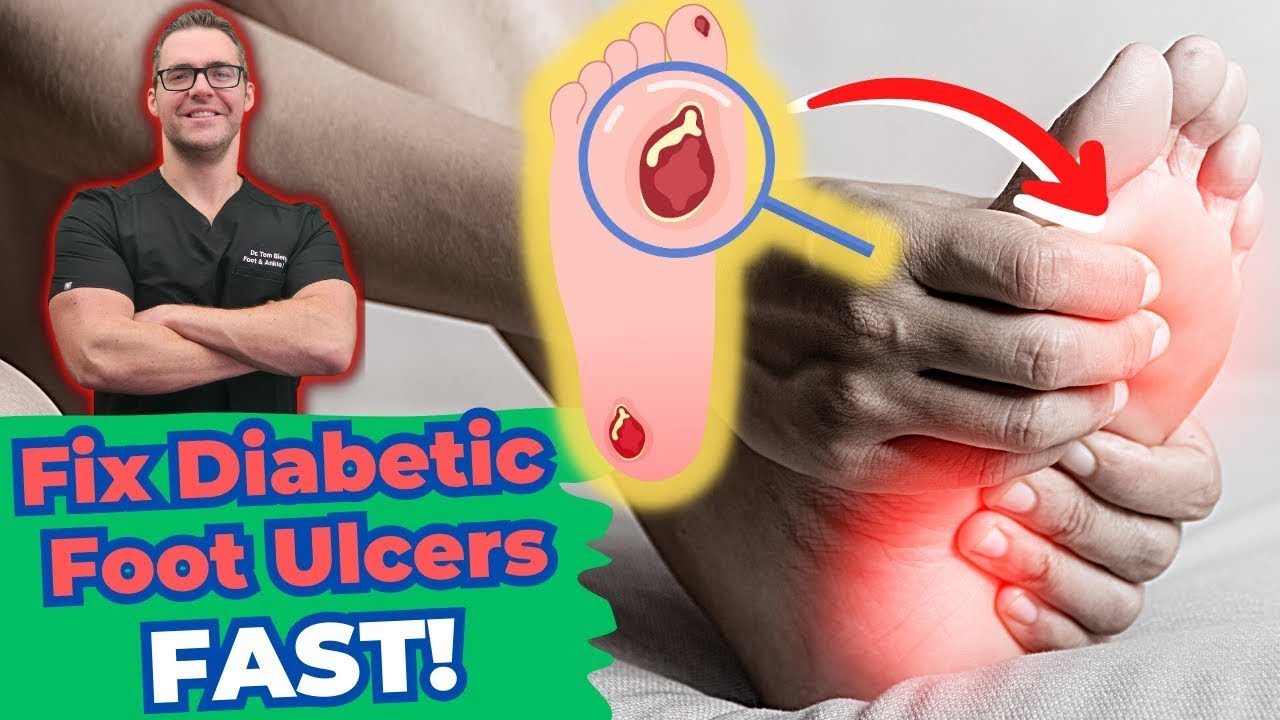
Osteomyelitis — infection of bone — in the foot and ankle is a serious, limb-threatening condition that requires prompt diagnosis and aggressive treatment. It most commonly develops as a complication of diabetic foot ulcers, puncture wounds, or post-surgical infection, and is the leading cause of foot and ankle amputation when inadequately treated. At Balance Foot & Ankle, Dr. Tom Biernacki, DPM diagnoses and manages foot osteomyelitis including surgical debridement and limb salvage in Howell and Bloomfield Township, Michigan. Book online or call (810) 206-1402 urgently if you have an infected diabetic foot wound.
Quick Answer: What Is Osteomyelitis?
Osteomyelitis is bacterial (occasionally fungal) infection of bone — most commonly Staphylococcus aureus (including MRSA), Streptococcus species, and gram-negative organisms in diabetic foot infections. In the foot, osteomyelitis most commonly develops by contiguous spread from an overlying wound (the diabetic foot ulcer route) rather than hematogenous seeding. The infection produces progressive bone destruction — cortical erosion, medullary cavity infection, and eventually pathological fracture or bone devitalization (sequestrum). The infected devitalized bone (sequestrum) must be surgically removed for antibiotic therapy to work — antibiotics cannot penetrate avascular necrotic bone.
Recognizing Osteomyelitis in Diabetic Foot Wounds
The most important clinical test is the “probe to bone” test: when a sterile metal probe or cotton swab is inserted into a diabetic foot ulcer and bone is contacted, the positive predictive value for underlying osteomyelitis is approximately 89%. A positive probe-to-bone test mandates immediate osteomyelitis workup. Laboratory findings: elevated ESR (>70 mm/hr has 89% specificity for osteomyelitis in diabetic foot), elevated CRP, elevated WBC in systemic infection (WBC may be normal in chronic, indolent osteomyelitis). Plain radiographs show bone erosion, periosteal reaction, and cortical loss — but these changes lag the clinical infection by 10–21 days and may be absent in early osteomyelitis. MRI is the gold standard imaging — bone marrow edema with cortical destruction is 90%+ sensitive and specific for osteomyelitis; positive before radiographic changes appear.
Treatment: Medical vs. Surgical
Medical management alone is appropriate for: superficial osteomyelitis without cortical destruction, cases in patients who are not surgical candidates, and cases where infection is limited to small, non-weight-bearing bones (phalanges). Protocol: 4–6 weeks of IV antibiotics guided by bone culture and sensitivities, followed by oral antibiotic step-down based on response. Medical failure rate: 30–40% — many patients treated medically for osteomyelitis in the foot have recurrence.
Surgical debridement is indicated for: probe-to-bone positive wounds with cortical involvement; failed antibiotic therapy; systemic sepsis from foot source; necrotic or devitalized bone; and chronic osteomyelitis with sequestrum formation. Surgical principles: complete debridement to bleeding bone margins (the “paprika sign” — visible bleeding from cancellous bone confirms viable tissue); preservation of the remaining viable foot architecture; filling the debridement cavity with antibiotic-impregnated cement spacer or bioactive glass when large defects exist; wound closure with flap rotation or negative pressure wound therapy (NPWT); and post-operative IV antibiotics for 4–6 weeks.
Amputation level decisions: When osteomyelitis is too extensive for viable limb salvage, the goal is the most distal amputation that achieves healing — preserving as much functional tissue as possible. Partial foot amputations (ray resection, transmetatarsal amputation, Chopart amputation) are performed when feasible. Below-knee amputation is considered when infection involves the hindfoot or ankle with inadequate remaining blood supply to heal a more distal level.
Bone Culture: Essential for Treatment
Antibiotic therapy for osteomyelitis should be guided by bone culture, not wound swab culture. Wound swab cultures from diabetic foot ulcers are frequently contaminated with colonizing organisms that do not reflect the true bone pathogen. Bone biopsy (preferably via surgical approach, or CT-guided percutaneous biopsy) provides the definitive culture specimen. MRSA is present in 20–30% of diabetic foot osteomyelitis cases — empiric vancomycin coverage should be included while awaiting culture results in high-risk patients.
Most Common Mistake with Foot Osteomyelitis
The most common mistake: treating diabetic foot osteomyelitis with oral antibiotics only based on wound swab culture, without surgical debridement or bone biopsy. In our clinic, we see this pattern regularly — patients treated for weeks to months with oral antibiotics prescribed by primary care for a wound culture — when the actual bone pathogen is different, the antibiotic spectrum is wrong, or there’s devitalized bone present that antibiotics cannot penetrate. A diabetic foot wound with bone contact or radiographic bone erosion is a surgical emergency requiring podiatric and infectious disease co-management — not outpatient antibiotic management alone. Book online or call (810) 206-1402 urgently if you have a diabetic foot wound that has failed antibiotic treatment, is worsening, or reaches bone.
Join 950,000+ Learning About Foot Health
Dr. Tom shares honest medical advice, supplement reviews, and treatment guides you won’t find anywhere else.
Subscribe on YouTube →📍 Located in Michigan?
Our board-certified podiatrists treat this condition at two convenient locations. Book online 24/7 at either office.

Insurance Accepted
BCBS · Medicare · Aetna · Cigna · United Healthcare · HAP · Priority Health · Humana · View All →
Howell Office
4330 E Grand River Ave
Howell, MI 48843
Get Directions →
Bloomfield Township Office
43494 Woodward Ave, #208
Bloomfield Township, MI 48302
Get Directions →
More Podiatrist-Recommended Foot Health Essentials
Hoka Clifton 10


Max-cushion everyday shoe — podiatrist favorite for walking and running.

OOFOS Recovery Slide

Impact-absorbing recovery sandal — wear after long days on your feet.
As an Amazon Associate, Balance Foot & Ankle earns from qualifying purchases. Product recommendations are based on clinical experience; prices and availability shown above update live from Amazon.

When to See a Podiatrist
If foot or ankle pain has been bothering you for more than a few weeks, home care alone may not be enough. Balance Foot & Ankle offers online booking 24/7 at our Howell and Bloomfield Township clinics — no referral needed in most cases. Bring your current shoes and a short list of symptoms and we’ll build you a treatment plan in one visit.
Call Balance Foot & Ankle: (810) 206-1402 · Book online · Offices in Howell & Bloomfield Township
Watch: Dr. Tom explains
Podiatrist-recommended products
As an Amazon Associate, Dr. Tom earns from qualifying purchases.
Offload infected foot during IV antibiotic therapy.
Check price →Reduce inflammation after debridement.
Check price →Offload pressure in diabetic feet.
Check price →Topical comfort (avoid open wounds).
View on Amazon →Related resources
Ready to solve this? Book today.
Book online 24/7 · Howell & Bloomfield Township · 4.9★ (1,200+ reviews)
☎ (810) 206-1402Book Online →Pros & Cons of Conservative Care for foot care
Advantages
- ✓ Conservative care first
- ✓ Book online 24/7
- ✓ Multiple insurance accepted
Considerations
- ✗ Self-treatment can mask issues
- ✗ See a podiatrist if pain >2 weeks
Dr. Tom’s Recommended Products for foot care
Affiliate disclosure: As an Amazon Associate, Balance Foot & Ankle earns from qualifying purchases. We only recommend products we use with patients.
Footnanny Heel Cream Dr. Tom’s Pick
Best for: Daily moisturizer for cracked heels
Ready to Get Back on Your Feet?
Appointments in Howell + Bloomfield Township. Most insurance accepted. Dr. Tom Biernacki, DPM & team.
Call Now: (810) 206-1402
In-Office Treatment at Balance Foot & Ankle
If home treatment isn’t providing relief for your foot health, our podiatry team at Balance Foot & Ankle can help with expert evaluations and advanced in-office care.
Book online 24/7. (810) 206-1402
Frequently Asked Questions
How long does treatment take to work?
It depends on the cause and how severe it is. Some problems settle within weeks; others, such as wounds, infections and circulation problems, need prompt treatment and closer follow-up. Your podiatrist will give you a realistic timeline once the cause is confirmed.
When is surgery needed?
It depends on the diagnosis. Some problems, such as a deep infection, dead tissue, or an unstable fracture or tendon rupture, may need surgery promptly, while many others are treated without an operation. Your podiatrist will explain which applies to you and why.
Is this covered by insurance?
Most diagnostic visits and conservative treatments are covered by Medicare and major insurers. Custom orthotics often require diabetic or post-surgical justification.
Our podiatrists treat the underlying cause, not just the symptom. Appointments at our Howell and Bloomfield Township, Michigan offices.
Ready for Expert Care?
Appointments in Howell & Bloomfield Township, MI.
4.9★ | 1,200+ Reviews | 3,000+ Surgeries
Or call: (810) 206-1402

Dr. Tom Biernacki, DPM is a board-certified foot & ankle surgeon (ABFAS & ABPM) at Balance Foot & Ankle Specialists in Southeast Michigan. With over a decade of clinical experience, he specializes in heel pain, bunions, diabetic foot care, sports injuries, and minimally invasive surgery. Dr. Biernacki is a member of the APMA and ACFAS, and his patient education content on MichiganFootDoctors.com and YouTube has made him one of the most-followed foot & ankle educators on YouTube.