
Board-Certified Podiatric Foot & Ankle Surgeon · Last reviewed: May 4, 2026
The most important clinical decision with Best Shoes High Arches Women Plantar Fasciitis 2026 isn't which treatment to start with — it's which subtype or underlying cause you actually have. Our podiatrists regularly see patients who've been treated for months for the wrong diagnosis. The correct identification changes the entire treatment path. Call (810) 206-1402 — Dr. Tom evaluates this condition at both Howell and Bloomfield Township locations.
Medically reviewed by Dr. Tom Biernacki, DPM · Board-Certified Podiatric Surgeon · Last reviewed: April 2026 · Editorial Policy
Quick Answer
Best Shoes for High Arches & Women’s Plantar Fasc relates to plantar fasciitis — typically caused by tight calves and arch overload. Most patients improve in 6-12 weeks with conservative care. Appointments in Howell + Bloomfield Township: (810) 206-1402.
Medically reviewed by Dr. Tom Biernacki, DPM — Board-certified foot & ankle surgeon, 3,000+ surgeries performed. Updated April 2026 with current clinical evidence. This article reflects real practice experience from Balance Foot & Ankle Specialists in Howell and Bloomfield Township, Michigan.
Quick Answer
Plantar fasciitis is inflammation where the plantar fascia attaches to the heel, causing sharp morning heel pain that eases after 10-15 minutes of walking. Most cases respond to stretching plus arch support within 6-12 weeks. See a podiatrist if pain persists beyond 6 weeks, worsens, or prevents walking.
Watch: Dr. Tom Biernacki, DPM
Medically reviewed by Dr. Tom Biernacki, DPM — Board-Certified Podiatric Surgeon — Balance Foot & Ankle, Howell & Bloomfield Township, MI. Last updated April 2026.
▶ Watch
📋 Dr. Tom Also Recommends
Podiatrist Recommended Orthotics 2026: Dr. Tom’s Top 10 Insoles & Arch Supports
A podiatrist’s complete clinical guide to the best insoles — custom orthotics, OTC picks, and what actually works for plantar fasciitis, flat feet, neuropathy & more.
Read the Full Guide →Medically Reviewed by Dr. Tom Biernacki, DPM — Board-Certified Podiatrist, Balance Foot & Ankle Specialists, Michigan. Last updated April 2026.
Women with high arches face a paradox: high arches (cavus feet) produce more rigid, less shock-absorbing feet than flat feet — yet the footwear industry mistakenly recommends motion-control shoes (designed for overpronators/flat feet) for everyone with foot pain. Dr. Tom Biernacki, DPM at Balance Foot & Ankle reviews the best shoes for women with high arches and plantar fasciitis in 2026 — with specific guidance on the arch type distinction that changes the entire product selection.
Quick Answer: High Arches vs. Flat Feet — Completely Different Shoes
Women with high arches (cavus feet) need: maximum cushioning (because the rigid high-arched foot doesn’t naturally absorb shock), neutral or stability midsole (not motion-control — adding medial posting to a supinating high-arched foot increases lateral ankle sprain risk), wide toe box to accommodate the forefoot splaying that high-arched feet tend toward, and a relatively flexible midsole that allows some foot motion. Women with flat feet need the opposite: a firm, controlling midsole with medial posting. Buying motion-control shoes for a high-arched foot is one of the most common podiatric footwear errors — it can cause lateral ankle pain, 5th metatarsal stress fractures, and worsening plantar fasciitis.
Best Overall for High-Arched Women: HOKA Clifton 9
The HOKA Clifton 9 is the top recommendation for women with high arches and plantar fasciitis. The maximum cushion design (37mm heel stack) provides the shock absorption that a rigid cavus foot cannot generate internally. The meta-rocker geometry reduces ankle dorsiflexion requirement, decreasing plantar fascia tension at push-off. Critically for high-arched women: the Clifton 9 is a neutral shoe — it doesn’t add medial arch posting that would exacerbate supination. The wide (2E) version accommodates the broader forefoot of cavus feet. The early-stage plush is particularly effective at plantar fasciitis first-step morning relief.
👟 More Podiatrist-Recommended Shoe Reviews
📍 Located in Michigan?
Our board-certified podiatrists treat this condition at two convenient locations. Book online 24/7 at either office.
View HOKA Clifton 9 Women’s on Amazon →
Best Walking Shoe for High Arches: Brooks Glycerin 21
The Brooks Glycerin 21 is the premier walking and everyday shoe for high-arched women with plantar fasciitis. The DNA LOFT v3 foam provides exceptional cushioning that maintains its volume over 500+ miles — important for high-arched women who need consistent shock absorption, not cushioning that degrades to firm foam within 3 months. The 3D Fit Print upper wraps the foot without restricting natural arch geometry. Available in narrow (2A), standard (B), and wide (D) widths. The Glycerin is a neutral shoe — appropriate for high arches, not the flat-footed motion-control Brooks that marketing materials sometimes confusingly recommend alongside it.
View Brooks Glycerin 21 Women’s on Amazon →
Best Cross-Trainer for High Arches: New Balance Fresh Foam X 1080v13
The New Balance Fresh Foam X 1080v13 is the best cross-training and running shoe for women with high arches who need both workout performance and plantar fasciitis protection. The Fresh Foam X midsole provides the softest, most cushioned ride in the New Balance lineup — 38mm at the heel. The 8mm heel-to-toe drop (higher than zero-drop shoes) provides a gentle heel lift that reduces Achilles and plantar fascia tension — important for the tight posterior chain that commonly accompanies high-arched feet. Wide (D) and extra-wide (2E) widths available. Used by many of our high-arched patients who run or do high-impact fitness classes where maximum cushioning significantly reduces post-workout plantar fascia pain.
View New Balance 1080v13 Women’s on Amazon →
Most Common Shoe Mistake for Women with High Arches
The most common mistake: purchasing “stability” or “motion-control” running shoes based on the general recommendation to “get a supportive shoe” for plantar fasciitis. Stability shoes add medial posting that pushes the arch up from below — appropriate for flat-footed overpronators, but harmful for high-arched supinators who are already loading their lateral foot excessively. The medial post in a stability shoe on a high-arched foot adds compressive force to an already-compressed lateral forefoot, increasing 5th metatarsal stress fracture risk and lateral ankle sprain risk. Have your arch type assessed by Dr. Biernacki before purchasing shoes for plantar fasciitis — a gait analysis in our office takes 10 minutes and prevents years of inappropriate footwear purchases.
Custom Orthotics for High-Arched Women
OTC insoles typically add arch support that presses upward into the arch — appropriate for flat feet but counterproductive for high arches where the arch is already rigid and elevated. Custom orthotics for high-arched women are designed differently: they fill the high arch space to distribute weight rather than push up; add cushioning material at metatarsal heads and heel where high-arched feet create point pressure; and may include a lateral heel wedge to reduce supination tendency. If OTC products haven’t helped your high-arch plantar fasciitis, custom orthotics designed for your specific arch type are the next step. Book online or call (810) 206-1402 — Howell and Bloomfield Township, Michigan.
Affiliate disclosure: As an Amazon Associate, Balance Foot & Ankle earns from qualifying purchases. Product recommendations are based on clinical criteria independent of commission.
Dr. Tom’s Recommended Insoles
PowerStep is the brand I prescribe most — medical-grade OTC support without the custom orthotic price tag.
- PowerStep Maxx Insoles — Maximum support for severe flat feet and high-demand use — the highest-profile arch in the PowerStep line.
- PowerStep Pinnacle Insoles — The #1 podiatrist-recommended OTC insole — firm arch support with dual-layer cushioning for all-day wear.
Affiliate disclosure: As an Amazon Associate, Balance Foot & Ankle earns from qualifying purchases. We only recommend products we trust for our own patients.
Dr. Tom’s Pick: Women’s Shoe Comfort Inserts
For women who want comfort without giving up their shoes — Foot Petals cushions work in heels, flats, and sandals.
- Foot Petals Tip Toes — Metatarsal cushion for any shoe — reduces forefoot pressure without bulk.
- Foot Petals Heavenly Heelz — Heel cushions for dress shoes and heels — stops slipping and absorbs impact.
Affiliate disclosure: As an Amazon Associate, Balance Foot & Ankle earns from qualifying purchases.
👟 Dr. Tom’s Pick: FLAT SOCKS for Minimalist & Zero-Drop Shoes
Ultra-thin flat-knit socks designed specifically for zero-drop, barefoot, and minimalist shoes. No bunching, no seams — just foot-contact-the-ground feel with moisture control.
View FLAT SOCKS on Amazon →Affiliate disclosure: As an Amazon Associate, Balance Foot & Ankle earns from qualifying purchases.
Join 950,000+ Learning About Foot Health
Dr. Tom shares honest medical advice, supplement reviews, and treatment guides you won’t find anywhere else.
Subscribe on YouTube →Podiatrist-Recommended Running Shoes
- Brooks Adrenaline GTS — Best Overall Stability
- HOKA Bondi 8 — Maximum Cushioning
- New Balance 860v14 — Best for Overpronators
- ASICS Gel-Kayano 31 — Premium Stability
Amazon affiliate links — we may earn a small commission at no extra cost to you.
Insurance Accepted
BCBS · Medicare · Aetna · Cigna · United Healthcare · HAP · Priority Health · Humana · View All →
Howell Office
4330 E Grand River Ave
Howell, MI 48843
Get Directions →
Bloomfield Township Office
43494 Woodward Ave, #208
Bloomfield Township, MI 48302
Get Directions →
More Podiatrist-Recommended Plantar Fasciitis Essentials
Best Night Splint


Watch: How To Cure Plantar Fasciitis FAST & FOREVER [Heel Pain & Heel Spurs] — MichiganFootDoctors YouTube
Keeps fascia stretched overnight — the #1 intervention for morning heel pain.
Top Podiatrist-Recommended Insole

Deep heel cup + arch support unloads the plantar fascia all day.
Plantar Fasciitis Compression Sock

Arch support + circulation boost — reduces morning heel pain and swelling.
As an Amazon Associate, Balance Foot & Ankle earns from qualifying purchases. Product recommendations are based on clinical experience; prices and availability shown above update live from Amazon.
When to See a Podiatrist
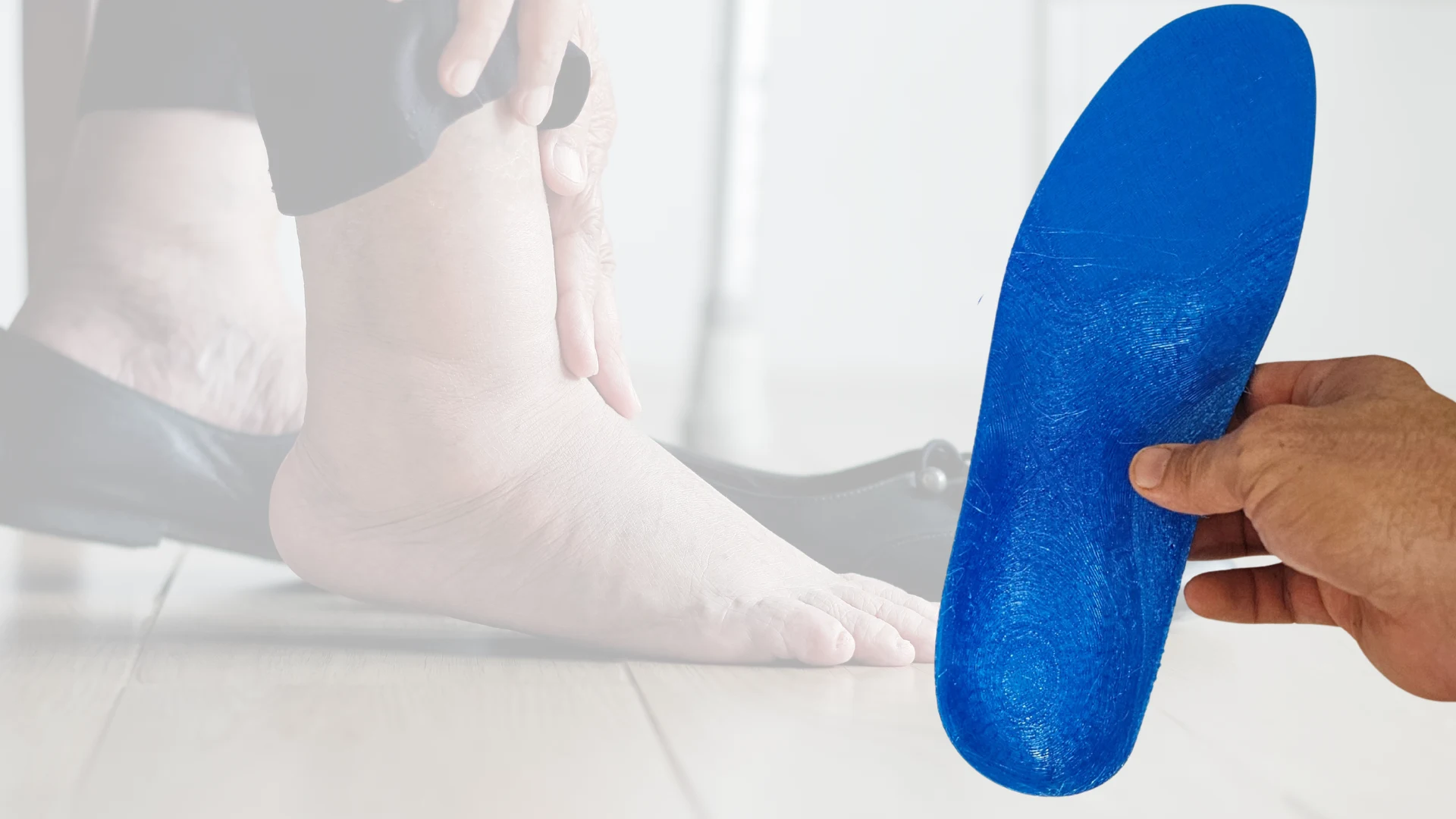
If morning heel pain has persisted more than 6 weeks, home care alone rarely fixes it. At Balance Foot & Ankle, we combine in-office ultrasound diagnostics, custom orthotics, and — when needed — shockwave or PRP to resolve plantar fasciitis that hasn’t responded to stretching and inserts. Most patients are walking pain-free within 4-8 weeks of starting a structured plan.
Call Balance Foot & Ankle: (810) 206-1402 · Book online · Offices in Howell & Bloomfield Township
In-Office Treatment at Balance Foot & Ankle
If home care isn’t resolving your plantar fasciitis, a visit with a board-certified podiatrist is the fastest path to accurate diagnosis and a personalized plan. At Balance Foot & Ankle Specialists, Dr. Tom Biernacki, Dr. Carl Jay, and Dr. Daria Gutkin offer appointments at both our Howell and Bloomfield Township offices. We perform on-site diagnostic ultrasound, digital X-ray, conservative care, advanced regenerative treatments, and minimally invasive surgery when indicated.
Call (810) 206-1402 or request an appointment online. Most insurance plans accepted, including Medicare, Blue Cross Blue Shield, Aetna, Cigna, and United Healthcare.
Differential Diagnosis: What Else Could It Be?
Several conditions share symptoms with Plantar Fasciitis and are commonly misdiagnosed in the first office visit. Considering these alternatives is part of every Balance Foot & Ankle exam:
- Baxter’s neuropathy. Compressed first branch of lateral plantar nerve — burning medial heel pain rather than first-step sharpness.
- Calcaneal stress fracture. Squeeze test of the heel reproduces pain anywhere; PF is reproduced only at the medial-plantar attachment.
- Heel spur (incidental). Spurs show on X-ray but rarely cause pain on their own — treat the fascia, not the spur.
If your symptoms don’t fit the textbook pattern, ask your podiatrist which differentials they ruled out — that conversation often shortcuts months of trial-and-error treatment.
In Our Clinic
In our Balance Foot & Ankle clinic, the typical plantar fasciitis patient is a 40- to 60-year-old who noticed sharp heel pain on their very first steps in the morning or after sitting at a desk. Many arrive having already tried cheap shoe-store inserts and a week of ice without relief. On exam, we palpate the medial calcaneal tubercle, check for a positive windlass test, and rule out Baxter’s neuropathy and calcaneal stress fractures. Most of our plantar fasciitis patients respond to a custom orthotic + eccentric calf loading + night splinting protocol within 6–12 weeks — without injections or surgery.
Most Common Mistake We See
The most common mistake we see is: Stretching aggressively before the fascia warms up. Fix: apply heat or move the foot through gentle circles for 3-5 minutes before your first morning steps, then stretch.
Warning Signs That Need Same-Day Care
Seek immediate evaluation at Balance Foot & Ankle if you experience any of the following:
- Unable to bear weight on the heel
- Bruising or visible swelling around the heel
- Constant rest or night pain in the heel
- No improvement after 6 weeks of home care
Call (810) 206-1402 — appointments at our Howell and Bloomfield Township offices.
Watch: Dr. Tom explains
Podiatrist-recommended products
As an Amazon Associate, Dr. Tom earns from qualifying purchases.
High-arch support
Check price →Lateral foot relief
Check price →PF recovery
View on Amazon →Post-walk icing
Check price →Related resources
Ready to solve this? Book today.
Book online 24/7 · Howell & Bloomfield Township · 4.9★ (1,200+ reviews)
☎ (810) 206-1402Book Online →Pros & Cons of Conservative Care for plantar fasciitis
Advantages
- ✓ Conservative care resolves 90%+ of cases
- ✓ Multiple home treatment options
- ✓ Strong evidence base
- ✓ Imaging often not required
Considerations
- ✗ Recovery takes 6-12 weeks
- ✗ Mistakes prolong recovery
- ✗ Untreated can become chronic
- ✗ Can mimic other conditions
Dr. Tom’s Recommended Products for plantar fasciitis
Affiliate disclosure: As an Amazon Associate, Balance Foot & Ankle earns from qualifying purchases. We only recommend products we use with patients.
PowerStep Pinnacle Maxx Dr. Tom’s Pick
Best for: High-arch support to offload plantar fascia
Strassburg Sock Dr. Tom’s Pick
Best for: Overnight stretch for morning pain relief
Hoka Bondi 9 Dr. Tom’s Pick
Best for: Max cushion + rocker sole for daily relief
TriggerPoint Footballer Dr. Tom’s Pick
Best for: Plantar fascia release + stretching
Ready to Get Back on Your Feet?
Appointments in Howell + Bloomfield Township. Most insurance accepted. Dr. Tom Biernacki, DPM & team.
Call Now: (810) 206-1402
Ready to feel better?
Appointments available in Howell and Bloomfield Township, Michigan.
Book Your VisitGet Expert Care at Balance Foot & Ankle
Appointments at our Howell and Bloomfield Township offices. Board-certified podiatric surgeons. Most insurance accepted.
Ready for Expert Care?
Appointments in Howell & Bloomfield Township, MI.
4.9★ | 1,200+ Reviews | 3,000+ Surgeries
Or call: (810) 206-1402
More Podiatrist Shoe Guides

Dr. Tom Biernacki, DPM is a board-certified foot & ankle surgeon (ABFAS & ABPM) at Balance Foot & Ankle Specialists in Southeast Michigan. With over a decade of clinical experience, he specializes in heel pain, bunions, diabetic foot care, sports injuries, and minimally invasive surgery. Dr. Biernacki is a member of the APMA and ACFAS, and his patient education content on MichiganFootDoctors.com and YouTube has made him one of the most-followed foot & ankle educators on YouTube.
More questions patients ask
What causes heel pain?
Heel pain most commonly results from plantar fasciitis (inflammation of the plantar fascia ligament), which accounts for approximately 80% of cases. Other causes include Achilles tendinitis, heel spurs, stress fractures, Baxter's nerve entrapment, and fat pad atrophy. Dr. Biernacki performs a thorough biomechanical evaluation to identify the precise cause. Call 810-206-1402 to book an appointment.
How long does plantar fasciitis take to heal?
With proper treatment, most plantar fasciitis cases improve within 6-12 weeks. Conservative treatments include custom orthotics, stretching protocols, physical therapy, and corticosteroid injections. For persistent cases beyond 6 months, Dr. Biernacki offers advanced options including shockwave therapy and minimally invasive procedures with 90%+ success rates.
Should I see a podiatrist for heel pain?
Yes. A board-certified podiatrist like Dr. Biernacki can accurately diagnose the cause of heel pain using X-rays and diagnostic ultrasound, ruling out stress fractures and other serious conditions. Self-treatment with over-the-counter insoles often delays proper treatment and can worsen the condition. Early intervention leads to faster recovery.
Still have a question about coverage or cost? Book online and we will check your benefits before your visit: Book in Howell · Book in Bloomfield Township. Prefer to talk it through first? Call (810) 206-1402.