
Medically reviewed by Dr. Tom Biernacki, DPM
Board-certified podiatric surgeon | Balance Foot & Ankle, Howell & Bloomfield Township, MI
Last reviewed: May 2026

Table of Contents
You’ve probably heard the term “overpronation” from a running store employee or after a painful bout of heel pain, shin splints, or knee aches that just won’t quit. In our clinic at Balance Foot & Ankle, overpronation is one of the most common biomechanical findings we see — and one of the most frequently misunderstood.
Here’s the complete clinical picture: what overpronation actually is, how to tell if you have it, what problems it causes, and — most importantly — what actually helps. I’ll also cut through the noise on insoles, because the right supportive insole genuinely makes a difference, and the wrong one is money wasted.
What Is Overpronation
Pronation is normal. When your foot hits the ground, it naturally rolls slightly inward — this is how your foot absorbs shock and adapts to uneven surfaces. A healthy foot pronates about 15 degrees during the gait cycle. Overpronation is when this inward roll exceeds normal limits, causing the arch to flatten excessively and the ankle to roll inward too far.
Think of it like a car with a wheel misalignment. The tire still rolls forward, but the excessive inward angle creates uneven wear, stress on the suspension, and problems that compound over miles. In your body, overpronation creates that same cascade — stress concentrations that lead to plantar fasciitis, shin splints, patellofemoral pain, and even hip and lower back issues.
Overpronation is different from having flat feet, though the two often coexist. You can have flat arches without overpronating, and you can overpronate with a relatively normal arch height. The distinction matters for treatment — arch height alone doesn’t tell the whole story.
Signs You Overpronate
You don’t need a formal gait analysis to get a reasonable idea of whether you overpronate. Here are the key signs we look for at Balance Foot & Ankle, most of which you can assess at home.
The Wet Test
Wet your foot, step on a piece of cardboard or brown paper bag, and look at your footprint. A neutral foot shows a distinct curve inward at the midfoot. An overpronated foot leaves a nearly complete footprint with little or no curve — because the arch is touching the ground. A high-arched (supinating) foot shows only a thin band at the outside of the footprint.
The Shoe Wear Test
Look at the bottom of your worn shoes. Overpronators wear down the inside heel and the inner forefoot disproportionately. The inner sole edge often collapses. If your shoe looks like it’s been rolled over inward, you’re very likely overpronating.
Standing Alignment Check
Stand barefoot in front of a mirror and look at your ankles from the front. If your ankles are rolling inward — so the inner ankle bone appears to be sinking toward the floor — that’s a visual sign of overpronation. From behind, the Achilles tendon should be vertical; in overpronators, it bows outward (a positive “Helbing sign”).
Symptoms That Suggest Overpronation
Pain patterns associated with overpronation include: heel and arch pain (especially morning pain — the hallmark of plantar fasciitis), shin splints (medial tibial stress syndrome), knee pain particularly at the inner knee, bunion formation or progression on the big toe, and posterior tibial tendon pain along the inner ankle. If you have multiple of these simultaneously, gait analysis is warranted.
Causes of Overpronation
Overpronation is rarely a single-cause problem. In clinical practice, it’s almost always a combination of structural, muscular, and footwear factors acting together. Understanding your specific drivers determines the most effective treatment.
Structural factors: Congenitally flat feet (pes planus), a tight Achilles tendon (which forces the foot to compensate by pronating), and excessive internal tibial torsion (inward rotation of the shinbone) all predispose to overpronation. These are the factors you’re largely born with.
Muscular weakness: Weakness of the hip abductors, external hip rotators, and the tibialis posterior muscle (the primary dynamic supporter of the medial arch) are the most common muscular contributors. In our clinic, I frequently see runners who overpronate specifically because of weak glutes and hip stabilizers — the foot is trying to compensate for instability happening much higher up the kinetic chain.
Footwear factors: Worn-out shoes (especially running shoes past 400–500 miles), shoes without adequate medial support, and barefoot or minimalist footwear transitions done too quickly can all trigger or worsen overpronation patterns. The midsole foam of running shoes loses approximately 40% of its shock absorption by 400 miles — long before the outsole shows obvious wear.
Injury and fatigue: Posterior tibial tendon dysfunction (a progressive condition common after 40, especially in women) causes the arch to collapse progressively over time. Ankle sprains can also loosen the lateral stabilizing ligaments, allowing excessive inward roll.
Problems Overpronation Causes
Uncorrected overpronation creates a biomechanical ripple effect. The foot’s excessive inward roll rotates the tibia internally, which throws off knee tracking, stresses the IT band, and eventually reaches the hip and lower back. Here’s the injury pattern we see in clinic, roughly in order of frequency.
Plantar fasciitis is the most direct consequence — the plantar fascia (the connective tissue band along the arch) is placed under excessive tension with every step. Overpronators develop plantar fasciitis at significantly higher rates than neutral or supinating feet.
Posterior tibial tendonitis develops because the posterior tibial tendon works overtime trying to hold the arch up against the pronation forces. This tendon runs along the inner ankle and when it fails — which it can progressively over years — it results in adult-acquired flatfoot deformity.
Shin splints (medial tibial stress syndrome) occur because the tibial internal rotation caused by overpronation creates traction stress on the tibial periosteum. Runners with overpronation are 2–3 times more likely to develop shin splints than those with neutral mechanics.
Bunions and hallux valgus develop and progress faster in overpronators because the big toe is placed under increased lateral push-off stress with each step.
Best Insoles for Overpronation
Supportive insoles are the single most impactful intervention for overpronation short of custom orthotics — and for many patients with mild-to-moderate overpronation, high-quality OTC insoles achieve results comparable to custom devices at a fraction of the cost. Here’s what I recommend to patients in our clinic.
PowerStep Pinnacle — Best Overall for Overpronation
PowerStep Pinnacle insoles are my first-line recommendation for overpronation in everyday footwear — walking shoes, work shoes, and casual use. The semi-rigid shell provides meaningful arch and heel support (not just cushioning), the heel cup controls rearfoot motion, and the dual-layer foam construction balances cushioning with ground feel. PowerStep insoles are clinically tested and recommended by podiatrists — I’ve had consistently good patient outcomes with them for plantar fasciitis, posterior tibial tendonitis, and general overpronation-related discomfort. They fit most shoe types and come in multiple widths.
Not ideal for: Very narrow footwear, minimalist shoes, or patients with significant structural flatfoot (stage 2+ PTTD) who need custom orthotics.
CURREX RunPro — Best for Runners
For runners and athletes, CURREX RunPro insoles are purpose-engineered for athletic use. They come in three arch profiles (low, medium, high) — critical for runners because an insole that matches your actual arch height performs significantly better than a generic height. The low-profile design doesn’t steal volume from your running shoe, and the dynamic arch design works with your foot’s motion rather than rigidly blocking it. For overpronating runners dealing with plantar fasciitis or shin splints, CURREX RunPro is my preferred recommendation.
Not ideal for: Dress shoes, very wide feet without matching width option, or severe structural flatfoot requiring rigid control.
CURREX HikePro — Best for Hiking and Trail Use
For overpronation in hiking boots and trail shoes, CURREX HikePro insoles provide the lateral stability and arch support needed for uneven terrain. Hiking creates particularly challenging pronation demands — every uneven surface is a new challenge for foot stability, and the right insole prevents the cumulative fatigue that leads to ankle rolls and arch overload on long trails.
Exercises to Correct Overpronation
Insoles address the structural support deficit, but strengthening exercises address the muscular contributors that insoles alone can’t fix. In our clinic, we prescribe this combination for virtually every overpronation patient, because insoles without strengthening is a brace without rehabilitation — the underlying weakness remains.
Short Foot Exercise (Arch Doming)
Sit with your foot flat on the floor. Without curling your toes, shorten your foot by drawing the ball of your foot toward your heel — this activates the intrinsic foot muscles that support the arch dynamically. Hold 5 seconds, release, repeat 15 times per foot, twice daily. This is the foundational exercise for arch strengthening and one of the most evidence-backed exercises for overpronation.
Single-Leg Calf Raise
Stand on one foot on the edge of a step. Slowly lower your heel below step level, then rise up onto the ball of your foot. Focus on keeping your ankle straight (not rolling in) throughout the movement. 3 sets of 15 repetitions per foot. This strengthens the gastrocnemius, soleus, and — critically — the posterior tibial tendon, the primary dynamic arch supporter.
Clamshells (Hip Abductor Strengthening)
Lie on your side with knees bent at 45 degrees. Keeping your feet together, rotate your top knee upward like a clamshell opening. 3 sets of 20 repetitions per side. Weak hip abductors and external rotators are a major upstream cause of overpronation — strengthening them often reduces foot pronation even without direct foot work.
Towel Toe Curls
Place a small towel on the floor. Using only your toes, scrunch the towel toward you. 3 sets until fatigue, twice daily. This activates the flexor digitorum brevis and other intrinsic foot muscles that provide dynamic arch support during gait.
Best Shoes for Overpronation
Footwear selection matters enormously for overpronation. Motion control and stability shoes are specifically designed to limit excessive inward roll, with denser foam on the medial (inner) side of the midsole, firmer heel counters, and lower heel-to-toe drops. Here’s how to choose correctly.
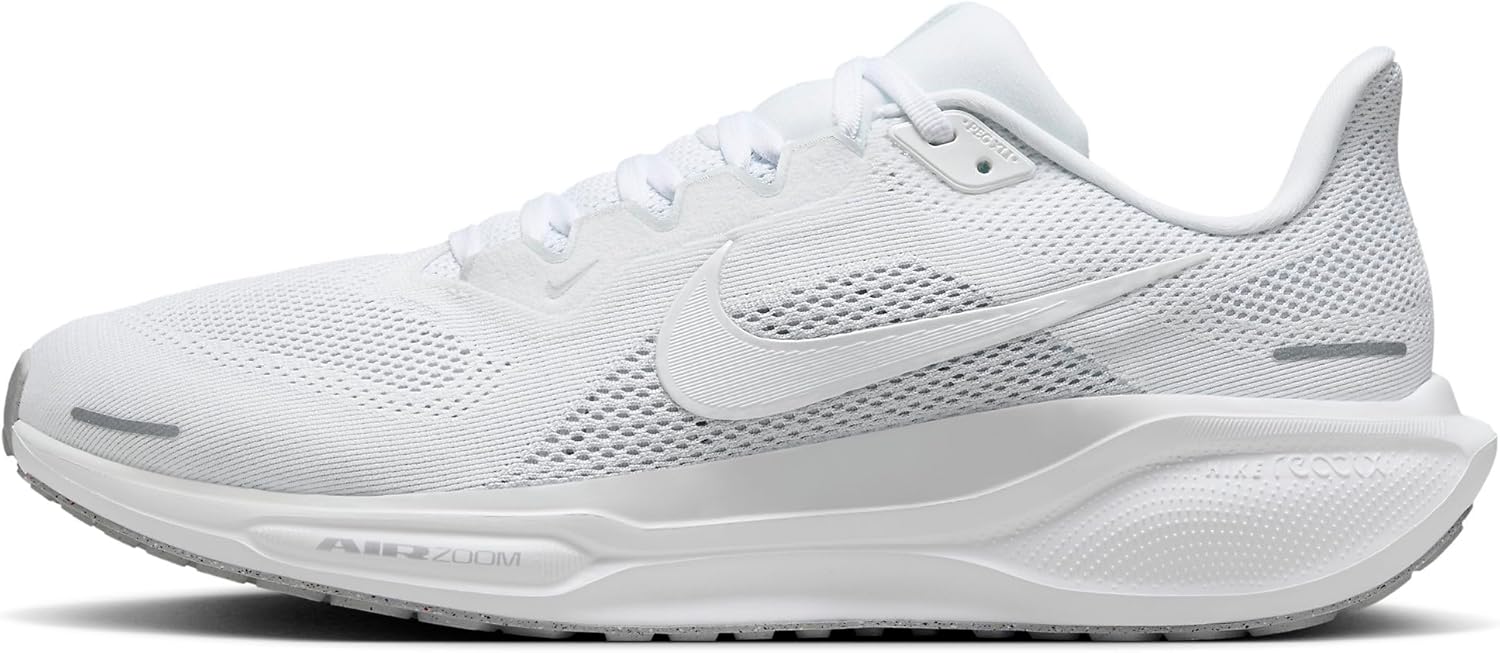
Stability shoes (moderate motion control) are appropriate for mild-to-moderate overpronation. Look for: a dual-density midsole (firmer on the medial side), a structured heel counter, and a straight or semi-curved last shape. Most major running brands (Asics, Brooks, New Balance) have a strong stability line.
Motion control shoes (maximum motion control) are for severe overpronation — particularly adults with flat feet, heavier runners, or those with posterior tibial tendon issues. They’re heavier and stiffer than stability shoes, but provide significantly more medial post support.
Replace running shoes every 400–500 miles regardless of how the outsole looks. Midsole foam degrades faster than the rubber sole shows wear — running in dead shoes is one of the most common ways overpronation patients injure themselves despite doing everything else right.
Professional Treatment Options
For mild-to-moderate overpronation, the combination of supportive insoles, strengthening exercises, and appropriate footwear resolves or significantly reduces symptoms in the majority of patients. For moderate-to-severe cases, or when overpronation is causing significant injury patterns, professional intervention accelerates recovery.
Custom orthotics provide the most precisely controlled motion correction available. At Balance Foot & Ankle, we cast for custom orthotics using weight-bearing and non-weight-bearing techniques, fabricating a device that exactly matches your foot’s anatomy and corrects your specific degree and pattern of pronation. Custom orthotics are particularly indicated for stage 2+ posterior tibial tendon dysfunction, significant structural flatfoot, and patients who have failed quality OTC insoles.
Physical therapy targeting the specific muscle imbalances identified in your gait analysis provides the exercise prescription most tailored to your mechanics. We work with local physical therapy partners in Howell and Bloomfield Township to co-manage complex biomechanical cases.
Bracing and ankle-foot orthoses (AFO) are reserved for severe cases, particularly advanced posterior tibial tendon dysfunction where the tendon can no longer maintain arch height actively. Surgery — including calcaneal osteotomy, tendon transfer, or lateral column lengthening — is occasionally indicated for structural flat foot deformity that doesn’t respond to conservative care.
Warning Signs — When Overpronation Needs Urgent Evaluation
Most Common Mistake With Overpronation
The most common mistake I see is patients buying the most heavily cushioned shoe available — thinking more cushion equals more correction — when what they actually need is more structure. Highly cushioned, soft-midsole shoes often worsen overpronation by allowing unconstrained inward roll. Cushion without support is like putting a thick mattress under a broken spring — you’re padding the problem, not fixing it.
The fix: Choose shoes based on arch support and medial posting rather than cushion softness. Pair them with a quality insole like PowerStep Pinnacle for additional medial arch support. Soft cushion and rigid arch control serve different purposes — you need the latter for overpronation.
In-Office Evaluation at Balance Foot & Ankle
If you’re in the Howell or Bloomfield Township, Michigan area and dealing with pain related to overpronation — or if you want a proper gait analysis and custom orthotic prescription — our team at Balance Foot & Ankle provides comprehensive biomechanical evaluation, digital gait analysis, custom orthotic fabrication, and conservative management of all overpronation-related conditions. Book online 24/7.
In-Office Treatment at Balance Foot & Ankle
If home treatment isn’t providing relief for your flat feet, our podiatry team at Balance Foot & Ankle can help with expert evaluations and advanced in-office care.
Frequently Asked Questions
Can overpronation be corrected permanently?
Structural overpronation — caused by flat feet or bone alignment issues — cannot be permanently corrected without surgery, but it can be very effectively managed with insoles, appropriate footwear, and strengthening exercises that reduce the impact of the mechanics. Functional overpronation caused primarily by muscle weakness often improves significantly with targeted strengthening, especially hip abductor and arch muscle exercises. Most patients achieve full resolution of symptoms without surgery.
What is the difference between overpronation and flat feet?
Flat feet (pes planus) refers to arch height — specifically, having a very low or absent arch. Overpronation refers to the motion of the foot during gait — the degree of inward roll during walking or running. They often coexist, but not always. You can have flat arches that are stable and don’t overpronate, and you can have a normal arch height that still excessively pronates during movement. Treatment addresses the mechanical behavior (overpronation), not just the arch height appearance.
Are PowerStep insoles as good as custom orthotics?
For mild-to-moderate overpronation, quality OTC insoles like PowerStep Pinnacle can achieve results comparable to custom orthotics in several studies, at a fraction of the cost. Custom orthotics are superior for significant structural flatfoot, posterior tibial tendon dysfunction, or when precise biomechanical control is needed for high-level athletic performance or complex foot deformity. I always recommend a quality OTC insole first — if it resolves symptoms within 6–8 weeks, custom orthotics may not be necessary.
Does insurance cover overpronation treatment?
Office visits and gait analysis are covered by most plans when associated with a diagnosed condition (plantar fasciitis, PTTD, etc.). Custom orthotics are covered by many insurance plans with medical necessity documentation — call your insurer to verify. OTC insoles like PowerStep and CURREX are not covered by insurance but are available through HSA/FSA accounts.
The Bottom Line
Overpronation is the most common biomechanical foot issue, and it causes a predictable pattern of injuries from plantar fasciitis to knee pain. The most effective management combines structural support (PowerStep Pinnacle for everyday use, CURREX RunPro for running, CURREX HikePro for hiking) with strengthening exercises targeting the intrinsic foot muscles and hip stabilizers. For progressive or severe cases, custom orthotics from a podiatrist provide the most precise correction available.
If you’re in Michigan and dealing with pain you suspect is overpronation-related, our team at Balance Foot & Ankle can give you a definitive diagnosis and a correction plan that actually addresses your specific mechanics — not just generic advice.
Sources
- Buldt AK, et al. The relationship between foot posture and lower limb kinematics during walking. Gait & Posture. 2015.
- Menz HB, et al. Walking stability in older adults and the association with overpronation. Journal of the American Podiatric Medical Association. 2016.
- Rasenberg N, et al. Insoles for the prevention and treatment of foot conditions: a systematic review. British Journal of Sports Medicine. 2018.
- Hawke F, et al. Custom-made foot orthoses for the treatment of foot pain. Cochrane Database of Systematic Reviews. 2008.
- Van Ginckel A, et al. Intrinsic gait-related risk factors for Achilles tendinopathy in novice runners. Clinical Biomechanics. 2009.
- American College of Foot and Ankle Surgeons. Flatfoot (Posterior Tibial Tendon Dysfunction). 2024. acfas.org.
When Shoes Aren’t Enough — Dr. Tom’s Top 9 Orthotics
About 30% of patients I see for foot pain need MORE than a great shoe — they need a structured insole. Below: my complete 2026 orthotic ranking with pros, cons, and the specific patient I’d give each one to.




American Podiatric Medical Association: Flatfoot and Overpronation
Ready to Get Relief?
Book online 24/7 in Howell & Bloomfield Township, MI
4.9★ | 1,200+ Reviews | 3,000+ Surgeries
Or call: (810) 206-1402

Dr. Tom Biernacki, DPM is a board-certified foot & ankle surgeon (ABFAS & ABPM) at Balance Foot & Ankle Specialists in Southeast Michigan. With over a decade of clinical experience, he specializes in heel pain, bunions, diabetic foot care, sports injuries, and minimally invasive surgery. Dr. Biernacki is a member of the APMA and ACFAS, and his patient education content on MichiganFootDoctors.com and YouTube has made him one of the most-followed foot & ankle educators on YouTube.