


Quick answer: Plantar Fibromatosis Ledderhose Disease Arch Nodules 2 is a clinical condition that responds to evidence-based treatment when caught early. Symptoms include pain, swelling, and altered function. Diagnosis requires clinical exam, often imaging. Treatment ladder: conservative care first (4-6 weeks), then targeted interventions if needed. Call (810) 206-1402.
Medically reviewed by Dr. Tom Biernacki, DPM — Board-Certified Podiatric Surgeon — Balance Foot & Ankle, Howell & Bloomfield Township, MI. Last updated April 2026.
Medically Reviewed by Dr. Tom Biernacki, DPM — Board-Certified Podiatrist, Balance Foot & Ankle Specialists, Michigan. Last updated April 2026.
The most important clinical decision with Plantar Fibromatosis Ledderhose Disease Arch Nodules 2 isn’t which treatment to start with — it’s which subtype or underlying cause you actually have. That distinction changes everything. Call us: (810) 206-1402
What Is Plantar Fibromatosis?
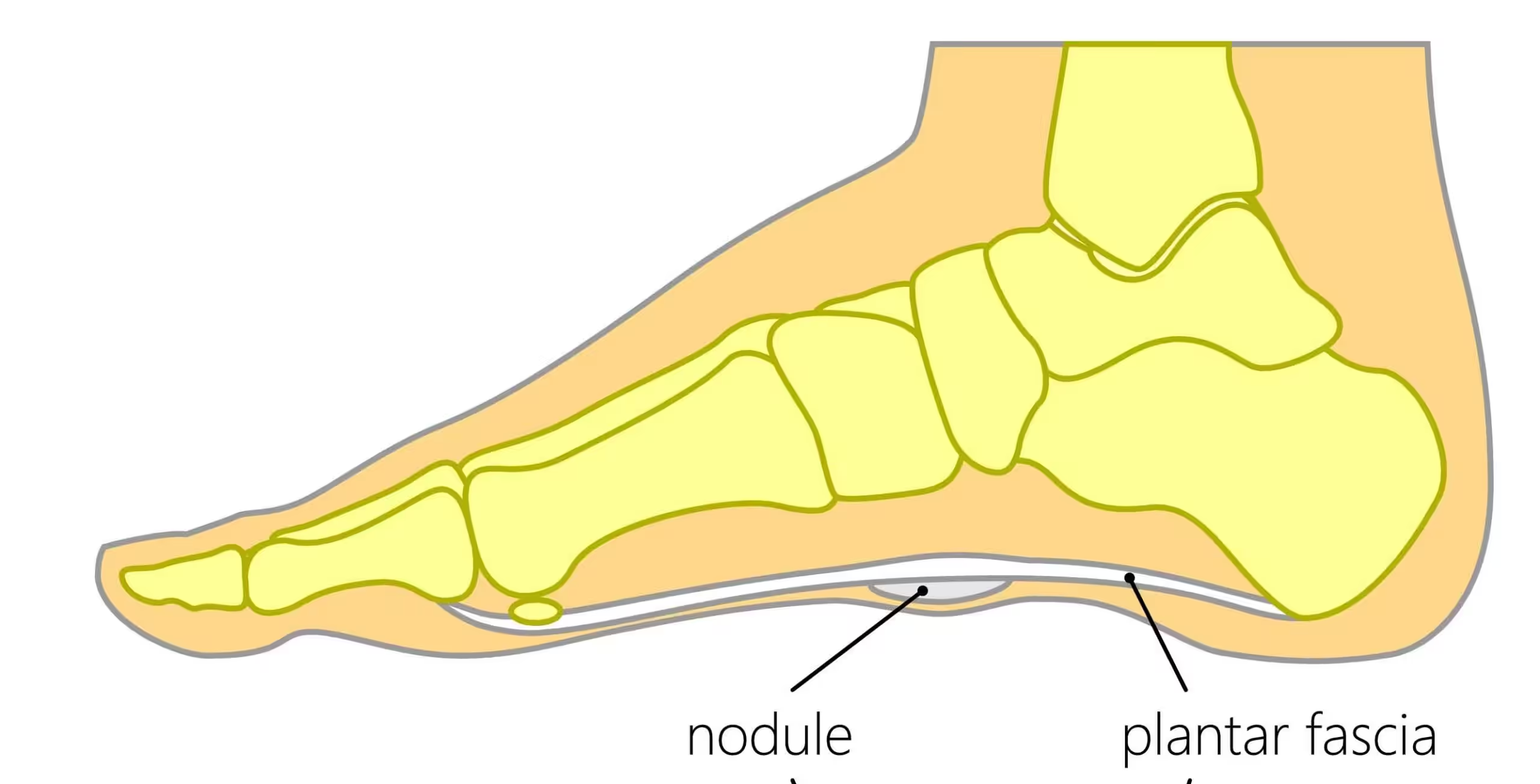
Plantar fibromatosis, also known as Ledderhose disease, is a benign (non-cancerous) proliferative condition of the plantar fascia in which firm, fibrous nodules develop within the plantar aponeurosis — the thick connective tissue band in the arch of the foot. Unlike plantar fasciitis, which is an inflammatory condition of the fascia, plantar fibromatosis involves abnormal fibrous tissue growth that creates palpable, fixed nodules that do not simply resolve with anti-inflammatory treatment.
The condition was first described by Georg Ledderhose in 1894, and it shares a biological relationship with Dupuytren contracture of the hand (palmar fibromatosis) and Peyronie disease of the penis (penile fibromatosis). Patients with any one of these conditions have elevated rates of the others, suggesting a common fibroproliferative mechanism.
At Balance Foot & Ankle, our podiatrists regularly diagnose and manage plantar fibromatosis, providing accurate assessment of nodule characteristics and comprehensive conservative treatment. For cases requiring intervention, we offer referral pathways to specialists and radiation therapy options.
Who Gets Plantar Fibromatosis?
Plantar fibromatosis affects men more commonly than women, with a male-to-female ratio of approximately 3 to 1. It is most prevalent in middle-aged adults (40 to 60 years), though it can occur at any age. Bilateral involvement (both feet) occurs in approximately 25 percent of cases.
Risk factors include Northern European ancestry, family history of fibromatoses, chronic alcohol consumption, diabetes mellitus, epilepsy medications (particularly phenytoin), and chronic liver disease. The precise cause remains incompletely understood, but a combination of genetic predisposition and local trauma appears to trigger the abnormal fibroblast proliferation.
Symptoms and Presentation
Plantar fibromatosis typically presents as one or more firm, non-tender nodules felt along the inner arch of the foot. In early stages, the nodules may be completely asymptomatic — discovered incidentally during self-examination or by a clinician examining the foot for another reason. As nodules enlarge, they can cause pain with walking, particularly barefoot walking or in flat-soled shoes where the nodule contacts the ground directly.
Unlike plantar fasciitis, the pain of symptomatic plantar fibromatosis is located in the middle arch rather than the heel. It may worsen with prolonged standing and improve with rest. Nodules do not cause the morning first-step pain characteristic of plantar fasciitis. In severe cases, toe contractures (similar to Dupuytren contracture in the hand) may develop as fibrotic tissue extends into the digital bands.
Diagnosis
Clinical examination reveals firm, rubbery nodules within the plantar fascia that move with the fascia when the toes are extended but do not move independently of the fascia. This adherence to the fascia distinguishes fibromatosis from other plantar soft tissue masses.
Ultrasound provides excellent real-time imaging of plantar fibromas, showing hypoechoic (dark) nodules within the fascia with characteristic features. MRI is the most comprehensive imaging modality, providing multi-planar assessment of nodule extent, involvement of adjacent structures, and features suggesting benign versus more aggressive behavior.
Biopsy is occasionally performed when imaging characteristics are atypical or when the diagnosis is in question. Histology shows hypercellular fibrous tissue with spindle-shaped fibroblasts but no features of malignancy. The vast majority of plantar fibroma cases do not require biopsy when clinical and imaging findings are characteristic.
Conservative Treatment Options
Custom orthotics with a relief cavity carved beneath the fibroma are the primary conservative intervention. The cutout redistributes pressure away from the nodule while the surrounding foot remains supported. Properly designed offloading orthotics significantly reduce pain with weight bearing and allow continued activity in most patients with mild to moderate fibromatosis.
Shoe modifications including softer insole materials, greater cushioning, and avoidance of flat-soled shoes reduce direct nodule compression. Walking barefoot on hard surfaces is particularly provocative and should be minimized.
Corticosteroid injection into or adjacent to the fibroma has been used for years with variable results. Studies show some reduction in nodule size and symptom improvement in early-stage lesions, though effects are often temporary and repeat injections carry risks of fascial atrophy and rupture with excessive administration.
Verapamil (a calcium channel blocker) injected intralesionally has shown promise in small studies, with potential to slow fibroma progression. Evidence base remains limited but this approach has a favorable side-effect profile.
Radiotherapy for Plantar Fibromatosis
Low-dose radiation therapy has emerged as an effective treatment for plantar fibromatosis, particularly in Europe where it has been used for decades. Superficial X-ray or electron beam radiation targets the fibrotic tissue, reducing fibroblast activity and inducing stabilization or regression of nodules. Multiple studies show that radiation therapy prevents disease progression and may reduce nodule size in 70 to 90 percent of patients.
Radiation therapy is typically administered in two courses of approximately 5 fractions each, separated by 6 to 8 weeks. It is most effective for early-stage disease when nodules are small and symptoms manageable. Side effects include temporary skin irritation that resolves after treatment. Long-term cancer risk from the doses used is extremely low but is a consideration, particularly for younger patients.
Surgical Treatment
Surgery for plantar fibromatosis carries significant risks and should be reserved for cases with severe, disabling symptoms that have failed all conservative measures and radiation therapy. The challenge is that plantar fibromatosis has a high recurrence rate after surgery because the fibromatosis extends microscopically beyond the visible nodule into the surrounding normal-appearing fascia. Limited local excision carries recurrence rates exceeding 50 percent.
Total plantar fasciotomy — removing the entire plantar fascia — reduces recurrence rates to approximately 25 percent but introduces its own complications including flat foot deformity from loss of the plantar fascia arch support mechanism, painful scarring, and wound healing problems. Surgery should be approached with cautious expectations and careful patient selection.
Long-Term Management
Plantar fibromatosis is a chronic, slowly progressive condition in most cases. The majority of patients can be managed effectively long-term with orthotics, appropriate footwear, and periodic monitoring. Nodules may remain stable for years, grow slowly, or in some cases diminish with conservative treatment. The goal of management is symptom control rather than cure, and most patients achieve satisfactory function with a comprehensive conservative approach.
If you have discovered a firm nodule in your arch or are experiencing unexplained arch pain, contact Balance Foot & Ankle for evaluation. Accurate diagnosis is the first step to effective management. We serve patients throughout Southeast Michigan with online booking available 24/7.
Ready to Relieve Your Foot Pain?
Board-certified podiatrists serving Southeast Michigan. Book online 24/7.
Book Your AppointmentPlantar Fibromatosis Treatment at Balance Foot & Ankle
Plantar fibromatosis (Ledderhose disease) causes firm nodules in the arch that can become painful with walking. Dr. Tom Biernacki at Balance Foot & Ankle provides conservative management and surgical excision when needed at our Howell and Bloomfield Township offices.
Learn About Our Arch Pain Treatment Options | Book Your Appointment | Call (810) 206-1402
Clinical References
- Espert M, et al. “Ledderhose disease: an uncommon entity.” European Journal of Radiology. 2016;85(3):591-595.
- Young JR, et al. “The etiology, evaluation, and management of plantar fibromatosis.” Orthopedic Clinics of North America. 2019;50(1):55-65.
- Lee TH, et al. “Plantar fibromatosis.” Journal of Bone and Joint Surgery. 1993;75(7):1080-1084.
Insurance Accepted
BCBS · Medicare · Aetna · Cigna · United Healthcare · HAP · Priority Health · Humana · View All →
Howell Office
4330 E Grand River Ave
Howell, MI 48843
Get Directions →
Bloomfield Township Office
43494 Woodward Ave, Suite 208
Bloomfield Township, MI 48302
Get Directions →
More Podiatrist-Recommended Foot Health Essentials
Hoka Clifton 10

Max-cushion everyday shoe — podiatrist favorite for walking and running.

OOFOS Recovery Slide

Impact-absorbing recovery sandal — wear after long days on your feet.
As an Amazon Associate, Balance Foot & Ankle earns from qualifying purchases. Product recommendations are based on clinical experience; prices and availability shown above update live from Amazon.
When to See a Podiatrist
If foot or ankle pain has been bothering you for more than a few weeks, home care alone may not be enough. Balance Foot & Ankle offers online booking 24/7 at our Howell and Bloomfield Township clinics — no referral needed in most cases. Bring your current shoes and a short list of symptoms and we’ll build you a treatment plan in one visit.
Call Balance Foot & Ankle: (810) 206-1402 · Book online · Offices in Howell & Bloomfield Township
In-Office Treatment at Balance Foot & Ankle
If home treatment isn’t providing relief for your foot and ankle conditions, our podiatry team at Balance Foot & Ankle can help with expert evaluations and advanced in-office care.
Book online 24/7. (810) 206-1402

Dr. Tom Biernacki, DPM is a board-certified foot & ankle surgeon (ABFAS & ABPM) at Balance Foot & Ankle Specialists in Southeast Michigan. With over a decade of clinical experience, he specializes in heel pain, bunions, diabetic foot care, sports injuries, and minimally invasive surgery. Dr. Biernacki is a member of the APMA and ACFAS, and his patient education content on MichiganFootDoctors.com and YouTube has made him one of the most-followed foot & ankle educators on YouTube.