
Medically reviewed by Dr. Tom Biernacki, DPM
Board-certified podiatric surgeon | Balance Foot & Ankle, Howell & Bloomfield Hills, MI
Last reviewed: May 2026
| Treatment | Mechanism | Cure Rate | Sessions Needed | Pain Level | Best For |
|---|---|---|---|---|---|
| Salicylic Acid (topical) | Keratolytic – dissolves infected keratin | 50-70% at 3 months | Daily self-application 6-12 weeks | Minimal | Small single warts; first-line in children |
| Cryotherapy (liquid nitrogen) | Freeze-thaw cycle destroys infected cells; stimulates immune response | 50-70% per treatment; 80%+ with repeat | 1-4 sessions every 2-3 weeks | Moderate (burning during and after) | Single or clustered warts; common office treatment |
| Candida Antigen Injection | Intralesional immunotherapy – triggers immune recognition of HPV | 70-80%; treats all warts systemically | 3-5 injections every 3-4 weeks | Moderate (injection) | Multiple warts; recurrent warts; immune-mediated clearance |
| Swift Microwave Therapy | Microwave energy heats tissue to 42-45C; triggers heat shock protein immune response | 70-85% at 12 weeks | 3-4 sessions every 4 weeks | Brief intense (3-5 seconds per application) | Stubborn mosaic warts; multiple warts; ideal for athletic patients |
| Pulsed Dye Laser (PDL) | Selectively destroys wart vasculature; indirect antiviral effect | 65-75% | 2-4 sessions every 3-4 weeks | Moderate | Warts unresponsive to other treatments |
| Surgical Excision / CO2 Laser | Physical removal of wart tissue | 60-80%; higher recurrence than immune-based methods | 1 (plus healing time) | Requires local anesthetic | Large, single, treatment-resistant wart; last resort |
| Feature | Plantar Wart (Verruca Plantaris) | Corn (Heloma) | Callus | Plantar Fibroma |
|---|---|---|---|---|
| Cause | HPV (strains 1, 2, 4, 27, 57) | Bone prominence + shoe pressure | Broad pressure or friction | Fibrous tissue overgrowth in plantar fascia |
| Surface | Disrupted skin lines; black dots (thrombosed capillaries) | Central hard nucleated core; normal skin lines around | Broad, smooth, thickened; skin lines intact | Firm, non-tender nodule within fascia |
| Pain with lateral squeeze | Yes – characteristic pinch test positive | No – pain with direct pressure only | No – aching with prolonged pressure | No – usually non-tender |
| Location | Any plantar surface; often pressure points | Under metatarsal head or toe | Ball of foot, heel, toes | Medial plantar fascia; arch area |
| Treatment | Antiviral/immune-based methods above | Debridement; correct bony cause | Debridement; orthotics | Observation; injection; surgical excision |
Plantar wart treatments range from drugstore acid pads to in-office cryotherapy to immunotherapy injections — and the success rate climbs from about 30% (home) to 80%+ (combined in-office) when used correctly.
You’re in the right place. Dr. Tom Biernacki, DPM, FACFAS — board-certified foot & ankle surgeon with 3,000+ surgeries — explains exactly what plantar wart treatment options means and what works. Call (810) 206-1402 for same-day appointment at Howell or Bloomfield Hills.
Quick answer: Treatment for plantar wart treatment options podiatrist follows a stepwise approach: 1) conservative care first (rest, ice, supportive footwear, OTC anti-inflammatories), 2) physical therapy and targeted exercises, 3) in-office treatments (injections, custom orthotics) if conservative fails at 4-6 weeks, 4) surgery for refractory cases. Most patients resolve at step 1 or 2. Call (810) 206-1402.
Medically Reviewed | Dr. Tom Biernacki, DPM | Board-Certified Podiatric Surgeon | Balance Foot & Ankle, Michigan
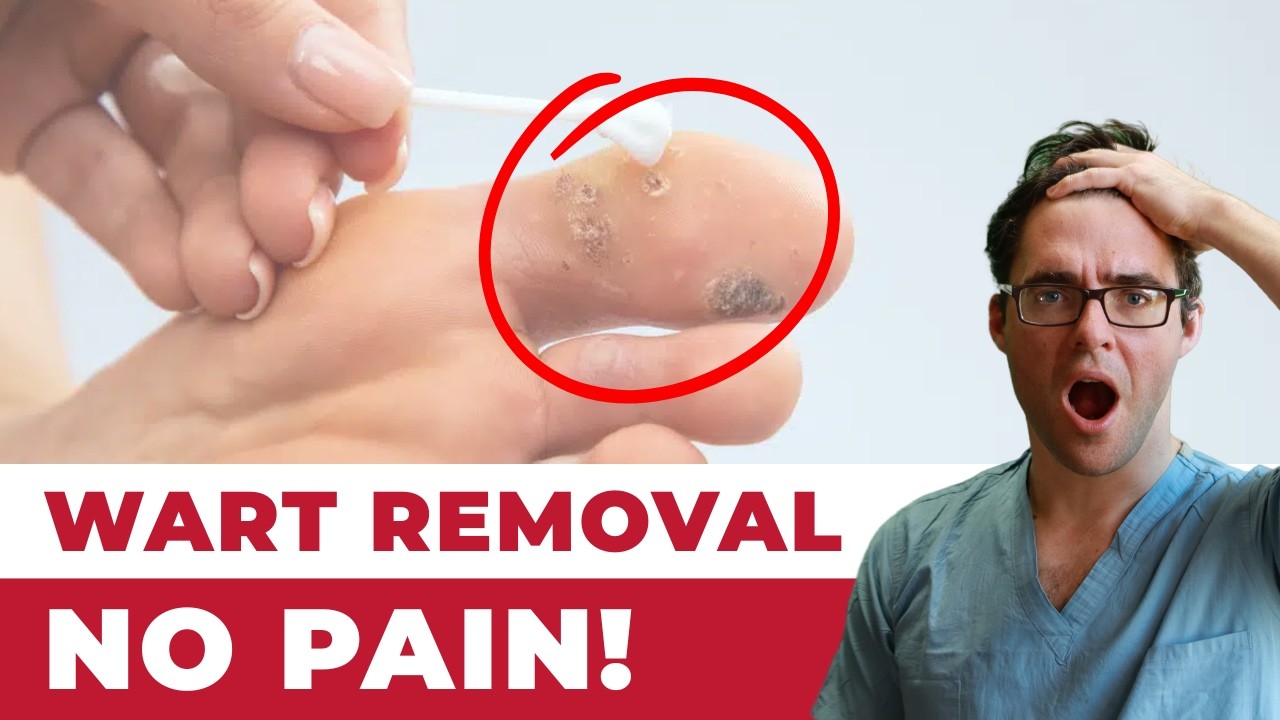
Watch: Plantar Wart Removal: How to Get Rid of a Foot Wart with No PAIN! — MichiganFootDoctors YouTube
The most important clinical decision with Plantar Wart Treatment Options Podiatrist isn’t which treatment to start with — it’s identifying the correct subtype. That changes everything. Call (810) 206-1402.
The most important clinical decision with Plantar Wart Treatment Options Podiatrist isn’t which treatment to start with — it’s identifying the correct subtype. That changes everything. Call (810) 206-1402.
What Is a Plantar Wart?
A plantar wart (verruca plantaris) is a cutaneous HPV infection — specifically HPV strains 1, 2, 4, or 63 — of the plantar skin. The virus enters through micro-abrasions in the skin barrier, most commonly in moist environments (swimming pools, locker rooms, gym floors). On the plantar surface, the wart is forced inward by body weight, often causing it to appear embedded rather than protruding. Characteristic appearance: disruption of normal skin lines (dermatoglyphics), black dots (thrombosed capillaries), and tenderness with lateral compression. Plantar warts can occur singly or in mosaic clusters. They may spontaneously resolve in 2-3 years in immunocompetent patients — but active treatment accelerates resolution and reduces spread.
Why OTC Treatments Usually Fail
OTC salicylic acid (Compound W, Dr. Scholl’s) is appropriate first-line treatment for small, early plantar warts. It works by keratolysis — dissolving the wart tissue layer by layer. Limitations: requires 8-16 weeks of daily application, success rates of 50-75% for small warts, much lower for large or recalcitrant warts, and requires perfect application technique including soaking and filing between applications. Patients typically present to a podiatrist after OTC treatment has failed for 2-6 months.
Cantharidin: The Preferred In-Office Treatment
Cantharidin (“beetle juice”) is a vesicant agent extracted from blister beetles that, when applied to wart tissue and covered for 24 hours, causes a blister to form under the wart — separating it from the underlying skin. The separated tissue is then debrided at the follow-up appointment. Success rates: 70-80% clearance with 1-3 applications. Cantharidin is painless to apply (patients feel the blister development over the next 24 hours) and well-tolerated. Dr. Biernacki uses cantharidin as the preferred first-line in-office treatment for most plantar warts.
Cryotherapy, Laser, and Immunotherapy
Cryotherapy (liquid nitrogen) freezes wart tissue, destroying cells and stimulating immune recognition. Effective but painful during and after application — particularly on the plantar surface. Multiple treatments at 2-3 week intervals required. Laser ablation (CO2 or pulsed dye laser) destroys wart tissue with precise thermal energy — effective for resistant warts but requires local anesthesia and has some post-procedural healing time. Candida antigen immunotherapy involves injection of a fungal antigen into the wart to stimulate a local immune response that often generalizes to attack HPV-infected cells throughout the body — particularly effective for multiple or recalcitrant warts. Surgical excision (curettage) under local anesthesia is reserved for warts not responding to other methods.
Dr. Tom's Product Recommendations

Compound W Plantar Wart Treatment
⭐ Highly Rated
OTC salicylic acid pads for early, small plantar warts. Appropriate first-line trial before pursuing in-office treatment. Use daily after soaking and filing for maximum effectiveness. Works best for warts under 1cm diameter present less than 6 months.
Dr. Tom says: “https://m.media-amazon.com/images/I/61bxw2OuVHL._AC_SL300_.jpg”
Early, small plantar warts as a first-line OTC trial
Large, mosaic, or recalcitrant warts that have already failed OTC treatment — requires in-office care
Disclosure: We earn a commission at no extra cost to you.

PowerStep Pinnacle Orthotic
⭐ Highly Rated
Pressure distribution to reduce pain at the wart site while treatment progresses. Useful for large plantar warts causing significant pain with weight-bearing during the treatment period.
Dr. Tom says: “https://m.media-amazon.com/images/I/71k+PB6ZHLL._AC_SL300_.jpg”
Plantar wart pain management during treatment
Replacement for active treatment — orthotics do not treat the HPV infection
Disclosure: We earn a commission at no extra cost to you.
✅ Pros / Benefits
- Cantharidin achieves 70-80% clearance in 1-3 painless applications — superior to most other methods
- Immunotherapy approaches clear multiple warts simultaneously — particularly useful for mosaic clusters
- In-office treatment dramatically faster than OTC approaches — months vs. weeks to resolution
❌ Cons / Risks
- Plantar warts can recur after successful treatment if HPV reservoir in skin is not eliminated
- Some patients are poor responders — requiring multiple treatment modalities before clearance
- Immunotherapy efficacy is unpredictable — works excellently in some, minimally in others
Dr. Tom Biernacki’s Recommendation
Cantharidin is my favorite plantar wart treatment, and patients often look at me skeptically when I tell them the application is painless. It is. You feel nothing during the application. You feel the blister developing over the next 24 hours — that’s when it gets sore. But the sore day is the day it’s working. I give patients detailed instructions, see them back 2 weeks later, debride the lifted tissue, and most of them have significant clearance or complete resolution within 2-3 applications. It’s much faster and better-tolerated than weekly cryotherapy.
— Dr. Tom Biernacki, DPM | Board-Certified Podiatric Surgeon | Balance Foot & Ankle
Frequently Asked Questions
How does a podiatrist remove a plantar wart?
The most common in-office technique is cantharidin application (blistering agent that separates the wart from surrounding skin), followed by debridement at a follow-up visit. Cryotherapy, laser, and surgical curettage are alternatives for resistant cases.
Are plantar warts contagious?
Yes — HPV is transmitted through direct skin contact and indirect contact via contaminated surfaces (shower floors, pool decks). Wear footwear in public showers and locker rooms to reduce exposure. Cover active warts during activities where transmission is possible.
How long does plantar wart treatment take?
OTC salicylic acid: 8-16 weeks for small warts. In-office cantharidin: 2-6 weeks, 1-3 application sessions. Cryotherapy: 6-12 weeks, 3-6 sessions. Large recalcitrant mosaic warts may require 3-6 months of combined treatment.
Michigan Foot Pain? See Dr. Biernacki In Person
4.9★ rated | 1,123 Reviews | 3,000+ Surgeries
Same-week appointments · Howell & Bloomfield Hills
📞 (810) 206-1402 Book Online →Frequently Asked Questions
How long does treatment take to work?
Most patients see improvement in 4-8 weeks with consistent conservative care. Persistent symptoms after 8 weeks need imaging and escalation.
When is surgery needed?
Surgery is reserved for cases that fail 3-6 months of conservative care, structural deformities, or fractures requiring stabilization.
Is this covered by insurance?
Most diagnostic visits and conservative treatments are covered by Medicare and major insurers. Custom orthotics often require diabetic or post-surgical justification.
What is Plantar wart?
Plantar wart is a common foot/ankle condition that affects mobility and quality of life. Understanding the underlying cause is the first step in successful treatment. Our podiatrists at Balance Foot & Ankle perform a hands-on biomechanical exam, review your activity history, and use diagnostic imaging when appropriate to identify the root cause—not just treat the symptom. Many patients have been told to “rest and ice” without a deeper diagnostic workup; our approach is different.
Symptoms and warning signs
Common signs of plantar wart include pain that worsens with activity, morning stiffness, swelling, tenderness when palpated, and difficulty bearing weight. If you experience sudden severe pain, inability to walk, visible deformity, numbness or color change, contact our office the same day or visit urgent care—these can signal a more serious injury such as a fracture, tendon rupture, or vascular compromise. Diabetics with any foot wound should seek same-day care.
Conservative treatment options
Most cases of plantar wart respond to non-surgical care: structured rest, supportive footwear changes, custom orthotics, targeted stretching and strengthening protocols, anti-inflammatory medications when medically appropriate, and in-office procedures such as ultrasound-guided injections. We also offer advanced therapies including MLS laser therapy, EPAT/shockwave, regenerative injections, and image-guided procedures. Treatment is sequenced from least invasive to most invasive, and we explain the rationale at every step.
When is surgery considered?
Surgery is reserved for cases that fail 3-6 months of well-structured conservative care, when there is structural pathology (severe deformity, complete tear, advanced arthritis), or when imaging shows damage that will not heal without intervention. Our surgeons have performed 3,000+ foot and ankle procedures and prioritize minimally-invasive techniques whenever appropriate. We discuss recovery timelines, return-to-activity milestones, and realistic outcome expectations before any procedure is scheduled.
Recovery timeline and prevention
Recovery from plantar wart varies based on severity and chosen treatment path. Conservative cases often improve within 4-8 weeks with consistent adherence to the protocol. Post-procedural recovery may range from a few days (in-office procedures) to several months (reconstructive surgery). Long-term prevention involves footwear assessment, activity modification, structured strengthening, and regular check-ins with your podiatrist if you have a history of recurrence. We provide written home-exercise plans and digital follow-up support.
Ready to feel better?
Same-week appointments available in Howell and Bloomfield Hills, Michigan.
Book Your VisitAmerican Academy of Dermatology: Warts
Ready to Get Relief?
Same-day appointments available in Howell & Bloomfield Hills, MI
4.9★ | 1,123 Reviews | 3,000+ Surgeries
Or call: (810) 206-1402

Dr. Tom Biernacki, DPM is a board-certified foot & ankle surgeon (ABFAS & ABPM) at Balance Foot & Ankle Specialists in Southeast Michigan. With over a decade of clinical experience, he specializes in heel pain, bunions, diabetic foot care, sports injuries, and minimally invasive surgery. Dr. Biernacki is a member of the APMA and ACFAS, and his patient education content on MichiganFootDoctors.com and YouTube has made him one of the most-followed foot & ankle educators on YouTube.