
The most important clinical decision with Plantar Warts Treatment Michigan isn’t which treatment to start with — it’s identifying the correct subtype. That changes everything. Book online or call (810) 206-1402.
Dr. Tom’s Top Pain Relief Picks — Dr. Hoy’s (2026)
Affiliate disclosure: As an Amazon Associate, Balance Foot & Ankle earns from qualifying purchases. I personally use Dr. Hoy’s in my practice for patients who need topical relief.
| Product | Best For | Dr. Tom’s Take | Get It |
|---|---|---|---|
| Dr. Hoy’s Natural Pain Relief Gel 3.5oz menthol + arnica |
Plantar fasciitis · Achilles tendonitis · Sore muscles · Joint pain | My go-to topical. Cooling-then-warming sensation. No greasy residue. Non-NSAID alternative. | Buy Now |
| Dr. Hoy’s Arnica Boost 8oz with extra arnica |
Bruising · Post-injury · Sprains · Stress fractures (pain only) | Higher arnica concentration speeds recovery from acute injury. Use 4x daily for first 7 days. | Buy Now |
| Dr. Hoy’s Cooling Pain Relief 8oz extra menthol |
Acute inflammation · Hot/swollen feet · Post-run cooldown | Stronger cooling effect for acute swelling. Pair with ice for first 48 hours after injury. | Buy Now |
| Dr. Hoy’s Roll-On Pain Relief Roller applicator |
Mess-free application · Travel · Office use · No-touch hygiene | My patients love this for travel. Glides on without hand contact — cleanest application available. | Buy Now |
| Dr. Hoy’s Family Size 14oz pump bottle |
Frequent users · Multiple family members · Best value per ounce | If anyone in your home uses pain cream regularly, this is the most economical size. Same formula. | Buy Now |
Why I recommend Dr. Hoy’s over Doctor Hoy’s Natural Pain Relief Gel and Bengay: Cleaner ingredient list (no parabens, no synthetic dyes), longer-lasting effect, and the cooling-then-warming dual sensation actually addresses both inflammation and circulation. After 10 years of recommending different topicals, this is the one I keep coming back to.
Medically reviewed by Dr. Tom Biernacki, DPM · Board-Certified Podiatric Surgeon · Last reviewed: April 2026 · Editorial Policy
Related Conditions
Quick Answer
Plantar Warts Treatment in Michigan Removal Options & relates to plantar fasciitis — typically caused by tight calves and arch overload. Most patients improve in 6-12 weeks with conservative care. Same-week appointments in Howell + Bloomfield Township: (810) 206-1402.
Quick Answer
A plantar wart is an HPV-caused skin growth on the sole of the foot. It looks like a callus but interrupts the skin lines and often shows tiny black dots (thrombosed capillaries). OTC 40% salicylic acid works for mild cases; persistent warts need cryotherapy, laser, or excision.
Medically reviewed by Dr. Tom Biernacki, DPM — Board-Certified Podiatric Surgeon — Balance Foot & Ankle, Howell & Bloomfield Township, MI. Last updated April 2026.
Watch: Dr. Tom Biernacki, DPM
👟 Dr. Tom Also Recommends
Podiatrist Recommended Shoes 2026: Dr. Tom’s Top Picks for Every Condition
The right footwear can make or break your recovery. Dr. Tom’s complete guide to the best shoes for plantar fasciitis, flat feet, neuropathy, bunions & more — with clinical picks for every foot type.
See Dr. Tom’s Top Shoe Picks →Plantar warts are one of the most common dermatological conditions affecting the foot, and one of the most frustrating — they are caused by a virus, resist many over-the-counter remedies, and can persist for years if not treated aggressively. At Balance Foot & Ankle, our Michigan podiatrists offer the full range of plantar wart removal options, including in-office chemical treatment, laser therapy, and surgical excision.
What Are Plantar Warts?
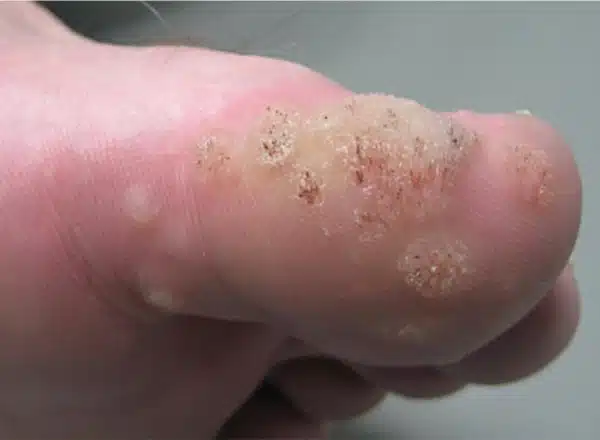

Plantar warts are caused by human papillomavirus (HPV), specifically types 1, 2, 4, 60, and 63, which infect the superficial layers of the skin on the bottom of the foot. The virus enters through tiny cuts or breaks in the skin and creates a thickened, sometimes painful lesion. Unlike most warts, plantar warts are driven inward by body weight, making them appear flat with a rough, callus-like surface — often with small black dots (thrombosed capillaries) visible in the center.
Plantar warts spread in moist environments — shared showers, locker rooms, pool decks, and yoga studios. Children and adolescents are most commonly affected due to immature immune response, though plantar warts occur at all ages. Patients with compromised immune systems (diabetes, HIV, immunosuppressive medications) may develop large, treatment-resistant clusters called mosaic warts.
How to Tell a Plantar Wart from a Callus
A callus forms over a bony prominence and has normal skin lines running through it. A plantar wart interrupts skin lines, shows a granular texture with black pinpoint dots, and is tender when pinched sideways (lateral compression) rather than directly from above. Shaving the surface of a wart reveals a cauliflower-like texture or bleeding capillaries; shaving a callus reveals normal skin.
Treatment Options
Salicylic Acid (First-Line)
High-concentration salicylic acid (40% compound) applied in-office or prescribed for home use causes keratolysis — chemical breakdown of the infected skin cells. Treatment requires consistent daily application and debridement over 6–12 weeks. Cure rates are approximately 70–80% with good patient compliance. This is safe for all ages including children.
Cryotherapy (Liquid Nitrogen)
Liquid nitrogen freezes the wart tissue, destroying infected cells and stimulating an immune response. Applied in-office every 2–4 weeks for 3–6 sessions. Most effective for smaller, single warts. Can cause blistering and temporary soreness after treatment. Cure rates of 70–80% when combined with salicylic acid between sessions.
Candida Antigen Injection (Immunotherapy)
Injecting Candida antigen directly into the wart stimulates a local immune response that can clear not only the treated wart but distant warts simultaneously. This approach is particularly effective for multiple or recurrent warts and mosaic warts. Typically requires 3–5 in-office injections spaced 4–6 weeks apart. Cure rates of 70–80% in studies, with the advantage of systemic immune activation.
Bleomycin Injection
Intralesional bleomycin — a chemotherapy agent — injected directly into the wart destroys the HPV-infected tissue with high efficacy (reported 70–94% clearance). Reserved for persistent warts that have failed other treatments. Can cause significant post-injection pain and requires careful technique to avoid digital necrosis.
Dr. Tom’s Recommended Products for Plantar Warts
📍 Located in Michigan?
Our board-certified podiatrists treat this condition at two convenient locations. Same-day appointments often available.
These are products I personally use and recommend to my patients at Balance Foot & Ankle.
- Compound W Nitrofreeze Wart Remover — Cryogenic freeze spray reaches -57°C — destroys the HPV-infected keratinocyte column in a single application
- PowerStep Clear Away Wart Remover — Salicylic acid 40% medicated pads — breaks down wart tissue over 4–8 weeks for at-home plantar wart treatment
- Duct Tape (3M Scotch — Heavy Duty) — Occlusion therapy with duct tape has equivalent efficacy to cryotherapy in randomized trials for plantar warts
Affiliate disclosure: As an Amazon Associate, Balance Foot & Ankle earns from qualifying purchases. We only recommend products we trust for our own patients.
Join 950,000+ Learning About Foot Health
Dr. Tom shares honest medical advice, supplement reviews, and treatment guides you won’t find anywhere else.
Subscribe on YouTube →Insurance Accepted
BCBS · Medicare · Aetna · Cigna · United Healthcare · HAP · Priority Health · Humana · View All →
Howell Office
4330 E Grand River Ave
Howell, MI 48843
Get Directions →
Bloomfield Township Office
43494 Woodward Ave, #208
Bloomfield Township, MI 48302
Get Directions →
Your Board-Certified Podiatrists



Ready to Get Back on Your Feet?
Same-week appointments available at both locations.
Book Your AppointmentDifferential Diagnosis: What Else Could It Be?
Several conditions share symptoms with Plantar Wart and are commonly misdiagnosed in the first office visit. Considering these alternatives is part of every Balance Foot & Ankle exam:
- Corn or callus. Skin lines run continuously through the lesion — wart interrupts them with black dots.
- Porokeratosis. Thin keratotic rim around a central plug, painful with side compression.
- Foreign body granuloma. History of stepping on something — ultrasound or X-ray finds the fragment.
If your symptoms don’t fit the textbook pattern, ask your podiatrist which differentials they ruled out — that conversation often shortcuts months of trial-and-error treatment.
In Our Clinic
Plantar warts in our clinic most often show up in active teenagers and adults who share locker-room showers. They hurt with lateral pinching (unlike calluses, which hurt with direct pressure), and on debridement we see the telltale black dots (thrombosed capillaries). For stubborn warts we use a layered approach: in-office cantharidin or liquid nitrogen, home 40 % salicylic acid nightly, occlusion with duct tape, and occasionally pulsed-dye laser for resistant lesions. Most clear within 3–6 months; the immune system does most of the work. We do NOT aggressively cut or burn — scars on the weight-bearing foot cause more pain than the wart.
Most Common Mistake We See
The most common mistake we see is: Digging at the wart with tools, which spreads HPV to surrounding skin. Fix: apply salicylic acid only to the wart surface, cover with tape, and replace every 2 days for 12 weeks.
Warning Signs That Need Same-Day Care
Seek immediate evaluation at Balance Foot & Ankle if you experience any of the following:
- Rapidly spreading lesions
- Not responding after 3 months of proper OTC treatment
- Diabetes or immunocompromise
- Bleeding or dark streaks (rule out melanoma)
Call (810) 206-1402 — same-day and next-day appointments at our Howell and Bloomfield Township offices.
Pros & Cons of Conservative Care for plantar fasciitis
Advantages
- ✓ Conservative care resolves 90%+ of cases
- ✓ Multiple home treatment options
- ✓ Strong evidence base
- ✓ Imaging often not required
Considerations
- ✗ Recovery takes 6-12 weeks
- ✗ Mistakes prolong recovery
- ✗ Untreated can become chronic
- ✗ Can mimic other conditions
In This Article
- Quick Answer
- Differential Diagnosis: What Else Could It Be? Several conditions share symptoms with Plantar Wart and are commonly misdiagnosed in the first office visit. Considering these alternatives is part of every Balance Foot & Ankle exam: Corn or callus. Skin lines run continuously through the lesion — wart interrupts them with black dots. Porokeratosis. Thin keratotic rim around a central plug, painful with side compression. Foreign body granuloma. History of stepping on something — ultrasound or X-ray finds the fragment. If your symptoms don’t fit the textbook pattern, ask your podiatrist which differentials they ruled out — that conversation often shortcuts months of trial-and-error treatment. In Our Clinic Plantar warts in our clinic most often show up in active teenagers and adults who share locker-room showers. They hurt with lateral pinching (unlike calluses, which hurt with direct pressure), and on debridement we see the telltale black dots (thrombosed capillaries). For stubborn warts we use a layered approach: in-office cantharidin or liquid nitrogen, home 40 % salicylic acid nightly, occlusion with duct tape, and occasionally pulsed-dye laser for resistant lesions. Most clear within 3–6 months; the immune system does most of the work. We do NOT aggressively cut or burn — scars on the weight-bearing foot cause more pain than the wart. Most Common Mistake We See
- Warning Signs That Need Same-Day Care
- In-Office Treatment at Balance Foot & Ankle
Dr. Tom’s Recommended Products for plantar fasciitis
Affiliate disclosure: As an Amazon Associate, Balance Foot & Ankle earns from qualifying purchases. We only recommend products we use with patients.
PowerStep Pinnacle Maxx Dr. Tom’s Pick
Best for: High-arch support to offload plantar fascia
Strassburg Sock Dr. Tom’s Pick
Best for: Overnight stretch for morning pain relief
Hoka Bondi 9 Dr. Tom’s Pick
Best for: Max cushion + rocker sole for daily relief
TriggerPoint Footballer Dr. Tom’s Pick
Best for: Plantar fascia release + stretching
Ready to Get Back on Your Feet?
Same-day appointments in Howell + Bloomfield Township. Most insurance accepted. Dr. Tom Biernacki, DPM & team.
Book Today — Same-Day Appointments Available
Call Now: (810) 206-1402
About Your Care Team at Balance Foot & Ankle
Dr. Tom Biernacki, DPM · Board-Certified Foot & Ankle Surgeon. Specializes in conservative-first care, minimally invasive bunion surgery, and complex reconstruction.
Dr. Carl Jay, DPM · Accepting new patients. Specializes in sports medicine, athletic injuries, and routine podiatric care.
Dr. Daria Gutkin, DPM, AACFAS · Accepting new patients. Specializes in surgical reconstruction and pediatric podiatry.
Locations: 4330 E Grand River Ave, Howell, MI 48843 · 43494 Woodward Ave Suite 208, Bloomfield Township, MI 48302
Hours: Mon–Fri 8:00 AM – 5:00 PM · (810) 206-1402

Dr. Tom Biernacki, DPM is a board-certified foot & ankle surgeon (ABFAS & ABPM) at Balance Foot & Ankle Specialists in Southeast Michigan. With over a decade of clinical experience, he specializes in heel pain, bunions, diabetic foot care, sports injuries, and minimally invasive surgery. Dr. Biernacki is a member of the APMA and ACFAS, and his patient education content on MichiganFootDoctors.com and YouTube has made him one of the most-followed foot & ankle educators on YouTube.
More questions patients ask
How do you get rid of plantar warts?
Professional treatments include cryotherapy (freezing), salicylic acid, laser therapy, and surgical excision. Dr. Biernacki typically uses a combination approach tailored to wart size and location. Over-the-counter treatments have limited effectiveness for plantar warts due to the thick skin on the foot sole. Most warts resolve within 2-4 treatments spaced 2-3 weeks apart. Call 810-206-1402 for treatment.
What does a plantar wart look like?
Plantar warts appear as small, rough, grainy growths on the bottom of the foot, often with small black dots (thrombosed capillaries). They may cause pain when walking, especially with direct pressure. Unlike calluses, warts interrupt natural skin lines and are painful when squeezed from the sides. Multiple warts clustered together are called mosaic warts.
Still have a question about coverage or cost? Book online and we will check your benefits before your visit: Book in Howell · Book in Bloomfield Township. Prefer to talk it through first? Call (810) 206-1402.