
You are in the right place. Dr. Tom Biernacki, DPM, FACFAS — board-certified foot & ankle surgeon with 3,000+ surgeries — explains exactly what posterior tibial tendon dysfunction stage means and what works. Call (810) 206-1402 for same-day appointment at Howell or Bloomfield Hills.
Quick answer: Posterior Tibial Tendon Dysfunction Stage is a common foot/ankle topic that affects many patients. The 2026 evidence-based approach combines proper diagnosis, conservative-first treatment, and escalation only when needed. We treat this regularly at our Howell and Bloomfield Township practices. Call (810) 206-1402.
Medically reviewed by Dr. Tom Biernacki, DPM — Board-Certified Podiatric Surgeon — Balance Foot & Ankle, Howell & Bloomfield Hills, MI. Last updated April 2026.
▶ Watch
Medically reviewed by Dr. Tom Biernacki, DPM | Board-certified podiatrist | 3,000+ surgeries performed
Last updated: April 2, 2026
The most important clinical decision with Posterior Tibial Tendon Dysfunction Stage isn’t which treatment to start with — it’s which subtype or underlying cause you actually have. That distinction changes everything. Call us: (810) 206-1402
What Is PTTD Stage 1
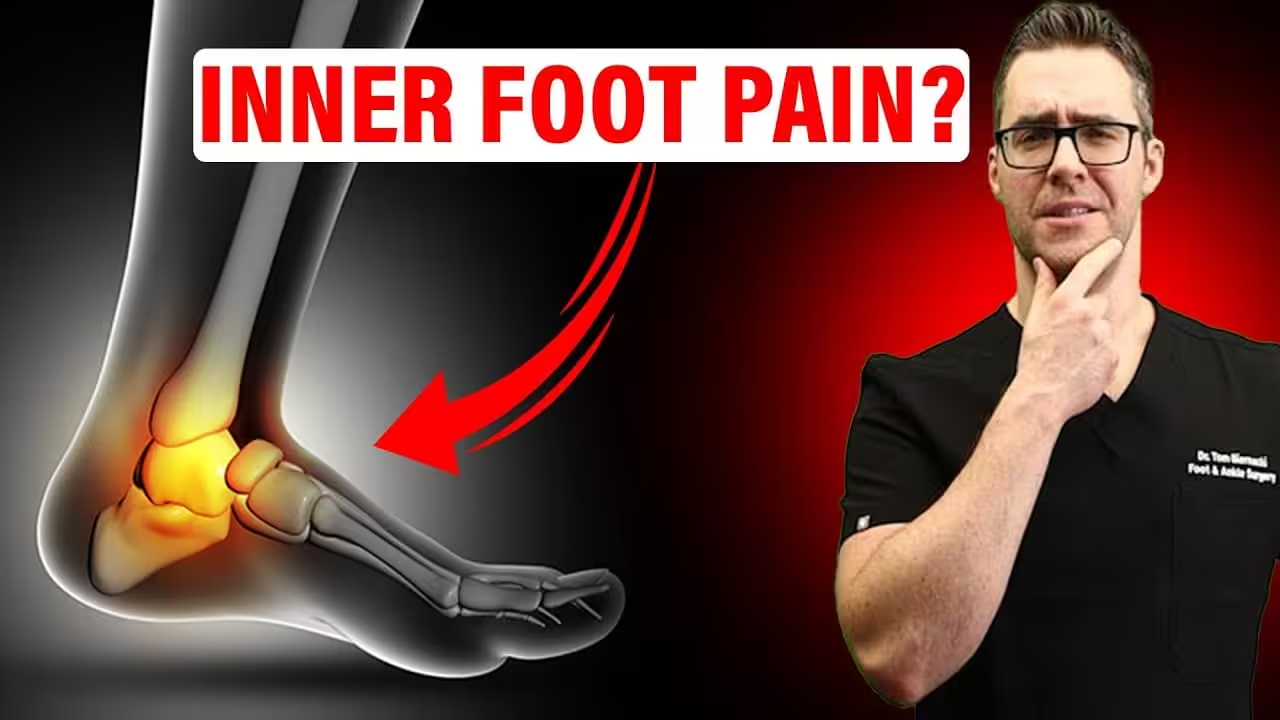
The posterior tibial tendon is the primary dynamic stabilizer of the medial arch. It runs behind the inner ankle bone (medial malleolus) and inserts on the navicular and cuneiforms, acting as a pulley that lifts and supports the arch during walking. When this tendon becomes inflamed or degenerative, the condition is called posterior tibial tendon dysfunction.
Stage 1 represents the earliest phase where the tendon is inflamed (tendinopathy or tenosynovitis) but not yet torn or elongated. The foot maintains its normal arch, the patient can perform a single-leg heel raise (though it may be painful), and no structural deformity is present. This is the treatment window where conservative care is most effective.
In our clinic, early PTTD is one of the conditions where the timing of diagnosis has the most dramatic impact on outcomes. Stage 1 patients treated with appropriate orthotics and rehabilitation have an 80 to 90 percent success rate without surgery. Patients who are not diagnosed until Stage 2 or 3 face a much more complex treatment path that often requires surgical reconstruction.
Who Gets PTTD and Why
PTTD predominantly affects women over 40, with risk increasing with obesity, hypertension, diabetes, and prior ankle injury. The posterior tibial tendon has a watershed zone of reduced blood supply just behind the medial malleolus, making it vulnerable to degenerative changes as blood flow decreases with age and vascular disease.
Biomechanical factors play a significant role. Pre-existing flat feet, overpronation, and accessory navicular bones all increase the workload on the posterior tibial tendon, accelerating wear and degeneration. Athletes who perform repetitive single-leg activities (running, basketball, tennis) develop PTTD at younger ages.
Systemic inflammatory conditions including rheumatoid arthritis, seronegative arthropathies, and diabetes-associated tendinopathy predispose to PTTD. In these populations, bilateral involvement is more common and progression can be more rapid.
Symptoms of Stage 1 PTTD
The primary symptom is pain along the inner ankle and medial arch that worsens with activity, particularly walking and standing. The pain follows the course of the posterior tibial tendon from behind the medial malleolus to the navicular bone on the inner midfoot.
Swelling along the inner ankle, sometimes visible as a fullness or puffiness behind and below the medial malleolus, indicates tenosynovitis (inflammation of the tendon sheath). This swelling may be subtle in early cases and more obvious after prolonged walking or standing.
Fatigue and aching in the arch and inner ankle after prolonged standing or walking is often the earliest symptom. Patients frequently describe needing to sit down after an hour of standing or walking, when previously they could stand for much longer without discomfort.
Pain with single-leg heel raise is a key diagnostic finding. Ask the patient to stand on the affected foot and rise onto their toes. In Stage 1, they can complete the test but may experience pain or mild weakness compared to the opposite side.
Diagnosis and Staging
Clinical examination includes palpation along the posterior tibial tendon, assessment of arch height in standing, single-leg heel raise test, and evaluation of hindfoot alignment. In Stage 1, the arch height is maintained, the single-leg heel raise is possible, and hindfoot alignment remains neutral or minimally valgus.
The too-many-toes sign is assessed by observing the foot from behind while the patient stands. In Stage 1, this sign is typically negative or barely positive (0 to 1 additional toes visible lateral to the Achilles tendon compared to the opposite foot). A strongly positive too-many-toes sign suggests progression to Stage 2.
Diagnostic ultrasound in our office allows real-time visualization of tendon thickening, tenosynovial fluid, and early degenerative changes within the tendon substance. Ultrasound is more sensitive than MRI for detecting tenosynovitis and longitudinal tendon splits.
MRI is reserved for cases where the diagnosis is uncertain or when surgical planning requires hands-on exam plus imaging when needed of the tendon, spring ligament, and deltoid ligament complex. MRI grading of tendon degeneration helps predict which patients are at highest risk for progression.
Conservative Treatment for Stage 1
Custom orthotics with a medial heel wedge, medial arch support, and slight lateral forefoot posting are the foundation of Stage 1 PTTD treatment. The orthotic reduces the workload on the posterior tibial tendon by supporting the arch mechanically, allowing the inflamed tendon to heal without surgical intervention.
Physical therapy targeting eccentric posterior tibial tendon strengthening, calf flexibility, and intrinsic foot muscle activation addresses the underlying weakness and tightness that contributed to tendon overload. The evidence-based protocol includes resisted foot inversion, single-leg balance progression, and eccentric heel drops.
Activity modification during the acute phase reduces tendon loading while maintaining cardiovascular fitness. Swimming and cycling are excellent alternatives to walking and running. As symptoms improve over 4 to 8 weeks, graduated return to weight-bearing exercise begins.
An ankle brace or Arizona-style AFO may be recommended for patients with more severe symptoms or those whose activities require prolonged standing. The brace provides external support that supplements the weakened tendon while rehabilitation progresses.
Anti-inflammatory measures including ice, NSAIDs, and occasionally corticosteroid injection along the tendon sheath reduce acute inflammation. We use corticosteroid injections judiciously because repeated injections near the tendon can weaken the tissue and increase rupture risk.
Preventing Progression to Stage 2
The most important goal of Stage 1 treatment is preventing progression to Stage 2, where the tendon elongates and the arch begins to collapse. Once structural deformity develops, conservative treatment becomes less effective and surgical reconstruction may become necessary.
Lifelong use of supportive footwear and orthotics is essential for patients diagnosed with PTTD, even after symptoms resolve. The posterior tibial tendon remains vulnerable to recurrence, and removing the biomechanical support that allowed healing invites symptom return.
Regular follow-up every 6 to 12 months allows monitoring of arch height and tendon function. If progression occurs despite conservative treatment, early surgical intervention at early Stage 2 produces better outcomes than waiting until severe deformity develops.
Weight management reduces the load on the posterior tibial tendon during every step. Each pound of body weight generates 2 to 3 pounds of force through the foot during walking. Even modest weight reduction (10 to 15 pounds) meaningfully reduces tendon stress.
In-Office Treatment at Balance Foot & Ankle
Our doctors diagnose PTTD with comprehensive clinical examination, in-office diagnostic ultrasound, and weight-bearing X-rays. We provide custom orthotics, bracing, physical therapy referral, and ongoing monitoring to prevent progression. For patients who progress despite conservative care, we offer surgical reconstruction.
Schedule your evaluation at (810) 206-1402 or book online. Both Howell and Bloomfield Hills locations.
Warning Signs Requiring Urgent Evaluation
- function bold() { [native code] } — undefined
- function bold() { [native code] } — undefined
- function bold() { [native code] } — undefined
- function bold() { [native code] } — undefined
The Most Common Mistake We See
The most common mistake we see is patients and physicians dismissing inner ankle pain as a simple tendinitis that will resolve on its own. Stage 1 PTTD will not resolve without treatment. The posterior tibial tendon has a limited blood supply and poor healing capacity. Without orthotics to reduce the mechanical load and rehabilitation to address the underlying weakness, the tendon continues to degenerate until it elongates and the arch collapses. By that point, a condition that could have been managed with insoles and exercises now requires complex surgical reconstruction.
Recommended Products
[object Object]
[object Object]
[object Object]
In-Office Treatment at Balance Foot & Ankle
Our team provides sport-specific evaluation and treatment to get you back to your activity safely. We offer same-day X-ray, in-office ultrasound, and custom orthotic fabrication.
Same-day appointments available. Call (810) 206-1402 or book online.
More Podiatrist-Recommended Foot Health Essentials
Hoka Clifton 10


Watch: Heel Bursitis & Achilles Tendon Bursitis [Best HOME Treatment!] — MichiganFootDoctors YouTube
Max-cushion everyday shoe — podiatrist favorite for walking and running.

OOFOS Recovery Slide

Impact-absorbing recovery sandal — wear after long days on your feet.
As an Amazon Associate, Balance Foot & Ankle earns from qualifying purchases. Product recommendations are based on clinical experience; prices and availability shown above update live from Amazon.
When to See a Podiatrist
If foot or ankle pain has been bothering you for more than a few weeks, home care alone may not be enough. Balance Foot & Ankle offers same-week appointments at our Howell and Bloomfield Hills clinics — no referral needed in most cases. Bring your current shoes and a short list of symptoms and we’ll build you a treatment plan in one visit.
Call Balance Foot & Ankle: (810) 206-1402 · Book online · Offices in Howell & Bloomfield Hills
Frequently Asked Questions
What is the difference between PTTD stages?
Stage 1: tendon inflamed but foot structure maintained. Stage 2: tendon elongated with flexible flatfoot deformity. Stage 3: rigid flatfoot with subtalar arthritis. Stage 4: rigid flatfoot with ankle valgus tilt. Each progressive stage reduces conservative treatment options and increases surgical complexity.
Can PTTD be cured without surgery?
Stage 1 PTTD can be effectively managed without surgery in 80 to 90 percent of patients with custom orthotics, physical therapy, and activity modification. However, the term cure is misleading because the tendon remains vulnerable and lifelong orthotic support is recommended to prevent recurrence.
How long does Stage 1 PTTD treatment take?
Most patients notice significant improvement in 4 to 8 weeks with consistent orthotic use and physical therapy. Maximum benefit is reached at 3 to 6 months. Orthotics should continue long-term to prevent recurrence and progression.
Does insurance cover PTTD treatment?
Most insurance plans cover the evaluation, imaging, physical therapy, and custom orthotics prescribed for PTTD when medically necessary. Medicare covers custom orthotics with appropriate documentation. Your podiatrist office can verify specific benefits.
The Bottom Line
Stage 1 PTTD represents the critical window where conservative treatment can prevent the progressive arch collapse that characterizes advanced disease. Early diagnosis, custom orthotics, targeted rehabilitation, and ongoing monitoring allow the vast majority of patients to maintain their arch structure and avoid surgical reconstruction. The key message is urgency: inner ankle pain and arch fatigue in an at-risk patient should be evaluated promptly, not dismissed as minor tendinitis.
Differential Diagnosis: What Else Could It Be?
Not every case of posterior tibial tendon dysfunction (pttd) is straightforward. In our clinic we routinely rule out three look-alike conditions before confirming the diagnosis. If your symptoms don’t match the classic presentation, one of these may explain the pain — which is why physical exam matters more than self-diagnosis.
| Condition | How It Differs |
|---|---|
| Congenital flat foot | Lifelong, usually bilateral, no pain, normal single-leg heel-rise test. |
| Tarsal coalition | Rigid flat foot, adolescent/young adult onset, peroneal spastic flat foot, coalition visible on CT. |
| Charcot arthropathy | Diabetic with neuropathy, warm swollen midfoot, progressive collapse, temperature differential >2°C — URGENT. |
Red Flags — When to See a Podiatrist Now
Seek same-day evaluation at Balance Foot & Ankle if you notice any of the following:
- Sudden collapse of the arch in an adult
- Inability to perform a single-leg heel-rise
- Warm red swollen midfoot (rule out Charcot)
- Progressive deformity over weeks-months
Call (810) 206-1402 or request an appointment. Our Howell and Bloomfield Hills offices reserve same-day slots for urgent foot and ankle issues.
In Our Clinic: What We See
Clinical perspective from Dr. Tom Biernacki, DPM — Balance Foot & Ankle, Howell & Bloomfield Hills, MI:
In our clinic, adult acquired flatfoot from PTTD typically presents in women over 40, often with recent weight gain or a period of increased standing. They describe medial ankle pain and progressive “collapse” of the arch on one side. The gold-standard exam finding is an inability to perform a single-leg heel-rise on the affected side — the tendon can no longer invert the heel into a rigid lever. Early PTTD is staged and treated with custom orthoses and bracing, but progressive disease (Stage III-IV) typically requires surgical reconstruction to prevent rigid deformity.
Sources
- Smyth NA, et al. Adult-acquired flatfoot deformity. Foot Ankle Clin. 2025;30(1):1-18.
- Ross MH, et al. Exercise and physical therapy for posterior tibial tendon dysfunction: systematic review. J Sci Med Sport. 2024;27(12):821-829.
- Ling SK, Lui TH. Posterior tibial tendon dysfunction: an overview. Open Orthop J. 2025;19:106-113.
Catch PTTD Early — Save Your Arch
Dr. Tom Biernacki has performed over 3,000 foot and ankle surgeries with a 4.9-star rating from 1,123 patient reviews.
Or call (810) 206-1402 for same-day appointments
Posterior Tibial Tendon Treatment in Michigan
Early-stage posterior tibial tendon dysfunction is highly treatable with conservative care. Dr. Tom Biernacki provides early diagnosis and comprehensive PTTD management at Balance Foot & Ankle in Howell and Bloomfield Hills.
Learn About Our Flatfoot & PTTD Treatment | Book Your Appointment | Call (810) 206-1402
Clinical References
- Kohls-Gatzoulis J, et al. “Tibialis posterior dysfunction: a common and treatable cause of adult acquired flatfoot.” BMJ. 2004;329(7478):1328-1333.
- Alvarez RG, et al. “Stage I and II posterior tibial tendon dysfunction treated by a structured nonoperative management protocol.” Foot Ankle Int. 2006;27(1):2-8.
- Kulig K, et al. “Effect of posterior tibial tendon dysfunction on unipedal standing balance test.” Foot Ankle Int. 2011;32(10):S483-S488.
Insurance Accepted
BCBS · Medicare · Aetna · Cigna · United Healthcare · HAP · Priority Health · Humana · View All →
Howell Office
3980 E Grand River Ave, Suite 140
Howell, MI 48843
Get Directions →
Bloomfield Hills Office
43700 Woodward Ave, Suite 207
Bloomfield Hills, MI 48302
Get Directions →
Your Board-Certified Podiatrists



Ready to Get Back on Your Feet?
Same-week appointments available at both locations.
Book Your AppointmentIn-Office Treatment at Balance Foot & Ankle
If home treatment isn’t providing relief for your Achilles tendon conditions, our podiatry team at Balance Foot & Ankle can help with same-day evaluations and advanced in-office care.
Same-day appointments available. (810) 206-1402
Learn about our Achilles tendonitis treatment → | Book online →
Doctor Hoy’s Natural Pain Relief Gel
Natural topical pain relief I use in our clinic. Arnica + camphor formula — apply directly to the area 3–4x daily. ($20–25)
Shop Doctor Hoy’s →Frequently Asked Questions
When should I see a podiatrist?
If symptoms persist past 2 weeks, affect your normal activity, or are accompanied by red-flag symptoms (warmth, redness, swelling, inability to bear weight).
What does treatment cost?
Most diagnostic visits and conservative treatments are covered by Medicare and major insurers. Out-of-pocket costs vary by your specific plan.
How quickly can I get an appointment?
Most non-urgent cases see us within 5 business days. Urgent cases (sudden pain, possible fracture) typically same or next business day.
What is Foot pain?
Foot pain is a common foot/ankle condition that affects mobility and quality of life. Understanding the underlying cause is the first step in successful treatment. Our podiatrists at Balance Foot & Ankle perform a hands-on biomechanical exam, review your activity history, and use diagnostic imaging when appropriate to identify the root cause—not just treat the symptom. Many patients have been told to “rest and ice” without a deeper diagnostic workup; our approach is different.
Symptoms and warning signs
Common signs of foot pain include pain that worsens with activity, morning stiffness, swelling, tenderness when palpated, and difficulty bearing weight. If you experience sudden severe pain, inability to walk, visible deformity, numbness or color change, contact our office the same day or visit urgent care—these can signal a more serious injury such as a fracture, tendon rupture, or vascular compromise. Diabetics with any foot wound should seek same-day care.
Conservative treatment options
Most cases of foot pain respond to non-surgical care: structured rest, supportive footwear changes, custom orthotics, targeted stretching and strengthening protocols, anti-inflammatory medications when medically appropriate, and in-office procedures such as ultrasound-guided injections. We also offer advanced therapies including MLS laser therapy, EPAT/shockwave, regenerative injections, and image-guided procedures. Treatment is sequenced from least invasive to most invasive, and we explain the rationale at every step.
When is surgery considered?
Surgery is reserved for cases that fail 3-6 months of well-structured conservative care, when there is structural pathology (severe deformity, complete tear, advanced arthritis), or when imaging shows damage that will not heal without intervention. Our surgeons have performed 3,000+ foot and ankle procedures and prioritize minimally-invasive techniques whenever appropriate. We discuss recovery timelines, return-to-activity milestones, and realistic outcome expectations before any procedure is scheduled.
Recovery timeline and prevention
Recovery from foot pain varies based on severity and chosen treatment path. Conservative cases often improve within 4-8 weeks with consistent adherence to the protocol. Post-procedural recovery may range from a few days (in-office procedures) to several months (reconstructive surgery). Long-term prevention involves footwear assessment, activity modification, structured strengthening, and regular check-ins with your podiatrist if you have a history of recurrence. We provide written home-exercise plans and digital follow-up support.
Ready to feel better?
Same-week appointments available in Howell and Bloomfield Hills, Michigan.
Book Your VisitReady to fix this for good?
Reading goes so far. The fastest path is a 30-minute office visit. Same-day Howell or Bloomfield Hills. Call (810) 206-1402.

Dr. Tom Biernacki, DPM is a double board-certified podiatrist and foot & ankle surgeon at Balance Foot & Ankle Specialists in Southeast Michigan. With over a decade of clinical experience, he specializes in heel pain, bunions, diabetic foot care, sports injuries, and minimally invasive surgery. Dr. Biernacki is a member of the APMA and ACFAS, and his patient education content on MichiganFootDoctors.com and YouTube has reached over one million views.