
Medically reviewed by Dr. Tom Biernacki, DPM · Board-Certified Podiatric Surgeon · Last reviewed: April 2026 · Editorial Policy
Quick Answer
PTTD Stage II Flexible Flatfoot: Surgical Reconstruction Opt relates to arch concerns — typically caused by foot structure or fatigue. Most patients improve in 6-12 weeks with intervention with conservative care. Same-week appointments in Howell + Bloomfield Twp: (810) 206-1402.

Medically reviewed by Dr. Tom Biernacki, DPM — Board-certified foot & ankle surgeon, 3,000+ surgeries performed. Updated April 2026 with current clinical evidence. This article reflects real practice experience from Balance Foot & Ankle Specialists in Howell and Bloomfield Hills, Michigan.
Quick Answer
Flat feet (pes planus) means the arch has collapsed, causing the ankle to roll inward. When flat feet cause plantar fasciitis, shin splints, or knee pain, custom orthotics combined with supportive footwear resolve most cases. Asymptomatic flat feet usually need no treatment.
Watch: Dr. Tom Biernacki, DPM

Medically reviewed by Dr. Tom Biernacki, DPM — Board-Certified Podiatric Surgeon — Balance Foot & Ankle, Howell & Bloomfield Hills, MI. Last updated April 2026.
▶ Watch
Medically Reviewed by Dr. Tom Biernacki, DPM — Board-Certified Podiatrist, Balance Foot & Ankle Specialists, Michigan. Last updated April 2026.
Stage II posterior tibial tendon dysfunction (PTTD) — flexible adult-acquired flatfoot deformity where the arch collapses during weight-bearing but corrects on non-weight-bearing — represents the transition from a tendon problem to a structural problem. Once the foot has progressed to Stage II, orthotics alone are insufficient for most patients — the tendon has failed and the medial supporting structures have stretched beyond their capacity to hold the arch. Surgical reconstruction restores the arch and prevents progression to the irreversible Stage III rigid flatfoot deformity.
Surgical Reconstruction Components
Stage II PTTD reconstruction typically combines multiple procedures addressing the different components of the deformity — no single procedure corrects all aspects of the complex three-dimensional collapse. The four-component reconstruction: (1) FDL-to-PTT tendon transfer — the flexor digitorum longus (FDL) is harvested and transferred to the navicular to replace the failed posterior tibial tendon as the primary arch-maintaining structure; (2) Medial calcaneal displacement osteotomy (MDCO) — the calcaneal tuberosity is cut and shifted medially 8–10mm to realign the heel under the leg, correcting the hindfoot valgus that is the most functionally limiting component of the deformity; (3) Spring ligament repair — the primary soft tissue restraint of the talonavicular joint is reconstructed to restore arch stability; (4) Gastrocnemius recession — the tight gastrocnemius (equinus) that drives arch collapse through excessive Achilles load is released through a Baumann or Strayer gastrocnemius slide. For severe abduction deformity, a lateral column lengthening (calcaneal Z-osteotomy or calcaneal neck lengthening) is added to correct the foot-abduction (too many toes) component.
Recovery and Outcomes
Recovery: non-weight-bearing for 6 weeks post-operatively (the calcaneal osteotomy requires full protection during initial healing); progressive weight-bearing from weeks 6–12 in a boot; transition to supportive shoe with custom orthotic at 3 months; return to full unrestricted activity at 6–9 months. Outcomes: 85–95% of Stage II patients achieve significant pain reduction and functional improvement; the medial calcaneal displacement osteotomy is the highest-impact component for functional outcome. Dr. Biernacki at Balance Foot & Ankle performs Stage II PTTD reconstruction with calcaneal osteotomy and tendon transfer for eligible patients. Call (810) 206-1402 at our Bloomfield Hills or Howell office.
📧 Get Dr. Tom’s Free Lab Test Guide
Discover the 5 lab tests every person over 35 should ask their doctor about — explained in plain English by a board-certified physician.
📍 Located in Michigan?
Our board-certified podiatrists treat this condition at two convenient locations. Same-day appointments often available.
In-Office Treatment at Balance Foot & Ankle
If home care isn’t resolving your your foot or ankle concern, a visit with a board-certified podiatrist is the fastest path to accurate diagnosis and a personalized plan. At Balance Foot & Ankle Specialists, Dr. Tom Biernacki, Dr. Carl Jay, and Dr. Daria Gutkin offer same-day and next-day appointments at both our Howell and Bloomfield Hills offices. We perform on-site diagnostic ultrasound, digital X-ray, conservative care, advanced regenerative treatments, and minimally invasive surgery when indicated.
Call (810) 206-1402 or request an appointment online. Most insurance plans accepted, including Medicare, Blue Cross Blue Shield, Aetna, Cigna, and United Healthcare.
More Podiatrist-Recommended Flat Feet Essentials
PowerStep Pinnacle Insole

- The Pinnacle Full length insoles for men & women provide maximum cushioning, from high activity to moderate support. The PowerStep arch support shape provides stability to the foot and ankle, helping to relieve foot pain.
- When you spend all day on your feet, every step counts. PowerStep insoles are a podiatrist-recommended orthotic to help relieve & prevent foot pain related to athletes, runners, Plantar Fasciitis, heel spurs & other common foot, ankle & knee injuries
- The Pinnacle plantar fasciitis insoles offer superior heel cushioning and arch support. The dual-layer cushioning is designed to reduce stress and fatigue, while PowerStep premium arch support is designed for plantar fasciitis relief.
- The PowerStep Pinnacle arch support inserts for men & women can be worn in a variety of shoe types such as; athletic, walking, running, work & some casual shoes. Orthotic Inserts are ordered by shoe size, no trimming required.
- Made in the USA & backed by a 30-day money-back guarantee. PowerStep orthotic inserts for men & women are designed for shoes where the factory insole can be removed. HSA & FSA Eligible
Top orthotic for flat feet — lifts the collapsed arch and controls pronation.
Stability Running Shoe

- Fresh Foam X midsole delivers our most cushioned Fresh Foam experience for incredible comfort
- Durable rubber outsole
- Lightweight synthetic material
- 8 mm drop; due to variances created during the development and manufacturing processes, all references to 8 mm drop are approximate
- Adjustable lace closure for a secure fit
New Balance Fresh Foam X 860 — designed for overpronators with flat feet.
Supportive Stability Shoe
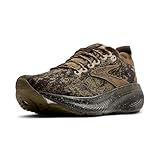
- THIS MEN’S SHOE IS FOR: The Adrenaline GTS 25 is perfect for runners and walkers seeking reliable support and a smooth ride. Featuring holistic GuideRails for Go-To Support and soft, dynamic premium nitrogen-infused DNA LOFT v3 cushioning, it delivers distraction-free comfort mile after mile. This Brooks Adrenaline GTS 25 is a certified PDAC A5500 Diabetic shoe and has been granted the APMA Seal of Acceptance. Predecessor: Adrenaline GTS 24.
- GUIDERAILS HOLISTIC SUPPORT SYSTEM: Our innovative technology - known as “GTS” for “Go-To Support” - supports your body in its natural motion path while keeping excess movement in check.
- SOFT & DYNAMIC CUSHIONING: Even more premium nitrogen-infused DNA Loft v3 cushioning delivers lightweight softness, and feel-good comfort mile after mile.
- TRUSTED FIT: The breathable engineered mesh upper and flat-knit collar offer a secure, comfortable fit, providing both structure and flexibility to accommodate natural movement during active use.
- SMOOTH TRANSITIONS: The specially designed outsole and midsole work together to promote seamless transitions, ensuring comfort and support for every step, so you can stay active longer.
Brooks Adrenaline GTS 25 — gold-standard stability shoe for flat feet.
As an Amazon Associate, Balance Foot & Ankle earns from qualifying purchases. Product recommendations are based on clinical experience; prices and availability shown above update live from Amazon.
When to See a Podiatrist
Painful flat feet in adults can signal posterior tibial tendon dysfunction — a progressive condition that needs early intervention to avoid surgery. Balance Foot & Ankle evaluates adult flatfoot with weight-bearing imaging and custom orthotic prescriptions. Catching PTTD at stage 1-2 makes the difference between a brace and a reconstruction.
Call Balance Foot & Ankle: (810) 206-1402 · Book online · Offices in Howell & Bloomfield Hills
Frequently Asked Questions
Do flat feet always cause pain?
No — many people with flat feet have no pain at all. Pain develops when flat feet lead to excessive pronation that stresses tendons, ligaments, and joints. Risk factors for developing pain include obesity, prolonged standing, high-impact activities, and aging.
Can flat feet be corrected?
In children, arch development can sometimes be supported. In adults, the arch cannot be rebuilt without surgery, but custom orthotics, physical therapy, and appropriate footwear can effectively control symptoms and prevent progression.
What is the treatment for adult flatfoot deformity?
Early stages respond well to custom orthotics, physical therapy, and supportive footwear. Advanced cases with Achilles tightness may benefit from stretching and bracing. Severe cases — especially stage III-IV posterior tibial tendon dysfunction — may require reconstruction surgery.
Need Treatment at Balance Foot & Ankle?
Dr. Tom Biernacki, Dr. Carl Jay, and Dr. Daria Gutkin see patients at our Howell and Bloomfield Township offices.
Book Online or call (810) 206-1402
Stage II Flatfoot Reconstruction Surgery in Michigan
Progressive flatfoot from Stage II PTTD requires expert surgical reconstruction to prevent further collapse. Our podiatric surgeons perform comprehensive flatfoot correction including tendon transfers, calcaneal osteotomies, and midfoot procedures tailored to your specific deformity.
Explore Flatfoot Treatment Options | Book Your Appointment | Call (810) 206-1402
Clinical References
- Myerson MS. Adult acquired flatfoot deformity: treatment of dysfunction of the posterior tibial tendon. J Bone Joint Surg Am. 1996;78(5):780-792.
- Guyton GP, Jeng C, Krieger LE, Mann RA. Flexor digitorum longus transfer and medial displacement calcaneal osteotomy for posterior tibial tendon dysfunction. Foot Ankle Int. 2001;22(8):627-632.
- Hiller L, Pinney SJ. Surgical treatment of acquired flatfoot deformity: what is the state of practice among academic foot and ankle surgeons in 2002? Foot Ankle Int. 2003;24(9):701-705.

Insurance Accepted
BCBS · Medicare · Aetna · Cigna · United Healthcare · HAP · Priority Health · Humana · View All →
Howell Office
3980 E Grand River Ave, Suite 140
Howell, MI 48843
Get Directions →
Bloomfield Hills Office
43700 Woodward Ave, Suite 207
Bloomfield Hills, MI 48302
Get Directions →
Your Board-Certified Podiatrists



Ready to Get Back on Your Feet?
Same-week appointments available at both locations.
Book Your AppointmentDifferential Diagnosis: What Else Could It Be?
Several conditions share symptoms with Flat Feet (Pes Planus) and are commonly misdiagnosed in the first office visit. Considering these alternatives is part of every Balance Foot & Ankle exam:
- Posterior tibial tendon dysfunction (PTTD). Acquired adult flatfoot with single-leg heel-rise weakness.
- Tarsal coalition. Rigid flatfoot in an adolescent — bone bridge between hindfoot bones.
- Charcot foot (diabetic). Sudden warm, swollen, collapsing midfoot in a diabetic — urgent off-loading.
If your symptoms don’t fit the textbook pattern, ask your podiatrist which differentials they ruled out — that conversation often shortcuts months of trial-and-error treatment.
In Our Clinic
In our clinic, the flat-footed patient who actually needs intervention is the one whose arch is collapsing progressively in adulthood — not the person who was born flat-footed and has been running 5Ks pain-free for 20 years. We evaluate for posterior tibial tendon dysfunction (PTTD) with single-heel-rise testing, check for the “too many toes” sign from behind, and get weight-bearing X-rays. Early PTTD responds well to a custom orthotic with a medial heel skive + short course of boot immobilization. Stage 2+ PTTD is a different conversation — we discuss tendon transfers and calcaneal osteotomy candidates.
Most Common Mistake We See
The most common mistake we see is: Buying motion-control shoes without a gait assessment. Fix: get a pressure-plate analysis or wet-foot test first to confirm overpronation and arch height.
Warning Signs That Need Same-Day Care
Seek immediate evaluation at Balance Foot & Ankle if you experience any of the following:
- Rapid collapse of an arch on one foot (possible PTT rupture)
- Walking becoming impossible
- Redness or warmth along the inner arch
- Diabetes plus progressive arch collapse
Call (810) 206-1402 — same-day and next-day appointments at our Howell and Bloomfield Hills offices.
Watch: Dr. Tom explains

Podiatrist-recommended products
As an Amazon Associate, Dr. Tom earns from qualifying purchases.
Arch support for flexible flatfoot.
View on Amazon →PTT offloading during conservative trial.
View on Amazon →Equinus contributes to PTTD.
View on Amazon →Swelling control post-reconstruction.
View on Amazon →Related resources
Ready to solve this? Book today.
Same-week appointments · Howell & Bloomfield Hills · 4.9★ (1,123+ reviews)
☎ (810) 206-1402Book Online →Pros & Cons of Conservative Care for foot care
Advantages
- ✓ Conservative care first
- ✓ Same-week appointments
- ✓ Multiple insurance accepted
Considerations
- ✗ Self-treatment can mask issues
- ✗ See a podiatrist if pain >2 weeks
Dr. Tom’s Recommended Products for foot care
Affiliate disclosure: As an Amazon Associate, Balance Foot & Ankle earns from qualifying purchases. We only recommend products we use with patients.


Footnanny Heel Cream Dr. Tom’s Pick
Best for: Daily moisturizer for cracked heels
Ready to Get Back on Your Feet?
Same-day appointments in Howell + Bloomfield Twp. Most insurance accepted. Dr. Tom Biernacki, DPM & team.
Book Today — Same-Day Appointments Available
Call Now: (810) 206-1402
About Your Care Team at Balance Foot & Ankle
Dr. Tom Biernacki, DPM · Board-Certified Foot & Ankle Surgeon. Specializes in conservative-first care, minimally invasive bunion surgery, and complex reconstruction.
Dr. Carl Jay, DPM · Accepting new patients. Specializes in sports medicine, athletic injuries, and routine podiatric care.
Dr. Daria Gutkin, DPM, AACFAS · Accepting new patients. Specializes in surgical reconstruction and pediatric podiatry.
Locations: 4330 E Grand River Ave, Howell, MI 48843 · 43494 Woodward Ave Suite 208, Bloomfield Twp, MI 48302
Hours: Mon–Fri 8:00 AM – 5:00 PM · (810) 206-1402

Dr. Tom Biernacki, DPM is a double board-certified podiatrist and foot & ankle surgeon at Balance Foot & Ankle Specialists in Southeast Michigan. With over a decade of clinical experience, he specializes in heel pain, bunions, diabetic foot care, sports injuries, and minimally invasive surgery. Dr. Biernacki is a member of the APMA and ACFAS, and his patient education content on MichiganFootDoctors.com and YouTube has reached over one million views.
- Plantar Fasciitis: Diagnosis and Conservative Management (PubMed)
- Plantar Fasciitis (APMA)
- Diagnosis and Treatment of Plantar Fasciitis (PubMed / AAFP)
- Heel Pain (APMA)