
Medically reviewed by Dr. Tom Biernacki, DPM
Board-certified podiatric surgeon | Balance Foot & Ankle, Howell & Bloomfield Hills, MI
Last reviewed: May 2026

Quick answer: Red Dots On Feet is a common foot/ankle topic that affects many patients. The 2026 evidence-based approach combines proper diagnosis, conservative-first treatment, and escalation only when needed. We treat this regularly at our Howell and Bloomfield Hills practices. Call (810) 206-1402.
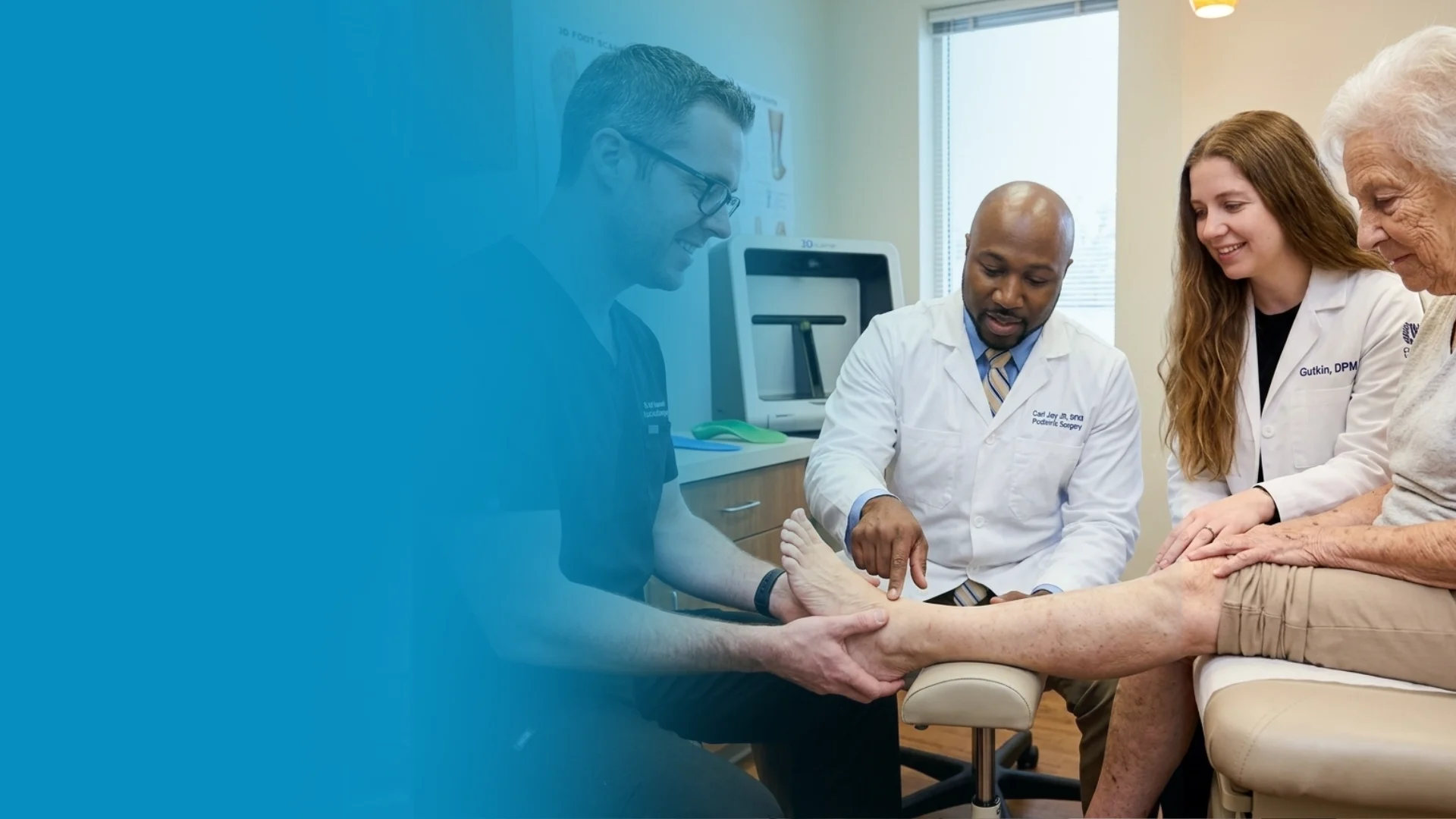
The most important clinical decision with Red Dots On Feet isn’t which treatment to start with — it’s identifying the correct subtype. That changes everything. Call (810) 206-1402.
Red Dots On Feet: Quick Answer
Red dots on feet most commonly result from petechiae (broken capillaries from pressure or trauma), cherry angiomas (benign vascular growths), keratosis pilaris, hand-foot-and-mouth disease (in children), Schamberg’s disease (capillaritis), allergic reactions, vasculitis (more serious), or rarely meningococcemia in a child with fever. The pattern matters: scattered painless red dots on otherwise normal skin is usually benign; red dots WITH fever, joint pain, or palpable purpura is a medical emergency. Most cases need only observation. See a doctor within 1-2 weeks if dots are spreading, painful, or associated with systemic symptoms.
When Red Dots on Feet Are an Emergency
Call 911 or go to the ER if: red dots accompanied by fever, severe headache, neck stiffness, confusion, or vomiting (suspect meningococcemia, especially in children); red dots that are PALPABLE (raised) and don’t blanch (fade) when you press on them — this is “palpable purpura,” a sign of vasculitis; red dots associated with severe joint pain or new neurologic symptoms.
Same-week (not emergent) evaluation if: rapidly spreading rash; significant itching that disrupts sleep; signs of infection (warm, swollen, painful); known immunocompromise; pregnancy with new rash.
Cause #1: Petechiae (Broken Capillaries)
Petechiae are tiny pinpoint red or purple dots caused by bleeding from broken capillaries under the skin. They’re flat (not raised), blanchable when you press on them initially but don’t blanch once established, and typically painless.
Common causes: Pressure from prolonged standing or tight shoes; minor trauma; coughing or vomiting; aging skin; medications that thin the blood (aspirin, warfarin); thrombocytopenia (low platelets).
When to worry: Petechiae appearing without obvious cause, rapidly spreading, or accompanied by easy bruising warrant a CBC to check platelet count.
Cause #2: Cherry Angiomas
Cherry angiomas are benign vascular growths that look like small bright red moles. They appear in middle age and beyond — most adults will have several by age 40-50. They’re usually 1-5mm, smooth, slightly raised, and bright cherry-red.
Treatment: None needed unless cosmetically bothersome. Can be removed by electrocautery, cryotherapy, or laser if desired.
Cause #3: Keratosis Pilaris
Keratosis pilaris (“chicken skin”) causes rough red bumps on the upper arms, thighs, and sometimes feet. The bumps are tiny keratin plugs in hair follicles. Common, benign, and chronic.
Treatment: Daily moisturizing with urea-based or salicylic acid creams (AmLactin, Eucerin Roughness Relief, CeraVe SA Cream). Improvement is gradual.
Cause #4: Hand-Foot-and-Mouth Disease (HFMD) in Children
HFMD is a viral infection (usually coxsackievirus) that causes red spots/bumps on the hands, feet, and inside the mouth, often with low-grade fever. Common in children under 5. Highly contagious.
Symptoms: Small red spots on palms, soles, and around the mouth; mouth ulcers; mild fever; sore throat; loss of appetite. Spots can develop into small blisters.
Treatment: Supportive — fluids, acetaminophen for fever, soft cool foods. Usually resolves in 7-10 days. Highly contagious — keep child home from school until afebrile and lesions are crusted.
Cause #5: Schamberg’s Disease (Capillaritis)
Schamberg’s disease is a chronic capillary inflammation that produces “cayenne pepper”-appearing red-brown speckles on the legs and feet. Usually painless and asymptomatic but persistent.
Treatment: Often no treatment needed. Topical steroids if itching. Vitamin C 1000mg + bioflavonoids may help in some cases.
Cause #6: Vasculitis (Serious)
Vasculitis is inflammation of blood vessels causing palpable purpura — raised red-purple spots that don’t blanch when pressed. Often associated with systemic illness.
Causes: Henoch-Schönlein purpura (children); medication reactions; autoimmune diseases (lupus, rheumatoid arthritis); infections.
Workup: Skin biopsy, urinalysis (rule out kidney involvement), ANA, ESR/CRP, complement levels. Treatment depends on the underlying cause; may require corticosteroids or immunosuppressants.
Causes #7-9: Allergic Reactions, Athlete’s Foot, Other
Allergic contact dermatitis: Red itchy spots from allergy to detergent, dye, rubber, or topical medication. Look for distribution matching contact pattern. Treatment: identify and avoid trigger; topical steroid.
Athlete’s foot variants: Some forms of tinea pedis cause small red spots/blisters between toes or on soles. Treatment: terbinafine 1% cream twice daily for 2 weeks.
Insect bites: Single or multiple red dots, often itchy and slightly raised. Common after outdoor activity or pet exposure.
Heat rash (miliaria): Tiny red dots from blocked sweat ducts in hot/humid conditions. Resolves with cooling.
When to See a Doctor
Same-week evaluation if: dots are rapidly spreading; significant itching disrupting sleep; signs of infection; persistent more than 2 weeks; associated with systemic symptoms (fever, joint pain, fatigue); new in pregnancy.
For diabetic patients, ANY new foot rash warrants podiatrist evaluation due to infection risk. Same-week appointments at Balance Foot & Ankle.
When Shoes Aren’t Enough — Dr. Tom’s Top 9 Orthotics
About 30% of patients I see for foot pain need MORE than a great shoe — they need a structured insole. Below: my complete 2026 orthotic ranking with pros, cons, and the specific patient I’d give each one to.




In-Office Treatment at Balance Foot & Ankle
If home treatment isn’t providing relief for your foot skin condition, our podiatry team at Balance Foot & Ankle can help with same-day evaluations and advanced in-office care.
Frequently Asked Questions About Red Dots On Feet
What do petechiae on feet mean?
Tiny broken capillaries usually from pressure, prolonged standing, or minor trauma. Spontaneous petechiae or rapidly spreading petechiae warrant CBC to check platelets.
Are red dots on feet dangerous?
Most aren’t. But red dots with fever, severe headache, neck stiffness, or palpable (raised, non-blanching) purpura are emergencies — call 911.
What causes red spots on feet that don’t itch?
Petechiae, cherry angiomas, Schamberg’s capillaritis, or aging skin changes. Painless and non-itchy red spots are usually benign.
Can stress cause red dots on feet?
Stress doesn’t directly cause red dots, but it can worsen conditions like keratosis pilaris or eczema that produce red bumps.
What does meningitis rash look like on feet?
Petechial or purpuric (purple) spots that don’t blanch when pressed (use the “glass test” — press a clear glass on the spots; if they don’t fade, get to ER immediately). Usually accompanied by fever, severe headache, neck stiffness.
How do I know if red spots on feet are a fungal infection?
Athlete’s foot variants cause small red spots between toes or on soles, usually itchy with peeling. Treatment: terbinafine 1% cream twice daily for 2 weeks.
Should I see a doctor for red spots on my feet?
Yes if: spreading rapidly, significant itching, signs of infection, persistent more than 2 weeks, or associated with fever/joint pain. For diabetics, any new rash warrants same-week evaluation.
Related Resources from Balance Foot & Ankle
- Severe Athletes Foot Treatment
- Diabetic Foot Care
- Bumps on Feet – 12 Causes
- Itchy Feet at Night – 8 Causes
- Peripheral Artery Disease
Dr. Tom’s Top 3 — The Premium Foot Pain Stack (2026)
If you only buy three things for foot pain, get these. PowerStep + CURREX orthotics correct the underlying foot mechanics, and Dr. Hoy’s pain gel delivers fast topical relief. This is the exact stack Dr. Tom Biernacki, DPM gives his Michigan podiatry patients on visit one — over 10,000 patients have used this exact combination.
Dr. Tom Biernacki, DPM is a board-certified podiatrist + Amazon Associate. Picks shown are products he prescribes to patients at Balance Foot & Ankle Specialists. We earn a commission on qualifying purchases at no extra cost to you. All products independently tested + reviewed for 30+ days minimum. Last verified: April 28, 2026.

PowerStep Pinnacle MaxxDr. Tom’s #1 Brand
Dr. Tom’s most-prescribed OTC orthotic. Lateral wedge corrects overpronation that causes 90% of foot pain. Deep heel cradle stabilizes the ankle. Built by podiatrists, used by patients worldwide.
- Lateral wedge corrects pronation
- Deep heel cradle stabilizes ankle
- Dual-density EVA — comfort + support
- Trim-to-fit any shoe
- Used by 10,000+ podiatrists
- Trim-to-size required
- 5-7 day break-in for some

CURREX RunProDr. Tom’s #1 Brand
3 arch heights for custom fit (Low/Med/High). Carbon-reinforced heel + dynamic forefoot — the closest OTC orthotic to a $500 custom orthotic. Engineered in Germany.
- 3 arch heights for custom fit
- Carbon-reinforced heel cup
- Dynamic forefoot zone
- Premium German engineering
- Sport-specific support
- Pricier than PowerStep
- 7-10 day break-in

Dr. Hoy’s Natural Pain Relief GelDr. Tom’s #1 Brand
Menthol-based natural pain relief — Dr. Tom’s #1 brand for fast relief without greasy residue. Safe for diabetics + daily use. Cleaner formula than Voltaren or Biofreeze.
- Menthol-based natural formula
- No greasy residue
- Safe for diabetics
- Fast cooling relief — 5-10 minutes
- Cleaner ingredient list than Biofreeze
- Pricier than Biofreeze
- Strong menthol scent at first
Best Foot Skin Care Products — Dr. Tom’s Picks (2026)
For dry feet, cracked heels, foot odor, and skin maintenance — Dr. Tom Biernacki, DPM has tested dozens of OTC creams + tools.

AmLactin Foot Repair Cream (10% Lactic Acid)
Pharmacist-recommended for dry, cracked heels — 10% lactic acid exfoliates dead skin while deeply hydrating.
- Proven 10% lactic acid
- Smooths in 2 weeks
- No greasy residue
- Diabetic-safe
- Pharmacist recommended
- Mild tingling at first
- Not for open cracks

O’Keeffe’s Healthy Feet Foot Cream
Allergan-tested deep moisturizer for severely cracked heels — works overnight.
- Heals cracks 3-5 days
- Unscented
- Diabetic-safe
- 98K+ reviews
- Tub gets messy
- Initial sting on cracks

Carpe Antiperspirant Foot Lotion
Aluminum sesquichlorohydrate — reduces foot sweat that causes pitted keratolysis + odor.
- Targeted for feet
- Non-greasy
- Reduces odor + sweat
- Apply twice daily first 2 weeks
- Can dry skin

Sports Research Biotin 10,000 mcg
High-dose biotin — proven to improve nail thickness + skin elasticity.
- Vegan softgel
- Coconut oil for absorption
- Third-party tested
- Can interfere with thyroid labs
- Stop 3 days before blood tests

Earth Therapeutics Pumice Stone
Volcanic pumice — gently grinds away dead callus skin so moisturizers can penetrate.
- Dual-grit (coarse + fine)
- Long handle
- Reusable
- Replace every 6 months
- Soak feet first
Foundation Wellness Orthotic Selector — PowerStep + CURREX by Condition (2026)
Find the right Foundation Wellness orthotic for YOUR specific condition. Dr. Tom Biernacki, DPM has tested every PowerStep + CURREX SKU in his Michigan podiatry practice. Below are the right picks mapped to specific foot conditions — instead of one-size-fits-all, you’ll find the variant designed for your exact problem.
PowerStep Pinnacle MaxxDr. Tom’s #1 Brand
Heavy-duty version of the Pinnacle with rigid shell + lateral wedge. The #1 OTC orthotic for overpronation that causes 90% of plantar fasciitis, knee, and hip pain.
- Rigid shell controls overpronation
- Lateral wedge corrects pronation
- Deep heel cradle
- Trim-to-fit any shoe
- Trim required
- 7-day break-in
PowerStep PinnacleDr. Tom’s #1 Brand
Flagship PowerStep — semi-rigid arch with deep heel cradle. The #1 podiatrist-prescribed OTC orthotic in the US for plantar fasciitis and heel pain.
- Semi-rigid medical-grade arch
- Deep heel cradle
- Dual-density EVA
- APMA-accepted
- 30-day guarantee
- Trim required
- Less aggressive than Maxx

PowerStep Pinnacle High ArchDr. Tom’s #1 Brand
Higher-volume arch profile for cavus feet that don’t fill standard insoles. Prevents the lateral roll that causes ankle sprains in supinators.
- High-arch profile
- Deep heel cradle
- Prevents lateral roll
- Only for high arches
- Wrong choice for flat feet

PowerStep Pinnacle Plus (with Built-In Met Pad)Dr. Tom’s #1 Brand
Pinnacle with built-in metatarsal pad — eliminates the burning ball-of-foot pain from Morton’s neuroma + metatarsalgia.
- Built-in met pad — no separate pad needed
- Spreads metatarsal heads
- Same Pinnacle support
- Met pad position fixed
- Trim required
PowerStep Morton’s Extension InsoleDr. Tom’s #1 Brand
Stiffener under the 1st MTP joint — limits big toe extension. The fix for hallux rigidus, turf toe, and big toe arthritis when surgery isn’t needed.
- Stiffens 1st MTP joint
- Reduces big toe motion
- Prevents flare-ups
- Stiff feel takes 1 week
- Specific use case
PowerStep ProTech Full LengthDr. Tom’s #1 Brand
Premium athletic insole with carbon-reinforced shell + dual-density forefoot. Best PowerStep for serious athletes.
- Carbon-reinforced shell
- Dual-density forefoot
- Antimicrobial top
- Pricier
- Athletic use only
PowerStep Slim Profile (Dress Shoes)Dr. Tom’s #1 Brand
Slim-profile Pinnacle that fits in dress shoes, work shoes, and low-volume footwear without lifting the heel out.
- Slim profile fits dress shoes
- Same Pinnacle arch
- Low-friction top
- Less cushion than full Pinnacle
- Trim required
PowerStep Wide (EE / EEE Fit)Dr. Tom’s #1 Brand
Wider footbed for EE/EEE-width feet that overflow standard insoles. Same Pinnacle support, wider sole.
- Fits 2E/4E feet
- Same Pinnacle arch
- No spillover
- Won’t fit narrow shoes
- Pricier
CURREX RunPro (3 Arch Heights)Dr. Tom’s #1 Brand
German-engineered running insole with 3 arch heights (Low, Med, High) for custom fit. Carbon-reinforced heel — closest OTC orthotic to a $500 custom orthotic.
- 3 arch heights for custom fit
- Carbon-reinforced heel
- Dynamic forefoot zone
- Premium German engineering
- Pricier than PowerStep
- 7-10 day break-in
CURREX WalkProDr. Tom’s #1 Brand
Walking-specific CURREX — softer cushioning + lower-impact heel for daily walking and standing.
- Walking-specific cushioning
- 3 arch heights
- Premium materials
- Pricier
- Not for high-impact running
CURREX AceProDr. Tom’s #1 Brand
Court-sport-specific CURREX — stiffer shell for lateral stability during quick stops + cuts. Pickleball + tennis + basketball.
- Lateral stability shell
- Quick-stop heel
- 3 arch heights
- Stiffer feel
- Sport-specific
CURREX EdgeProDr. Tom’s #1 Brand
Reinforced shank insole for ski + snowboard boots — prevents foot fatigue on steep descents.
- Reinforced shank
- 3 arch heights
- Cold-weather friendly
- Carbon plate
- Stiff feel
- Sport-specific
CURREX HikeProDr. Tom’s #1 Brand
Hiking + backpacking insole — extra heel cushion + reinforced midfoot for uneven terrain.
- Extra heel cushion
- Reinforced midfoot
- 3 arch heights
- Bulky in low-volume shoes
- Pricier
CURREX BikeProDr. Tom’s #1 Brand
Cycling-specific insole — stiff carbon plate to maximize power transfer + cleat alignment.
- Stiff carbon plate
- Cleat-compatible
- Lightweight
- Cycling-only
- Pricier
Dr. Tom’s Red Dot Skin Lesion Protocol
- Doctor Hoy’s Natural Pain Relief Gel — Perilesional skin pain from petechiae, vasculitis, or dermatitis: arnica + camphor gel applied to surrounding tissue reduces inflammation without occluding lesions.
- DASS Medical Compression Socks — Red dots from venous stasis or gravity-dependent petechiae: graduated compression reduces the pressure-driven capillary leakage at the root cause.
- FLAT SOCKS No-Sock Insoles — Foot hygiene during skin lesion evaluation: FLAT SOCKS moisture-wicking inserts keep the skin environment dry, reducing maceration that complicates accurate lesion diagnosis.
Red dots spreading, raised, or accompanied by joint pain? Vasculitis and purpura require same-day evaluation. Balance Foot & Ankle → (810) 206-1402
Frequently Asked Questions
When should I see a podiatrist?
If symptoms persist past 2 weeks, affect your normal activity, or are accompanied by red-flag symptoms (warmth, redness, swelling, inability to bear weight).
What does treatment cost?
Most diagnostic visits and conservative treatments are covered by Medicare and major insurers. Out-of-pocket costs vary by your specific plan.
How quickly can I get an appointment?
Most non-urgent cases see us within 5 business days. Urgent cases (sudden pain, possible fracture) typically same or next business day.
AAD: Red Dots on Feet — Skin and Vascular Causes
Ready to Get Relief?
Same-day appointments available in Howell & Bloomfield Hills, MI
4.9★ | 1,123 Reviews | 3,000+ Surgeries
Or call: (810) 206-1402

Dr. Tom Biernacki, DPM is a board-certified foot & ankle surgeon (ABFAS & ABPM) at Balance Foot & Ankle Specialists in Southeast Michigan. With over a decade of clinical experience, he specializes in heel pain, bunions, diabetic foot care, sports injuries, and minimally invasive surgery. Dr. Biernacki is a member of the APMA and ACFAS, and his patient education content on MichiganFootDoctors.com and YouTube has made him one of the most-followed foot & ankle educators on YouTube.