

Medically reviewed by Dr. Tom Biernacki, DPM
Board-certified podiatric surgeon | Balance Foot & Ankle, Howell & Bloomfield Township, MI
Last reviewed: May 2026
Quick answer: The best shoes for women with plantar fasciitis do three things: a firm heel counter that resists twisting, real arch support under the medial arch, and a slight heel-to-toe drop that takes tension off the plantar fascia. The models that meet that standard most consistently are the HOKA Bondi for walking and all-day wear, the Brooks Adrenaline if you need stability, the Dansko Professional for long shifts on hard floors, and the Vionic Brandie when the day calls for something dressier. Avoid flat ballet flats, unsupported flip-flops, and anything you can fold in half. Questions? Call (810) 206-1402.
Women’s shoes present a particular challenge for plantar fasciitis: fashion often conflicts directly with foot health. Ballet flats, high heels, and pointed-toe shoes are among the most harmful footwear choices for plantar fasciitis — and they dominate women’s fashion. In our Howell and Bloomfield Township clinics, we help women find shoes that are actually supportive without sacrificing the ability to look professional or put-together.
The most important clinical decision with Shoes For Plantar Fasciitis Women isn’t which treatment to start with — it’s identifying the correct subtype. That changes everything. Call (810) 206-1402.
Why Women Are Disproportionately Affected by Plantar Fasciitis
Women develop plantar fasciitis at higher rates than men, and shoe choice is a significant contributing factor. The mechanics are straightforward:
- Ballet flats and flat shoes — zero heel elevation maximizes plantar fascia tension; women’s fashion disproportionately features flat, unsupported footwear
- High heels — while heels do reduce plantar fascia tension momentarily, switching between heels and flats repeatedly causes repeated stretch-shorten cycles that promote inflammation; chronic heel use also shortens the Achilles tendon, increasing fascia strain when barefoot
- Narrow toe boxes — women’s shoes are typically narrower than men’s relative to foot width, compressing the forefoot and altering gait mechanics
- Hormonal factors — pregnancy hormones (relaxin) loosen ligaments; combined with weight gain, this significantly increases plantar fasciitis risk
- Higher rates of flat feet — ligamentous laxity in women contributes to higher rates of adult-acquired flat feet that predispose to plantar fasciitis
The reasons are mechanical rather than mysterious, and they compound.
Footwear history does most of the damage. Years spent in shoes with an elevated heel gradually shorten the calf complex. A tight gastrocnemius limits how far the ankle can dorsiflex, and an ankle that cannot dorsiflex forces the midfoot to make up the difference — the arch flattens further and faster with every step, and the plantar fascia absorbs that load. This is why the pain so often appears years after the heels have been retired. The shortened calf is still there.
Pregnancy changes the foot permanently for many women. Relaxin increases ligamentous laxity throughout the body, and the arch is held up substantially by ligament. Combine that with additional body weight over a relatively short period, and many women finish a pregnancy with a measurably longer, flatter foot than they started with. It frequently does not return to its previous shape, and shoes that were comfortable before often are not afterward.
Women’s shoes are built on lasts that work against the condition. A narrower heel, a tapered toe box and a thin flexible sole are close to universal in women’s footwear, and all three make plantar fasciitis harder to manage. A shoe that is genuinely supportive but too narrow through the heel will still let the foot slip, and a foot sliding inside a shoe is not being controlled by it.
The occupational pattern is real too. Nursing, teaching, retail and hospitality all involve long hours standing on hard floors, and all skew heavily female. Standing still on concrete is harder on the plantar fascia than walking, because the tissue never gets the intermittent unloading that walking provides.
None of this makes the condition inevitable or untreatable. It means the shoe you choose is doing more work for you than it would for someone else — which is exactly why getting it right is worth the effort.
What Makes a Women’s Shoe Good for Plantar Fasciitis?
- 8–15mm heel-to-toe drop — a slight heel elevation reduces plantar fascia tension; flat shoes (0–4mm drop) maximize it
- Arch support that actually contacts the arch — press your thumb into the arch; a good shoe resists compression
- Firm, encapsulated heel counter — squeeze the heel cup; it should not collapse
- Cushioned midsole — important for shock absorption at heel strike
- Rocker sole or beveled heel — smooths gait and reduces peak plantar fascia loading
- Wide or medium toe box — avoids forefoot compression that alters mechanics
- Removable insole — accommodates custom orthotics
How We Evaluate These Shoes
Most “best shoes for plantar fasciitis” lists are assembled from product specifications by writers who have never watched anyone walk. These are the four checks that actually matter, and you can run every one of them yourself in a shoe store in under a minute.
The heel counter has to be rigid
Squeeze the back of the heel between your thumb and forefinger. If it collapses inward, the shoe cannot control the rearfoot — and rearfoot control is most of what makes plantar fasciitis improve. This single test eliminates more shoes than any other, including a great many marketed specifically for plantar fasciitis.
The shoe must not twist through the midfoot
Hold the heel in one hand and the forefoot in the other and try to wring it like a towel. A shoe that twists easily lets the arch collapse with every step, which is precisely the motion that loads the plantar fascia. It should resist you.
It should bend at the toes, and only at the toes
A shoe should flex where your foot flexes, at the ball. If it folds in half across the middle, it is offering no meaningful arch support regardless of what the insole claims.
The footbed has to come out
A removable insole means the shoe can accept an orthotic later if you need one. A glued-in footbed forecloses that option, and for a foot that is still changing, that matters more than the quality of the insole it shipped with.
What deliberately does not count: brand marketing, “podiatrist-designed” labels, or price. Plenty of inexpensive shoes pass all four tests, and plenty of expensive ones fail them.
Best Women’s Shoes for Plantar Fasciitis
Athletic / Walking Shoes
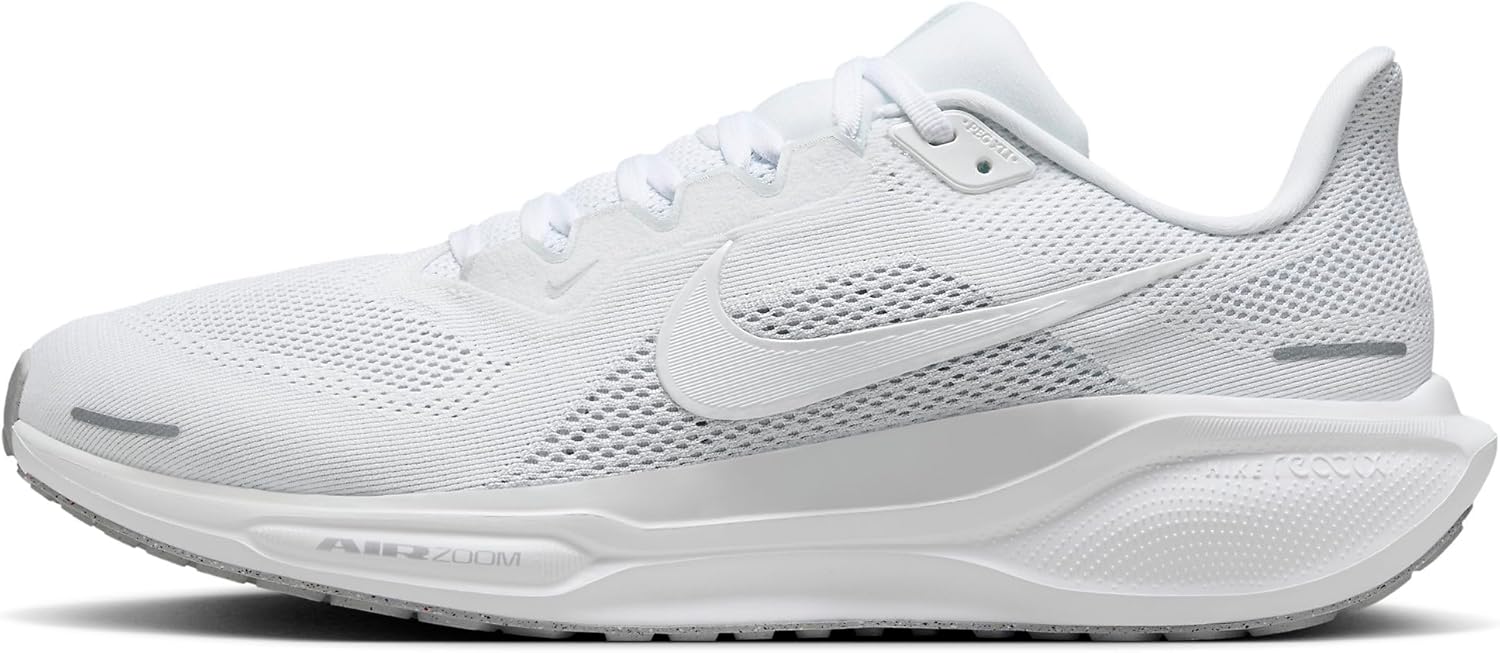
HOKA Bondi W — The most prescribed walking/running shoe for plantar fasciitis in our practice. Maximal cushion, built-in Meta-Rocker, heel bevel. Available in standard and wide widths. The extended heel platform provides exceptional heel stability.
Brooks Adrenaline GTS W — Stability running shoe with GuideRails technology to control excess motion. Excellent for women with flat feet and plantar fasciitis. Fits true to size in standard and wide widths.
New Balance 990 W — Durable, supportive, and genuinely wide-width options (B, D widths for women). ENCAP midsole provides both cushioning and support.
Work / Professional Shoes
Dansko Professional Clog — The rigid rocker sole is a plantar fascia pain reducer. A staple for nurses, teachers, and professionals on their feet all day. The closed heel model is more appropriate for plantar fasciitis than the open back. Available in narrow, medium, and wide.
Vionic Brandie Flat / Walker — Built on Orthaheel orthotic technology clinically studied for plantar fasciitis. APMA Seal of Acceptance. Looks like a professional flat but functions like an orthotic shoe. The most important exception to the “no flat shoes” rule — the Orthaheel arch support genuinely compensates.
Sandals for Women With Plantar Fasciitis
Vionic sandals with Orthaheel support — Arch-supportive sandals that are appropriate for plantar fasciitis patients; the built-in orthotic support compensates for the open design. Regular flat sandals and flip-flops are completely inappropriate.
Birkenstock with firm footbed — The cork footbed contours to the arch over time and provides genuine arch contact; the deep heel cup controls rearfoot motion. Better than most flat sandals but not equivalent to a proper athletic shoe.
Women’s Shoes to Absolutely Avoid With Plantar Fasciitis
- Ballet flats — flat, flexible, zero arch support; among the worst possible choices
- High heels above 1.5 inches — shifts load, shortens Achilles, causes rebound heel pain when removed
- Flip-flops and flat sandals — no heel control, no arch support
- Pointed-toe shoes — forefoot compression that alters gait mechanics
- Minimalist/barefoot shoes — zero cushioning explicitly harmful during plantar fasciitis
- Worn-out athletic shoes — replace every 300–400 miles or annually for daily walkers
- Slip-ons without firm heel counters — the heel slips inside the shoe, eliminating rear-foot control
⚠️ See a podiatrist if:
- Plantar fasciitis pain persists beyond 6 weeks despite wearing supportive footwear
- You’re pregnant and developed heel pain — neuropathic and vascular causes must also be considered
- Morning heel pain is rated 7/10 or higher — this level of pain typically needs more than shoe changes
- You’ve been wearing “supportive shoes” for weeks but still have significant pain
- Numbness accompanies the heel pain — this may be tarsal tunnel, not plantar fasciitis
Do I Need Orthotics With These Shoes?
Often, no. A supportive shoe and a consistent calf-stretching routine resolve a large share of plantar fasciitis on their own, and it is worth giving that a proper trial before buying anything else.
A good shoe alone is usually enough when the pain is recent, it is worst with the first few steps in the morning and eases as you move, and you have been wearing flat or unsupported shoes up to now. In that situation the shoe is correcting the thing that caused the problem, and that is frequently sufficient.
Add an over-the-counter insole when you have a noticeably flat or a very high arch, when you stand on hard floors for long shifts, or when a good shoe has helped but stalled short of comfortable. A firm supportive insole adds arch contact the shoe alone cannot provide, and it is worth trying before anything custom.
Consider custom orthotics when you have given a proper shoe and an over-the-counter insole a genuine eight to twelve week trial without adequate relief, when your two feet differ meaningfully in shape, when there is a significant deformity such as a bunion or a rigid flatfoot, or when the pain keeps returning after it settles.
One thing worth knowing before you spend money: an orthotic can only work inside a shoe that holds it. Dropping a quality insole into a soft, twisting shoe wastes both. Get the shoe right first — the insole is the second decision, not the first.
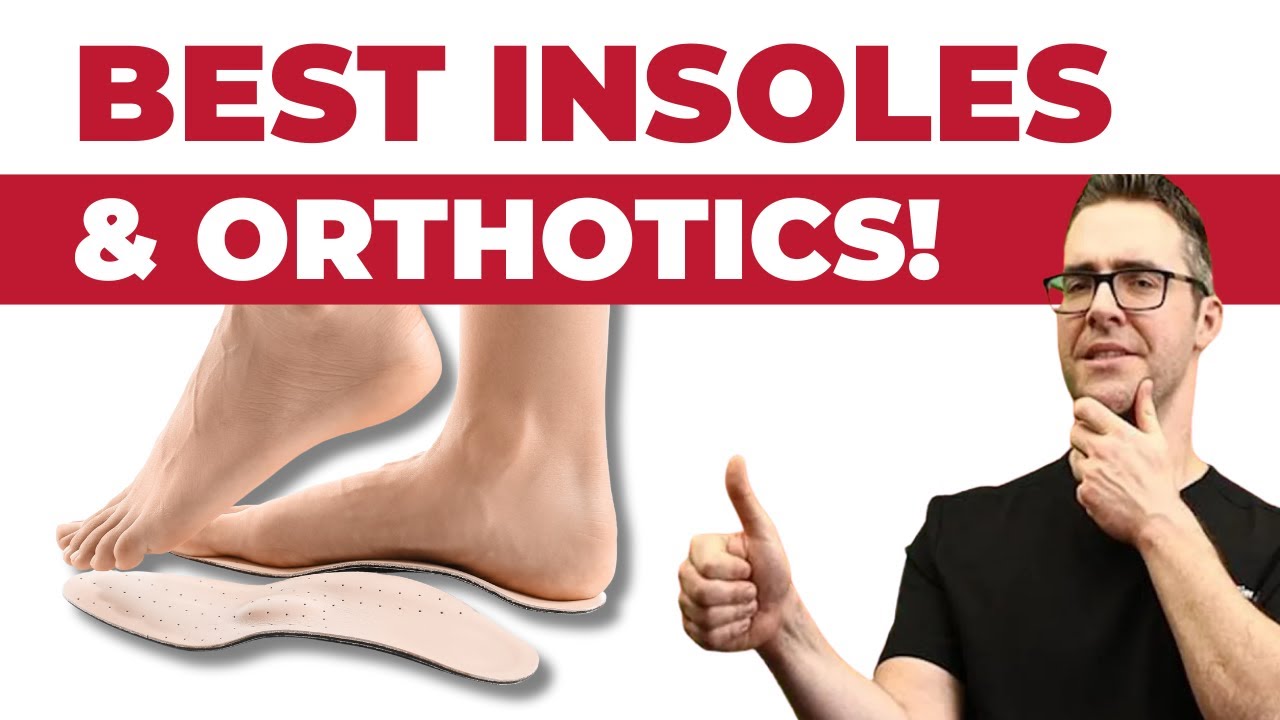
When Shoes Aren’t Enough — Dr. Tom’s Top 9 Orthotics
About 30% of patients I see for foot pain need MORE than a great shoe — they need a structured insole. Below: my complete 2026 orthotic ranking with pros, cons, and the specific patient I’d give each one to.





What a Shoe-Fitting Visit Actually Involves
A list narrows the field. It cannot tell you which of these shoes fits your foot, and fit is the part that decides whether any of it works.
At a shoe and orthotic visit we watch you walk, measure both feet — they are rarely the same size, and most people end up fitted to the smaller one — check how far your ankle actually dorsiflexes, and look at where your current shoes have worn through. That wear pattern is usually the most informative thing in the room. From there it is possible to say whether a stability shoe or a neutral one suits you, whether an over-the-counter insole will do, and whether the calf tightness driving the problem needs addressing before any shoe will feel better.
If the plantar fasciitis has been going on for months rather than weeks, that assessment is worth more than another purchase. Chronic plantar fasciitis responds to different treatment than the recent kind, and continuing to buy shoes for a problem that has moved past footwear is the most common expensive mistake we see.
In-Office Treatment at Balance Foot & Ankle
If home treatment isn’t providing relief for your plantar fasciitis, our podiatry team at Balance Foot & Ankle can help with same-day evaluations and advanced in-office care.
Walking a lot? See our dedicated guide to the best women’s walking shoes for plantar fasciitis.
Frequently Asked Questions About Shoes for Plantar Fasciitis Women
Can women with plantar fasciitis wear heels?
Low block heels (1–1.5 inches) with a wide base may be tolerable for short periods during plantar fasciitis treatment — they provide heel elevation without the biomechanical disruption of high stilettos. However, any heel higher than 1.5 inches should be avoided during active treatment. When you switch from heels to flat shoes, the sudden change in Achilles tension provokes plantar fascia pain.
Are HOKA shoes good for women with plantar fasciitis?
Yes — HOKA is one of the top brands we recommend for women with plantar fasciitis. The Bondi, Clifton, and Gaviota models are particularly well-suited. The built-in Meta-Rocker reduces plantar fascia loading and the maximal cushioning absorbs heel strike forces. The Gaviota adds stability features for women with flat feet and overpronation. Available in both standard and wide widths.
What women’s work shoe is best for plantar fasciitis?
For healthcare, food service, and other professions requiring standing all day: Dansko Professional Clog or Clog Leather (rocker sole), Alegria shoes (rocker sole, arch support), or professional Vionic styles (Orthaheel technology). For office environments: Vionic dress flats, low block heel shoes with removable insoles for custom orthotics, or Ecco Walking flats. Avoid traditional pumps and pointed-toe flats.
Are Birkenstocks good for women’s plantar fasciitis?
Birkenstocks are significantly better than standard flat sandals because their cork footbed molds to the arch and the deep heel cup controls heel position. Many patients find relief with them. However, they are not equivalent to a proper plantar fasciitis shoe — the arch support diminishes as the cork compresses, they have no heel strap to prevent heel slippage, and they don’t provide as much cushioning as a cushioned running shoe. Better than most sandals, but not our first recommendation.
How do I find stylish shoes that are also good for plantar fasciitis?
Brands that consistently offer stylish and supportive options: Vionic (multiple styles including dress, casual, and sandals), Ecco (quality leather shoes with removable insoles), Clarks (look for styles with structured arch), and HOKA (stylish athletic designs). The key trade-off: flatter, pointed, and strappy styles are almost always incompatible with plantar fasciitis. The closer a shoe looks like a sneaker structurally, the better it is for plantar fasciitis.
Women’s plantar fasciitis picks are one slice of the library — Dr. Tom’s podiatrist-recommended shoes hub ranks every condition and profession.
How long before new shoes make my plantar fasciitis feel better?
Most women notice a difference in the first-step morning pain within two to three weeks, and meaningful improvement by six to eight. If there has been no change at all after eight weeks in a genuinely supportive shoe, the shoe is not the missing piece and it is worth being evaluated.
Can I wear the same shoes for work and exercise?
You can, but they wear out faster and neither job gets done well. A shoe that has absorbed a full shift on hard floors has already given up much of its cushioning. If you are on your feet all day and also exercising, two pairs is genuinely the cheaper approach.
Are expensive shoes better for plantar fasciitis?
Not reliably. Price tracks brand and materials more than it tracks the three things that matter — heel counter rigidity, torsional stability and arch contact. Run the squeeze-and-twist checks described above; they cost nothing and tell you more than the price tag.
Do I need to replace my shoes even if they still look fine?
Yes, and this catches a lot of people out. The midsole foam that does the cushioning compresses long before the upper shows wear, so a shoe can look nearly new while providing very little support. With plantar fasciitis, replace walking and work shoes roughly every eight to twelve months of daily wear, sooner if you stand on concrete.
Sources
- Taunton JE, et al. A retrospective case-control analysis of 2002 running injuries. Br J Sports Med. 2002;36(2):95–101.
- Ogon M, et al. Footwear alters normal loading patterns of heel. Clin Biomech. 1999;14(6):428–31.
- Rathleff MS, et al. High-load strength training: a randomized control trial. Scand J Med Sci Sports. 2015.
- Young CC, et al. Treatment of plantar fasciitis. Am Fam Physician. 2001;63(3):467–74.
⚕ Doctor Recommended
Doctor Hoy’s Natural Pain ReliefTopical relief for foot & ankle pain
View Product →Ready to Get Relief?
Same-day appointments available in Howell & Bloomfield Township, MI
4.9★ | 1,123 Reviews | 3,000+ Surgeries
Or call: (810) 206-1402
Podiatrist guide: Plantar Fasciitis Treatment (podiatrist guide). Book at Balance Foot & Ankle in Howell or Bloomfield Township.

Dr. Tom Biernacki, DPM is a board-certified foot & ankle surgeon (ABFAS & ABPM) at Balance Foot & Ankle Specialists in Southeast Michigan. With over a decade of clinical experience, he specializes in heel pain, bunions, diabetic foot care, sports injuries, and minimally invasive surgery. Dr. Biernacki is a member of the APMA and ACFAS, and his patient education content on MichiganFootDoctors.com and YouTube has made him one of the most-followed foot & ankle educators on YouTube.