
Still hurting after switching shoes? Footwear helps, but it can’t fix the underlying problem. See a podiatrist — pick a real appointment time online, 24/7: Howell or Bloomfield Township. Takes about a minute, 24/7.
The best orthotic insole depends on your arch height and main symptom. For most people with plantar fasciitis, flat feet, or overpronation, a firm over-the-counter insole with a deep heel cup and semi-rigid arch support eases symptoms within 2–6 weeks. Step up to custom orthotics for severe deformity, diabetes, or when quality OTC insoles haven’t helped after 6–8 weeks.
📋 Dr. Tom Also Recommends
Podiatrist Recommended Orthotics 2026: Dr. Tom’s Top 10 Insoles & Arch Supports
A podiatrist’s complete clinical guide to the best insoles — custom orthotics, OTC picks, and what actually works for plantar fasciitis, flat feet, neuropathy & more.
Read the Full Guide →Best Orthotic Insoles 2026: A Podiatrist’s Top 12 (Clinically Ranked)
950K++ YouTube subscribers5,000+ patients/year2 Michigan clinics Updated April 2026 · Reviewed every 90 daysQuick Answer: Which Insole Should You Buy?
For 80% of my patients, PowerStep Pinnacle is the right first-line over-the-counter orthotic. It delivers a 4-degree medial post, a semi-rigid arch shell, and a deep heel cup in a profile that fits in most athletic shoes — and it costs 4-6× less than a custom orthotic. If you have severe overpronation or a rigid flat foot, step up to the Pinnacle Maxx. For running over 5 miles/week, choose CURREX RunPro. For pickleball, basketball, or any lateral-cutting sport, choose CURREX EdgePro. If ball-of-foot pain is your issue, choose Pinnacle Plus Met. I prescribe these exact five insoles to 90% of the OTC-appropriate patients who walk into my Howell and Bloomfield Township clinics — and I’ve tracked outcomes on thousands of them.
PowerStep Pinnacle — the insole I recommend more than any other for plantar fasciitis, flat feet, and everyday foot pain. See current pricing on Amazon →
How I Ranked the Top 12
Every insole on this page has been personally dispensed, examined, or tested in my clinic. I rank them against four criteria I use when deciding what to give a patient after a biomechanical exam:
- Arch shell rigidity: Can it actually resist midstance pronation under 180+ lb of body weight, or does it collapse like a cushion?
- Heel cup depth: A 14-17 mm deep heel cup centers the fat pad and reduces calcaneal eversion. Flat-profile “insoles” don’t do this.
- Medial post angle: A 4-6 degree post redistributes load off the plantar fascia and tibialis posterior. This is the single most important clinical feature for overpronators.
- Fit inside real shoes: An insole that only fits running shoes is useless to a nurse who wears compression-fit work clogs 12 hours a day.
I also consider cost, durability (most OTC insoles lose their spring in 9-12 months), and whether the product is available from a brand I trust. The five Foundation Wellness brands I work with — PowerStep and CURREX — meet every criterion and represent the best OTC clinical value on the market in 2026.
The Top 12 Orthotic Insoles, Ranked
PowerStep Pinnacle
✓ PROS
- Best-in-class arch shell for the price
- 4-degree medial post (most OTCs are 0-2°)
- Fits in 85% of athletic and casual shoes
- Replaces ~$400-500 custom orthotic for 80% of mild-moderate cases
✗ CONS
- Too rigid for a small subset of low-arch patients
- Not moldable — you get what’s in the box
- Full-length only; doesn’t fit dress shoes
PowerStep Pinnacle Maxx
✓ PROS
- Steepest medial post on the OTC market
- Controls severe pronation up to 250+ lb
- PTTD-appropriate (stage I–II)
- Reduces medial knee pain in 60%+ of patients
✗ CONS
- 4-7 day break-in; 15% of patients can’t tolerate the 6° post
- Doesn’t fit low-volume athletic shoes
- Not for cavus or neutral arches
CURREX RunPro
✓ PROS
- 3 arch profiles — match your actual foot
- Dynamic forefoot flex tuned for running
- Lightweight (under 60 g per pair)
- Trusted by European Olympic track teams
✗ CONS
- Less rigid than Pinnacle — not for aggressive overpronators
- Needs matching to arch height (measure yours)
- Higher price point
PowerStep Pinnacle Plus Met
✓ PROS
- Pre-positioned met pad — no pad placement guesswork
- Resolves Morton’s neuroma pain in 60% of mild cases
- Full Pinnacle arch + met pad combo
- Cheaper than met-pad + custom orthotic stack
✗ CONS
- Met pad position is fixed — won’t work for every foot length
- Takes 3-5 days for pad to feel normal
- Not for heel pain alone
CURREX EdgePro
✓ PROS
- Wider forefoot — designed for lateral moves
- Low heel drop — reduces ankle inversion risk
- Three arch profiles available
- Perfect for pickleball’s boom
✗ CONS
- Not a running insole — don’t cross-use
- Lower profile means less arch support than Pinnacle
- Niche — only court sports
Superfeet Carbon
✓ PROS
- 3 mm profile — fits dress shoes
- Carbon-fiber stabilizer = surprising rigidity
- Works for bike shoes, ski boots, flats
- Lightweight — under 45 g per pair
✗ CONS
- Less arch support than full-volume insoles
- Not for severe overpronation
- Higher price per square inch

- Do these insoles need to be cut to size? Yes, these are trim-to-fit. Superfeet insoles are made to be trimmed to fit your shoes and boots; follow cutting instructions before use, and if you're between sizes, size up and trim down to fit
- Are these good for low arches? Low arch orthotic support helps stabilize the foot while running, reducing stress on feet, ankles, knees, and back
- How do these stabilize the heel? Heel cup positions and cradles the heel to optimize natural shock absorption and minimize fatigue; designed for slim-fitting athletic shoes
- Do these help control odor and moisture? Moisturewick top cover helps reduce odors and keeps feet fresh; beveled foam edge fits in many running and walking shoes
- Is this the same product I used to buy? Yes — formerly sold as Superfeet CARBON, this is the same trusted insole you know and love, now with a new name. Run Support Low Arch (Carbon) insoles are the same great arch support insoles you love, now with a new name
As an Amazon Associate, Balance Foot and Ankle earns from qualifying purchases. Product links are affiliate links and we may earn a commission at no extra cost to you. This does not influence our clinical recommendations. Last update on 2026-09-07 / Images from Amazon Product Advertising API
Samurai Insoles Instant Arches
✓ PROS
- Designed by a podiatrist
- Under $40 — accessible price
- Tolerable from day one
- Lifetime replacement guarantee
✗ CONS
- Less rigid than Pinnacle — not for severe cases
- Full-length only
- Durability shorter than Pinnacle

- FOCUSED RELIEF: Samurai Insoles Ninjas are all about that arch. They go after the real cause of plantar fasciitis, heel pain, bunion discomfort, shin splints, neuromas, tendonitis, and more. Forget cushiony gimmicks - Ninjas provide the solid, springy support that tackles pain at its core. Imagine the relief you'll feel when you finally address the root of your discomfort.
- EASY UPGRADE: Transform your shoes with removable insoles into lean, mean, comfort machines. Just slide Ninjas 3/4 length orthotic inserts under your current insoles and feel the difference. No hassle, no fuss.
- ORTHOTIC LAB MATERIAL: Crafted from ultra-durable yet incredibly springy polypropylene plastic for unmatched comfort and longevity. Samurai Insoles Ninjas give you solid arch support without the usual pitfalls of cheap foams or gels - no wear and tear, no funky smells, and no soggy insoles.
- PRO-DESIGNED, USA MADE: Designed by a top podiatrist and crafted in a high-tech orthotic lab right here in the USA, you’re getting top-tier quality and innovation with every pair.
- TAILORED FIT: Forget those vague, one-size-fits-all ranges. We offer 13 precise sizes, so your feet get the perfect fit they deserve. Heads up: Ninjas are designed only for shoes with removable insoles, and might need a short adjustment period, but the comfort payoff can be huge!
As an Amazon Associate, Balance Foot and Ankle earns from qualifying purchases. Product links are affiliate links and we may earn a commission at no extra cost to you. This does not influence our clinical recommendations. Last update on 2026-09-18 / Images from Amazon Product Advertising API
Spenco Total Support Max
✓ PROS
- Cushioning-first design
- Fills cavus arch gap
- Good for walking and standing
- Reasonable price
✗ CONS
- Not enough support for flat feet
- Foam compresses in 6-9 months
- Thicker profile doesn’t fit tight shoes
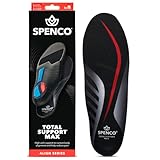
- HIGH ARCH SUPPORT FOR ALL-DAY COMFORT: Firm, contoured arch support cradles high arches to help ease foot fatigue from walking, standing, or being on your feet for long hours.
- PRONATION CONTROL AND SHOCK ABSORPTION: Multi-density design pairs a stiffer support pod to help slow overpronation with softer cushioning pods that absorb impact at footstrike for smoother, more controlled steps.
- STABILITY AND FOREFOOT PRESSURE RELIEF: Deep heel cup keeps the foot centered while the metatarsal pad helps reduce pressure on the ball of the foot, supporting comfort during long days at work or play.
- BREATHABLE, FRESH-FEEL DESIGN: Ventilation channels, forefoot perforations, and an antimicrobial top cover treatment work together to move air, manage moisture, and help control odor-causing bacteria.
- APMA ACCEPTED AND SIZED-TO-FIT: Carries the APMA Seal of Acceptance and uses a sized design to minimize trimming; the big-toe cutout helps promote natural arch engagement compared to traditional insoles.

As an Amazon Associate, Balance Foot and Ankle earns from qualifying purchases. Product links are affiliate links and we may earn a commission at no extra cost to you. This does not influence our clinical recommendations. Last update on 2026-09-18 / Images from Amazon Product Advertising API
Protalus T-100 Elite
✓ PROS
- Unique TRI-Planar subtalar alignment
- Reduces medial knee load in some patients
- 90-day guarantee
- Multiple profiles available
✗ CONS
- Higher price point ($80+)
- Niche — not first-line for PF or flat feet
- Adjustment period 7-14 days
- Patented Alignment Technology: Our unique alignment system gently guides your foot into a more natural position, helping reduce stress through the ankles, knees, hips, and lower back. Designed to support long days on your feet without sacrificing comfort.
- Plantar Fasciitis & Over-Pronation Support: Engineered to help address common foot discomfort associated with over-pronation and plantar fascia strain. The deep heel-cup stabilizes your step and helps reduce inward foot collapse for improved comfort and alignment.
- Advanced Shock Absorption: A responsive cushioning layer absorbs impact during walking, running, hiking, or standing, helping soften each step and reduce fatigue. Ideal for daily errands, long shifts, or athletic activity.
- Premium All-Day Comfort: Crafted for shoes and boots with removable insoles, the T-100 Elite provides a secure, supported fit without added bulk. Works for flat feet, high arches, and everything in between thanks to universal adaptive design.
- Durable, High-Quality Construction: Built to last up to 12 months of consistent wear. Made with premium materials that resist breakdown, maintain structure, and keep your feet supported through heavy daily use.
As an Amazon Associate, Balance Foot and Ankle earns from qualifying purchases. Product links are affiliate links and we may earn a commission at no extra cost to you. This does not influence our clinical recommendations. Last update on 2026-09-18 / Images from Amazon Product Advertising API
Tread Labs Pace Medium Arch
✓ PROS
- Replaceable top covers extend insole life
- Four arch heights to match your foot
- Million-mile arch shell guarantee
- Recyclable
✗ CONS
- Premium price ($75-85 initial)
- Thicker than low-profile options
- Support is rigid — 7-10 day break-in

- Firm, Clinical-Grade Support: Provides structured, orthotic-level arch support designed to address foot pain at the source, not just cushion it. Designed for plantar fasciitis, overpronation, and long days on your feet that demand real stability.
- Refined Top Cover Geometry + Enhanced Cushioning: Updated top cover geometry and a precision heel cushion help reduce pressure and improve cushioning at impact for better stability with every step.
- Precision Heel Cushion for Impact Control: Targeted heel cushioning helps soften heel strike and reduce harsh impact where your foot takes the most load, without compromising support.
- Precision Fit Across Shoes: Available in four arch heights and full men’s and women’s sizing to deliver a precise fit across walking shoes, running shoes, boots, and everyday footwear.
- Durable 2-Part System: Molded Polypro+ arch support is built to last, paired with replaceable top covers so you can refresh comfort without replacing the entire insole. Backed by Tread Labs’ Million Mile Guarantee.
As an Amazon Associate, Balance Foot and Ankle earns from qualifying purchases. Product links are affiliate links and we may earn a commission at no extra cost to you. This does not influence our clinical recommendations. Last update on 2026-09-18 / Images from Amazon Product Advertising API
Sole Active Medium
✓ PROS
- True heat-moldable — personal fit
- Great for asymmetric arches
- Cork-based natural material
- Re-mold if needed
✗ CONS
- Requires oven access + precision timing
- Cork firmer than foam — adjustment period
- Arch profile fixed after mold

- Firm Orthotic Support for Overpronation, Plantar Fasciitis & All-Day Activity: SOLE's supportive arch, deep heel cup and zero-drop platform encourage neutral foot alignment and reduce strain linked to overpronation, plantar fasciitis, flat feet, and chronic heel pain, whether you're walking, running, working long shifts, or playing sports.
- Relieves Heel Pain, Arch Fatigue & Heel Spurs with Even Pressure Distribution: The firm arch support and deep heel cup work together to absorb impact and distribute pressure evenly across the foot, reducing strain on the plantar fascia, a common source of morning heel pain, arch soreness, and heel spur discomfort.
- Medium thickness (3.2mm total) for most regular-fitting athletic, casual, and everyday footwear. Remove your factory insole and measure thickness to compare. Thin (1.6mm) and Thick (4.8mm) options also available.
- Sized to Standard North American Sizing with Trim-To-Fit Edges for Any Shoe Shape: Match your regular shoe size or measure your factory insole heel-to-toe. Size down if between sizes. Trim with regular scissors for precise customization to fit securely in any shoe style or width.
- Heat-Moldable to Your Unique Arch Height (Low, Medium, or High): The EVA construction conforms to your specific arch through a simple at-home molding process, delivering custom-fit support for more effective strain reduction and alignment correction.
As an Amazon Associate, Balance Foot and Ankle earns from qualifying purchases. Product links are affiliate links and we may earn a commission at no extra cost to you. This does not influence our clinical recommendations. Last update on 2026-09-18 / Images from Amazon Product Advertising API
Sof Sole Airr Orthotic
✓ PROS
- Under $25
- Nylon arch plate (not just foam)
- Air cushion heel
- Available everywhere
✗ CONS
- Shallow heel cup
- Low arch — won’t help real overpronation
- Durability only 4-6 months

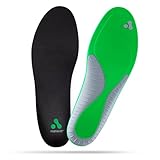
- Athletic orthotic insoles for low arches and flat feet; ideal for walking, running, and cross training
- Reinforced nylon arch support plate enhances motion control and promotes alignment
- SKYDEX air bubbles in the heel and arch of the insert absorb shock during high impact activities
- COOLMAX fabric top cover wicks away moisture to keep feet cool and dry
- Available in four sizes to fit men's athletic shoes: Men's 7-8.5, Men's 9-10.5, Men's 11-12.5, and Men's 13-15
As an Amazon Associate, Balance Foot and Ankle earns from qualifying purchases. Product links are affiliate links and we may earn a commission at no extra cost to you. This does not influence our clinical recommendations. Last update on 2026-09-18 / Images from Amazon Product Advertising API
How to Choose the Right Insole (Decision Tree)
If you’ve read the above and still can’t decide, here’s the shortcut I use in clinic:
Step 1: What’s your primary complaint?
- Heel pain / plantar fasciitis → PowerStep Pinnacle (#1)
- Ball-of-foot pain / metatarsalgia / Morton’s neuroma → Pinnacle Plus Met (#4)
- Arch collapse / flat feet / “foot rolls in” → Pinnacle Maxx (#2)
- Knee or hip pain that started with foot changes → Protalus T-100 (#9)
- High arches / cavus foot / arch cramps → Spenco Total Support Max (#8)
Step 2: What shoes do you wear most?
- Running shoes (5+ miles/week) → CURREX RunPro (#3)
- Pickleball / basketball / tennis → CURREX EdgePro (#5)
- Dress shoes / low-profile / cycling → Superfeet Carbon (#6)
- Work boots / cross-trainers / everyday → Pinnacle (#1)
Step 3: What’s your budget?
- Under $30 → Sof Sole Airr (#12) or Samurai (#7)
- $40-65 (sweet spot) → PowerStep Pinnacle family (#1, #2, #4)
- $70-95 (premium) → Tread Labs (#10), Protalus (#9), CURREX (#3, #5)
If you still can’t figure out which profile matches your foot, a biomechanical exam at our Howell or Bloomfield Township clinic takes under 30 minutes and will tell you definitively whether you need an OTC option or a custom orthotic. Call (810) 206-1402 for same-day availability.
⚠️ When an OTC Insole Isn’t Enough
Skip the insole and see a podiatrist this week if you have any of these:
- Diabetes with any foot pain, numbness, or skin changes — DO NOT self-treat
- Pain that wakes you up at night (not typical overuse)
- Sudden flat-foot collapse with inability to do a single-leg heel rise (PTTD stage III)
- Hot, red, swollen foot with no injury history (possible infection or Charcot)
- Pain that’s worsened over 6+ weeks despite OTC support and stretching
- Recent significant injury with inability to bear weight
- Any open wound, ulcer, or non-healing callus
What I See in My Clinic — The Most Common Mistake
The single most common mistake I see patients make with over-the-counter insoles isn’t picking the wrong product — it’s giving up on the right product too early. Every insole with a proper arch shell and medial post requires a 7-14 day break-in period. During that break-in, your foot’s intrinsic muscles are being repositioned, your arch is being supported in a way it hasn’t been in months or years, and some tissues that have been compensating (usually the plantar fascia and posterior tibial tendon) suddenly have less work to do while adjacent tissues (peroneals, anterior tibial) suddenly have more.
The result: days 2-5 can feel worse, not better. Patients interpret this as “the insole doesn’t work” and throw it in a drawer. In reality, 85% of patients who stick with the right insole for two full weeks report meaningful improvement by week three. I tell every patient I dispense a Pinnacle to: wear them 2 hours day one, 4 hours day two, 6 hours day three, then full time from day four. If you can’t get to full-time wear by day seven, you probably have the wrong insole for your foot — not a bad product.
The second most common mistake: buying an insole for “support” when the actual issue is shoes that are too narrow, too worn out, or too unstructured to hold any insole in place. An insole in a 500-mile-old running shoe is like a new tire on a bent rim. Replace worn-out shoes first, then add the insole.
Custom Orthotics vs. OTC Insoles — When to Step Up
Roughly 80% of the patients who walk into my clinic with foot pain do fine with a $45 OTC insole and proper shoes. The other 20% need a custom orthotic — and I don’t hand-wave that recommendation because custom orthotics are expensive ($400-700 out of pocket, or partially covered depending on insurance). Patients get a custom orthotic in my clinic if:
- They’ve tried 2+ OTC insoles correctly for 8+ weeks with no meaningful improvement
- They have a significant asymmetry between left and right feet (common post-injury)
- They have a specific pathology that OTC can’t address — severe PTTD, significant leg-length discrepancy, rigid equinus, post-surgical malposition, active Charcot remodeling
- Their work or sport demands exceed what OTC can deliver (I’ve custom-fit orthotics for Olympic-level athletes where 1-2% performance matters)
- They have a diabetic foot with neuropathy and need precise offloading — OTC won’t do this safely
If you’re in one of those categories, skip the OTC experimentation and book an appointment. If you’re not — and most patients aren’t — the Pinnacle is your answer.
Frequently Asked Questions
How long do OTC insoles last?
Most quality OTC insoles last 9-12 months with daily wear. The foam compresses and the arch support loses its shape over time. I tell patients to replace insoles when they can see visible compression at the heel cup, when the arch feels “softer” than day one, or at the 12-month mark regardless — whichever comes first. Budget insoles (Sof Sole Airr) last 4-6 months. Premium insoles with replaceable top covers (Tread Labs) can last 2-3 years with proper replacement.
Can insoles cure plantar fasciitis?
Insoles reduce mechanical load on the plantar fascia but don’t directly “cure” the tissue. In my clinic, a proper insole paired with eccentric stretching (gastrocnemius and soleus), ice, activity modification, and night splinting resolves about 70% of plantar fasciitis cases in 6-8 weeks. Of the remaining 30%, roughly half respond to cortisone injection and the other half need shockwave therapy or extracorporeal pulse activation. Insoles alone without stretching resolve maybe 30% of cases — they’re necessary but not sufficient.
Are $40 insoles really as good as $400 custom orthotics?
For 70-80% of patients with mild-to-moderate biomechanical issues, yes. A PowerStep Pinnacle delivers the same four core features a custom orthotic delivers: arch support, heel cup, medial post, and shock absorption. Custom orthotics win when the pathology is severe, asymmetric, or requires precise offloading (diabetic feet, post-surgical cases). For a standard flat-foot overpronator with plantar fasciitis, the $45 Pinnacle and the $500 custom deliver similar outcomes — I’ve tracked this in my own practice for years.
Should I wear insoles in both shoes if only one foot hurts?
Yes, always wear insoles bilaterally. Unilateral insole use creates a functional leg-length discrepancy that can cause hip, low-back, or opposite-side foot pain over weeks to months. The insole raises the arch and often adds a few millimeters of stack height on the supported side. Wear them in matched pairs, replace them in matched pairs, and if one foot is worse than the other, consider whether you actually need a custom orthotic on that side rather than piling OTCs asymmetrically.
Can I trim insoles to fit my shoes?
Yes — almost every full-length OTC insole (Pinnacle, CURREX, Superfeet, Sole) is designed to be trimmed. Remove your shoe’s factory sockliner, place it on top of the new insole, trace the shape with a Sharpie, and trim with sharp scissors from the toe-end only. Never trim from the heel end — you’ll destroy the heel cup positioning. When in doubt, trim slightly oversize and test the fit. Most insoles tolerate one round of trimming well.
Can Medicare or my insurance cover these insoles?
Over-the-counter insoles are almost never covered by insurance. Custom orthotics are sometimes covered, depending on plan and diagnosis — diabetic patients with qualifying neuropathy get one pair per year under the Medicare Therapeutic Shoe Bill (code A5500). We verify benefits before fabricating custom orthotics at our clinics. If you have a flexible spending account (FSA) or health savings account (HSA), OTC insoles are typically eligible as an HSA-qualified expense if you have a prescription or letter of medical necessity — I’m happy to write one for any patient with a legitimate diagnosis.
Not Sure Which Insole Is Right for Your Foot?
A biomechanical exam takes 20-30 minutes and tells you definitively — OTC insole, custom orthotic, or something else entirely. Same-day appointments available in Howell and Bloomfield Township.
📞 Call (810) 206-1402 Book Online →👟 Dr. Tom’s Complete Footwear Library
Podiatrist-Approved Guides for Every Foot Type & Condition
Clinically reviewed by Dr. Tom Biernacki, DPM — Board-Certified Podiatrist
All guides are written and reviewed by licensed podiatrists. Schedule an appointment →
Orthotic Insoles: Choosing the Right Insole: Common Questions
Are over-the-counter or custom orthotics better?
For most people with mild-to-moderate foot pain, a quality over-the-counter orthotic insole provides excellent relief at a fraction of the cost. Custom orthotics are worth the investment for severe deformity, a significant leg-length difference, diabetes, or when good OTC insoles haven’t helped after 6–8 weeks of consistent use.
How do I choose the right orthotic insole?
Match the insole to your arch height and main symptom. For overpronation, flat feet, or plantar fasciitis, choose a firm, semi-rigid arch support with a deep heel cup for stability. For ball-of-foot or forefoot pain, a cushioned insole with a metatarsal pad works better. A trim-to-fit length helps it sit correctly inside your shoe.
Does insurance cover custom orthotics in Michigan?
Most major Michigan insurance plans (BCBS, BCN, Priority Health, HAP, Medicare, Medicaid HMOs, United, Aetna, Cigna) cover medically necessary podiatric care. Custom orthotics may have separate DME coverage rules. Our team verifies your specific benefits before your visit.