
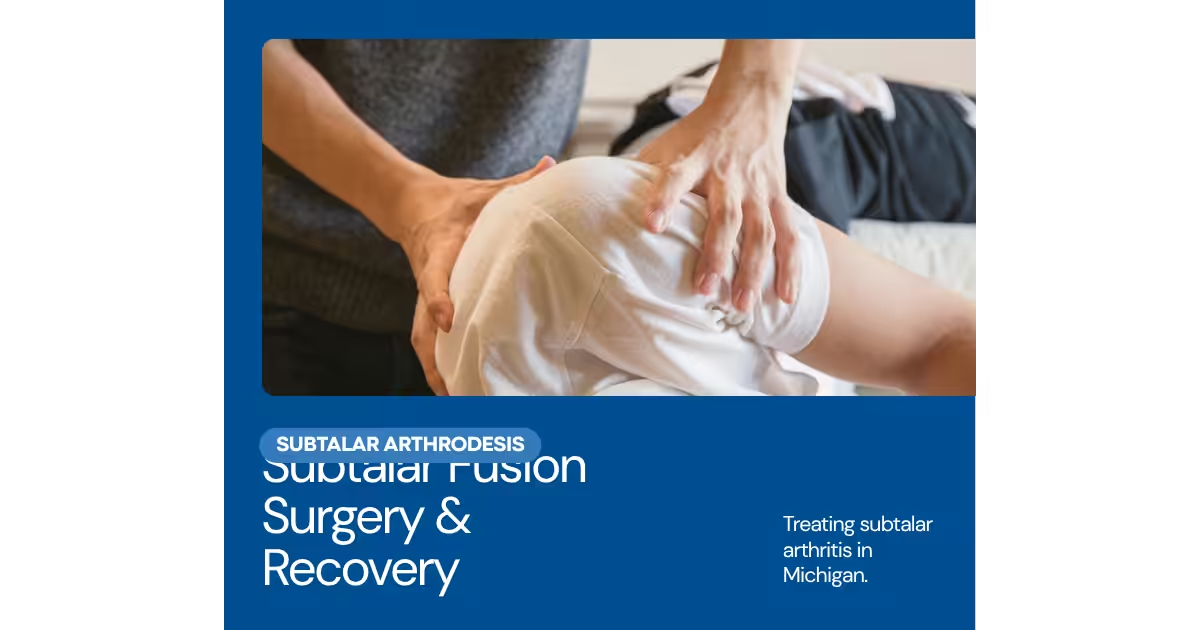
Quick answer: Subtalar Joint Pain Fusion has multiple potential causes including mechanical, neurological, vascular, and inflammatory. The patterns we see most often are overuse, poorly-fitted shoes, and biomechanical imbalance. Red flags requiring urgent evaluation: warmth/redness (infection), inability to bear weight (fracture), and unilateral swelling without injury (DVT). Call (810) 206-1402.
Dr. Tom’s Top Pain Relief Picks — Dr. Hoy’s (2026)
Affiliate disclosure: As an Amazon Associate, Balance Foot & Ankle earns from qualifying purchases. I personally use Dr. Hoy’s in my practice for patients who need topical relief.
| Product | Best For | Dr. Tom’s Take | Get It |
|---|---|---|---|
| Dr. Hoy’s Natural Pain Relief Gel 3.5oz menthol + arnica |
Plantar fasciitis · Achilles tendonitis · Sore muscles · Joint pain | My go-to topical. Cooling-then-warming sensation. No greasy residue. Non-NSAID alternative. | Buy Now |
| Dr. Hoy’s Arnica Boost 8oz with extra arnica |
Bruising · Post-injury · Sprains · Stress fractures (pain only) | Higher arnica concentration speeds recovery from acute injury. Use 4x daily for first 7 days. | Buy Now |
| Dr. Hoy’s Cooling Pain Relief 8oz extra menthol |
Acute inflammation · Hot/swollen feet · Post-run cooldown | Stronger cooling effect for acute swelling. Pair with ice for first 48 hours after injury. | Buy Now |
| Dr. Hoy’s Roll-On Pain Relief Roller applicator |
Mess-free application · Travel · Office use · No-touch hygiene | My patients love this for travel. Glides on without hand contact — cleanest application available. | Buy Now |
| Dr. Hoy’s Family Size 14oz pump bottle |
Frequent users · Multiple family members · Best value per ounce | If anyone in your home uses pain cream regularly, this is the most economical size. Same formula. | Buy Now |
Why I recommend Dr. Hoy’s over Doctor Hoy’s Natural Pain Relief and Bengay: Cleaner ingredient list (no parabens, no synthetic dyes), longer-lasting effect, and the cooling-then-warming dual sensation actually addresses both inflammation and circulation. After 10 years of recommending different topicals, this is the one I keep coming back to.
Medically reviewed by Dr. Tom Biernacki, DPM · Board-Certified Podiatric Surgeon · Last reviewed: April 2026 · Editorial Policy
Related Conditions
Quick Answer
Subtalar Joint Pain and Fusion: Causes, Diagnosis, and Surgi relates to foot pain — typically caused by overuse, footwear, or biomechanics. Most patients improve in 6-12 weeks with conservative care. Same-week appointments in Howell + Bloomfield Township: (810) 206-1402.
✅ Medically reviewed by Dr. Tom Biernacki, DPM — Board-certified podiatrist specializing in foot & ankle surgery. View credentials.
What Is the Subtalar Joint?
The subtalar joint is located directly below the ankle joint (tibiotalar joint), between the talus (ankle bone) and the calcaneus (heel bone). While the ankle joint controls up-and-down (dorsiflexion/plantarflexion) motion, the subtalar joint controls side-to-side motion of the hindfoot—inversion and eversion, which are essential for walking on uneven surfaces, negotiating slopes, and absorbing the rotational forces that travel up from the foot during gait. The subtalar joint works as part of a functional unit with the midtarsal (Chopart) joints to produce the complex three-dimensional motion of the hindfoot.
Subtalar joint pathology is frequently overlooked because its symptoms—deep posterior heel pain and lateral hindfoot aching—can be attributed to the ankle above it or the heel below it. Many patients who report persistent “ankle pain” after an ankle injury actually have subtalar joint involvement. Any patient with persistent hindfoot pain, particularly after a calcaneus fracture, talar fracture, or severe ankle sprain, should have the subtalar joint specifically evaluated.
Causes of Subtalar Arthritis and Pain
Post-traumatic arthritis is the most common cause of subtalar joint arthritis—specifically following calcaneus fractures (which cross the subtalar joint and damage articular cartilage directly) and talar fractures. Calcaneus fractures are the most frequent major foot fracture in adults, and subtalar arthritis develops in a significant proportion—estimates range from 30–50%—even when surgically treated. Other causes include: inflammatory arthritis (rheumatoid, psoriatic), coalitions (tarsal coalition—abnormal bony union between the calcaneus and talus or navicular, causing rigid painful hindfoot), primary osteoarthritis, and adult-acquired flatfoot deformity (posterior tibial tendon dysfunction) that places abnormal stress on the subtalar joint.
Diagnosis
Clinical diagnosis of subtalar arthritis begins with palpation of the sinus tarsi (the anatomical depression just below and anterior to the lateral malleolus)—subtalar arthritis typically produces tenderness here. Range of motion testing shows reduced and painful inversion/eversion compared to the contralateral side. Weight-bearing X-rays (including oblique views) may show joint space narrowing, sclerosis, and osteophytes. CT scan is superior for characterizing subtalar joint involvement (particularly after calcaneus fracture), assessing deformity, and planning surgery. A diagnostic corticosteroid injection into the subtalar joint is both therapeutic and diagnostic—significant relief after injection confirms the subtalar joint as the primary pain source and predicts good response to fusion.
Non-Surgical Treatment
Conservative management for subtalar arthritis includes: corticosteroid or hyaluronic acid injection for temporary relief, an ankle-foot orthosis (Arizona brace or lace-up ankle brace) that restricts subtalar motion, cushioned footwear with rocker-sole modification, activity modification to reduce impact loading, and anti-inflammatory medications. Physical therapy can improve surrounding muscle support but does not address the articular cartilage damage. Conservative treatment may provide adequate symptom control for months to years in patients with mild-to-moderate disease or who are not surgical candidates.
Subtalar Fusion (Arthrodesis)
Subtalar fusion—surgically eliminating the subtalar joint by fusing the calcaneus to the talus—is the definitive treatment for end-stage subtalar arthritis that has failed conservative care. The joint surfaces are removed and bone graft or bone void filler is placed, with fixation using large cannulated screws (typically 2–3 screws) inserted through the heel into the talus. The goal is solid bone union across the former joint space, eliminating motion and thus eliminating pain. Fusion rates for subtalar arthrodesis are 85–95% in most series when performed in non-smoking patients with adequate bone quality.
After subtalar fusion, patients lose subtalar inversion and eversion. This motion is partially compensated by the midtarsal joints (which have some independent contribution to hindfoot mobility), and most patients walk comfortably on flat surfaces. Negotiating uneven terrain and slopes is more challenging after subtalar fusion, and some patients use a cane or walking stick for outdoor activities. Patient satisfaction rates after subtalar fusion are 75–85%—comparable to other hindfoot arthrodesis procedures. Return to daily walking is typically at 3–4 months; return to more demanding activity at 6–9 months.
Frequently Asked Questions
How do I know if my pain is from the subtalar joint or the ankle?
Distinguishing subtalar from ankle (tibiotalar) joint pain can be challenging because the joints are adjacent. Key differences: ankle joint pain typically worsens with dorsiflexion and plantarflexion (up-and-down motion), while subtalar pain worsens with inversion and eversion (side-to-side motion) and is felt deep in the posterior heel and sinus tarsi area. A diagnostic injection is the most reliable way to differentiate—if injecting the subtalar joint (under fluoroscopic or ultrasound guidance) relieves your pain significantly, the subtalar joint is the primary source. If you have persistent hindfoot pain after a calcaneus fracture, talus fracture, or ankle sprain that hasn’t responded to ankle-directed treatment, specifically asking your physician about subtalar joint involvement is worthwhile.
How long is recovery after subtalar fusion surgery?
Recovery after subtalar fusion involves a non-weight-bearing period of approximately 6–8 weeks for initial bone healing, followed by progressive weight-bearing in a boot from 6–12 weeks, with transition to regular supportive footwear at 10–14 weeks. CT scan confirmation of solid fusion (bone bridge across the former joint) typically occurs at 3–4 months. Physical therapy for gait training, strength, and balance begins with full weight-bearing. Most patients walk comfortably in shoes by 4–5 months and reach full functional recovery by 6–9 months. Smoking substantially delays and reduces fusion rates—smoking cessation before subtalar fusion surgery is strongly recommended.
Will I be able to walk normally after subtalar fusion?
Most patients walk without a limp on flat surfaces after successful subtalar fusion. The loss of inversion and eversion is compensated by increased motion in the midtarsal joints and improved functional gait mechanics compared to the pre-operative arthritic state. Challenges include: increased difficulty walking on uneven terrain, stairs, and slopes, higher energy expenditure for walking, and increased stress on adjacent joints (which may accelerate arthritis in the ankle or midfoot over decades). Studies using gait analysis show that subtalar fusion produces near-normal gait on flat surfaces in most patients. Athletic activities are generally possible, though high-impact jumping and cutting sports are limited. Many patients return to hiking with appropriate footwear.
Medical References & Sources
- American Orthopaedic Foot & Ankle Society — Subtalar Fusion
- PubMed Research — Subtalar Arthrodesis Outcomes
- PubMed Research — Calcaneus Fracture and Subtalar Arthritis
Dr. Tom Biernacki, DPM is a board-certified podiatric surgeon at Balance Foot & Ankle in Howell and Bloomfield Township, Michigan. He evaluates and treats subtalar joint arthritis with conservative management including bracing and injection, and performs subtalar arthrodesis for end-stage disease.
Join 950,000+ Learning About Foot Health
Dr. Tom shares honest medical advice, supplement reviews, and treatment guides you won’t find anywhere else.
Subscribe on YouTube →Top-Rated Ankle Braces
- Aircast Air-Stirrup — Gold Standard Ankle Brace
- Zamst A2-DX — Maximum Support for Athletes
- McDavid Lace-Up Ankle Brace — Everyday Stability
Amazon affiliate links — we may earn a small commission at no extra cost to you.
📍 Located in Michigan?
Our board-certified podiatrists treat this condition at two convenient locations. Most new patients are seen the same week.
Insurance Accepted
BCBS · Medicare · Aetna · Cigna · United Healthcare · HAP · Priority Health · Humana · View All →
Howell Office
4330 E Grand River Ave
Howell, MI 48843
Get Directions →
Bloomfield Township Office
43494 Woodward Ave, #208
Bloomfield Township, MI 48302
Get Directions →
Your Board-Certified Podiatrists



Ready to Get Back on Your Feet?
Same-week appointments available at both locations.
Book Your AppointmentPros & Cons of Conservative Care for foot care
Advantages
- ✓ Conservative care first
- ✓ Same-week appointments
- ✓ Multiple insurance accepted
Considerations
- ✗ Self-treatment can mask issues
- ✗ See a podiatrist if pain >2 weeks
Dr. Tom’s Recommended Products for foot care
Affiliate disclosure: As an Amazon Associate, Balance Foot & Ankle earns from qualifying purchases. We only recommend products we use with patients.
Footnanny Heel Cream Dr. Tom’s Pick
Best for: Daily moisturizer for cracked heels
Ready to Get Back on Your Feet?
Same-week appointments in Howell + Bloomfield Township. Most insurance accepted. Dr. Tom Biernacki, DPM & team.
Book Today — Same-Week Appointments Available
Call Now: (810) 206-1402
About Your Care Team at Balance Foot & Ankle
Dr. Tom Biernacki, DPM · Board-Certified Foot & Ankle Surgeon. Specializes in conservative-first care, minimally invasive bunion surgery, and complex reconstruction.
Dr. Carl Jay, DPM · Accepting new patients. Specializes in sports medicine, athletic injuries, and routine podiatric care.
Dr. Daria Gutkin, DPM, AACFAS · Accepting new patients. Specializes in surgical reconstruction and pediatric podiatry.
Locations: 4330 E Grand River Ave, Howell, MI 48843 · 43494 Woodward Ave Suite 208, Bloomfield Township, MI 48302
Hours: Mon–Fri 8:00 AM – 5:00 PM · (810) 206-1402
In-Office Treatment at Balance Foot & Ankle
If home treatment isn’t providing relief for your foot pain, our podiatry team at Balance Foot & Ankle can help with same-week evaluations and advanced in-office care.
Same-week appointments available. (810) 206-1402
Ready for Expert Care?
Same-week appointments in Howell & Bloomfield Township, MI.
4.9★ | 1,123 Reviews | 3,000+ Surgeries
Or call: (810) 206-1402
